

What Is Polyethylene Tubular FFS Films?
A Polyethylene Tubular FFS Film is, at its core, a continuous tube of polyethylene film supplied on rolls and engineered to be converted into finished sacks on automatic Form‑Fill‑Seal (FFS) equipment—where the bag is formed from the tube, filled with product, and sealed, repeatedly, at industrial line speeds.So the real question is not “Can the film be made into a bag?” Of course it can. The real question is sharper: Can the film be made into a bag that stays sealed, stays stable on the pallet, stays consistent from roll to roll, and stays efficient at speed—without forcing operators to slow down?
This is why manufacturers in this category highlight durability and thickness uniformity as non‑negotiable properties of heavy‑duty tubular FFS products, and why multi‑layer co‑extrusion is so commonly referenced in product descriptions and specifications.Typical 25 kg use cases for tubular PE FFS films include granules, pellets, and powdery/granular industrial goods such as fertilizers, chemical raw materials, and petrochemical resins—materials that are free‑flowing enough for automated filling yet “heavy” enough to punish weak corners, weak seals, and slippery pallets. To ground this in real market language, suppliers commonly position tubular FFS solutions for industrial packing weights in the single‑digit to mid‑tens kilogram range, with a particular emphasis on sacks up to about 25 kg in automated operations.
From Resin to Roll: Multi‑Layer Co‑Extrusion Tubular FFS Film
Polyethylene tubular FFS film is typically produced by blown‑film extrusion, and in heavy‑duty applications it is frequently produced as a multi‑layer co‑extruded structure, rather than a single‑layer film, because multi‑layer construction lets converters “assign” different jobs to different layers. In co-extrusion, multiple molten polymer streams are extruded simultaneously and combined into one layered film. One practical definition—straight from an industry supplier description—is thatco-extrusion manufactures a multilayer structure by the simultaneous extrusion of two or more polymers.
From a broader engineering reference perspective, coextrusion is likewise described as forming an extrudate composed of more than one thermoplastic melt stream, developed because packaging performance demands are often better served by combining materials than by relying on a single polymer.
In blown‑film production, those layered melt streams are shaped through a die, inflated into a bubble, cooled, and collapsed into a flattened tube that can be wound as rollstock. In other words: the “tube” format is not an afterthought—it is literally the geometry produced by the blown‑film bubble before collapse, and it is the natural feedstock for tubular FFS conversion.
Why multi‑layer is the default for heavy‑duty FFS
If you only remember one thing about heavy‑duty tubular FFS films, remember this: the film must perform as a system. Sealability alone is not enough. Strength alone is not enough. Friction alone is not enough. What matters is the combination—balanced, repeatable, and compatible with high‑speed bagging. This is exactly why suppliers emphasize production via advanced multi‑layer co-extrusion blown-film processes when describing heavy‑duty tubular FFS packaging—because multi‑layer manufacturing improves thickness uniformity and supports demanding end‑use performance.
It is also why modern extrusion platform providers explicitly offer multi‑layer systems in the layer counts that converters repeatedly use in practice: one major machinery manufacturer lists blown‑film configurations with 1, 3, 5, 7, 9 (and even 11) layers, along with options such as side gusseting as special equipment—features directly aligned with FFS sack production requirements. And it is why that same machinery supplier describes film extrusion as the first step toward ready‑for‑use packaging, and positions blown‑film quality as the foundation for reliable printing and converting—because in industrial packaging, a weak foundation does not stay hidden. It shows up later as downtime. It shows up as pallet instability. It shows up as seal failures that always seem to happen at the worst moment.
Table: What “Tubular FFS Film” means in process terms
| Item | What it is | Why it matters for 25 kg sacks |
| Film format | Continuous tubular film rollstock | Enables automated forming/cutting/filling/sealing with minimal manual handling. |
| Conversion method | FFS system forms the bag from a reel, fills, and seals in one integrated line | Improves efficiency and reduces labor dependence; the film must run reliably to protect line productivity. |
| Typical manufacturing | Blown film, often multi‑layer co‑extrusion | Supports durability and thickness uniformity; enables functional “division of labor” across layers. |
| Sustainability positioning | Often described as mono‑material and recyclable when specified as single‑material PE structures | Simplifies recycling pathways compared with mixed‑material sacks when mono‑PE designs are used. |
Layer Architectures: Common Layer Counts and What Each Layer Does
When buyers ask “How many layers?” they are not asking out of curiosity. They are asking because layer architecture is a proxy for how precisely the film can be tuned to real‑world conditions: sealing speed, drop shock, corner puncture, humidity exposure, pallet stability, print durability, even the “feel” of the film as it slides across guides and forming collars.
So what layer counts are common in Polyethylene Tubular FFS Films? In heavy‑duty practice, you will most often see three‑layer structures as a baseline; then five‑layer structures when performance and material efficiency must be balanced with finer control; and seven‑layer or nine‑layer structures when converters want the highest degree of tunability (and, in some cases, the ability to introduce specialized layers such as tie layers or barrier layers in non‑mono‑material designs).
A key point that is easy to miss: “more layers” is not automatically “better.” More layers means more design freedom. Used wisely, that freedom improves performance; used carelessly, it adds complexity without payoff. The best structure is not the most complicated one—it is the most appropriate one.
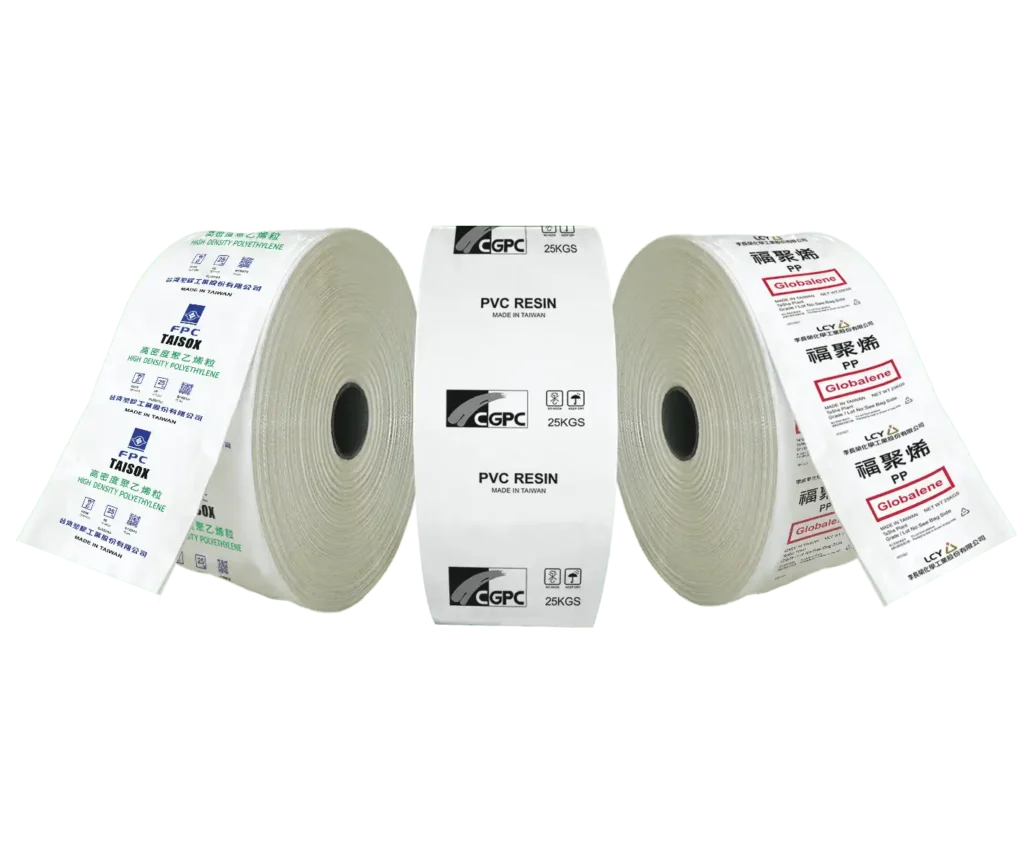
Interpreting three, five, seven, and nine layers designs in PE FFS tubes
To explain layers clearly, it helps to use the standard engineering language of skin layers, a core layer, and—when needed—tie layers or intermediate layers. A patent reference describing multilayer blown films provides a straightforward conceptual model: a three‑layer coextruded film can be described as A/B/C, where the middle “B” is the core layer, sandwiched between outer “skin layers” A and C; and in multilayer films, one of the skin layers may be formulated to provide seal strength (a sealant layer).
From an engineering overview standpoint, coextruded films can include many functional layers, including tie layers intended to bond neighboring layers where compatibility is limited, with five‑layer structures being common in practice.
With that framework, below is a practical, heavy‑duty FFS‑oriented interpretation of common layer counts—aligned with the materials and options repeatedly described across industrial FFS film suppliers and machinery platforms.
Table: Common multi‑layer structures and what each layer is typically engineered to do
| Layer count | Typical structural idea | Typical PE‑family materials used (examples) | What the layers are “assigned” to achieve in 25 kg FFS sacks |
| 3‑layer Co‑Extrusion Films | A/B/C or ABA | Skins: LDPE/LLDPE blends; Core: LLDPE/LDPE; stiffness‑tuning with HDPE/MDPE in controlled blends | A balanced “workhorse” film: sealability + toughness + acceptable stiffness, with reasonable cost and stable processing. |
| 5‑layer Co‑Extrusion Films | A/B/C/B/A (often symmetrical) | Skins: optional with PE/Tie/PA/Tie/PE | Finer tuning: better puncture/tear balance, improved friction control, or the ability to place certain additives in skins while controlling core economics. |
| 7‑layer Co‑Extrusion Films | More granular functional layering | Multiple PE layers, potentially dedicating separate layers for hot‑tack window, stiffness, and abuse resistance | High barrier properties. High barrier materials such as EVOH can be added and “wrapped” in the middle through a multi-layer structure to prevent moisture absorption and deterioration. Applications include vacuum-packed meat and cheese, foods requiring high-temperature sterilization, and some pharmaceutical packaging. |
| 9‑layer Co‑Extrusion Films | Maximum tunability within common industrial practice | Multiple Plastic layers: Optional with PA/Tie/PE/Tie/PA/EVOH/PA/Tie/PE | Top-tier barrier performance. It precisely separates and distributes multiple barrier layers—such as nylon (PA) and EVOH—achieving exceptional oxygen and moisture resistance, as well as superior aroma retention, even with a reduced overall thickness. Ideal for packaging applications with extremely demanding shelf-life and flavor requirements, including high-end foods, spices, pharmaceuticals, and sensitive electronic components. |
Table: Layer‑by‑layer functional roles in tubular FFS films
| Layer role | Where it sits | Typical functions in FFS sack performance | Common material strategy |
| Outer surface layer (outer skin) | Outside of the sack | Scuff/abrasion resistance; controlled friction for pallet stability; print receptivity if printed; resistance to blocking | PE skin with surface‑property additives; anti‑slip strategies include embossing or coatings/varnishes described by suppliers. |
| Structural layer(s) | Between skins and core | Adds stiffness, puncture resistance, tear balance, and process robustness | Blends of PE families (LDPE/LLDPE/HDPE) tailored for strength vs stiffness. |
| Core layer | Middle (main mass) | Cost‑efficient thickness build; bulk mechanical performance; can host certain additives or recycled content (in some designs) | PE core formulated for toughness and economics; coextrusion enables property mixing across polymers. |
| Inner seal layer (product side) | Inside of the sack | Heat‑seal reliability; hot‑tack behavior at speed; resistance to leaking at the seal when product drops after sealing | PE sealant layer designed for sealing window; hot tack is explicitly highlighted in tubular FFS product sheets and is recognized as critical in vertical FFS operations. |
| Tie layers (when needed) | Between incompatible materials | Bonding between layers of limited compatibility | Used mainly when non‑mono structures introduce barrier materials; engineering references describe tie layers as bonding functional layers in complex coextruded films. |
Notice the pattern: layers are not just “stacked.” They are tasked. One layer is asked to seal quickly. Another is asked to resist puncture. Another is asked—quietly, but critically—to keep pallets stable by controlling friction.
And this is where a rhetorical but practical contrast matters:
- A film that is strong but slippery can still fail—because pallets can shift.
- A film that is grippy but seal‑weak can still fail—because leaks and seal splits end the journey early.
- A film that is thick but inconsistent can still fail—because thickness variation becomes machine variation, and machine variation becomes downtime.
So, when the buyer asks “How many layers?”, the most professional answer is not a number. It is a question back: What do you need the sack to survive, and what do you need the line to sustain?
Specification Ranges and Configurable Features for Tubular FFS Films
Specifications are not paperwork; they are the film translated into numbers. Thickness. Width. Gusset depth. Roll diameter. Print colors. Friction coefficient. Each one is a performance lever, and each one becomes either a quiet success or a loud problem at 2:00 a.m. when a packaging line is running at speed.
Table: Market‑reported specification ranges relevant to 25 kg tubular FFS applications
| Parameter | Typical range (as reported by suppliers) | Notes for 25 kg sacks |
| Film thickness | ~0.10 mm typical for 25 kg heavy‑duty sacks; common ranges 80–220 μm, 100–250 μm, or 0.12–0.22 mm depending on supplier | Thickness selection is not “max it out”; it is “optimize it” for drop/puncture/seal + cost. |
| Tube / film width | Examples include 35–65 cm; other systems report broader dimensional capability (e.g., 420–1700 mm film dimensions) | Width is chosen based on bag circumference, forming set, and target bag geometry. |
| Roll / film diameter limits | Roll diameter examples: 100–150 cm; tubular film diameter up to ~1500 mm; max diameter up to ~1400 mm | Diameter values vary by how suppliers define roll vs tube dimensions; align with your machine’s unwind and handling limits. |
| Printing capability | 1–6 colors in some offerings; up to 8 colors common; up to 10 colors offered by certain suppliers | Color capability depends on printing method and whether tube printing or pre‑printing/formation is used. |
Options that change real-world performance
The options below are repeatedly highlighted across suppliers because they solve recurring industrial problems: pallet slippage, trapped air, poor bag shape, insufficient branding, and regulated shipment requirements.
Table: Core configuration options for tubular FFS films and what they solve
| Option | What it is | What it solves in 25 kg operations | Evidence in supplier offerings |
| Flat type (pillow tube) | Tube without side folds | Maximum simplicity; stable tracking; often preferred when volume expansion is not needed | Flat pillow tube is explicitly listed; flat type is offered as a bag type option. |
| Gusset type | Tube with side gussets (side folds, including M‑style gussets in some offerings) | Better bag shape; increased volume/shape stability; improves pallet pack geometry for certain products | Gusseted tubes are listed; gusseting ranges and gusset options are specified by suppliers. |
| Anti‑slip embossing strip / embossing / anti‑slip varnish | Surface texturing or strip embossing to increase friction | Improves stacking stability; reduces pallet shift during storage/transport; increases “load stability” | Anti‑slip embossing strips and embossing options are prominently listed, with friction‑based load stability described. |
| Micro‑perforation / degassing | Controlled micro‑holes or venting system | Faster deaeration; better brick‑shaped packs; reduced “puffy” bags | Micro‑perforated degassing and ventilation concepts are described for controlled deaeration and operational efficiency. |
| UN certification | Packaging certified for dangerous goods transport performance (application‑dependent) | Enables compliant shipment where dangerous goods regulations apply; supports customer compliance documentation | UN certificate option is listed alongside IMDG code compliance references. |
| Printing (multi‑color) | Printed tubular film, sometimes via flexo or gravure | Branding, identification, compliance marks, traceability visuals | Up to 8 colors is common; some offer higher with tube‑formed approaches or up to 10 colors in dedicated offerings. |
Now we translate those options into practical buying guidance—because a table can be accurate and still leave the buyer wondering, “Which one should I choose?”
Gusset type vs flat type. If your product is granular and you want a stable, rectangular footprint on the pallet, gussets are often the difference between “stackable” and “stackable but risky.” Multiple suppliers explicitly support tube‑with‑gussets configurations and specify gusseting options.
But if you run a very stable product flow and prioritize maximum line simplicity, flat pillow tubes remain a standard offering.
Antislip embossing strips and friction control. The pallet is the silent judge of FFS film quality. A sack can be perfectly sealed and still become a logistics hazard if pallet layers slide. That is why suppliers quote friction‑based load stability, embossing to increase friction, and even explicit anti‑slip treatment targets such as static friction coefficient thresholds.
One supplier describes anti‑slip embossing strips placed on both sides of the bag to increase stacking stability—an example of a design detail that looks small on paper but becomes huge on the warehouse floor.
Microperforation and controlled deaeration. Ask yourself: do you want operators “massaging” bags to push air out during palletizing, or do you want the packaging to do its job automatically? Suppliers position micro‑perforated degassing as a way to maintain leak‑proof behavior while improving degassing and packaging efficiency, and specialized venting systems are offered for controlled deaeration—particularly relevant for powders.
UN certification. If your customer’s product is regulated as dangerous goods, UN performance certification may not be “nice to have”; it may be mandatory for shipment. One supplier explicitly links its UN certificate option to IMDG code inspection standards and to applying UN certification for customers’ bags.
From a regulatory reference standpoint, UN/ADR frameworks specify construction and testing requirements for dangerous goods packagings, including leakproofness and other performance tests depending on the packaging type and contents.
Printing up to 8–10 colors. Industrial sacks are not only logistics tools; they are also communication tools: brand, instructions, hazard markings, batch identification, barcodes, and product differentiation. Multiple suppliers cite printing capability up to 8 colors, while at least one supplier offering lists printing up to 10 colors for its polyethylene FFS films.
Additionally, one supplier notes that higher numbers of printing colors may be possible when using flat film followed by tube forming, and certain high‑barrier tube‑formed products are described with print up to 8 + 8 colors—evidence that printing capability depends on the specific manufacturing/printing route.

VIDEPAK manufacturing approach for tubular FFS films
A product introduction is incomplete if it describes only the film and not the system behind it. Because in heavy‑duty packaging, consistency is not a slogan; it is a capability built by material sourcing, by equipment choice, by standards discipline, and by inspection before shipment.
It also publishes a 25 kg‑relevant specification set for its PE FFS film offering—including width, thickness, roll diameter, and printing colors—making it easier for buyers to align film selection with equipment requirements.
Raw materials: why sourcing is part of performance
Film performance starts long before extrusion; it starts with resin selection and lot control. VidePak’s manufacturing narrative emphasizes premium or virgin material sourcing and ties resin lot qualification to international test standards such as ASTM/ISO.
In particular, VidePak describes sourcing virgin PP/PE resins from leading suppliers such as BASF, Sinopec, and Yangzi Petrochemical, with resin lots certified (e.g., melt flow, density) to ASTM/ISO standards.
For buyers, the implication is direct: better control of inputs supports better repeatability of outputs—thickness, sealing, friction, and mechanical performance.
Equipment: why the line matters as much as the recipe
VIDEPAK frames its equipment strategy around European machinery and identifies equipment from W&H as part of its manufacturing approach for industrial bag production.
Standards and inspection: how “good film” becomes “approved film”
VIDEPAK describes designing and testing products per ASTM/ISO standards and highlights both in‑line metrology and final inspections as part of its quality approach.
Table: A practical quality checklist for 25 kg tubular FFS films and sacks (ASTM‑aligned examples)
| Performance area | Why it matters in 25 kg bagging | Example test standard commonly used in industry |
| Tensile strength & elongation | Controls basic film strength, stretching behavior, and handling robustness | ASTM D882 (tensile properties of thin plastic films) |
| Impact resistance | Correlates with resistance to sudden shocks and handling impacts | ASTM D1709 (dart impact resistance of plastic films) |
| Tear propagation resistance | Helps prevent small nicks from becoming catastrophic tears | ASTM D1922 / ASTM D1938 (film tear resistance methods) |
| Coefficient of friction | Direct lever for pallet stability and sack‑to‑sack slippage | ASTM D1894 (COF of plastic film and sheeting) |
| Hot tack / seal robustness at speed | Prevents seal failures during high‑speed vertical FFS where product drops soon after sealing | Hot tack defined as seal strength while hot; important in vertical FFS contexts |
| Dangerous goods compliance (when needed) | Enables regulated transport pathways and customer compliance | UN/ADR frameworks specify packaging construction/testing requirements; UN‑spec packaging required for most air DG shipments |
No single test “guarantees” success. But together, these tests build a disciplined picture: does the film behave the same today as it did last month, on the fastest line, under the toughest conditions, with the harshest product? That is the real definition of qualification.
Reference:
https://www.wh.group/int/en/our_products/extrusion/blown_film_lines/varex_ii/
https://www.wh.group/int/en/our_products/extrusion/blown_film_lines/
https://www.sciencedirect.com/topics/materials-science/coextrusion
https://patents.google.com/patent/WO2014110657A1/en
https://www.pp-wovenbags.com/pe-heavy-duty-form-fill-seal-tubular-roll-polyethylene-bags/
https://unece.org/DAM/trans/danger/publi/adr/adr2009/English/Part6.pdf
https://www.faa.gov/hazmat/safecargo/how_to_ship/package_for_shipping
https://www.unece.org/fileadmin/DAM/trans/danger/publi/unrec/rev21/ST-SG-AC10-1r21e_Vol1_WEB.pdf
https://www.ddltesting.com/package-testing/film-testing/?utm_source=chatgpt.com
https://www.qualitester.com/dart-impact-testing-of-polyethylene-film/?utm_source=chatgpt.com
https://www.sciencedirect.com/topics/engineering/hot-tack