
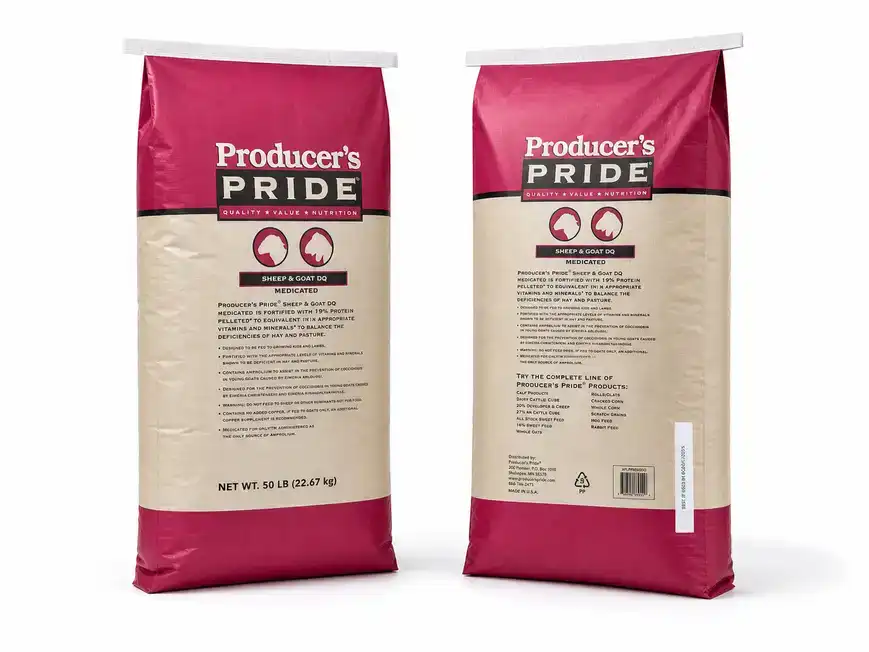
Product Analysis:Multiwall Paper Open Mouth Bags for Industrial Packaging
A paper sack looks simple only from a distance. Up close, it is a working system: paper must carry the load, the mouth must match the filler, the bottom must keep its shape, air must leave at the right speed, and the closure must stop dust, moisture, and product loss. That is why VIDEPAK approaches Multiwall Paper Open Mouth Bags as engineered packaging rather than ordinary paper containers.
The basic principle is straightforward. Several plies of sack kraft paper are converted into a flat or gusseted tube; one end is closed in the factory, while the other remains fully Open Mouth for top filling. After the product enters, the packer closes the top by sewing, hot-melt sealing, folding, taping, or another specified method. Industry guidance defines multiwall sacks as flexible shipping containers made with more than one paper ply or protective barrier, and standard converting practice forms those plies into a controlled tube before the selected bottom and mouth features are completed.
The central buying rule: do not choose a bag by ply count alone. Choose the filling style first, the closure second, the barrier third, and the ply structure last. A heavier bag is not automatically a better bag. A balanced bag is.
What Multiwall Paper Open Mouth Bags Must Do
The performance of Multiwall Paper Open Mouth Bags comes from the interaction of material, geometry, filling behavior, and closure control. Sack kraft paper is valued because it combines strength with controlled porosity. Strength helps the sack absorb shocks during dropping, conveying, palletizing, and transport. Porosity allows displaced air to escape while powder or granules enter the bag. Industry engineering guidance links tensile strength and stretch to tensile energy absorption, a useful measure of how well paper can absorb the energy of a drop, while sector research also shows that modern sack kraft development has raised porosity and strength at the same time.
This balance is critical. If paper is too closed, the bag can inflate during filling, slow the line, wrinkle around the mouth, or push dust back toward the operator. If paper is too open, fine product may sift through weak points, and unnecessary perforation can reduce sack strength. Industry dust-control guidance therefore recommends high-porosity paper where possible and warns that perforations can weaken the sack and create dust paths.
Fill
The mouth opens consistently, the gussets expand correctly, and air leaves without uncontrolled dust.
Close
The top closure matches the customer’s equipment and creates the required sift, moisture, and tamper performance.
Stack
Bag dimensions, bottom geometry, stiffness, and friction work together to build a stable pallet.
Protect
Paper plies, coatings, and liners are selected around moisture, grease, oxygen, odor, and puncture risk.
Four Common Types of Multiwall Paper Open Mouth Bags
The term Open Mouth describes how the bag is filled, not one single bottom or closure. Within the category, buyers commonly compare four practical designs: Block Bottom Open Mouth Bags, Pinch Bottom Open Mouth Bags, Sewn Open Mouth Bags, and Satchel Bottom Open Mouth Bags. Each design answers a different operational question. Must the empty bag stand by itself? Is a stitch line acceptable? Is a cleaner heat-sealed top required? Does pallet shape matter more than the lowest conversion cost?
Block Bottom Open Mouth Bags: Stability First
Block Bottom Open Mouth Bags use a machine-formed flat base, normally with side gussets, so the bag can open into a rectangular footprint. The bottom gives the empty or partly filled bag better standing ability than a simple flat tube. This improves operator control during manual filling and can support cleaner presentation on semi-automatic or automatic lines. Comparable industry descriptions identify the self-opening satchel or block-bottom form as a gusseted bag that stands unsupported, fills with good stability, and builds orderly pallet loads.
The value of Block Bottom Open Mouth Bags is geometric. The bag does not merely hold product; it shapes product into a more regular unit. A square footprint can reduce rounded corners, improve pallet face alignment, and make printed front panels easier to see. Flour, sugar, charcoal, pet food, lawn products, powdered ingredients, and many medium-weight granules can benefit from this design when standing behavior and neat stacking are important.
However, a block bottom requires accurate bottom pasting and crease control. Too much adhesive can create stiffness or contamination at the fold. Too little can reduce bottom security. The width, gusset, and bottom depth must also match product density; otherwise the filled bag may become too tall and narrow, or too short and wide. For this reason, VIDEPAK treats dimensions as a volume-and-pallet calculation, not a catalogue guess.
Best fit: choose Block Bottom Open Mouth Bags when easy opening, unsupported standing, a rectangular filled shape, and organized pallet presentation are stronger priorities than the simplest possible bag construction.
Pinch Bottom Open Mouth Bags: Clean Sealing and Premium Form
Pinch Bottom Open Mouth Bags normally use stepped paper plies and pre-applied hot-melt adhesive at the closing area. The factory closes one end; the customer fills through the top Open Mouth; then a pinch closer activates the adhesive and presses the top into a flat, controlled seal. Industry specifications commonly place this design in medium-to-large formats, often with three to six paper plies and optional PE-coated paper, free-film barriers, grease-resistant paper, easy-open features, and higher-barrier liner choices.
Compared with sewing, Pinch Bottom Open Mouth Bags can provide a smoother exterior and fewer direct needle holes through the mouth area. This makes the format attractive for food ingredients, pet food, specialty chemicals, pharmaceutical intermediates, nutritional powders, and branded dry products where appearance and sift control matter together. The closure is flat, the message panel is clean, and the finished pack looks deliberate.
The trade-off is process discipline. Hot-melt performance depends on the correct closing temperature, pressure, dwell time, fold position, and contamination control. Dust on the seal area can reduce adhesion. A closure designed without reference to the customer’s pinch sealer may look correct in a drawing but fail on the line. VIDEPAK therefore recommends confirming the adhesive system against actual filling temperature, line speed, top-fold geometry, and product dust level before mass production.
Best fit: choose Pinch Bottom Open Mouth Bags when the pack needs a clean heat-activated closure, strong shelf appearance, good sift resistance, and compatibility with barrier liners.
Sewn Open Mouth Bags: The Flexible Industrial Workhorse
Sewn Open Mouth Bags are among the most established multiwall sack formats. The converter supplies a tube with one factory-closed end and one flush-cut Open Mouth. After filling, the customer passes the top through a sewing head. The bag may be flat or gusseted, and the seam may include paper tape, filler cord, or an easy-open chain stitch. Industry references describe this style as economical, tough, and adaptable, commonly in three-to-six-ply constructions for feed, seed, fertilizer, grains, minerals, and other dry goods.
The strength of Sewn Open Mouth Bags is flexibility. Sewing equipment is widely understood, top lengths can be adjusted, and the process can tolerate a broad range of products and filling methods. Coarse granules, pellets, flakes, seeds, and many powders can be handled efficiently. For operations that value dependable mechanics and straightforward maintenance, the sewn style remains difficult to replace.
Its weakness is also clear: every needle hole is a possible path for very fine powder, moisture, or insects. Tape-over-sewing, coated thread, filler cord, and an independently heat-sealed inner liner can improve performance, but these options must be specified as a system. When the product is dusty, hygroscopic, or hygiene-sensitive, the liner closure may be more important than the visible paper seam.
Best fit: choose Sewn Open Mouth Bags for robust, cost-aware industrial packaging, especially where the customer already operates sewing equipment and needs broad product flexibility.
Satchel Bottom Open Mouth Bags: Square Base, Pinch-Style Top
Satchel Bottom Open Mouth Bags combine a square, self-supporting satchel bottom with a sealable top. In practical terms, the design brings together the standing and stacking advantages of a block base with the clean closure logic of a pinch-style mouth. Standard industry descriptions note that this format stands unsupported, uses pre-applied adhesive for heat sealing, is often built with three to six paper plies, and can incorporate moisture, grease, odor, and easy-open features.
This hybrid geometry gives Satchel Bottom Open Mouth Bags a strong position in premium bulk and semi-retail packaging. The bottom helps the bag sit squarely during filling; the top closes into a neat plane; the finished package stacks with less slumping than a conventional pinch bag with a softer base. For pet food, specialty flour, powdered nutrition, food additives, chemicals, and higher-value dry mixes, that combination can support both line efficiency and brand value.
Ply Counts and Inner-Liner Choices
How Many Paper Plies?
Most industrial multiwall designs use two to six paper plies, although the most common commercial zone is often three to five. The number is not a quality grade by itself. Two strong extensible plies can outperform three weak plies in a specific drop test; four plies can be unnecessary for a light, low-abrasion product; five plies can still fail if the bottom fold, adhesive, or top closure is poorly designed. Standard industry references likewise describe multiwall construction across roughly two to six plies, with the chosen structure linked to fill weight, product behavior, and barrier needs.
Each ply should have a job. The outer ply supports printing, abrasion resistance, and brand appearance. Middle plies add tensile energy, puncture resistance, and body. The inner paper ply contacts the product directly or supports the liner, depending on the design. Paper may be natural brown or bleached white, and different basis weights can be combined. VIDEPAK’s recommendation is to specify performance targets first—filled weight, drop height, stack height, climate, shelf life, and filling rate—then choose ply count and paper weight to meet those targets with minimum unnecessary material.
Which Inner Bag or Barrier?
A liner is not automatically required. Dry, non-greasy, non-hygroscopic granules may work well in an all-paper structure, especially when recyclability and rapid air release are priorities. But when moisture, oxygen, aroma, grease, contamination, or very fine particle leakage becomes a concern, the inner barrier becomes a central part of the design. Open-mouth food sack examples in the market use PE-coated paper, free-film PE liners, and EVOH-based barrier film for moisture, grease, or oxygen protection.
No Separate Liner
Best for low-barrier dry goods when breathability, simple material structure, and paper recovery are priorities.
PE-Coated Inner Ply
Adds moderate moisture or grease resistance without a loose inner tube, but coating weight and end-of-life route should be reviewed.
Free-Film PE Tube
Creates a separate moisture and sift barrier. It can be loose, spot-tacked, bottom-tacked, or designed for independent heat sealing.
High-Barrier Film
EVOH, metallized, or foil-based structures support oxygen, odor, or aroma protection when ordinary PE is not enough.
The free-film PE tube is the most versatile choice for many Multiwall Paper Open Mouth Bags. It can be made longer than the paper body so the liner is heat sealed before the paper top is sewn or pinched. This creates two closures with two different functions: the film protects the product, while the paper closure carries and shapes the package. For fatty feed, milk powder, fine chemicals, starch, salt, or moisture-sensitive ingredients, that separation can be highly valuable.
Yet every added barrier introduces a trade-off. It may slow air evacuation, change filling behavior, add a sealing step, increase cost, and complicate fiber recycling if the components are difficult to separate. Current European packaging rules are moving the market toward packaging designed for material recycling and recyclability at scale, while paper-sack design guidance emphasizes reviewing barrier content and separability.The correct question is not “paper or plastic?” It is “what is the lowest barrier structure that protects the product through its real supply chain?”
Matching the Bag to the Product and Filling Line
A technically good bag can still be commercially wrong if it does not fit the customer’s equipment. VIDEPAK therefore starts with the product and process, not with a pre-selected catalogue style. Product density determines volume. Particle size affects sifting. Flowability affects mouth width. Dust level affects seal contamination. Fat or oil content affects grease resistance. Warehouse climate affects moisture barrier. Pallet pattern affects final dimensions. The answer sits at the intersection.
Selection Flow
density, particle size, dust, moisture sensitivity
manual, gravity, automated top fill, closer type
block, pinch, sewn, or satchel bottom
plies, paper grade, coating, liner, closure
fill trial, seal trial, drop test, pallet test
| Product Condition | Recommended Direction | Reason |
|---|---|---|
| Coarse granules, low dust, cost-sensitive | Sewn Open Mouth Bags | Simple closure, broad line compatibility, durable handling |
| Fine powder, premium appearance, sift concern | Pinch Bottom Open Mouth Bags with barrier option | Flat heat seal and cleaner finished top |
| Manual or automatic filling, standing bag required | Block Bottom Open Mouth Bags | Self-supporting base and easier product loading |
| High-value product, neat pallet, clean seal | Satchel Bottom Open Mouth Bags | Square base plus pinch-style top performance |
Capacity should be treated as a result of product bulk density and bag dimensions, not a universal label. The same bag volume may hold very different weights of flour, resin pellets, mineral powder, or pet food. Common industrial formats range from small ingredient sacks to packages above 50 kg, but the correct width, length, gusset, and bottom depth must be confirmed with the actual product. The most reliable development method is a filled-bag trial followed by drop, compression, closure, and pallet checks under realistic humidity.
VIDEPAK Manufacturing and Quality Logic
Consistency in Multiwall Paper Open Mouth Bags is created step by step. Rolls of kraft paper and barrier material are unwound, tension controlled, printed, aligned, and formed around a rigid former into a flat or gusseted tube. Adhesive is applied in planned zones; straight or stepped ends are created; the tube is cut or separated; the bottom is sewn, pasted, folded, or shaped; liners are inserted or integrated; and the final bag is inspected. Industry descriptions of the tuber process stress that several paper rolls are combined into one tube and that scoring, perforation, gusseting, and coatings may be completed during this stage.
Process Control That Buyers Can See
The buyer sees the result in small details: a mouth that opens without tearing, a gusset that expands symmetrically, a bottom that lies flat, printing that remains in register, and bundles that feed smoothly into the packing line. Those details depend on web tension, paper moisture, adhesive weight, fold position, liner placement, and dimensional tolerance. A variation of only a few millimeters can change how the bag sits under the filling spout or enters a closing machine.
VIDEPAK’s published company information states that its broader packaging operation has more than 500 employees, serves over 70 countries, uses major international production equipment, and declares annual capacity of up to 800 million bags across its product portfolio.Scale matters because repeat orders require more than one good sample. They require stable raw-material control, documented recipes, trained operators, maintained equipment, and the ability to repeat dimensions and print across many production lots.
A Practical Validation Plan
Paper checks: basis weight, tensile strength, elongation, tear resistance, porosity, moisture, and water absorption.
Conversion checks: width, length, gusset, bottom depth, mouth cut, adhesive position, liner length, print register, and bundle count.
Filled-bag checks: opening behavior, filling speed, air release, seal strength, drop resistance, leakage, compression, pallet shape, and transport simulation.
Approval rule: approve the bag on the customer’s product and equipment whenever possible, because laboratory strength alone cannot predict every filling-line interaction.
For food, feed, chemicals, or dangerous goods, material declarations and test requirements must be matched to the destination market and actual packaged product. A claim such as “food grade,” “UN,” or “recyclable” should never be treated as a decorative phrase. It must refer to a defined material, design, test, and supply chain. FSC chain-of-custody certification, for example, verifies controlled processes for producing and trading certified forest-based products and is the basis for legitimate on-product FSC claims.
Branding, Sustainability, and Commercial Value
Industrial packaging is often judged first by engineering teams and later by everyone else. Warehouse staff notice whether pallets lean. Distributors notice whether printing scuffs. Customers notice whether the bag opens cleanly. Brand managers notice whether color and typography survive the journey. The best Multiwall Paper Open Mouth Bags connect all four viewpoints.
Large printable panels allow VIDEPAK to build a clear visual hierarchy: brand name first, product grade second, net weight and handling information third, traceability data where scanners can reach it. Natural kraft can signal simplicity and material authenticity. White kraft can increase contrast for vivid graphics. Matte surfaces can feel technical and controlled; gloss accents can lift selected design elements. But decoration should never cover functional areas such as seal lands, sewing zones, registration marks, or high-rub pallet contact points.
Sustainability must also be designed rather than assumed. Paper is renewable when responsibly sourced, but liners, coatings, adhesives, inks, and contamination determine how the used package behaves in a recycling stream. Paper-sack recyclability guidance encourages designers to minimize non-paper content, select compatible components, and consider whether barriers can separate during repulping. FSC certification can support responsible fiber sourcing when the correct chain-of-custody system and trademark approval are in place.
Commercial insight: reducing one unnecessary ply may lower material use, but removing a necessary barrier may destroy product. Adding a liner may improve shelf life, but an oversized liner may slow filling and waste resin. The goal is not the least material at any cost. The goal is the least material that safely completes the job.
This is where VIDEPAK’s market position becomes practical. The company can discuss paper grade, bag style, liner, printing, closing method, pallet dimensions, and destination requirements as one package. For the customer, this reduces the risk of buying isolated features that do not work together. The conversation moves from “How cheap is one bag?” to “What is the total cost of filling, sealing, damage, product loss, pallet stability, and brand presentation?” That is a more demanding question. It is also the right one.
How to Specify the Right VIDEPAK Bag
A complete request should state the product name, bulk density, particle size, fill weight, filling method, target bags per hour, closing equipment, required barrier, storage climate, transport route, pallet size, stack height, printing colors, regulatory destination, and expected annual volume. It should also identify the preferred format—Block Bottom Open Mouth Bags, Pinch Bottom Open Mouth Bags, Sewn Open Mouth Bags, or Satchel Bottom Open Mouth Bags—while leaving room for engineering review.
For many mainstream dry products, a three-ply structure may provide the best balance. For harder logistics, dense material, or rough surfaces, four or more plies may be justified. For moisture-sensitive goods, a PE-coated ply or separate PE liner may be essential. For oxygen- or aroma-sensitive products, a higher-barrier film may be required. For clean appearance and sift control, Pinch Bottom Open Mouth Bags or Satchel Bottom Open Mouth Bags may lead. For flexibility and proven industrial simplicity, Sewn Open Mouth Bags remain strong. For easy standing and orderly pallets, Block Bottom Open Mouth Bags are often the natural choice.
The final answer should be verified, not assumed. Sample the real paper. Fill the real product. Close it on the real machine. Drop it at the required weight. Stack it in the intended pallet pattern. Expose it to realistic humidity. Then review the package after handling, not only before. In packaging, success is not a perfect empty bag on a table; it is a full bag that reaches the customer clean, strong, readable, and ready to use.
VIDEPAK’s product promise is simple: engineer Multiwall Paper Open Mouth Bags around the product, the line, and the journey. Not more paper for the sake of more paper. Not more features for the sake of more features. The right structure, the right closure, the right barrier, and the right result.
Multiwall paper bags are heavy-duty, multi-layer sacks designed for bulk packaging of powders, granules and other dry goods. Built from several plies of strong sack kraft paper, often with internal liners or coatings, these bags offer high tensile strength, tear resistance and moisture protection. Common in industries like cement, chemicals, food ingredients and animal feed, multiwall paper bags come in many styles (valve-top, sewn open-mouth, glued open-mouth, pinch-bottom etc.) and capacities (5–50+ kg) to suit diverse needs. This in-depth guide covers materials (kraft paper, PE liners, coatings, adhesives), bag structures and closures (valve, open-mouth , pinch bottom, Block Botom, gussets), and specifications (GSM, ply count, dimensions, strength tests). We also discuss applications (cement, flour, fertilizers, chemicals, food-grade uses) and procurement factors such as minimum order quantities, lead times, printing customization and certifications. Where data is unspecified, we note assumptions or typical industry ranges. Throughout, we incorporate key product keywords and common buyer search terms (e.g. “multiwall paper bags 25kg cement”, “kraft paper valve bag 50kg”, “custom printed multiwall paper bags”, “food-grade multiwall paper bags”). This analytical report aims to equip packaging engineers and procurement specialists with the technical details and practical insights needed to specify the right multiwall bag for any bulk-product application.
Multiwall Paper Bag Construction and Materials
Multiwall paper bags derive their strength and barrier properties from a layered construction. Typically, they consist of 2–6 plies of heavy-duty sack kraft paper, laminated together and often combined with plastic films or coatings. Each layer serves a purpose: outer plies provide printability and environmental protection, middle plies contribute stiffness and tear resistance, and inner plies (or liners) ensure moisture and dust barriers. For example, a 4-ply sack might use one outer 100 gsm kraft paper, two middle kraft plies (each ~80 gsm) for stiffness, and an inner 70–90 gsm kraft or film layer with adhesive to weld the bag closed. The layered design dramatically increases strength – a multiwall bag can be 2–5× stronger than a single-ply bag of the same weight.
Sack Kraft Paper: The bulk of a multiwall Paper bag is made from sack kraft paper, a strong unbleached or bleached paper made from long wood fibers. These fibers give high tensile and tear strength, essential for stacking and transport. Modern extensible sack kraft papers allow fewer plies without losing strength. Manufacturers offer different grades (natural brown or bleached white) and fiber blends. Virgin fiber sack kraft (from new pulp) provides maximum strength and elongation, so it’s often used in heavy-duty applications. Recycled fiber paper (post-consumer or industrial kraft) may be used for outer or middle plies to save cost and improve sustainability, but it has lower strength and must be carefully specified. In practice, a 4–5 ply bag for cement or mortar might use 100–120 gsm virgin kraft outer plies, whereas a 2–3 ply bag for light feed or sugar might use 70–80 gsm recycled kraft plies.
Polyethylene/Polypropylene Liners: To protect contents from moisture and dust, many multiwall bags include an internal plastic liner or film. Typically this is low-density or low-density polyethylene inner bag(LDPE/LLDPE), 20–70 microns thick. The liner can be a loose tube, a laminated film ply, or even a form-fit sleeve. The liner acts as an invisible moisture barrier so that e.g. cement, flour or feed stay dry even if the bag is stored in humid conditions. In food or specialty applications, more advanced films like EVOH or metallized laminates may be used to block oxygen or aroma. However, adding heavy films can complicate recyclability.
Coatings and Treatments: Some multiwall bags use surface coatings on the paper. For instance, a thin polyethylene coating on the outer ply can improve water resistance, or a grease-resistant varnish can protect the bag surface in food use. Coatings increase durability (rub resistance) but may impact recyclability. Many buyers look for uncoated or readily recyclable sacks where possible.
Adhesives and Seams: Layers of paper and liners are bonded with glue or by heat sealing. Typical adhesives include hot-melt (melted and cooled), sometimes with paper pulp additives. The seams (side seam and bottom seam) must hold under stacking and filling stresses. Some bags use sewn seams (with cotton or PP threads) for open-mouth closures, often reinforced with laminated kraft tape to seal the stitch holes. Valve bags or glued closures rely on the adhesive (e.g. PVAc or hot melt) to bind the plies tightly. Quality adhesive application and curing is critical: under-cured glue can lead to delamination under load. In short, every layer matters – from the fiber length of the paper to the melt-flow of the liner resin to the bond strength of the glue.
Suggested illustration: An annotated cross-section diagram of a multiwall bag (showing outer kraft, inner plies, PE liner, adhesive line) would clarify how each layer is arranged (not shown).
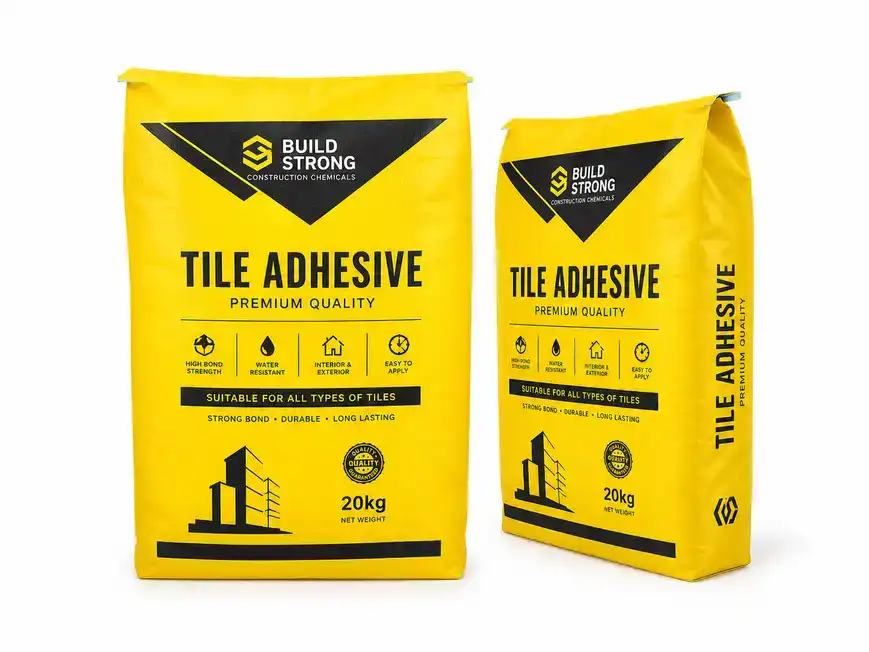
- Product Analysis:Multiwall Paper Open Mouth Bags for Industrial Packaging
- What Multiwall Paper Open Mouth Bags Must Do
- Four Common Types of Multiwall Paper Open Mouth Bags
- Ply Counts and Inner-Liner Choices
- Matching the Bag to the Product and Filling Line
- VIDEPAK Manufacturing and Quality Logic
- Branding, Sustainability, and Commercial Value
- How to Specify the Right VIDEPAK Bag
- Multiwall Paper Bag Construction and Materials
References:
- SGS Test Reports (available on request)
- VidePak ISO Certifications (ISO 9001:2015 #CN-ISO-2025-0045)
- OSHA 2025 Industry Report
- Internal Case Studies (AE-2024-Chemicals, BR-2024-Food)
Note: All specifications verified through third-party testing. Custom solutions available upon request.