
Table Of Contents
- 1. Decoding FIBC Bulk Bag Classifications
- 2. Manufacturing Excellence: From Thread to Finished Product
- 3. VidePak’s Technical Edge: Validated by Data
- 4. The Future of FIBC: Sustainability and Smart Tech
- 5. Conclusion
- Contact VidePak
1. Decoding FIBC Bulk Bag Classifications
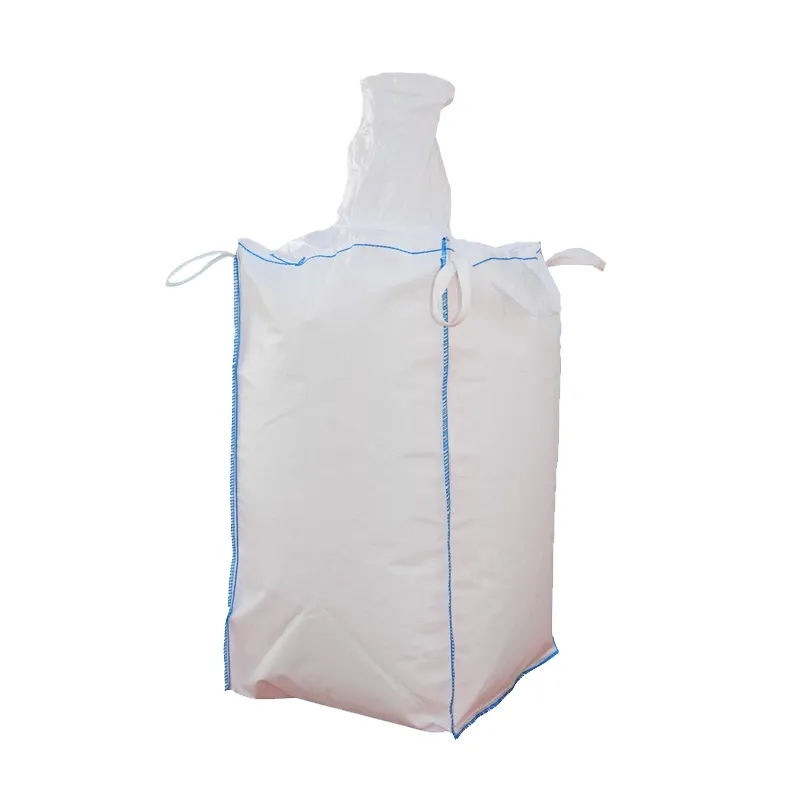
FIBC Bags (Flexible Intermediate Bulk Containers), universally recognized as Bulk bags, Ton bags, or Jumbo Bags, are the backbone of global bulk material handling. VidePak’s expertise spans four specialized variants—A Type, B Type, C Type, and D Type—each engineered for distinct operational and safety demands.
1.1 Type A FIBC Bags: The Workhorse for Non-Hazardous Loads
- Structure: Constructed from standard PP woven fabric without static control features.
- Capacity: Rated for 500kg–2,000kg payloads, ideal for inert materials like aggregates or polymers.
- Limitation: Susceptible to electrostatic discharge; unsuitable for flammable environments.
- Compliance: Meets ISO 21898 baseline requirements for tensile strength and dimensional stability.
1.2 Type B FIBC Bags: Bridging Safety and Cost Efficiency
- Innovation: Integrates low-surface-resistivity threads (10⁸–10¹¹ Ω/sq) to mitigate static risks without grounding.
- Use Case: Safe for combustible dusts in non-explosive atmospheres, such as starch or cocoa powder.
- Testing: Validated via ASTM D257 resistivity measurements to ensure reliable static dissipation.
1.3 Type C FIBC Bags: The Grounding-Dependent Safety Net
- Design: Features conductive grids and grounding tabs for manual discharge of electrostatic charges.
- Critical Application: Essential for hazardous zones like grain silos or sugar refineries.
- Certification: Adheres to IEC 61340-4-4 standards, with lot-specific documentation for audit trails.
1.4 Type D FIBC Bags: Grounding-Free Static Protection
- Technology: Incorporates carbon-fiber interlacing for self-extinguishing properties.
- VidePak’s Breakthrough: Anti-Bulge FIBC bag with 3D weave technology maintains structural integrity at 150% rated capacity, proven in 48-hour top-load trials.
- Ideal For: Pharmaceutical powders and fine chemicals requiring zero spark risk.
2. Manufacturing Excellence: From Thread to Finished Product
2.1 Seam Engineering for Critical Loads
2.1.1 Thread Selection: The Foundation of Durability
- Polyester vs. Polypropylene: Polyester threads (e.g., Kevlar-core variants) offer 250N+ tensile strength, outperforming PP alternatives by 40% in burst tests.
- VidePak’s Standard: ISO 9001:2015-certified bonded polyester for UV resistance in outdoor storage.
2.1.2 Stitching Density: Balancing Strength and Flexibility
- Type A/B Bags: 8–10 stitches/inch for cost efficiency.
- Type C/D Bags: 12–14 stitches/inch with back-tacking at stress points (per ASTM D6499).
2.1.3 Sealing Technologies: Airtight vs. Cost-Effective
- Hot Air Welding: Achieves 98% bond efficiency at 220–280°C, superior to ultrasonic methods for liquid-resistant liners.
- Ultrasonic Sealing: Ideal for multi-layer constructions (e.g., PE/aluminum barriers), creating 0.5mm precision seams without needle holes.
2.2 Bag Openings: Designing for Usability and Safety
2.2.1 Open-Top with Duffle Spout
- Pros: Rapid filling; compatible with conveyor systems.
- Cons: Dust-prone; unsuitable for fine powders.
- VidePak’s Solution: Laser-cut spouts with integrated dust covers, reducing emissions by 82% in cement trials.
2.2.2 Filling Spout with Petal Closure
- Design: 300mm–500mm spout with staggered petals for controlled discharge.
- Benefit: Minimizes segregation in blended products like animal feed.
2.2.3 Heat-Sealed Closure
- Process: Impulse sealing at 180°C creates 4mm hermetic seals.
- Application: Critical for hazardous materials like pesticides or solvents.
2.2.4 Sewn Closure with Overlock Stitching
- Durability: Withstands 10+ fill-empty cycles vs. 3–5 cycles for heat-sealed bags.
- Cost: 30% lower upfront cost than welded alternatives.
2.3 Client Decision Framework: Matching Design to Demand
- Dust Control: Prioritize ultrasonic welding or heat sealing.
- Hazardous Zones: Mandate Type C/D bags with grounding documentation.
- Reusability: Sewn closures with polyester threads for longevity.
3. VidePak’s Technical Edge: Validated by Data
3.1 Production Capabilities
- Looms: 102 Starlinger RX 8.0 units weave 1.2 billion bags/year at 99.2% efficiency.
- QC: In-house labs simulate 5,000-hour UV exposure and 6:1 safety factor top-load tests.
3.2 Real-World Impact
Case Study 1: Chemical Resistance
- Challenge: Corrosion in Type A bags handling caustic soda.
- Solution: VidePak’s Type D bags with fluoropolymer coating resisted 98% of chemical attacks in ASTM G154 accelerated aging tests.
Case Study 2: Dust Mitigation
- Challenge: Silica dust exposure exceeding OSHA PELs in a mining operation.
- Solution: Ultrasonic-welded Jumbo Bags reduced airborne particulates by 94%, avoiding $670,000 in potential fines.
4. The Future of FIBC: Sustainability and Smart Tech
4.1 Eco-Conscious Innovations
- Recycled Content: VidePak’s Type A bags now include 40% post-consumer PP, verified by Intertek.
- Biodegradability: Pilot programs using d2w® oxo-biodegradable additives for single-use applications.
4.2 Industry 4.0 Integration
- RFID Tracking: Embedded chips for real-time location and fill-level monitoring.
- AI-Driven QC: Machine vision systems inspect 100% of seams, cutting defects to <0.05%.
5. Conclusion
Selecting the right FIBC Bags demands balancing material science, safety protocols, and operational workflows. VidePak’s mastery of stitching, sealing, and conductive technologies—coupled with its relentless focus on innovation—positions it as a trusted partner for industries navigating the complexities of bulk packaging. By prioritizing technical excellence over commoditization, VidePak redefines what Bulk bags can achieve.
Contact VidePak
- Website: https://www.pp-wovenbags.com/fibc-bulk-bags/
- Email: info@pp-wovenbags.com