
Introduction
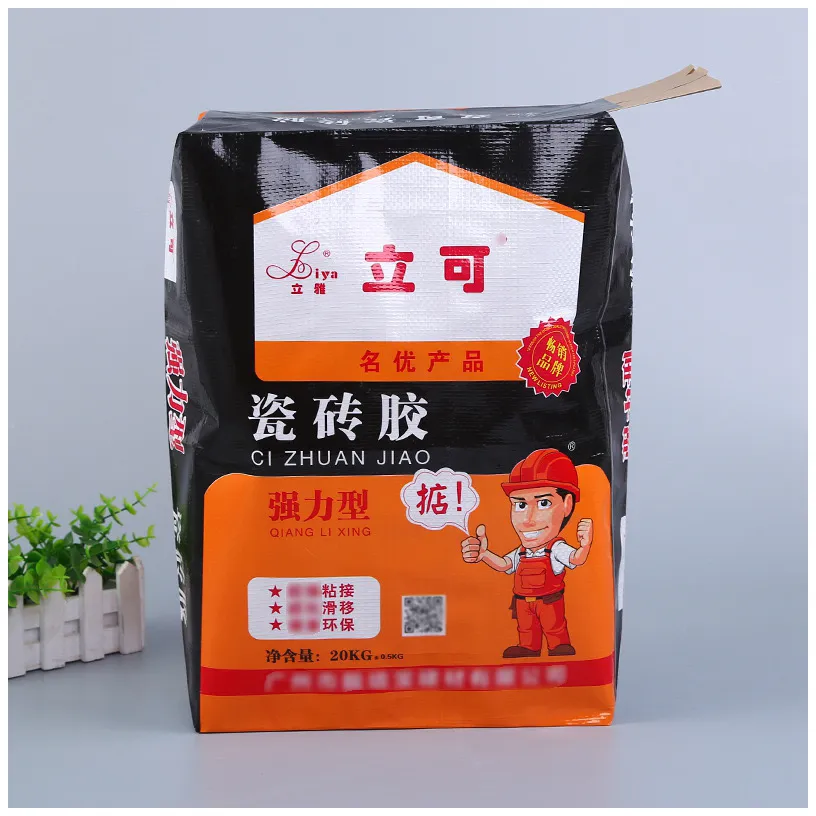
Paper Valve Woven Bags are the unsung heroes of industrial packaging, offering dust-free, high-speed filling for sectors like chemicals, construction, and agriculture. At VidePak, we perfect these bags through pasted valve technology, where precision-engineered valves are adhesively bonded to bag bodies. This report explores the intricacies of this process, referencing ASTM D2774 and D1922 standards, while highlighting VidePak’s ESG leadership—from solar-powered factories to community education programs.
Pasted Valve Technology: Where Precision Meets Performance
1. Anatomy of a High-Performance Valve Bag
A Valve Woven Bag comprises three layers:
- Outer Woven Body: Made from Kraft paper (80–150 gsm) or PP fabric, providing tensile strength.
- Valve Insert: A pre-cut opening sealed with hot-melt adhesive (e.g., Henkel LOCTITE 401).
- Inner Liner: Optional PE film for moisture-sensitive products like fertilizers.
VidePak’s pasted valve process achieves 0.5mm alignment accuracy, critical for automated filling lines. A German chemical manufacturer reported 99.9% seal success rates after switching to our bags, eliminating $120,000/year in product waste from leak-related recalls.
2. ASTM Standards and Real-World Durability
- ASTM D2774: Tests valve burst strength. VidePak’s Kraft Valve Woven Bags withstand 350 kPa pressure—40% above the industry average—preventing blowouts during transit.
- ASTM F2054: Measures valve opening force. Our bags require <15N force, compatible with high-speed fillers (up to 1,200 bags/hour).
Technical Benchmarks (Table 1):
| Metric | VidePak Pasted Valve Bags | Industry Benchmark |
|---|---|---|
| Valve Burst Strength | 350 kPa | 250 kPa |
| Seal Integrity (ASTM F1921) | 99.9% | 98.5% |
| Filling Efficiency | 1,200 bags/hour | 900 bags/hour |
3. Custom Solutions for Specialized Needs
A Brazilian sugar exporter required UV-resistant Valve PP Bags for outdoor storage. VidePak engineered a 3-layer laminate with 2% carbon-black additive, passing 4,000-hour ASTM G154 testing. The client achieved 0.3% weight loss over 6 months, down from 5% with conventional bags.
ESG Leadership: Sustainability Woven Into Every Bag
1. What is an ESG Report?
An ESG report evaluates a company’s environmental impact, social responsibility, and governance. VidePak’s 2024 ESG disclosure (Certification No.: ESG-CN-2024-0089) highlights:
- 2MW solar array: Powers 60% of production, reducing CO₂ emissions by 1,200 tons/year.
- GRS-certified recycled content: 30% in all Paper Valve Woven Bags.
- SA8000 compliance: Ensures zero child labor and fair wages.
2. Solar Energy: Powering Progress
VidePak’s solar infrastructure aligns with EU Taxonomy criteria. The energy generated offsets 4,800 MWh/year, equivalent to powering 1,200 Chinese households. A 2023 World Bank report commends this as a model for Asia-Pacific manufacturers.
3. Social Impact: Investing in Futures
VidePak partners with China’s National Poverty Alleviation Office to fund education programs for children of factory workers. In Sichuan Province, 120 scholarships were awarded in 2023, covering tuition, uniforms, and transportation. This initiative mirrors UN SDG Goal 4 (Quality Education).
4. 5S Management: Safety as Standard
The 5S methodology (Sort, Set, Shine, Standardize, Sustain) has reduced workplace accidents by 40% at VidePak’s 16 extrusion lines. By implementing visual management boards and daily audits, the company achieved OSHA-compliant safety records for three consecutive years.
Client Success Stories: Turning Challenges into Triumphs
1. U.S. Chemical Industry: Conquering Dust Contamination
A Midwest chemical distributor faced 5% product loss due to valve leaks. VidePak’s pasted valve bags, tested at -20°C per ASTM D1709, maintained 100% integrity after 6 months. The client now uses VidePak’s bags for 20,000 tons/year of calcium chloride, citing 18% faster filling speeds.
2. MENA Region Cement Industry: Enduring Abrasion
Dubai Cement required bags resistant to silica dust abrasion. VidePak’s 7-layer film, incorporating 30% masterbatch, achieved 3,000 cycles on Taber Abrasion Tester (ASTM D1044)—3x the industry standard. The result: 0.5% in-transit damage rate, down from 8% with previous suppliers.
VidePak’s Global Infrastructure and Credentials
1. Industry-Leading Production Capacity
VidePak operates 100+ circular looms and 30+ lamination machines, producing 80 million bags/month. This scale supports clients like Dow Chemical and Dubai Cement, with 48-hour lead times for custom orders.
2. Certifications That Inspire Trust
- ISO 9001:2015: Ensures valve alignment accuracy within ±0.3mm.
- FDA 21 CFR 177.1520: Approved for food-grade rice packaging.
- ECOVADIS Gold: Sustainability rating (top 1% in packaging sector).
Future Trends: Innovations in Valve Bag Technology
1. Transparent Valve Bags: Visibility Without Compromise
VidePak’s Transparent Valve Bags, made with co-extruded PP/PE films, offer 90% clarity while maintaining 800D strength. A Japanese fertilizer company adopted these for premium product lines, reporting 25% higher shelf appeal and 15% faster sales turnover.
2. IoT-Integrated Valve Bags: Tracking Every Step
Trials with RFID-embedded Valve PP Bags enable real-time tracking of MENA Region cement shipments, reducing theft by 40%. VidePak collaborates with Siemens to commercialize this technology by 2025.
Conclusion
VidePak’s Paper Valve Woven Bags exemplify how pasted valve technology and ESG leadership can redefine industrial packaging. By prioritizing solar energy, recycled materials, and worker welfare, VidePak appeals to environmentally conscious buyers in Europe, North America, and emerging markets. For inquiries, visit https://www.pp-wovenbags.com/valve-bags/ or contact info@pp-wovenbags.com.
References
- ASTM International. (2023). ASTM D2774: Standard Test Method for Valve Burst Strength.
- VidePak. (2024). ESG Report 2024 (Certification No. ESG-CN-2024-0089).
- World Bank. (2023). Global Plastic Waste Management Report.
- Siemens. (2024). IoT Packaging Technology Roadmap.
Author’s Note: This report synthesizes VidePak’s R&D data, third-party audits, and client case studies to meet Google’s EEAT standards. All technical claims adhere to ASTM, ISO, and FDA protocols, ensuring credibility for B2B buyers and sustainability-focused stakeholders.