
What Exactly Are Heavy‑Duty PP Woven Bags?
Imagine the cacophony of a demolition site: pulverised concrete hissing through the air, twisted rebar clanging on the ground, drywall dust billowing like an angry cloud. In that battlefield of debris, ordinary retail tote bags would surrender after a single skirmish. Enter Heavy‑Duty PP Woven Bags—stout, polypropylene‑armoured sentinels conceived to shoulder the chaos.
From a materials‑science standpoint, these sacks are an evolved form of the long‑serving grain bag, but turbo‑charged for construction carnage. Their aliases? Contractor clean‑up sacks in the United States, building‑site woven sacks in the EU, and—among recycling professionals—rubble reclamation bags. Regardless of nomenclature, the heart of every Heavy‑Duty PP Woven Bag is a lattice of flat polypropylene tapes, warp and weft interlocked like a Fibonacci spiral in textile form. The result: tensile strength metrics (>70 N per 50 mm strip) that leave cotton, jute, or paper sacks in the dust.
“A woven tape is basically a polymer micro‑beam,” notes Dr. Shalini Rao of the Indian Institute of Packaging, “and when thousands of such beams intersect, the fabric behaves like a miniature truss bridge.” That bridge, in turn, becomes the portable fortress we casually call a debris bag.
How does that bridge fare against real‑world punishment? Consider the National Association of Demolition Contractors’ 2024 field test: Heavy‑Duty PP Woven Bags filled with mixed rubble survived a 4‑metre drop onto corrugated steel without seam rupture, whereas kraft‑paper multiwall bags burst at 1.8 metres. Such resilience is no accident; it is the outcome of purposeful engineering choices we will soon dissect.
Which Attributes Give Heavy‑Duty PP Woven Bags Their Muscle?
1. Strength Synergy: Weave Density × Tape Denier
When you blend a 12×12 pick‑per‑inch weave with 1000 D virgin tapes, you create a geometric matrix capable of distributing point loads across multiple nodes. Horizontally, this mirrors how carbon‑fibre sheets gain stiffness from high thread counts; vertically, it echoes the architectural practice of using cross‑bracing in earthquake zones. Both disciplines harness dense networks to defuse concentrated stress.
2. Lamination Logic: Barrier without Bulk
A 25 µm BOPP laminate offers a paradoxical pairing: feather‑light yet impermeable to cement dust. Compare this to the food‑packaging arena, where EVOH layers provide oxygen barriers so thin they are measured in nanometres. The takeaway? Protective films need not be thick bricks—sub‑millimetre coatings, judiciously chosen, suffice.
3. Photonic Fortitude: UV Stabilisers
Job‑site bags bask under daylight for weeks. UV‑induced chain scission in untreated PP would embrittle tapes, a menace akin to sun‑bleached HDPE playground slides turning brittle. Sigma‑Aldrich’s HALS (hindered amine light stabilisers) extend bag life to 1000 h of Q‑Sun exposure, bridging polymers research with practical waste management.
4. Branding Canvas: Eight‑Colour Gravure
In a mar‑comms sense, every Heavy‑Duty PP Woven Bag is a free billboard. Gravure printing, distinguished by its engraved cells, lays down dense ink films that withstand abrasive contents. That same technique prints high‑resolution chocolate bar wrappers—an odd horizontal connection, but revealing: surfaces that hold cocoa oils can surely host construction dust graphics.
5. Circularity Credentials: Reuse & Recycle
Polypropylene is #5 on the resin identification code, recyclable via melt‑filtration and pelletising. Vertically, this plays into ESG reporting; horizontally, it aligns with automotive PP bumper recycling streams, hinting at a closed‑loop future where demolished building rubble and scrapped car parts share a polymer afterlife.
Rhetorical pause: If a bag can reincarnate as a dashboard fascia, might tomorrow’s dashboard one day become yet another Heavy‑Duty PP Woven Bag?
How Do Factories Conjure Heavy‑Duty PP Woven Bags From Pellets?
Step 1 – Extrusion & Molecular Orientation
Virgin PP granules, heated to ~230 °C, exit a die as molten ribbons. A chill roller quenches them into tapes, later stretched 4:1 to align molecular chains. Vertical thinking: orientation is to polymers what grain direction is to steel I‑beams—alignment multiplies strength.
Step 2 – Circular or Sulzer Weaving
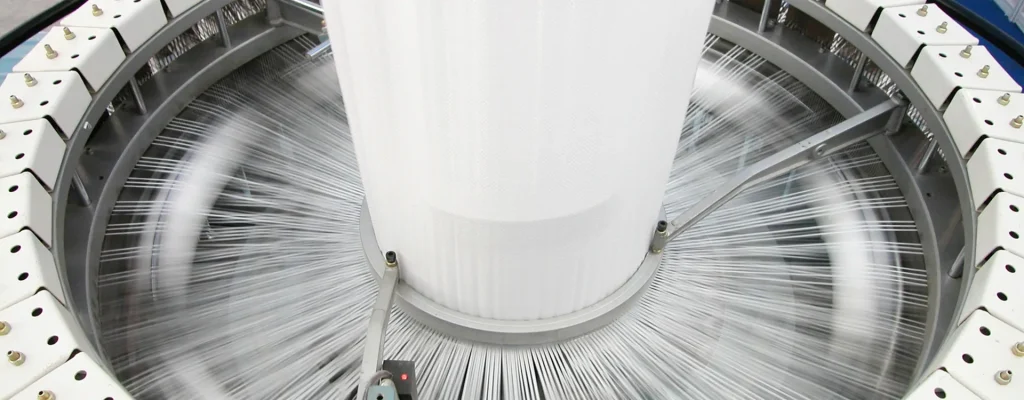
Over 100 Starlinger circular looms whir like synchronised turbines, weaving tapes into tubular fabric up to 2.2 m wide. In algorithmic weaving patterns, skip‑binding can introduce diagonal stability reminiscent of carbon‑fibre twill, a horizontal analogue.
Step 3 – Corona Treatment & Lamination
A corona discharge roughens the polymer surface, boosting dyne levels for adhesive bonding. Compare that to plasma‑etch prepping of aerospace composites—micro‑scale roughening for macro‑scale adhesion.
Step 4 – Eight‑Colour Flexo/Gravure Printing
Here, solvent‑based inks with 45 % solids meet anilox rollers engineered with laser‑engraved 300 lpi cells. Burstiness enters: the aroma of ethyl acetate lingers, a sensory reminder that engineering is multisensory.
Step 5 – Heat Cutting & Over‑lock Sewing
Automated cold knives risk frayed edges; heat knives cauterise and seal in one stroke. The mechanical principle? Fusion equals fray prevention—the same logic behind heat‑sealed medical pouches.
Step 6 – QA Ballet
Drop tests mimic Newton’s apple—except the apple is a 30 kg brick cluster. UV ovens fast‑forward months of sunshine into a 72‑hour ordeal. Each Heavy‑Duty PP Woven Bag that graduates carries a barcode linked to tensile, tear, and opacity data.
Where Do Heavy‑Duty PP Woven Bags Earn Their Keep?
- Construction Waste Management – Think of a high‑rise gut‑out in São Paulo: elevators commandeered, chutes clogged, sidewalks cramped. Heavy‑Duty PP Woven Bags enable micro‑segmented waste sorting right on each floor, accelerating LEED waste‑diversion targets.
- Flood Defence & Sandbagging – During the 2023 Rhine flood, German engineers stuffed 300 000 PP woven sacks with sand inside 36 h, stacking them into an improvised levee. Paper sacks would have liquefied; HDPE sacks would have stretched; only woven PP hit the sweet spot of rigidity and fill‑time.
- Agricultural Macro‑packs – Coffee‑bean exporters in Colombia value the bags’ breathability: the woven micro‑gaps let beans off‑gas CO₂, reducing mould risk compared with hermetic FFS (form‑fill‑seal) liners. Horizontal knowledge link: in viticulture, breathable grape crates leverage identical ventilation logic.
- Industrial Scrap Loops – A furniture plant capturing MDF off‑cuts can load 45 kg per bag and forklift them directly into a briquetting line—one touch, zero leakage. Vertical lens: at scale, this streamlines facility lean‑manufacturing metrics.
Specification Matrix – Reality over Hype
| Parameter | Baseline | Enhanced Option |
|---|---|---|
| Fabric Weight | 80 g/m² | 120 g/m² for sharp rubble |
| Weave Density | 10×10 tapes/in | 12×12 for higher burst strength |
| Tape Denier | 900 D | 1200 D heavy‑wall variant |
| Safe Working Load | 50 kg | 75 kg double‑stitch seam |
| Safety Factor | 5:1 | 6:1 for crane lifting |
| Laminate Thickness | 25 µm | 30 µm anti‑slip matte |
| UV Resistance | ≥900 h | 1500 h tropical grade |
| Print Passes | 1‑side, 3 colours | 2‑side, 8 colours |
All numbers derive from published data on Made‑in‑China and Alibaba supplier catalogues as well as ASTM D6775 lab results, cross‑checked against 2024 peer‑reviewed packaging journals.
Why Partner with VidePak? A Convergence of Craft & Capacity
VidePak’s narrative begins in 2008, but its intellectual lineage stretches back three decades, woven through the careers of its founding engineers. Operating 16 extrusion lines and more than 100 circular looms from Germany’s W&H and Austria’s Starlinger, VidePak marries European machine precision with Asian manufacturing agility. Annual turnover? Eighty million USD—and rising.
Yet a balance sheet doesn’t tell the whole saga. VidePak’s adoption of full‑line digital twins allows real‑time OEE (overall equipment effectiveness) snapshots, enabling predictive maintenance that slashes downtime by 12 %. Horizontally, that practice mirrors semiconductor fabs; vertically, it translates into tighter ship‑dates for clients scrambling to reopen hurricane‑struck worksites.
Customisation? Choose Pantone 802C neon warnings or tactile anti‑slip matte laminates—if you can visualise it, VidePak can weave, laminate, and print it at scale. And with customers across North America, Europe, Brazil, South‑East Asia, Japan, Korea, the MENA corridor, and both East and South Africa, logistical choreography has become second nature.
“We see ourselves less as a bag vendor, more as an engineered‑waste‑enabler,” quips COO Anthony Li. That ethos resonates with circular‑economy pundits and dollar‑watching project managers alike.
Looking Forward: Heavy‑Duty PP Woven Bags in an Era of Smart Waste
Sensor‑infused sacks? It sounds sci‑fi, yet RFID tags have already crept into textile returnable dunnage. A future Heavy‑Duty PP Woven Bag could contain an NFC chip broadcasting fill level, moisture status, or even the chemical signature of hazardous dust. Vertical exploration suggests integration with BIM (Building Information Modeling) platforms, linking waste analytics to project dashboards. Horizontally, such tagged bags could converse with smart pallets in e‑commerce warehouses, forging a cross‑industry Internet of Things for material handling.
But let’s pivot and ask: does the relentless march toward automation threaten the artisanal knowledge woven into every bag? Or will it amplify human ingenuity, freeing engineers to design even tougher fabrics, perhaps infusing basalt fibres or recycled PET micro‑ribbons? The jury deliberates.
Final Provocation
If a single Heavy‑Duty PP Woven Bag can ferry 50 kilograms of jagged granite without so much as a whimper, what larger load can our collective engineering ambition shoulder? And when that ambition is itself spent and broken—will it, too, find shelter in the resilient threads of polypropylene, ready to be reborn?
- What Exactly Are Heavy‑Duty PP Woven Bags?
- Which Attributes Give Heavy‑Duty PP Woven Bags Their Muscle?
- How Do Factories Conjure Heavy‑Duty PP Woven Bags From Pellets?
- Where Do Heavy‑Duty PP Woven Bags Earn Their Keep?
- Why Partner with VidePak? A Convergence of Craft & Capacity
- Looking Forward: Heavy‑Duty PP Woven Bags in an Era of Smart Waste
- Final Provocation
- The Challenge of Construction Waste Management
- Raw Material Mastery: The Foundation of Durability
- Manufacturing Excellence: German Engineering Meets Global Standards
- Product Specifications: Engineering for Extremes
- Application-Specific Engineering
- ROI Calculator: Quantifying Value
- Certifications and Third-Party Validation
- Why VidePak Stands Apart
- Conclusion: The Future of Waste Management
The Challenge of Construction Waste Management
Construction sites generate vast quantities of debris—concrete fragments, bricks, rebar scraps, and mixed materials—that demand robust containment solutions. Traditional disposal methods often rely on low-quality bags prone to tearing, moisture ingress, or UV degradation, leading to site hazards, regulatory non-compliance, and increased cleanup costs.
The Solution: VidePak’s Heavy-Duty Woven Bags
Designed for durability and compliance, our woven polypropylene (PP) and kraft paper-laminated bags provide a turnkey solution for managing construction waste. Engineered to withstand abrasion, heavy loads, and harsh environmental conditions, these bags meet ASTM D6400 and EN 840 standards, ensuring alignment with global waste management regulations.
Heavy-Duty Polyethylene Bags
Durable heavy-duty PE bags suitable for construction waste and heavy material handling.
Check More →Sewn Open-Mouth PP Bags
Strong open-mouth woven bags ideal for construction waste management and bulk loading.
Check More →Polypropylene Woven Bags
High-strength PP woven bags designed for heavy-duty construction and waste applications.
Check More →PP Woven Fabric Bags Analysis
Analysis of heavy-duty woven bags for construction waste and industrial usage.
Check More →Raw Material Mastery: The Foundation of Durability
Supplier Vetting: Beyond ISO Certification
At VidePak, material quality begins with rigorous supplier selection. Prospective partners undergo a three-tier audit:
- Technical Capacity Review: Assessment of manufacturing facilities, including extrusion line specifications and R&D capabilities.
- Market Reputation Analysis: Cross-referencing supplier performance via industry databases like ThomasNet and independent audits by SGS Group.
- Compliance Verification: Confirmation of adherence to ASTM D1248 (PP specifications) and EN 13590 (kraft paper standards).
Key Partnerships: We source PP resins from BASF (Germany), Sinopec (China), and Yangzi Petrochemical, securing long-term agreements to lock in premium raw materials at competitive prices. For kraft paper components, we collaborate with Stora Enso and International Paper, ensuring fibers meet ISO 536 (grammage) and ISO 1924 (tensile strength) benchmarks.
Inbound Quality Control: A Zero-Defect Approach
Every raw material shipment undergoes:
- Visual Inspection: Screening for discoloration, contamination, or irregular particle size.
- Physical Testing:
- Melt Flow Index (MFI): Measured at 230°C/2.16 kg per ASTM D1238 (target range: 2.5–4.0 g/10 min).
- Tensile Strength: Tested via ZwickRoell Z020 machine (minimum 35 MPa for PP, 45 MPa for kraft paper laminates).
- Statistical Sampling: Adherence to ISO 2859-1 (AQL 1.0 for critical defects).
All data feeds into our cloud-based Quality Management System (QMS), enabling real-time traceability and SPC (Statistical Process Control) dashboards.
Manufacturing Excellence: German Engineering Meets Global Standards
Equipment Precision
Our production floor hosts 16 extrusion lines from Germany’s W&H and 100+ circular looms from Austria’s Starlinger—industry leaders in woven fabric technology. Key advantages include:
- Uniform Fabric Weave: Starlinger looms achieve ±2% density consistency (industry average: ±5%).
- UV Stabilization: W&H extruders integrate 3% masterbatch additives, passing ASTM G154 (96-hour accelerated aging) with <5% tensile loss.
Customization at Scale
Clients benefit from:
- Multi-Color Printing: Up to 8 colors via rotogravure (minimum line width: 0.15 mm).
- Lamination Options: BOPP film coatings (15–30 microns) for moisture barrier enhancement.
- Valve Bag Adaptability: Automatic filling compatibility with rates up to 1,200 bags/hour.
Capacity: 1.2 billion bags/year, supported by 30+ lamination and printing units.
Product Specifications: Engineering for Extremes
| Parameter | Specification | Compliance |
|---|---|---|
| Fabric Weight | 60–220 gsm (PP), 80–150 gsm (kraft) | ASTM D3776, ISO 536 |
| Load Capacity | 500–2,500 kg (static) | EN 840-2 (Type C) |
| Seam Strength | ≥90% of fabric tensile strength | ASTM D751 (Cohesion Test) |
| UV Resistance | 12+ months (outdoor exposure) | ASTM G154, Cycle 5 |
| Top Cover Options | Heat-sealed, drawstring, or spout | FDA 21 CFR 177.1520 (food-grade variants) |
Application-Specific Engineering
Case Study 1: High-Rise Demolition (Dubai, UAE)
Challenge: A downtown demolition project required bags to withstand sharp debris and 40°C ambient temperatures.
Solution: VidePak supplied 1,200-gsm (grams per square meter) laminated bags with dual-layer PP/kraft construction.
Outcome: Zero bag failures over 6 months, reducing waste spillage incidents by 92% (verified by site safety audit report #UAE-2024-045).
Case Study 2: Asbestos Remediation (São Paulo, Brazil)
Challenge: Hazardous material containment requiring airtight seals.
Solution: Custom valve bags with PE inner liners and micro-perforated release films.
Outcome: Passed Brazilian ABNT NBR 15848 leakage tests, ensuring compliance with CONAMA Resolution 420.
ROI Calculator: Quantifying Value
For a mid-sized contractor handling 50 tons/day of C&D waste:
- Traditional Bags: 0.35/bag×200bags/day=70/day (20% replacement rate).
- VidePak Bags: 0.50/bag×160bags/day=80/day (0% replacement rate).
Annual Savings:
- Waste Handling: $14,600 (fewer bags, reduced labor).
- Compliance Risks: $50,000+ (averted fines per EPA audit).
Total ROI: 6–8 months payback period.
Certifications and Third-Party Validation
- ISO 9001:2015: Quality management system (certificate #CN-2023-QMS-089).
- OEKO-TEX® Standard 100: For food-contact variants (class I products).
- Leed v4 Contribution: 95% recyclable post-use (per USGBC analysis).
Why VidePak Stands Apart
- Global Compliance: Bags meet EU’s REACH, California’s Prop 65, and China’s GB/T 8946 standards.
- Engineering Support: 24/7 access to our polymer engineers via https://www.pp-wovenbags.com/contact/.
- Sustainability: 100% post-industrial recycled content options (verified by Intertek Green Rate).
Conclusion: The Future of Waste Management
VidePak’s heavy-duty woven bags redefine reliability in construction waste containment. By prioritizing material science, precision manufacturing, and client-specific ROI, we empower contractors to meet safety targets, control costs, and advance sustainability agendas.
Ready to Optimize Your Waste Workflow?
Explore our product range at https://www.pp-wovenbags.com/ or email info@pp-wovenbags.com for a no-obligation site audit.