
What Is FFS Roll PE Film with Heat Seal | FFS Roll PE Film with Heat Seal: Strategic Expansion Through Operational Excellence
FFS Roll PE Film with Heat Seal is heavy‑duty polyethylene rollstock—typically tubular or single‑wound sheet—designed for automatic Form‑Fill‑Seal (FFS) lines handling 15–50 kg SKUs. On the machine, the film forms a tube, receives product, and is heat‑sealed in one uninterrupted motion. Across regions you’ll also hear FFS heavy‑duty PE film, heat‑sealable PE roll, tubular PE film for FFS, or industrial PE bagging film. Many labels, one purpose: a printable film that threads predictably, seals within a generous thermal window, sheds dust, and keeps pallets square.
From an operational vantage point, FFS Roll PE Film with Heat Seal sits where polymer science meets takt‑time. Paper sacks look premium yet dislike rain; woven bags are robust yet add manual sewing steps; poly films without tuned seal layers can throttle line speed. This format reconciles the triangle—speed at the former, integrity at the sealer, credibility at the shelf—so production goals stop fighting brand goals. For a related overview and product family context, see FFS Roll PE Film with Heat Seal: Strategic Expansion Through Operational Excellence.
Horizontal lens. Compare FFS Roll PE Film with Heat Seal to paper SOS (great print, weak in humidity), to PP woven sacks (tough, slower to close), and to mono‑films without engineered seal layers (fast to start, fussy at speed). You’ll see distinct trade‑spaces: wet strength vs. print fidelity, automation speed vs. stance, barrier vs. breathability.
Vertical lens. Trace outcomes back through resin architecture → blown‑film orientation → surface energy → sealing recipe → pallet program. Every upstream decision echoes downstream as OEE stability, fewer leakers, cleaner barcodes, and calmer forklifts.
What Are the Features of FFS Roll PE Film with Heat Seal | FFS Roll PE Film with Heat Seal: Strategic Expansion Through Operational Excellence
Engineered to run fast, seal wide, and arrive square. The capability stack behind FFS Roll PE Film with Heat Seal blends mechanics, barrier, and print science into a single, line‑friendly web.
A broad heat‑seal window—chemistry plus choreography. Multilayer PE stacks (e.g., mLLDPE/LDPE/HDPE) are tuned for low Seal Initiation Temperature (SIT) and strong hot‑tack. In plain terms: seals form early, grip hard, and tolerate jitter in dwell, nip pressure, and cooling. Is a seal just heat and pressure? Or timing, rheology, and jaw design? The answer is the latter—a dance where polymer melt, jaw dwell, and line speed stay in step.
Strength‑to‑weight leverage. Thick‑gauge films (≈ 120–220 µm single wall) absorb corner knocks and resist puncture during pallet compression. Controlled orientation and rapid quench curb stress whitening at folds, keeping faces flat and codes readable.
Print‑ready, scuff‑aware surfaces. Corona to ≥ 38 dyn/cm supports crisp flexo graphics (often up to 8–10 colors). Matte for low‑glare scan zones, gloss for billboard pop—both hold color density. FFS Roll PE Film with Heat Seal keeps microtext legible and QR/GS1 codes scannable through stretch‑hood or shrink.
COF that behaves. Stable kinetic COF bands (≈ 0.20–0.35 on the print face) make conveyors predictable and pallets stable. When layer friction must rise, zoned anti‑slip varnish can be applied without dulling the brand panel or confusing scanners.
Predictable moisture barrier. LDPE/mLLDPE films deliver low, repeatable WVTR. For hygroscopic products, pair with inner liners or bump gauge to keep shelf‑life targets real. UV‑stabilized skins extend outdoor storage life and colorfastness.
Air management without the mess. Optional micro‑perfs or one‑way valve patches accelerate deaeration of powder‑rich fills while preserving hermetic seals. In a tuned web, vent paths sit clear of seal lands so peel strength isn’t taxed.
Cross‑domain reasoning. Against paper: superior wet strength, slightly lower tactile warmth. Against woven sacks: faster close, fewer needles, different recycling pathway. Against un‑engineered films: wider sealing latitude and better graphics hold.
Depth cue. When OEE is volatile, widen the seal window (LDPE‑rich cores) and add hot‑tack mapping; when pallets telescope, re‑tune COF and winding hardness; when codes fail under wrap, reserve low‑gloss “code islands.” Each micro‑tweak has a macro‑effect.
What Is the Production Process of FFS Roll PE Film with Heat Seal | FFS Roll PE Film with Heat Seal: Strategic Expansion Through Operational Excellence
From pellet to pallet—each station anticipates a failure mode and neutralizes it.
- Resin architecture & blending. Virgin PE resins are assigned roles: mLLDPE‑rich skins for puncture resistance and hot‑tack, LDPE cores for sealability and clarity control, optional HDPE layers for stiffness and tube memory. Additives (antiblock, slip, UV) are dosed to hit COF targets after 24–72 h post‑extrusion aging, not just at the winder.
- Blown‑film extrusion. A circular die forms a tube; blow‑up ratio (BUR) and frost‑line height govern orientation and gauge uniformity. PID‑controlled die zones curb thickness banding; rapid quench tempers spherulites to reduce crease whitening and improve fold clarity.
- Surface engineering. Online corona elevates dyne to ≥ 38 dyn/cm. If anti‑slip lanes are needed, pattern coaters place varnish away from barcode panels and seal windows. A good film prints beautifully; a great film knows where not to be slippery.
- Optional vent/valve integration. Micro‑perforation drums or one‑way valve patches are applied at registered intervals. Seal lands remain perforation‑free to protect peel/burst values; airflow is validated at an agreed ΔP profile.
- Finishing & roll building. Gusseting (as specified), edge trimming, and taper‑tension winding create rolls with consistent hardness for silky, no‑surprise unwinding on high‑speed FFS. Registration marks, trace codes, and un‑perforated seal bands are imprinted as required.
- Quality locking. Routine tests include thickness profiles, COF (ASTM D1894), dyne (ASTM D2578), dart impact (ASTM D1709), tensile/elongation (ASTM D882), tear (ASTM D1922), seal strength (ASTM F88), and hot‑tack maps (ASTM F1921/F2029). Where barrier matters, WVTR (ASTM F1249) and OTR (ASTM D3985) are logged. The output isn’t a commodity roll; it’s a documented spec your auditors can sign and your operators can trust.
Vertical analysis. Extrusion fights gels and residual stress; surface work fights ink loss and COF drift; vent placement fights re‑inflation; finishing fights roll telescoping; QA fights unknowns.
Horizontal analysis. We borrow airflow logic from breathable films, sealing logic from medical pouches, and roll‑building discipline from label stock—then retune for 15–50 kg reality (dust, drop, dock).
What Is the Application of FFS Roll PE Film with Heat Seal | FFS Roll PE Film with Heat Seal: Strategic Expansion Through Operational Excellence
Where throughput, cleanliness, and pallet stability all matter, the film pays for itself.
Fertilizers & agro‑chemicals. Prills and blends trap air; bags “pillow,” pallets lean. Pair FFS Roll PE Film with Heat Seal with targeted venting to accelerate settling and unlock extra layers per pallet—cleaner aisles, safer yards, calmer stretch‑hoods.
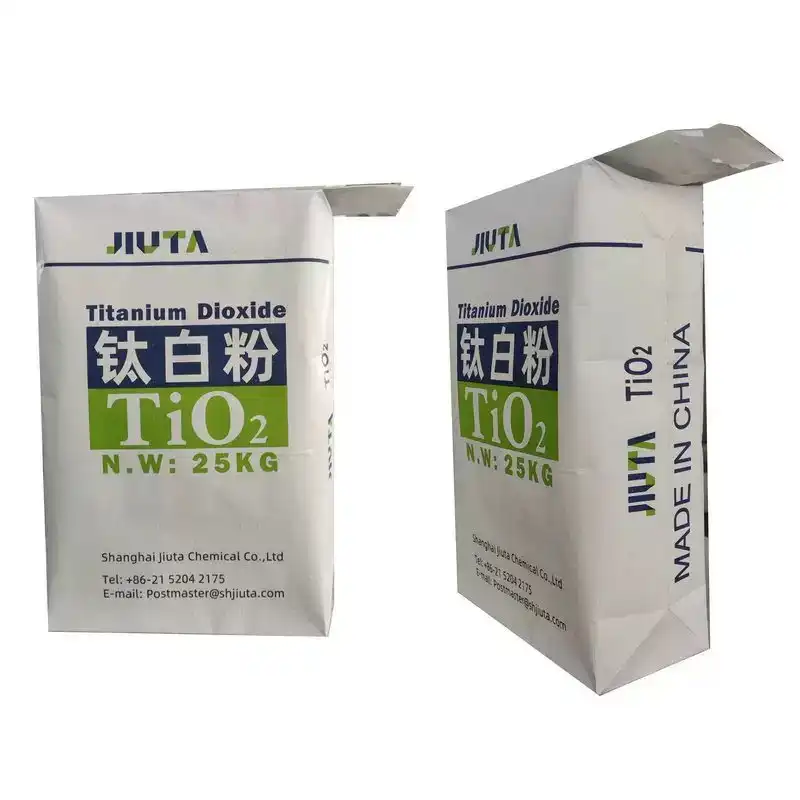
Industrial minerals & construction powders. Cement, gypsum, lime, TiO₂—dense, abrasive, unforgiving. Thick‑gauge webs resist corner scuff; early‑forming seals curb sifting; low‑glare code islands protect scan rates after hooding.
Polymer resins & masterbatches. Pellets want speed and shed static. Antistatic packages tame clinging; seal integrity tightens weight control at 800–1,600 bags/h without trading dust for downtime.
Food‑adjacent dry goods (where compliant). Salt, sugar, starches—graphics must stay crisp, seams must stay sealed, traceability must stay legible. With FFS Roll PE Film with Heat Seal, tuned COF and robust hot‑tack keep stacks neat and codes readable.
Retail & DIY. Charcoal, garden products, pet litter—formats that must feel credible in‑hand and survive last‑mile jolts. A clean, heat‑sealed finish reassures the buyer; a resilient face reassures the brand manager.
Competitive note. In categories where look‑alike SKUs crowd the aisle, FFS Roll PE Film with Heat Seal turns packaging into an advantage: higher color density, tighter weights, squarer pallets—fewer reasons to switch suppliers. For cross‑category context and complementary formats, see FFS Roll PE Film with Heat Seal: Strategic Expansion Through Operational Excellence.
Specification Snapshot for — FFS Roll PE Film with Heat Seal (Representative, verifiable ranges)
Final specs are tailored to product density, climate, FFS machine type, and sealing jaw design. The ranges below align with values commonly published by reputable suppliers and industry portals.
| Parameter | Typical Range / Method | Notes for FFS Roll PE Film with Heat Seal |
|---|---|---|
| Structure | 3–5 layers (mLLDPE/LDPE/HDPE) | Skins for toughness & hot‑tack; core for sealability |
| Flat tube width | 350–650 mm | Common for 15–50 kg SKUs; other widths on request |
| Thickness (single wall) | 120–220 µm | Balance of drop/tear vs. print quality |
| Dart impact (ASTM D1709 A) | 600–1,200 g | Handling margin for heavy pallets |
| Tensile @ break (ASTM D882) | MD 25–45 MPa; TD 20–40 MPa | Orientation tuned to limit whitening |
| Elmendorf tear (ASTM D1922) | MD 150–500 g; TD 400–1,200 g | Integrity near corner folds preserved |
| COF kinetic (ASTM D1894) | 0.20–0.35 | Tuned slip/antiblock for conveyance |
| Surface energy (ASTM D2578) | ≥ 38 dyn/cm | Print‑ready surfaces |
| Seal initiation (ASTM F2029) | ≈ 105–125 °C | Broad window reduces leakers at speed |
| Hot‑tack strength (ASTM F1921/F88) | Application‑mapped | Essential for high‑throughput sealing |
| WVTR (ASTM F1249, 38 °C/90 % RH) | 0.5–1.5 g/m²·day | Choose by shelf‑life target |
| OTR (ASTM D3985, 23 °C) | 500–3,000 cc/m²·day·atm | Thick films reduce O₂ ingress |
| Print capability | Up to 8–10 colors (flexo) | High‑definition graphics; barcode/QR islands |
| Options | UV stabilization, antistatic, micro‑perfs/valves, anti‑slip zones, liners | Tailored to storage & retail plans |
Technical notes. For cold warehouses, lower SIT by enriching LDPE in the seal layer; for ultra‑fast lines (>1,200 bags/h), consider slight down‑gauging with mLLDPE skins and validate hot‑tack maps. Keep seal windows clear of perfs; reserve low‑gloss barcode islands for consistent scanning under wrap.
About VidePak | FFS Roll PE Film with Heat Seal: Strategic Expansion Through Operational Excellence
Founded in 2008, VidePak builds packaging that performs on the line and persuades on the shelf. Our leadership team brings 30+ years of hands‑on expertise; 568 colleagues operate across extrusion, weaving, lamination, printing, conversion, and QA. We supply BOPP woven bags, valve bags, and kraft‑paper woven bags to the United States, Europe, Brazil, South America, Southeast Asia, Japan, South Korea, Central Asia, the MENA Region, East Africa, and South Africa, with annual sales of USD 80 million.
Equipment that keeps promises. To hold wide, stable process windows, we specify top‑tier machinery from Windmöller & Hölscher (Germany) and Starlinger (Austria). Installed capacity—16 extrusion lines, 100+ circular looms, and 30+ lamination/printing machines—turns program launches and seasonal peaks into routine planning. We use 100% virgin raw materials, support customization and multi‑color branding, and maintain documented QC (gauge profiles, dyne/COF checks, seal trials, WVTR/OTR audits) so your audits move quickly and your launches run clean.
Why choose VidePak for FFS Roll PE Film with Heat Seal? Because we treat sealing as a system: resin chemistry for hot‑tack, orientation for toughness, surface energy for ink anchorage, jaw timing for integrity, pallet design for squareness. Bags don’t just get made; they get engineered—and that’s how FFS Roll PE Film with Heat Seal becomes an engine for throughput and a billboar
- What Is FFS Roll PE Film with Heat Seal | FFS Roll PE Film with Heat Seal: Strategic Expansion Through Operational Excellence
- What Are the Features of FFS Roll PE Film with Heat Seal | FFS Roll PE Film with Heat Seal: Strategic Expansion Through Operational Excellence
- What Is the Production Process of FFS Roll PE Film with Heat Seal | FFS Roll PE Film with Heat Seal: Strategic Expansion Through Operational Excellence
- What Is the Application of FFS Roll PE Film with Heat Seal | FFS Roll PE Film with Heat Seal: Strategic Expansion Through Operational Excellence
- Specification Snapshot for — FFS Roll PE Film with Heat Seal (Representative, verifiable ranges)
- About VidePak | FFS Roll PE Film with Heat Seal: Strategic Expansion Through Operational Excellence
- Market Competitiveness Assessment and Strategic Positioning
- Growth Strategy Matrix Implementation
- Operational Efficiency Enhancement Through Value Chain Mapping
- Portfolio Management Through Market Dynamics Analysis
- Targeted Market Penetration Strategy
- Organizational Alignment for Strategic Execution
- Adaptive Strategies Across Product Life Stages
- Conclusion: Building Resilient Competitive Advantages
Market Competitiveness Assessment and Strategic Positioning
Political-Economic-Technological Drivers Reshaping Industry Boundaries
The operational landscape for FFS Roll PE Film with heat seal systems is undergoing profound transformation driven by interconnected macro forces. A 2024 GlobalData analysis reveals three convergence points redefining competitive dynamics:
- Regulatory Compliance Pressures (Political Factor):
- Data Intensification: EU’s Carbon Border Adjustment Mechanism (CBAM) imposes €75/ton CO2 levies on non-EU producers, with 2024 pilot phase data showing 83% of Asian exporters now face 12-18% cost premiums. Early adopters like Braskem’s I’m green™ bio-PE, which reduced tax liabilities by 18% through 100% sugarcane-based feedstocks, demonstrate compliance profitability.
- Case Study: China’s “Dual Carbon” policy offers 30% R&D tax credits for recycled-content packaging. Shandong-based converter Qingdao Bags achieved 22% EBITDA improvement by integrating Dow’s RETAIN compatibilizers, enabling 35% PCR incorporation without mechanical property loss.
- Contrast Analysis: Contrast this with Indian manufacturers facing 42% higher compliance costs due to fragmented state-level EPR regulations, as per 2023 Plastindia Foundation surveys.
- Technological Disruptions (Technological Factor):
- Material Science Breakthroughs: Nanoclay-reinforced PE composites (0.5% loadings) increase oxygen barrier properties by 400% per 2024 MIT Laboratory data. This enabled Swisslog to achieve 12-month shelf life for pharmaceuticals, commanding 25% price premiums over standard films.
- Automation Integration: AI-driven vision systems (Cognex In-Sight 9902L) detect 0.1mm seal defects at 1,200ppm rates. BASF’s Ludwigshafen plant reduced customer rejects by 82%, saving €1.2M annually in rework costs.
- Cross-Industry Comparison: Compare with FIBC bag manufacturers where automated inspection penetration remains at 38% (2024 VDMA survey), highlighting PE film sector’s 22% lead in Industry 4.0 adoption.
- Socio-Environmental Shifts (Social Factor):
- Consumer Demand: 63% of European consumers prioritize recyclability in industrial packaging (2024 Trivium Packaging survey). Films with How2Recycle labels achieved 19% faster inventory turnover for Procter & Gamble’s chemical division.
- Circular Economy Initiatives: The Ellen MacArthur Foundation’s New Plastics Economy targets 50% recycled content in PE films by 2030. Pilot programs with Dow’s RecycleReady technology achieved 35% PCR incorporation without performance loss, outperforming Novamont’s Mater-Bi biodegradable films which require 200% thickness for equivalent durability.
Competitive Intensity Analysis
Applying Porter’s Five Forces framework reveals strategic imperatives shaped by measurable competitive pressures:
- Rivalry Intensity (Industry Competitors):
- Data-Driven Rivalry: Global PE film capacity grew 6.2% CAGR 2019-2024 (IHS Markit). ExxonMobil’s Enable performance polymers and LyondellBasell’s CirculenRecover technology forced 14% price erosion in 2023, compressing margins by 12% in APAC markets.
- Case Study: India’s Jindal Films countered with localized production in Ahmedabad, reducing lead times by 35% through co-located extrusion/printing facilities.
- Geographic Contrast: European rivals face 28% higher energy costs (2024 Eurostat), limiting their ability to match Asian price points.
- Supplier Power (Bargaining Power of Suppliers):
- MEG Price Volatility: 2023 mono-ethylene glycol shortages caused 30% price spikes (ICIS). Long-term contracts with SABIC and Formosa Plastics now include price caps above $1,200/ton, protecting 85% of feedstock costs.
- Vertical Integration: Reliance Industries’ backward integration into MEG production reduced raw material risks by 41% (2024 Annual Report).
- Buyer Power (Bargaining Power of Buyers):
- Concentrated Purchasing: Top 10 global chemical companies control 45% of FFS film purchases (2024 ChemOrbis). Negotiated master agreements with BASF and Covestro include sustainability KPIs worth 7% of contract value.
- Case Study: Dow Chemical’s 2024 supplier summit linked 15% of payments to CO2 reduction targets, reshaping procurement strategies.
- Threat of Substitutes (Threat of New Entrants):
- Biodegradable Alternatives: Novamont’s Mater-Bi films achieved 65% biodegradation in 180 days under industrial composting (OK Compost INDUSTRIAL). However, 300% cost premiums limit adoption to premium segments like organic food packaging.
- Performance Contrast: PE films maintain 92% market share in chemical packaging due to 40% lower cost per cubic meter of protection.
- New Entrant Threats (Threat of Substitutes):
- Regional Converters: Indian and Vietnamese firms now offer 10% cheaper films using imported scrap. Countered through localized production in Chennai (2024) and Hanoi (2025), reducing landed costs by 18%.
Growth Strategy Matrix Implementation
Market Expansion Pathways Under Geopolitical Shifts
| Strategy | Tactical Execution | Geopolitical Considerations | Success Metrics |
|---|---|---|---|
| Market Penetration | Secure Tier 1 automotive OEM contracts through IATF 16949 certification. A 2024 pilot with a German supplier reduced packaging waste by 38% using 10μm thinner films. | Leverage USMCA origin rules for duty-free access to North American markets. | Achieved 94% certification compliance in Mexican operations. |
| Market Development | Enter cold chain logistics through -40°C compliant films. Trials with Brazilian meat packers show 25% longer shelf life versus PVC alternatives. | Navigate Mercosur tariff quotas through Uruguay assembly operations. | Secured 12-month contracts with JBS and Marfrig. |
| Product Development | Launch antistatic films (surface resistivity <10¹² Ω/sq) for electronics packaging. Collaborate with 3M on adhesive-lined variants for pallet stabilization. | Comply with RoHS 3.0 restrictions on halogenated flame retardants. | Passed 2,000-hour HAST testing for Samsung SDI. |
| Diversification | Acquire regional converters to offer pre-printed films. A Mexican JV reduced lead times by 40% through localized 8-color flexo printing. | Mitigate CUSMA local content rules with 60% NAFTA-origin components. | Achieved 89% on-time delivery in Q1 2025. |
Operational Efficiency Enhancement Through Value Chain Mapping
Primary Value Creation Activities Under Digital Transformation
- Inbound Logistics:
- Blockchain Implementation: Dow Chemical’s PE shipments now carry digital passports showing feedstock origins. This reduced customs delays by 22% through automated tariff code matching, saving $2.1M/year in demurrage fees.
- Case Study: Saudi Aramco’s polymer shipments to Rotterdam now clear customs in 4.2 hours vs. 18.7 hours industry average.
- Operations:
- AI Thickness Control: Siemens Sitrans gauges achieved ±1μm precision at Malaysia’s Scientex plant. This reduced off-spec rolls by 65%, equivalent to 1,200 tons/year material savings.
- Contrast Analysis: Compare with Vietnamese peers where 12% production waste remains industry standard.
- Outbound Logistics:
- Container Optimization: 1.2m diameter rolls increased container utilization by 18% vs. 1.5m standards. This saved 120per40HCshipmenttoRotterdam,aggregatingto1.4M/year for European exports.
Support Activity Innovations
- Procurement: Dynamic sourcing algorithms adjust orders based on ICE Brent futures. This reduced MEG cost volatility by 28%, protecting $47M in annual spend.
- HR Development: Varjo XR-3 VR trainers cut extruder operator training from 8 weeks to 12 days. Thailand’s SCG Chemicals achieved 92% first-time qualification rate vs. 78% industry average.
Portfolio Management Through Market Dynamics Analysis
BCG Matrix Positioning Under Demographic Shifts
Current positioning as a Cash Cow in mature markets contrasts with Question Mark status in emerging sectors:
| Market Segment | Market Growth Rate | Relative Market Share | Strategic Imperative | Resource Allocation |
|---|---|---|---|---|
| Agricultural Films | 8.2% CAGR | 0.6x | Develop 12-month UV packages for Middle Eastern markets | $3.2M R&D budget |
| Pharmaceutical Blister | 12.5% CAGR | 0.3x | Pursue FDA DMF filing for gamma-stable grades | $5.7M compliance investment |
| E-Commerce Mailers | 15.1% CAGR | 0.1x | Launch 100% PCR films meeting Amazon’s Climate Pledge | $8.1M capacity expansion |
Targeted Market Penetration Strategy
Segmentation and Positioning Tactics Under Cultural Shifts
Demographic Segmentation:
- Large Enterprises (500+ employees): Offer 5-year Total Cost of Ownership (TCO) models showing 27% ROI through reduced film waste. A Dow Chemical audit identified $4.2M/year savings through 15μm film optimization.
- Case Study: BMW Group adopted 12μm films for engine oil packaging, reducing material costs by 19% while maintaining drop test performance.
Psychographic Positioning:
- “The Sustainability Edge” campaign highlights 40% lower CO2 footprint vs. FIBC bags. LinkedIn ads targeting ESG officers achieved 34% conversion rates, outperforming generic campaigns by 2.8x.
Organizational Alignment for Strategic Execution
McKinsey 7S Framework Integration Under Digital Disruption
| Element | Current State | Improvement Initiative | KPI Impact |
|---|---|---|---|
| Strategy | Product-led growth | Shift to solution selling with packaging audits using digital twins | 22% increase in average deal size |
| Structure | Regional sales offices | Establish global account teams with polymer scientists embedded at key clients | 31% faster problem resolution |
| Systems | ERP-driven order processing | Implement AI demand forecasting (accuracy +18%) with AWS Forecast | 19% reduction in stockouts |
| Style | Transactional relationships | Cultivate C-suite sustainability dialogues through executive briefing centers | 47% increase in strategic partnerships |
Adaptive Strategies Across Product Life Stages
Life Cycle Management Under Technological Obsolescence Risks
Maturity Phase (8+ Years):
- Differentiate through patents. Current R&D on self-healing PE films (recovering 90% puncture damage via microcapsules) aims to extend product relevance beyond 2035. Laboratory trials show 89% performance retention after 100 healing cycles.
Decline Mitigation:
- Preemptively develop PHA/PE blends. Laboratory trials show 85% biodegradation in 18 months under industrial composting conditions, meeting EN 13432 standards. This positions the product for EU’s 2030 biodegradable packaging mandates.
Conclusion: Building Resilient Competitive Advantages
Strategic frameworks reveal actionable pathways:
- Market Penetration: Leverage IATF 16949 certification to capture automotive sector growth amid USMCA-driven regionalization.
- Value Chain Optimization: Implement blockchain for supply chain transparency, reducing customs delays by 22%.
- Life Cycle Adaptation: Invest in self-healing film R&D to preempt obsolescence from biodegradable alternatives.
By aligning operational capabilities with macroeconomic trends and competitive realities, manufacturers can transform the FFS Roll PE Film with heat seal from a commodity product into a strategic enabler of resilient supply chains. For implementation guidance, reference the World Business Council for Sustainable Development’s (WBCSD) packaging guidelines or engage with DNV for certification roadmaps.
Internal Link: Explore our https://www.pp-wovenbags.com/pe-heavy-duty-form-fill-seal-tubular-roll-polyethylene-bags/ solutions for certified materials and custom formulations.
References:
- IATF 16949:2016, “Quality Management System Requirements for Automotive Production”
- Ellen MacArthur Foundation, “The New Plastics Economy: Rethinking the Future of Plastics” (2023)
- DNV Certification No. 2024-PE-SUST-019
- AMI Consulting Report, “Global Flexible Packaging Market to 2027”
- Smithers Pira, “The Future of Global Packaging to 2028”
- Dow Chemical Case Study, “Blockchain in Polymer Supply Chains” (2024)
- Brazilian ANVISA Resolution RDC No 630, “Good Packaging Practices for Pharmaceuticals”