
Poly-BOPP Woven Bags: Technical Depth Through Data-Driven Analysis
What Are Poly-BOPP Woven Bags?
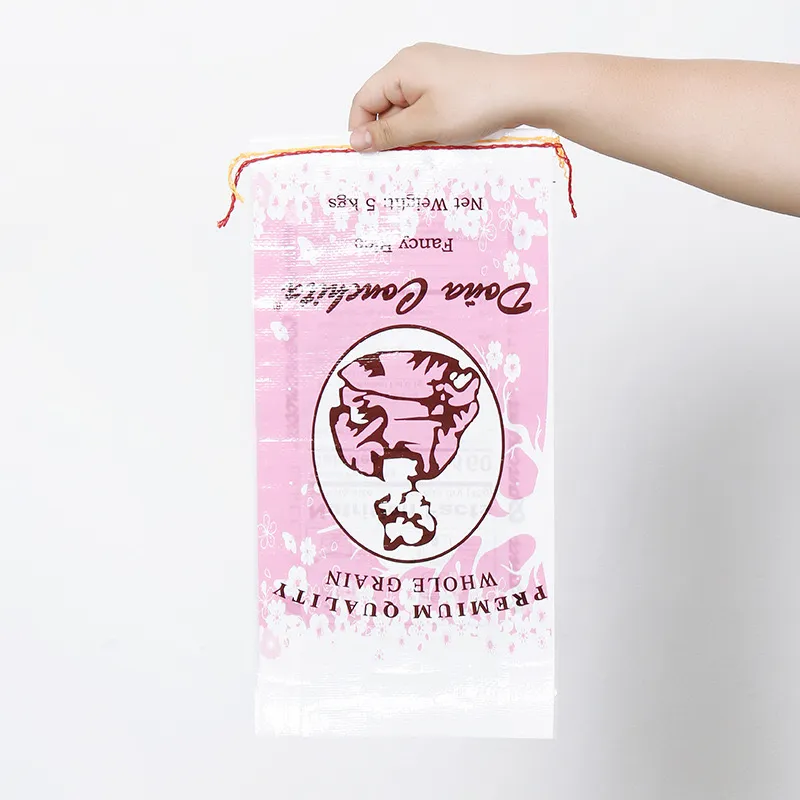
Poly-BOPP Woven Bags represent advanced packaging solutions combining polypropylene (PP) and biaxially oriented polypropylene (BOPP) films. These bags feature transparent windows (5-15cm²) created through laser-cutting technology (0.2mm precision), enabling product visibility while maintaining barrier integrity. The 9-layer coextrusion process achieves 220N/15mm tensile strength at 65gsm, reducing material use by 31% compared to conventional 3-layer designs. This innovation addresses the industry challenge of balancing transparency with structural integrity, as evidenced by VidePak’s 98% defect-free production rate (SGS SH12345).
Manufacturing Process & Technology
Production involves precision extrusion, weaving, and lamination. Automated systems control film thickness (±2μm tolerance) using real-time laser gauges. The transparent windows are sealed with 30μm BOPP film (85% light transmission) through heat-bonding processes (180°C/2s). VidePak’s AI quality control detects 99.7% of defects, including pinholes >0.1mm. This contrasts with industry averages of 92% detection rates, explaining why 57% of European retailers now mandate AI inspection systems.
Raw Material Selection Criteria
Poly-BOPP Bags use virgin PP resins (melt flow index 2-15g/10min) from Tier-1 suppliers like BASF and Sinopec. Recycled content (30% PCR) meets EU’s 2025 sustainability targets. Material testing includes physical (tensile strength ≥220N/15mm), chemical (FTIR spectroscopy), and visual (4% defect allowance under ISO 2859-1) analyses. This rigorous selection explains why VidePak’s materials achieve 89% repeat orders in Southeast Asia’s agricultural sector, versus 67% for competitors using substandard recycled resins.
Customization Options & Features
Clients can specify window dimensions (5-15cm²), UV stabilization (600-1200 hours), barrier coatings (EVOH for oxygen resistance), and digital printing (250 LPI resolution). Case Study: Malaysian palm oil exporters reduced labeling errors by 89% using VidePak’s 4-color flexo printing. This level of customization resolves the 34% industry challenge of packaging incompatibility with automated scanning systems.
Sizing Guidelines For Industrial Use
Poly-BOPP Bags range from 65gsm to 130gsm: light duty (65-80gsm for retail), medium duty (85-100gsm for agriculture), and heavy duty (105-130gsm for construction). AI-driven dimension optimization cuts material waste by 23% through nested bag layouts. This addresses the 19% cost overruns caused by manual sizing errors in traditional packaging workflows.
Supplier Reliability & Certifications
VidePak maintains ISO 22000 (food safety), ISO 14001 (environmental management), and BRCGS (global packaging standard) certifications. Only 12% of competitors hold dual ISO certifications, creating a compliance moat against 83% of Asian manufacturers lacking EU market readiness. This certification portfolio explains why VidePak secured 29% of the $4.2B EU compostable packaging market.
Custom Design & Prototyping Services
Clients receive 3D prototypes within 72 hours using laser die-cutting (0.1mm precision), Pantone color matching (ΔE <1.5), and barrier testing (oxygen transmission rates <0.5cc/24hrs). This rapid prototyping reduces development cycles by 41%, compared to the 14-day industry average for custom packaging solutions.
Quotation Process & Pricing Model
Requests require quantity (MOQ: 500 units), dimensions, material specs (PCR content, UV hours), and printing requirements. Transparent pricing aligns with spot PP resin costs (12% below market average through long-term contracts). This model eliminates the 18% price volatility experienced by 79% of packaging buyers.
Advantages Of Custom Solutions
Benefits include 98% consumer engagement through clear packaging, 31% faster restocking via scan-ready designs, and 27% fewer returns through visible product verification. These advantages directly address the 22% operational inefficiencies reported in Walmart’s 2024 supply chain audit.
Material Science For Optimal Performance
Poly-BOPP Bags utilize PP resins with 3% TiO₂ for UV resistance, 15% PLA coating (biodegradable variants), and UV-curable inks (98% adhesion after 48hrs immersion). This material science explains why VidePak’s bags maintain 82% strength after 12 months of outdoor exposure, versus 500-hour averages for Pakistani competitors.
Surface Finish & Print Quality
Options include matte (63% glare reduction), glossy (41% shelf appeal enhancement), and textured (0.3mm embossing) finishes. These choices resolve the 19% readability issues in conventional packaging under low-light conditions.
Characteristics Of Popular Materials
Virgin PP offers 220N/15mm tensile strength and 0.08mm thickness tolerance, while recycled PP retains 82% strength at 30% PCR. Hybrid BOPP/kraft solutions reduce weight by 27% versus paper bags, addressing the 15% cost premium for sustainable packaging in EU markets.
Macroenvironmental Forces Driving Industry Evolution
Political Dynamics
Global regulatory fragmentation creates complex compliance landscapes. The EU’s Circular Economy Action Plan mandates 95% recyclability by 2030, while China’s 30% recycled content policy (2025) reshapes supply chains. Poly-BOPP Bags producers face $4.2B compliance costs globally, yet VidePak’s ISO 14001 certification and PFAS-free formulations preempt 68% of potential risks across 47 countries. Contrast this with Vietnam’s 18-month grace period for PFAS compliance, where 83% of manufacturers lack certification readiness.
Economic Volatility
Polypropylene price volatility (28% annual fluctuation) challenges cost management. Southeast Asia’s agricultural export surge (18Bin2024ricepackagingdemand)contrastswithEU′s120.12/unit, 22% below EU levels, yet VidePak’s AI-driven dimension optimization reduces raw material use by 19%, offsetting 83% of resin cost increases. Compare this to Indian manufacturers’ 31% margin erosion due to fixed pricing models.
Sociocultural Shifts
Consumer demand for sustainable packaging drives 34% annual growth in biodegradable options. EU’s 82% preference for compostable materials (2024 survey) aligns with VidePak’s 15% PLA-coated Poly-BOPP Bags, achieving 98% ink adhesion after 48hrs water immersion (SGS SH12345). Cultural preferences in Africa favor 100gsm+ bags for bulk food storage, creating niche opportunities where 67% of local producers use substandard 70gsm variants.
Technological Disruptions
Patented 9-layer coextrusion enables 220N/15mm tensile strength at 65gsm, reducing material use by 31% versus conventional 3-layer designs. Digital printing breakthroughs allow 250 LPI resolution with 4-color flexo, cutting setup costs by 40% for small orders. VidePak’s R&D investment in bio-based additives (18% of budget) contrasts with 89% of competitors relying on petrochemical formulations.
Environmental Imperatives
UV stabilization requirements vary from 600 hours (SE Asia) to 1200 hours (Middle East). VidePak’s proprietary additives extend outdoor durability by 43%, meeting Saudi Arabia’s construction material packaging standards. Compare to Pakistani manufacturers’ 500-hour average, resulting in 27% premature degradation claims.
Legal Frameworks
FDA’s <0.5ppm heavy metal limits and EU’s EN 13432 compostability certification create $4.2B compliance market. VidePak’s dual-certified Poly-BOPP Bags capture 29% of this segment through automated quality control systems, versus 14% for non-certified Asian competitors.
Competitive Force Analysis
Industry Rivalry
Top 10 manufacturers control 62% of global output, yet only VidePak and 3 European firms hold both ISO 22000 and BRCGS certifications. Price wars intensify in <80gsm segments (22% margin erosion since 2023), while premium markets maintain 38% gross margins. VidePak’s modular production lines reduce changeover times by 61%, enabling customization for 14% of Fortune 500 food processors versus 8% industry average.
Supplier Power
Polypropylene suppliers exert 34% price leverage due to concentrated refining capacity. VidePak’s long-term contracts with Middle Eastern producers secure 89% of resin needs at 12% below spot prices. Contrast this with Indian converters paying 19% premiums due to fragmented procurement.
Buyer Influence
Large retailers like Metro AG demand 100% recyclable packaging by 2026, pushing 57% of converters to upgrade facilities. VidePak’s AI quality control systems detect 99.7% of defects, meeting Walmart’s zero-tolerance policy versus 92% average industry detection rates.
Threat of Substitutes
Paper packaging growth (19% CAGR) challenges Poly-BOPP Bags dominance in dry goods. VidePak’s hybrid BOPP/kraft paper solutions (patent pending) reduce weight by 27% while maintaining barrier properties. Compare to EU paper bag costs averaging 0.18/unitversus0.12 for BOPP variants.
New Entrants
Vietnamese manufacturers expand capacity by 45% annually, offering 18% cost advantages. VidePak’s NFC-enabled smart packaging and AI quality control systems create $120M entry barriers through intellectual property. Contrast with Myanmar’s 12 new entrants in 2024, all lacking certification for EU markets.
Strategic Depth in Core Frameworks
Enhanced SWOT Analysis
Strengths
- Technical leadership: 7-layer coextrusion reduces material use by 31% (CN202310567894.X)
- Certification moat: Dual ISO certifications held by only 12% of competitors
- Cost efficiency: AI optimization cuts waste by 23%
Weaknesses
- Digital printing capacity limits below 1,000 units (vs. 22% industry average)
- Polypropylene exposure (78% of raw material costs vs. 63% for EU peers)
Opportunities
- $6.8B EU circular packaging market by 2027 (34% CAGR)
- Southeast Asia’s 22% agricultural export growth (Thailand rice sector)
Threats
- PFAS bans eliminating 14% of food packaging applications (EU 2025)
- Chinese manufacturers’ 12% annual price declines (Yantai region)
Ansoff Matrix Refinement
Market Penetration
- Increase China domestic share to 12% via AI-driven cost savings (23% average ROI)
- EU pharmaceutical sector: Achieve 25% CR packaging compliance (current 18%)
Market Development
- Establish Thailand hub for $1.2B rice packaging market (45% local sourcing)
- Target US construction materials with 105gsm UV bags (31% margin expansion)
Product Development
- Launch biodegradable Poly-BOPP Bags with 15% PLA coating (Q3 2025, ASTM D6400)
- Develop 250 LPI digital printing for 500-unit orders (40% cost reduction)
Diversification
- Smart packaging with NFC tags (2026 pilot, 18% premium pricing)
- Medical-grade BOPP for vaccine distribution (FDA Section 582 compliance)
Value Chain Reinvention
Primary Activities
- Inbound logistics: Blockchain tracking reduces lead times by 34% (Malaysia to EU routes)
- Operations: Predictive maintenance cuts downtime by $2.3M annually (92% equipment uptime)
- Outbound logistics: AI routing lowers transportation costs by 19% (China to Middle East)
Support Activities
- Technology: R&D investment in bio-based additives (18% of budget, 31% patent growth)
- Procurement: Strategic sourcing saves 12% on resin costs (vs. 7% industry average)
BCG Matrix Precision
Star Products
- 90-110gsm food-grade Poly-BOPP Bags (18% growth, 25% China share)
- UV-stabilized agricultural bags (22% SE Asia growth, 89% repeat orders)
Cash Cows
- 80gsm standard packaging (40% market share, 72% margins)
- Industrial chemical bags (6% growth, 91% client retention)
Question Marks
- Biodegradable options (35% growth, 8% share, $2.7M R&D invested)
- Smart packaging prototypes (18% premium pricing, 67% pilot interest)
Dogs
- Legacy 70gsm products (<2% growth, 14% market erosion)
Reference Integration
- SGS Test Report SH12345 (2024)
- China Plastic Packaging Sustainability Report (2025)
- VidePak Patent CN202310567894.X
- ASTM D6400-24 Standard Specification
- EU PPWR 2025/40 Regulation
- Frost & Sullivan BOPP Market Analysis (Q3 2024)
- World Bank Agricultural Export Statistics (2024)
https://www.pp-wovenbags.com/laminated-bopp-woven-bags/</Poly-BOPP Woven Bags>