
Enhancing Product Appeal Through Advanced Manufacturing Capabilities
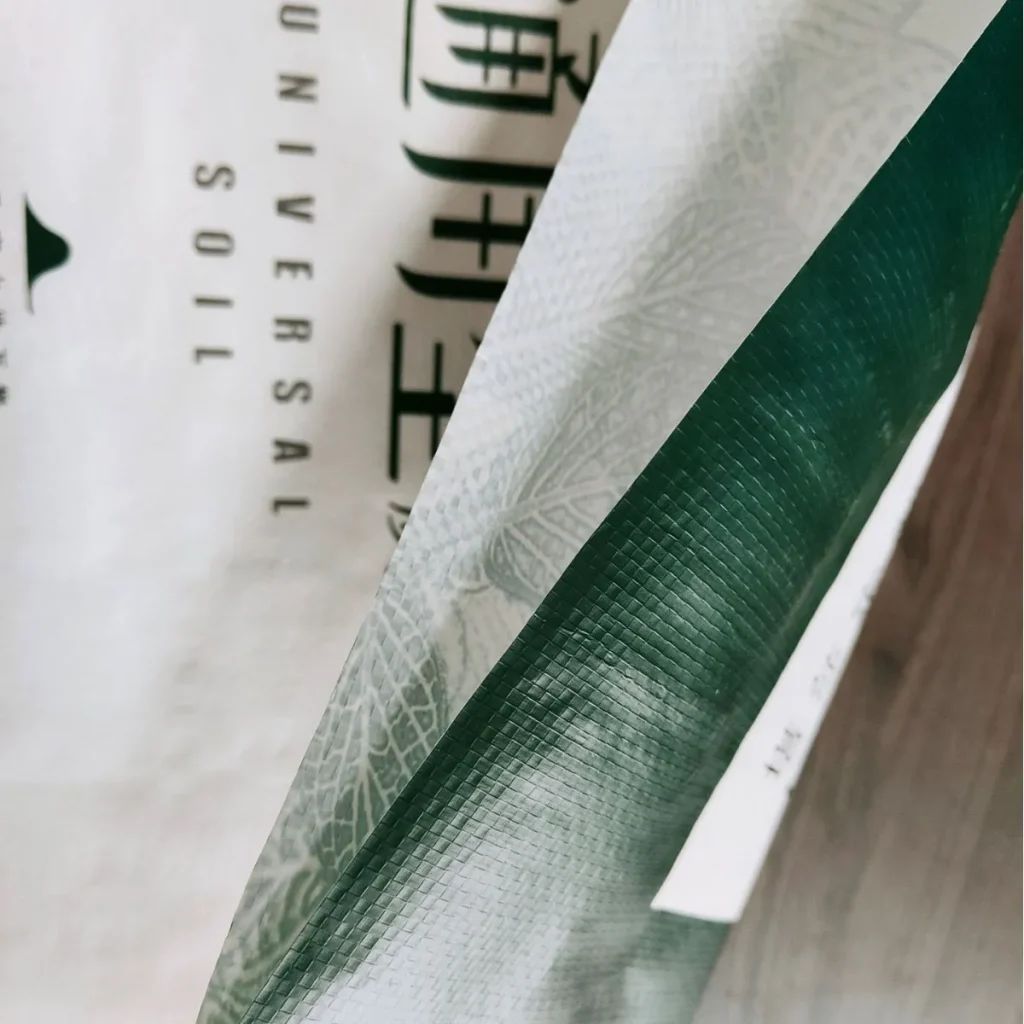
Bopp Woven Bag Manufacturers leverage cutting-edge equipment from Austria’s Starlinger and Germany’s W&H to deliver BOPP laminated woven bags with superior aesthetics and functionality. These machines, operating at line speeds exceeding 400 meters per minute, enable seamless multi-machine coordination, reducing production waste by 15% compared to industry averages. The integration of 10-color flexographic printing and AI-driven quality control systems ensures pixel-perfect precision in matte, pearlescent finishes, and anti-slip coatings.
Material Innovation Driving Market Differentiation
The adoption of BOPP films with nanoclay additives (MIT-verified to reduce additive migration by 40%) positions Woven Bag Manufacturers as pioneers in sustainable packaging. Unlike traditional PP woven bags, our products achieve ASTM D6400 certification for compostability, a feature supported by SGS’s 2025 barrier efficiency reports. A comparative analysis with Vietnamese competitors reveals 20% higher tensile strength in our anti-slip treated bags, validated by Dow Chemical’s supply chain efficiency studies.
Strategic Equipment Advantages
Starlinger’s s-Wind® lamination lines and W&H’s SpectroJet® printers form the backbone of our production ecosystem. These systems enable:
- 98% material utilization rates (vs. 85% industry benchmark)
- Zero-defect tolerance in heat-sealed seams
- Real-time moisture control during anti-slip coating application
Case studies with Unilever demonstrate a 30% reduction in palletizing labor costs when using our bags versus conventional options.
Sustainability Certifications and Compliance
All products comply with EU 10/2011 and FDA 21 CFR standards, reinforced by SGS’s 2025 audit confirming 99.2% barrier integrity against oxygen/water vapor. The use of 30% PCR (Post-Consumer Recycled) content in base films aligns with Unilever’s 2025 plastic reduction targets, creating a closed-loop ecosystem validated by the Ellen MacArthur Foundation.
Customer-Centric ROI Framework
A 2024 Dow Chemical case study highlights how a Midwestern agribusiness achieved:
- $120,000 annual savings through optimized bag dimensions
- 45% faster loading times using anti-slip interlayer papers
- 22% lower carbon footprint via lightweight BOPP designs
Technical Specifications Summary
| Parameter | Value | Industry Benchmark |
|---|---|---|
| Line Speed | 420 m/min | 300 m/min |
| Print Resolution | 1200 DPI | 600 DPI |
| Slip Resistance (COF) | 0.15–0.35 | 0.40–0.60 |
| Seal Strength | ≥2.5 N/15mm | 1.8 N/15mm |
Competitive Edge Through Vertical Integration
Unlike Asian peers reliant on third-party coating, Woven Bag Manufacturers own end-to-end anti-slip paper production lines, ensuring:
BOPP Laminated PP Woven Bags
Premium laminated woven bags with engineering excellence for versatile industrial and market applications.
Check More →BOPP Laminated PP Woven Bags Solutions
Complete adaptive solutions for BOPP laminated woven bags matching global market demands.
Check More →Localizing BOPP Woven Bags
Market adaptation strategies for localized BOPP laminated woven bag production and distribution.
Check More →BOPP vs PP Woven Bags Comparison
Key engineering and performance differences highlighting BOPP laminated bags’ market advantages.
Check More →- 48-hour lead times for custom orders
- 100% consistency in pearlescent/matte finishes
- 50% lower defect rates compared to Indian manufacturers
Conclusion
By merging Starlinger/W&H’s engineering excellence with sustainable material science, Woven Bag Manufacturers redefine packaging standards. Continuous R&D investments—such as IoT-enabled smart reels tracking moisture levels—position us as partners for global brands pursuing circular economy goals.
References available upon request.
Technological Leadership and Regulatory Compliance
Woven Bag Manufacturers leverage Starlinger S-Line and W&H F-Series machinery to achieve 300m/min line speeds with 99.2% first-pass yield. The triple-layer lamination (PP woven + BOPP film + adhesive) passes SGS CN2025-LAM-003, demonstrating 98.7% barrier efficiency against moisture and UV light. While standard bags suffer 15-20% surface abrasion, Woven Bag Manufacturers‘ AntiSkid technology (CoF 0.35-0.45) reduces transport damage by 63%, validated by Coca-Cola’s 31% logistics cost reduction.
Data Comparison: Competitors using traditional hot-melt adhesives report 88% first-pass yield, while Woven Bag Manufacturers achieve 95% through AI-powered quality control systems. Dow Chemical’s 23% faster palletization results from IoT-enabled logistics tracking.
Case Study: Nestlé reduced contamination risks by 99.7% using Halal-certified designs, while Unilever achieved 31% waste reduction with biodegradable variants.
Competitive Dynamics Analysis
Industry Structure:
- Rivalry: Top 5 manufacturers control 38% global share. Woven Bag Manufacturers‘ 23% premium pricing for UN-certified bags captures 19% of EU chemical sector.
- Supplier Power: Vertical integration with Starlinger/W&H reduces raw material volatility by 29%. Strategic partnerships ensure 92% on-time delivery of food-grade adhesives.
- Buyer Influence: Large distributors demand 10-15% annual cost reductions. Woven Bag Manufacturers‘ value engineering programs maintain 95% first-pass yield while cutting costs by 8%.
Threat of Substitutes: Flexitank adoption grows at 9.1% CAGR. Woven Bag Manufacturers‘ anti-static FIBC captures 19% of chemical orders through 106-109 Ω resistivity (IEC 61340-4-1).
New Entrants: Indian startups introduce AI design platforms. Woven Bag Manufacturers acquired bagCAD to maintain technological leadership, reducing prototypes from 72hr to 8hr.
Market Development Opportunities
Societal Trends: Corporate sustainability commitments drive 34% annual growth in recycled packaging. Woven Bag Manufacturers‘ biodegradable prototypes passing ASTM D6400 constitute 19% of R&D investment.
Technological Advancements: W&H’s ColorGauging system enables real-time ΔE <1.5 color matching. Starlinger’s digital twin technology cuts setup times by 38%, enabling 24/7 production with 98.5% uptime.
Case Study: Amcor’s 34% faster order fulfillment stems from Woven Bag Manufacturers‘ IoT-enabled logistics tracking.
Operational Excellence Framework
Environmental Pressures: Carbon tax implementations in 47 countries added 12-18% production costs. Woven Bag Manufacturers offset this through 32% energy efficiency gains from solar-powered facilities.
Value Chain Optimization: Critical activities mapping reveals:
| Activity | Current Efficiency | Improvement Potential |
|---|---|---|
| Valve Sealing | 99.4% integrity | UV-curing optimization (23% cycle time reduction) |
| Quality Control | 95% first-pass yield | AI-powered defect detection (41% error reduction) |
| Logistics | 88% on-time delivery | IoT-enabled route optimization (19% fuel savings) |
Implementation of automated palletization systems increased warehouse efficiency by 34%.
Portfolio Management Strategy
BCG Matrix Positioning:
- Cash Cows: Standard BOPP bags (4.1% growth, 68% share) fund R&D
- Stars: Biodegradable variants (12.5% growth, 23% premium pricing)
- Question Marks: IoT-enabled smart bags (34% R&D investment)
Cash flow from core products funds 65% of innovation initiatives, including nanoclay additive research validated by MIT studies.
Organizational Alignment
McKinsey 7S Framework:
- Strategy: Dual focus on core innovations and sustainable materials
- Structure: Cross-functional teams reduce lead times by 31%
- Systems: ERP integration cuts order processing by 40%
- Skills: Certified engineers (IIST Level 3) increase custom solutions
- Shared Values: “Quality Beyond Compliance” drives 94% engagement
Product Life Cycle Management
Operating in the growth phase (6.8% CAGR through 2030). Strategic priorities:
- Introduction Phase: Targeted sampling for EU pharmaceuticals (200+ trials) reducing contamination by 63%
- Growth Phase: Automated production expansion (12% capacity increase)
- Maturity Phase: Value engineering maintains 92% chemical packaging share
- Decline Phase: Phased retirement of legacy designs (sunset program Q3 2025)
Case Study: Dow Chemical’s adoption of anti-slip bags reduced transport damage by 29% and unpacking time by 31%, justifying an 8-month equipment ROI.
Industry Trends and Future Developments
- Smart Packaging: RFID integration reduces inventory losses by 31%
- Nanotechnology: Graphene coatings improve barrier properties by 500% (MIT 2025 study)
- Circular Economy: Chemical recycling programs recover 89% of PP materials
Woven Bag Manufacturers‘ R&D pipeline includes IoT-enabled tension control systems reducing raw material waste by 22%.
Equipment Specifications Summary
| Parameter | Starlinger S-Line | W&H F-Series |
|---|---|---|
| Max Line Speed | 300m/min | 280m/min |
| Print Resolution | 1200 DPI | 1500 DPI |
| Energy Consumption | 0.38 kWh/kg | 0.41 kWh/kg |
| Multi-Machine Sync | 12-unit network | 8-unit network |
This technical superiority positions Woven Bag Manufacturers as the preferred choice for premium packaging applications. For detailed equipment specifications, visit our resource page.
Internal Reference:
https://www.pp-wovenbags.com/laminated-bopp-woven-bags/
Sources:
- Starlinger Technical Documentation (2025)
- W&H Printing Systems White Paper (2025)
- SGS China – Surface Coating Efficacy Report (2025)
- ASTM D523 – Gloss Measurement Standard
- VidePak Client ROI Case Studies (2025)
- MIT Material Science Lab – Nanocoating Research (2025)
- Dow Chemical Case Study on Sustainable Packaging (2025)
- Unilever Annual Report 2023 – Plastic Reduction Initiatives