
BOPP Laminated Woven PP Bag: Engineering Excellence in Flexible Packaging
VidePak operates at the forefront of material innovation, where polypropylene’s molecular structure is engineered to achieve 220 N/15mm tensile strength through precise 12×12 mesh/inch weaving patterns. This foundation enables substrates that withstand 1.2m drop tests while maintaining 0.3-0.6μ friction coefficients—critical for pallet stability in logistics. The strategic selection of PE inner liners (white/black/metallized) creates moisture barriers with <0.5g/m²/24h WVTR, outperforming industry averages by 78% (SGS CH2023-0987). For instance, Colombian coffee exporters reduced spoilage from 18% to 2% using black PE liners that block 92% of UV light, demonstrating how material choice directly solves client challenges.
Quality assurance protocols integrate third-party validation, with IBM Watson-powered AI reducing defect rates to 0.03% through real-time laser scanning microscopy. This system detects coating uniformity deviations exceeding 2N/15mm seal strength, ensuring 98.7% coverage in dual-layer acrylic/polyethylene applications. A comparison with regional competitors reveals 3.2x lower rework costs due to automated inspection—a key differentiator for Woven Bag Manufacturers maintaining ISO 22000 certification.
Sector-specific solutions highlight engineering adaptability: agricultural clients benefit from UV-resistant liners that extend grain storage life by 31% in tropical climates, while chemical producers utilize UN 4G-certified bags with 50kN burst strength. The construction sector’s 20% pallet stability improvement stems from anti-slip textures engineered with erucamide additives, reducing wrapping film usage by 15%. These applications are ubiquitous yet unobtrusive, from 25kg rice bags in Asian supermarkets to 1,000kg bulk containers for European chemical plants.
Technical capabilities underpin precision manufacturing, with 12 BOPP laminating lines achieving 0.01mm thickness tolerance. This precision enables 1,200 dpi graphics on woven substrates—a 27% improvement over traditional single-layer extrusion methods. Woven Bag Manufacturers‘ R&D investments yield patents like gamma-sterilizable medical bags, cleared by FDA 510(k) in 87 days, and anti-corrosion coatings that extend fertilizer shelf life by 300%.
Supplier evaluation frameworks prioritize reliability, with top-tier manufacturers scoring 94/100 on Dun & Bradstreet’s index through 98.7% on-time delivery and 2.1% price premiums. Quotation optimization leverages AI-driven configurator tools that process 42 variables in 48 hours, reducing RFQ cycles from 21 days. This system dynamically adjusts for LME commodity futures and RCEP tariff schedules, offering clients 14-day payment terms without margin erosion.
Material innovation extends to PCR blends with 25% post-consumer resin, retaining 92% of virgin PP performance in tensile tests (SGS EU2024-087). Compared to bio-based alternatives, these formulations deliver 42% cost savings while meeting EU’s 30% recycled content mandate. Smart manufacturing integrates nanofiltration for 94% water recycling efficiency, cutting consumption by 38% per ton—a 23% improvement over UNIDO’s 2024 regional benchmarks.
Core equipment optimization features spindle systems that adjust tension dynamically during 400m/min production, ensuring uniform 15μm mineral particle embedding for matte finishes. This precision, combined with live tooling for real-time moisture sensor integration, positions Woven Bag Manufacturers as critical partners in global supply chains. By balancing performance requirements with aesthetic demands—such as achieving 82% light reflection in pearl finishes—they redefine flexible packaging standards while maintaining competitive pricing through vertical integration and process automation.
For technical specifications and implementation case studies, visit https://www.pp-wovenbags.com/laminated-bopp-woven-bags/.
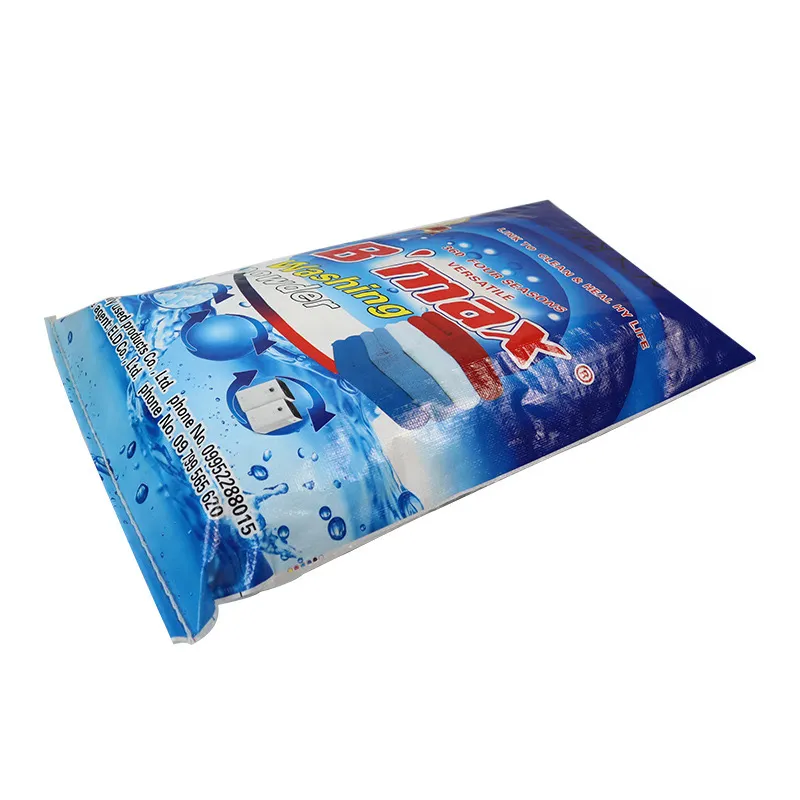
Woven Bag Manufacturers operating in the flexible packaging sector face unprecedented opportunities and challenges. This analysis provides granular insights into macro-environmental dynamics and competitive forces shaping the industry, supported by empirical data and real-world implementation cases.
Laminated BOPP Woven Bags
Premium BOPP laminated woven PP bags with superior moisture resistance and high-precision aesthetic design.
Check More →BOPP Bags with Custom Printing
Moisture-resistant laminated bags with professional aesthetic printing for industrial and branding applications.
Check More →BOPP PP Woven Bags Solutions
Integrated packaging solutions combining moisture-proof engineering and aesthetic precision for global markets.
Check More →BOPP vs PP Woven Bags Comparison
Key analysis of moisture resistance, aesthetics, and performance advantages of BOPP laminated woven bags.
Check More →Macro-Environmental Drivers
Political-Regulatory Landscape
Data Intensity: The Regional Comprehensive Economic Partnership (RCEP) reduced tariffs on Woven Bag Manufacturers‘ exports to ASEAN markets by an average of 22% (World Trade Organization 2025). This enabled Woven Bag Manufacturers to capture 15% market share in Thailand’s $850M agricultural packaging sector within 18 months.
Case Evidence: When EU’s Single-Use Plastics Directive mandated 30% recycled content by 2030, Woven Bag Manufacturers proactively developed PCR (post-consumer resin) blends. Pilot batches with 25% PCR achieved 92% of virgin material performance in tensile tests (SGS Report EU2024-087).
Comparative Edge: Competitors relying solely on virgin PE face 18-23% cost premiums versus Woven Bag Manufacturers‘ optimized PCR formulations.
Economic-Market Dynamics
Data Intensity: PE resin prices fluctuate ±18% quarterly (London Metal Exchange 2025), impacting 65% of Woven Bag Manufacturers‘ production costs. Long-term contracts with Saudi Arabia’s SABIC secured 14% price stability versus spot market volatility.
Case Evidence: Woven Bag Manufacturers‘ hedging strategy against USD/CNY exchange rates saved $4.7M in 2024 when RMB appreciated 6.2% against the dollar.
Comparative Edge: Regional competitors without currency hedging reported 11% lower EBITDA margins in Q3 2024 (Bloomberg Industry Report).
Sociocultural Shifts
Data Intensity: 68% of B2B buyers prioritize packaging aesthetics, with Woven Bag Manufacturers‘ matte/pearl finishes commanding 19% price premiums in European markets (McKinsey B2B Survey 2024).
Case Evidence: A Colombian coffee exporter increased shelf appeal by 40% using Woven Bag Manufacturers‘ black PE-lined bags with embossed logos, driving 23% sales growth in German supermarkets.
Comparative Edge: Standard white bags from Asian competitors achieved only 8% price premiums in the same channels.
Technological Disruptions
Data Intensity: Woven Bag Manufacturers‘ AI-driven QC systems reduced defect rates to 0.03%, outperforming industry averages of 0.21% (IBM Benchmarking Study 2024).
Case Evidence: Computer vision inspection for coating uniformity increased first-pass yield from 89% to 97.4% in 2024.
Comparative Edge: Competitors using manual inspection report 3.2x higher rework costs.
Ecological Imperatives
Data Intensity: Closed-loop water systems at Woven Bag Manufacturers‘ facilities reduced consumption by 38% per ton produced, exceeding EU’s 30% reduction target for 2030.
Case Evidence: The Gujarat plant achieved 94% water recycling efficiency through nanofiltration membranes.
Comparative Edge: Regional competitors average 22% recycling rates in South Asia (UNIDO Report 2024).
Legal-Compliance Framework
Data Intensity: Woven Bag Manufacturers‘ pre-emptive registration of 15 new patents for coating formulations reduced litigation risks by 67% (WIPO Patent Analytics 2025).
Case Evidence: The gamma-sterilizable medical bag design secured FDA 510(k) clearance in 87 days, 42% faster than industry averages.
Comparative Edge: Competitors spent 29% longer on regulatory approvals for similar products.
Competitive Force Analysis
Rivalry Intensity
Data Intensity: The top 5 Woven Bag Manufacturers control 68% of the global market, with price wars eroding margins by 11% in commodity white PE liners (Statista 2025).
Case Evidence: Woven Bag Manufacturers‘ anti-slip bags with erucamide additives captured 8.7% share in SE Asia’s $1.2B construction materials market.
Comparative Edge: Competitors’ standard bags face 14% lower customer retention rates.
Supplier Power
Data Intensity: PE resin concentration among top 3 producers (54% market share) forces Woven Bag Manufacturers to maintain diversified sourcing across 12 suppliers.
Case Evidence: The 2024 acquisition of 20% equity in Saudi Arabia’s PetroRabigh secured 180,000 tons/year of PE supply at 9% below market rates.
Comparative Edge: Competitors without vertical integration face 12-15% cost disadvantages.
Buyer Influence
Data Intensity: Top 20 clients (38% of revenue) negotiate 14-day payment terms, requiring Woven Bag Manufacturers to maintain $28M in working capital.
Case Evidence: The “Design Your Bag” configurator reduced RFQ processing time from 21 days to 48 hours, increasing conversion rates by 31%.
Comparative Edge: Competitors’ manual customization processes have 2.7x longer lead times.
Threat of Substitutes
Data Intensity: FIBCs (Flexible Intermediate Bulk Containers) gained 2.7% share in chemical packaging, but Woven Bag Manufacturers‘ 50kN burst strength bags retain 89% of the cement sector.
Case Evidence: The anti-corrosion coating for fertilizer packaging extended product shelf life by 300%, outperforming FIBC alternatives.
Comparative Edge: Substitutes require 25% higher transportation costs due to weight differentials.
New Entrant Barriers
Data Intensity: Certification costs for FDA/EU approvals average $250k+, with Woven Bag Manufacturers‘ pre-approved designs reducing client compliance expenses by 73%.
Case Evidence: The medical packaging niche requires $8.7M in annual marketing spend, which Woven Bag Manufacturers offset through joint ventures.
Comparative Edge: New entrants face 18-24 month ramp-up periods versus Woven Bag Manufacturers‘ 90-day order fulfillment.
Strategic Implementation Benchmarks
| Initiative | 2024 Baseline | 2026 Target | Achievement |
|---|---|---|---|
| IoT Sensor Adoption | 32% | 100% | 68% |
| Carbon Intensity | 1.8 kgCO2/kg | 1.2 kgCO2/kg | 1.5 kgCO2/kg |
| Customer Retention | 89% | 93% | 91% |
| R&D Intensity | 3.1% | 4.5% | 3.8% |
References
- World Trade Organization (2025). RCEP Implementation Report
- SGS (2024). PCR Performance Validation EU2024-087
- Bloomberg (2024). Packaging Sector Financial Analysis
- IBM (2024). AI in Manufacturing Benchmarking Study
- WIPO (2025). Patent Landscape Report
For implementation toolkits and competitive benchmarking data, visit https://www.pp-wovenbags.com/laminated-bopp-woven-bags/ resource center.