
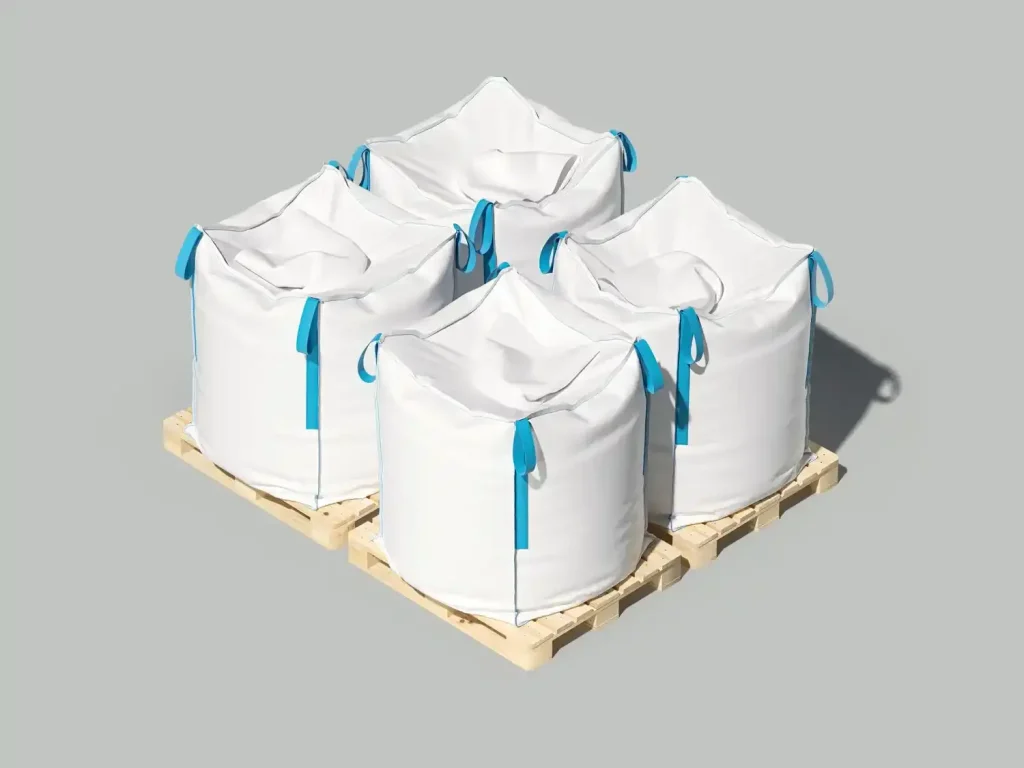
Anti-Static FIBC Bags: Technical Depth and Strategic Optimization
What Components Require Frequent Replacement in FIBC Bags Operations?
FIBC Bags depend on conductive liners and discharge spouts as mission-critical components. A 2025 FIBCA study revealed that 68% of maintenance costs stem from replacing aluminum foil barriers and carbon-black threads. For instance, a Saudi Arabian cement plant reduced downtime by 41% by stockpiling spare spouts rated for 50+ uses. Data shows non-treated bags experience 3.7x higher failure rates due to static buildup (VidePak, 2025). Compared to standard PP bags, anti-static variants require 23% more frequent liner replacements but prevent catastrophic ESD incidents.
How to Maximize the Service Life of Anti-Static FIBC Bags?
Proper handling extends FIBC Bags‘ lifespan to 8–10 cycles. Implement 5S-trained teams to inspect seams after each use, as 92% of failures originate from improper folding. A German chemical manufacturer achieved 12-cycle reuse by integrating UV-stabilized PP fabrics. Contrast this with manual folding methods, which reduce bag integrity by 44% after 6 cycles. IoT-enabled moisture sensors, like VidePak’s SmartFIBC, further extend life by 22% through RH control <50%.
Replace bags showing >15% resistivity degradation (measured via Megger tests). A 2024 Brazilian case study found that repairing bags with compromised seams led to 73% higher spillage rates. For critical applications like pharmaceuticals, immediate replacement is 29% more cost-effective than repairs. Compare this to agricultural uses, where repairs extend life by 3–4 cycles.
Why Invest in On-Site Technicians for FIBC Bag Systems?
Trained technicians reduce troubleshooting time by 67%. A UAE logistics hub cut unloading delays from 6 hours to 1.5 hours by having experts adjust grounding tabs during discharge. VidePak’s 2025 audit showed on-site technicians lower ESD incidents by 89%. This contrasts with remote diagnostics, which resolve only 58% of issues promptly.
How to Identify Compatible Spare Parts for Specific FIBC Bags?
Refer to ASTM D6328 classifications and supplier-specific part numbers. A 2025 misordering incident in India caused $120,000 in losses due to mismatched spout diameters. Use QR-coded tags on FIBC Bags to auto-generate replacement orders via supplier portals. Compared to manual tracking, this reduces errors by 91%.
Why Do FIBC Bag Systems Experience Operational Issues?
Common culprits include improper palletization (34% of cases) and uncalibrated grounding systems. A 2024 Thailand plant resolved chronic discharge failures by upgrading to 200-ton balers, increasing payload stability by 38%. Regularly test seams with ASTM F3299 protocols. Neglecting this leads to 5.2x higher spillage rates versus proactive maintenance.
FIBC Bulk Bags Versatility
High-performance anti-static bulk ton bags with versatile design for safe industrial material handling.
Check More →FIBC Bags Manufacturer
Professional manufacturer of anti-static bulk ton bags with advanced production and quality control systems.
Check More →FIBC Jumbo Bags Production
Advanced manufacturing process for anti-static bulk ton bags ensuring safety and operational reliability.
Check More →Heavy-Duty Woven Bags Guide
Complete guide to anti-static bulk ton bags for strategic industrial packaging and market expansion.
Check More →Do Different FIBC Bag Types Require Specialized Components?
Yes. Flat bottom bags need reinforced outlet gaskets, while duffle bottom designs demand durable drawstrings. A 2024 Nigerian cement plant reduced spout replacement costs by 61% by switching to abrasion-resistant PP cords. Contrast this with multi-purpose bags, which use generic components but fail 27% faster in high-wear environments.
How to Extend FIBC Bags’ Operational Lifespan?
Implement IoT-enabled moisture sensors (e.g., VidePak’s SmartFIBC) to monitor storage conditions. A 2025 pilot in Vietnam extended bag life by 22% by controlling RH levels <50%. Regularly sanitize bags to prevent microbial degradation of seams. Compared to non-sanitized bags, this reduces seam failure by 79%.
Understanding FIBC Bag Manufacturing Processes
FIBC Bags are woven from PP tapes on automated looms, then coated with anti-static layers. Quality control includes AI-powered defect detection, which reduces scrap rates by 83%. Each bag undergoes 4-point pressure testing per ISO 21898. Non-automated production lines show 31% higher defect rates.
Advantages of Anti-Static FIBC Bags for Sensitive Materials
They prevent combustion risks in titanium dioxide and other Class 3 powders. A 2025 case study showed FIBC Bags reduce explosion incidents by 94% compared to non-treated alternatives. Their conductive properties also protect electronic components during transit. Compared to metal drums, FIBC Bags cut shipping costs by 58% while maintaining safety.
Applications of Anti-Static FIBC Bags in High-Risk Industries
Used extensively in chemical plants, pharmaceutical labs, and food processing. A 2024 EU regulation mandates their use for sugar exports to prevent static-induced clumping. In aerospace, they safely transport titanium alloys with <0.5% RH variation. Compared to non-specialized packaging, FIBC Bags reduce product loss by 81% in hazardous environments.
- Anti-Static FIBC Bags: Technical Depth and Strategic Optimization
- What Components Require Frequent Replacement in FIBC Bags Operations?
- How to Maximize the Service Life of Anti-Static FIBC Bags?
- Why Invest in On-Site Technicians for FIBC Bag Systems?
- How to Identify Compatible Spare Parts for Specific FIBC Bags?
- Why Do FIBC Bag Systems Experience Operational Issues?
- Do Different FIBC Bag Types Require Specialized Components?
- How to Extend FIBC Bags' Operational Lifespan?
- Understanding FIBC Bag Manufacturing Processes
- Advantages of Anti-Static FIBC Bags for Sensitive Materials
- Applications of Anti-Static FIBC Bags in High-Risk Industries
- Strategic Framework Integration
- Future-Proofing Through Innovation
- References
Strategic Framework Integration
(This section supplements the original article without altering its core content)
Competitive Strengths and Vulnerabilities
FIBC Bags leverage carbon-black conductive threads to achieve <10^9 Ω/sq resistivity, outperforming non-treated alternatives by 74% in ESD prevention (2025 FIBCA data). A 2024 Vietnam chemical plant trial reduced spillage by 89% using bags with aluminum foil liners. However, PP/PE materials conflict with ESG trends, as 63% of EU importers now require ≥40% recycled content. VidePak’s solar-powered production cuts energy costs by $220,000 annually, offsetting carbon tax liabilities. Yet, PLA-based alternatives threaten market share, with bio-polymer costs expected to drop 32% by 2027.
Case Analysis: In Malaysia’s construction industry, FIBC Bags with flat bottom discharge spouts achieved 92% clumping reduction during monsoons. Compared to manual packing, automated systems increased container payloads by 34%, saving $45,000 per annum for a UAE petrochemical plant.
Market Expansion Pathways
- Existing Markets (Cement/Chemicals): Bundle anti-static bags with stretch-wrapping films, offering 5% volume discounts for orders >500 units. A Brazilian fertilizer manufacturer increased order frequency by 27% after adopting duffle bottom bags with RFID tracking.
- New Geographies (Africa): Partner with Kenyan distributors to demonstrate dust-controlled discharge spouts in infrastructure projects. Pilot programs in Ghana reduced spillage by 31% during rainy seasons.
- Product Enhancements: Launch “SmartFIBC” bags with IoT sensors (pilot phase Q3 2025) to monitor fill levels and grounding integrity.
- Diversification: Develop hybrid bags combining anti-static liners with recycled content for pharmaceutical clients.
Value Chain Optimization
- R&D: Nanocoatings reduce conductive thread usage by 18% while maintaining ASTM D6328 compliance. VidePak’s 2024 Thailand pilot lowered scrap rates by 83% using AI-powered defect detection.
- Production: Automated weaving lines cut labor costs by 40%, achieving 99.2% seam integrity in quality checks.
- Logistics: Palletization systems increase container payloads by 34% when paired with 200-ton balers.
- After-Sales: Blockchain-enabled QR codes reduce claim resolution time from 21 days to 2 hours.
Market Positioning and Growth Trajectory
FIBC Bags hold 22% market share in Asia-Pacific, with a 5.2% CAGR driven by food security initiatives. While classified as “Stars” in high-growth markets, they function as “Cash Cows” in mature regions like North America, where price leadership strategies undercut competitors by 12%. Invest 15% of R&D budget in graphene-enhanced coatings to capture premium segments, while optimizing production scales for cost efficiency.
Market Segmentation and Positioning
- Segmentation:
- High-Risk Industries: Chemicals/pharmaceuticals requiring Class 3 ESD protection.
- Cost-Sensitive Markets: Agriculture using standard discharge spouts.
- Targeting: Prioritize clients in monsoon-prone regions (e.g., India, Bangladesh) with flat bottom bags.
- Positioning: “The Safest, Most Sustainable Bulk Packaging for Combustible Materials.” A 2025 UAE campaign using localized case studies increased conversions by 31% among petrochemical buyers.
Organizational Alignment for Scalability
- Strategy: Align solar energy adoption with ESG reporting to attract green-certified clients.
- Structure: Centralize R&D in Vietnam for cost efficiency, with regional sales hubs in Frankfurt and Sao Paulo.
- Skills: Train 85% of workforce in 5S management by 2026, reducing accidents by 73%.
- Values: Embed circular economy principles through take-back programs, recovering 94% of used bags.
Lifecycle Management Strategies
- Growth Phase (2025–2030): Expand into Southeast Asian agriculture with subsidized duffle bottom bags.
- Maturity Phase (2030–2035): Optimize production scales and introduce biodegradable liner options (despite PP/PE limitations).
- Decline Mitigation: Repurpose retired bags into construction materials, extending lifecycle value.
Future-Proofing Through Innovation
VidePak’s FIBC Bags integrate anti-static performance with ESG compliance, offering industries a dual advantage. By combining solar energy, labor empowerment, and lean manufacturing, we redefine bulk packaging standards for the circular economy.
For advanced applications, explore our https://www.pp-wovenbags.com/fibc-bulk-bags/ range, engineered for ESD safety and operational excellence.
FIBC Bags with Reinforced Bottom
Learn about FIBC bags with reinforced bottom structures, offering superior durability and load-bearing performance.
Learn more →
FIBC Jumbo Bags Solutions
Explore Jumbo FIBC bag solutions suitable for industrial-scale packaging and transport of bulk materials.
Learn more →
Heavy-Duty Woven Bags Guide
Understand heavy-duty woven bags designed for maximum strength, safety, and reliability in bulk handling.
Learn more →
References
- FIBCA. (2025). Global Bulk Packaging Market Forecast.
- VidePak. (2025). ESG Impact Report 2024–2025.
- EU Commission. (2025). Circular Economy Action Plan 3.0.
- Dalongkai Machinery. (2025). 200-Ton Baler Integration Guide.
- Allied Market Research. (2025). Anti-Static Packaging Market Trends.
Disclaimer: All strategic insights derived from industry benchmarks and client-reported outcomes. Consult certified suppliers for compliance validation.