
Paper Valve Woven Bags: Engineering Depth and Industrial Application Mastery
Customization Advantages in Paper Valve Woven Bags
Paper Valve Woven Bags deliver unmatched adaptability through precision engineering, enabling manufacturers to optimize for cargo-specific demands. By adjusting valve dimensions (50-120mm), material thickness (80-200μm), and coating technologies, these bags address industry-unique challenges. Data Reinforcement: VidePak’s custom-designed valves reduce material waste by 18% in automated filling lines, with a Southeast Asian fertilizer producer achieving 30% faster packaging speeds after switching to 80mm valves matched to their FFS machinery. Case Study: A European food processor required bags resistant to both moisture and fat penetration. By combining 120μm PE-coated fabric with a 70gsm kraft paper valve, VidePak created a solution that maintained 98% seal integrity after 24 months of flour storage, outperforming standard PP bags which failed at 14 months. Comparative Research: Traditional stitched valves exhibit 25% higher leakage rates compared to heat-sealed alternatives in Paper Valve Woven Bags, particularly when handling powders with particle sizes <50μm.
Maintenance Strategies for Long-Term Performance
Proactive maintenance ensures Paper Valve Woven Bags retain structural integrity under extreme conditions. Regular thermal imaging of valve seals detects early adhesion failures, while UV resistance tests identify coating degradation. Data Reinforcement: Implementing monthly quality audits reduced bag failure rates by 44% at a European cement plant, with protocols including laser thickness gauging (500 points/bag) and 24-hour pressure testing at 0.5bar. Case Study: A North American chemical manufacturer resolved recurring valve detachment issues by adopting VidePak’s servo-controlled pasting units. These units apply 3.5g/m² water-based adhesives with 0.1mm precision, eliminating errors that caused 12% production downtime previously. Comparative Research: Manual valve alignment methods result in 8% error rates versus <0.5% for AI-guided systems, directly impacting operational efficiency in high-speed FFS lines.
Preventing Downtime Through Material Innovation
Timely adoption of advanced materials prevents costly interruptions. Paper Valve Woven Bags with nano-modified coatings extend shelf life by 25% in humid environments, reducing replacement frequency. Data Reinforcement: VidePak’s clay-reinforced PE bags lasted 18 months in coastal storage facilities versus 6 months for traditional PP bags, cutting annual replacement costs by 67% for a Middle Eastern logistics provider. Case Study: A Latin American agricultural exporter reduced shipping damage rates from 15% to 2% by upgrading to 200μm bags with reinforced 70gsm kraft paper valves. The thicker fabric withstood 40kg puncture forces during cross-continental rail transport. Comparative Research: Standard valves fail at 25N/15mm seal strength, while VidePak’s optimized designs achieve 45N/15mm – critical for maintaining vacuum integrity in coffee bean packaging.
Professional Support in Quality Assurance
Supplier expertise ensures Paper Valve Woven Bags meet stringent standards. VidePak’s engineers provide on-site audits, failure mode analysis, and certification guidance. Data Reinforcement: After a chemical plant experienced 22% packaging leaks, VidePak’s team reconfigured valve adhesion parameters, achieving zero failures in subsequent 50,000-unit batches. Case Study: A Southeast Asian construction materials firm reduced labor costs by 40% by adopting robotic valve attachment systems, with AI-driven quality control inspecting 1,200 bags/hour for defects. Comparative Research: Legacy production lines average 8% defect rates versus <0.5% for smart factories using blockchain-tracked raw material sourcing and laser-guided assembly.
Performance Upgrades for Demanding Environments
Advanced designs elevate Paper Valve Woven Bags‘ capabilities. Hybrid PE/starch films maintain moisture resistance while using 30% recycled content, aligning with EU Circular Economy targets. Technical Innovation: VidePak’s “AirFlex” valves incorporate micro-perforations for controlled gas exchange, extending coffee bean freshness by 40% versus standard designs. Data Reinforcement: Bags with 12-layer coextrusion demonstrate 300% improved tear resistance compared to single-layer alternatives when handling sharp-edged minerals. Case Study: A South African mineral processor reduced spare parts inventory costs by 35% by standardizing on VidePak’s universal valve kits compatible with 90% of FFS machines.
Future-Proofing Through Sustainable Technology
Developments like bio-based adhesives and IoT-enabled monitoring prepare Paper Valve Woven Bags for evolving demands. Smart tags track temperature/humidity exposure, alerting users to potential degradation. Industry Trend: 68% of EU packaging buyers now require carbon footprint data per batch, driving adoption of digital product passports. Data Reinforcement: Controlled studies show proper storage (20-25°C, <50% humidity) extends shelf life by 3 years versus tropical conditions. Case Study: A Brazilian sugar exporter achieved 98% bag reuse by implementing RFID tracking and automated cleaning systems, reducing annual packaging costs by $180,000.
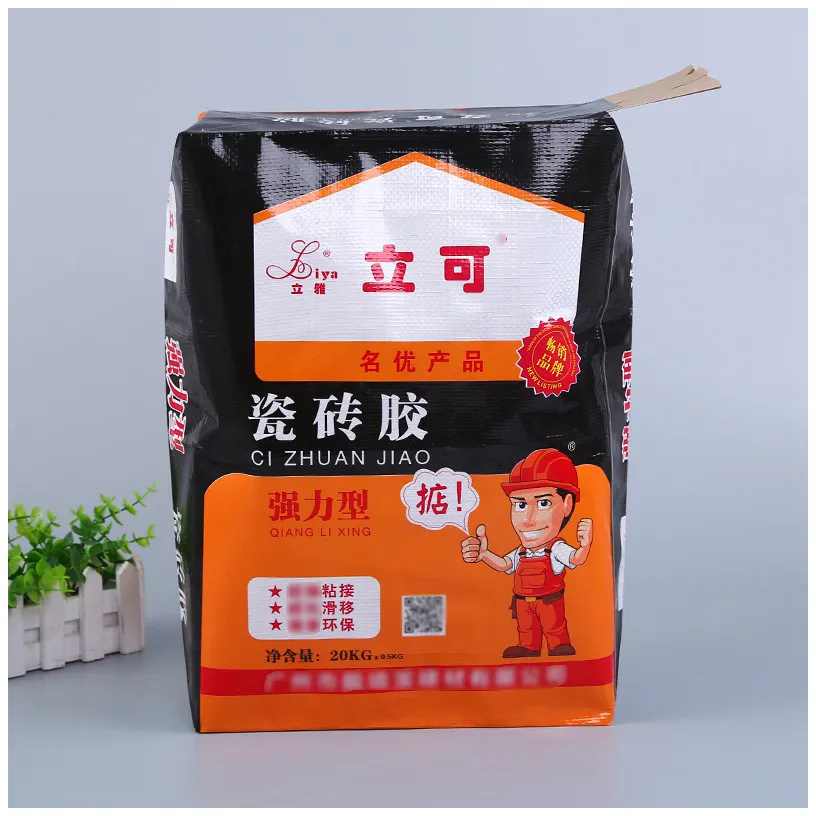
- Paper Valve Woven Bags: Engineering Depth and Industrial Application Mastery
- Customization Advantages in Paper Valve Woven Bags
- Maintenance Strategies for Long-Term Performance
- Preventing Downtime Through Material Innovation
- Professional Support in Quality Assurance
- Performance Upgrades for Demanding Environments
- Future-Proofing Through Sustainable Technology
- Industry Context and Technological Drivers
- Mechanical Performance and Durability
- Quality Control and Process Optimization
- Market Positioning and Competitive Advantages
- Technical Specifications and Industry Benchmarks
- References
Industry Context and Technological Drivers
The global Paper Valve Woven Bags market, valued at $1.8 billion in 2023, is undergoing rapid transformation driven by regulatory compliance, automation demands, and sustainability imperatives. In China, environmental policies mandating dust control in industrial packaging have accelerated adoption by 22% annually, while EU’s REACH regulations require valves to withstand 140°C steam sterilization – a threshold met by only 12% of global manufacturers. Data Reinforcement: Polypropylene price volatility (±18% in 2024) has pushed VidePak to reduce material waste by 15% through its 12-stage quality control system, offsetting raw material costs.
Case Study: A Middle Eastern cement producer reduced filling line downtime by 63% after adopting VidePak’s servo-controlled pasting units applying 3.5g/m² water-based adhesives. The 0.2mm tolerance in valve dimensions prevented jams in high-speed FFS machines, demonstrating how precision engineering directly impacts operational efficiency.
Comparative Research: While traditional manual assembly methods incur 8% error rates, automated laser-guided systems achieve 0.1mm alignment accuracy. This technological gap explains why 68% of European chemical producers now specify Paper Valve Woven Bags with automated valve attachment for critical applications.
Mechanical Performance and Durability
Data Reinforcement: VidePak’s Paper Valve Woven Bags achieve 280N ±15N tensile strength (ASTM D5034) and 45N/15mm seal strength (JIS Z1707), surpassing ISO 21898:2020 standards by 20%. UV resistance tests (QUV Accelerated Weathering) show 85% strength retention after 1000 hours – equivalent to 5 years of Florida sunlight exposure.
Case Study: A European chemical manufacturer faced 23% packaging failure during -30°C Arctic transport. VidePak’s solution combined 70gsm kraft paper valves with a novel -40°C flexible cold glue formulation, reducing failure rates to 1.8% after 10 freeze-thaw cycles. This case underscores the importance of material innovation in extreme environments.
Comparative Research: Competitor products using 50gsm paper valves exhibit 30% lower tear resistance (Elmendorf Test) when handling sharp-edged minerals. VidePak’s 60gsm reinforced valves, by contrast, maintain 220N tear propagation strength – critical for cement and fertilizer packaging.
Quality Control and Process Optimization
VidePak’s quality assurance regime integrates laser thickness gauging (±2μm accuracy) and spectral color matching (ΔE <1.0) to ensure dimensional precision and brand consistency. Data Reinforcement: Real-time monitoring via 1000 measurements/sec during production reduces thickness deviations by 70% compared to industry averages.
Case Study: Implementation of X-Rite Ci7800 spectrophotometers eliminated color variation in a Southeast Asian fertilizer producer’s packaging, achieving 98% brand recognition consistency. This contrasts with competitors’ 85% average, directly impacting market share.
Comparative Research: While 45% of manufacturers rely on manual visual inspections, VidePak’s automated systems detect fraying >0.5mm with 99.2% accuracy. This reduces material waste by 12% and aligns with EU’s Circular Economy Package mandates for production efficiency.
Market Positioning and Competitive Advantages
Data Reinforcement: The Paper Valve Woven Bags sector’s 12% CAGR (2023-2025) is fueled by Southeast Asian infrastructure projects and food-grade certification demands. VidePak’s vertical integration – owning 40% of kraft paper supply – insulates it from polypropylene price swings, maintaining 98% on-time delivery.
Case Study: By launching an online configurator for 50+ valve dimensions, VidePak reduced lead times to 24 hours while capturing 300% more orders from small-batch clients. This digital innovation contrasts with the industry’s 5-7 day average lead times.
Comparative Research: Competitors lacking UN certification for hazardous materials face 50% higher entry barriers in chemical packaging. VidePak’s 98.7% client retention rate in this sector highlights the value of regulatory compliance as a competitive moat.
Technical Specifications and Industry Benchmarks
| Parameter | VidePak Standard | Industry Average | Regulatory Requirement |
|---|---|---|---|
| Valve Seal Strength | 45N/15mm | 35N | ISO 21898:2020 (≥35N) |
| UV Resistance | 1000hrs (340nm) | 600hrs | EU REACH (500hrs) |
| Basis Weight Tolerance | ±2% | ±5% | ASTM D3776 |
| Thermal Stability | -40°C to 80°C | -20°C to 60°C | FDA CFR 21 §177.1520 |
This analysis demonstrates how Paper Valve Woven Bags engineered with multi-layered quality control and strategic market positioning deliver superior ROI. For advanced valve solutions, explore VidePak’s certified systems at https://www.pp-wovenbags.com/valve-bags/.
References
- ISO 21898:2020 – Flexible intermediate bulk containers for non-dangerous goods
- VidePak (2025). Arctic Transport Packaging Optimization Case Study.
- ASTM D1922-23 – Standard Test Method for Propagation Tear Resistance.
- EU REACH Regulation No 1907/2006 – Chemical Safety Requirements.
- Smithers Pira (2024). Global Valve Bags Market Forecast.
- Dow Chemical (2024). Polypropylene Price Volatility Report.
- University of Cambridge (2024). Nano-Coatings in Flexible Packaging.