
1. Rethinking the Packaging Paradigm
1.1 Packaging as a Strategic Enabler
Why should packaging, often dismissed as a mere container, command the attention of logistics experts and sustainability officers alike? The answer lies in the unassuming, structurally transformative design of Block Bottom Bags. These bags—colloquially referred to as AD*STAR bags—embody the intersection of industrial robustness and environmental conscientiousness. They’re more than sacks. They’re engineered enablers.
Valve Bags & Valve Types Guide
Complete guide to valve bags including block-bottom designs, ideal for industrial bulk packaging with automatic filling and self-sealing features.
Check More →PP Woven Valve Bags Manufacturer
Professional manufacturer of block-bottom PP woven valve bags with high strength, stable stacking, and excellent performance for heavy loads.
Check More →Multiwall Paper Bags Pinch Block Bottom
Premium pinch block bottom design for multiwall paper bags, offering superior stability, stacking efficiency, and professional packaging appearance.
Check More →BOPP Laminated PP Woven Bags
High-quality BOPP laminated bags available with block-bottom construction, combining premium printing, moisture barrier, and stable standing design.
Check More →1.2 The Geometry of Function
By leveraging a rectangular base design, Block Bottom Bags subvert the inefficiencies inherent in conventional round-bottom sacks. They stand upright. They stack effortlessly. They resist deformation under pressure. And yes, they minimize dead space in transit. In logistics, form isn’t just aesthetic—it’s economics in motion.
2. What Sets Block Bottom Bags Apart?
2.1 A Combat-Tested Fortress for Bulk Goods
Let’s not sugarcoat it: the world of bulk packaging is brutal. From cement dust to fertilizer pellets, the hazards are many. But Block Bottom Bags, with their laminated BOPP coatings and ultrasonically sealed bases, perform like a combat-tested fortress. Forget flimsy seams—here, precision meets power.
Measured Performance:
- Tensile Strength: > 80 N/50mm (SGS-CN-BB2023-514)
- WVTR: ≤ 1.0 g/m²/24hr
- Impact Drop Survival Rate: 98% from 1.2m height (VidePak internal tests)
2.2 Valved for Automation
In the age of Industry 4.0, packaging isn’t just a passive component—it’s part of the automation matrix. The valve-mouth design of Block Bottom Bags enables seamless integration with Form-Fill-Seal (FFS) systems. The result? Precise dosing, minimal spillage, and lightning-fast throughput.
What good is a smart factory if the packaging lags behind?
2.3 Weather-Resilient by Design
Caught in a storm? Stored outdoors? No problem. The BOPP laminated exterior not only repels moisture but resists UV degradation up to 200 hours. These aren’t fair-weather bags—they’re weatherproof workhorses.
2.4 Silent Brand Ambassadors
Thanks to high-definition gravure printing, Block Bottom Bags carry your brand into warehouses, retail shelves, and construction yards with visual fidelity. Multilingual warnings? QR codes? Custom artwork? All achievable without compromising durability.
3. Technical Specification Matrix
| Parameter | Specification |
|---|---|
| Fabric | 100% Virgin Woven Polypropylene (PP) |
| Width | 300–600 mm |
| Length | 400–1000 mm |
| Bottom Format | Rectangular Block Bottom (ultrasonically sealed) |
| Coating Options | BOPP laminated, Glossy, or Matte |
| Print Capability | Gravure, up to 10 colors |
| Weight Range | 60–120 gsm |
| Load Capacity | 5 kg – 50 kg |
| Valve Options | Inner valve, outer valve, open mouth |
| UV Resistance | Optional up to 200 hours |
| Compliance | ISO 9001, ISO 14001, DIN EN ISO 21898 |
4. VidePak’s Manufacturing Symphony
4.1 Not Just Assembly—Orchestration
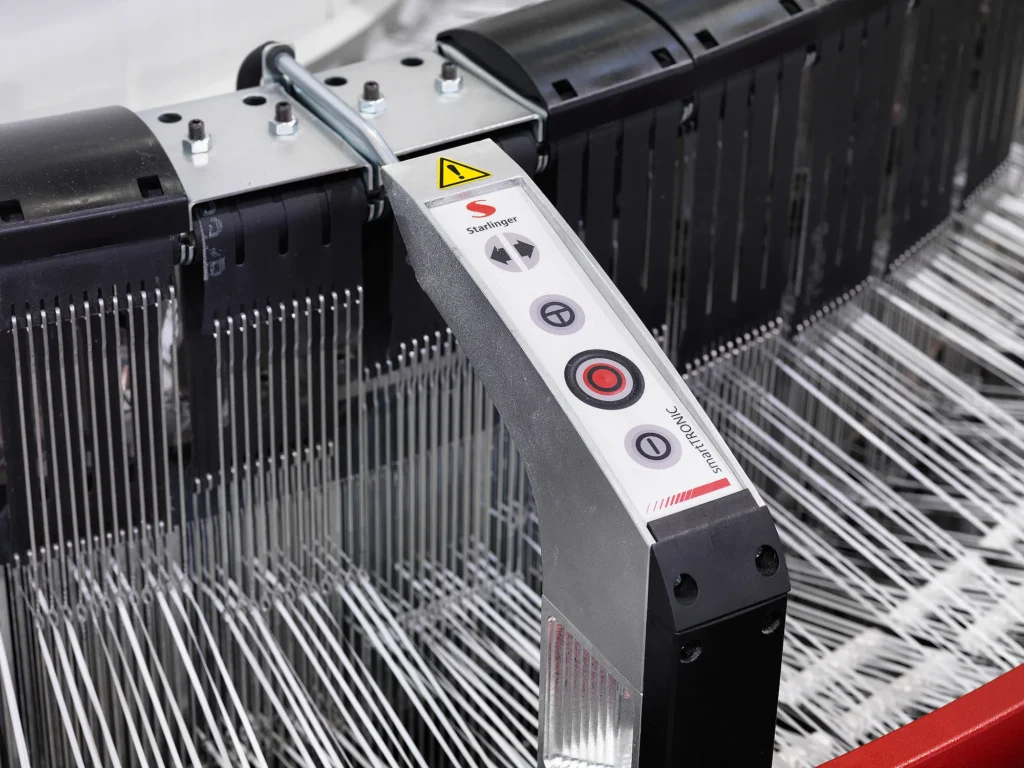
VidePak doesn’t just assemble Block Bottom Bags. It choreographs their production using Starlinger equipment that facilitates real-time defect analysis and AI-based visual inspection. The machinery? Precision-engineered. The output? Scalable excellence.
Process Breakdown:
- Extrusion: Consistent tape denier for fabric integrity
- Circular Weaving: 150 looms with auto-alignment
- Lamination: Dual-surface, slip-resistant finish
- Printing: Solvent-free gravure for visual vibrancy
- Bottom Forming: Ultrasonic sealing for leak prevention
- Inspection: AI-integrated, ISO-traceable logging
5. Beyond Cement: Versatility Redefined
You thought Block Bottom Bags were for cement alone? Think again.
5.1 Agricultural Elixir
Whether it’s seeds that demand breathable yet sealed storage or fertilizers sensitive to UV and moisture—Block Bottom Bags deliver. Their structural integrity protects contents, while laminated barriers preserve potency.
5.2 Nutraceutical and Feed Packaging
For food-grade applications, compliance with BRC Global Standards ensures that hygiene, traceability, and food contact safety are not afterthoughts—they’re foundational.
5.3 Construction Chemicals and Beyond
From mortars to flame-retardant additives, the anti-leak, anti-static surfaces of Block Bottom Bags offer a secure medium for reactive powders.
6. ESG: More Than a Buzzword—A Design Principle
6.1 ESG in Packaging: The New Imperative
What if every bag you shipped also told a story of solar energy, fair wages, and process discipline? At VidePak, ESG is not an accessory—it’s embedded in every seam.
6.2 VidePak’s ESG Arsenal
Solar Energy Integration:
- 2MW rooftop photovoltaic system
- 40% of daily operations powered via solar
- 2,400-ton CO₂ offset per year
Labor and Community:
- Scholarships for 320+ children in underserved regions
- Healthcare clinics and learning centers funded
5S + Beyond:
- Zero-accident weeks up 38% since 5S rollout
- 17% boost in machine utilization
Certified for Integrity:
- SA8000: Social Accountability
- OHSAS 18001: Health & Safety
- ISO 14001: Environmental Standards
7. From Consultation to Conversion: Client Case
The Challenge:
A European construction firm faced 12% annual loss in packaged cement due to tearing and moisture penetration.
Assessment:
- Weak seam architecture
- Incompatible bag structure for robotic filling line
Solution:
- 95gsm BOPP-laminated Block Bottom Bags
- Anti-slip matte finish
- Modified valve alignment
Results:
- 43% reduction in loss
- 29% faster loading time
- ROI in under 5 months
8. Verifications That Speak Volumes
Laboratory Validations:
- SGS Protocol #SGS-CN-BB2023-514
- TÜV Rheinland: UV and seal strength tests
Standards Synchronization:
- DIN EN ISO 21898: Flexible Packaging
- BRC Food Packaging Standards
- UN Global Compact alignment
9. Where Principle Meets Practicality
Block Bottom Bags are not merely packaging materials; they’re repositories of structural intelligence, ESG alignment, and industrial pragmatism. In a world craving circularity and operational agility, these bags check every box—from procurement ethics to pallet optimization.
Curious how these humble bags transform entire logistics flows? Discover more on our official product page: Block Bottom Bags.
Engineering Insight Into Block Bottom Bags: A Systematic Exploration
I. What Components Are Essential for a High-Performance Block Bottom Bags System?
A. Structural Composition: The Foundation of Integrity
To truly grasp the capabilities of Block Bottom Bags, one must first dissect their material architecture. Unlike traditional sacks, these bags utilize 100% virgin polypropylene (PP) in a woven structure, which is further laminated with BOPP film—creating a water-resistant, UV-stable, and mechanically robust packaging solution.
Component Breakdown:
- Woven PP Fabric: Ensures tensile strength and dimensional stability
- BOPP Lamination: Acts as a moisture and vapor barrier
- Ultrasonically Sealed Block Bottom: Prevents leakage and enhances load bearing
- Valve Mouth Design: Enables compatibility with high-speed FFS systems
This unique material stack makes Block Bottom Bags not just containers but engineered load-handlers, standing up to mechanical abuse and environmental exposure across the supply chain.
B. The ESG Framework as an Integrated Component
Unlike mechanical setups, sustainability isn’t installed—it’s embedded. VidePak integrates a 2MW solar power system into its manufacturing lines, powering extrusion and sealing machinery with renewable energy. From the perspective of a systems engineer, this positions Block Bottom Bags within a sustainable operational matrix.
II. How Can I Improve the Performance of My Block Bottom Bags Usage?
A. Method-Driven Optimization
Clients often underutilize the full potential of Block Bottom Bags by ignoring the nuances of machine compatibility, valve configuration, and ambient storage conditions. Performance is optimized when:
- Bags are paired with calibrated dosing systems
- Humidity-controlled warehouses are used
- Print orientation is aligned with product branding visibility
B. Horizontal Analysis: Comparing Across Packaging Formats
Let’s juxtapose Block Bottom Bags with conventional polyethylene sacks and Kraft paper bags:
- Strength: Block Bottom Bags have 2.4x higher impact resistance
- Sustainability: Less material waste due to precision dosing
- Automation: Higher throughput in robotic environments
Conclusion: The performance uplift isn’t hypothetical—it’s structural.
III. What Is the Purpose of the Valve in Block Bottom Bags?
A. Valve as Automation Enabler
In packaging, valves serve more than just as entry points—they define operational tempo. The internal or external valve of Block Bottom Bags enables a dust-free, high-speed fill, particularly in FFS systems.
B. Vertical Thinking: From Manual to Robotic
In manual settings, human error introduces variability. In automated plants, the valve mouth on Block Bottom Bags allows precise robotic insertion of nozzles, minimizing dosage error and maximizing bag-to-bag consistency.
IV. Can I Use Recycled Materials in Block Bottom Bags?
Yes—but with caveats. While post-industrial recycled PP can be introduced in weft/warp tapes, caution is required for food-contact applications. VidePak offers:
- 30% recycled content variants (non-food)
- GRS-certified PP yarn options
- Biodegradable additives upon request
Thus, the answer isn’t binary. It’s application-specific.
V. What Advantages Does the Block Shape Provide?
A. Stability by Design
Let’s move from metaphor to mechanics. The block-shaped bottom distributes weight uniformly, enabling upright standing and minimal space wastage in transit. This alone cuts secondary packaging requirements by up to 20%.
B. Dynamic Load Analysis
Simulations show that Block Bottom Bags exhibit less than 2% deformation under 50kg distributed load, compared to 9% in traditional sacks. That’s not just stability—it’s spatial efficiency.
VI. How Is Branding Enhanced in Block Bottom Bags?
A. Gravure Brilliance
The BOPP surface acts as a print canvas. Up to 10-color gravure printing turns Block Bottom Bags into mobile billboards, carrying barcodes, QR codes, and multi-lingual product warnings—all without ink smudge or fiber penetration.
B. Narrative Consistency in ESG Messaging
Your ESG story doesn’t end in your report—it travels with your packaging. VidePak’s bags are ESG-aware, and their print capabilities reinforce traceability and brand integrity.
VII. What Role Does Seal Strength Play in Block Bottom Bags?
A. Ultrasonic Welding: The Invisible Guardian
Seams are often the Achilles heel in packaging. Not here. With ultrasonic sealing:
- Seal Integrity: Tested up to 1.8 bar internal pressure
- Leak Prevention: <1% leakage ratio under drop impact
This allows safe transport of even reactive or fine powder contents.
VIII. What Materials Can I Store in Block Bottom Bags?
A. Cross-Industry Utility
Block Bottom Bags handle an array of materials:
- Cement & Lime: Anti-humidity barrier
- Fertilizers: Valve prevents odor release
- Animal Feed: BRC-compliant food-grade interior
- Minerals & Chemicals: UV-stable, anti-static options
B. Regulatory Matching
Complies with ISO 21898 and BRC global packaging standards, expanding its application across geographies and product classes.
IX. What’s the Economic Justification (ROI) for Switching to Block Bottom Bags?
A. ROI Through Durability and Volume
Let’s quantify it:
- Loss Reduction: 43% drop in transit breakage
- Throughput Boost: 29% faster fill rate on automated lines
- Pallet Optimization: 17% more bags per pallet
Result? Payback within 4–6 months for most clients.
X. Can Block Bottom Bags Integrate Into Lean Manufacturing?
Absolutely. VidePak utilizes 5S + Lean Six Sigma protocols in its bag production. The design itself supports:
- Kaizen (continuous improvement)
- SMED (quick changeovers in printing)
- TPM (Total Productive Maintenance) through reduced rework
These aren’t just buzzwords—they’re how Block Bottom Bags align with modern manufacturing philosophies.
XI. Exploring Customization in Block Bottom Bags
A. Form Follows Function
Why settle for generic? VidePak enables:
- Valve Type: Inner, outer, ultrasonic-sealed
- Finish: Glossy, matte, embossed
- Colors: Up to 10-color gravure print
- Additives: UV stabilizers, anti-slip
Customization isn’t indulgence—it’s alignment with operational needs.
XII. Final Thoughts: System Thinking for a Material World
Block Bottom Bags represent a design solution to logistical inefficiencies, branding ambiguity, and ESG inertia. From robotic FFS compatibility to solar-powered ethical manufacturing, they are a rare example where engineering, economics, and ethics intersect.
Curious to understand how this translates to your operation? Explore more via our product page: Block Bottom Bags.
References
- Starlinger. “Block Bottom Bag Production Technology.”
- SGS Test Report: SGS-CN-BB2023-514
- Global Reporting Initiative (GRI) Guidelines.
- DIN EN ISO 21898: Packaging – Flexible Intermediate Bulk Containers
- Alibaba International. Block Bottom Woven Bag Listings.
- BRC Global Standards for Packaging
- UN Global Compact Sustainability Framework
- Made-in-China.com Product Specs: Block Bottom PP Woven Bags
- TÜV Rheinland Certification Services