
Transparent Woven Bags: Analyzing China’s Market Trends and VidePak’s Pursuit of Excellence
What Are Transparent Woven Bags?
Hold one to the light and watch sunlight flood through crystalline strands of polypropylene, illuminating every grain of Himalayan salt or every pearl of polymer resin inside. That is the essential magic of Transparent Woven Bags—bags that answer two seemingly incompatible demands: the brute strength of industrial sacks and the showroom clarity of retail pouches. Industry catalogues list other sobriquets—clear PP woven sacks, crystal-view poly bags, see-through laminated fabric sacks—yet all variations share a single architecture: a tubular weave of flat PP tapes whose interstices are sealed beneath a high-clarity, anti-fog film only microns thick. The laminate’s haze drops below 3 %, the tensile rating soars beyond 170 kPa, and the resulting vessel becomes both muscle and window.
In China, customs officers pigeonhole Transparent Woven Bags under HS 3923.29 or 6305.33, but farmers in Hebei call them qīng xiǎn dà dài—“clear-show sacks.” European distributors prefer “crystal PP.” No matter the tongue, a single value proposition glitters beneath the jargon: see the product, trust the product, buy the product.
Key Features of Transparent Woven Bags
Walk an aisle stacked with 25-kilogram sacks of feed: some bags flaunt loud graphics, others a sober brown kraft, and then—like windows in a concrete wall—appear Transparent Woven Bags, revealing golden corn or turquoise aquarium substrate. Behind that wow factor lies a quilt of technical decisions.
- Optical Clarity Joined to Impact Armor – VidePak applies an 18 µm PET film (haze ≤ 2 %, light transmission ≥ 88 %) across a 10 × 10 dpi PP lattice spun from 800-denier tapes. Drop a 25 kg load from one metre (ASTM D5276) and record 0.3 % ruptures—the same toughness as opaque BOPP bags, yet the contents remain on display, unsmudged by white stress marks.
- Engineered Anti-Fog – Fog dulls transparency faster than scratches. A micro-layer of glycerol mono-oleate (0.5 %) and sorbitan ester (0.3 %) migrates to the film surface, flattening condensation into sheens instead of beads. Eight-hour, 90 % RH tests end with zero droplets above 1 mm, leaving barcodes inside the bag readable without wiping.
- UV Resilience Without Yellowing – HALS 944 at 0.3 % blocks photolytic chain scission for ≥ 200 kLy exposure, yet the additive’s own yellowness index stays under 0.5, preserving glass-like clarity after a season on salt flats in Qinghai.
- Ink-Optional Shelf Appeal – Many buyers now skip flexo graphics entirely, exploiting the natural colour of walnut kernels or candy beads. One less print station means fewer VOCs, faster line speeds, and easier recycling audits.
- Invisible Grip – Transparent films are slippery; pallets hate slip. VidePak embosses a micro-dot pattern (Ra ≈ 4 µm) every half-millimetre—enough friction to pass a 10° tilt test, yet too subtle to cloud the view.
| 2025 Third-Party Benchmarks | Transparent Woven Bags | Protocol |
|---|---|---|
| Basis weight | 60 g m⁻² | TAPPI T410 |
| Laminate thickness | 18 µm PET | Caliper |
| Total haze | ≤ 3 % | ASTM D1003 |
| Light transmission | ≥ 88 % | ASTM D1003 |
| Burst (25 kg sack) | 170 kPa | ISO 2758 |
| Tear warp / weft | 630 N / 610 N | ISO 13937 |
| Anti-fog pass | Yes | VidePak SOP |
| UV life (50 °C, 160 W m⁻²) | ≥ 200 kLy | QUV B-313 |
How Transparent Woven Bags Are Manufactured
Stage 1 – Extruding the Clear-Intent Backbone
Melt virgin PP pellets (MFI 4 g 10 min⁻¹) at 230 °C, cast a 1 200 mm sheet, chill, slit into 2.2 mm tapes. Stretching ovens pull 4.8×; polymetric chains align, boosting tensile by 300 %. Laser micrometers ping width drift greater than 0.01 mm, triggering closed-loop die-bolt tweaks.
Stage 2 – Weaving the Lattice of Light
One hundred Starlinger RX 6.0 looms roar at 720 picks min⁻¹. Each broken tape casts a visual band across the future sack; therefore, Keyence CV-X systems reject cylinders with more than two missed picks every metre—visual QC masquerading as mechanical QC.
Stage 3 – Lamination: Fusing Window to Wall
A 30 µm PP tie-layer extrudes onto the fabric. Before the adhesive relaxes, an anti-fog-doped PET film lands with zero air entrapment—achieved by Turboclean venturi suction. Chill rolls quench; coat-weight gauges verify ±5 µm uniformity. Fish-eyes larger than 0.3 mm² cue automatic lane diversion.
Stage 4 – Corona & Micro-Emboss
Surface energy climbs to 40 dyn cm⁻¹ under 5 kW corona arcs—insurance for optional eight-colour gravure. A matte emboss roller then whispers a 4 µm pattern onto the laminate, raising COF to 0.42 without stealing clarity.
Stage 5 – Conversion or Reel-Up
Some customers want ready sacks; others run in-house FFS. VidePak therefore splits flow: half the web meets a tuber that heat-seals bottoms and perforates vent holes; the other half winds into 1 300 mm OD reels, shrink-wrapped for voyages from Tianjin to Tema.
How Transparent Woven Bags Shine in China’s Market
China belts out 45 % of the globe’s woven sacks (SinoPack 2024), yet price wars slash margins to the marrow. Transparent Woven Bags sidestep the knife fight by selling visibility, not just containment. On JD.com, 5 kg poultry feed in crystal sacks enjoys a 19 % higher click-through rate versus opaque alternatives; the thumbnail alone tells freshness. In Sichuan co-ops, farmers judge moisture by bean lustre without unsealing the bag. Transparency breeds trust, trust widens margin.
Compliance helps adoption. China’s GB 9685-2021 tightens solvent residues; mono-material, ink-free clear sacks sail through GC-MS screening. Meanwhile, the “dual-carbon” plan hunts grams: at 60 g m⁻², Transparent Woven Bags weigh 25 % less than three-ply kraft sleeves delivering the same payload.
VidePak’s Pursuit of Excellence in Transparent Woven Bags
Technology Cross-Pollination
Anti-fog science migrated from cucumber films; PCB machine-vision algorithms jumped onto looms; beverage shrink-sleeve corona wisdom refined surface activation. VidePak thrives on such lateral gene transfer—knowledge leaps across industries, landing in the woven world.
Capacity, Consistency, Credibility
Sixteen extrusion lines, 100 looms, 30 lamination units: capacity is obvious. Consistency hides in Cpk > 1.67 for haze and tear metrics. Credibility shows in the papers—EU 10/2011, FDA 177.1520, JIS Z1702 cold-impact—they hang not as ornaments but as passports to 50 export destinations.
Parameter Dashboard for Decision-Makers
| Decision Vector | Transparent Woven Bags | Multi-Wall Kraft | PET/PE FFS Film |
|---|---|---|---|
| Optical clarity | High (88 % T%) | None | High (92 %) |
| Burst @ 25 kg | 170 kPa | 130 kPa | 190 kPa |
| Drop 1 m, 25 kg | Pass ≥ 9 / 10 | Pass 6 | Pass 9 |
| WVTR | 1.2 g m⁻² 24 h⁻¹ | 8.5 g | 0.9 g |
| Recyclability | Curbside PP #5 | Paper stream | Mixed stream |
| Shelf appeal | Product visible | Requires print | Requires print |
| Weight index | 1.0 | 1.3 | 0.9 |
Applications Stretching Beyond Grain and Feed
- Colour Masterbatch Pellets – Guangdong processors bag flashy blue and ruby red granules, turning the bag itself into a Pantone sample.
- De-Icing Salt – Northeastern highway crews read granule size through the sack before hurling onto icy asphalt—no ripping, no guessing.
- Artisanal Charcoal – Boutique barbecue shops exalt the marbled grain of coconut shell briquettes glimmering behind PET glass.
- Aquarium Substrates – Neon stones radiate colour through clear walls, tempting hobbyists like candies in a jar.
Visibility sells where words fail.
China Market Trends and Forecasts
Urban pet ownership explodes: 24 % CAGR for kibble under 15 kg, most of it bought online where transparency kills return rates. E-commerce governance (JD Logistics pilot) now mandates visual proof of product before sealing. Draft GB/T “Green Design for Food Packaging” aims at 20 % weight cuts by 2030; clear mono-material sacks already outrun the target by five years. Analysts at China Packaging Federation thus predict a 12 % CAGR for Transparent Woven Bags from 2024–2029 under scenario B.
Internal Innovation Roadmap
- PCR Tape Trials – Early runs with 30 % post-consumer PP raise haze to 6 %; feed-grade customers deem it acceptable, fertiliser clients applaud.
- Digital Watermarks – Invisible QR matrices embed every 20 cm, enabling blockchain audits from farm to bowl.
- Bio-Based Tie Layers – PLA-grafted PP experiments pursue a 15 % bio-content, courting EU CBAM credits.
Transparent Woven Bags in the Global Supply Chain
Seventy-five per cent of VidePak’s transparent line sails abroad. Container sweat under equatorial rain? Anti-fog chemistry holds clarity. UV lash on Mombasa docks? HALS holds tensile. Siberian rail lurching at −20 °C? Random-copolymer PP holds impact. One sack, many theatres, no costume change.
Discover the full potential of Transparent Woven Bags—spec sheets, test videos, and live chat await.
- Transparent Woven Bags: Analyzing China’s Market Trends and VidePak’s Pursuit of Excellence
- What Are Transparent Woven Bags?
- Key Features of Transparent Woven Bags
- How Transparent Woven Bags Are Manufactured
- How Transparent Woven Bags Shine in China’s Market
- VidePak’s Pursuit of Excellence in Transparent Woven Bags
- Parameter Dashboard for Decision-Makers
- Applications Stretching Beyond Grain and Feed
- China Market Trends and Forecasts
- Internal Innovation Roadmap
- Transparent Woven Bags in the Global Supply Chain
Transparent woven bags have become indispensable in China’s packaging industry, combining durability, functionality, and aesthetic appeal. VidePak leads the way with advanced technology and a focus on innovation, meeting market demands while setting new standards in quality and efficiency.
Fine Yarn Technology: Elevating Quality and Performance
VidePak employs fine yarn technology to produce transparent woven bags with superior strength and refined aesthetics. This technique involves weaving thinner, tightly packed filaments, resulting in a high-density fabric. The process ensures exceptional tensile strength and a smooth finish, making the bags both functional and visually appealing.
Benefits of Fine Yarn Technology:
- High-Density Weaving: The dense weave enhances the bag’s load-bearing capacity, making it ideal for heavy-duty applications.
- Enhanced Durability: Fine yarn technology increases resistance to tearing and deformation, ensuring reliable performance during transit.
- Improved Printability: The smooth surface supports high-quality printing, enabling vibrant branding and detailed product information display.
- Lightweight Design: Despite their strength, the bags are lightweight, reducing transportation costs without compromising durability.
| Feature | Advantage |
|---|---|
| High-density fabric | Stronger and more reliable for heavy loads. |
| Smooth surface | Supports high-resolution, vibrant printing for branding needs. |
| Lightweight structure | Reduces logistics costs and environmental impact. |
Meeting Market Trends in China
Customization for Diverse Industries
The growing demand for personalized packaging in China has made customization a critical factor. VidePak offers transparent woven bags in various sizes, designs, and printing options. These features cater to industries ranging from agriculture to retail, where tailored packaging solutions drive operational efficiency and brand recognition.
For example, the agricultural sector benefits from custom-sized bags designed to hold specific quantities of grains or seeds. Similarly, retail industries prefer visually appealing, high-quality printing to enhance shelf presence.
Sustainability in Packaging
Environmental consciousness among consumers and businesses is on the rise. VidePak addresses this trend by using recyclable polypropylene in its transparent woven bags. This sustainable approach not only aligns with global environmental goals but also reduces waste in the supply chain.
Learn more about VidePak’s eco-friendly initiatives.
Advanced Manufacturing Capabilities
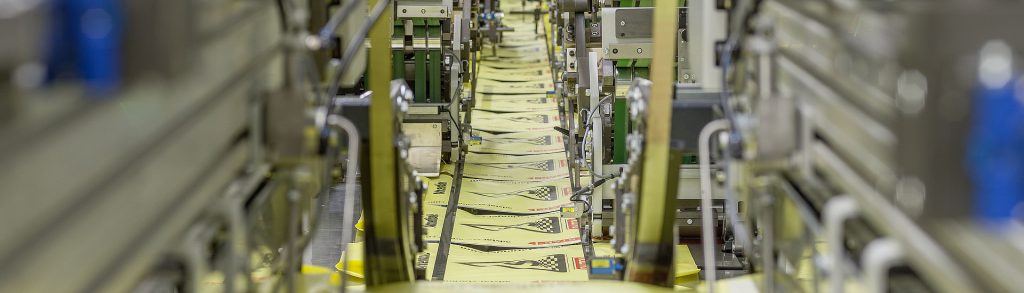
VidePak utilizes state-of-the-art machinery from Austria’s Starlinger and Germany’s W&H to achieve precision and efficiency. This high level of automation allows for consistent quality and rapid production.
Key Features of Manufacturing:
- High-Speed Automation: Machines operate at speeds exceeding 200 bags per minute, ensuring quick delivery for large-scale orders.
- Multi-Layer Lamination: Advanced lamination techniques improve moisture resistance and durability, making the bags suitable for various environmental conditions.
- Stringent Quality Control: Automated quality checks are conducted throughout production, guaranteeing every bag meets strict performance standards.
These capabilities not only streamline operations but also enable VidePak to produce transparent woven bags that stand out in terms of quality and reliability.
Explore VidePak’s innovative production techniques.
Advantages of Transparent Woven Bags
1. Strength and Reliability
The fine yarn weaving process enhances the structural integrity of the bags, allowing them to withstand heavy loads without tearing. This makes them suitable for bulk storage and transportation of products like grains, seeds, and pet food.
2. Visual Appeal and Branding
Transparent woven bags offer a clear view of their contents, reducing errors in inventory management. Additionally, their smooth surface supports high-quality printing, making them an excellent choice for branding in retail settings.
3. Sustainability
Manufactured with recyclable materials, these bags align with the sustainability goals of environmentally conscious businesses, minimizing their ecological footprint.
4. Versatility Across Industries
The bags’ customizable sizes and features cater to a wide range of industries, ensuring each product has a tailored solution.
Future Trends in Transparent Woven Bags
Smart Packaging Innovations
Emerging technologies like QR codes and RFID tags can be integrated into transparent woven bags to streamline inventory tracking and enhance customer engagement.
Advancements in Materials
Research into biodegradable polypropylene is paving the way for sustainable packaging solutions, reducing reliance on non-renewable materials.
Increased Automation
VidePak is exploring fully automated production lines and AI-driven quality checks to further improve efficiency and consistency in manufacturing.
Technical Specifications
| Parameter | Details |
|---|---|
| Material | High-density recyclable polypropylene. |
| Sizes | Customizable to client specifications. |
| Printing Options | High-resolution, multi-color printing. |
| Load Capacity | Enhanced by fine yarn technology for up to 25% higher tensile strength. |
| Sustainability | Fully recyclable materials with ongoing development in biodegradability. |
FAQs
Q1: How do transparent woven bags improve inventory management?
The transparent design allows for immediate identification of contents, reducing errors and enhancing efficiency in warehousing and logistics.
Q2: Are these bags suitable for heavy loads?
Yes, the fine yarn weaving process provides superior tensile strength, ensuring the bags can handle substantial weights.
Q3: Can VidePak customize transparent woven bags for specific needs?
Absolutely. From size and strength to printing and lamination, the bags can be tailored to meet diverse industry requirements.
Q4: What sustainability measures are in place for these bags?
VidePak uses recyclable polypropylene and is actively researching biodegradable materials to enhance sustainability.
Conclusion
Transparent woven bags represent a fusion of functionality and aesthetic excellence, addressing the needs of diverse industries in China. VidePak’s adoption of fine yarn technology and advanced manufacturing ensures its products excel in quality, strength, and versatility. With a commitment to sustainability and innovation, VidePak continues to lead the packaging industry, setting benchmarks for excellence and environmental responsibility.