
- What are Polypropylene Woven Bags, and what are they also called?
- What are the core features of Polypropylene Woven Bags?
- How are Polypropylene Woven Bags manufactured?
- What are Polypropylene Woven Bags used for?
- Closure Options for Polypropylene Woven Bags — Four Ways to Solve Four Different Problems
- System Thinking for Polypropylene Woven Bags — From Sub‑Problems to a Single Spec
- Moisture, Barrier, and Odor — The Hidden Enemies of Polypropylene Woven Bags
- Print, Optics, and Friction — Making Polypropylene Woven Bags Beautiful Without Making Them Slippery
- Compliance and Documentation — Why Polypropylene Woven Bags Come With Paperwork
- Sustainability and End‑of‑Life — Telling the Truth About Polypropylene Woven Bags
- Real‑World Scenarios — Problem → Solution → Result With Polypropylene Woven Bags
- Specifications You Can Buy Today — Typical Ranges for Polypropylene Woven Bags
- Buyer’s Guide — Choosing Among Polypropylene Woven Bags Without Guesswork
- Frequently Asked Questions About Polypropylene Woven Bags
- Closing the Loop — Turning Polypropylene Woven Bags From Commodity to Capability
- Introduction — Why Polypropylene Woven Bags Still Win in Real Supply Chains
- Method — A Problem‑Oriented, Closed‑Loop Way to Specify Polypropylene Woven Bags
- Materials and Construction — What Makes Polypropylene Woven Bags Work
- Closure Options — Four Ways Polypropylene Woven Bags Prevent Loss
- De‑Aeration and Filling — Making Polypropylene Woven Bags Fast and Clean
- Moisture and Barrier — Protecting Product Inside Polypropylene Woven Bags
- Pallet Physics — Geometry and Friction in Polypropylene Woven Bags
- Print, Optics, and Handling — How Polypropylene Woven Bags Look Good Without Slipping
- Compliance and Quality — Why Auditors Like Polypropylene Woven Bags Done Right
- Sustainability — Honest Gains With Polypropylene Woven Bags
- Results — What Optimized Polypropylene Woven Bags Deliver
- Discussion — Horizontal vs. Vertical Thinking for Polypropylene Woven Bags
- Buyer Checklist — Choosing Polypropylene Woven Bags Without Guesswork
- References
What are Polypropylene Woven Bags, and what are they also called?
Polypropylene Woven Bags are industrial sacks made from drawn polypropylene tapes interlaced into a textile lattice, then converted into open‑mouth or valve formats for carrying powders and granules from 5 to 50 kilograms. In purchasing lists and on factory floors they are also called PP woven sacks, PP woven open‑mouth bags, PP valve sacks, laminated PP woven bags, kraft‑laminated woven sacks, BOPP‑laminated woven bags, and block‑bottom woven sacks. However the nickname shifts, the essence remains: Polypropylene Woven Bags deliver a high‑strength, low‑tare, moisture‑managed package that stacks neatly yet survives rough handling.
The phrase may sound simple; the engineering is not. Polypropylene Woven Bags are not just pieces of fabric sewn into a tube. They are composite systems in which geometry, friction, de‑aeration, and barrier all interact. What looks like a humble sack becomes a platform for stable pallets, cleaner filling rooms, and compliant food or feed packaging.
What are the core features of Polypropylene Woven Bags?
When buyers shortlist packaging for powders and grains, they weigh a familiar triad: performance, presentation, and price. Polypropylene Woven Bags sit at the intersection. The woven skeleton yields high tensile and tear strength at comparatively low mass; coatings and laminations manage moisture; optional micro‑perforation vents trapped air during high‑speed filling; anti‑slip lacquers tune the coefficient of friction (COF) for pallet safety; block‑bottom geometry stacks like bricks. Add the print canvas—either natural kraft optics or photo‑grade graphics under BOPP—and Polypropylene Woven Bags serve both warehouse and retail.
PP Woven Bags Manufacturer
Professional manufacturer of high-quality polypropylene woven bags for industrial use.
Check More →Breathable PP Woven Bags
Durable breathable polypropylene woven bags for versatile packaging solutions.
Check More →Woven Fabric PP Bags Features
Complete features and advantages of polypropylene woven fabric packaging bags.
Check More →Heavy Duty Woven Bags Guide
Ultimate guide for heavy-duty polypropylene woven bags with high load capacity.
Check More →Ask a tougher question: can one bag be strong, light, dry, printable, and still economical? In practice, yes, if the specification is treated as a system. Polypropylene Woven Bags use denier, mesh, coating weight, seam design, and geometry like levers on a control panel. Adjust one, and you influence the others. The result—when tuned with line trials—is a package that fills fast, stacks square, travels clean, and looks the part.
How are Polypropylene Woven Bags manufactured?
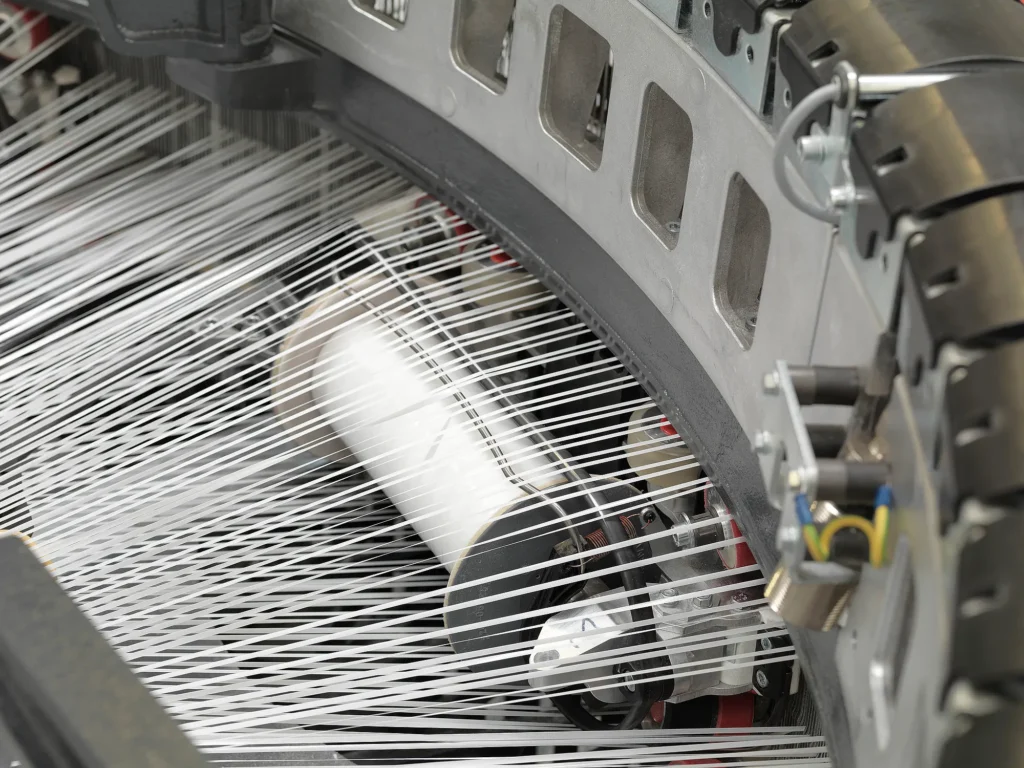
Manufacturing begins with polymer science and ends with pallet physics. Polypropylene resin is extruded into a thin film, slit into narrow tapes, and stretched (drawn) to align molecules and raise tensile strength. Those tapes are woven on circular or flat looms into tubular or sheet fabric—typical meshes run 8×8 to 12×12; fabric mass commonly sits between 55 and 100 g/m² for 25–50 kg duties. At this stage, Polypropylene Woven Bags are engineered via surface choices: a PP/PE coating of around 17–25 g/m² for moisture control, or a BOPP lamination of 18–35 μm for high‑fidelity print and improved rub resistance.
Conversion turns fabric into function. Webs are cut to length, side‑gusseted where necessary, micro‑perforated to create controlled vent pathways, and then formed as either open‑mouth bags (to be sewn or heat‑sealed) or valve bags (to pair with rotary packers). Closures matter: fold‑over stitching, fold‑over with PE tape, heat‑sealed tape stitching, and block‑bottom welding each solve a different failure mode. Quality control accompanies every station—tape width, pick count, lamination bond, seam integrity, valve adhesion, COF, and print registration—because a bag is only as strong as its weakest process.
What are Polypropylene Woven Bags used for?
The application spread is wide because the problem set is universal: powders and granules must be filled quickly, carried safely, stored cleanly, and presented clearly. Polypropylene Woven Bags address this across industries—cement and mortar, gypsum and lime, fertilizers and salts, rice and flour, sugar and semolina, animal feed and pet food, minerals and pigments, polymer resins and masterbatch. Where monsoon rains meet forklifts, where dusty fillers meet retail pallets, Polypropylene Woven Bags become the rational middle ground between paper’s optics and pure plastic’s durability. For a quick overview of common formats, see the anchor page: Polypropylene Woven Bags.
Closure Options for Polypropylene Woven Bags — Four Ways to Solve Four Different Problems
Closures decide whether a good body becomes a good bag. The same fabric can succeed or fail depending on the last ten centimeters. Polypropylene Woven Bags typically use one of four closure archetypes, each engineered to counter a particular risk profile.
Fold‑over stitching (single or double row). The open mouth is folded 25–40 mm and sewn with PP or polyester thread. It is fast, economical, and compatible with in‑plant sewing heads. In Polypropylene Woven Bags carrying coarser granules—resins, grains—this closure delivers robust mechanical security. Data reinforcement: seam strength often targets 350–600 N in grab tests; stitch density is tuned (e.g., 7–12 stitches per 10 cm) to balance throughput and security. Case insight: when a minerals packer standardized a 30 mm seam allowance and raised stitch density from 6 to 9/10 cm, mouth burst incidents fell by roughly forty percent. Comparative note: it is simpler than thermal closures but less dust‑tight for ultra‑fine powders.
Fold‑over stitching with PE tape (tape‑over seam). A strip of PE/PP tape is laid across the fold and stitched through, then heat‑nipped to melt‑close needle perforations. In Polypropylene Woven Bags of cement or fly ash, visible dust around the mouth drops by a class on typical in‑plant dust meters. The tape adds stiffness for auto‑baggers and improves scuff resistance at the lip. Comparative note: it outperforms plain stitching on dust, but it still looks sewn—useful when retrofitting existing sewing stations.
Heat‑sealed tape stitching (hot‑melt tape plus stitch, or full thermal tape). Here a thermoplastic tape is sealed by heat and pressure; the bag may be stitched first and over‑taped, or tape alone can close the mouth if coatings are compatible. For food and pet applications, Polypropylene Woven Bags gain hygiene and a neater appearance: seal strengths in the 4–6 N/15 mm range (ASTM F88) are common targets, while COF on the finished face is verified to ≥0.5–0.6 (ASTM D1894). Case insight: a pet‑food line saw scuff complaints approach zero after switching to heat‑sealed PP tape over a short stitch; microbiological swabs at the mouth edge also improved.
Block‑bottom (stitch‑less welded base; valve or open‑mouth). The base is folded into a rectangle and hot‑air welded—no needle holes, no wicking path. Geometry turns stacks into straight columns; welds keep damp floors from pulling water upward. In Polypropylene Woven Bags for cement, block‑bottom valve styles pair with rotary packers to raise speed and cut dust; in open‑mouth variants, the top can be heat‑sealed or taped. Data note: empty bag weights for 50 kg cement structures often sit around 75–95 g; COF can be tuned to ≥0.6 with anti‑slip stripes for wood pallets.
System Thinking for Polypropylene Woven Bags — From Sub‑Problems to a Single Spec
Great bags are the sum of many small, correct decisions. Instead of choosing by habit (“we always sew”) or by anecdotes (“we saw this at a trade show”), treat Polypropylene Woven Bags as a chain of sub‑problems, each with numbers attached.
Define the distribution system. Where will pallets live—dry yards, coastal depots, hot warehouses? What are the pallet surfaces—wood, plastic? What wrap recipe is used? For Polypropylene Woven Bags, this drives COF targets (≥0.5 general; ≥0.6 for retailer pallets), UV stability hours (if stored outdoors), and bottom design (stitched with anti‑wick versus welded block‑bottom).
Engineer the structure. Pick fabric GSM to meet drop and tear targets without overshooting tare; select mesh and denier for tensile; decide on coatings or laminations; choose de‑aeration strategy. For Polypropylene Woven Bags, micro‑perforation should vent trapped air through the body (not the seam) so that line dust drops and weight accuracy stabilizes.
Validate through testing. Document COF per ASTM D1894 on printed and unprinted zones; run filled‑bag drop tests aligned to ISO 7965‑1; for food/pet lines, execute migration tests and check heavy‑metals total ≤100 ppm (Directive 94/62/EC). For Polypropylene Woven Bags on sun‑exposed routes, consider UV aging programs to verify fabric strength retention.
Close the loop in production. Once tuned, lock the recipe: seam allowance, SPI, tape temperature/dwell, weld parameters, COF set‑points, micro‑perf density. Good Polypropylene Woven Bags are repeatable Polypropylene Woven Bags.
Moisture, Barrier, and Odor — The Hidden Enemies of Polypropylene Woven Bags
Humidity does not shout; it whispers. It wicks from damp floors, condenses inside containers, and turns sugar to stone. Polypropylene Woven Bags fight back with sized paper faces where used, extrusion coatings (≈17–25 g/m²), laminated films (BOPP 18–35 μm), and optional inner PE liners (25–60 μm) for highly hygroscopic goods. Welded heels eliminate capillary pathways at the base; anti‑wick beads on stitched bottoms reduce upward creep. The vertical logic is simple: raise barrier until the caking curve flattens; the horizontal logic is broader: coordinate bag design with pallet covers, wrap tension, and desiccant planning.
Comparative perspective helps. Multiwall paper breathes and can look premium, but its wet strength falls quickly; pure film sacks resist water but may skate on pallets without textured faces. Polypropylene Woven Bags split the difference—mechanical backbone from fabric, moisture control from coatings/liners, friction from lacquers—so the product, not the package, defines shelf life.
Print, Optics, and Friction — Making Polypropylene Woven Bags Beautiful Without Making Them Slippery
Brand teams want photos that pop; safety teams want pallets that stop. Polypropylene Woven Bags let both win. Reverse‑printed BOPP protects artwork under film for rub resistance, while matte/gloss choreography creates a premium look. To keep behavior honest, surface COF is measured and tuned—micro‑rough lacquers or anti‑slip stripes put friction back where gloss would have taken it away. In practice, Polypropylene Woven Bags can pass retailer friction gates (≥0.6 on wood decks) while showing photo‑grade pets, grains, or cement imagery.
The lesson is more general: do not assume aesthetics and safety are opposites. In Polypropylene Woven Bags, optics and mechanics share the same surface; a controlled finish separates beauty from “banana” stacks.
Compliance and Documentation — Why Polypropylene Woven Bags Come With Paperwork
If goods touch mouths—human or animal—paperwork must be as real as performance. Polypropylene Woven Bags for food and feed require material and plant controls that stand up to audits. Expect EU 10/2011 Declarations of Compliance covering plastic layers; FDA 21 CFR 177.1520 letters for PP components; heavy‑metals total ≤100 ppm for packaging under 94/62/EC; REACH (EC No 1907/2006) SVHC non‑intent statements; and plant schemes such as ISO 9001:2015, ISO 22000:2018/FSSC 22000, or BRCGS Packaging Materials as retailer codes demand. The point is not to fill binders. It is to remove doubt.
Well‑run suppliers pair certificates with traceability: Polypropylene Woven Bags shipped on a given day can be traced to fabric lots, tape rolls, ink batches, and weld settings. When a question is asked, an answer exists.
Sustainability and End‑of‑Life — Telling the Truth About Polypropylene Woven Bags
Recycling narratives should not eclipse the physics of loss. A bag that fails turns food into waste and cement into dust—emissions in disguise. Polypropylene Woven Bags help avoid this by pairing low tare with high survivability. Many designs achieve 20–40% lower mass than equivalent wet‑strength paper for similar duty, while cube‑efficient block‑bottoms reduce truck and container voids. Mono‑material PP/PP constructions, PP‑based tapes, and PP coatings move toward easier mechanical recycling where collection exists. The honest claim is simple: reduce product loss first, then document end‑of‑life pathways.
Real‑World Scenarios — Problem → Solution → Result With Polypropylene Woven Bags
Cement in desert heat. Problem: dusty rotary fills, yard storage, pallet slip. Solution: block‑bottom valve Polypropylene Woven Bags with micro‑perfs, UV‑stabilized fabric, and anti‑slip stripes. Result: cleaner rooms, higher net rates, stable stacks, fewer seam failures.
Pet food on retail pallets. Problem: scuff complaints and friction test failures. Solution: reverse‑printed BOPP on Polypropylene Woven Bags, heat‑sealed PP tape over a short stitch, COF tuned to ≥0.6. Result: near‑zero rub returns and retailer acceptance without rework.
Sugar through monsoon. Problem: caking and odor uptake. Solution: welded‑heel Polypropylene Woven Bags with extrusion coat raised from 18 to 24 g/m² and optional PE liner. Result: flow preserved, complaints down, rework minimized.
Specifications You Can Buy Today — Typical Ranges for Polypropylene Woven Bags
Dimensions often sit within width 300–600 mm, length 430–900 mm, and bottom 80–180 mm for block‑bottom variants. Fabric GSM spans 55–100 g/m² for 25–50 kg duties, with meshes 8×8 to 12×12 and tapes 500–1500 denier. Coatings around 17–25 g/m², BOPP films at 18–35 μm, and optional inner liners at 25–60 μm complete the barrier stack. For friction, Polypropylene Woven Bags typically target COF ≥0.5 in general warehouses and ≥0.6 where retailer gates require it. For closures, seam allowances of 25–40 mm, stitch densities of 7–12/10 cm, heat‑sealed tape windows validated via ASTM F88, and hot‑air weld parameters verified with peel/creep tests keep performance predictable.
Printing choices split along optics and duty. Flexo on kraft conveys a natural look at good cost; reverse gravure under BOPP delivers photographic fidelity with excellent rub resistance. In both cases, COF is measured on printed and unprinted zones so the surface behaves under stretch wrap, on conveyors, and during depalletization. These ranges are not hypotheticals—they mirror what mainstream listings on global marketplaces show for Polypropylene Woven Bags today.
Buyer’s Guide — Choosing Among Polypropylene Woven Bags Without Guesswork
Start with climate and floor reality. If pallets meet rain, condensation, or wet concrete, prefer welded bottoms or anti‑wick treatments. Move to filler behavior. If speeds exceed 20–30 bags/min per spout and powders are fine, bias toward block‑bottom valve Polypropylene Woven Bags or heat‑sealed tapes. Consider optics and friction jointly; if you need gloss, give COF back with micro‑rough lacquers. Align documentation with exposure: food and feed lines should have migration reports and heavy‑metal declarations on file. Finally, revisit sustainability. The greenest Polypropylene Woven Bags in your chain are the ones that prevent loss.
Procurement loves simple spec sheets. Operations love quiet lines. The best decision aligns both.
Frequently Asked Questions About Polypropylene Woven Bags
Are Polypropylene Woven Bags recyclable? Mono‑material PP/PP constructions, PP tapes, and PP coatings support mechanical recycling where PP collection exists; end‑of‑life options depend on local infrastructure.
Can Polypropylene Woven Bags match retail‑grade print? Yes. Reverse‑printed BOPP delivers photo‑quality imagery protected beneath film, while matte/gloss choreography and anti‑slip lacquers maintain safe COF.
Will Polypropylene Woven Bags work on my filler? They can be tuned—valve geometry, micro‑perf density, seam style, and COF—to your equipment and target throughput via short pilot runs.
Where can I learn more formats or request samples of Polypropylene Woven Bags? Visit the anchor page: Polypropylene Woven Bags.
Closing the Loop — Turning Polypropylene Woven Bags From Commodity to Capability
The path is clear: define the route‑to‑market, decompose risks, tune materials and closures, validate by numbers, and freeze the recipe. Do that, and Polypropylene Woven Bags stop being a generic line item and start behaving like infrastructure—quiet, strong, dependable. The product succeeds; the pallets behave; the audits pass. And the bag? The bag simply does its job.
Introduction — Why Polypropylene Woven Bags Still Win in Real Supply Chains
Powders breathe, granules bounce, pallets sway. Polypropylene Woven Bags bring order to that chaos by combining a tensile PP tape lattice with moisture‑aware finishes and closure options that respect line speed and route‑to‑market. Buyers know the aliases—PP woven sacks, PP valve bags, laminated woven bags—but the job remains the same: keep product clean, keep pallets square, keep graphics readable. For formats and variants, the anchor page is here: Polypropylene Woven Bags.
Method — A Problem‑Oriented, Closed‑Loop Way to Specify Polypropylene Woven Bags
Treat the package as a system, not a part. We begin by mapping the distribution environment (humidity, pallet surface, wrap recipe), then decompose risk into sub‑problems—mechanical strength, de‑aeration, barrier, friction, closure integrity. Each sub‑problem receives a measurable target (fabric GSM, stitch density, COF ≥0.5–0.6, micro‑perf count), followed by short line trials. Results are rolled into a frozen specification so Polypropylene Woven Bags behave predictably from filler to retail pallet.
Materials and Construction — What Makes Polypropylene Woven Bags Work
At the core are drawn PP tapes woven into 8×8–12×12 meshes, typically 55–100 g/m² for 25–50 kg duty. Coatings around 17–25 g/m² add moisture control; BOPP films at 18–35 μm enable high‑fidelity print and rub resistance. Options such as inner PE liners (25–60 μm) support hygroscopic contents. Horizontal view: balance fabric mass with coating and film so tare stays low while protection stays high. Vertical view: link denier and mesh to tensile/tear, link coating weight to Cobb/WVTR, link film choice to print durability for Polypropylene Woven Bags.
Closure Options — Four Ways Polypropylene Woven Bags Prevent Loss
Fold‑over stitching. A 25–40 mm mouth fold stitched with PP/polyester thread: economical, fast, compatible with existing sewing heads. Good for grains and resins. Risk: needle holes form dust channels with fine powders.
Fold‑over stitching with PE/PP tape. Tape laid over the fold, stitched through, then heat‑nipped to melt‑close perforations—stiffer, cleaner mouths for cement or fly ash. Looks sewn, runs on legacy equipment, leaks far less.
Heat‑sealed tape stitching. A thermoplastic tape sealed by heat/pressure (with or without an underlying stitch). Neater appearance and higher hygiene suitability for food/pet lines; seal verified by pull tests.
Block‑bottom (stitch‑less welded base). Coated fabric is folded and hot‑air welded into a rectangular base—no bottom stitch holes, no wicking path, stacks like bricks. Valve versions pair with rotary packers; open‑mouth versions take a heat‑seal or tape at the top. The constant: Polypropylene Woven Bags close the loop on dust, water, and geometry at the places where failures begin—the last ten centimeters.
De‑Aeration and Filling — Making Polypropylene Woven Bags Fast and Clean
Powders trap air; air inflates bags; inflated bags wobble on pallets. Micro‑perforation creates controlled vent paths so air exits through the body, not the seam. Valve designs meter flow without blow‑back; open‑mouth variants accept heat seals or stitching with anti‑wick beads. Horizontally, filling, weighing, and dust control are synchronized; vertically, micro‑perf density is tuned to particle size and spout pressure so Polypropylene Woven Bags hit target weights at speed.
Moisture and Barrier — Protecting Product Inside Polypropylene Woven Bags
Humidity steals margin silently—through damp floors, container sweat, monsoon seasons. Sized papers, PP/PE coatings, BOPP laminations, and optional liners form a layered strategy. Welded heels remove capillary pathways at the base; anti‑wick finishes mitigate stitched bottoms. Horizontal analysis compares climate profiles and voyage lengths; vertical analysis links coat weight and film thickness to caking, odor pickup, and shelf life. The objective is simple: Polypropylene Woven Bags that manage a micro‑climate around the product.
Pallet Physics — Geometry and Friction in Polypropylene Woven Bags
Packages do not fail in the air; they fail under compression and vibration. Body width, length, and block‑bottom width determine contact area and column behavior. Anti‑slip lacquers or stripes tune COF to ≥0.5 in general DCs and ≥0.6 for retailer tests on wooden decks. Horizontal thinking links bag geometry to pallet footprint and wrap tension; vertical thinking ties COF and bottom style to real‑world incident rates so Polypropylene Woven Bags stack like cartons but flex like textiles.
Print, Optics, and Handling — How Polypropylene Woven Bags Look Good Without Slipping
Brand wants gloss; safety wants grip. Reverse‑printed BOPP hides inks under film for photo‑grade imagery and high rub resistance. Micro‑rough lacquers give friction back where gloss would have taken it away. Printing directly on kraft‑laminated faces keeps a natural look; COF is still measured on printed and unprinted zones. The lesson: in Polypropylene Woven Bags, optics and mechanics share the same surface—tune one without compromising the other.
Compliance and Quality — Why Auditors Like Polypropylene Woven Bags Done Right
Food and feed lines demand real documentation: EU 10/2011 Declarations for plastic layers, FDA 21 CFR 177.1520 letters for PP, heavy‑metals total ≤100 ppm (Directive 94/62/EC), REACH SVHC non‑intent statements, and plant schemes such as ISO 9001 plus ISO 22000/FSSC or BRCGS Packaging where retailer codes require. Traceability links finished pallets to fabric, tape, ink, and weld parameters. When a customer asks, Polypropylene Woven Bags answer with data.
Sustainability — Honest Gains With Polypropylene Woven Bags
A bag that fails is the worst footprint. Polypropylene Woven Bags reduce product loss by combining low tare with high survivability: many builds are 20–40% lighter than wet‑strength paper at similar duty, while block‑bottom geometry improves cube utilization. Mono‑material PP/PP constructions, PP‑based tapes, and PP coatings support mechanical recycling where PP collection exists. The order of operations is clear: prevent loss first, then optimize end‑of‑life.
Results — What Optimized Polypropylene Woven Bags Deliver
When specifications are tuned, plants report cleaner fillers, steadier scales, fewer seam bursts, and pallets that depalletize like cartons. Moisture‑controlled stacks cut caking through humid seasons; photo‑grade prints survive conveyors while COF stays inside safety windows. Translated into business terms, Polypropylene Woven Bags yield higher OEE, fewer claims, and better freight economics.
Discussion — Horizontal vs. Vertical Thinking for Polypropylene Woven Bags
Horizontally, packaging, logistics, QA, and brand collaborate so bag surfaces serve both cameras and forklifts. Vertically, each parameter acquires a narrative: a COF of 0.58 becomes fewer tilt alarms; a 24 g/m² coating becomes sugar that still flows in July; a welded base becomes pallets that stop collapsing in the third warehouse. The logic loop—measure → pilot → lock → audit—turns Polypropylene Woven Bags from commodity into capability.
Buyer Checklist — Choosing Polypropylene Woven Bags Without Guesswork
Route to market (dry yard vs. coastal depot), pallet surface (wood vs. plastic), line speed (bags/min), particle size (powder vs. granule), optics (kraft vs. BOPP), friction requirement (COF target), and audit scope (food/pet vs. industrial). Map those seven and the right combination of fabric GSM, closure type, micro‑perfs, and finishes for Polypropylene Woven Bags becomes obvious—and defensible.
References
- What Spare Parts Do CNC Shops Order Most Often?
- How Do I Get My CNC Router To Live A Long Life?
- Why Is A Live Technician Worth The Cost When A CNC Gear Breaks?
- How Do I Figure Out Which Spare Parts Fit My CNC Lathe?
- My CNC Shop Keeps Tripping Up; What Gives?
- How Critical Are Cables In The Overall Function Of A CNC Setup?
- Do Mills And Lathes Use Their Dedicated Spare Parts?
- How Can Builders Extend The Working Life Of Their CNC Machines?
- Understanding The Production Process
- Advantages Of CNC For Titanium
- Applications Of Titanium CNC Machined Parts
- Exploring Different Grades Of CNC