
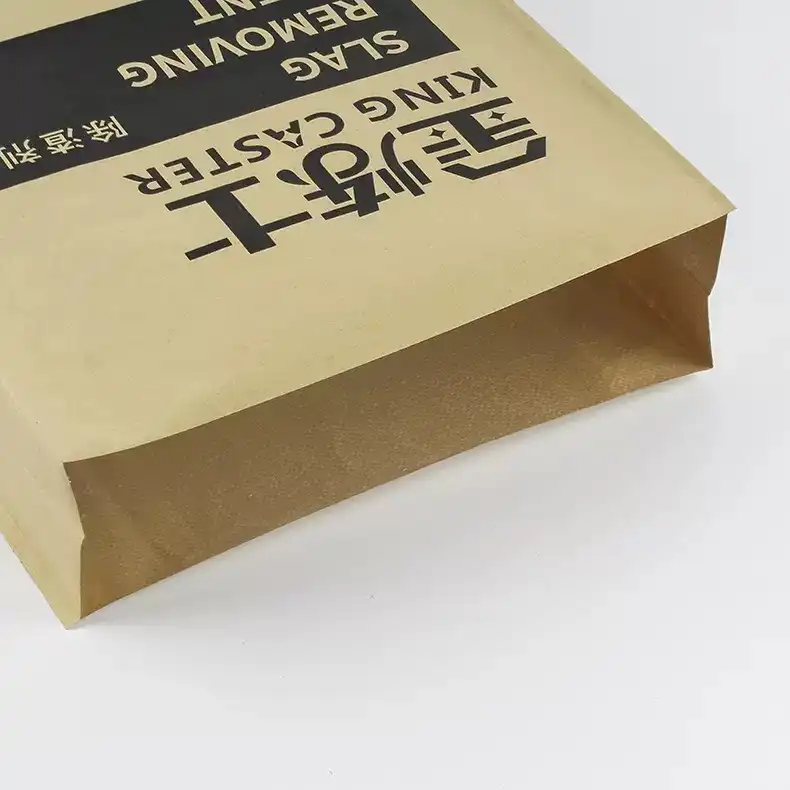
VIDEPAK Laminated Kraft Paper Bags: Where Paper Appearance Meets Woven Strength
Industrial packaging has a simple job on paper: hold the product, protect it, and move it from one place to another. In real supply chains, however, the job is much harder. A bag may face fast filling, internal pressure, sharp product particles, repeated lifting, pallet compression, humid warehouses, container transport, dust, scuffing, and demanding retail presentation. That is why VIDEPAK approaches Laminated Kraft Paper Bags as engineered packaging systems rather than ordinary paper sacks.
The design principle is straightforward. Kraft Paper provides the visible surface, stiffness, friction, and a clean area for printing. PP Woven Fabric works as the structural layer that carries much of the mechanical load. Lamination brings the materials together and can improve moisture control, surface integrity, and handling performance. In PP Laminated Kraft Paper Bags, these elements do different jobs, but they work toward one result: packaging that is strong enough for industrial logistics and presentable enough for a modern brand.
VIDEPAK can develop Laminated Kraft Paper Bags for powders, granules, agricultural products, food-related dry goods, fertilizers, minerals, animal nutrition, construction materials, chemical products, and many other applications. Bag dimensions, material weights, closures, valves, liners, printing, coatings, perforation, and surface treatments can all be adjusted according to the product and filling process. VIDEPAK’s published product information describes configurations ranging from conventional laminated paper structures to paper-laminated woven sacks and higher-barrier composite constructions.
The VIDEPAK design idea: Do not ask one material to do every job. Let Kraft Paper communicate. Let PP Woven Fabric carry. Let Lamination connect and protect. The result is a balanced family of Laminated Kraft Paper Bags built around the real journey of the packed product.
Understanding the Architecture of Laminated Kraft Paper Bags
A composite package, not simply a paper bag
Laminated Kraft Paper Bags are created by combining a paper layer with one or more functional layers through Lamination. Depending on the application, the supporting structure may include PP Woven Fabric, polymer coating, film, an inner liner, or a specialized barrier layer. This means that the words “laminated kraft bag” can describe several constructions rather than one fixed material recipe.
For heavy-duty dry products, PP Laminated Kraft Paper Bags are especially important because the paper and woven layer divide the work. Kraft Paper gives the package a firm, familiar surface and supports clear branding. PP Woven Fabric adds tensile and tear resistance through interwoven polypropylene tapes. The bonding layer holds the package together so impact and handling forces can be distributed across the structure rather than concentrated in one fragile layer. VIDEPAK describes paper-laminated woven packaging in the same way: a printable paper exterior works together with a load-bearing polypropylene woven structure and a controlled bonding layer.
Why the layered approach matters
A paper-only sack can offer excellent print quality and useful stiffness, but moisture and rough handling can become concerns when specifications are not matched carefully to the distribution environment. A basic woven sack can be very tough, but its textured surface may not deliver the paper-style look a brand wants. PP Laminated Kraft Paper Bags sit between these two approaches. Paper on the outside. Woven strength beneath. A controlled Lamination interface between them.
This is the key advantage of Laminated Kraft Paper Bags: performance can be designed layer by layer. A customer that needs better print presentation may focus on the grade and surface of Kraft Paper. A customer packing a dense or abrasive material may focus more heavily on PP Woven Fabric weight, weave construction, seam design, and bottom geometry. A moisture-sensitive powder may require a tighter coating, an additional liner, or another barrier strategy. The package changes because the risk changes.
A Closer Look at VIDEPAK Laminated Kraft Paper Bags
Built around the product rather than a fixed recipe
There is no single specification that can represent every VIDEPAK Laminated Kraft Paper Bags project. Packing ten kilograms of a light granular product is different from packing fifty kilograms of a dense powder. Filling slowly by gravity is different from using a high-speed valve packer. A bag stored in a dry indoor warehouse has different needs from one moving through warm and humid ports.
For that reason, VIDEPAK develops Laminated Kraft Paper Bags around capacity, bulk density, particle size, filling method, handling conditions, transport route, storage time, pallet pattern, printing requirements, and expected exposure to moisture. Published VIDEPAK material ranges for related kraft sack constructions include paper basis weights around 70–150 g/m², while its poly-paper descriptions show woven substrates commonly engineered in ranges such as approximately 70–120 g/m². Other VIDEPAK woven applications use still broader fabric-weight ranges, demonstrating why the final specification should be confirmed against the application rather than copied from a generic data sheet.
Common configuration choices
A simple version of Laminated Kraft Paper Bags may use Kraft Paper bonded to a polymer layer to improve surface protection. A more structural version may combine Kraft Paper and PP Woven Fabric. More demanding applications can introduce a liner or barrier layer. VIDEPAK also works with open-mouth, sewn, pinch-style, pasted, valve, and block-bottom concepts across its wider industrial bag portfolio, allowing the bag geometry to be considered alongside the materials.
Strength
PP Woven Fabric reinforces Laminated Kraft Paper Bags when the package must carry heavier loads or tolerate demanding handling.
Presentation
Kraft Paper creates a clean printable face for product names, instructions, logos, barcodes and market-specific information.
Protection
Lamination, coatings and optional liners can be selected to control moisture exposure, dust escape and product sifting.
Printing that works for industrial communication and branding
Packaging has to carry kilograms, but it also has to carry information. The outer Kraft Paper surface of Laminated Kraft Paper Bags can provide an attractive platform for brand graphics, product identification, regulatory information, batch coding zones, safety instructions and handling symbols. VIDEPAK lists multi-color printing options on related laminated kraft constructions, including configurations offering up to eight colors depending on the bag structure and printing route.
That matters in two very different markets. In industrial channels, printing must be easy to read, easy to identify and consistent from pallet to pallet. In consumer-facing or dealer-facing channels, it must also support brand value. One surface, two roles: communicate clearly and present professionally.
Why PP Laminated Kraft Paper Bags Depend on PP Woven Fabric
The internal skeleton of the package
The easiest way to understand PP Woven Fabric is to think of it as a flexible skeleton. Polypropylene is formed into tapes, the tapes are oriented and then woven into a fabric. The crossing tapes create a structure that can carry tensile loads efficiently while remaining lightweight and flexible. Woven polypropylene sacks are widely used for dry bulk packaging, and ISO 23560:2015 specifies general characteristics, requirements and test methods for certain 25 kg and 50 kg woven PP sacks intended for foodstuffs such as cereals, sugar and pulses.
In VIDEPAK PP Laminated Kraft Paper Bags, PP Woven Fabric gives the paper-faced package a strong structural base. This is particularly useful when a bag will be lifted repeatedly, dropped during normal handling, compressed on pallets, rubbed against other bags, or subjected to vibration during truck and container transport. Paper remains visible. The woven structure works quietly underneath.
The strength of PP Woven Fabric cannot be reduced to one number. Fabric weight matters, but so do tape width, tape consistency, weave density, orientation, seam construction, coating, bag geometry and the way load moves through corners and closures. VIDEPAK therefore treats woven material parameters as part of a system rather than assuming that a heavier fabric automatically creates a better bag. Its published woven ranges show that different projects use substantially different fabric weights and constructions according to duty.
Typical design parameters for buyer discussion
The following values are practical reference ranges drawn from VIDEPAK’s published product information. They are not universal limits. Final PP Laminated Kraft Paper Bags should be specified according to filling tests, product characteristics, transport conditions, customer equipment and applicable market requirements.
Important specification principle: more material is not automatically better material. The goal of VIDEPAK PP Laminated Kraft Paper Bags is to place the right amount of Kraft Paper, PP Woven Fabric and Lamination in the right structure for the customer’s actual product and supply chain.
The Role of Kraft Paper and Lamination
Kraft Paper: more than a decorative outer layer
In Laminated Kraft Paper Bags, Kraft Paper makes the first visual impression, but appearance is only part of its job. Sack paper can contribute stiffness, friction, folding behavior, impact-energy management and print performance. Technical work published through the paper industry has long highlighted the importance of both strength and porosity in high-performance sack kraft applications, because a sack must survive handling while also working with the filling process.
Natural brown Kraft Paper creates a practical industrial appearance and can communicate simplicity and material authenticity. Bleached or lighter paper options can provide a brighter printing surface when the graphic design requires stronger contrast. Grammage can be changed according to stiffness, handling and surface requirements. Yet paper should never be selected alone: its behavior must be considered together with PP Woven Fabric, the bag closure and Lamination.
This interaction is why PP Laminated Kraft Paper Bags can feel more balanced than either substrate by itself. The Kraft Paper face can resist light scuffing and create useful pallet friction, while the woven backing carries much of the tensile load. One gives shape; one gives strength. One speaks to the market; one supports the journey.
Lamination: the interface that makes the layers cooperate
Lamination is not an afterthought. If Kraft Paper and PP Woven Fabric are the major structural components of PP Laminated Kraft Paper Bags, the bond between them is the interface through which forces are transferred. Uniform bonding helps keep the outer paper attached during folding, filling, transport and repeated flexing. Depending on the design, polymer-based extrusion bonding or other converting approaches may be used to create the composite structure. VIDEPAK’s published production descriptions specifically discuss bonding paper and woven material during the composite-bag manufacturing process.
Good Lamination must balance several goals at once. The bond needs to be reliable, but the finished bag must still fold and convert correctly. The structure may need to slow moisture movement, yet a fast-filled powder may also require controlled air release. A smooth surface may support printing, while the pallet may require useful friction. Packaging engineering is full of these trade-offs. Solving one problem while creating another is easy; solving them together is the real work.
How the material system comes together
Define the base material for the woven reinforcement.
↓
Tape formation and weaving establish the structural foundation.
↓
Choose paper surface, grammage and artwork according to the application.
↓
Bond paper and woven layers into an integrated composite web.
↓
Form the required size, gussets, bottom, valve, mouth and closure.
↓
Inspect, pack and prepare the finished packaging for customer use.
The sequence is simple to see, but every step influences the next. Inconsistent woven fabric can affect the surface. Inconsistent paper can affect printing and conversion. Weak bonding can reduce the advantage of the composite. Poor bag geometry can waste the strength of good raw materials. VIDEPAK therefore looks at Kraft Paper, PP Woven Fabric and Lamination as one connected system.
Where Laminated Kraft Paper Bags Create Value
Construction materials and mineral powders
Construction products often combine high weight, abrasive particles, dust and demanding transport. In these applications, PP Laminated Kraft Paper Bags can use PP Woven Fabric as the load-bearing structure while the Kraft Paper exterior delivers clear product identification and a more paper-like presentation. Valve-style or other filling-oriented configurations can be considered where powders must be packed efficiently. VIDEPAK’s product portfolio places woven and paper-composite formats across building-material and mineral applications for precisely these types of packaging demands.
Agriculture, grain, seed and animal nutrition
Agricultural packaging needs a different balance. Some products need natural air movement; others must be protected from humidity. Some contain coarse pellets; others contain fine meals. Some bags remain industrial, while others appear in dealer stores where design matters. Laminated Kraft Paper Bags give the buyer several levers: adjust PP Woven Fabric, change the coating, select suitable Lamination, add controlled perforation, choose a liner, and design the outer Kraft Paper for the required market.
Food-related dry products
Dry-food packaging places greater attention on material suitability, cleanliness, documentation and the relationship between the packaging and the product. Woven polypropylene sacks are covered by specific international requirements in some food-bulk applications, while the final construction, contact layer and compliance documentation always need to match the destination market and intended use.
For suitable projects, PP Laminated Kraft Paper Bags can combine a strong woven shell with a paper exterior, while liners or additional layers can be considered when direct product-contact or barrier requirements demand a more specialized structure. The important point is not to call every bag “food grade” by default. The correct approach is to define the product, contact condition, destination and applicable requirements first, then build the bag accordingly.
Fertilizers, chemicals and technical powders
Fertilizers, resins, pigments and chemical powders can be heavy, moisture-sensitive, dusty or difficult to contain. Here the modular nature of Laminated Kraft Paper Bags becomes valuable. Stronger PP Woven Fabric can address mechanical stress. More protective Lamination can help manage the outer environment. An inner liner can provide another functional layer where required. The Kraft Paper face can then carry product identification, handling instructions and safety communication in a highly visible format.
The right specification begins with questions
How heavy is the product? How large is each particle? Does it absorb moisture? Does it contain sharp edges? Is the bag filled by gravity, auger, impeller or another system? How quickly must air leave during filling? Will the package be sewn, pasted, heat sealed or closed through a valve? Will it travel by truck only, or spend weeks inside an ocean container? Will it be stored indoors? Will it be displayed to consumers?
Those questions are more useful than asking for “the strongest bag.” A stronger PP Woven Fabric may not solve a poor valve. A thicker Kraft Paper may not solve trapped filling air. More Lamination may improve moisture resistance while reducing natural breathability. Good packaging is not the maximum of every parameter. It is the balance of every parameter.
A useful purchasing rule: specify the journey before specifying the bag. VIDEPAK can then build Laminated Kraft Paper Bags around the product, filler, pallet, warehouse and transport route instead of forcing every customer into one standard construction.
From Raw Materials to Finished PP Laminated Kraft Paper Bags
Material preparation
Production begins before the bag exists. For a woven-reinforced construction, polypropylene is converted into tapes and the tapes are woven to create PP Woven Fabric. Consistency at this stage matters because uneven tape or fabric behavior can affect strength, coating, conversion and final appearance. At the same time, suitable Kraft Paper is selected according to the planned weight, printing design and mechanical requirements.
VIDEPAK’s published descriptions of woven-packaging manufacture follow this integrated logic: polymer processing establishes the tape, weaving establishes the base fabric, coating or Lamination modifies the surface and barrier behavior, and conversion turns the material into the final bag geometry.
Printing and composite formation
The outer Kraft Paper may be printed before final converting, depending on the construction and production route. Artwork has to do more than look attractive. It must remain aligned with folds, gussets, valves, sewing areas and other converting zones. Product names need space. Regulatory text needs space. Barcodes need usable contrast. Brand design and bag engineering therefore meet on the same sheet of paper.
Next comes Lamination. The paper and woven components are bonded into the composite structure. Control at this stage influences adhesion, flatness, flexibility and how the material behaves in later forming operations. VIDEPAK’s descriptions of paper-and-woven manufacturing specifically identify the bonding step as central to creating the durability expected from the combined construction.
Bag forming, closures and functional details
The laminated web is converted to the required bag format. Width, length and gusset depth are established according to volume and pallet dimensions. The top and bottom design are formed according to the filling system. Depending on the project, this may mean an open-mouth configuration, a valve construction, a sewn closure, a pasted structure or another suitable design.
Optional functional changes can also be introduced. Controlled perforation can help air escape during filling. An inner film can improve containment or moisture protection. Surface treatments can influence handling. A valve can reduce manual closing work on compatible filling equipment. Each addition has a reason; each reason should trace back to a real operating requirement.
Quality should be evaluated as a system
A finished PP Laminated Kraft Paper Bags specification should not be judged only by paper grammage or fabric weight. Dimensional consistency, seam or bottom integrity, bond quality, print position, surface condition, valve construction, perforation, liner fit and filled-bag performance can all matter. The complete package is only as dependable as its weakest interface.
How to Select the Right VIDEPAK Laminated Kraft Paper Bags
Start with the packed product
Begin with bulk density, particle size and packed weight. These three factors determine a large part of the bag’s geometry and mechanical requirement. A dense mineral powder creates a different load profile from a light feed ingredient. A sharp granular product creates a different puncture risk from a smooth flour. Before discussing artwork, first understand what the bag must physically contain.
Then define the filling process
Filling method changes packaging behavior. A product entering quickly can carry trapped air into the bag. If that air cannot escape, the package may swell, slow the filling cycle or become difficult to close and stack. In such applications, the permeability of the structure, controlled perforation, valve design and coating choices need to work together. VIDEPAK’s breathable woven packaging guidance emphasizes exactly this balance between air release, product retention, surface coatings and bag geometry.
This is particularly important for PP Laminated Kraft Paper Bags. Because Lamination can reduce the natural permeability of woven material, a bag designed for fast-filling powder may require engineered air-release paths. More barrier is useful only when the filling process can still operate correctly.
Map the distribution risk
Next, consider what happens after filling. Pallet compression places long-duration forces on the bag. Truck vibration creates repeated movement. Container transport may expose the load to changing temperature and humidity. Forklift handling creates puncture and edge risks. Warehouses can add stacking pressure. The specification of PP Woven Fabric, Kraft Paper, closure and Lamination should therefore reflect the full distribution route, not only the first five minutes after the bag leaves the filler.
Finish with presentation and market requirements
Only after the mechanical and barrier needs are clear should printing and visual design be finalized. This does not make branding less important. It makes branding more reliable. When the correct Kraft Paper and package geometry have already been selected, artwork can be built around the real printing panel, folds and handling areas instead of being forced onto an unsuitable structure later.
A practical specification path
Product → Packed Weight → Filling Method → Air Release → Moisture Requirement → PP Woven Fabric → Kraft Paper → Lamination → Closure → Printing → Pallet → Transport → Finished Laminated Kraft Paper Bags
Following this order helps prevent a common mistake: selecting a bag by appearance or price before defining what the packaging must actually survive.
Why VIDEPAK for Laminated Kraft Paper Bags
One product family, many possible structures
The commercial value of VIDEPAK Laminated Kraft Paper Bags is not based on one standard construction. It comes from the ability to change the structure around different markets and operating conditions. The customer can begin with Kraft Paper and add PP Woven Fabric when stronger mechanical support is required. Lamination can be tuned. Closures can change. Printing can change. Liners can be introduced. Perforation can be adjusted. Dimensions can be developed around filling equipment and pallet size.
This makes PP Laminated Kraft Paper Bags a platform rather than a single SKU. The same basic paper-and-woven idea can support an industrial powder bag, an agricultural sack, an animal-feed package or a more brand-focused retail format. The materials remain familiar, but the engineering behind them changes.
Look beyond the price of one empty bag
A packaging purchase is often compared by unit price. That number matters, but it is not the whole cost. A bag also affects filling speed, operator intervention, product loss, broken-package cleanup, rework, pallet stability, warehouse efficiency, transport claims and brand presentation. A cheaper bag that fails more often may become expensive after filling. A slightly more engineered bag can create value quietly because nothing goes wrong.
That is the purpose of combining Kraft Paper, PP Woven Fabric and Lamination. The outer paper communicates. The inner woven structure supports. The composite bond holds the system together. Optional layers answer special risks. No single material has to solve every problem.
Strong inside. Clear outside. Designed around the journey.
VIDEPAK Laminated Kraft Paper Bags are developed for customers who want more than a conventional paper sack and more than a basic woven package. They bring the printable, familiar appearance of Kraft Paper together with the structural advantages of PP Woven Fabric. Through controlled Lamination, customized dimensions, suitable closures and application-focused options, PP Laminated Kraft Paper Bags can be built around the product rather than asking the product to fit the bag.
The result is a practical packaging philosophy: strong where strength matters, printable where communication matters, protective where the environment matters, and configurable where each customer’s process is different. For heavy industrial materials, agricultural goods, food-related dry products, minerals, fertilizers, animal nutrition and other demanding applications, VIDEPAK Laminated Kraft Paper Bags provide a flexible path from material selection to finished packaging.
VIDEPAK Packaging Principle
Kraft Paper for the face. PP Woven Fabric for the force. Lamination for the connection.
That combination is the foundation of VIDEPAK Laminated Kraft Paper Bags and PP Laminated Kraft Paper Bags: packaging engineered to fill efficiently, carry confidently, stack cleanly, communicate clearly, and arrive ready for the next step in the customer’s supply chain.
- VIDEPAK Laminated Kraft Paper Bags: Where Paper Appearance Meets Woven Strength
- Understanding the Architecture of Laminated Kraft Paper Bags
- A Closer Look at VIDEPAK Laminated Kraft Paper Bags
- Why PP Laminated Kraft Paper Bags Depend on PP Woven Fabric
- The Role of Kraft Paper and Lamination
- Where Laminated Kraft Paper Bags Create Value
- From Raw Materials to Finished PP Laminated Kraft Paper Bags
- How to Select the Right VIDEPAK Laminated Kraft Paper Bags
- Why VIDEPAK for Laminated Kraft Paper Bags
- What Are Laminated Kraft Paper Bags?
- Why Laminated Kraft Paper Bags Solve Real Problems
- Lamination Architectures You Will Actually Encounter
- References
What Are Laminated Kraft Paper Bags?
What exactly are Laminated Kraft Paper Bags? In short, they are composite paper packages in which a kraft paper substrate is permanently bonded to a secondary layer—film, foil, or a woven polymer—to achieve properties that plain paper alone cannot deliver. Across catalogs and factory floors you will also see aliases such as paper‑foil laminate bags, kraft‑laminated pouches, paper‑poly composite sacks, paper‑laminated woven bags, and laminated paper valve sacks. Different names, one idea: paper on the outside for tactile appeal and legible print; engineered lamina inside for barrier, sealing, and durability.
What are the defining features of Laminated Kraft Paper Bags? Strength without bulk; moisture and oxygen control via PE, VMPET, or foil layers; clean, matte optics that make barcodes behave; the ability to run as stand‑up pouches, side‑gusset coffee formats, SOS paper sacks, or block‑bottom valve sacks; options for reseal (zippers), degassing (one‑way valves), and sift‑proof closures. Because kraft accepts crisp flexographic or offset inks, brands get a natural look that still reads precisely under scanners.
How are they made? The manufacturing process is staged: (1) condition kraft paper for moisture and flatness; (2) prepare a partner web—PE/CPP, PET, vacuum‑metallized PET (VMPET), or aluminum foil for high barrier; (3) bond the webs by extrusion lamination (molten LDPE/LLDPE tie) or solventless polyurethane adhesive lamination; (4) print on kraft (flexo/offset) or reverse‑print on film; (5) convert the laminate—cut lengths, form gussets, apply zippers/valves, and heat‑seal pouches or hot‑air‑weld paper sacks; (6) test seams, check color, palletize.
Why Laminated Kraft Paper Bags Solve Real Problems
A package isn’t a poster; it’s a tool. Operators worry about filling speed and dust. Logistics teams worry about pallet lean and wrap usage. Brand managers worry about color fidelity and lot‑code legibility. Compliance officers worry about food‑contact declarations and migration limits. Laminated Kraft Paper Bags sit at this intersection. Paper provides grip, readability, and a premium touch; lamination supplies the barrier, sealability, and toughness. Adjust coat weight, change the inner film, move from pinch‑bottom to block‑bottom, and multiple outcomes shift in unison—OEE rises, claims fall, shelf presence stabilizes.
Lamination Architectures You Will Actually Encounter
PE‑Coated Kraft (Paper//PE)
A thin extrusion coat of LDPE/LLDPE on kraft controls porosity, boosts moisture resistance, and gives a reliable heat‑seal surface for SOS or pinch‑bottom sacks. It is cost‑efficient and rugged—ideal where bold graphics and regulatory text matter more than photographic imagery.
Paper//VMPET//PE (Kraft + Metallized PET)
Vacuum‑metallized PET (VMPET) provides a shiny, mid‑barrier layer with excellent flex life. Combine it with a PE sealant and you get pouches that keep aromas in and humidity out without the cost of solid foil. A good fit for teas, snacks, and many powdered foods.
Kraft Paper Laminated Woven Bags
High-quality laminated kraft paper woven bags for industrial and packaging use.
Check More →Paper Valve Woven Bags
Durable paper valve woven bags with reliable sealing and packaging performance.
Check More →Pasted Paper Valve Bags
Premium pasted paper valve bags ideal for bulk material packaging solutions.
Check More →Multi Ply Kraft Paper Bags
Heavy-duty multi-layer kraft paper bags for strong and safe packaging.
Check More →Paper//AL//PE or Paper//PET//AL//PE (Foil‑Laminate Kraft)
The gold standard when oxygen, moisture, or light must be minimized. Aluminum foil at ~6–12 µm delivers near‑zero OTR/WVTR when intact. Add a PET “shield” above the foil for handling strength and print via reverse gravure if you want high‑saturation color beneath the paper face cut‑outs or as a fully film‑faced variant.
Paper‑Laminated Woven (Kraft//PP Woven)
When loads reach 20–50 kg and forklifts enter the story, a kraft face bonded to a woven polypropylene core marries paper optics with woven mechanics. Converted as block‑bottom valve sacks, this branch of Laminated Kraft Paper Bags runs fast, stacks straight, and survives yards.
References
ASTM D3985 — Standard test method for oxygen transmission rate of films and laminates.
ASTM F1249 — Standard test method for water vapor transmission rate using infrared detection.
ASTM D882 / ASTM D1709 — Tensile and impact for plastic films.
ASTM D5264 — Sutherland rub test for printed materials.
ISO 7965 / ASTM D5276 — Drop tests for paper sacks and packages ≤50 kg.
ISO 12647 — Process control for CMYK printing (gravure/flexo variants).
TAPPI T 410 — Basis weight (grammage) of paper and paperboard.
FDA 21 CFR 177.1520 — Olefin polymers for food contact.
EU Regulation No. 10/2011 — Plastic materials intended to contact food (OML guidance).