
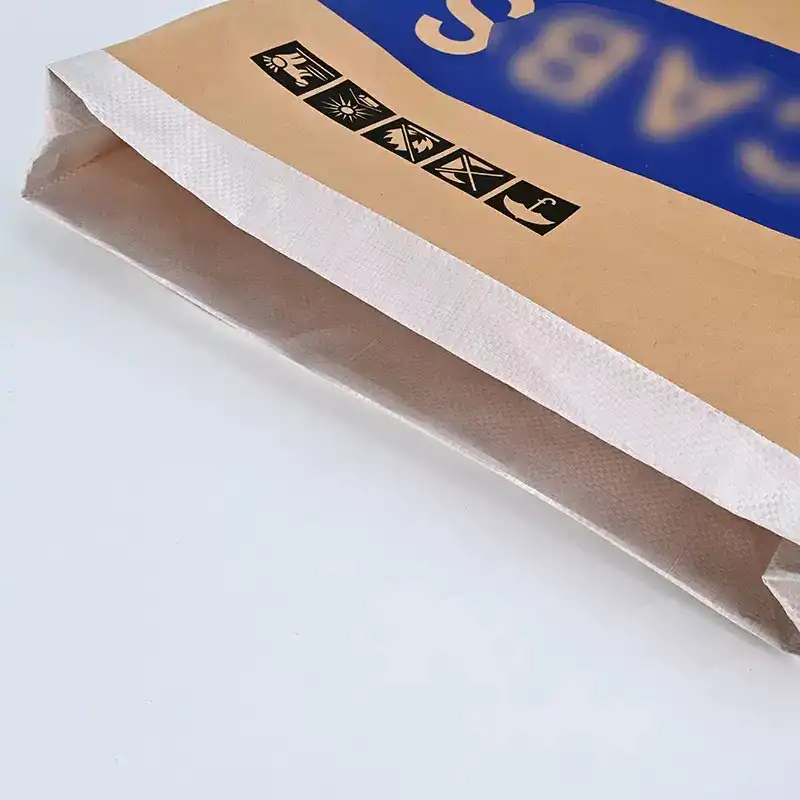
- What Are Poly‑paper Bags?
- Why Combine Paper and Poly? A Practical Rationale
- Manufacturing Routes and Their Consequences
- Performance Dimensions: What to Measure and Why It Matters
- Parameter Windows Seen in the Market—and How to Read Them
- Choosing Thickness, Grammage, and Size: A System Method
- Horizontal Perspective: Lessons Borrowed from Neighboring Domains
- Vertical Perspective: Cause‑and‑Effect from Resin to Pallet
- Case Narratives: Problem → Solution → Result
- Comparative Lens: Poly‑paper Bags vs. Mono‑Material Formats
- Quality System, Audits, and the Paper Trail That Earns Trust
- Sustainability Notes: Recycled Content and End‑of‑Life
- Practical Buying and Setup Guide
- Frequently Asked Questions About Poly‑paper Bags
- Introduction: Framing the Packaging Problem
- Method: A Systems Approach Instead of One‑Off Tweaks
- Materials Subsystem: What Each Layer Contributes
- Construction Subsystem: Laminated vs. Lined, and Why It Matters
- Sealing Subsystem: Owning the Heat Window
- Friction Subsystem: Run on Conveyors, Lock on Pallets
- Dimensional Subsystem: Gauge, Grammage, and Tolerances
- Logistics Subsystem: Venting, Moisture, and Abuse
- Results: What Operations See When the System Works
- Discussion: Trade‑Offs, Risk Tiers, and Decision Rules
- Horizontal View: Borrowing What Works from Adjacent Fields
- Vertical View: Cause‑and‑Effect from Resin to Pallet
- Problem–Solution–Result Examples to Ground the Numbers
- Practical Setup Guide: How to Turn Specs into Stable Runs
- References
What Are Poly‑paper Bags?
Poly‑paper Bags are hybrid industrial sacks that marry a printable paper exterior with a moisture‑resistant polyolefin component, delivering square‑edged stackability and rugged supply‑chain durability in one package. In everyday trade they also appear under aliases such as paper‑poly laminated woven bags, paper‑laminated PP woven sacks, kraft bags with poly liner, pinch‑bottom poly‑paper bags, and valve bags with PE liner. Different names, same purpose: to carry 5–50 kg of powders or pellets with better presentation, better protection, and better pallet stability than single‑material alternatives.
What are the defining features of Poly‑paper Bags? A stiff, scuff‑resistant paper face that prints crisply; a tough, low‑WVTR poly layer that resists punctures and supports heat‑sealed closures; configurable formats (open‑mouth sewn, pinch‑bottom heat‑sealed, block‑bottom, valve); and surfaces tuned for either high friction (to lock pallets) or controlled slip (to flow on conveyors).
How are Poly‑paper Bags produced? Two mainstream routes dominate. In a laminated design, kraft paper (often 70–120 g/m²) is extrusion‑coated or adhesively laminated onto PP woven fabric or PE film, then converted into tubes, printed up to 6–8 colors, and finished as block‑bottom or sewn open‑mouth sacks. In a lined design, multiple kraft plies (typically 2–6 layers of 70–100 g/m²) are formed around an internal PE liner (≈ 20–80 µm), then closed by sewing or pinch‑sealing; valve sleeves can be integrated for fast filling.
Where do Poly‑paper Bags shine? In bulk goods that must be both presentable and resilient: fertilizers, cement and construction additives, mineral fillers, resins and masterbatch, animal feed and seeds, salt and sugar, specialty chemicals, and other flowable commodities that dislike moisture, dust loss, or pallet collapse. For a quick overview and common configurations, see the product family page: Poly‑paper Bags.
Why Combine Paper and Poly? A Practical Rationale
Ask a simple question: why splice two materials at all? Because no single substrate nails every requirement. Paper delivers modulus, edge definition, and print beauty; poly brings ductility, barrier, and heat‑sealing. On the warehouse floor and across the ocean, a sack must be stiff yet forgiving, breathable enough for handling yet tight enough for shelf life, beautiful enough for a brand yet brutal enough for a forklift. Poly‑paper Bags balance those contradictions.
Consider the trade space. All‑paper sacks are elegant and square, but humidity is their quiet enemy and edge tears their sudden one. All‑poly sacks shrug off rain and rough conveyors, but they can scuff, glare under store lights, and slide on pallets like ice on steel. By pairing paper and poly, you achieve four outcomes at once: a brandable façade; a moisture shield; impact and tear resistance; and a geometry that stacks to the ceiling without “pregnant” bulges. Stronger, cleaner, steadier—three ambitions, one hybrid.
Manufacturing Routes and Their Consequences
Paper‑Laminated PP Woven
Process sketch: flat PP tapes → weaving (e.g., 7×7 to 14×14 mesh; 450D–1500D) → optional BOPP/PE coating → kraft lamination → printing → tube forming → block‑bottom/valve finishing.
Where this route excels: long export lanes; abrasive products; drop and corner abuse. The woven core arrests tears; the laminate creates a printable, scuff‑resistant shell. Control points include laminate peel strength (ASTM F904), thickness variation, and surface friction. One caution: friction that delights the pallet can frustrate infeed if COF targets are not set and verified.
Kraft Paper Laminated Woven Bags
Premium poly-paper composite bags with paper lamination and PP woven base material.
Check More →Poly Paper Composite Bags Solutions
Professional manufacturer solutions for durable poly-paper laminated woven packaging bags.
Check More →Poly Paper Bags Material Guide
Complete analysis of poly-paper composite materials and multi-layer packaging structures.
Check More →Multi-Ply Poly Paper Composite Bags
High-strength multi-ply poly-paper bags combining paper and poly woven advantages.
Check More →Multi‑Wall Kraft with PE Liner
Process sketch: 2–6 plies of kraft (often 70–100 g/m² each) wrapped around a PE liner (≈ 20–80 µm) → tube forming → pinch‑bottom heat seal or sewn bottom → optional valve.
Where this route excels: premium brand presence, food/feed contexts, square‑shouldered stacks. The inner liner controls dust and water vapor; the paper shell takes ink and resists shelf scuffing. Sewing is fast but may create leak paths unless taped; pinch‑seals demand a robust seal window on the liner and verified peel strength.
Performance Dimensions: What to Measure and Why It Matters
Moisture control. Paper surface water uptake is characterized by ISO 535 (Cobb). For the liner or laminate, water vapor transmission rate (WVTR) is quantified by ASTM F1249 (modulated IR) or ISO 15106 methods. Real‑world meaning: lower WVTR helps prevent caking and keeps flowability intact after storage in humid yards.
Mechanical toughness. Liner films are profiled by tensile (ASTM D882) and dart impact (ASTM D1709). Laminates are checked for peel (ASTM F904). Paper plies are evaluated by ISO 1924‑2 tensile and edge tear. Drop, tilt, and vibration simulations translate lab data into handling survival.
Seal integrity. Pinch‑bottom windows are developed per ASTM F2029; seal strength is verified by ASTM F88/F88M with a target failure mode of “peel through sealant,” not “film tear.” Valve closures are validated on the filling line to ensure dust does not compromise sealing.
Friction and handling. Static/kinetic COF per ASTM D1894 governs two opposing needs: sacks should flow through infeed yet resist pallet slippage. A controlled gap between static and kinetic values is the operating sweet spot.
Optics and print. Color and contrast (ASTM E1164), whiteness/yellowness (ASTM E313), and rub resistance ensure barcodes scan and brand colors stay true after transit.
Quality system anchors. ISO 9001:2015 underpins repeatable production; FSC® chain‑of‑custody documents paper origin when specified; food‑contact declarations (EU 10/2011; 21 CFR 177.1520; BfR XXXVI) are prepared for regulated SKUs. These are not stickers; they are auditable frameworks.
Parameter Windows Seen in the Market—and How to Read Them
Public listings from mainstream B2B marketplaces routinely publish ranges like the following:
- Paper grammage per ply: ~70–100 g/m² for valve/pinch bags (broader 60–150 g/m² by request).
- Number of plies: 2–6, scaled to product risk and route‑to‑market.
- PP woven fabric mass: ~50–200 g/m²; mesh 7×7 to 14×14; denier 450D–1500D.
- PE liner thickness: ~20–80 µm depending on WVTR targets and dust control needs.
- Widths and sizes: flat widths ~260–1300 mm for laminated woven forms; paper/liner constructions commonly 300–800 mm wide; 25 kg formats around 50×80 cm are a frequent starting point.
- Printing: up to 6–8 colors by gravure or flexo on the paper face or BOPP layer.
Treat these as signposts, not commandments. The right specification for Poly‑paper Bags depends on density, abrasiveness, climate, stack height, and line speed. A 25 kg mineral filler riding a monsoon port needs a different build than a 10 kg charcoal display in an air‑conditioned retail aisle.
Choosing Thickness, Grammage, and Size: A System Method
Start with physics, not guesswork.
1) Fix the payload and geometry. Pick the net weight (25 kg? 50 kg?). Estimate bag volume from bulk density, then compute lay‑flat/width and bag length to hit a fill height that leaves workable headspace. If stacks lean, adjust width and bottom style before chasing wrap tension.
2) Select the construction. Abrasive, high‑density powders bound for export lanes often prefer a paper‑laminated woven route (laminate GSM up; strong block‑bottom). Premium food or feed products frequently choose multi‑wall kraft with a well‑sealed PE liner for dust and hygiene.
3) Tune barrier. If caking risk is flagged, increase liner from ~30–40 µm to ~60–80 µm and verify WVTR using ASTM F1249 under realistic temperature/humidity settings. Map shelf‑life assumptions to a measured WVTR, not the other way around.
4) Balance tear and seal. Corners tearing during forklift handling? Increase woven GSM or denier, or refine laminate bond strength. Seals scorching at the bottom? Widen the heat‑seal window with a more forgiving sealant and map it again per F2029.
5) Engineer friction. For tall columns, target higher static COF on the exterior; for high‑speed infeed, moderate kinetic COF and consider surface varnishes or micro‑emboss. Validate choices with tilt‑table trials and conveyor tests, not only with lab coupons.
Horizontal Perspective: Lessons Borrowed from Neighboring Domains
From flexible barrier films: the discipline of thickness control (ASTM D6988; ISO 4593) and color management (E1164/E313). From pallet unitization: the emphasis on COF targets and tilt‑table verification. From outdoor agricultural films: UV stabilization strategies that preserve tensile and tear after sun exposure. By borrowing what works, Poly‑paper Bags gain predictability—on the machine, on the forklift, and on the shelf.
Vertical Perspective: Cause‑and‑Effect from Resin to Pallet
Trace a single change. Increase liner density → raises seal initiation temperature → nudges jaw settings upward → shifts the seal‑strength curve → lowers early‑opening risk at the mouth of the bag → cuts leakers after vibration → reduces replacement claims. The logic chain is long, but it is unbroken. Managing Poly‑paper Bags well means seeing that chain and designing along it.
Case Narratives: Problem → Solution → Result
Mineral filler exporter, 25 kg valve bag.
- Problem: moisture ingress in monsoon storage and corner tears on export pallets.
- Solution: migrated from all‑paper to paper‑laminated PP woven (100 g/m² kraft + 120 g/m² woven), added a continuous 50 µm PE coating, and raised static COF via exterior finish. Validated WVTR (F1249) and COF (D1894).
- Result: claim rate fell ≈ 60%; stack height increased by one layer without extra wrap.
Animal feed producer, 25 kg open‑mouth.
- Problem: dust fouling the seal land, creating leakers in hot weather.
- Solution: retained multi‑wall kraft, upgraded liner from 35 µm to 45–50 µm, and shifted to labyrinth micro‑vents located away from the mouth. Re‑mapped seal window (F2029) and set peel targets (F88) with “peel through sealant” mode.
- Result: leaker rate down ≈ 70%; sustainable line speed rose from 15 to 18 bags/min.
Charcoal brand, 10–15 kg retail.
- Problem: deformed sacks collapsing cube in displays.
- Solution: increased outer kraft ply from 70 → 90 g/m², kept 30 µm liner, and adopted block‑bottom geometry; tuned static COF via varnish.
- Result: noticeably squarer packs and lower wrap consumption.
Comparative Lens: Poly‑paper Bags vs. Mono‑Material Formats
Against all‑paper: superior moisture barrier and tear resistance, while retaining print elegance and square edges; the cost is material complexity and recycling separation.
Against all‑poly: better scuff performance, better barcode readability, and steadier pallets; the cost can be higher unit price and the need for paper sourcing controls (FSC®) when required.
Against FFS tubular film: Poly‑paper Bags excel in retail presence and brick‑like geometry; tubular films excel in automation speed and lowest cost per bag. Many plants use both, assigning formats by SKU risk and brand priorities.
Quality System, Audits, and the Paper Trail That Earns Trust
A credible program ties every lot to its ingredients, process, and test outcomes:
- Materials: kraft ply grammage; number of plies; liner thickness; woven GSM/mesh/denier; adhesive/lamination details.
- Process: lamination conditions and peel; sealing parameters for pinch‑bottom; winding hardness and curl control; print register data.
- Tests: ISO 535 (Cobb); ASTM F1249 (WVTR); ASTM D882 (tensile); ASTM D1709 (dart); ASTM F2029/F88 (seal window/strength); ASTM D1894 (COF); ASTM E1164/E313 (optics); AQL sampling per ISO 2859‑1 for visual defects.
- Certificates: ISO 9001:2015 QMS; FSC® or equivalent where specified; food‑contact declarations (EU 10/2011; 21 CFR 177.1520; BfR XXXVI).
When a buyer can read this dossier and trace lot IDs from raw paper rolls to finished pallets, trust stops being a promise and becomes evidence.
Sustainability Notes: Recycled Content and End‑of‑Life
Does hybrid mean unsustainable? Not necessarily. Poly‑paper Bags can incorporate recycled kraft or post‑industrial poly streams where regulations allow, provided mechanical properties and food‑contact rules are respected. End‑of‑life pathways vary by region: some markets support separation of paper and plastic components; others channel sacks to energy recovery. Transparency—declaring recycled fractions, publishing mass balances, documenting FSC® status—matters more than slogans.
Practical Buying and Setup Guide
Before issuing a PO, ask three classes of questions about Poly‑paper Bags:
- Product physics: bulk density, particle shape (abrasiveness), moisture/caking risk.
- Line reality: jaw width and dwell, preferred closure (sewn vs. pinch), target speed, vent strategy.
- Route to market: stack height, climate exposure (yard vs. covered), export distance, and handling risks.
From those answers, write a specification that names numbers, not adjectives. Define grammage per ply; set liner thickness; fix woven GSM/mesh/denier; select width/length; set COF targets; require WVTR maxima; declare seal strength and failure mode. Attach the test plan and acceptance criteria. Then validate on the real line: run drop/tilt, vibration, and storage trials; capture OEE before and after; keep retain samples per policy. This is how Poly‑paper Bags stop being a commodity and become a controlled component in a reliable supply chain.
Frequently Asked Questions About Poly‑paper Bags
Are Poly‑paper Bags always better than single‑material sacks? Not always. They are better where moisture exposure, branding, and stack stability matter at once. For purely internal flows with fast turns and no print need, a mono‑material might suffice.
How do I choose between laminated woven and multi‑wall with liner? Let density, abrasiveness, and brand priorities decide. Laminated woven wins on abuse resistance; multi‑wall with liner wins on print elegance and clean dust control.
Will higher friction harm my line? It can. That’s why COF targets distinguish static (for pallets) and kinetic (for infeed). Tune chemistry and finishes until both are in range.
What single test prevents the most headaches? A mapped heat‑seal window (F2029) paired with peel‑mode verification (F88). If you own your seals, you own your uptime.
Can Poly‑paper Bags carry recycled content? Yes, within regulatory and performance limits. Place recycled poly where it does not compromise seals; use certified papers where buyers insist; prove performance with the same test suite you would for virgin builds.
Introduction: Framing the Packaging Problem
Bulk powders and pellets are unforgiving. They cake in humidity, abrade during transit, and slump on pallets if the package lacks structure. Poly-paper Bags emerged to solve this multi-variable puzzle by combining a printable paper exterior with a moisture-resilient polyolefin component. In practice, Poly-paper Bags appear under several working names—paper‑poly laminated woven bags, kraft bags with poly liner, paper‑laminated PP woven sacks, pinch‑bottom poly‑paper bags, valve bags with PE liner—but the engineering intent is the same: keep products dry, pallets square, graphics crisp, and costs predictable. For a fast overview of configurations and common sizes, see Poly-paper Bags.
Method: A Systems Approach Instead of One‑Off Tweaks
To specify Poly-paper Bags with confidence, we decompose the challenge into six subsystems—materials, construction, sealing, friction, dimensional control, and logistics—then integrate. Horizontally, we borrow best practices from flexible films, corrugated unitization, and print management; vertically, we trace cause‑and‑effect from resin choice to pallet behavior. The result is a closed loop: diagnose → design → test → run → measure → refine.
Materials Subsystem: What Each Layer Contributes
Paper first. The kraft face of Poly-paper Bags contributes stiffness, scuff resistance, and print fidelity. High modulus stabilizes edges and helps stacks behave like cubes rather than pillows. Poly next. The PE or PP component supplies ductile toughness and lowers water vapor transmission (WVTR). In laminated designs, PP woven fabric arrests tears; in lined designs, a PE film inside the paper plies curbs moisture and dust escape. Horizontally, this mirrors food‑grade pouches where paper handles graphics and poly handles barrier. Vertically, a higher‑MFR poly processes faster yet narrows the heat window; a heavier kraft ply prints beautifully yet adds bending stiffness that may affect fill dynamics.
Construction Subsystem: Laminated vs. Lined, and Why It Matters
Poly-paper Bags are built in two dominant ways. Laminated: kraft is extrusion‑coated or adhesively bonded onto PP woven fabric or PE film, then converted to tubes and finished into block‑bottom or valve formats. Lined: multiple kraft plies (commonly 2–6) are formed around an internal PE liner and closed by sewing or pinch‑sealing. Laminates excel in abuse resistance and long export lanes; lined builds excel in premium print and hygienic dust control. The choice is rarely aesthetic alone; it flows from density, abrasiveness, shelf‑life expectations, and whether bags will live outdoors before dispatch.
Sealing Subsystem: Owning the Heat Window
Seals determine uptime. Pinch‑bottom closures on Poly-paper Bags should be developed by mapping seal strength against jaw temperature at fixed dwell and pressure. The preferred failure mode is “peel through sealant,” not “film tear,” because predictable peel correlates with better shock tolerance in transit. Where sewing is required, needle leak paths must be mitigated with tapes or inner film extensions. Horizontally, this mirrors medical‑grade pouch validation—test the window, set the center, verify the mode. Vertically, sealant chemistry couples to jaw profile and liner thickness to define a usable process range for hot days, cold starts, and line restarts.
Friction Subsystem: Run on Conveyors, Lock on Pallets
Poly-paper Bags must glide at the infeed yet resist sliding on stacked pallets. Static and kinetic coefficients of friction (COF) are tuned via exterior varnish, slip masterbatch in coatings, or micro‑emboss where available. A higher static COF helps column stability; a moderate kinetic COF prevents stop‑start chatter and jams. The target is a controllable gap between the two. Horizontally, principles echo stretch‑film optimization; vertically, line speed, wrap tension, and pallet patterns determine acceptable COF windows.
Dimensional Subsystem: Gauge, Grammage, and Tolerances
Thickness and grammage are not only cost levers; they stabilize bag length, sealing consistency, and print registration. For Poly-paper Bags, practical windows commonly seen in public listings include kraft ply weights around 70–100 g/m² (broader 60–150 g/m² on request), woven fabric masses of roughly 50–200 g/m² with meshes near 7×7 to 14×14, and PE liner thickness from ~20–80 µm. Flat widths span ~260–1300 mm for laminated woven formats, while lined kraft constructions often sit in the 300–800 mm band. A 25 kg typical starting size is about 50 × 80 cm, but actual length is computed from bulk density, not copied from a catalog. Keep these as signposts; then validate against your filling head geometry and pallet footprint.
Logistics Subsystem: Venting, Moisture, and Abuse
Powders that trap air need a vent strategy. Poly-paper Bags can incorporate micro‑vents or labyrinth patterns positioned away from the seal path to purge entrapped air without contaminating closures. Outdoor storage risks demand UV‑resistant inks and moisture‑tolerant closures; export lanes with multiple transshipments demand higher transverse tear thresholds and tougher corners. A bag that survives the stretch wrapper yet fails on the forklift is a failed specification, not a failed warehouse.
Results: What Operations See When the System Works
When these subsystems align, Poly-paper Bags deliver tangible gains. Seal windows widen, reducing leakers at the mouth. Sacks form squarer bricks, raising pallet columns and cutting stretch‑wrap use. Infeed smooths out; operators spend less time nudging bundles and more time running. Claims fall because moisture ingress declines and corner tears become rare events instead of daily anecdotes. In short: higher OEE, steadier stacks, cleaner shipments.
Discussion: Trade‑Offs, Risk Tiers, and Decision Rules
There is no free lunch. Raising exterior friction makes pallets safer but can agitate infeed. Heavier kraft elevates print and stack shape but may increase bending stiffness at the forming shoulder. Thicker liners reduce WVTR but tighten the seal window unless chemistry compensates. For Poly-paper Bags, we recommend classifying SKUs by risk: (1) high‑density, abrasive powders on long export lanes → laminated woven with stronger transverse tear and higher static COF; (2) premium food/feed with brand emphasis → multi‑wall kraft with sealed PE liner and rub‑resistant inks; (3) short‑haul pellets with fast line speeds → moderate COF, wider seal window, and optimized length for cycle time.
Horizontal View: Borrowing What Works from Adjacent Fields
From flexible films we inherit thickness control and WVTR thinking; from corrugated we borrow the obsession with column strength and footprint discipline; from retail print we learn colorimetry and rub resistance so barcodes scan after a thousand miles. This cross‑pollination helps Poly-paper Bags act predictably—on machines, on forklifts, and on shelves.
Vertical View: Cause‑and‑Effect from Resin to Pallet
Change one variable, watch the chain react. Increase liner density: seal initiation temperature rises, jaws run hotter, seal strength curve shifts, early‑opening risk drops, leaker rate declines after vibration testing, customer complaints fall. Or tweak exterior varnish: static COF climbs, pallet shift decreases, but infeed jams increase unless kinetic COF is moderated. Poly-paper Bags reward this longitudinal thinking because upstream tweaks echo downstream as logistics outcomes.
Problem–Solution–Result Examples to Ground the Numbers
A mineral filler exporter experienced moisture ingress during monsoon months and corner tears at transshipment. The switch from all‑paper to Poly-paper Bags in a laminated woven format (100 g/m² kraft + 120 g/m² woven, continuous 50 µm PE coating) plus a higher‑friction exterior finish cut claims by ~60% and added one pallet layer without extra wrap.
An animal‑feed producer saw hot‑day leakers when dust fouled the seal land. Retaining multi‑wall kraft but upgrading the liner from 35 to 45–50 µm, relocating micro‑vents away from the mouth, and re‑mapping the seal window delivered a ~70% drop in leakers and lifted sustainable speed from 15 to 18 bags/min.
A charcoal brand struggled with display collapse. Increasing the outer ply from 70 → 90 g/m², staying with a 30 µm liner, adopting a block‑bottom, and targeting a higher static COF produced visibly squarer packs and lower wrap consumption.
Practical Setup Guide: How to Turn Specs into Stable Runs
Before issuing a PO for Poly-paper Bags, capture three fact sets. Product physics: bulk density, particle shape, moisture/caking risk. Line realities: jaw width and dwell, closure type (sewn vs. pinch), target speed, vent scheme, forming shoulder geometry. Route to market: stack height, climate exposure, export distance, and handling risks. Convert these into numbers—ply grammage, liner thickness, woven GSM/mesh/denier, width/length, COF targets, WVTR maxima, seal strength and failure mode—and attach an acceptance plan with sampling and retention. Then verify on the real line: run drop/tilt/vibration; scan barcodes after transit; store test pallets for a weather cycle. Repeatability is earned in the trial bay, not on the spreadsheet.
References
• ISO 535 — Paper and board — Determination of water absorptiveness (Cobb method).
• ASTM F1249 / ISO 15106 — Water vapor transmission rate (WVTR) methods for films and laminates.
• ASTM D882 — Tensile properties of thin plastic sheeting (useful for PE liners).
• ASTM D1709 — Impact resistance of plastic film by free‑falling dart (liner toughness).
• ASTM F904 — Comparison of peel or shear strength of adhesive bonds (laminate bonds).
• ASTM F2029 / ASTM F88 — Heat‑seal window development and seal strength for flexible packaging.
• ASTM D1894 — Static and kinetic coefficients of friction of plastic film and sheeting.
• ISO 1924‑2 — Paper — Determination of tensile properties.
• ISO 2859‑1 — Sampling procedures for inspection by attributes (visual/AQL).
• ISO 9001:2015 — Quality management systems (manufacturing control framework).
• FSC® Chain‑of‑Custody guidance — Paper sourcing traceability for certified products.
• Public supplier listings on major B2B platforms for observed parameter windows (ply grammage, woven GSM, mesh/denier, widths, common 25 kg formats).