
- Introduction — What are Multiwall Kraft Paper Valve Bags?
- What are the aliases?
- What is the features?
- Building Materials & Minerals — Why Multiwall Kraft Paper Valve Bags dominate powder logistics
- Food & Agriculture — Hygiene, traceability, and smooth line changeovers
- Chemicals & Polymers — Managing dust, moisture, and sealing logic
- Animal Nutrition & Pet Products — Durability with an easy‑open finish
- Raw Materials & Incoming Quality Control — The foundation of repeatability
- Printing & Graphics — Legibility under industrial realities
- Tubing — The choreography of multiple webs
- Bottoming & Valve Construction — Where structure meets function
- Conditioning, Palletization & Final QC — Locking in shape and data
- W&H and Starlinger — Equipment pedigree and what it buys you
- Design Decisions Re‑examined — Ply count, grammage, valve type, micro‑perfs, and print
- Filling & Downstream Handling — Making the spec work on your line
- Sustainability & Compliance — Designing for circularity without compromising function
- Specification Snapshot — Parameters that shape Multiwall Kraft Paper Valve Bags
- From Parameters to Practice — A systems view of choices and consequences
- Why Many Buyers Choose VidePak for Multiwall Kraft Paper Valve Bags
- Onboarding Checklist — Turning interest into a working specification
- Market Context and Definition
- Problem Framing: Why Powders Need Specialized Packaging
- Method — Materials Science Foundations
- Method — Converting Process and Controls
- Method — Valve Engineering and the Packer Interface
- Results — Performance Outcomes that Operations Care About
- Discussion — Horizontal and Vertical Reasoning
- System Thinking — Breaking the Problem into Sub‑Problems
- Specification Snapshot — Key Parameters at a Glance
- Methods in Practice — From Trial to Locked Specification
- Cross‑Industry Parallels and Contrasts
- Sustainability and Compliance — Practical, Not Performative
- Implementation Roadmap for Buyers
- References
Introduction — What are Multiwall Kraft Paper Valve Bags?
Multiwall Kraft Paper Valve Bags are heavy‑duty paper containers engineered from multiple plies of high‑strength sack kraft paper, typically two to five layers arranged to balance de‑aeration, tensile energy absorption, and drop resistance. The structure is produced as a tube and finished with a pasted, block bottom; at one corner sits a valve sleeve that mates with a packer spout. Product flows in; trapped air escapes; the valve closes under pressure. Simple in appearance, precise in behavior.
What are the aliases?
You will encounter several names in the field: valve sack, pasted valve sack, PVSE (Pasted Valve, Stepped‑End), block‑bottom valve bag, paper valve sack, and multiwall paper sack. Different markets prefer different terms, but the underlying mechanics stay constant: multi‑ply paper walls, a block bottom, and a self‑closing valve.
What is the features?
Hallmark attributes include high TEA from extensible kraft; fast, dust‑controlled filling via a tuned valve geometry; excellent print real estate for branding and handling instructions; optional barrier layers (e.g., thin PE film or greaseproof paper) to resist moisture or fat; micro‑perforations to vent air at high packer speeds; square, stack‑ready bottoms that protect pallets and minimize leaning. The result is packaging that looks simple yet behaves like a calibrated tool.
Paper Valve Woven Bags
Engineered paper valve woven bags for bulk powder and granular packaging solutions.
Check More →3-5 Ply Multiwall Paper Bags
Multiwall kraft paper bags with PE liner for industrial and food grade applications.
Check More →Multiwall Paper Pinch Bottom Bags
Pinch & block bottom design multiwall paper bags for stable pallet stacking.
Check More →Kraft Paper Sacks Product Guide
Comprehensive guide for kraft paper sacks and multiwall paper valve bags.
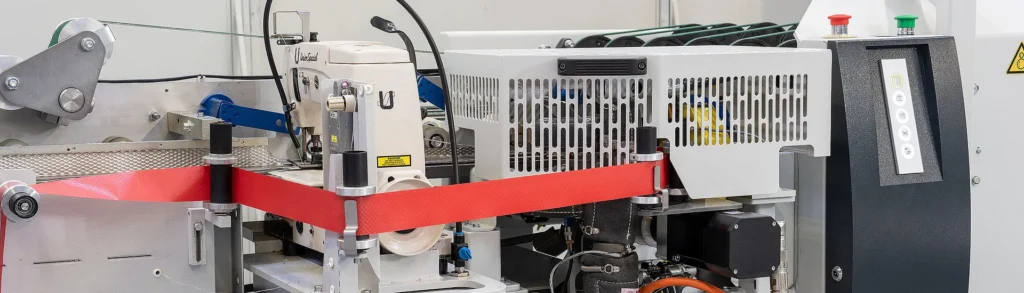
Check More →The classic converting route proceeds in four stages: flexographic printing (pre‑print or in‑line); tubing on a multi‑ply tuber that aligns, glues, and forms the paper webs; bottoming that pastes a block bottom and integrates the valve sleeve; conditioning and quality release. Depending on application, converters add micro‑perforations, anti‑slip topcoats, easy‑open tapes, or sealable PE sleeves. VidePak deploys Windmöller & Hölscher (W&H) converting technology for the valve‑bag line and operates Starlinger equipment for woven/FIBC products—an ecosystem that ensures precision where paper rules and resilience where woven PP excels.
Where do Multiwall Kraft Paper Valve Bags shine? In dry, free‑flowing powders and fine granulates where clean, repeatable filling matters and pallets must ride far: cement, dry mortar, tile adhesive, calcium carbonate and mineral fillers, gypsum and lime, fertilizers and agro‑chemicals, animal‑feed premixes, starch and sugar, wheat flour, plastic masterbatch and polymer additives, pigments such as TiO₂ and carbon black, and select pharma/nutra powders (with food‑grade papers and inner liners). If you prefer a single anchor to explore specifications, see our overview of Multiwall Kraft Paper Valve Bags.
Building Materials & Minerals — Why Multiwall Kraft Paper Valve Bags dominate powder logistics
Cement and gypsum behave like sand with secrets: they hold air, collapse late, dust easily. The bag that tames them must vent rapidly yet hold together on impact. Multiwall Kraft Paper Valve Bags meet that paradox through tuned porosity, micro‑perforation patterns, and a valve that seals as the mass stabilizes.
Problem framing. High‑speed impeller and air packers inject product and air together. Insufficient venting gives “balloon” bags; over‑venting causes dust and weight scatter. Pallet lean, corner bruising, and sifting erode brand and margins.
Operational levers. Paper selection (Gurley air resistance), micro‑perf density, and valve stiffness work as a triad. A medium‑density micro‑perf map near the valve zone rushes air out without sacrificing burst strength. Extensible sack kraft absorbs drop energy, protecting seams when pallets ride long distances.
What changes on the packing floor? Squarer bags roll out, line speed increases, and housekeeping improves. A 20–50 kg format covers most SKUs. VidePak validates the configuration on customer packers, then locks the data into the spec—tube width, bottom height, valve length, perf map—so repeat orders behave identically. Isn’t that what production craves—predictability disguised as paper?
Food & Agriculture — Hygiene, traceability, and smooth line changeovers
Bulk starch, sugar, flour, milk powder: each asks for cleanliness without delay. Multiwall Kraft Paper Valve Bags deliver with food‑grade papers, water‑based inks, and starch glues, paired with optional PE inner sleeves.
Risk landscape. Allergen cross‑contact, foreign bodies, and moisture ingress. Changeovers between sweet and savory powders complicate sanitation.
Control stack. VidePak uses segregated storage for food‑contact paper, ink certificates, and batch‑level traceability. Where a barrier is essential, a thin PE film between plies adds moisture protection while preserving the paper exterior for recyclability. Metal detection on finished pallets helps verify hygiene integrity.
Outcome in practice. Operators see fewer clean‑down events; QC sees tighter weights; marketing sees better print fidelity for nutrition panels and barcodes. The humble bag becomes a harmonizer: it keeps powder in, contaminants out, and messaging legible.
Chemicals & Polymers — Managing dust, moisture, and sealing logic
TiO₂, carbon black, polymer additives—fine powders that test both patience and plant vacuum systems. Multiwall Kraft Paper Valve Bags cope through a combinatorial approach: high‑porosity outer plies for venting, strategic micro‑perf, and (when demanded) a sealable PE valve sleeve that accepts ultrasonic or heat sealing to lock down sifting.
Key questions engineers ask. How tight must the valve be after fill? Is the powder hygroscopic? Will pallets cross humid ports? Answers shape the structure: uncoated inner for venting; PE‑coated inner for moisture; free film between plies when hermeticity matters.
Trade‑off calculus. More perforations speed de‑aeration but trim burst strength; thicker papers resist puncture but slow venting. VidePak balances these vectors with plant trials and retains settings for the specification.
Animal Nutrition & Pet Products — Durability with an easy‑open finish
Feed premixes and pet‑food powders endure rough logistics and rapid decanting at destination. Multiwall Kraft Paper Valve Bags with block bottoms stack sturdily in mixed SKUs, anti‑slip topcoats stabilize pallets, and easy‑open tapes help downstream users empty sacks quickly without knives. When warehouses run fast, small conveniences become large time savings.
Raw Materials & Incoming Quality Control — The foundation of repeatability
The process begins where it often ends in packaging: paper science. Multiwall Kraft Paper Valve Bags succeed or fail based on fiber choices and how consistently those choices are received.
Material decisions. Outer plies typically sit at 70–100 g/m²; inner plies may vary to reach the target ply count. High‑porosity grades vent quickly on fast packers; greaseproof or PE‑coated inners protect high‑fat or moisture‑sensitive goods. For a moisture barrier without a full laminate, a 10–25 µm PE free film between paper layers is a proven path.
Incoming checks. Grammage (ISO 536) confirms basis weight; moisture (ISO 287) guards against curl and mis‑register; Cobb (ISO 535) quantifies water absorptiveness on the outer ply; air resistance (ISO 5636‑5, Gurley) ranks porosity for filling behavior. Traceability tags each roll, tying future audit trails to present decisions.
Feedback mechanism. If porosity creeps high, VidePak moderates micro‑perf density to preserve strength. If moisture strays, glue add‑on at the tuber is tuned. Control is not a single lever; it is a dashboard.
Printing & Graphics — Legibility under industrial realities
Print is more than branding; it is instruction, identification, and safety. Multiwall Kraft Paper Valve Bags carry this burden on porous fibers that can drink ink if unmanaged.
Technique. Water‑based flexography on photopolymer plates remains the mainstay. For complex graphics, VidePak pre‑prints the outer ply off‑line to hit color and register targets. In‑line printing supports simpler art and short runs.
Controls. Ink pH and viscosity stay within a narrow corridor; anilox volume matches paper porosity; drying curves protect both ink holdout and downstream glue bonds. Camera systems watch for register and smear; ΔE targets keep color where the brand expects it.
Why it matters. Barcodes that scan, hazard symbols that survive scuffs, brand colors that remain themselves after the third truck transfer—these are not luxuries. They are the reasons graphics inhabit the same spec sheet as tube width and bottom height.
Tubing — The choreography of multiple webs
On the tuber, several paper webs, sometimes a free film, converge over a forming shoulder to become a single tube. Multiwall Kraft Paper Valve Bags demand precise ply alignment so the bottomer can later fold, paste, and square the base.
What can go wrong? Web wander, wrinkle, glue starvation, over‑penetration. Each flaw projects forward: a small mis‑register in tubing becomes a crooked bottom fold; a dry glue line becomes a seam peel during a drop test.
VidePak’s countermeasures. Tension control; edge sensors; digital glue application; real‑time tube width checks; documented micro‑perf maps matched to the target powder. Stepped‑end or flush‑cut tube ends are chosen to suit the bottom design and valve type.
Bottoming & Valve Construction — Where structure meets function
The bottomer closes both ends, folds a block bottom, and integrates the valve. Here Multiwall Kraft Paper Valve Bags acquire their geometry and their purpose.
Valve choices. Internal paper valve (self‑closing) for recyclability and simplicity; extended PE sleeve for post‑fill ultrasonic or heat sealing; external valve variants for specific packers. Valve stiffness and length must fit the spout and the product’s bulk behavior.
Quality hooks. Digital glue patterns with coverage checks; camera verification of sleeve position; bottom squareness measurements; periodic seam peel and burst sampling. A beautiful print with a weak seam is not a product; it is a complaint in transit.
Conditioning, Palletization & Final QC — Locking in shape and data
Freshly bottomed, Multiwall Kraft Paper Valve Bags pass through controlled drying to stabilize glue lines. Stacks receive slip sheets and edge protection. Labels carry batch IDs, tube dimensions, valve type, perf pattern—metadata that lets QA trace outcomes to settings.
Release testing. Visual AQL, dimensional checks, bag weight. Where customers request, filled‑bag drop testing aligns with ISO 7965‑1; transport drop protocols reference ISO 2248. Food‑contact builds include hygiene inspections and metal detection records.
W&H and Starlinger — Equipment pedigree and what it buys you
VidePak’s valve‑bag converting lines are built around Windmöller & Hölscher technology. Precision tubers and bottomers enable repeatable geometry at speed, with digital glue systems and add‑on modules such as liner insertion. Meanwhile, our woven and FIBC programs run on Starlinger lines—the industry’s benchmark for PP woven packaging and circular “bag‑to‑bag” concepts.
Why mention both in a paper‑bag article? Because customers buy capability, not just format. The same operational discipline that powers woven programs infuses our paper lines: preventive maintenance, OEM parts availability, operator training, SPC on critical dimensions. Multiwall Kraft Paper Valve Bags benefit from that culture of repeatability.
Design Decisions Re‑examined — Ply count, grammage, valve type, micro‑perfs, and print
Engineers rarely ask, “Which bag?” They ask, “Which trade‑off?” Multiwall Kraft Paper Valve Bags answer by offering levers rather than a single switch.
Ply count & grammage.
- Challenge. Satisfy drop/stack targets without slowing venting or inflating cost.
- Options. 2–3 plies for flowable powders like flour or cement paired with a film insert; 4–5 plies for high‑abuse logistics or when film is excluded.
- Comparative note. More plies resist puncture; high‑porosity papers accelerate filling; both affect print holdout. The right solution rides the edge between strength and speed.
- VidePak habit. Begin at three plies (outer 70–90 g/m², inner tuned, optional film in between), then validate at the packer and adjust.
Valve type & closure.
- Question. Must the bag be hermetic? If yes, a sealable PE sleeve; if not, a self‑closing paper valve usually suffices.
- Effect. Sealable sleeves add a closure step but cut sifting; paper valves sustain recyclability and simplify operation.
- Decision lens. Dust tolerance on the packing floor, humidity in transit, and spout geometry.
Micro‑perforation.
- Tension. Too few holes balloon the bag; too many reduce burst strength. Powder bulk density and air retention set the stage.
- Practice. VidePak starts with a medium pattern around the valve zone, then tunes based on fill curves observed during trials.
Printing & coatings.
- Reality. Graphics must survive conveyors and forklifts. Pre‑print for shelf‑visible SKUs; in‑line for internal or utility grades. Anti‑slip or protective varnishes pull double duty: friction on pallets, scuff resistance on art.
Throughout these decisions, the constant is documentation. Multiwall Kraft Paper Valve Bags are not just paper and glue; they are a parameter set that, once proven, must be repeatable.
Filling & Downstream Handling — Making the spec work on your line
Packer types—air, impeller, auger, gravity, vacuum—see powders differently. Multiwall Kraft Paper Valve Bags adapt by matching valve length and stiffness to spout diameter and flow dynamics. The spout insertion angle, roll‑out routine, and curing time before long hauls matter. For hermetic demands, ultrasonic or heat sealing on a PE sleeve closes the last gap against dust and moisture.
VidePak provides on‑site guidance where needed: how to seat the spout, how to read the bag during discharge, how to stage pallets so that edge protection remains in place. Seemingly minor practices often decide whether squareness holds from line to truck.
Sustainability & Compliance — Designing for circularity without compromising function
Multiwall Kraft Paper Valve Bags are inherently fiber‑based, which helps recyclability. VidePak favors mono‑material paper structures where possible and uses easily separable film‑in‑between solutions when barriers are non‑negotiable.
Compliance anchors include ISO 535/536/5636‑5 for paper properties, ISO 6599‑1 for conditioning, ISO 7965‑1 and ISO 2248 for drop protocols, 21 CFR 176.170 for U.S. paper‑food contact, and Regulation (EC) No. 1935/2004 for EU frameworks. For customers audited to BRCGS Packaging Materials, VidePak maintains hygiene documentation and traceability records. Sustainability is not rhetoric here; it is specification.
Specification Snapshot — Parameters that shape Multiwall Kraft Paper Valve Bags
| Parameter | Typical Range / Options | Process Anchor / Test | Practical Note |
|---|---|---|---|
| Net capacity | 10–50 kg (25–100 lb) | Packer sizing; pallet design | 20–25 kg common in cement; heavier SKUs demand stronger seams |
| Ply count | 2–5 plies | Tuber setup | 3‑ply is a versatile baseline for powders with film insert |
| Paper grammage (per ply) | 70–100 g/m² (outer); 70–120 g/m² (inner) | ISO 536 | Higher grammage ≈ better puncture/drop; lower porosity slows filling |
| Tube width | 180–750 mm | Tuber forming shoulder | Chosen by bulk density and spout diameter |
| Tube length | 300–1350 mm | Tuber cut controls | Matches target fill weight and bottom geometry |
| Bottom height | 70–250 mm | Bottomer setup | Larger bottom = more footprint stability |
| Valve type | Internal paper; PE sleeve (sealable); external | Bottomer valve unit | PE sleeves enable hermetic closure; paper valves maximize recyclability |
| Micro‑perforation | Low/medium/high; targeted zones | In‑line perforation | Tune to powder air retention for squareness |
| Printing | Up to 6–8 colors, water‑based flexo | Pre‑print or in‑line | Pre‑print for premium graphics; varnish for anti‑slip/scuff |
| Add‑ons | Anti‑slip; easy‑open tape; carry notch | Post‑press | Improves pallet friction and user experience |
| Compliance | ISO 535/536/5636‑5; ISO 6599‑1; ISO 7965‑1; ISO 2248; 21 CFR 176.170; Reg (EC) 1935/2004 | QA/Reg | Applied per build; food SKUs include hygiene documentation |
From Parameters to Practice — A systems view of choices and consequences
Packaging decisions are interdependent; change one variable and three others shift. Multiwall Kraft Paper Valve Bags make those dependencies visible.
- If dust on the packer floor is trending up, consider whether micro‑perf density dropped in a paper mill changeover. Adjust the perf map or specify a higher‑porosity ply for the next lot.
- If pallets lean in summer humidity, inspect bottom height, anti‑slip finish, and curing time. A small increase in bottom height and a matte topcoat can restore stack integrity.
- If graphics scuff in mixed transport, adopt a protective varnish and verify rub resistance in QA, not on the customer dock.
- If net weights drift, review valve sleeve stiffness and spout fit; bags that close too quickly may trap air, while those that lag may shed product.
Process capability is not a single capability; it is the intersection of paper, adhesive, forming, valve geometry, and human practice. When the intersection is tuned, the effect is compounding: cleaner fills, truer weights, calmer warehouses.
Why Many Buyers Choose VidePak for Multiwall Kraft Paper Valve Bags
- Application fluency. We read powders like production reads schedules. From tile adhesive to TiO₂, the configuration shifts, but the discipline does not.
- Equipment pedigree. W&H for paper converting; Starlinger for woven and FIBCs. Two ecosystems, one quality language.
- Quality discipline. ISO‑aligned QMS, SPC on critical dimensions, and roll‑to‑pallet traceability. Data stays with the product.
- Sustainability posture. Recyclability where possible; separable film inserts where necessary; honest trade‑offs explained before they cost you.
- Supply steadiness. Qualified mills, preventive maintenance, and contingency plans. Your line cannot wait, and our plan reflects that.
Onboarding Checklist — Turning interest into a working specification
To configure Multiwall Kraft Paper Valve Bags for your line, prepare the following:
- Product profile. Powder type, bulk density, particle size, hygroscopicity.
- Performance targets. Bags per minute, permissible dust levels, drop/stack criteria, pallet pattern and height.
- Packer details. Spout diameter, type (air/impeller/auger/gravity/vacuum), current valve style.
- Graphics & labels. Color count, coverage, barcodes/QRs; need for anti‑slip or protective coats.
- Compliance scope. Food‑contact declarations, audit frameworks, regional labeling.
- Trial plan. Initial micro‑perf and valve map; on‑line trial; parameter freezes for repeat orders.
With this information, VidePak builds a spec, validates on your packer, and documents the final settings so the fiftieth pallet behaves like the first. That is the quiet promise of Multiwall Kraft Paper Valve Bags—predictable performance, achieved through many small, deliberate choices.
Market Context and Definition
Multiwall Kraft Paper Valve Bags are engineered, multi‑ply paper sacks designed for high‑speed, dust‑controlled filling of powders and fine granulates. Built from two to five layers of extensible sack kraft and finished with a self‑closing valve in one corner, they combine structural strength, controlled de‑aeration, and print‑ready surfaces. The aim is simple yet demanding: move bulk solids quickly, cleanly, and safely from packer to pallet to customer.
Problem Framing: Why Powders Need Specialized Packaging
Powders behave badly. Air becomes trapped during filling; moisture sneaks in during transit; stacked pallets lean when bags fail to square. The challenge is multidimensional—flow physics, paper porosity, seam integrity, warehouse handling. Multiwall Kraft Paper Valve Bags address these frictions by orchestrating paper properties, perforation strategy, valve geometry, and bottom design. Horizontally, they integrate learnings from powder rheology, print engineering, and logistics; vertically, they control risk from raw paper through converting to line commissioning.
Method — Materials Science Foundations
Effective Multiwall Kraft Paper Valve Bags start with fiber. Outer plies of 70–100 g/m² sack kraft provide print fidelity and abrasion resistance; inner plies tune burst strength and puncture resistance. When humidity or fat content threatens product quality, a thin PE free film between plies or a PE‑coated inner paper creates a functional barrier without sacrificing a paper exterior. Porosity (often expressed by Gurley seconds) is the quiet hero: lower values vent entrained air faster, enabling squarer bags and quicker line speeds. The system problem breaks into sub‑questions: Which grammage per ply? What porosity window? Is a barrier film necessary? Each answer maps to a measurable test—ISO 536 for basis weight, ISO 5636‑5 for air resistance, ISO 535 for water absorptiveness.
Method — Converting Process and Controls
The converting route transforms specification into repeatable form. Pre‑press defines brand color targets and legibility for regulatory text; flexographic printing (water‑based inks) lays down graphics on the outer ply. A multi‑roll tuber aligns plies, applies adhesive, forms a tube, and (when specified) adds micro‑perforations to accelerate de‑aeration. The bottomer folds and pastes a block bottom, integrates the valve sleeve, and fixes geometry. Conditioning stabilizes glue lines prior to palletizing. Throughout, Multiwall Kraft Paper Valve Bags benefit from statistical checks—tube width and length control, glue add‑on verification, valve length tolerance, bottom squareness inspection. The process is linear, but feedback loops are constant: if porosity of a paper lot drifts, the micro‑perf density is recalibrated; if print scuffs, a protective topcoat is considered.
Method — Valve Engineering and the Packer Interface
The valve is where physics meets throughput. Multiwall Kraft Paper Valve Bags use three common configurations: a self‑closing internal paper valve for simplicity and recyclability; an extended PE sleeve that can be ultrasonically or heat‑sealed post‑fill for dust and moisture control; and external valve variants for specialized packers. The optimal choice depends on packer type (air, impeller, auger, gravity, vacuum), spout diameter, and powder bulk density. Micro‑perforations, typically concentrated near the valve zone, vent air rapidly so the bag collapses into a stable block before leaving the discharge belt. The logic chain is tight: powder aeration → de‑aeration path → valve closure behavior → final squareness.
Results — Performance Outcomes that Operations Care About
Well‑specified Multiwall Kraft Paper Valve Bags deliver tangible performance: shorter fill times, cleaner packer rooms, tighter net‑weight control, and pallets that stack without leaning. In food applications, hygiene controls (segregated paper storage, water‑based inks, starch glues, metal detection) produce auditor‑ready documentation. In chemicals, a sealable PE sleeve reduces sifting and protects hygroscopic powders through humid corridors. In building materials, tuned porosity and medium‑density perforation minimize ballooning—less rework, fewer returns, calmer warehouses.
Discussion — Horizontal and Vertical Reasoning
Horizontal synthesis. Packaging must talk to multiple disciplines. From powder mechanics it borrows the need for venting; from print engineering, ink holdout and abrasion resistance; from logistics, anti‑slip finishes and pallet geometry. Multiwall Kraft Paper Valve Bags sit at this intersection, turning trade‑offs into levers.
Vertical decomposition. Consider the lifecycle: raw paper → converting → line setup → transport → decanting. Each layer contains a problem to solve. Raw paper controls porosity dispersion; converting fixes dimensional tolerance; line setup validates valve length and perf map against real powder behavior; transport confirms stack stability; decanting checks openability and dust release. Resolution at one layer reduces stress in the next.
System Thinking — Breaking the Problem into Sub‑Problems
Sub‑problem 1: De‑aeration during high‑speed filling. Solution: choose a porosity window and micro‑perforation density matched to the packer type. Outcome: squarer bags at discharge, higher line speeds.
Sub‑problem 2: Moisture ingress in transit. Solution: add a thin PE film between plies or specify a PE‑coated inner; use a sealable PE valve sleeve. Outcome: reduced caking and weight gain in humid lanes.
Sub‑problem 3: Pallet stability and safety. Solution: optimize bottom height, add anti‑slip topcoat, specify edge protection in palletization SOPs. Outcome: fewer leaning stacks, lower fork‑truck damage.
Sub‑problem 4: Brand communication under abrasion. Solution: pre‑print outer ply for complex art; water‑based inks with protective varnish where rub resistance is critical. Outcome: barcodes that scan, warnings that remain legible, consistent brand color.
Sub‑problem 5: Recyclability vs. barrier. Solution: favor mono‑material paper builds; if barrier is mandatory, keep plastic as a separable insert rather than a full lamination. Outcome: better fiber recovery while meeting product protection.
Together these answers cohere into an operating specification, not just a bag description.
Specification Snapshot — Key Parameters at a Glance
| Parameter | Typical Range / Options | Why It Matters |
|---|---|---|
| Net capacity | 10–50 kg (25–100 lb) | Aligns with packer throughput and pallet patterns |
| Ply count | 2–5 plies (3‑ply common) | Balances strength, venting speed, and cost |
| Paper grammage | 70–100 g/m² outer; 70–120 g/m² inner | Print quality outside; burst strength inside |
| Porosity (Gurley) | Tuned to powder & packer | Governs de‑aeration and squareness |
| Valve type | Paper valve / PE sleeve (sealable) / external | Sets closure behavior and dust control level |
| Micro‑perforation | Low/medium/high; targeted near valve | Accelerates air release without excess dusting |
| Bottom height | 70–250 mm | Larger footprint improves stack stability |
| Printing | Up to 6–8 colors, water‑based flexo | Legibility for branding, safety, and codes |
| Add‑ons | Anti‑slip coat; easy‑open tape; carry notch | Handling efficiency and user safety |
| Compliance anchors | ISO 535/536/5636‑5; ISO 6599‑1; ISO 7965‑1; ISO 2248; 21 CFR 176.170; Reg. (EC) 1935/2004 | Testable, auditable quality baseline |
Methods in Practice — From Trial to Locked Specification
A robust onboarding follows the scientific method. Define hypotheses: a medium micro‑perf map and a self‑closing paper valve will meet throughput and cleanliness targets. Run a line trial on actual powder, measure fill time, net‑weight variance, dust counts, and pallet squareness. Analyze outcomes; adjust valve stiffness or perf density; re‑test. When KPIs meet thresholds, freeze parameters: tube width/length, bottom height, valve length, porosity range, micro‑perf map, print plate IDs. Multiwall Kraft Paper Valve Bags then behave consistently from order to order because the recipe is not merely described—it is controlled.
Cross‑Industry Parallels and Contrasts
In building materials, powders are abrasive and dense; the bag must resist scuffing and corner impacts. In food, hygiene and traceability dominate; documents matter as much as drop performance. In chemicals, moisture control and sifting reduction outrank everything else. Multiwall Kraft Paper Valve Bags flex across these contexts by swapping valve type, perf strategy, and barrier choices while holding dimensional discipline constant. Contrast them with woven PP valve sacks: woven excels in prolonged wet exposure, while paper often wins on print quality, de‑aeration behavior, and fiber‑stream recyclability. The decision is rarely ideological; it is contextual.
Sustainability and Compliance — Practical, Not Performative
Fiber‑first constructions simplify recovery in paper streams. Where barriers are unavoidable, using a separable PE insert keeps recycling viable. Compliance isn’t a footnote: ISO test methods define properties; ISO 7965‑1 and ISO 2248 frame drop testing; 21 CFR 176.170 and EU 1935/2004 cover food‑contact. For audited sites (e.g., BRCGS Packaging Materials), hygiene zones, batch traceability, and metal detection are not optional—they are table stakes. Multiwall Kraft Paper Valve Bags fold these demands into standard work.
Implementation Roadmap for Buyers
Start with your powder: bulk density, particle size, hygroscopicity. Note your packer: type, spout size, target bags per minute. Define logistics: pallet height, storage humidity, handling environment. With this profile, specify a baseline—3‑ply, medium porosity, internal paper valve, medium micro‑perf near the valve, bottom height sized to your footprint. Schedule a plant trial and record KPIs. If moisture is a risk, add a PE film insert and a sealable sleeve; if abrasion mars print, adopt a protective topcoat. Lock the spec only when data stabilizes. To learn how these elements tie together in practice, review our overview of Multiwall Kraft Paper Valve Bags.
References
- CEPI Eurokraft & EUROSAC. “Paper Sacks—Design for Recyclability Guidance.”
- ISO 535: Paper and board—Determination of water absorptiveness (Cobb method).
- ISO 536: Paper and board—Determination of grammage.
- ISO 5636‑5: Paper and board—Air permeance (Gurley method).
- ISO 6599‑1: Paper sacks—Measurement of dimensions.
- ISO 7965‑1: Paper sacks—Drop test.
- ISO 2248: Packaging—Complete, filled transport packages—Vertical impact test by dropping.
- BRCGS Global Standard for Packaging Materials—Issue 6.
- U.S. FDA 21 CFR 176.170—Components of paper and paperboard in contact with aqueous and fatty foods.
- Regulation (EC) No 1935/2004—Materials and articles intended to come into contact with food.
- Windmöller & Hölscher—Paper sack converting technology notes.
- Industry technical notes on sack kraft TEA, porosity, and flexographic print practices.