
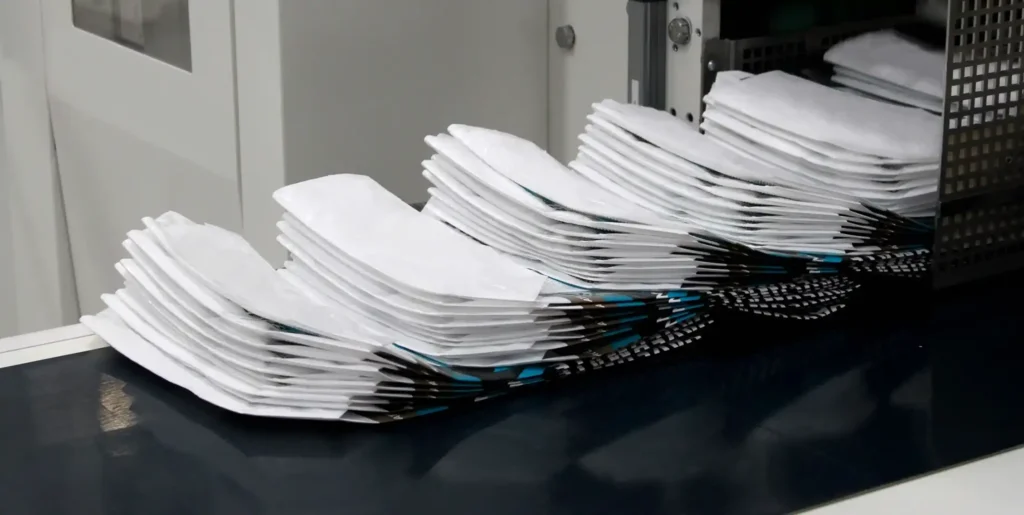
- What Are Anti‑Static Woven Bags? (Aliases, Features, Process, Uses)
- Why Do Anti‑Static Woven Bags Matter? A Short Thought Experiment
- The Electrical Logic: Four Engineering Routes to Anti‑Static Behavior
- 1) Anti‑static masterbatch embedded in PP tapes
- 2) Conductive yarn grid with verified ground path (Type C)
- 3) Permanently dissipative fabric with self‑neutralizing behavior (Type D)
- 4) Dissipative coatings, laminations, and liners
- Standards, Test Methods, and the Language of Proof
- System Thinking: From Hazard Mapping to a Coherent Specification
- Core Parameters and Build Options (At‑a‑Glance Table)
- Arguments Examined with Evidence, Cases, and Contrasts
- China Market Perspective: Development Path and Brandization — Where VidePak Differentiates
- Practical Specifications for Three Real‑World Scenes
- Risk Modes and the Controls That Keep Anti‑Static Woven Bags Honest
- Buying Guide and a Fill‑in‑the‑Blanks Spec
- Frequently Asked Questions (for engineers, EHS, and buyers)
- Introduction: Why Anti‑Static Woven Bags Matter
- What Components Are Essential for an Anti‑Static Woven Bags System?
- How Can I Improve the Performance of Anti‑Static Woven Bags?
- What Is the Purpose of the Conductive Grid in Anti‑Static Woven Bags?
- Can I Use Mono‑Material Designs for Anti‑Static Woven Bags to Aid Recycling?
- What Advantages Do Valve Tops and Liners Provide in Anti‑Static Woven Bags?
- What Standards “Code” the Behavior of Anti‑Static Woven Bags?
- What Role Do Liners and Dust‑Tight Seams Play in Anti‑Static Woven Bags?
- What Powders and Goods Are Best Packaged with Anti‑Static Woven Bags?
- What Is the Benefit of Laminated Surfaces in Anti‑Static Woven Bags?
- The Role of Precision in Specifying Anti‑Static Woven Bags
- Benefits of Using Anti‑Static Woven Bags Across Industries
- Exploring Customization Paths for Anti‑Static Woven Bags
- References
What Are Anti‑Static Woven Bags? (Aliases, Features, Process, Uses)
Anti‑Static Woven Bags are engineered packaging sacks made from woven polypropylene tapes or equivalent polyolefin fabrics that limit charge accumulation and control discharge energy during handling, filling, storage, and conveyance. In practice, users also encounter them as ESD woven sacks, static‑dissipative woven bags, Type B/C/D FIBC (for bulk formats), or anti‑static woven poly bags—different names, one central mission: to prevent electrostatic problems that stain quality records, interrupt production, or endanger safety. If a cloud of fine powder streams into a sack, if a forklift glides past a mixer, if a printed label must remain scuff‑clear, Anti‑Static Woven Bags play the quiet guardian.
Aliases (industry usage, bolded for clarity): ESD woven sacks, static‑dissipative PP bags, Type B FIBC, Type C FIBC, Type D FIBC, anti‑static woven poly bags.
Key features of Anti‑Static Woven Bags include a tunable electrostatic window (anti‑static, dissipative, or groundable), strong tensile performance from oriented PP tapes, optional laminations for moisture control and print quality, selectable closures and liners, and the possibility of conductive yarn networks or permanently dissipative filaments. When users ask “What makes this sack different?” the short answer is: electrical behavior by design, not by accident.
Manufacturing process (from resin to ready):
- Extrusion & tape drawing — PP resin is extruded, slit into tapes, and stretched to orient molecules, lifting tensile and tear properties.
- Weaving — Tapes are woven into fabric (commonly 10×10 to 14×14 ends/inch) to form a robust, breathable substrate.
- ESD enabling — The fabric or tapes receive one or more electrostatic controls: anti‑static masterbatch (migratory or permanent), conductive yarn grid (for groundable systems), dissipative coatings/laminations, or inherently dissipative fibers.
- Converting & printing — Cutting, stitching, seaming; valves or open‑mouth; optional liners; flexographic or rotogravure print faces.
- Testing & release — Electrical characterization (surface/volume resistivity, decay time, breakdown voltage) and mechanical checks; food‑contact or RoHS/REACH documentation as required.
Typical uses (bolded for scan‑ability): powders & granulates (pigments, fertilizers, flour, sugar, PVC resin), combustible‑dust or vapor zones (chemicals, pharmaceuticals, inks, coatings), electronics logistics (outer sacks around inner ESD trays), agriculture & food (grains, rice with inner liners), battery materials (cathode/anode powders), and additive masterbatches where dust hygiene matters. A single product family, many theaters of action.
Curious for more context or sourcing options? See this reference anchor: Anti‑Static Woven Bags.
Why Do Anti‑Static Woven Bags Matter? A Short Thought Experiment
A silo empties through a spout; powder cascades like a dry waterfall. Each collision, each separation, pulls electrons from one surface to another. Now imagine this in winter—air drier, charges cling longer. If a sack behaves like an insulator, voltage climbs. If a human touches a charged surface, where does the energy go? Through the finger, perhaps as a spark. Harmless? Sometimes. But in solvent‑rich or dust‑dense rooms, that spark can be an ignition source. Here lies the purpose of Anti‑Static Woven Bags: to dissipate charge, to shunt it safely, or to prevent its violent release.
Parallel truths can coexist: production must be fast, labeling must be crisp, safety must be non‑negotiable. Anti‑Static Woven Bags tie these together—quietly, relentlessly.
The Electrical Logic: Four Engineering Routes to Anti‑Static Behavior
Static hazards are generated by contact, separation, and flow. Effective sacks either reduce charge formation, bleed charge away, or control the discharge mode so that energy remains below ignition thresholds. In Anti‑Static Woven Bags, four mainstream constructions are combined and tuned to risk and standards.
Anti-Static FIBC Bags in Food Industry
Explore the use of anti-static FIBC bags to enhance safety and prevent electrostatic hazards in food packaging.
Learn more →
FIBC Bulk Bags: Versatility & Function
Discover the versatility and functionality of FIBC bulk bags, including anti-static options for sensitive materials.
Learn more →
FIBC Bulk Bags in Global Market
Gain insights into FIBC bulk bag trends and strengths, including the role of anti-static bags in modern packaging.
Learn more →
Laminated PP Woven Bags
Durable laminated polypropylene woven bags with premium protection and stable performance.
Check More →Polypropylene Woven Bags China
High-quality PP woven bags from China manufacturer with customizable specifications.
Check More →PP Woven Fabric Bags Analysis
Professional analysis of PP woven fabric bags for industrial and packaging applications.
Check More →Anti-Static FIBC Bags For Food
Safe anti-static FIBC bags designed for food industry and hygienic applications.
Check More →1) Anti‑static masterbatch embedded in PP tapes
The question. If unmodified PP is an insulator (surface resistivity often >10^12 Ω/sq), how can a woven bag avoid becoming a charge reservoir when powders flow?
The mechanism. Introduce anti‑static masterbatch—either migratory additives that bloom to the surface and attract a moisture film, or permanent inherently dissipative polymers (IDPs) that create ionic pathways through the bulk. The result is a surface that allows charge to leak away in a controlled manner.
The outcome. Surface resistivity shifts into the static‑dissipative window, typically 10^5–10^11 Ω/sq. Decay from 5 kV to 50 V often occurs within <2 seconds under standard lab conditions. Migratory systems are economical but humidity‑sensitive; permanent systems cost more yet offer consistency across seasons.
Data reinforcement. Typical use levels: 0.5–3% for migratory systems; 5–20% for permanent IDPs (application‑dependent). Lab measurements record stable decay times even after multiple handling cycles when permanent systems are used.
Case analysis. Coastal rice mills that switched to anti‑static‑modified sacks reported cleaner filling throats, fewer powder smears on print panels, and reduced operator complaints about minor shocks.
Comparative view. Topical sprays provide short‑lived benefit; masterbatch integrates performance into the polymer matrix, simplifying audits and documentation.
2) Conductive yarn grid with verified ground path (Type C)
The question. When flammable vapors or very low MIE dust clouds may be present, is slow leakage enough? Or must charge be taken decisively to ground?
The mechanism. Weave conductive yarns—carbon‑filled or metal‑core filaments—into a defined grid pitch (e.g., 5–20 mm). Add grounding tabs. When properly grounded, the bag behaves like a Faraday cage, draining charge along low‑resistance paths.
The outcome. Resistance‑to‑ground from any grid point commonly reads <10^6 Ω, and brush or spark discharges are suppressed when operational rules are respected.
Data reinforcement. Grid continuity is audited roll‑to‑roll; pitch is selected so that unprotected areas do not surpass limits associated with brush discharge formation.
Case analysis. A pigments plant in Jiangsu, after a close call, upgraded to Type C FIBC. With color‑coded ground whips at every spout and a simple meter check, the site moved from worry to procedure.
Comparative view. Type C is powerful but conditional—it is only safe when grounded. The tradeoff is worthwhile in higher‑risk zones.
3) Permanently dissipative fabric with self‑neutralizing behavior (Type D)
The question. What if ground leads are impractical in mobile operations? Must safety depend on cables that can be forgotten or misclipped?
The mechanism. Type D fabrics mix dissipative filaments and chemistries that promote ultra‑low‑energy surface neutralization events—akin to countless microscopic corona releases that prevent spark formation.
The outcome. Safe operation in many dust/vapor environments without a ground wire—as long as contamination rules are honored (no metal fragments, no conductive build‑ups).
Data reinforcement. Fabric typically exhibits 10^9–10^12 Ω/sq on at least one surface and a material breakdown voltage <4 kV; compatible liners are mandatory to keep the system classification intact.
Case analysis. Solvent‑borne ink makers in Guangdong reported smoother bay‑to‑bay transfers and fewer changeover delays after adopting Type D, thanks to the removal of ground‑lead logistics.
Comparative view. Type D simplifies operations yet demands vigilance: avoid conductive pollutants and incompatible liners.
4) Dissipative coatings, laminations, and liners
The question. Can a bag be both dust‑tight and electrically well‑behaved? Can one face host vivid print while keeping charge at bay?
The mechanism. Apply dissipative PP/PE coatings (via quaternary ammonium salts, IDPs, or thin carbon‑rich skins) or insert ESD‑rated liners (L1/L2/L3 for FIBC). Corona treatment can boost ink adhesion.
The outcome. Moisture and dust barriers without insulating the system. Correct liner classification preserves the Type B/C/D designation.
Data reinforcement. Laminations commonly run 18–40 μm; liners for FIBC frequently span 50–120 μm. EVOH co‑extrusions add oxygen barrier for sensitive powders.
Case analysis. PVC resin packers in Zhejiang combined laminated Type C fabric with an L2 dissipative liner—meeting both cleanliness and static requirements in drop and leak testing.
Comparative view. Versus additive‑only strategies, coatings and liners unlock multi‑functionality: barrier, print face, and ESD control.
Standards, Test Methods, and the Language of Proof
It is easy to claim; it is harder to demonstrate. Anti‑Static Woven Bags are judged by measurements, not adjectives. Plants and auditors speak in the codes below because they compress real physics into actionable acceptance criteria:
- IEC 61340‑4‑4:2018 — Classification, testing, performance, and safe use of FIBC Types A/B/C/D; liner classes L1/L2/L3.
- ANSI/ESD S541‑2019 — Packaging requirements for ESD‑sensitive items (categories, labeling, and performance tiers).
- ANSI/ESD STM11.11 — Methods for surface resistance and resistivity using concentric ring electrodes (Ohms and Ohms/sq).
- GB/T 8946‑2013 — China’s base standard for plastic woven bags: definitions, mechanical requirements, test methods.
- RoHS (2011/65/EU) and REACH (EC 1907/2006) — Hazardous substance and SVHC considerations for additives, inks, and coatings.
- ISO 9001, BRCGS Packaging Materials, ISO 22000/HACCP — Quality and hygiene scaffolding where food contact is in scope.
A rule of thumb worth repeating: the “type” stamped on a bag is only meaningful together with its operational use‑rules. A Type C system that is not grounded is a fiction.
System Thinking: From Hazard Mapping to a Coherent Specification
Complexity becomes manageable when broken into sub‑questions. Each receives a crisp answer; the composite forms a robust specification for Anti‑Static Woven Bags.
A) What is the electrostatic hazard?
- Powder charging propensity and Minimum Ignition Energy (MIE): how little energy can ignite?
- Presence of flammable vapors around the filling and discharge line.
- Fill speed and conveying geometry: faster flow, sharper turns, more charge.
Answer path. MIE ≤ 3 mJ or vapor present → Type C (grounded) or Type D. Only nuisance static in non‑hazard areas → anti‑static/dissipative sack suffices.
Data reinforcement. Plants that classify dusts by MIE levels can align bag selection to the same thresholds, simplifying HAZOP documentation.
B) How should charge be managed: leakage or grounding?
- Grounding strategy (Type C): define verified ground points, continuity checks, and operator routines.
- Leakage strategy (Type D or additive/lamination): set resistivity targets and decay benchmarks.
Answer path. Specify resistance‑to‑ground Rtg < 1×10^6 Ω for Type C paths; for dissipative faces, cite the 10^5–10^11/10^12 Ω/sq window and decay ≤ 2 s at standard lab conditions.
Case note. Plants that place meters at every filling head halve the time‑to‑detection for ground faults.
C) What other performance envelopes matter?
- Barrier (moisture/oxygen), strength (SWL, stitch density), hygiene (dust‑tight seams), print durability (scuff, dyne level).
Answer path. Pick fabric GSM and weave, lamination thickness, liner class and gauge, seam method, and ink set with target dyne ≥ 38 for reliable adhesion.
Comparative view. EVOH co‑extruded liners justify their premium when hygroscopic powders are in scope; commodity monolayer PE liners suffice for less sensitive goods.
D) How is performance proven and then kept stable lot‑to‑lot?
- Incoming: resin/additive COAs; conductive yarn continuity certificates.
- In‑process: surface resistance checks; ground‑tab continuity; stitch audits.
- Final: IEC 61340‑4‑4 type tests; GB/T 8946 mechanicals; ink adhesion; migration tests for food‑contact designs.
Answer path. Build a PQCP (Product & Process Quality Control Plan) with AQL 1.5–4.0 sampling, calibrated meters, retention samples, and traceable labels.
Result. Repeatability replaces hope.
Core Parameters and Build Options (At‑a‑Glance Table)
These values reflect common, real‑world configurations for Anti‑Static Woven Bags. Final specs should be tuned to hazard studies and local codes.
| Parameter | Anti‑static Sack (Additive/Coating) | Type C Woven Bag (Groundable) | Type D Woven Bag (No Ground) |
|---|---|---|---|
| Fabric weave | 10×10–14×14 ends/inch | 12×12–14×14 with conductive grid (5–20 mm pitch) | 12×12–14×14 with permanently dissipative yarns |
| Basis weight | 70–120 g/m² (sacks, 25–50 kg) | 160–230 g/m² (FIBC body) | 160–230 g/m² (FIBC body) |
| Lamination | 18–40 μm PP/PE optional | 25–40 μm optional, dissipative | 25–40 μm optional, dissipative |
| Liner | Optional LDPE or dissipative PE; 40–80 μm | L1/L2 liner, 50–120 μm | L2/L3 compatible liner, 50–120 μm |
| Electrical target | 10^5–10^11 Ω/sq | Rtg < 1×10^6 Ω to ground from any grid point | ≥1 surface 10^9–10^12 Ω/sq; breakdown < 4 kV |
| Decay time | 5 kV → 50 V in <2 s (typical) | <1 s to ground (typical) | <2 s (typical) |
| SWL/SF (FIBC) | n/a | 500–2000 kg, SF 5:1 or 6:1 | 500–2000 kg, SF 5:1 or 6:1 |
| Closures | Sewn hem, open mouth, valve | Spout top/bottom, duffle, skirts | Spout top/bottom, duffle, skirts |
| Printing | Flexo up to 8 colors | Flexo/rotogravure; ESD‑rated inks | Flexo/rotogravure; ESD‑rated inks |
Arguments Examined with Evidence, Cases, and Contrasts
Claim 1 — Anti‑Static Woven Bags reduce ignition risk and product damage
Data reinforcement. Transitioning from insulative PP (>10^12 Ω/sq) to dissipative ranges (10^5–10^11 Ω/sq) shifts the discharge regime: charges bleed rather than spark. With Type C grids, measured Rtg < 1×10^6 Ω converts a charged surface into a ground‑fed sink. IEC 61340‑4‑4 classifies and limits breakdown behaviors; adherence correlates with incident reduction in audits.
Case analysis.
- Electronics EMS, Shenzhen. Outer woven sacks with dissipative laminations used to shuttle ESD trays cut latent failure returns and improved shelf cleanliness; the packaging change aligned with an ESD training refresh, indicating a system effect rather than a single silver bullet.
- Carbon black handling, Nanjing. Upgrading to Type C FIBC removed nuisance shocks and powder streaks; operator acceptance rose once ground checks were routinized.
Comparative study. Plain PP vs dissipative sacks: visible decline in dust cling and improved barcode readability; Type B vs Type C: Type B controls propagating brush discharges yet cannot be grounded, whereas grounded Type C suppresses spark potential in vapor‑risk zones.
Claim 2 — Performance must be verified, not presumed
Data reinforcement. Surface resistance via ANSI/ESD STM11.11 (concentric rings) provides repeatable numbers in Ohms or Ohms/sq; resistance‑to‑ground measurements document path integrity. For FIBC, IEC 61340‑4‑4 governs charge decay, breakdown thresholds, and labeling.
Case analysis. A solvent recycler in Tianjin discovered intermittent grid breaks in incoming Type C rolls; instituting 100% continuity scans and destructive pull‑tests per lot converted failure hunting into prevention.
Comparative study. Migratory anti‑stat agents swing with humidity; permanent IDPs and dissipative laminations hold steadier in dry inland winters—a seasonal reliability dividend.
Claim 3 — The liner is a co‑equal partner to the fabric
Data reinforcement. An incompatible liner (high resistivity, incorrect class) can re‑charge powders inside a grounded bag, defeating the purpose. L2/L3 classified liners preserve decay times and suppress tribo‑charging in flow.
Case analysis. Shandong flour mills that replaced standard PE liners with L2 dissipative liners halved powder hang‑up at the neck and stabilized fill weights.
Comparative study. EVOH co‑extruded dissipative liners extend moisture/oxygen control for hygroscopic commodities; for robust powders in ambient conditions, simpler dissipative PE liners meet the brief.
China Market Perspective: Development Path and Brandization — Where VidePak Differentiates
China’s packaging hubs—Pearl River Delta, Yangtze River Delta, Bohai Rim—are tightening ESD expectations. Three intertwined currents define the near horizon: standard adoption, automation, and brand‑backed documentation. In such an environment, Anti‑Static Woven Bags are not commodities; they are audited components of a safety system.
Development path in practice:
- Stage 1 (Entry) — Anti‑static additive sacks for nuisance static; GB/T 8946 mechanical compliance; simple COAs.
- Stage 2 (Intermediate) — Laminated sacks or Type B FIBC; early ESD tests; attention to humidity.
- Stage 3 (Advanced) — Type C/D with specified liners; full IEC 61340‑4‑4 suite; in‑plant audits; QR‑linked traceability.
- Stage 4 (Ecosystem) — Digital COAs, serialized labels, AQL dashboards; supplier development programs for repeat performance.
VidePak’s brand stance:
- Long‑term value over short‑term price — Stable formulations, yarn continuity assurance, and statistical process control outlast discount cycles.
- Quality first — Drawings embed standard IDs; each lot ships with resistance/decay/continuity readings; liners are validated for class fit.
- Traceability — Labels encode batch and raw‑material lots; scans retrieve COA and AQL snapshots; audit friction falls.
- Partnership, not shipment — Co‑authored ESD SOPs, annual audit calendars, PLM integration with revision control—because packaging is a system.
Practical Specifications for Three Real‑World Scenes
Scene 1 — Food‑grade powders without vapor risk
Problem. Flour or rice powder clings to surfaces and mis‑weighs; sack exteriors soil quickly; labels smudge.
Solution. Anti‑static masterbatch sacks at ~90 g/m², dissipative lamination ~25 μm, optional food‑grade dissipative liner ~60 μm.
Result. Cleaner throats, clear labels, GB/T 8946 mechanical compliance, documented decay <2 s under standard conditions.
Checks. Periodic STM11.11 logs; ink/varnish migration tests for food contact.
Scene 2 — Organic pigments with combustible dust but no vapors
Problem. High‑charging powders shock operators and create colored dust haze; customers request ESD evidence.
Solution. Type B FIBC (breakdown < 6 kV) with dissipative lamination; L2 liner; dust‑tight seams.
Result. Propagating brush discharges suppressed; cleaner bay air; audit boxes ticked.
Checks. Breakdown verification; liner certificates; label inspection for type markings.
Scene 3 — Solvent‑borne inks with potential vapor exposure
Problem. Tote‑to‑mixer transfers across multiple bays; ground cables slow operators and get misplaced.
Solution. Type D FIBC with permanently dissipative fabric; compatible dissipative liner; strict housekeeping to avoid conductive contamination.
Result. Safe operation without external ground; quicker changeovers; fewer procedural errors.
Checks. Surface resistivity and breakdown tests; operator training: no metal staples, avoid soaked surfaces, maintain fabric integrity.
Risk Modes and the Controls That Keep Anti‑Static Woven Bags Honest
| Failure Mode | Root Cause | Consequence | Control Plan |
|---|---|---|---|
| Static decay out of spec | Under‑loaded anti‑stat; low humidity | Operator shocks, dust cling | Minimum recipe loadings; IDP options; decay QC at 12% RH |
| Broken conductive grid | Loom splice or yarn faults | Loss of ground path | 100% grid continuity scan; destructive pull‑test per lot |
| Liner incompatibility | Non‑dissipative liner in Type C/D | Internal re‑charging | Liner class control (L1/L2/L3); vendor audits |
| Mis‑labeling | Wrong type/liner code | Audit failure; misuse | Barcode‑driven labels; double‑verification at pack‑out |
| Ink scuff/smudge | Low dyne or wrong ink set | Illegible safety info | Corona ≥ 38 dynes; scuff‑resistant ink/varnish systems |
Buying Guide and a Fill‑in‑the‑Blanks Spec
1) Application & hazard — Powder identity, MIE, presence of vapors (Y/N), target room RH, fill speeds.
2) Electrostatic class — Anti‑static sack / Type B / Type C (grounded) / Type D (no ground). Resistivity & decay targets; test methods; acceptance limits.
3) Mechanical & barrier — Size, SWL (for FIBC), fabric GSM, lamination thickness, liner class & gauge, seam type, dust‑tightness.
4) Print & regulatory — Colors, ESD symbol, batch traceability, RoHS/REACH/food‑contact declarations, scuff expectations.
5) Quality plan — AQL levels, in‑process resistance checks, grid continuity scans, COA fields, retention samples.
Example shortform spec:
“Type C FIBC, 1000 kg SWL 5:1; fabric 180 g/m²; conductive grid 10 mm pitch; dissipative lamination 30 μm; L2 liner 80 μm; Rtg < 1×10^6 Ω; 5 kV → 50 V decay < 2 s; IEC 61340‑4‑4 label; RoHS/REACH; batch QR traceability; COA with STM11.11 and continuity results.”
Frequently Asked Questions (for engineers, EHS, and buyers)
Q1. Are Anti‑Static Woven Bags the same as metallized ESD shielding pouches?
A. No. Shielding pouches block external fields and route discharge over a metallized skin; woven sacks generally dissipate or ground charge and are used for powders and bulk goods.
Q2. What resistivity window should we request?
A. For dissipative faces, 10^5–10^11/10^12 Ω/sq is customary. For Type C, specify Rtg < 1×10^6 Ω from any grid node to ground.
Q3. Will anti‑static performance fade with time?
A. Migratory additives can diminish or fluctuate with humidity. Permanent IDPs and dissipative laminations preserve year‑round behavior; that’s why many inland sites prefer them.
Q4. Can the bags be recycled?
A. Yes. PP is recyclable; conductive yarns and specialty coatings may require stream separation. Mono‑material dissipative PP designs are available for simpler recovery.
Q5. How do we satisfy auditors on day one?
A. Provide calibrated STM11.11 readings, IEC 61340‑4‑4 lines for classification and liner pairing, and photos of labels and grounding practice. Most of the friction disappears when documentation mirrors standards language.
Introduction: Why Anti‑Static Woven Bags Matter
Electrostatic charge is born wherever powders flow, surfaces separate, or dry air prevails. In such environments, a packaging error can be more than messy; it can be unsafe. Anti‑Static Woven Bags address this hazard by controlling charge generation, guiding charge dissipation, and preventing energetic discharges that could damage products or ignite combustible atmospheres. Horizontally, we can compare them with other electrostatic controls—flooring, garments, ionizers—to see the shared physics of charge migration. Vertically, we descend from plant‑wide risk (hazardous zones, minimum ignition energy) to material choices (additives, fabrics, liners) and then to operator practice (ground checks, labeling). The logic chain we will follow is problem‑oriented and closed‑loop: background → methods → results → discussion.
What Components Are Essential for an Anti‑Static Woven Bags System?
At system level, Anti‑Static Woven Bags are not just fabric. They combine: (1) a woven polypropylene substrate with tensile strength and puncture resistance; (2) an electrostatic pathway—anti‑static masterbatch, dissipative skin, conductive yarn grid, or permanently dissipative filaments; (3) optional laminations and liners for barrier control; (4) closures and seams engineered for dust‑tightness; (5) a measurement and labeling regime (surface resistance, decay time, type marking). Horizontally, this mirrors any engineered control system: sensor (meter), actuator (ground path), controller (SOP). Vertically, each layer narrows uncertainty: material properties → bag construction → in‑process verification → safe use.
How Can I Improve the Performance of Anti‑Static Woven Bags?
Methodologically, performance equals design choices plus process discipline. For Anti‑Static Woven Bags, three levers dominate: materials, environment, and verification. Materials: switch from humidity‑dependent migratory additives to permanent dissipative polymers where winters are dry; specify conductive yarn continuity for grounded designs. Environment: manage relative humidity at the filling head and reduce frictional charging through smoother chutes. Verification: define targets (e.g., 10^5–10^11 Ω/sq surfaces; resistance‑to‑ground < 1×10^6 Ω for grids) and log them by lot. The result is a bag that behaves predictably rather than occasionally—an outcome reinforced when training and meters meet at the line.
What Is the Purpose of the Conductive Grid in Anti‑Static Woven Bags?
In higher‑risk zones, charge must not merely leak; it must be led. Conductive yarn grids in Anti‑Static Woven Bags create low‑resistance paths that drain charge to a verified ground point. The grid pitch, yarn integrity, and tab connection form a circuit; if any link is missing, the circuit is broken. Horizontally, think of this like lightning protection in buildings—capture, convey, dissipate. Vertically, we evaluate from material selection (carbon‑filled or metal‑core yarns) to weaving parameters (pitch) to procedural checks (ground confirmation) to operational outcomes (spark suppression).
Can I Use Mono‑Material Designs for Anti‑Static Woven Bags to Aid Recycling?
Sustainability and safety need not compete. Mono‑material PP constructions for Anti‑Static Woven Bags—using dissipative PP skins or inherently dissipative PP‑compatible polymers—simplify downstream recovery. The method is to keep the bag’s polymer family uniform while meeting resistivity targets. The result is a package that enters PP recycling streams more cleanly. The discussion turns on trade‑offs: pure performance (multi‑layer laminates, exotic liners) versus circularity goals. Horizontal thinking compares packaging streams across industries; vertical thinking weighs resin selection, additive class, and label/ink choices against regional recycling capabilities.
What Advantages Do Valve Tops and Liners Provide in Anti‑Static Woven Bags?
Valve tops accelerate filling and reduce powder backflow; liners control moisture, odor, and dust migration. In Anti‑Static Woven Bags, liners also participate in electrostatic behavior. A non‑dissipative liner can re‑charge product inside a grounded bag; a dissipative L2/L3 liner maintains decay and reduces tribo‑charging as product flows. The method is pairing: bag type (dissipative, Type C, or Type D) with a compatible liner class and thickness. The result is dual performance—cleanliness and electrical stability. The discussion centers on process specifics: hygroscopic powders benefit from EVOH co‑extruded dissipative liners, while robust granulates may only need dissipative PE.
What Standards “Code” the Behavior of Anti‑Static Woven Bags?
Standards translate physics into acceptance criteria. Anti‑Static Woven Bags are commonly assessed by IEC 61340‑4‑4 (FIBC classification and liner pairing), ANSI/ESD S541 (packaging categories and labeling), and ANSI/ESD STM11.11 (surface resistance/resistivity). National baselines like GB/T 8946 define mechanical quality for plastic woven bags, while RoHS and REACH govern chemical content. The method is straightforward: specify the standard, select tests, document results. The result is shared language with auditors and customers. Discussion extends to governance: without a standard, debates are semantic; with a standard, they are numerical.
What Role Do Liners and Dust‑Tight Seams Play in Anti‑Static Woven Bags?
For fine powders, dust control is a hygiene issue and an electrostatics issue. Anti‑Static Woven Bags with dust‑tight seams and compatible dissipative liners prevent powder escape and reduce charge separation within the package. The method is mechanical plus electrical: seam density, needle size, and tape choice for dust‑tightness; liner resistivity and thickness for charge control. The result is cleaner bays, clearer labels, and fewer nuisance shocks. The discussion links to occupational health: better containment means lower airborne particles and improved housekeeping metrics.
What Powders and Goods Are Best Packaged with Anti‑Static Woven Bags?
The horizontal scan is wide: pigments, carbon black, polymer resins, agrochemicals, flours, sugars, rice, pharmaceutical intermediates, and electronics subassemblies can all benefit from Anti‑Static Woven Bags. The vertical analysis asks two questions: Does the powder charge easily? Are flammable vapors present? High‑charging powders or vapor‑risk zones push the solution toward grounded (Type C) or self‑neutralizing (Type D) designs; benign conditions may only need dissipative sacks. The result is fit‑for‑purpose packaging instead of one‑size‑fits‑none.
What Is the Benefit of Laminated Surfaces in Anti‑Static Woven Bags?
Laminations provide a print‑receptive face and barrier, yet in Anti‑Static Woven Bags they must be tuned not to create insulative skins. The method is to use dissipative coatings or co‑extrusions that maintain surface resistivity in the acceptable band, typically 10^5–10^11 Ω/sq. The result is crisp artwork, protected product, and stable charge behavior. Discussion points include ink systems (scuff resistance, low‑VOC) and dyne levels (≥38) for adhesion—details that bridge graphics, compliance, and safety.
The Role of Precision in Specifying Anti‑Static Woven Bags
Precision is not a slogan; it is a measurement habit. Specifying Anti‑Static Woven Bags means writing numbers into drawings and COAs: fabric GSM, weave density, lamination microns, liner gauge, target resistivity, decay thresholds, resistance‑to‑ground, seam density, SWL and safety factor for bulk bags. The method is a PQCP—Product & Process Quality Control Plan—with AQL sampling and calibrated meters. The result is lot‑to‑lot repeatability. The discussion returns us to the closed loop: measurement drives correction, correction preserves performance, performance sustains trust.
Benefits of Using Anti‑Static Woven Bags Across Industries
Cross‑industry thinking reveals shared payoffs. In chemicals and coatings, Anti‑Static Woven Bags reduce ignition sources and dust haze. In food and agriculture, they keep labels legible and sifter rooms cleaner. In electronics logistics, they prevent tribo‑charging at outer layers so inner ESD packaging works as intended. Vertical analysis considers lifecycle: fewer rejects, shorter cleanups, smoother audits, and better worker comfort. The result is operational stability that reads as brand reliability to end customers.
Exploring Customization Paths for Anti‑Static Woven Bags
Customization aligns technical needs with brand goals. Anti‑Static Woven Bags can be tailored by fabric GSM, grid pitch (for grounded designs), lamination type and thickness, liner class, valve geometry, printing up to multiple colors, and traceability elements like QR‑linked COAs. The method is modular: each choice targets a sub‑problem—electrostatics, barrier, ergonomics, identity. The result is a coherent solution rather than a menu of parts. For sourcing or specification guides, see the anchor resource: Anti‑Static Woven Bags.
References
IEC 61340‑4‑4:2018 — Electrostatics: Classification and performance of FIBC (Types A/B/C/D) and liner classes (L1/L2/L3).
ANSI/ESD S541‑2019 — Packaging materials for ESD‑sensitive items: categories, performance, and labeling.
ANSI/ESD STM11.11 — Surface resistance/resistivity measurement of planar materials.
GB/T 8946‑2013 — Plastic woven bags: terminology, requirements, and test methods.
Directive 2011/65/EU (RoHS) — Restriction of hazardous substances in electrical and electronic equipment (relevant to inks/coatings compliance).
REGULATION (EC) No 1907/2006 (REACH) — Registration, Evaluation, Authorisation and Restriction of Chemicals (SVHC considerations for additives).