
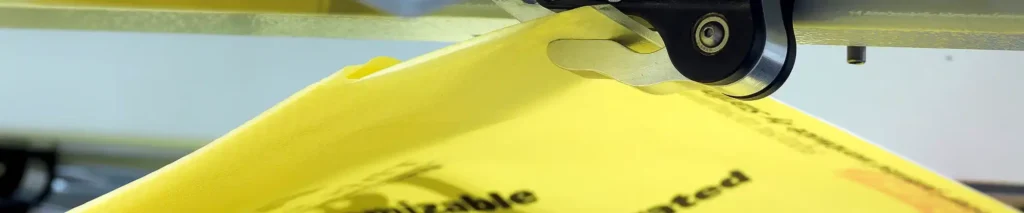
VIDEPAK Open Top PP woven Bags: A Practical Guide to Open Mouth, Hemmed Open Mouth and Double Fold Open Mouth Packaging
For many dry bulk products, packaging does not need to be complicated to be effective. It needs to open cleanly, fill efficiently, close securely, stack well, travel safely, and present the product with confidence. That is exactly why VIDEPAK Open Top PP woven Bags remain a practical packaging platform for agriculture, food ingredients, animal feed, seeds, fertilizers, plastic granules, minerals, construction materials, and many other dry products. The format starts with a simple idea: keep the top fully accessible before filling, then choose the closing method that best matches the product and packing line.
Within this family, terms such as Open Top, Open Mouth, Hemmed Open Mouth, and Double Fold Open Mouth describe related but different design decisions. An ordinary Open Mouth gives maximum simplicity. A Hemmed Open Mouth adds a cleaner, more stable finished edge. A Double Fold Open Mouth can further reinforce the opening by controlling and protecting the cut edge. The choice looks small on a drawing, yet it can influence filling, handling, sewing, appearance, fraying, and the overall feel of the finished package.
Packaging principle: the best VIDEPAK Open Top PP woven Bags specification is not simply the heaviest bag or the most complex bag. It is the construction that correctly matches the product, filling system, closing method, distribution route, appearance target, and required protection.
Why VIDEPAK Open Top PP woven Bags Are Built Around Filling Flexibility
The simple logic behind the Open Top structure
The defining feature of VIDEPAK Open Top PP woven Bags is easy to understand: the bag reaches the filling operation with its upper end unsealed. The opening can be presented to an operator, clamped around a filling spout, or handled by suitable automated equipment. After the required quantity has entered the bag, the mouth can be sewn, combined with an inner liner seal, fitted with an easy-open feature, or finished through another specified closing process. VIDEPAK’s published technical material places these bags broadly in the 5–50 kg filling range and describes their compatibility with manual, semi-automatic, and automated open-mouth packing operations.
This flexibility is the central commercial value of the Open Top concept. One factory may pack grains today and pellets tomorrow. Another may operate several product grades through one filling area. A third may need a simple bag for an established sewing line rather than a package that forces the plant to change its filling equipment. In each case, Open Top PP woven Bags let the packaging specification adapt around the process instead of requiring the process to adapt around a highly specialized package. VIDEPAK technical guidance consequently positions Open Mouth constructions as particularly useful where filling flexibility is important.
Strength comes from the woven body, not from complexity
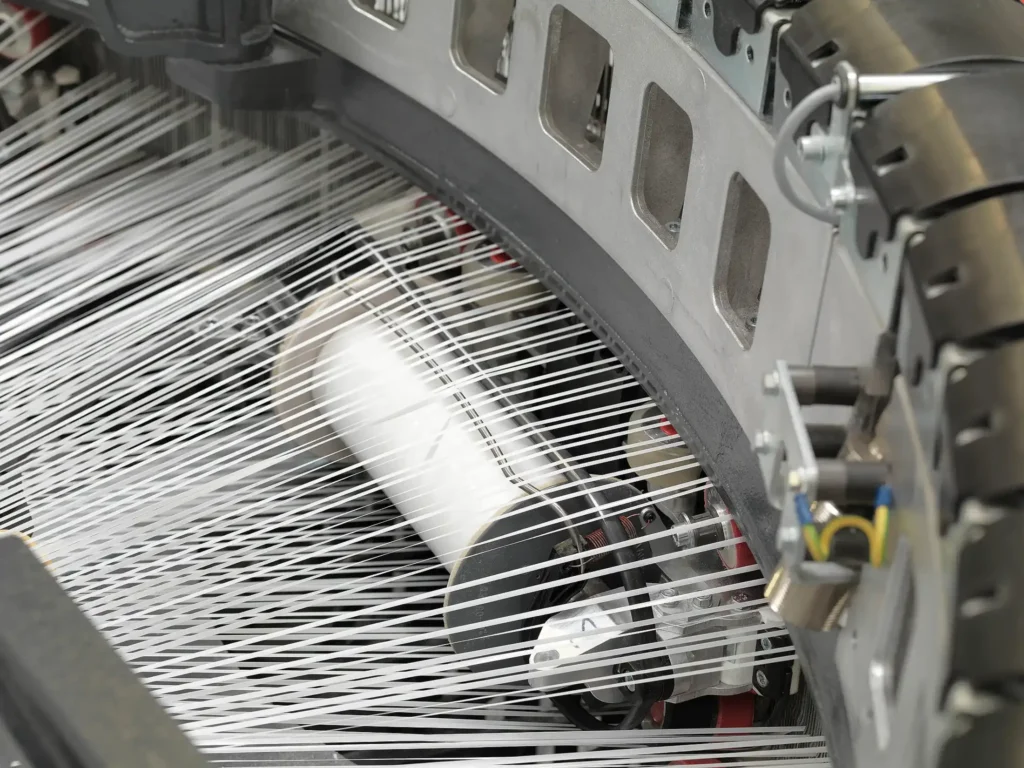
VIDEPAK Open Top PP woven Bags are based on polypropylene tapes woven into a fabric structure. During production, polypropylene resin is converted into film, slit into tapes, stretched to develop useful mechanical properties, woven into fabric, and then converted into finished sacks. Depending on the project, the woven body may remain uncoated for greater air movement, receive an extrusion coating for improved moisture and dust control, or be laminated with printed BOPP film when stronger visual presentation and surface protection are required. Liners can also be added when the packed material needs an additional barrier.
Easy Filling
The wide Open Mouth supports straightforward loading of grains, pellets, granules, feed, seeds and many other flowable products.
Flexible Closing
The same Open Top platform can be specified around sewing, liner heat sealing, easy-open features and other project-specific closure arrangements.
Configurable Protection
Coating, BOPP lamination, PE liners, controlled venting, anti-slip treatment and UV-related options can be selected according to the actual distribution environment.
Simple to fill does not mean simple to engineer. The mouth must stay usable during handling. The bottom must survive the packed load. The fabric must balance weight, strength, flexibility, breathability and barrier needs. The printing must remain readable after transport. Good Open Top PP woven Bags therefore combine a simple geometry with careful control of many small details. Simple outside; engineered inside.
Understanding Open Mouth, Hemmed Open Mouth and Double Fold Open Mouth
Standard Open Mouth: direct, economical and adaptable
A standard Open Mouth bag provides a full-width opening for filling and is normally closed after the product enters the sack. In a basic woven construction, the upper edge may be heat cut to help control loose tapes, while the finished closure can be selected according to the customer’s filling operation. This makes Open Mouth one of the most straightforward forms of VIDEPAK Open Top PP woven Bags. It works especially well when the buyer values simple handling, a familiar sewing process, broad product compatibility, and an efficient balance between performance and packaging cost.
The advantage is freedom. The trade-off is that the mouth itself must be designed for the way it will actually be handled. A raw or heat-cut opening can be enough for a controlled application, but repeated rubbing, aggressive handling, demanding filling equipment, or a premium appearance target may justify a more finished edge. This is where Hemmed Open Mouth and Double Fold Open Mouth become valuable design choices rather than cosmetic upgrades.
Hemmed Open Mouth: a cleaner edge with better handling control
With a Hemmed Open Mouth, the cut top edge is folded and secured so that exposed woven tapes are better controlled. VIDEPAK technical descriptions commonly discuss mouth folds in the region of approximately 20–35 mm, while related manufacturing guidance identifies single fold, double fold, or turned-hem arrangements in roughly the 20–40 mm range depending on construction. These values are engineering references rather than universal rules; the final fold should match bag size, fabric weight, filling method and closing equipment.
The result is easy to see and easy to feel. A Hemmed Open Mouth creates a tidier upper edge, reduces the tendency of the woven tapes to fray, gives operators a more controlled area to grip, and can make the mouth more stable as it moves toward filling and sewing. VIDEPAK’s current product guidance also notes that a hemmed edge can improve the professional appearance of the bag while helping the opening tolerate repeated handling.
For this reason, Hemmed Open Mouth often makes sense for rice, seed, feed, food ingredients, retail agricultural products and other programs where both industrial performance and visual finish matter. It is a small fold with a large job: control the edge, guide the fill, support the close.
Double Fold Open Mouth: added edge control for demanding programs
The phrase Double Fold Open Mouth is best treated as a buying and specification term that must be confirmed on the final bag drawing. In practical woven-bag construction, a double-folded opening means the cut edge is turned over more than once before it is secured, placing the cut end inside the folded structure rather than leaving it directly exposed. VIDEPAK technical material describes double-folded mouth edges as a way to create a smoother, reinforced opening and better control fraying and snagging.
Compared with a basic Open Mouth, a Double Fold Open Mouth requires additional converting work. Compared with a simpler Hemmed Open Mouth, it may provide more edge build-up and protection where that extra construction is useful. This does not automatically make Double Fold Open Mouth the best choice for every product. More material and more processing should solve a real problem. When repeated mouth handling, demanding sewing conditions, a neat edge, or additional stiffness justifies the upgrade, Double Fold Open Mouth can be an effective specification. When those needs are absent, a standard Open Mouth may remain the better commercial answer.
Technical Design of VIDEPAK Open Top PP woven Bags
Fabric weight, mesh and tape denier work as one system
Buyers sometimes begin an RFQ by asking only for GSM. GSM matters, but GSM alone cannot describe the performance of VIDEPAK Open Top PP woven Bags. Tape denier, weave density, fabric construction, bag dimensions, coating, lamination, bottom seam and mouth finish all work together. VIDEPAK’s published reference envelope for standard open-top woven sacks lists fabric weights around 70–120 g/m² for mainstream 25–50 kg applications, denier commonly around 700D–1400D, and mesh constructions such as 10×10 and 12×12, with a broader customizable mesh range around 9×9 to 14×14. Heavier constructions can be engineered when the payload and distribution stress justify them.
That is why an experienced supplier should ask what goes inside the bag before deciding what goes into the bag. Smooth resin pellets do not stress fabric in exactly the same way as angular minerals. A 10 kg package does not face the same drop energy as a 50 kg package. A bag moving directly from filler to a protected warehouse does not face the same environment as one transported through several distribution points. The correct VIDEPAK Open Top PP woven Bags design begins with use conditions, then turns those conditions into measurable specifications.
Barrier or breathability: choose what the product needs
Uncoated woven PP allows more air movement through the weave and can be useful for products where breathability and fast de-aeration are helpful. Where moisture, dust control, surface cleanliness or print presentation becomes more important, VIDEPAK Open Top PP woven Bags can incorporate coating or lamination. Published VIDEPAK technical ranges include PP/PE coating in approximately the 15–30 μm range and BOPP film in approximately the 15–25 μm range for relevant constructions. PE liners are also available, with published reference thicknesses commonly around 20–80 μm on the main Open Top PP woven Bags technical page.
Important specification note: published ranges are useful for quotation alignment, but they are not a substitute for the final approved specification. Actual GSM, mesh, denier, liner gauge, coating, dimensions, mouth fold and seam design should be selected according to the packed product, net weight, filling equipment and required test performance.
The dimensions and values above summarize VIDEPAK’s published engineering envelope for this product family and should be treated as starting points for technical discussion rather than fixed limits.
From Resin to Finished Open Mouth: How the Bag Takes Shape
A controlled manufacturing chain
The performance of VIDEPAK Open Top PP woven Bags is created step by step. Polypropylene resin is converted into film and slit into tapes. Those tapes are stretched and woven into fabric. The fabric may then remain plain, receive coating, or be combined with a printed BOPP layer. Printing follows the selected construction. Converting operations cut the fabric to the required length, create the specified bottom, prepare the Open Mouth, form a Hemmed Open Mouth or Double Fold Open Mouth where requested, integrate liners or easy-open components when specified, and prepare finished bags for inspection and packing. VIDEPAK describes quality checks such as fabric weight control, dimensional checks, seam evaluation and visual inspection as part of this production logic.
VIDEPAK Open Top PP woven Bags Manufacturing Flow
Each stage changes the final behavior of the bag. Tape and weave create the mechanical base; coating and lamination change barrier and surface properties; converting determines the mouth and seam geometry; inspection confirms whether production remains aligned with the approved specification.
The bottom deserves as much attention as the Open Top
A buyer searching for Open Top PP woven Bags naturally focuses on the opening, but the bottom carries the product every minute after filling. VIDEPAK offers folded and sewn bottom constructions, including single- and double-fold solutions, while laminated programs can also use other engineered bottom formats where appropriate. A stronger fold and stitch arrangement can help distribute seam stress for demanding loads, although the correct choice depends on product weight, particle shape, handling and the required test level.
This is an important distinction: Double Fold Open Mouth describes the way the opening is prepared in this article, while a double-fold bottom describes the base seam. They are different features and should never be assumed to be the same item on an RFQ. A customer may order a standard Open Mouth with a double-fold sewn bottom, a Hemmed Open Mouth with that same bottom, or a Double Fold Open Mouth with another approved bottom construction. Clear drawings prevent unclear expectations.
Printing turns industrial packaging into visible packaging
For plain utility programs, direct printing can communicate product name, handling marks, batch information and basic branding. Where stronger shelf appearance is needed, BOPP-laminated VIDEPAK Open Top PP woven Bags provide a print-ready outer surface suited to more detailed graphics. VIDEPAK technical material identifies BOPP lamination as an option that combines the load-bearing woven PP structure with improved visual presentation and surface resistance.
The contrast is useful: the woven body carries the load; the printed surface carries the message. Strength speaks to operations. Graphics speak to the market. Good packaging lets both speak at once.
Matching Open Top PP woven Bags to Products and Packing Conditions
Grains, rice, seeds and agricultural products
Rice, maize, pulses, seeds and similar products are natural candidates for Open Top PP woven Bags because the large Open Mouth supports straightforward loading while woven PP provides a strong, lightweight packaging structure. Depending on moisture conditions, distribution time and retail positioning, customers can choose an uncoated woven body, coated fabric, a liner, or BOPP-laminated graphics. VIDEPAK specifically identifies food staples, feed and seed among the common use areas for this product family.
For a basic grain program, standard Open Mouth may offer all the functionality required. When bags are handled more often before sewing, a Hemmed Open Mouth can provide a cleaner working edge. Where the project calls for more edge reinforcement or a more defined mouth structure, a precisely specified Double Fold Open Mouth can be evaluated. Three approaches, one platform, different levels of finishing.
Feed, pet food and branded agricultural goods
Feed and pet-food packaging often asks one bag to perform two jobs: survive industrial logistics and support strong product presentation. BOPP-laminated VIDEPAK Open Top PP woven Bags can address this combination by using the woven PP base for mechanical support while the laminated exterior carries higher-detail graphics. A Hemmed Open Mouth may complement that premium presentation by making the top edge feel more controlled before closure.
Resins, minerals, fertilizer and industrial granules
Plastic resin, masterbatch, calcium carbonate, fertilizers, salts and mineral products may also be packed in Open Top PP woven Bags, but these applications make specification discipline especially important. Sharp or abrasive granules can increase mechanical demand. Fine powders can move through stitch holes or fabric openings if containment is not properly designed. Moisture-sensitive contents may need coating or a PE liner. Air released during filling may require controlled venting. VIDEPAK therefore treats the bag as a system: fabric, barrier, opening, bottom, closure and filling behavior are selected together.
Fast selection rule: free-flowing product + flexible filling often points toward VIDEPAK Open Top PP woven Bags; repeated mouth handling can strengthen the case for Hemmed Open Mouth; greater edge control can justify Double Fold Open Mouth; dusty or moisture-sensitive goods should trigger a separate discussion about coating, liner, venting and final closure.
A practical specification decision flow
What is being packed: grain, pellet, seed, feed, powder, mineral or another dry product?
Does the plant need a wide, flexible Open Mouth for manual, semi-automatic or compatible automated filling?
Choose standard Open Mouth, cleaner Hemmed Open Mouth, or reinforced-edge Double Fold Open Mouth.
Decide whether the bag should remain breathable or use coating, BOPP lamination, a PE liner, venting, UV-related options or anti-slip treatment.
Define net weight, pallet pattern, stack height, transport route, storage environment and test requirements.
Size + GSM + mesh + denier + barrier + print + bottom + mouth + closure + inspection requirements.
This sequence avoids a common sourcing mistake: selecting a bag name first and solving the real packaging problem later. With Open Top PP woven Bags, the better order is product first, process second, structure third. Form follows function; specification follows reality.
VIDEPAK as an Open Top PP woven Bags supplier: From RFQ to Repeat Production
A strong supplier should convert requirements into measurable details
The real value of an industrial packaging supplier appears before mass production begins. A useful quotation should do more than attach a price to the words Open Top PP woven Bags. It should define the bag. VIDEPAK recommends aligning on finished width and length, target fill weight, fabric GSM, mesh, tape denier, coating or lamination, liner construction, mouth treatment, bottom seam, printing, closure method and any required functional additions. Pallet pattern and stack expectations can also matter because the finished package is part of a logistics system, not an isolated piece of fabric.
Production scale should be supported by process control
VIDEPAK states that it was founded in 2008, employs more than 500 people, exports to more than 70 countries, uses virgin materials for its PP woven product range, and has company-wide production capability of up to 800 million bags annually across its heavy-duty packaging operations. Scale alone does not define quality, but it matters when customers need repeat orders, multiple specifications and reliable supply planning. The more important point is the combination of manufacturing scale with controlled extrusion, weaving, printing, converting and inspection.
For a buyer, this means the discussion with a VIDEPAK supplier team can move from “Can you make this bag?” to better questions: “Which Open Mouth treatment matches my filler?” “Should this application use Hemmed Open Mouth?” “Does Double Fold Open Mouth solve a real handling issue?” “Should the woven body breathe, or should we add a barrier?” “Which bottom construction is appropriate for my drop and transport conditions?” These questions turn packaging purchasing into packaging engineering.
Consistency begins with an approved sample and a clear specification
Before repeat production, critical characteristics should be fixed in the approved specification: finished dimensions, tolerance, fabric construction, surface treatment, printing, bottom seam, liner, mouth finish and packing method. For Open Top PP woven Bags, the precise treatment of the upper edge deserves particular attention because terms can be interpreted differently across markets. A drawing showing exactly how Open Mouth, Hemmed Open Mouth or Double Fold Open Mouth is formed is more reliable than a product name alone. VIDEPAK’s technical guidance likewise emphasizes measurable specification details and production checks rather than relying only on general bag categories.
The VIDEPAK Open Top PP woven Bags Value Equation
Easy filling + engineered woven strength + the right Open Mouth finish + suitable barrier + reliable bottom construction + clear printing + controlled production = packaging designed around the customer’s real process.
That is the purpose of VIDEPAK Open Top PP woven Bags. Not complexity for the sake of complexity. Not one structure forced onto every application. Instead, the product family gives buyers a practical starting point and then lets the important details change around the job. Standard Open Mouth keeps the format direct and flexible. Hemmed Open Mouth improves edge control and creates a cleaner handling experience. Double Fold Open Mouth provides another level of mouth finishing where additional fold structure is justified. Coating, BOPP lamination, PE liners, printing, bottom designs and functional treatments extend that platform according to the packed product and supply chain.
For customers choosing an Open Top PP woven Bags supplier, the most useful question is therefore not simply, “How much is one bag?” A better question is, “What bag will run correctly on our line, protect our product, survive our route, represent our brand and remain repeatable from order to order?” That is where VIDEPAK’s approach to Open Top packaging is designed to add value: understand first, specify clearly, manufacture consistently.
- VIDEPAK Open Top PP woven Bags: A Practical Guide to Open Mouth, Hemmed Open Mouth and Double Fold Open Mouth Packaging
- Why VIDEPAK Open Top PP woven Bags Are Built Around Filling Flexibility
- Understanding Open Mouth, Hemmed Open Mouth and Double Fold Open Mouth
- Technical Design of VIDEPAK Open Top PP woven Bags
- From Resin to Finished Open Mouth: How the Bag Takes Shape
- Matching Open Top PP woven Bags to Products and Packing Conditions
- VIDEPAK as an Open Top PP woven Bags supplier: From RFQ to Repeat Production
- Why an Open Top? Equipment Logic, Product Logic, Market Logic
- Ability to Serve Complex Product Profiles
- Selecting Appropriate Constructions and Filling Equipment
- Significance of Material Selection for Performance
- Quality Control and Testing That Matter
- Industries Where the Format Excels
- Everyday Products You’ve Likely Seen
- Evaluating Supplier Proficiency
- Issues to Address When Requesting a Quotation
- Evaluating Suppliers for Quality and Turnaround
- What Premium Open‑Mouth Bags Are and Why They Elevate Protection
- How Open Top PP woven Bags Differ from Valve Bags and FIBCs
- What Material Combinations Are Used
- Quick Specification Snapshot (For Fast Alignment)
- References
Breathable PP Woven Bags China Supplier
Premium open top breathable PP woven bags with reliable quality and customizable manufacturing options.
Check More →Woven Fabric PP Bags Features
Key features of open top PP woven fabric bags including durability, ventilation and easy filling.
Check More →Breathable PP Woven Bags Factory
Professional factory manufacturing open top breathable PP woven bags for bulk packaging applications.
Check More →Heat Sealed PP Woven Bags
Open top heat sealed PP woven bags with strong structure and stable performance for industrial use.
Check More →Why an Open Top? Equipment Logic, Product Logic, Market Logic
If packaging is a chain of decisions, the choice of an open mouth sits near the front of the line. Who is filling the bag—people, a semi‑auto clamp, or a robotic pick‑fill‑seal cell? What is going into the bag—pellets or powder, free‑flowing or cohesive, hydrophilic or oily? Where will it be stacked—indoor pallets or outdoor yards, temperate climates or sun‑belt depots? The Open Top PP woven Bags format survives these questions with surprising ease because it does not force a single sealing technology. Sewing stations are ubiquitous and economical; heat‑seal bars become practical once a PE liner or film lamination is present; drawstrings and EZ‑open tapes add consumer‑level convenience without disrupting industrial throughput.
Contrast this with valve bags: brilliant at high‑speed powder filling, but a narrower tooling lane. Or FIBCs: unmatched for 500–2000 kg payloads, but irrelevant for 10–50 kg retail or feed SKUs. The open‑mouth sack is the pragmatic middle: fast enough, tough enough, brand‑ready.
A skeptic might ask, “If the bag does not arrive sealed, don’t we risk inconsistency at the plant?” That depends on system engineering. When Open Top PP woven Bags are specified with hemmed mouths (to reduce fray), defined stitch densities, and seam fold types matched to drop‑test targets, the filling step becomes repeatable. When laminated or lined constructions are used, heat‑seal parameters can be standardized with SOPs just as rigorously as for mono‑material PE pillow bags.
Ability to Serve Complex Product Profiles
Open Top PP woven Bags are designed to accommodate a wide spectrum of particle morphologies—free‑flowing pellets, angular granules, cohesive powders, and mixed formulations. Horizontally, they bridge multiple disciplines: textile engineering (woven fabric geometry), materials science (polyolefin behavior), and packaging operations (filling/closure). Vertically, they connect decisions from polymer grade → tape orientation → fabric GSM/mesh → seam architecture → closure method. The result is a single platform that can be tuned to control dust, protect against moisture, and resist tearing, even when product shapes vary within the same SKU family.
Selecting Appropriate Constructions and Filling Equipment
Choosing Open Top PP woven Bags means choosing a configuration: unlaminated for breathability, coated or BOPP‑laminated for barrier and graphics, liner‑inserted for powders or greases. From a systems lens, the bag is half the story; the other half is the line. Manual clamps suit short runs; semi‑automatic open‑mouth baggers accelerate 10–50 kg fills; fully automatic pick‑fill‑seal cells demand mouth rigidity and narrow dimensional tolerances. Introduce EZ‑open tear tape where consumer convenience matters. Integrate anti‑slip coatings if tall pallets or inclined conveyors are expected. Each choice ties back to a measurable outcome—cleaner fills, faster cycles, safer stacks.
Significance of Material Selection for Performance
The polymer is policy. Open Top PP woven Bags rely on polypropylene tapes whose draw ratio and denier (often 700D–1400D) govern tensile strength and tear propagation. Fabric GSM (e.g., 70–120 g/m² for 25–50 kg) and mesh (10×10 to 12×12 common) tune the balance between toughness and weight. Barrier architecture widens the envelope: PE liners (20–80 μm) reduce moisture ingress; PP/PE coatings (15–30 μm) protect against splash and scuff; BOPP laminations (15–25 μm) deliver high‑fidelity print and a tougher surface. Horizontally, these materials intersect with ink systems and corona treatment; vertically, they cascade down to seam choices and drop performance.
Quality Control and Testing That Matter
A credible QA plan for Open Top PP woven Bags starts with inputs (GSM verification, tape denier checks) and ends with outputs (seam strength, drop tests, migration tests for food contact where applicable). Stitch density (stitches per meter) correlates directly with seam integrity; bottom fold type (single vs. double) predicts burst resistance. For laminated or lined builds, verify film thickness and adhesion, and treat micro‑perforation as a controlled feature, not a random artifact. Outdoor routes demand UV stabilization metrics with hours‑of‑sun targets. The logic is circular in the best way: better inputs → stable processes → fewer field claims → cleaner audits.
Industries Where the Format Excels
Open Top PP woven Bags span agriculture (rice, maize, pulses, seeds), animal nutrition (feed, pet food, bird seed), industrial minerals (calcium carbonate, silica, bentonite), chemicals (fertilizers, salts), and polymers (PP/PE pellets, masterbatch). Horizontally, the same bag architecture can serve both food staples and industrial goods by toggling barrier and hygiene levels. Vertically, each sector imposes distinct stressors—humidity in Southeast Asian rice depots, UV exposure in Middle East yards, abrasion in resin transfers—driving region‑specific BOMs that keep the platform dependable.
Everyday Products You’ve Likely Seen
Supermarket rice sacks, farm‑store feed bags, winter de‑icing salt packs, resin bags near molding presses—these are everyday faces of Open Top PP woven Bags. The user experience differs: brand‑forward BOPP prints for pet food; breathable uncoated bodies for grains; liner‑assisted builds for dusty blends; EZ‑open ribbons where tools aren’t handy. A single platform, many familiar touchpoints.
Evaluating Supplier Proficiency
Proficiency shows up in details you can measure. Look for suppliers of Open Top PP woven Bags who can share tape draw ratios, mesh/GSM tolerances, stitch density targets, and drop‑test regimes. Ask about their food‑contact documentation (EU 10/2011, FDA 21 CFR 177.1520) and plant certifications (ISO 9001/22000; BRCGS Packaging Materials). Horizontally, proficiency blends polymer knowledge, loom control, and converting discipline. Vertically, it links sales specs to shop‑floor SOPs to outbound QA, so what you approve on paper is what ships on pallets.
Issues to Address When Requesting a Quotation
A precise RFQ for Open Top PP woven Bags includes: finished size (W×L), capacity target (e.g., 25 kg or 50 kg), fabric GSM and mesh, denier band, lamination or coating details, liner thickness and style (inserted vs. tubular), mouth treatment (heat‑cut or hemmed), closure (sewn, heat‑seal, EZ‑open), printing method and color count, UV/anti‑slip needs, and compliance documents required. Include pallet patterns and expected stack height; these numbers inform anti‑slip choices and seam geometry. The tighter the RFQ, the fewer iterations to hit spec.
Evaluating Suppliers for Quality and Turnaround
Lead time is capacity plus predictability. For Open Top PP woven Bags, confirm loom availability, printing queues, and converting bottlenecks (cutting, sewing, liner insertion). Sample turns reveal more than brochures: do dimensions sit within tolerance? Are hems tidy and threads trimmed? Do printed colors match Pantone targets within ΔE limits? Request lot coding conventions and retention‑sample policies. The payoff is fewer surprises when orders scale.
What Premium Open‑Mouth Bags Are and Why They Elevate Protection
Premium Open Top PP woven Bags are not different in name but in architecture: tighter meshes for cleaner print, heavier GSM for higher drops, BOPP for shelf‑grade graphics, liners for grease or moisture control, and mouth/closure packages matched to the filling line. Horizontally, these upgrades combine materials and process refinements; vertically, they translate into less damage, better brand legibility, and smoother audits. Up‑spec only where the failure mode justifies it—engineering, not ornament.
How Open Top PP woven Bags Differ from Valve Bags and FIBCs
Open‑mouth sacks trade a self‑closing valve for flexibility in closure and filling equipment. Open Top PP woven Bags excel where product diversity and mixed lines matter—manual to fully automatic baggers, 5–50 kg fills, graphics that must survive pallet rub. Valve bags dominate homogeneous fine powders needing speed; FIBCs dominate bulk logistics at 500–2000 kg. Horizontally, all three are woven polyolefin systems; vertically, they address different operating scales and closure philosophies. Choosing among them is less a contest and more a fit‑for‑purpose decision tree.
What Material Combinations Are Used
Base fabric: oriented PP tapes woven into tubular or back‑seamed cloth. Barrier options: PP/PE coating or BOPP lamination; liners in LDPE/HDPE at 20–80 μm. Mouth treatments: heat‑cut to fuse yarns, or hemmed to capture fray. Bottoms: single‑fold sewn for economy or double‑fold for tougher duty; block bottoms on laminated bodies for squarer stacks. Printing: 1–6 color flexo for economy, 6–10 color gravure on BOPP for photographic effect. Each layer in Open Top PP woven Bags serves a purpose—strength, sealability, breathability, graphics, handling.
Quick Specification Snapshot (For Fast Alignment)
| Parameter | Typical Options/Values |
|---|---|
| Capacity | 5, 10, 20/25, 40 lb, 50 lb, 50 kg |
| Finished Size (W×L) | 30×45 → 55×92 cm; common 50×80 cm |
| Fabric GSM | 70–120 g/m² mainstream; up to ~200 g/m² heavy‑duty |
| Mesh | 10×10, 12×12 (custom 9×9–14×14) |
| Denier | 700D–1400D typical |
| Lamination/Coating | BOPP 15–25 μm; PP/PE coat 15–30 μm |
| Liner | LDPE/HDPE 20–80 μm (inserted or tubular) |
| Mouth/Closure | Heat‑cut or hemmed; sewn; heat‑seal; EZ‑open tape |
| Bottom | Single or double fold & sewn; block‑bottom (laminated) |
| Add‑ons | Anti‑slip coat/print; UV stabilization; micro‑perforation |
For a broader product overview, see the anchor page: Open Top PP woven Bags.
References
- Commission Regulation (EU) No 10/2011 on plastic materials and articles intended to come into contact with food.
- U.S. FDA 21 CFR 177.1520 — Olefin polymers for food contact applications.
- GB/T 8946‑2013 — Plastic woven sacks: General technical requirements (China National Standard).
- BRCGS Packaging Materials — Global Standard for Packaging and Packaging Materials.
- ISO 9001 and ISO 22000 — Quality and Food Safety Management Systems guidelines for packaging producers.
- Representative open‑mouth bagging machinery datasheets (5–50 kg range) and supplier application notes on UV stabilization and anti‑slip printing for woven PP sacks.