
- What is Block Bottom Bags?
- Why Block Bottom Bags? Geometry that changes physics, retail, and cost
- System thinking: break the big decision into small, testable ones
- Production process—how Block Bottom Bags are actually made
- Four advanced design tracks for Block Bottom Bags
- Standards and compliance—what the numbers actually buy you
- Data reinforcement — what the market already shows
- Case studies — from anecdote to pattern
- Comparative study — where Block Bottom Bags outperform and where they don’t
- Parameter & options tables — decision tools for design and sourcing
- Problem → Method → Result — short loops you can reuse
- Implementation checklist — from inquiry to stable production
- Introduction — What are Block Bottom Bags?
- Methods — A systems map for specifying Block Bottom Bags
- Results — What integrated specs deliver in Block Bottom Bags
- Discussion — Horizontal and vertical analysis around Block Bottom Bags
- Problem → Method → Result — reusable micro‑narratives for Block Bottom Bags
- Implementation checklist — from inquiry to stable production with Block Bottom Bags
- Internal link — explore related formats of Block Bottom Bags
- References
What is Block Bottom Bags?
Block Bottom Bags are engineered sacks that combine a flexible body with a squared, plate‑like base so the package stands upright, stacks like a brick, and ships like a pro. In different markets you may also see Block‑bottom sacks, Square‑bottom bags, AD‑style valve bags, Pinch‑bottom bags (for heat‑sealable variants), and Valve block‑bottom bags—aliases that orbit the same geometry: a bag that transforms from a tube into a true rectangular prism. The body may be woven polypropylene (PP), kraft paper with film reinforcement, or hybrid laminates; the idea is constant. A textile or paper backbone carries the load; a shaped bottom carries the logistics.
Features of Block Bottom Bags
High strength‑to‑weight construction; self‑standing display; better cube utilization on pallets and in containers; superior stack stability from flat tops and bottoms; scuff‑resistant, photo‑grade graphics when a printed film face is used; fast, clean filling in valve formats; sift‑proof seam programs; options for anti‑slip lacquers, micro‑perforations for deaeration, easy‑open tape, tamper evidence, antistatic surfaces, and antimicrobial liners. When produced on audited lines, Block Bottom Bags can be documented for dry‑food contact.
How Block Bottom Bags are produced (high level)
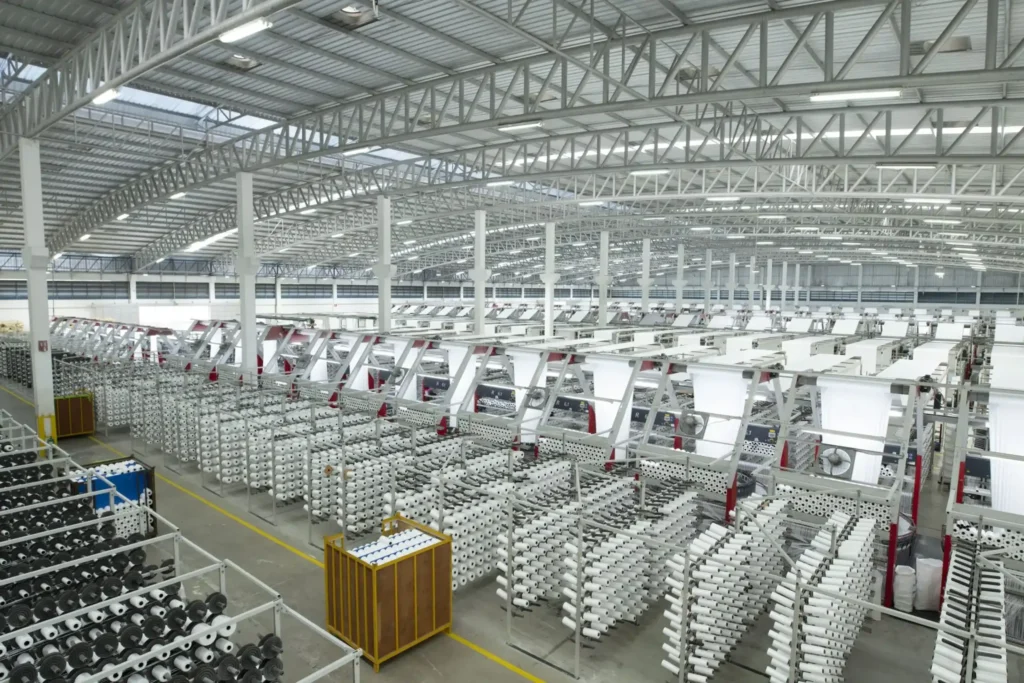
Resin and/or paper webs → tape extrusion and drawing (when woven) → weaving into fabric → surface preparation → extrusion coating or adhesive lamination to printed film or paper → creasing and base forming to create the square bottom → addition of valves or pinch‑seal tops → sewing or heat‑sealing → inspection, testing, and baling. Each stage pulls a different lever: denier and weave; coating weight and peel; crease radius and base panel size; stitch density and bite width; valve geometry and venting.
Where Block Bottom Bags are used
cement and building materials, fertilizers and agro‑chemicals, rice and grains, sugar and flour, animal feed and pet food, mineral powders, plastic pellets, coffee and tea, spices and dehydrated foods, industrial additives—all cases where packs of 10–50 kg must stand tall, look good, and survive rough handling. For an adjacent overview and related constructions, explore Block Bottom Bags.
Why Block Bottom Bags? Geometry that changes physics, retail, and cost
A pillow sack slumps; Block Bottom Bags stand. That one change multiplies benefits. Square bases fill pallet corners; flat tops distribute compressive load; upright faces act like billboards. In warehouses, stacks lean less; in transit, pallets bulge less; in stores, brands speak louder.
Cubic efficiency. Right‑angle bases reduce voids. Depending on SKU size and pattern, users often see 5–15% better pallet fill. That is not a rounding error—it is fewer trips per season and tighter containers.
Stack stability. With flat interfaces, layer‑to‑layer shear is predictable. Add anti‑slip lacquer to hold the static COF in a sweet spot (~0.35–0.45 for many programs) and the tower stays square. Too slick and pallets skate; too sticky and layers distort. Block Bottom Bags let you tune it.
Point‑of‑sale presence. Upright packs don’t hide. Reverse‑printed film faces bury ink beneath the film, so scuffs from handling don’t erase the story. A bag that stands still sells more.
Cleaner filling. Valve block‑bottom formats pair with air or impeller fillers. Deaeration vents near the valve evacuate trapped air so bags settle to shape quickly, cycle times drop, and swelling disappears.
Pinch Bottom Open Mouth Bags
Professional block bottom design bags with stable standing structure and reliable packaging performance.
Check More →PP Woven Valve Bags Manufacturer
Block bottom valve bags with strong load-bearing capacity and automated filling compatibility.
Check More →UN 5M2 Block Bottom Paper Bags
Certified block bottom paper bags with secure sealing and safe transportation performance.
Check More →Multiwall Paper Block Bottom Bags
High-strength multiwall paper bags with block bottom design for industrial bulk packaging.
Check More →Comparative cut. Versus open‑mouth “pillow” sacks, Block Bottom Bags deliver better stack geometry and sift‑proof options. Versus multi‑wall paper valve sacks, woven PP or hybrid constructions shrug off humidity and puncture while maintaining high filler speeds. Versus heavy‑duty PE film bags, the square base resists compression bulge and holds a tighter pallet.
System thinking: break the big decision into small, testable ones
Designing Block Bottom Bags is not a single choice; it’s a choreography. We decompose the spec into six layers, each with its own risks, levers, and proofs. The payoff is a bill of materials (BOM) that reads like a logic chain—every part earns its place.
3-4-5 Ply Multiwall Paper Bags with PE Liner
Durable multiwall paper bags featuring PE liners, ideal for heavy-duty packaging and reliable material handling.
Learn more →
Kraft Paper Laminated Woven Bags
High-strength laminated kraft paper bags providing excellent protection and durability for industrial packaging.
Learn more →
Laminated Kraft Paper Sacks
Reliable laminated kraft paper sacks designed for safe storage and transport of bulk materials with enhanced durability.
Learn more →
- Mechanical backbone (textile or paper) — tape denier and weave (for woven), ply count and basis weight (for paper), fabric GSM, UV stability.
- Surface & graphics — film gauge, print process, topcoat texture, COF window, rub resistance.
- Bottom & geometry — crease pattern, base panel width/length, corner reinforcement, valve sleeve insertion.
- Permeation & breathability — micro‑perfs, liner material (PE/EVOH/foil), barrier targets (OTR/WVTR/light).
- Safety & hygiene — antistatic masterbatch or conductive grids, antimicrobial coatings/liners, HACCP documentation.
- Validation & compliance — tensile/peel/seam/drop, COF, barrier, ESD, migration, plus quality systems (ISO/BRCGS) and food‑contact citations (FDA/EU) when claimed.
Production process—how Block Bottom Bags are actually made
Tape extrusion & drawing (for woven bodies)
Polypropylene homopolymer is extruded, slit into ~2.5 mm tapes, and drawn 5–7× to align molecules and raise tenacity. The watchwords: denier coefficient of variation ≤3%, controlled elongation to match seam behavior, and moisture ≤0.1% at the hopper. Poor filtration causes gels; unstable tension causes weak tapes. Both are solvable with process discipline.
Verification toolkit — Tape tensile on CRE frames; skein‑mass denier checks; resin MFI; in‑line width and thickness control logs.
Weaving
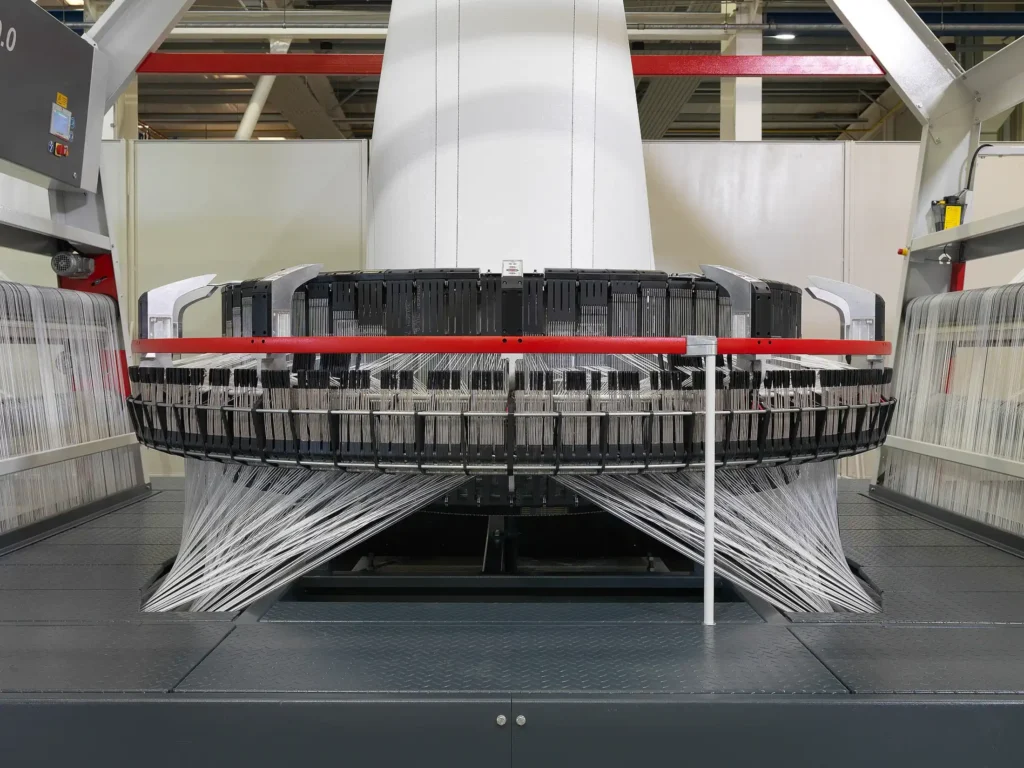
Circular looms produce tubular fabric in 10×10–14×14 meshes; 12×12 is a common sweet spot for 25–50 kg corridors because it balances anisotropy and seam fold mechanics. Ends/picks counters and take‑up tension set GSM and handfeel.
Verification toolkit — ASTM D5035 (raveled‑strip) and ASTM D5034 (grab) tensile; ASTM D1777 thickness; AQL visual for miss‑picks and oil marks.
Printing & surface tuning
Reverse‑printed BOPP (20–30 μm) or coated fabrics carry artwork. Color ΔE ≤2.0 safeguards brand fidelity; rub/tape tests confirm ink anchorage; residual solvent checks avoid lamination blisters. Topcoats (gloss, matte, soft‑touch) hide or highlight texture and set baseline friction.
Lamination / extrusion coating
Printed film is bonded to the fabric with +20–30 g/m² extrusion coat or with solventless adhesive lamination. Peel must survive creasing and sewing; cohesive failure is preferred. Edge overhangs (~5 mm) are managed so fold lines don’t pry the laminate.
Verification toolkit — ASTM D903 180° peel; gravimetric coating weight; ASTM D1894 COF; cross‑sections under a microscope for nip uniformity.
Block‑bottom forming & conversion
Creases define side panels and base; the tube folds into a rectangle. Closures may be sewn (double‑chain) or heat‑sealed (pinch‑bottom); valves (paper/PE/woven sleeves) are inserted for high‑speed filling. Filler cords and special seam programs create sift‑proof constructions for fine powders.
Verification toolkit — Stitch density 14 ± 2 stitches/dm; seam bite ≥25 mm; seam rupture testing (ISO 13935‑1); instrumented drop sequences at 1.0–1.2 m per ASTM D5276; valve dimensional audits.
Liner options (optional, chemistry‑driven)
PE liners keep things clean and add basic moisture resistance; EVOH co‑ex liners improve oxygen control; AL/PE or AL/PA/PE foil liners drive OTR/WVTR toward the instrument floor and block light completely—ideal for aroma‑active or oxidation‑sensitive foods.
Verification toolkit — OTR by ASTM D3985 or ISO 15105‑2; WVTR by ASTM F1249; ASTM F88 seal strength; opacity/light transmission as required.
Four advanced design tracks for Block Bottom Bags
A. Breathable architecture — for grains and produce that arrive warm
Problem — Field heat and residual moisture trapped in non‑breathable packs condense overnight, inviting caking, discoloration, or fungal growth.
Method — Introduce calibrated micro‑perforations through the film/fabric laminate; specify textile air permeability (e.g., ASTM D737); place vents near the valve so filling air escapes without compromising side‑wall barrier. Pair with hydrophobic topcoats that repel liquid water but allow vapor to diffuse.
Result — Bags deaerate fast on the filler, settle square on pallets, and arrive without the “pillow” look.
Discussion — Breathability is a setting, not a virtue. Too many perfs kill barrier; too few trap heat. Validate microbial counts under your HACCP plan.
B. Barrier architecture — for shelf‑life, odor control, and flavor retention
Problem — Oxygen, moisture, and light degrade fats, aromas, and active compounds; sensitive goods go stale or rancid.
Method — Choose metallized films for mid‑barrier or foil liners (AL/PE, AL/PA/PE) for near‑zero OTR/WVTR; design opaque stacks for light‑sensitive products. Tighten peel specs to favor cohesive failure so creasing and bottoming do not split the laminate. Avoid panel perforations unless strictly necessary.
Result — Chemistry stays where it belongs; flavor holds through label life; odor migration is minimized.
Discussion — Match the liner to the product chemistry: oxygen dominates for fatty powders; moisture for hygroscopic salts and fertilizers; light for teas and spices. Block Bottom Bags provide the mechanical stage; the liner writes the shelf‑life script.
C. Antistatic architecture — for flammable dusts and ESD‑sensitive contents
Problem — Dust clouds from sugar, flour, starch, pigments, or fine minerals can ignite; electronics and some powders are ESD‑sensitive. A stray spark at filling is unacceptable.
Method — Add antistatic masterbatch to tapes or topcoats; for higher‑risk zones, weave in conductive yarn grids and provide grounding lugs. Target surface resistivity in the 10^5–10^11 Ω/sq band per IEC 61340‑2‑3; design procedures in line with NFPA 77 and NFPA 652; in the EU, classify equipment and practices per ATEX 2014/34/EU.
Result — Charge builds slowly and bleeds predictably; no surprises on the filler; safety audits pass.
Discussion — Block Bottom Bags reduce static, they do not eliminate poor housekeeping. Humidity control, clean floors, and grounded metalwork are part of the same circuit.
D. Antimicrobial architecture — for food and pharma hygiene
Problem — Warm, humid logistics can elevate surface microflora, risking off‑odors or out‑of‑spec counts.
Method — Apply antimicrobial coatings (silver‑ or zinc‑based) to the inner surface or integrate antimicrobial masterbatch in PE liners. Validate efficacy by ISO 22196 / JIS Z 2801 and, for dynamic conditions, ASTM E2149. Claims should target bioburden suppression, not sterility.
Result — Lower recoverable bacterial counts during storage; cleaner sensory outcomes; more forgiving supply chains.
Discussion — Effects are surface‑bound and time‑limited. Verify under your actual temperature and humidity profile, and assemble a food‑contact Declaration of Compliance.
Standards and compliance—what the numbers actually buy you
Food contact — FDA 21 CFR 177.1520 (PP/PE resins), 21 CFR 175.105 (adhesives), 21 CFR 174.5 (GMP). In the EU, Regulation (EU) No 10/2011 with overall migration limit (OML) 10 mg/dm² and SMLs for specific substances. Certificates are backed by ISO 17025 migration reports.
Mechanical & surface — ASTM D5035/D5034 (fabric tensile), ISO 13935‑1 (seam tensile), ASTM D903 (peel), ASTM D1777 (thickness), ASTM D1894 (COF), ASTM D5276 (drop). These translate lab behavior to field survival.
Barrier — ASTM D3985 (OTR), ASTM F1249 (WVTR), ISO 15105‑2 (gas permeability). For light, use opacity or spectrophotometric transmittance.
ESD & combustible dust — IEC 61340‑2‑3, IEC 61340‑4‑4 (as design references), NFPA 77, NFPA 652, and ATEX 2014/34/EU where applicable.
Antimicrobial — ISO 22196/JIS Z 2801, ASTM E2149.
Quality systems — ISO 22000:2018 and BRCGS Packaging Materials (Issue 6+) for food programs; ISO 9001:2015 for general QA.
Numbers create trust. Cite them in your specification and on your Declaration of Compliance; retain cut‑outs, test graphs, and lot IDs to close the audit loop.
Data reinforcement — what the market already shows
Public supplier catalogs and sourcing portals repeatedly list Block Bottom Bags for 25–50 kg duty with: 900–1200D tapes (for woven builds), 12×12 weaves, printed film faces at 20–30 μm, +20–30 g/m² coating weights, micro‑perf options for deaeration, and foil‑liner options where barrier must approach instrument floors. These corridors are not folklore; they align with measured drop/stack outcomes in typical food and industrial routes.
Case studies — from anecdote to pattern
Case 1 — 50 kg fertilizer through monsoon hubs
Problem — Leaning pallets, seam dusting, and humidity uptake.
Intervention — Shifted from open‑mouth pillow sacks to Block Bottom Bags with a valve; added anti‑slip topcoat (target static COF ≈0.40); increased seam bite to 28 mm; moved micro‑perfs to the valve zone only.
Outcome — Five‑drop at 1.2 m passed; pallet lean incidents dropped by more than half; visible belt dusting fell; field complaints declined sharply.
Case 2 — 25 kg rice in premium retail
Problem — Scuffed graphics and corner cracks in stacked displays.
Intervention — Upgraded film gauge from 18 → 25 μm soft‑touch matte; raised peel spec to ensure cohesive failure; softened crease radius; added easy‑open tape.
Outcome — Displays kept their gloss; no corner‑crack CAPAs; merchandising teams reported higher forward facings due to stand‑up behavior.
Case 3 — Vitamin premix across equatorial ports
Problem — Caking and potency drift after long, humid routes.
Intervention — Added an AL/PE liner; eliminated panel perforations; retained valve‑zone venting; validated OTR/WVTR and seal strength on the laminate.
Outcome — Shelf‑life met label; caking complaints vanished; inbound assays stayed within specification.
Comparative study — where Block Bottom Bags outperform and where they don’t
Against pillow sacks — Geometry is destiny. Square bases reduce bulge and lean; sift‑proof seams control dust. If your primary KPI is stack stability, Block Bottom Bags are the baseline.
Against multi‑wall paper valve sacks — Paper wins on recycling optics and “natural” tactility; woven or hybrid Block Bottom Bags win in humidity, puncture resistance, and long storage.
Against PE heavy‑duty film — Mono‑PE heat‑seals fast and blocks liquid water well; at high stack heights, creep can soften the tower. Block Bottom Bags keep shape under compression and carry photorealistic graphics via reverse‑printed BOPP.
Parameter & options tables — decision tools for design and sourcing
Table A — Quick specification matrix for Block Bottom Bags
| Attribute | Practical window | Notes |
|---|---|---|
| Capacity | 10, 20, 25, 40, 50 kg | Custom footprints available |
| Body material | Woven PP; kraft + film; hybrid laminates | Choose by route humidity & abuse |
| Tape denier (woven) | 800–1200D | Higher for abrasive/mineral goods |
| Weave density | 10×10–14×14 (12×12 common) | Balances anisotropy and GSM |
| Uncoated GSM (woven) | 80–110 g/m² | Program dependent |
| Film face | BOPP 20–30 μm (gloss/matte/pearlized) | Reverse print protected by film |
| Coating weight | +20–30 g/m² PP/PE | Peel and pinhole coverage |
| COF (outer) | Static ≈0.35–0.45 | Tuned by anti‑slip lacquer |
| Style | Valve block‑bottom, pinch‑bottom, open‑mouth | Valve for powders/throughput |
| Seam program | Double‑chain; bite ≥25 mm; 14 ± 2 stitches/dm | Filler cords for sift‑proofing |
| Liner | PE, EVOH co‑ex, AL/PE, AL/PA/PE | Choose by OTR/WVTR/light |
| Breathability | Micro‑perfs (valve‑zone; optional panels) | Validate by ASTM D737 |
| Antistatic | Masterbatch or conductive grid | Target 10^5–10^11 Ω/sq |
| Antimicrobial | Coating or liner additive | Verify ISO 22196 |
Table B — Goal → levers → verification for Block Bottom Bags
| Goal | Primary levers | Verification |
|---|---|---|
| Upright stacks | Block‑bottom geometry; COF tuning | Stack tests; ASTM D1894 |
| Drop survival | Fabric denier/weave; seam bite; peel | ASTM D5035/D5034, D903, D5276 |
| Shelf‑life | Liner barrier; remove panel perfs | ASTM D3985, F1249, opacity |
| Clean filling | Valve sleeve; venting strategy | Cycle time; dust audits |
| Combustible‑dust safety | Antistatic grid; grounding | IEC 61340‑2‑3; NFPA/ATEX SOPs |
| Hygiene | Antimicrobial surfaces; HACCP | ISO 22196; micro counts |
Table C — Lot‑wise QA test plan (suggested)
| Property | Sample plan | Method |
|---|---|---|
| Tape denier | 5 tapes/lot | Skein mass; line log |
| Fabric tensile (warp/weft) | 5 strips/roll | ASTM D5035/D5034 |
| Thickness/GSM | 5/roll | ASTM D1777; gravimetric GSM |
| Peel adhesion | 5 cuts/shift | ASTM D903 |
| COF (film face) | 3/shift | ASTM D1894 |
| Seam rupture | 3 bags/lot | ISO 13935‑1 strip seam |
| Drop test | 5 bags/SKU | ASTM D5276 sequence |
| Barrier (if claimed) | 1 laminate/lot | ASTM D3985, F1249 |
| ESD (if claimed) | 3 bags/lot | IEC 61340‑2‑3 |
Problem → Method → Result — short loops you can reuse
Problem — “Our 50 kg fertilizer bags lean and split corners.”
Method — Switch to Block Bottom Bags with valve; set static COF ≈0.40 via anti‑slip lacquer; raise seam bite to ~28 mm; confine micro‑perfs to valve zone.
Result — 1.2 m five‑drop passes; pallet lean incidents drop; dusting reduced.
Problem — “Premium rice graphics scuff in stacked displays.”
Method — Increase film to 25 μm; move to soft‑touch matte; raise peel spec; soften crease radius; add easy‑open tape.
Result — Brand image holds; corner cracks vanish; shoppers see the story, not the scars.
Problem — “Powdered milk cakes and loses flavor on humid routes.”
Method — Add AL/PE liner; remove panel perfs; keep valve‑zone venting; validate OTR/WVTR and seals.
Result — Chemistry stays in spec; caking complaints disappear; shelf‑life meets label.
Implementation checklist — from inquiry to stable production
- Define the fill and route: density, abrasiveness, particle size, aeration, drop heights, humidity, UV, storage time.
- Choose the backbone: woven PP or paper/hybrid; for woven, 900–1200D and 12×12 are reliable starting points for 25–50 kg.
- Select the face: printed BOPP 20–30 μm; topcoat for gloss/matte/soft‑touch; target COF window ≈0.35–0.45.
- Engineer the bottom: crease plan, base panel dimensions, valve sleeve matched to filler nozzles.
- Decide breathability vs. barrier: micro‑perfs for hot grains; metallized or foil liners for odor/light/oxygen‑sensitive goods.
- Add safety and hygiene as needed: antistatic band 10^5–10^11 Ω/sq with grounding; antimicrobial surfaces validated to ISO 22196.
- Validate: tensile, peel, seam, drop, COF, barrier; for food, compile FDA/EU DoC with migration reports; for ESD, attach resistivity data and SOPs.
- Freeze BOM and trace: bale labels with roll IDs, loom numbers, and QC signatures; archive retains and test graphs.
Follow this path and Block Bottom Bags stop being a list of parts. They become a system: mechanical geometry, surface science, and barrier chemistry working together to move product safely and sell it beautifully.
Introduction — What are Block Bottom Bags?
Block Bottom Bags are upright, square‑based packaging sacks designed to stand like a box, stack like a brick, and travel like a pro. The body can be woven polypropylene (PP), kraft paper with film reinforcement, or hybrid laminates; the geometry is the star. You may also encounter block‑bottom sacks, square‑bottom bags, AD‑style valve bags, pinch‑bottom bags, and valve block‑bottom bags—different names for one idea: a tubular body transformed by creases into a true rectangular footprint. What follows from that footprint? Stability, efficiency, and a front panel that works as a miniature billboard.
The core features of Block Bottom Bags map neatly to real‑world pressures. A high strength‑to‑weight backbone resists drops and punctures; a flat top and bottom deliver predictable compression in tall stacks; scuff‑resistant printable faces keep graphics intact; optional valves enable clean, fast filling; anti‑slip lacquers tune friction for transport; liners and coatings tailor barrier and hygiene. How are they made? Resin is extruded into tapes (when woven), tapes are woven into fabric, the fabric is laminated or coated to carry print, the tube is creased and formed into a square bottom, then sewn or heat‑sealed and fitted with a valve where needed. Where do they serve? cement and building materials, fertilizers and agro‑chemicals, rice and grains, sugar and flour, animal feed and pet food, mineral powders, plastic pellets, coffee and tea, spices and dehydrated foods—from bulk commodity to premium retail, from warehouse to aisle.
Methods — A systems map for specifying Block Bottom Bags
Engineering Block Bottom Bags is less a single decision and more a choreography of levers that close a logic loop from “problem” to “proof.” We divide the task into six sub‑problems and give each a measurable outcome.
First, define the fill and the route. Density, particle size, abrasiveness, trapped air; drop heights, humidity swings, UV exposure, storage time. Why this preamble? Because Block Bottom Bags don’t just hold product; they hold risk profiles. Warm grains want breathability; fatty powders want oxygen control; fine minerals want sift‑proof seams.
Second, choose the mechanical backbone. For woven bodies, set tape denier (often 900–1200D) and weave density (10×10–14×14; 12×12 is a reliable starting point for 25–50 kg). The goal is predictable strip/grab tensile with a seam behavior that neither peels nor ruptures prematurely.
Third, select the surface and graphics package. Reverse‑printed BOPP in the 20–30 μm band (gloss, matte, or soft‑touch) protects ink under film; coated fabric is an option for simpler art. The same layer sets the coefficient of friction (COF). Too slick and pallets skate; too sticky and layers distort. Many programs target a static COF around 0.35–0.45 so pallets resist acceleration yet move on conveyors.
Fourth, tune adhesion and creasing. Extrusion coating (+20–30 g/m²) or solventless adhesive lamination bonds film to fabric. Peel strength must prefer cohesive failure so that creases and sewn folds don’t pry the laminate apart. Edge overhangs and crease radii look cosmetic but are structural: set them, record them, guard them.
Fifth, decide the liner and permeability. PE sleeves keep packs clean; EVOH co‑extrusions improve oxygen control; AL/PE or AL/PA/PE foil liners drive OTR/WVTR toward instrument floors and block light—ideal for aroma‑active or oxidation‑sensitive foods. Micro‑perforations near the valve vent filling air; avoid panel perforations if shelf‑life is king.
Sixth, lock the style and seam program. Open‑mouth sewn is simple and versatile; pinch‑bottom heat‑seals tidy the top; valve block‑bottom is the workhorse for powders. Stitch density (for example, 14 ± 2 stitches per decimeter), seam bite (≥25 mm), and filler cords create sift‑proof paths. A bag is only as good as its seams; treat them like components, not afterthoughts.
Results — What integrated specs deliver in Block Bottom Bags
When these sub‑decisions align, Block Bottom Bags behave with pleasing predictability. Drop performance climbs because impacts spread across flat panels instead of concentrating at soft corners. Stack stability improves because flat‑to‑flat contact shares compressive load. On the line, valve designs with localized micro‑vents speed deaeration so bags reach final shape quickly; swelling and wobble vanish.
For a 25 kg food SKU, a typical integrated bill of materials might read: woven PP at 900D, 12×12 weave, ~95 g/m² uncoated; 20–25 μm matte BOPP reverse‑printed and extrusion‑coated +25 g/m²; anti‑slip lacquer tuned to ~0.40 static COF; EVOH liner for mid‑barrier or AL/PE for premium shelf‑life; block‑bottom valve geometry matched to the filler’s nozzle; seam bite at 25–28 mm with a double‑chain program and filler cord. For a 50 kg fertilizer, push fabric to 1000–1200D, keep 12×12, specify anti‑slip matte to fight lean, and retain only valve‑zone venting so panel integrity stays high.
What does this integration buy you? Fewer CAPAs for corner splits; fewer pallet‑lean incidents; cleaner aisles; more consistent color in retail displays because the ink lives beneath film and rubs can’t reach it. The effect is cumulative: a geometry that behaves, a surface that tells the story, and a liner that guards the chemistry.
Discussion — Horizontal and vertical analysis around Block Bottom Bags
Horizontally, set Block Bottom Bags alongside their cousins. Against open‑mouth “pillow” sacks, geometry is destiny: square bases reduce bulge and lean, and sift‑proof seams control dust. Against multi‑wall paper valve sacks, woven or hybrid Block Bottom Bags resist humidity, shrug off forklift rash, and maintain stiffness over long storage; paper still wins on curbside optics and “natural” tactility. Against heavy‑duty PE film bags, Block Bottom Bags hold a truer profile in tall stacks and carry photorealistic graphics with reverse‑printed BOPP.
Vertically, trace a complaint to its root. “Our graphics crack at creases.” Ink change? Often not. The fix usually sits with lamination peel margins and crease geometry. “Our pallets lean at layer five.” The culprit could be COF too low (layers slide) or too high (layers stick and distort), a seam that acts like a hard spine, or a base panel dimension that encourages rocking. Block Bottom Bags are a system: polymer physics, textile mechanics, surface science, and conversion craft talk to each other through the pallet.
Problem → Method → Result — reusable micro‑narratives for Block Bottom Bags
A powdered milk brand ships through humid ports and finds caking on arrival. The method: replace a plain PE liner with an AL/PE foil liner, remove panel perforations, keep valve‑zone venting, and validate OTR/WVTR and seal strength. The result: chemistry stays where it belongs; caking disappears; labeled shelf‑life is met.
A premium rice line sees scuffed graphics and whitening at folds. The method: raise film gauge from 18 μm to 25 μm, specify soft‑touch matte, increase peel to favor cohesive failure, and soften crease radius. The result: displays keep their gloss; corners stop cracking; shopper appeal grows.
A fertilizer producer logs leaning towers during monsoon season. The method: move from a pillow sack to a valve‑style Block Bottom Bags, add anti‑slip lacquer to hold static COF around 0.40, increase seam bite to ~28 mm, and confine micro‑perfs to the valve zone. The result: five‑drop sequences pass; pallet lean incidents drop by more than half; belt dusting falls.
Implementation checklist — from inquiry to stable production with Block Bottom Bags
Start by defining the fill (density, abrasiveness, particle size, trapped air) and the route (drop heights, humidity, UV exposure, storage duration). Choose the backbone (woven PP or paper/hybrid); for woven bodies, 900–1200D tapes and a 12×12 weave are sensible anchors for 25–50 kg programs. Select the face (BOPP 20–30 μm; gloss/matte/soft‑touch) and set a COF target around 0.35–0.45 with anti‑slip lacquer. Engineer the bottom (crease plan, base panel dimensions, valve sleeve geometry) to match the filler. Decide permeability (micro‑perfs for hot grains; metallized or foil liners for oxygen/odor/light‑sensitive goods). Add safety and hygiene as required (antistatic band 10^5–10^11 Ω/sq with grounding; antimicrobial surfaces validated to ISO 22196). Validate mechanically (tensile, peel, seam, drop), tribologically (COF), and—if barrier is claimed—physically (OTR/WVTR, opacity). For food programs, compile a Declaration of Compliance citing FDA 21 CFR and EU 10/2011 with migration reports. Freeze the bill of materials, label bales with trace IDs, and archive cut‑outs and test graphs. When the choreography is stable, scale.
Internal link — explore related formats of Block Bottom Bags
For adjacent constructions, styles, and examples, see Block Bottom Bags and use the geometry notes in this document to frame your sourcing brief.
References
American Society for Testing and Materials (ASTM): D5035/D5034 (textile tensile), D903 (peel), D1894 (coefficient of friction), D5276 (drop), D3985 (oxygen transmission), F1249 (water‑vapor transmission).
International Organization for Standardization (ISO): 15105‑2 (gas permeability), 13935‑1 (seam tensile), 22196 (antibacterial activity on plastics).
US Food & Drug Administration (FDA): 21 CFR 177.1520 (PP/PE resins), 21 CFR 175.105 (adhesives), 21 CFR 174.5 (GMP for food‑contact materials).
European Union: Regulation (EU) No 10/2011 on plastic materials & articles intended to come into contact with food (OML/SML framework).
Packaging equipment and converter catalogs describing Block Bottom Bags specifications (denier ranges, film gauges, coating weights, valve geometries) used for 10–50 kg duty in food and industrial logistics.