
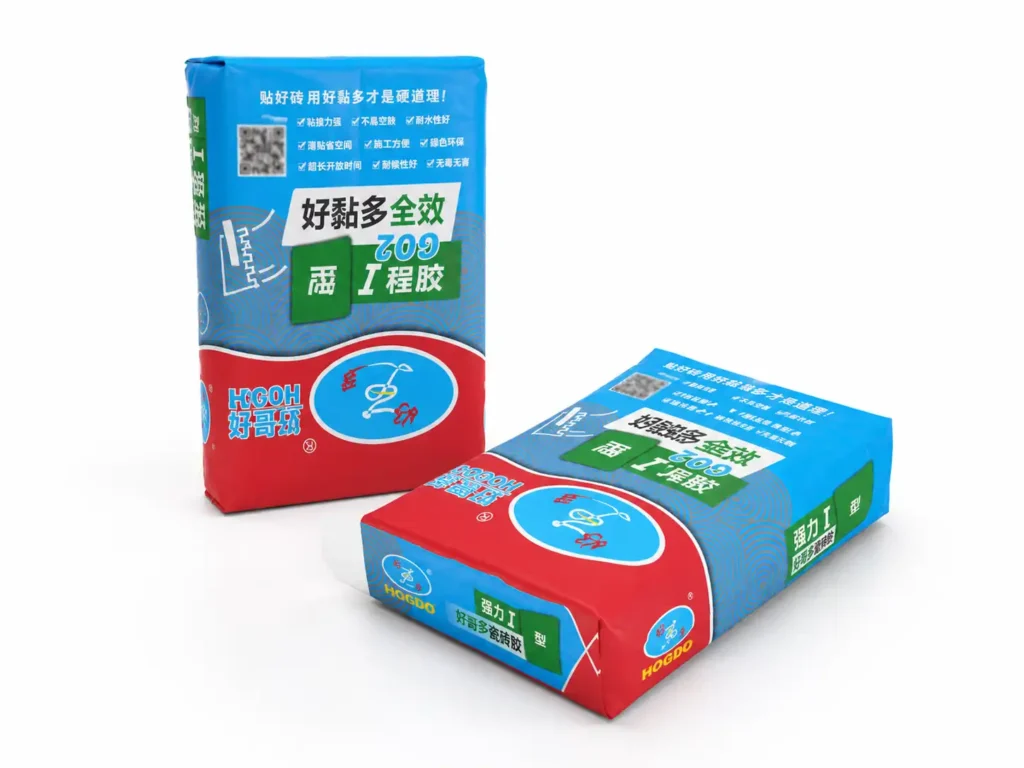
Multiwall Paper Bags: A Practical Guide to Bottom, Pinch Bottom, Block Bottom, and Satchel bottom
Industrial packaging is judged in moments that seem small but carry large costs: the second a bag enters a filling spout, the instant a seal closes, the hour a pallet is strapped, and the week a shipment crosses a humid route. VIDEPAK designs Multiwall Paper Bags around those moments. The goal is not simply to make a paper sack that holds material. The goal is to create a reliable packing tool that fills cleanly, protects the product, carries clear brand information, stacks with discipline, and arrives ready for use. In this system, the Bottom construction is not a minor detail. It is the point where product flow, closure strength, pallet shape, and visual presentation meet.
That is why VIDEPAK treats Pinch Bottom, Block Bottom, and Satchel bottom formats as different answers to different operating needs. One favors a clean heat-activated closure. One creates a square, box-like stance. One opens easily and stands upright for manual or semi-automatic handling. The choices are related, but they are not interchangeable. Fast is valuable. Clean is valuable. Stable is valuable. The best Multiwall Paper Bags specification finds the right balance instead of chasing one benefit at the expense of all others.
VIDEPAK Selection Principle: Start with the product and the filling line, then choose the Bottom style. A strong-looking bag can still fail if air cannot escape, the seal does not match the equipment, or the pallet geometry does not match the route.
Why VIDEPAK Multiwall Paper Bags Are Built as a Packaging System
Layered Strength Without Unnecessary Weight
Multiwall Paper Bags are heavy-duty sacks made from multiple plies of sack kraft paper. Each ply can perform a different task. An outer ply can support printing and surface appearance. A middle ply can add tensile and burst strength. An inner ply can support cleanliness, friction control, or contact requirements. Optional coatings or polyethylene liners can be introduced when moisture, odor, grease, or fine-powder containment requires more protection than paper alone can provide. VIDEPAK’s published guidance describes common paper weights around 70–100 g/m² per ply, typical multi-ply builds from two to five layers, and optional film liners commonly specified within an application-dependent thickness range. These figures are reference windows, not universal promises; the final build should be confirmed by product, line, and transport trials.
The value of layers is not “more is always better.” More paper can raise stiffness and mechanical reserve, yet it can also change air release, folding behavior, sealing pressure, freight weight, and cost. A three-ply bag with well-selected paper and correct venting may outperform a heavier bag that traps air or forms poor folds. A four-ply bag may be the better choice for export routes, sharp granules, or higher stack loads. A liner may be essential for a moisture-sensitive powder but unnecessary for a stable dry product. VIDEPAK therefore builds Multiwall Paper Bags through assigned functions: one layer carries, one layer stabilizes, one layer prints, one layer protects.
The Bottom as a Performance Interface
The Bottom decides more than how the sack looks when empty. It affects how the bag opens, how product settles, how trapped air leaves, how the filled package stands, how force moves through the corners, and how neighboring bags touch on a pallet. In a pillow-shaped sack, soft edges may shift under strap pressure. In a square-base format, broad faces can contact more evenly. In a heat-sealed format, the closure can reduce the leakage paths associated with needle holes. In a self-opening format, the operator can spend less time shaping the empty bag before filling. These are not isolated features; they are operating consequences.
VIDEPAK’s Bottom design process therefore considers five connected questions: What is being filled? How is it filled? What must be blocked or released? How will the package be stacked? What must the customer see? Fine powders may need controlled deaeration and high sift resistance. Coarse granules may need puncture strength and fold integrity. Food ingredients may need a clean seal and carefully selected liner. Pet nutrition may need both shelf presence and aroma protection. Construction powders may value valve filling speed above retail display. The same paper family can serve all these markets, but not with one universal Bottom.
Protect
Match plies, liner, closure, and seam control to moisture, dust, grease, aroma, and contamination risks.
Perform
Tune the Bottom, gusset, venting, and mouth geometry for the actual filler and target cycle.
Present
Use stable faces, high-contrast printing, and clear coding to make the package easier to sell and easier to manage.
Core Parameters for VIDEPAK Multiwall Paper Bags
A useful specification starts with ranges and ends with validation. VIDEPAK can configure natural or white kraft paper, multiple ply counts, flat or gusseted bodies, open-mouth or valve filling, optional liners, water-based flexographic printing, anti-slip treatment, sift-control features, and several Bottom constructions. Published VIDEPAK material presents 10–50 kg as a common industrial fill class, with 25 kg and 50 kg widely used, while paper grammage, liner thickness, dimensions, and closure details remain dependent on the packed product and the customer’s equipment.
Dimensions should never be copied from a generic catalog without considering bulk density and filled shape. Two products with the same net weight may require very different bag volumes. A light feed ingredient may need a larger body and gusset than a dense mineral. A highly aerated powder may expand during filling, then settle later. A Block Bottom bag may create a more regular cube than a soft-sided alternative, while a Pinch Bottom format may require enough sealing land for stable heat and pressure transfer. VIDEPAK uses the customer’s target fill weight, bulk density, filler type, pallet footprint, stack height, route climate, and closure equipment to move from an estimated size to a trial-ready specification.
Important Parameter Note
The ranges above are practical starting points. Final Multiwall Paper Bags performance depends on the complete system: paper grade, ply order, adhesive, perforation, liner, dimensions, Bottom geometry, closure equipment, packed product, and distribution route.
Detailed Guide to Pinch Bottom, Block Bottom, and Satchel bottom
Pinch Bottom: Clean Closure, Strong Presentation
Pinch Bottom open-mouth construction is designed for top filling followed by a folded, adhesive-based closure. In a typical process, the bag arrives with one end factory formed and the filling mouth open. After product enters, a pre-applied adhesive zone is activated according to the selected sealing system; the extended paper land is folded and pressed to produce a neat final seam. This approach avoids an exposed stitch line across the closed mouth and can improve the finished appearance of Multiwall Paper Bags used for flour, starch, specialty powders, food ingredients, pet products, chemicals, and other dry goods that need both containment and strong visual presentation.
The strongest marketing benefit of Pinch Bottom is also an engineering benefit: the package can look precise because the closure is precise. A broad, flat sealed area supports clean graphics and clear coding. The absence of sewing holes can reduce one common path for fines to escape. Optional liners can be folded or sealed in ways designed around the product’s barrier needs. Yet Pinch Bottom is not automatically the best choice for every line. The customer must have suitable closing equipment, stable heat and pressure control, and enough process discipline to maintain seal quality through changes in paper, ambient conditions, and line speed. A beautiful seal is useful only when it is repeatable.
VIDEPAK evaluates the sealing land, adhesive system, paper caliper, mouth alignment, and liner arrangement together. For some trial builds, published examples use a controlled heat-seal window rather than one fixed temperature, because the correct setting changes with adhesive, speed, pressure, paper moisture, and equipment. Seal testing after conditioning is important: a seam that appears strong immediately may behave differently after storage in heat or humidity. For this reason, VIDEPAK recommends line trials with the actual product and closer, followed by handling and route simulation before full commercial release.
Block Bottom: Square Geometry That Works Like a Box
Block Bottom construction creates a pasted, square base that allows the filled bag to stand with a more regular footprint. The result is still a flexible sack, but it behaves more like a box during display and pallet building. Broad faces become easier to align. Corners become more defined. Stack layers can look cleaner. This is why Block Bottom Multiwall Paper Bags are widely considered for animal nutrition, seeds, grains, rice, flour, lawn and garden products, premium dry mixes, and branded industrial goods where pallet discipline and visual order matter alongside strength.
The performance of Block Bottom depends on accurate folding, overlap, adhesive coverage, paper stiffness, and gusset control. If the base is not planar, the bag may rock, twist, or place uneven force on the pallet layer. If the corners are weak, the package may lose its square profile under compression. If the top closure is not matched to the product, fine material can still escape even though the base is strong. VIDEPAK therefore treats Block Bottom as one part of a complete package: the square base supports stability, while the mouth design, liner, sift-control tape, and print layout complete the function. Geometry starts the advantage; process control keeps it.
A Block Bottom design can be used with different filling concepts. In an open-mouth version, the operator or automatic system fills from the top and closes the mouth after filling. In a valve version, the square form works with a valve sleeve and spout packing process. This distinction matters because “open mouth” and “valve” describe how the product enters, while Block Bottom describes the package geometry. Clear naming prevents expensive mistakes in RFQs, samples, and line trials.
Satchel bottom: Easy Opening and Upright Handling
Satchel bottom is commonly used to describe a pre-formed square-base style that opens into shape as the bag is filled or prepared for filling. In self-opening satchel formats, creased gussets and a formed base help the bag stand upright, making it attractive for manual and semi-automatic operations. The upright shape can improve operator access, shelf visibility, front-panel readability, and customer handling. Within the VIDEPAK Multiwall Paper Bags range, Satchel bottom concepts are especially relevant when the package must move between industrial handling and retail-style presentation.
The main strength of Satchel bottom is convenience, but convenience must be engineered. Crease memory affects how quickly the bag opens. Outer-ply stiffness affects whether the package stays upright. Base patching affects load support. The mouth may be closed by tape, fold-over sealing, or another system selected for the product and filling line. For finer materials, additional sift-control measures may be needed. For moisture-sensitive materials, a liner may be added, but its fit must allow the bag to open correctly rather than bunch inside the gussets. A successful Satchel bottom bag opens easily, fills evenly, and stands confidently.
Three Formats, Three Clear Priorities
Pinch Bottom prioritizes a neat sealed mouth and strong sift control. Block Bottom prioritizes square stance and pallet order. Satchel bottom prioritizes easy opening and upright handling. VIDEPAK can combine these priorities with suitable plies, gussets, liners, printing, and closure details.
Comparison and Selection Flow for Multiwall Paper Bags
The table shows why buyers should not choose Multiwall Paper Bags by appearance alone. A Pinch Bottom sample may look premium, yet it will not deliver value if the plant lacks a stable closing process. A Block Bottom bag may stack beautifully, yet it may not solve the dust challenge of a highly aerated powder without the correct mouth or valve design. A Satchel bottom bag may open quickly for an operator, yet it may need extra stiffness or reinforcement for a long export route. Selection is a chain. Every link must fit.
VIDEPAK Selection Flow
Powder, granule, feed, ingredient, chemical, mineral
Dust, humidity, odor, grease, puncture, contamination
Gravity, auger, air, impeller, manual, automatic
Plies, liner, venting, gusset, print, dimensions
Pinch Bottom, Block Bottom, Satchel bottom, valve, or sewn
This flow begins with product physics rather than a favorite bag type. Bulk density shapes volume. Particle size shapes sift risk. Air entrainment shapes venting. Hygroscopic behavior shapes the barrier. The filler shapes the mouth and closure. Pallet height shapes stiffness and compression needs. Route climate shapes paper treatment, liner choice, and over-packing. Brand strategy shapes print quality and stance. When these inputs are known, the correct Bottom becomes easier to identify and easier to defend with data.
Manufacturing, Quality Control, and Brand Value
From Kraft Paper to Finished Bottom
VIDEPAK’s production sequence starts with paper and ends with a controlled shipping unit. Paper rolls are selected by strength, weight, surface, porosity, and intended contact or barrier function. Plies are brought together into a tube, adhesive is applied in planned zones, gussets or stepped ends are formed, optional liners and perforations are integrated, graphics are printed, and the selected Bottom is converted. For Pinch Bottom, the sealing land and adhesive placement must support the customer’s closing process. For Block Bottom, folds and pasted overlaps must create a flat, square base. For Satchel bottom, crease control must support easy opening and stable stance.
Printing is not decoration added after engineering; it is part of the package function. Large paper faces can carry product names, compliance text, handling symbols, lot codes, barcodes, QR codes, and color systems for warehouse recognition. Matte code zones can improve scanning under stretch film. Side-gusset marks can remain visible when pallet faces are tightly packed. Repeating edge identifiers can help operators distinguish similar products without moving every sack. On Block Bottom and Satchel bottom packages, the more upright shape can also create a stronger visual billboard. On Pinch Bottom packages, the neat top closure can preserve a clean premium look.
Testing the Material, the Seam, and the Whole Bag
Quality control should follow the failure modes that matter. Paper tensile testing measures how the sheet responds to pulling force. Burst testing examines resistance to hydraulic pressure. Cobb testing measures water absorptiveness under defined conditions. Whole-package evaluation can include drop handling, stack compression, seam inspection, valve leakage, dimensional checks, and closure-strength testing. ISO describes standardized methods for tensile properties, bursting strength, and water absorptiveness, while ASTM provides compression methods for shipping containers and unit loads. These tests do not replace a customer line trial, but they make the discussion measurable.
For VIDEPAK Multiwall Paper Bags, validation should move in three stages. First, test materials and converted features in controlled conditions. Second, run bags on the real filling and closing equipment, recording fill time, dust, weight accuracy, air release, seal appearance, and reject rate. Third, test filled bags through handling, stacking, vibration, route humidity, and warehouse dwell. Quality is not one number. It is consistent performance across the full journey.
Quality Questions Worth Asking
Does the bag fill at the target speed? Does the Bottom stay square after settling? Does the Pinch Bottom seal remain closed after conditioning? Does the Block Bottom keep the pallet face aligned? Does the Satchel bottom open without extra operator effort? Do codes scan after wrapping? Does the package survive the real route?
VIDEPAK Manufacturing Depth
VIDEPAK states that it was established in 2008, employs more than 500 people, serves customers across more than 70 countries, and produces several families of heavy-duty industrial bags, including kraft paper sacks. Its published company profile also describes a quality-management approach aligned with ISO 9001:2015 and production for multiple international standards. For buyers, these facts matter because Multiwall Paper Bags programs often require more than one successful sample: they require repeatable paper sourcing, stable converting, controlled printing, documented inspection, and enough production depth to support changing demand.
Application Guidance and the VIDEPAK Value Proposition
Food Ingredients, Flour, Starch, and Specialty Powders
For food ingredients and fine specialty powders, the package must protect cleanliness while supporting efficient handling. Pinch Bottom Multiwall Paper Bags are often a strong starting point because the adhesive closure can create a neat mouth without an exposed sewing line. Optional liners can support moisture, odor, or fine-particle control, subject to contact requirements and end-use testing. Block Bottom may be selected when standing shape, pallet order, or display value carries greater weight. Satchel bottom may suit manual or semi-automatic operations where fast opening and upright presentation are important. The correct answer depends on the line, not only the ingredient.
Animal Nutrition, Pet Products, Seeds, and Agricultural Goods
Animal nutrition and agricultural products create a wide range of stresses: coarse particles, oils, dust, variable warehouse humidity, long pallet dwell, and strong branding needs. Block Bottom Multiwall Paper Bags can provide broad panels, regular stacking, and a stable stance. Satchel bottom can improve operator handling and customer presentation. Pinch Bottom can support cleaner closure where fines, aroma, or premium appearance matter. Optional anti-slip treatment, liners, reinforced plies, sift-control tape, and clear side identification can be added according to the risk map. The package should be rugged in the warehouse and readable in the market.
Building Materials, Minerals, Fertilizers, and Industrial Powders
For cement, mortar, gypsum, putty, minerals, fertilizers, and similar dry industrial products, filling speed and dust control often lead the decision. Valve formats may be preferred for high-throughput spout filling, while Block Bottom geometry can support brick-like pallets. Pinch Bottom remains relevant for products filled through an open mouth when a tight final closure or cleaner presentation is required. Moisture-sensitive fertilizers and salts may justify a liner or treated paper, especially for humid storage and ocean routes. Heavy or abrasive contents may require stronger ply combinations and careful fold reinforcement. In these markets, every second on the line and every damaged pallet has a visible cost.
What VIDEPAK Brings to the Project
VIDEPAK approaches Multiwall Paper Bags as a configurable platform rather than a fixed catalog item. The discussion can cover paper grade, ply sequence, liner, dimensions, printing, venting, anti-slip treatment, mouth closure, and the exact Bottom family. The aim is direct: make the bag fit the product, make the product fit the line, and make the filled package fit the supply chain.
The commercial value of a good bag is broader than the unit price. A carefully chosen Pinch Bottom can reduce leakage complaints and lift presentation. A precise Block Bottom can improve pallet order and make warehouse handling more predictable. A well-formed Satchel bottom can save operator effort and create a friendlier customer experience. Correctly designed Multiwall Paper Bags can support faster filling, cleaner plants, clearer identification, better stack stability, fewer damaged goods, and stronger brand trust.
VIDEPAK’s recommendation is to begin every project with facts: product data, filling method, target speed, desired closure, route climate, pallet plan, storage time, print file, and regulatory needs. From there, samples can be built around the right Bottom logic. Choose Pinch Bottom when a clean adhesive seal and polished appearance lead the brief. Choose Block Bottom when square stance and pallet discipline lead. Choose Satchel bottom when easy opening and upright handling lead. Then validate. Measure. Improve. That is how Multiwall Paper Bags become more than packaging: they become a reliable part of the production system and a visible part of the customer promise.
- Multiwall Paper Bags: A Practical Guide to Bottom, Pinch Bottom, Block Bottom, and Satchel bottom
- Why VIDEPAK Multiwall Paper Bags Are Built as a Packaging System
- Core Parameters for VIDEPAK Multiwall Paper Bags
- Detailed Guide to Pinch Bottom, Block Bottom, and Satchel bottom
- Comparison and Selection Flow for Multiwall Paper Bags
- Manufacturing, Quality Control, and Brand Value
- Application Guidance and the VIDEPAK Value Proposition
- Why the Multiwall Paper Bags Bottom Type matters: a systems frame
- Pasted Valve (PV): speed without the mess
- Pinch Bottom Open Mouth (PBOM): hermeticity and presentation
- Block Bottom Open Mouth (BBOM): geometry that behaves like a box
- References
Why the Multiwall Paper Bags Bottom Type matters: a systems frame
Ask a simple question—why worry about the bottom?—and a complex system answers. Products differ: powders entrain air; pellets create point loads; hygroscopic materials sponge up humidity. Equipment varies: gravity fillers tolerate bulk; impeller and air packers push speed; sealers require certain geometries. The distribution world is even less forgiving: container sweat, long‑duration compression, forklift shocks, and inbound warehouse stacking. The Multiwall Paper Bags Bottom Type sits at the junction of these forces. Choose wisely and you reduce total cost, prevent claims, and accelerate the line; choose poorly and you inherit dust clouds, caking, toppled pallets, and unhappy retailers.
Multiwall Paper Valve Bags Manufacturing
Professional manufacturing process for multiwall paper valve bags with stable structure and reliable sealing.
Check More →3-4-5 Ply Multiwall Paper Bags With PE Liner
High-strength multi-ply multiwall paper bags with PE lining, perfect for pinch block bottom packaging.
Check More →Kraft Paper Sacks Product Guide
Complete guide to kraft paper sacks including pinch block bottom design and industrial applications.
Check More →Multiwall Paper Bags Pinch Block Bottom
Premium pinch block bottom multiwall paper bags with excellent standing stability and load-bearing capacity.
Check More →To reason clearly, decomposing the problem helps. We can map performance into five sub‑systems:
- Mechanical integrity. Tensile and tear in the plies, seam strength at the bottom, drop resilience, stack creep over weeks.
- Barrier and cleanliness. Moisture ingress rates (WVTR), oxygen transmission (OTR) when relevant, sifting/leakage at seams and valves, hygiene at the point of fill.
- Line compatibility. Filling method (gravity, auger, impeller, air), achievable bags/hour, dust capture requirements, changeover time.
- Logistics geometry. Cube efficiency in 20′ and 40′ containers, pallet stability, interlocking patterns, edge crush resistance when over‑packed.
- Branding and compliance. Print area, ink holdout, tamper‑evidence, label real estate for nutrition/DG, traceability.
The five bottom constructions distribute these trade‑offs differently. What follows is a deeper analysis—not just what each bottom is, but how it behaves under load, under humidity, under real factory constraints.
Pasted Valve (PV): speed without the mess
Definition and structure. PV is a bag with both ends factory pasted. A valve sleeve—often HDPE, PP, or reinforced paper—is embedded at one corner. A spout engages the sleeve; product and air flow in; upon withdrawal the internal pressure, sometimes aided by heat‑reactive layers, pushes the valve into a self‑closing state. The form factor is brick‑like, the ends are flat, and the overall geometry is cart‑friendly.
Where PV excels. Fine powders—cement, fly ash, limestone flour, titanium dioxide, ceramic powders, mineral fillers, fertilizer prills—on modern impeller or air packers. The Multiwall Paper Bags Bottom Type list includes PV because it supports rapid filling with tight dust control and gives a square stack for logistics.
Engineering levers. Valve inner diameters generally range 35–60 mm; sleeve lengths 90–140 mm; thicker PE films (40–70 μm) strengthen the sleeve and allow heat‑tacking. Micro‑perforations—60–160 holes/100 cm²—vent entrained air, with patterns tuned to bulk density and flow. Seam pastes (hot‑melt/starch) aim for outer‑ply peel > 50 N/50 mm, a common benchmark that deters delamination during drops.
Problem → Solution → Result.
— Sifting and speed. Fine powder plus impeller speed equals entrained air and pressure pulses near the top. Solution: PV with a low‑friction PE valve, targeted micro‑perforation, and a pressure‑relief patch. Result: 2,000–2,800 bags per hour per spout on rotary packers; dust emissions around hood capture points drop into the single‑digit mg/m³ range on tuned systems.
— Moisture attack. Hygroscopic products cake under tropical RH. Solution: internal PE liner 20–40 μm, skim‑coated at the valve mouth to avoid a wicking path; dispersion‑coated outer ply to cut Cobb60 (e.g., from ~45 to <25 g/m²). Result: WVTR plummets—an order of magnitude better than uncoated paper—leading to fewer caking claims after ocean transit.
— Pallet discipline. Rounded ends shift; pasted ends lock. Solution: PV’s flat pasted geometry; optional corner boards in over‑packed pallets. Result: more uniform pallet faces, improved top‑load tolerance, easier column stack patterns.
Deeper analysis: data, cases, comparison.
Data reinforcement. PV sacks for 25 kg cement commonly clear 5–6 drops at ~80 cm under ISO 7965 after ISO 2233 conditioning. Outer ply 70–100 g/m² provides Elmendorf tear (ISO 1974) > 400 mN depending on machine direction. Where hazardous solids qualify, PV designs can be built for UN 5M1/5M2 testing, and food‑grade SKUs can align with FDA 21 CFR 176.170/176.180 and EU 1935/2004 when inks and adhesives comply.
Case anatomy. A cement plant migrating from SOM to PV removed one operator per shift at the filler, scrubbed ~0.3% spillage from totals, and increased pallet cube utility by ~2–3% owing to flatter ends. Workplace dust sensors saw measurable declines without adding bag‑top sealers.
Comparative study. Versus PBOM, PV runs faster and cleaner at the filler; versus SOM, PV eliminates stitch holes and thread contamination while requiring more precise line conditions. In the constellation of Multiwall Paper Bags Bottom Type, PV is the sprinter—fast off the mark—provided your powder and packer are tuned.
Rhetorical check: what if valves “leak”? A fair question. A poorly matched sleeve diameter or a rough spout can scuff the valve; absent heat‑tacking, powders may whisper out. The counter is engineering discipline: sleeve materials that soften and tack, precise spout geometry, and micro‑perforation that releases air before it seeks an escape through the valve.
Pinch Bottom Open Mouth (PBOM): hermeticity and presentation
Definition and structure. PBOM arrives open at the top. The bottom is factory pasted for a square base. After filling—often gravity or auger—the top is folded into a pinch and heat‑sealed via a coextruded thermoplastic inside the closure. PBOM can thus integrate a liner and achieve a near‑hermetic seal while preserving a crisp, premium look.
Where PBOM excels. Food ingredients, nutraceutical blends, premium pet food, cocoa and fat powders—any product where aroma retention, oxygen control, and consumer‑facing print matter. In the Multiwall Paper Bags Bottom Type taxonomy, PBOM is the gourmet choice: slower at the line than PV, but superior for shelf life and tamper evidence.
Engineering levers. Pinch tapes activate around 120–160 °C; lap widths 20–35 mm; liners can be PE 30–70 μm or PE/EVOH/PE 40–90 μm to pull OTR below 5 cm³/m²·day at 23 °C, 0% RH. Tucked‑in gussets prevent chimneying that can compromise seal uniformity. Outer dispersion coatings reduce Cobb60 to 20–30 g/m², adding splash resistance without plasticizing the look.
Problem → Solution → Result.
— Shelf life and aroma. Oxygen, moisture, light—three thieves of flavor. Solution: PBOM with coex liner including EVOH core; heat‑seal through the pinch using dialed temperatures and dwell times. Result: headspace oxygen stays low; off‑notes recede; 12‑month shelf targets move from hope to plan.
— Retail face and stack. Slumped faces undermine brand cues. Solution: PBOM’s square bottom and flat panels; corner patches for heavy stacks. Result: tight faces, confident stacks, and lower toppling risk on retail endcaps.
— Tamper evidence. How do we show the consumer a clean closure? Solution: a wide, even pinch seam with lot coding across it; optional tear tape. Result: visible integrity that is harder to counterfeit than a simple sew line.
Deeper analysis: data, cases, comparison.
Data reinforcement. Seal strength via ASTM F88 typically targets > 2.5–4.0 N/15 mm depending on liner; through‑seal integrity can be checked using ASTM F2054 burst. Barriers are quantified using ASTM F1927 (OTR) and F1249 (WVTR). For food safety and plant hygiene, BRCGS or FSSC systems ensure that packaging materials meet documented controls; inks follow the EuPIA exclusion policy, and plastics under EU 10/2011 restrict migration.
Case anatomy. A dairy exporter replaced SOM poly‑lined sacks with PBOM and a 60 μm PE/EVOH/PE liner. Accelerated aging indicated headspace O₂ below ~2% at six months; oxidation returns dropped; and needle/thread contamination risks at the seam disappeared.
Comparative study. PBOM vs PV: speed surrender, seal victory. PBOM vs BBOM: both have square bases; PBOM’s heat‑sealed top outperforms tape/sew for barrier performance—crucial for sensitive foods.
Rhetorical check: is PBOM “over‑engineered” for commodity goods? Sometimes. If the product shrugs at oxygen and moisture, if it sells in non‑retail channels, if the line can’t support heat sealing—then PBOM’s advantages narrow. Yet where flavor, aroma, and perception define value, PBOM earns its keep.
Block Bottom Open Mouth (BBOM): geometry that behaves like a box
Definition and structure. BBOM is an open‑mouth sack with a factory‑pasted square—block—bottom. The top is closed by sewing, tape‑over, or fold‑over heat‑seal if a liner exists. BBOM’s revelation is simple: a bag that handles like a bag but stacks like a box.
Where BBOM excels. Feed, seeds, rice, premium pet food, lawn and garden mixes—products that benefit from a self‑standing bag with neat faces and generous panels. Within Multiwall Paper Bags Bottom Type, BBOM is the pragmatic urbanist: optimizing footprint and stability without sacrificing line flexibility.
Engineering levers. Bottom planarity depends on overlap design and hot‑melt application. Outer ply basis weight and bottom patches govern squareness. Top closures vary: a sift‑proof crepe tape under sewing combats leakage; a fold‑over heat seal can be used if a PE liner stands inside the mouth. Anti‑sift inside flaps keep fines from finding pinholes.
Problem → Solution → Result.
— Stability and presentation. Rounded bottoms slide and bulge under strap pressure. Solution: BBOM’s block base interlocks, raises friction, and standardizes face contact. Result: fewer corner‑crush events; higher, safer stacks.
— Leakage from open mouths. Sewing can invite fines to escape via needle holes. Solution: sift‑proof tapes, crepe width adjustments, and fold‑over seals when liners exist. Result: leakage shrinks to negligible levels in agricultural applications.
— Retail readability. A slumped bag tells no story. Solution: BBOM’s flat front invites 8‑color flexo and crisp branding. Result: a commodity can look premium—without the expense of full film laminates.
Deeper analysis: data, cases, comparison.
Data reinforcement. Compression via ASTM D642 and long‑duration stacks via ASTM D4577 show BBOM’s advantage over pillow sacks thanks to base planarity. In distribution simulations (ASTM D4169, ISTA 3A), BBOM often equals or exceeds SOM performance at comparable ply counts.
Case anatomy. A pet‑food maker pivoted from SOS to BBOM with a light PE liner and tape‑over top. The brand enjoyed a larger billboard; pallets densified ~4%; returns fell below 0.1%.
Comparative study. BBOM vs SOS: both self‑stand, but BBOM’s corners resist high stacks better. BBOM vs SOM: costs are higher than bare SOM, but cube efficiency and shelf presence frequently repay the delta in retail channels.
Rhetorical check: if BBOM stacks so well, why not always use it? Because geometry is only part of the story. If your filler demands a valve, or your product is ultra‑fine, or your channel is purely industrial, other bottoms may beat BBOM in dust control or cost.
References
- ISO 535: Paper and board — Determination of water absorptiveness (Cobb method).
- ISO 1974: Paper — Determination of tearing resistance (Elmendorf method).
- ISO 7965‑2: Sacks — Drop test for filled transport sacks.
- ISO 2233: Packaging — Conditioning for testing.
- ASTM D4169: Standard Practice for Performance Testing of Shipping Containers and Systems.
- ISTA 3A: General Simulation Performance Test for Packaged-Products for Parcel Delivery System Shipment.
- ASTM F1249: Standard Test Method for Water Vapor Transmission Rate Through Plastic Film and Sheeting Using a Modulated Infrared Sensor.
- ASTM F1927: Standard Test Method for Determination of Oxygen Gas Transmission Rate, Permeability, and Permeance at Controlled Relative Humidity Through Plastic Film and Sheeting Using a Coulometric Sensor.
- ASTM F88/F88M: Standard Test Method for Seal Strength of Flexible Barrier Materials.
- ASTM F2054: Burst Testing of Flexible Package Seals Using Internal Air Pressurization Within Restraining Plates.
- EU 10/2011: Plastic materials and articles intended to come into contact with food.
- FDA 21 CFR 176.170/176.180: Components of paper and paperboard in contact with aqueous and fatty foods.
- EuPIA Guideline on Printing Inks applied to Food Contact Materials.
- UN Recommendations on the Transport of Dangerous Goods — Model Regulations (5M1/5M2 packaging performance for multiwall paper sacks).