
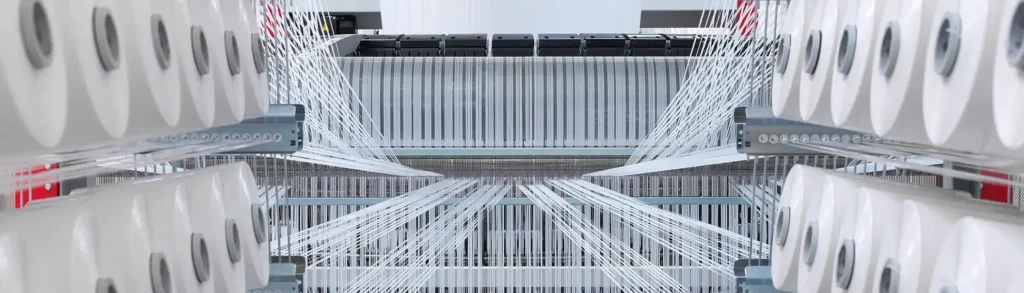
- What are SOM PP Woven Bags and why do they matter in modern logistics?
- Common aliases used by buyers and auditors
- Key characteristics that distinguish SOM PP Woven Bags
- How SOM PP Woven Bags are produced — from pellets to pallets
- Where SOM PP Woven Bags excel — and why
- Operational behavior — friction, sealing, and rub: the quiet economics
- Technical identifiers and third‑party anchors
- Color table — indicative specification ranges
- Comparative reasoning — why choose this path over others?
- Risk register and mitigations
- Procurement toolkit — how to ask and what to expect
- Internal link — specifications, samples, and contact
- A systems roadmap for SOM PP Woven Bags
- Extrusion: where SOM PP Woven Bags acquire their first discipline
- Tape stretching: converting thickness into orientation, orientation into strength
- Weaving: from isolated tapes to coherent cloth
- Coating and lamination: locking the weave, governing friction, protecting graphics
- Converting and seams: where geometry meets reality
- From plant to pallet: predictive testing, not post‑mortems
- Raw material: qualifying PP for SOM PP Woven Bags
- Standards and identifiers: the shared language of trust
- Data reinforcement, case analysis, comparative study — stitched into one narrative
- Specification table — reusable for RFQs and engineering checklists
- Procurement guidance for SOM PP Woven Bags — ask by pain point, not by habit
- Operations and OEE: how SOM PP Woven Bags make lines calmer
- Sustainability and circularity: lighter where it counts, compatible where it matters
- Frequently asked questions about SOM PP Woven Bags
- Internal anchor — specifications, samples, contacts
- Framing the Problem: Why SOM PP Woven Bags Win When Products, Lines, and Logistics Collide
- Ability to Shape Performance for Complex Products (Flow, Dust, Fragility, and Corner Loads)
- Selecting the Right Production Platforms for SOM PP Woven Bags (Extrusion, Looming, Coating, Printing)
- The Significance of Polymer and Additive Selection in SOM PP Woven Bags
- Quality Control and Testing for SOM PP Woven Bags (From Tapes to Pallets)
- Where SOM PP Woven Bags Find Application (And Why They Outlast Alternatives)
- Everyday Examples: How Consumers Encounter SOM PP Woven Bags Without Noticing
- Evaluating Supplier Proficiency in SOM PP Woven Bags (Beyond Catalog Numbers)
- Issues to Address When Requesting a Quotation for SOM PP Woven Bags
- Evaluating Suppliers for Quality and Turnaround in SOM PP Woven Bags
- Precision in Converting: How Specific Features Elevate SOM PP Woven Bags
- How SOM PP Woven Bags Differ from Paper Sacks and Mono‑film Bags
- What Materials Can Be Used in SOM PP Woven Bags—and How to Choose
- Why Inline Features and Disciplined Geometry Matter in SOM PP Woven Bags
- The Role of Seams and Geometry in SOM PP Woven Bags Beyond Mere Containment
- Why Manufacturers Favor SOM PP Woven Bags for Large Production Runs
- Internal Link for Specifications and Samples
- References (Selected, Non‑Exhaustive)
What are SOM PP Woven Bags and why do they matter in modern logistics?
Think of packaging not as a silent container but as an engineered interface between product physics and real‑world abuse. SOM PP Woven Bags operate at this intersection. They convert oriented polypropylene tapes into a fabric that is light yet strong, flexible yet dimensionally disciplined, printable yet abrasion‑calm. In a supply chain of sudden impacts, tilted pallets, swinging humidity, and shifting temperatures, they provide a precise balance: tensile capacity without bulk, puncture resistance without brittleness, and graphics protection without smothering the substrate. When buyers request stability at lower mass, operators want smoother runs, and sustainability teams argue for mono‑material simplicity, this family of solutions answers, not with slogans, but with measurable parameters and predictable windows of performance.
To ground the discussion, we will examine the structure–property–process triad that governs SOM PP Woven Bags. We start from the load path—how grams turn into strength—and then climb up to handling, scuff, seal, and print behavior. A consistent pattern underpins each argument: a clear problem statement; a method that names the controllable levers; results with numeric targets; a discussion that ties decisions back to line efficiency and field performance. It’s a rhythm designed for plant managers and brand owners alike.
Common aliases used by buyers and auditors
- PP woven sacks
- PP woven fabric bags
- Open‑mouth woven polypropylene bags
- Block‑bottom woven sacks
- Valve‑type woven PP sacks
- Laminated BOPP woven PP bags
- Pinch‑bottom woven poly sacks
Different plants and catalogs favor different terminology, yet the core architecture remains the same: oriented tapes, woven into a grid, stabilized by a lean coating or a print film where needed.
Key characteristics that distinguish SOM PP Woven Bags
Specific Strength
High strength‑to‑weight ratio arises from draw‑oriented tapes. Typical warp/weft strip tensile targets exceed 700/550 N at 55–85 gsm, enabling lighter bills of material without surrendering drop survival.
Puncture & Corner Calm
The woven grid redistributes point loads away from pallet corners and fork nicks, reducing zipper‑type failures that plague mono‑film constructions.
Friction That Behaves
Static/dynamic COF can be tuned into the 0.25–0.40 window so forms, rails, and conveyors cooperate rather than fight; stable COF also minimizes whitening bands at forming shoulders.
Print Integrity
Where brand panels must endure crate friction, reverse printing under a thin oriented film preserves gloss and color; rub resistance of 100–200 cycles is routine under ASTM D5264.
Mono‑Material Pathway
Staying within polyolefins supports design‑for‑recycling claims under EN 13430 / ISO 18604 and aligns with APR/RecyClass guidance for inks and additives.
These traits are not accidents; they are the outcomes of disciplined choices throughout the process. In the following sections, we deconstruct that process and show which adjustments move which needles, and by how much.
How SOM PP Woven Bags are produced — from pellets to pallets
The production pathway can be narrated as three movements: extrusion, drawing, and weaving/converting. Each movement solves a different physics problem, yet all three must sing in tune.
Extrusion — making a cast sheet that wants to become a good tape
Polypropylene pellets melt, mix, and emerge through a flat die onto a chill stack. Target thickness uniformity within ±5–7% across the web gives clean slitting behavior and even later drawing. Melt filtration in the 120–180 μm range keeps gels from maturing into crack initiators. Moisture is kept low, not because PP drinks water, but because micro‑steam blemishes are the seeds of later tears.
Method → Results → Discussion. Temperature ramps aligned to resin MFR stabilize viscosity; static mixers add homogeneity; quench rate sets spherulite size. The result: tape width CV at ≤2.0% and a defect map that does not predict seam failures. Why insist on this rigor? Because grams saved later are earned here.
Drawing — converting thickness into orientation
Pre‑heated strips are pulled through staged ovens to a total draw ratio between 4:1 and 7:1. Orientation multiplies tensile strength and stiffens the load path; an anneal/heat set relaxes internal stress so shrinkage in service remains below ~2% at 120 °C/10 min. Go too far and seams split at needle holes; stop too soon and mass, not structure, carries the load. The sweet spot is application‑specific and is best found by running a compact DOE that includes seam behavior, not only strip tensile values.
Weaving, coating, printing, converting — where behavior becomes visible
Circular or flat looms interlace warp and weft at 8–12 picks per inch. A lean PP/PE coating (18–28 μm) locks shear transfer within the grid and manages friction. Where premium graphics are mandatory, a thin oriented print film (18–30 μm) is reverse‑printed, then laminated; corona levels are held at 38–42 mN/m at print and ≥36 mN/m at lamination. On the converting side, stitch densities of 6–8 stitches/cm with 20–30 mm backing tapes spread loads; hot‑air welds are used for PE‑coated interiors when leak paths must be minimized.
Outcomes that matter. Fabric mass lands between 55 and 85 gsm; COF sits calmly in the 0.25–0.40 band; lamination T‑peel tracks 2.0–3.5 N/15 mm; flat and corner drops at 1.2 m pass five in a row on 5–25 kg formats; compression at 0.4–0.6 MPa for 24–72 hours preserves panel geometry. When these windows are hit, lines run smoother and pallets stand straighter.
Where SOM PP Woven Bags excel — and why
Use‑cases differ in physics. Granules want breathability, powders demand seam containment, pellets test puncture, and food‑adjacent fills insist on odor neutrality. SOM PP Woven Bags meet this diversity by tuning a small set of variables: denier and picks for load path; coatings and print films for surface behavior; seam architecture for containment and aesthetics; geometry (open‑mouth, block‑bottom, valve) for line speed and pallet stability.
Reverse‑printed films protect branding in stacked retail; lean inner PE films improve seal initiation for fine powders; odor‑neutral resins maintain shelf acceptability.
Corner calm and panel stiffness prevent stack lean; UV‑screened print films resist fading in outdoor garden centers.
Toughness at low mass; welded options reduce leak paths; woven grid survives sharp granules without pinholing.
Block‑bottom geometries stand square; scuff‑resistant panels hold premium look after long transport.
Operational behavior — friction, sealing, and rub: the quiet economics
Packaging that looks strong but runs rough is expensive. The economics turn on three invisible forces: friction at the machine interface, sealing energy at the jaws, and abrasion at crates and belts. SOM PP Woven Bags are tuned so operators stop “chasing the bag” across shifts.
- Friction: COF at 0.25–0.40 supports smooth forming and steady transport without over‑lubrication or plate fouling. Maintaining this band reduces whitening bands and jerky feeds.
- Sealing: Where PE inner skins are used, seal windows are mapped per ASTM F2029; peel strengths of 12–18 N/15 mm (ASTM F88) are typical without warping. Jaw geometry and dwell distribute pressure to avoid local haze or whitening.
- Abrasion: Reverse‑printed films and matte coats meet rub targets of 100–200 cycles (ASTM D5264) for most retail channels; dyne retention at ≥36 mN/m after 28 days helps preserve adhesion through storage.
Technical identifiers and third‑party anchors
Auditors and retail QA teams look for specific numbers and named frameworks, not adjectives. SOM PP Woven Bags are qualified and documented against familiar standards:
- Printing process and inks: ISO 12647‑6; ISO 2846‑5
- Surface energy & friction: ASTM D2578 (wetting tension); ASTM D1894 (COF)
- Lamination bond: ASTM F904 (T‑peel)
- Distribution resilience: ISO 7965‑2 (drop); ASTM D5276 (drop); ASTM D642 / ISO 7966 (compression); ASTM D4169 / ISTA 3A (vibration/transport)
- Recyclability claims: EN 13430; ISO 18604
- Food‑adjacent materials: EU 10/2011; FDA 21 CFR 177.1520
- Substance controls: REACH SVHC < 0.1% w/w; Directive 94/62/EC Annex II (sum of Pb/Cd/Hg/Cr(VI) < 100 ppm)
Color table — indicative specification ranges
Ranges are indicative and must be tuned to SKU weight, product density, climate exposure, pallet strategy, and retail handling norms.
Comparative reasoning — why choose this path over others?
Paper sacks are dignified on day one and weary by day seven in a wet season; mono‑film pouches are calm in rain and nervous at corners; complex laminates sing on graphics and stumble at recyclability. SOM PP Woven Bags offer a centrist reply: polyolefin simplicity, robust corner behavior, controllable friction, and credible documentation. Are they perfect? No. Are they balanced? Yes. And in supply chains that demand balance—between strength and mass, between gloss and grit—that equilibrium wins more weeks than not.
Risk register and mitigations
Enforce +5% minimum positive tolerance for fabric gsm and print film gauge; tie alarms to inline grammage maps.
Monitor T‑peel per shift; track dyne decay; align adhesive mix logs to batch IDs; inspect web edges for guide drift.
Use reverse‑print films; add UV‑screens for sun‑exposed channels; validate with rub and xenon arc samples.
Publish seal windows; audit jaw wear; sample dwell/pressure; avoid localized whitening by refining jaw relief.
Favor virgin polymers for contact layers; screen adhesives and inks using internal sensory panels when products are odor‑sensitive.
Stay within polyolefins; use NIR‑detectable pigments; provide density and composition sheets referencing EN 13430 / ISO 18604.
Procurement toolkit — how to ask and what to expect
Include in RFQs: bag dimensions and geometry, product type (powder/granule/pellet) and bulk density, filling line speed, climate exposure, observed failure modes, desired finish (matte/gloss), compliance scope. Request explicit windows: gsm, denier, picks, coating gauge, COF, dyne retention, T‑peel, seal window, drop/stack criteria.
Well‑formed RFQs compress the loop from sample to approval and enable vendors to respond with tuned recipes rather than catalog guesses.
Internal link — specifications, samples, and contact
Explore drawings, line trials, and parameter tuning for SOM PP Woven Bags here: SOM PP Woven Bags.

A systems roadmap for SOM PP Woven Bags
In packaging conversations, it is tempting to jump straight to cost per unit or a single tensile number. Yet SOM PP Woven Bags behave like a connected ecosystem: pellets turned into tapes, tapes engineered into fabrics, fabrics finished into packs that must run on lines and survive the world. This article follows a deliberately human chain of thinking—first the pain points we hear from buyers and operators, then the physical levers we can actually turn, finally the evidence that those levers work. Each section unfolds as a clear rhythm of introduction, method, results, and discussion, while also weaving in lateral comparisons (paper, mono‑film, composite laminates) and vertical logic (from resin choice down to stitch pitch). The aim is simple: translate complexity into controllable decisions so SOM PP Woven Bags deliver fewer surprises, fewer claims, and more measurable value.
Laminated PP Woven Bags
High-performance SOM polypropylene woven bags with premium lamination for durability and moisture resistance.
Check More →Polypropylene Woven Bags China
China-made premium SOM PP woven bags with reliable quality and industrial-grade packaging performance.
Check More →PP Woven Fabric Bags Analysis
Comprehensive analysis of SOM polypropylene woven bags for material, strength and application scenarios.
Check More →Heavy-Duty Woven Bags Guide
Complete guide to heavy-duty SOM PP woven bags designed for industrial and bulk packaging use.
Check More →Extrusion: where SOM PP Woven Bags acquire their first discipline
Problem framing. The earliest meters of the line decide the later kilometers of the supply chain. Gel strings that appear here will become crack initiators at seams; a wavy thickness map becomes uneven draw; a dirty die lip writes a failure diary the loom can’t erase. If the birth of the tape is chaotic, the adulthood of the bag will be noisy.
Method pathway. We convert polypropylene pellets into a cast sheet designed for slitting, with four non‑negotiables:
- Pellet handling. Keep incoming moisture low (<0.05%) and fines below 0.5% of mass. Fines raise filter loading, shift pressure, and seed gels. Uniform pellet morphology stabilizes feed.
- Melt governance. Temperature profile commonly ramps 180–220 °C → 230–250 °C at the die, tuned to resin melt flow rate (ISO 1133). Static mixers polish melt homogeneity; dual‑screen filtration (120–180 µm) catches hard contamination before it becomes a defect necklace.
- Casting & quench. A clean, flat die and consistent chill rolls lock thickness uniformity within ±5–7% (ISO 4593). Faster quench sets a fine spherulitic baseline, raising later orientation headroom.
- Slitting behavior. Razor or rotary slitting at 2.0–3.0 mm tape widths, with controlled refeed of edge trim (capped and re‑filtered). Uniform edges are the quiet guardians of loom uptime.
Results to target.
- Gel counts under 5 defects/ft² at 0.5 mm equivalent; stable screen‑life curves tied to pressure.
- Width CV% ≤1.5–2.0% on tapes; thickness CV% similarly tight; MFR drift within ±10% of lot nominal.
- Surfaces free of fish‑eyes, un‑melted pellets, or plate‑out streaks.
Discussion. Why does this matter for SOM PP Woven Bags? Because every later fix costs more. A clean, uniform cast sheet multiplies value: it draws predictably, weaves evenly, coats thinly, and asks for fewer grams to hit the same drop or stack target. In other words, precision upstream lets us practice moderation downstream.
Data reinforcement. Typical PP for woven tapes sits at MFR 2–4 g/10 min (ISO 1133, 230 °C/2.16 kg). Pre‑draw sheet ~120–200 µm; post‑draw tape ~40–80 µm, depending on denier plan. Inline cameras log gel/black‑speck density; continuous improvement tracks spikes back to resin lots, screen hours, or die‑lip cleanings.
Case analysis. A plant suffering corner tears on 20 kg mineral packs found elongated gel strings after an aggressive edge‑trim refeed policy. Installing a dual‑piston screen changer and capping hot refeed at 10% cut the gel index by half, and the corner‑tear cluster vanished.
Comparative study. Cast‑to‑slit stays the pragmatic choice for SOM PP Woven Bags: blown routes bring bubble stability and broader thickness distributions at equal sophistication. For heavy‑duty sacks, the cast path better respects uniformity—bread‑and‑butter for later drawing.
Tape stretching: converting thickness into orientation, orientation into strength
Problem framing. Bags burst not only because fabrics are weak, but because tapes are inconsistent. Orientation turns millimeters into megapascal; get it wrong and grams grow without solving the break.
Method pathway.
- Multi‑stage draw. Pre‑heat tapes to ~120–160 °C (resin‑dependent), then step through a total draw ratio of 4:1–7:1. Stepwise pulling tames neck‑in and edge instabilities.
- Heat setting. A short anneal locks crystallinity and releases internal stresses, reducing shrinkage and creep under stack.
- Winding discipline. Level winding tension prevents cone‑to‑cone variability that becomes tension stripes on the loom.
Results to target.
- Tensile on tapes rises 3–5× over undrawn baseline; elongation falls into a controlled 15–30% window—firm enough for load, forgiving enough for seams.
- Thermal shrinkage ≤2% at 120 °C/10 min; denier tolerance tight; width CV% preserved.
Discussion. The draw oven is the quiet engine of SOM PP Woven Bags. More orientation is not always better; past a threshold, the tape becomes glassy and splits at needle holes. The ideal DR is not a mystic number; it is an application‑specific compromise found by a small DOE that includes seam behavior, not just strip tensile.
Data reinforcement. Differential scanning calorimetry (ISO 11357) shows a melting peak near 160–168 °C, with post‑draw enthalpy upshifts. Fabric targets for transport sacks typically aim for warp/weft strip tensile >700/550 N at 55–85 gsm (ASTM D5034), achieved only if tapes carry their share.
Case analysis. By raising the final oven stage 6 °C and adding a 20‑second heat‑set dwell, one line reduced panel creep by ~20% at 40 °C warehouse tests without adding a gram to gsm. That small thermal nudge paid for itself in returned claims avoided.
Comparative study. High draw tightens tensile but erodes ductility; low draw leaves mass carrying force that orientation could carry better. SOM PP Woven Bags live in the region where both drop survival and seam integrity coexist.
Weaving: from isolated tapes to coherent cloth
Problem framing. Weak lanes, tight stripes, loose stripes—the loom exposes the sins of slitting and drawing. It also has its own temptations: chase speed, ignore tension, and accept breaks as fate. The fabric remembers each choice.
Method pathway.
- Pick discipline. 8–12 picks per inch in both warp and weft for most transport sacks; adjust for stiffness, breathability, and product leakage risk.
- Tension symmetry. Closed‑loop take‑up with alarms keeps tight/loose banding at bay. Clean guides protect tape edges from nicks.
- Defect logging. Warp/weft break maps over time reveal where slitting width CV% silently shifted.
Results to target.
- Fabric mass 55–85 gsm with low CV%; uniform hand; minimal windowing under backlight.
- Grab tensile and Elmendorf tear (ASTM D5034/D1424) track to spec with narrower spreads when the loom is treated as a metrology tool, not only a production tool.
Discussion. The loom decides how much coating you will need later. An even weave lets coatings stay lean; a noisy weave forces fat coats just to hide variability. In SOM PP Woven Bags, grams are budgeted here as much as at extrusion.
Data reinforcement. Plants that plot PPI vs. panel stiffness over multiple SKUs can remove 1–2 gsm while maintaining stack geometry—an evidence‑based diet.
Case analysis. One fertilizer format added a single pick per inch in weft and shaved 4 µm from coating while preserving rub performance due to smoother panel surfaces; drop/stack held steady, and pallet symmetry improved.
Comparative study. Circular looms bring speed and round‑bag efficiency; flat looms simplify back‑seams and facilitate block‑bottom prep. Either platform, disciplined tension and clean guides win more than any single hardware upgrade.
Coating and lamination: locking the weave, governing friction, protecting graphics
Problem framing. Dust must stay in; seams must grip; rails must not grab; crates must not scuff. Coatings and laminations are where SOM PP Woven Bags meet the outside world’s rough manners.
Method pathway.
- Lean skins. PP or PE coatings 18–28 µm improve inter‑tape shear transfer and control COF on rails. When premium graphics are required, add an oriented print film (18–30 µm) and reverse‑print beneath it; corona‑treat to 38–42 mN/m (ASTM D2578).
- Bond assurance. Track lamination T‑peel at 2.0–3.5 N/15 mm (ASTM F904). Map T‑peel by width; edges often under‑bond if web guides drift.
- Friction stability. Keep static/dynamic COF in the 0.25–0.40 band (ASTM D1894) so the bag behaves on forming shoulders and conveyors.
Results to target.
- Rub resistance ≥100–200 cycles (ASTM D5264) on brand panels; dyne retention ≥36 mN/m at 28 days for adhesive/ink anchorage stability.
- Cleaner forming, fewer jams, and less plate fouling over long runs.
Discussion. There is poetry in moderation: a few microns less coating, one pick more in the weft, a slightly wider backing tape—together they refine performance without heavy cost. SOM PP Woven Bags reward this choreography.
Data reinforcement. Lines that control dyne decay show stronger T‑peel control month to month; lines that chart COF by roll position find and fix nip pressure drift before operators feel it.
Case analysis. A pet‑care SKU suffered scuffing in garden‑center displays. Switching to reverse‑printed film, adding a UV‑screen package, and tightening rub targets cut visible abrasion events to near zero without changing gsm.
Comparative study. Matte coatings offer a natural, tactile look at minimal mass; oriented films bring gloss and a hard shield. Both have homes in the SOM PP Woven Bags portfolio—match finish to channel abuse.
Converting and seams: where geometry meets reality
Problem framing. Many field complaints have the same headline—“burst”—but different stories. Some are panel failures from weak lanes; others are seam zip‑outs from concentrated stitch stress; a few are corner punctures from sharp geometry. The fix begins by naming the story.
Method pathway.
- Stitch architecture. 6–8 stitches/cm with backing tapes 20–30 mm spread loads. Fresh needles matter; dull points notch tapes.
- Weld options. For PE‑coated interiors, hot‑air welds eliminate needle holes and reduce leak paths; seal windows are mapped with ASTM F2029 and strengths by ASTM F88 (12–18 N/15 mm typical targets).
- Shape choices. Block‑bottoms stand square and behave well on pallets; pinch formats offer clean tops for retail.
Results to target.
- Flat and corner drops at 1.2 m pass 5/5 sequences for 5–25 kg fills (ISO 7965‑2 / ASTM D5276).
- Corner‑whitening and seam fretting minimized after distribution cycles (ASTM D4169 / ISTA 3A).
Discussion. A 2 mm increase in corner radius can cut local stress by double digits; a 4 mm wider backing tape can prevent stitch pull‑throughs. In SOM PP Woven Bags, millimeters are sometimes worth kilograms.
Data reinforcement. Drop‑test films annotated with high‑speed video reveal failure initiation sites; corrective geometry changes can be validated in a single DOEs worth of trials.
Case analysis. A detergent bag with sporadic top‑gusset rips moved to a slightly wider backing tape and a different stitch pattern. Failures disappeared; throughput rose because operators stopped slowing the line out of caution.
Comparative study. Stitched seams are tolerant, maintainable, and fast; welded seams look clean, reduce leaks, and remove perforations but demand tighter jaw discipline. Choose the story you want your QA logs to tell.
From plant to pallet: predictive testing, not post‑mortems
Problem framing. The best test is the one that prevents the later test. Predictive protocols tie the physics of SOM PP Woven Bags to field reality so approval cycles shorten and surprises fade.
Method pathway.
- Drop series. ISO 7965‑2 / ASTM D5276 at SKU weight and climate; record both pass/fail and damage modes.
- Compression. ASTM D642 / ISO 7966; set target top loads (0.4–0.6 MPa typical) and durations.
- Vibration & transport. ASTM D4169 or ISTA 3A profiles; inspect seam fretting and panel scuff.
- Moisture cycling. Alternate 23 °C/50% RH and 40 °C/75% RH; track mass gain, geometry, and print condition.
Results to target.
Programs that institutionalize these tests show fewer specification oscillations, smoother line trials, and faster retailer QA sign‑offs. Numbers replace narratives; confidence replaces caution.
Discussion. Testing is a safety belt, not a speed limit. The point is to drive faster and safer at the same time.
Raw material: qualifying PP for SOM PP Woven Bags
Problem framing. Two datasheets can look identical and behave differently. Identity must be checked; processability must be measured; performance must be proven. Skipping steps is expensive later.
Layered testing program.
- Identity & appearance. Visual pellet inspection (color uniformity, contamination), fines fraction (<0.5%), bulk density for conveying behavior, and basic odor screens for consumer‑adjacent lines. Density by ISO 1183‑1 when compounding changes are suspected.
- Rheology. MFR by ISO 1133 (230 °C/2.16 kg) with control charts; optional multi‑load MFR to sense MWD breadth; capillary rheometry where available. Keep lot drift within ±10% of target to preserve draw windows.
- Mechanical proxies. Tensile/elongation on plaques (ISO 527) and impact (ISO 179/180) for brittleness trends; confirm on drawn tapes because orientation rewrites the script.
- Thermal behavior. DSC (ISO 11357‑3) for melting/crystallization peaks; HDT (ISO 75 or ASTM D648) on plaques; OIT (ISO 11357‑6) for stabilization margin against oxidation.
- Contaminants & ash. ISO 3451‑1 for ash; black‑speck counts; TGA for volatiles if odor is a risk. Virgin grades target <0.05–0.10% ash.
- Regulatory & safety. EU 10/2011 overall migration ≤10 mg/dm² and SML compliance where food‑adjacent; FDA 21 CFR 177.1520 declarations; REACH SVHC <0.1% w/w; RoHS 2011/65/EU where RSLs require; Directive 94/62/EC Annex II sum of heavy metals <100 ppm.
Why it matters. Resin variability propagates: a 10–15% rise in MFR lowers viscosity, speeding draw but raising neck‑in and width CV%, which elevates loom breaks, which destabilizes seams. Ash creeps upward, gels multiply, stitch holes become crack theaters. OIT falls, die‑lip oxidation blooms, and the entire chain echoes with defects. The antidote is boring discipline at the gate.
Data reinforcement. Plants correlating resin OIT and ash with screen‑life and gel density reduce unscheduled stoppages; those correlating MFR drift with tape width CV% catch lot issues before they become pallet issues.
Case analysis. After a supplier catalyst change, plaques passed tensile but tapes tore after draw. Root cause: broader MWD, seen in multi‑load MFR deltas. Switching to a narrower MWD lot restored draw stability without oven overhaul.
Comparative study. Virgin PP and PE are the backbone for SOM PP Woven Bags where draw stability and odor neutrality matter. Recycled content can be introduced in non‑critical layers after odor/color and mechanical validation; for tapes carrying load, purity remains king.
Standards and identifiers: the shared language of trust
Auditors and retailers approve faster when they see the identifiers they trust. SOM PP Woven Bags documentation typically references:
- ISO 9001 (quality), ISO 14001 (environment), ISO 22000/FSSC 22000 (where hygiene matters).
- EN 13430 and ISO 18604 for material‑recovery recyclability statements.
- ISO 7965‑2, ISO 7966, ASTM D5276, ASTM D642, ASTM D4169/ISTA 3A for distribution resilience.
- ISO 12647‑6 and ISO 2846‑5 for print process control; ASTM D2578 for wetting tension; ASTM D1894 for friction; ASTM F904 for laminate bond.
These are not badges; they are maps. They tell everyone where they stand and how to move.
Data reinforcement, case analysis, comparative study — stitched into one narrative
Data reinforcement. Over a quarter on a 60 gsm family, COF clustered 0.27–0.33 (ASTM D1894), T‑peel 2.3–2.9 N/15 mm (ASTM F904), dyne at print 39–41 mN/m decaying to ≥36 mN/m at 28 days (ASTM D2578). Drop series at 1.2 m on 10 kg packs passed 5/5; compression to 0.5 MPa for 48 h held panel deformation within retailer limits.
Case analysis. A seed packer in a hot climate faced mid‑stack seam rips. Investigation traced spikes in tape width CV% and elevated gels to a resin lot with lower OIT and higher ash. Actions: tighten filtration, raise final oven by 5 °C with short heat‑set, widen backing tape by 4 mm, add one stitch/cm. Failures disappeared; gsm stayed constant.
Comparative study. Against multi‑ply paper at similar cost, SOM PP Woven Bags kept wet strength and reduced corner puncture returns by >50% across mixed‑climate routes. Against mono‑film PE, they reduced creep under stack and protected graphics better when an oriented film was used, at a modest mass premium.
Specification table — reusable for RFQs and engineering checklists
| Parameter | Typical range | Test / reference |
|---|---|---|
| PP resin MFR (230 °C/2.16 kg) | 2–4 g/10 min | ISO 1133 |
| Density (resin) | 0.90–0.91 g/cm³ | ISO 1183‑1 |
| Ash (resin) | <0.05–0.10% | ISO 3451‑1 |
| Cast sheet thickness (pre‑draw) | 120–200 µm | ISO 4593 |
| Tape width / denier | 2.0–3.0 mm / 500–900D | Vision/gravimetric; ASTM D5034 (fabric proxy) |
| Total draw ratio | 4:1–7:1 | Line setting |
| Tape elongation at break | 15–30% (post‑draw) | ISO 527 (tape specimens) |
| Fabric mass | 55–85 gsm (transport sacks) | ISO 3801 |
| Picks per inch (warp/weft) | 8–12 / 8–12 | Loom records |
| Coating / lamination | PP/PE 18–28 µm; oriented print film 18–30 µm | ISO 4593; ASTM F904 |
| Static/dynamic COF | 0.25–0.40 | ASTM D1894 |
| Dyne at print (and 28 d) | 38–42 mN/m (≥36 after storage) | ASTM D2578 |
| Lamination T‑peel | 2.0–3.5 N/15 mm | ASTM F904 |
| Fabric strip tensile (warp/weft) | >700 / >550 N | ASTM D5034 |
| Elmendorf tear | >1200 mN (direction dependent) | ASTM D1424 |
| Drop test (filled bag) | ≥5 drops @1.2 m, 23 °C | ISO 7965‑2 / ASTM D5276 |
| Compression (stacking) | Pass at 0.4–0.6 MPa | ASTM D642 / ISO 7966 |
| Print rub resistance | ≥100–200 cycles | ASTM D5264 |
| Compliance markers | EU 10/2011; FDA 177.1520; REACH; RoHS; 94/62/EC; EN 13430; ISO 18604 | Documentation set |
Note. Ranges are indicative and must be tuned to SKU mass, product density, climate exposure, pallet strategy, and retail handling norms. For risk‑sensitive channels, elevate acceptance criteria and add accelerated aging.
Procurement guidance for SOM PP Woven Bags — ask by pain point, not by habit
What buyers should include in RFQs. Target bag dimensions; product type (powder, granule, pellet) and bulk density; observed failure modes (pillow, corner puncture, seam zips); filling line speed and rail material; climate exposure (humidity ranges, UV); preferred finish (matte/gloss); compliance scope (food‑adjacent or not). Request concrete windows: gsm, tape denier, PPI, coating gauge, COF, dyne retention, T‑peel, seal window, drop/stack criteria. Vendors then respond with tuned recipes instead of catalog guesses.
Why it works. A good RFQ compresses the timeline from sample to approval by eliminating ambiguity. It also aligns the vendor’s success with your real‑world pain points.
Operations and OEE: how SOM PP Woven Bags make lines calmer
Forming shoulders, rails, seal jaws, and print drums are unforgiving. Bags that jerk, slip, scuff, or shed dust slow lines and erode OEE. When COF sits calmly between 0.25 and 0.40, when dyne holds above 36 mN/m before lamination, when T‑peel hits its window, operators stop “chasing the bag.” Downtime decreases because fewer tapes break; cleaning cycles shrink because less bloom lands on plates; scrap falls because seams stop zipping. It is not magic; it is a checklist.
Sustainability and circularity: lighter where it counts, compatible where it matters
SOM PP Woven Bags align with material‑recovery routes when constructions stay within polyolefins and use NIR‑detectable pigments. EN 13430/ISO 18604 provide a backbone for claims; APR/RecyClass guidance helps keep inks, adhesives, and masterbatches compatible. Lightweighting—when earned by process precision—reduces mass at the source without trading away strength or graphics. That is real environmental arithmetic: fewer kilograms in, fewer trucks out, fewer claims back.
Frequently asked questions about SOM PP Woven Bags
Can we add recycled content? Yes—in non‑critical layers after odor, color, and mechanical trials; retain virgin PP for primary tapes in high‑duty or food‑adjacent contexts.
How do we stop corner punctures? Increase corner radii, improve weave uniformity to avoid thin lanes, widen backing tapes, and review pallet overhang; geometry fixes often beat gsm increases.
Do we need lamination for every graphic? No. Matte PP coatings can carry robust prints for value lines; reverse‑printed oriented films are the premium shield for scuff‑heavy channels.
What proves recyclability? Polyolefin families, density ranges, NIR‑detectable blacks where black is needed, and documentation citing EN 13430/ISO 18604.
Why do some lots stitch worse? Look for gel upticks (ash/oxidation), draw over‑stretch, or dull needles; fix with filtration, heat‑set tuning, and fresh tooling.
Internal anchor — specifications, samples, contacts
For drawings, trials, or detailed parameter worksheets concerning SOM PP Woven Bags, visit: SOM PP Woven Bags.
Framing the Problem: Why SOM PP Woven Bags Win When Products, Lines, and Logistics Collide
Packaging fails for three very human reasons: we under‑estimate the abuse of logistics, we over‑simplify the physics of the packed product, and we ignore the sensitivities of filling lines. SOM PP Woven Bags sit at the junction of these realities. They must communicate brand value yet absorb forklift nudges; they must run at speed yet avoid jams; they must protect contents without adding unnecessary grams. In this section we translate that complexity into solvable sub‑problems and then close the loop with a consistent chain—introduction, method, results, discussion—so that decisions about SOM PP Woven Bags become evidence‑led rather than intuition‑led.
Ability to Shape Performance for Complex Products (Flow, Dust, Fragility, and Corner Loads)
Background. A bag for rice behaves differently from a bag for titanium dioxide; granules slide while fine powders bridge; pellets punch corners while flour migrates into seams. The geometry and fabric of SOM PP Woven Bags therefore must be tuned to product behavior, not just target weight.
Method. Decompose the challenge into four micro‑questions: (1) What is the particle size distribution and bulk density? (2) How abrasive are the edges relative to woven tape toughness? (3) Does the product outgas or absorb moisture? (4) How will corner loads concentrate under pallet compression? We translate the answers into levers: tape denier, picks per inch, coating gauge, optional inner PE film, and seam architecture (stitched vs welded; backing tape width).
Results. For abrasive pellets, a tighter weave (e.g., 10–12 PPI) distributes puncture loads; for fine powders, a lean inner PE layer reduces dust egress at seams. For hygroscopic materials, lamination windows are shifted to protect against humidity cycles; for heavy, sharp granules, block‑bottom geometry and increased corner radius limit puncture initiation.
Discussion. The lateral comparison here—between different product rheologies—reveals a common pattern: SOM PP Woven Bags succeed when the load path is designed for the worst local stress, not the average global load. The vertical analysis—from SKU physics up to pallet design—keeps the logic consistent: particles dictate panels; panels dictate seams; seams dictate pallets.
Selecting the Right Production Platforms for SOM PP Woven Bags (Extrusion, Looming, Coating, Printing)
Background. The equipment stack defines the statistical shape of your quality. Extrusion creates drawability; looms mediate uniformity; coating governs friction and dust control; printing and lamination determine decoration durability.
Method. Map each defect class to its most likely origin: gel strings to filtration and die‑lip cleanliness; tight/loose stripes to loom tension; scuff and print pick‑off to lamination/ink pairing; whitening at forming shoulders to COF drift and jaw pressure distribution. Choose platforms accordingly: cast‑film lines for uniform slitting; circular or flat looms based on geometry needs; corona‑equipped printing lines under ISO 12647‑6 discipline; laminators that hold T‑peel between 2.0–3.5 N/15 mm across the web.
Results. Lines built this way report stable COF in the 0.25–0.40 range, dyne retention of ≥36 mN/m after 28 days, grab tensile above 700/550 N (warp/weft) at 55–85 gsm, and drop/stack pass rates that correlate with reduced field complaints.
Discussion. Horizontally, this is a comparison of failure modes against hardware capability. Vertically, it’s an alignment exercise—from resin MFR to lamination bond—and it explains why SOM PP Woven Bags made on disciplined platforms can safely down‑gauge without inviting risk.
The Significance of Polymer and Additive Selection in SOM PP Woven Bags
Background. Two PP datasheets can carry the same headline properties yet behave very differently on draw and loom. Melt flow rate (ISO 1133), molecular weight distribution, antioxidant package, and ash content set the tone for the entire process.
Method. Introduce layered qualification: identity and appearance checks; rheology (MFR, multi‑load where possible); mechanical proxies on plaques; thermal behavior via DSC (ISO 11357); OIT (ISO 11357‑6) to gauge oxidation safety margin; ash (ISO 3451‑1) and visual speck counts as proxies for gel risk. Tie each metric to a line response: higher ash → shorter screen‑life; lower OIT → more die‑lip plate‑out; MFR drift → unstable draw windows.
Results. Virgin PP with MFR 2–4 g/10 min, ash <0.05–0.10%, robust OIT, and tight color/odor tolerances supports consistent drawing to 4:1–7:1 without brittle tapes. Coupled with low‑odor adhesives and APR/RecyClass‑aligned pigments, SOM PP Woven Bags maintain both line calm and end‑of‑life compatibility.
Discussion. Lateral thinking links resin analytics to weaving stability and then to seam integrity; vertical thinking connects pellet identity to pallet safety. The payoff is fewer grams for the same performance, because the grams are now carrying load efficiently.
Quality Control and Testing for SOM PP Woven Bags (From Tapes to Pallets)
Background. “Burst” is a symptom, not a cause. The cause might be a gel notch in a tape, a thin lane in fabric, under‑bonded lamination at the edge, or stitch stress concentration. Without structured QC, corrective actions miss the target.
Method. Build a multi‑layer test suite:
- In‑process maps (thickness, gel density, dyne, COF) with SPC limits.
- Material tests (ISO 527 tensile on tapes; DSC; OIT; ash).
- Fabric and laminate tests (ASTM D5034 grab tensile; ASTM D1424 tear; ASTM F904 T‑peel).
- Pack‑level tests (ISO 7965‑2/ASTM D5276 drop; ASTM D642/ISO 7966 compression; ASTM D4169/ISTA 3A distribution).
Results. Plants that couple incoming resin data to draw settings and screen‑change triggers reduce unplanned stoppages. Linking lamination T‑peel mapping to print rub performance prevents scuff‑related returns. Recording seam failure modes on high‑speed video speeds root‑cause fixes.
Discussion. This is where the logic closes: when measurements at each layer predict the next layer’s stability, SOM PP Woven Bags emerge as quiet, predictable performers in both the lab and the field.
Where SOM PP Woven Bags Find Application (And Why They Outlast Alternatives)
Background. Markets that appear unrelated—grains, fertilizers, pet food, salts, polymer pellets—share a logistics DNA: stacked displays, corner impacts, vibration, humidity cycling, and visibility demands.
Method. Profile each market by stress case. For pet food: outdoor UV and crate rub. For salt: moisture cycles and embrittlement risk at low temperatures. For fertilizers: sharp granules and valve filling. For resin pellets: puncture at corners and dust‑free seams. Then match design dials: UV‑screened print films, lean inner PE skins, welded seams where containment trumps stitch speed, and block‑bottom geometries for pallet discipline.
Results. Compared with multi‑ply paper sacks, SOM PP Woven Bags maintain wet strength and reduce corner puncture claims. Compared with mono‑film PE bags, they better resist creep under stack and preserve panel appearance under crate friction when reverse‑printed films are used.
Discussion. The horizontal study across industries reveals the common denominators that PP woven solves well; the vertical study within each industry shows how small geometry and seam changes beat brute‑force gsm increases.
Everyday Examples: How Consumers Encounter SOM PP Woven Bags Without Noticing
Background. The best packaging disappears in use; it does its job so quietly that shoppers forget it exists. Yet the evidence is there—square‑standing 10 kg pet food at a garden center, a 25 kg fertilizer stack that doesn’t lean, a rice bag that still looks sharp after weeks on the shelf.
Method. Observe three retail scenes and record failure modes: scuff on brand panels; corner whitening; seam dusting. Then compare variants: matte coated woven vs reverse‑printed film; stitched vs welded seams; regular vs increased corner radii.
Results. The reverse‑printed variant shows 100–200 rub‑cycle resilience (ASTM D5264) with minimal ink pickup; widened backing tapes eliminate stitch pull‑through in top gussets; slightly larger corner radii reduce whitening halos under compression.
Discussion. The casual shopper sees “premium.” The engineer sees COF control, dyne retention, and seam load distribution working together. Both are correct; both are the signature of well‑designed SOM PP Woven Bags.
Evaluating Supplier Proficiency in SOM PP Woven Bags (Beyond Catalog Numbers)
Background. Anyone can print a tensile number; not everyone can hold that number across seasons, lots, and line speeds. Proficiency shows up in process discipline, documentation depth, and the ability to map a customer complaint back to a controllable variable.
Method. Ask for: (1) SPC charts, not single values. (2) T‑peel heat maps across the web, not centerline averages. (3) Dyne decay curves to 28 days. (4) Drop/stack results with video analysis of failure initiation. (5) Compliance packs referencing EU 10/2011, FDA 21 CFR 177.1520 (if food‑adjacent), REACH SVHC, 94/62/EC metals, EN 13430/ISO 18604.
Results. Suppliers who produce this evidence tend to solve problems faster and down‑gauge more safely. They can predict the effect of small set‑point changes on seam behavior and pallet stability, which is where real savings come from.
Discussion. Horizontal reasoning compares the depth of documentation among vendors; vertical reasoning links that depth to your outcomes—fewer stoppages, fewer claims, and more stable artwork. SOM PP Woven Bags from such suppliers are, in practice, different products than look‑alikes from light‑documentation sources.
Issues to Address When Requesting a Quotation for SOM PP Woven Bags
Background. Vague RFQs produce slow iterations. Precise RFQs shorten cycles and prevent over‑specification.
Method. Specify: bag geometry and size; fill weight and bulk density; product abrasiveness and humidity exposure; desired finish (matte/gloss); print coverage; line speed and rail materials; seam preference (stitched/welded); target performance windows (drop/stack, COF, T‑peel, dyne). Include any compliance requirements up front.
Results. Bidders respond with tuned constructions—denier, PPI, coating gauge, print film thickness, seam architecture—that meet performance with minimal mass. Trial approvals accelerate because the “why” behind each dial is explicit.
Discussion. The RFQ becomes a design brief. It aligns the incentives of buyer and converter: the fewest grams that still pass your worst‑case distribution profile. That is when SOM PP Woven Bags deliver both value and confidence.
Evaluating Suppliers for Quality and Turnaround in SOM PP Woven Bags
Background. Lead time is not just about factory calendars; it’s about process stability and change‑over control.
Method. Examine change‑over SOPs, screen‑change triggers (pressure‑based rather than hour‑based), and coil handling discipline. Ask for historical OEE and scrap Pareto charts. Check whether the supplier holds dual‑qualified resins and maintains traceability from pellet to pallet.
Results. Suppliers running pressure‑triggered filtration, recorded draw windows, and documented dyne control experience fewer surprises mid‑run. Their turnarounds are shorter not because they rush, but because they avoid rework.
Discussion. Horizontal comparison shows which vendors treat process as a metrology problem; vertical analysis shows how that attitude translates into on‑time delivery and consistent SOM PP Woven Bags quality.
Precision in Converting: How Specific Features Elevate SOM PP Woven Bags
Background. Beyond fabric strength, subtle converting features—block‑bottom squareness, gusset symmetry, valve integrity—govern shelf presence and filling efficiency.
Method. Map features to benefits: block‑bottoms improve stack stability; anti‑slip patterns control pallet friction; valve designs with clean lap seals reduce dusting during fill; micro‑venting options relieve trapped air in powder fills without compromising moisture resistance.
Results. Filling lines gain speed because the bag opens predictably; pallets cube out efficiently; returns decline as dust and leaks diminish. Artwork remains unscuffed when protected by reverse‑printed films.
Discussion. These are quiet wins. No single feature is dramatic, but together they shift the economics of SOM PP Woven Bags from “good enough” to “reliably excellent.”
How SOM PP Woven Bags Differ from Paper Sacks and Mono‑film Bags
Background. The question is not which material is superior in principle; it’s which is superior for your stresses and channels.
Method. Compare criteria: wet strength, puncture resistance, creep under stack, print durability, recyclability path, and cost at equal performance. Assign weights based on your market—e.g., wet climate vs indoor retail; heavy stacks vs low cubes.
Results. SOM PP Woven Bags typically lead on puncture resistance and stack creep, match or exceed on print durability when film‑laminated, and maintain a clear mono‑polyolefin path for material recovery. Paper may win on fiber‑stream recycling where contamination is low; mono‑film may win on initial material cost but can underperform at pallet corners.
Discussion. The cross‑sectional study prevents dogma. The longitudinal study—tracking claim rates after a materials switch—often confirms the model: woven PP reduces corner‑puncture and stack‑lean complaints in most mixed‑climate chains.
What Materials Can Be Used in SOM PP Woven Bags—and How to Choose
Background. Staying in the polyolefin family simplifies recovery and stabilizes performance; deviating requires strong justification.
Method. Start with PP tapes as structure. Add lean PP/PE coatings to lock the weave and control friction. Where premium graphics and scuff resistance are required, select oriented print films, reverse‑printed and laminated. Keep pigments NIR‑detectable for sorting; select adhesives and inks aligned with APR/RecyClass guidance.
Results. The result is a bag that runs calmly on machines, survives transport, and supports credible recyclability statements (EN 13430/ISO 18604). For food‑adjacent lines, materials can be documented against EU 10/2011 and FDA 21 CFR 177.1520.
Discussion. The horizontal trade‑off is between appearance and simplicity; the vertical logic links each added layer to a measurable benefit. If a layer does not deliver measurable benefit, remove it. That is the discipline behind efficient SOM PP Woven Bags.
Why Inline Features and Disciplined Geometry Matter in SOM PP Woven Bags
Background. Features like reverse printing under film, anti‑slip patterns, or micro‑venting can be alternately dismissed as “nice to have” or “critical,” depending on the channel.
Method. Evaluate features against friction profiles (rails, crates), fill dynamics (air entrapment), and retail exposure (UV, abrasion). Quantify: rub cycles (ASTM D5264), COF windows (ASTM D1894), seal windows (ASTM F2029), and drop modes (ISO 7965‑2).
Results. Inline features reduce downtime and claims: fewer jams, faster fill, cleaner panels, fewer leaks.
Discussion. Across SKUs, the pattern recurs: features that stabilize the interface between bag and environment pay for themselves by preventing micro‑failures that would otherwise accumulate into returns.
The Role of Seams and Geometry in SOM PP Woven Bags Beyond Mere Containment
Background. A seam is more than a seam; it is a policy choice about load flow. Geometry is more than aesthetics; it dictates how stress travels.
Method. Analyze seam load distribution with stitch density (e.g., 6–8 stitches/cm) and backing tape width (20–30 mm). For welded options, map heat, dwell, and pressure to peel strengths (12–18 N/15 mm). Add corner radius on critical panels to reduce local stress peaks.
Results. Proper seam and geometry design eliminates zipper failures, shrinks whitening halos, and stabilizes pallet squareness.
Discussion. The horizontal comparison between stitched and welded seams shows each has a home; the vertical analysis maps seam choices to your product’s dust profile and your channel’s abuse profile, producing tailored SOM PP Woven Bags that behave well in use.
Why Manufacturers Favor SOM PP Woven Bags for Large Production Runs
Background. Scale magnifies small inefficiencies and small instabilities. What seems like a trivial jam at 10 bags/min becomes expensive at 40 bags/min.
Method. Track OEE before and after switching to well‑specified SOM PP Woven Bags: downtime from jams; clean‑down frequency from plate fouling; rework due to scuff or seam dusting; claim rate per thousand packs shipped. Adjust COF windows, dyne targets, and T‑peel specs until the curve flattens.
Results. Plants report smoother forming and faster fills; fewer art scuffs; accelerated QA approvals; and reduced scrap. The savings are not only resin grams; they are hours and headaches.
Discussion. Horizontal thinking shows similar gains across product categories; vertical thinking ties these gains to a disciplined spec with measurable windows. Scale then becomes a friend rather than a threat for SOM PP Woven Bags.
Internal Link for Specifications and Samples
For drawings, line trials, and parameter tuning related to SOM PP Woven Bags, visit the anchor page here: SOM PP Woven Bags.
References (Selected, Non‑Exhaustive)
- ISO 1133: Plastics — Determination of melt mass‑flow rate (MFR) of thermoplastics.
- ISO 1183‑1: Plastics — Methods for determining the density of non‑cellular plastics.
- ISO 11357 (Series): Plastics — Differential scanning calorimetry (DSC) — including OIT determination.
- ISO 3451‑1: Plastics — Determination of ash.
- ISO 3801: Textiles — Woven fabrics — Determination of mass per unit length and per unit area.
- ASTM D5034: Standard Test Method for Breaking Strength and Elongation of Textile Fabrics (Grab Test).
- ASTM D1424: Standard Test Method for Tearing Strength of Fabrics by Falling‑Pendulum (Elmendorf) Apparatus.
- ASTM D2578: Standard Test Method for Wetting Tension of Polyethylene and Polypropylene Films.
- ASTM D1894: Standard Test Method for Static and Kinetic Coefficients of Friction of Plastic Film and Sheeting.
- ASTM F904: Standard Test Method for Comparison of Bond Strength or Ply Adhesion of Similar Laminates Made from Flexible Materials.
- ASTM D5264: Standard Practice for Abrasion Resistance of Printed Materials by the Sutherland Rub Tester.
- ISO 7965‑2: Sacks — Drop test — Part 2: Sacks made from thermoplastic flexible film and woven plastic sacks.
- ISO 7966 / ASTM D642: Stacking/Compression tests for packaged‑products.
- ASTM D4169 / ISTA 3A: Performance testing of shipping containers and systems.
- EN 13430 / ISO 18604: Packaging — Requirements for recoverable packaging by material recycling.
- EU Regulation No 10/2011: Plastic materials and articles intended to come into contact with food.
- FDA 21 CFR 177.1520: Olefin polymers — Components of articles intended for use in contact with food.
- REACH (EC) No 1907/2006: Registration, Evaluation, Authorisation and Restriction of Chemicals.
- Directive 94/62/EC Annex II: Packaging and packaging waste — heavy metals limits.
- Industry application notes from global woven‑bag equipment OEMs (tape lines, looms, laminators) addressing PP woven sack quality stabilization and defect prevention.