
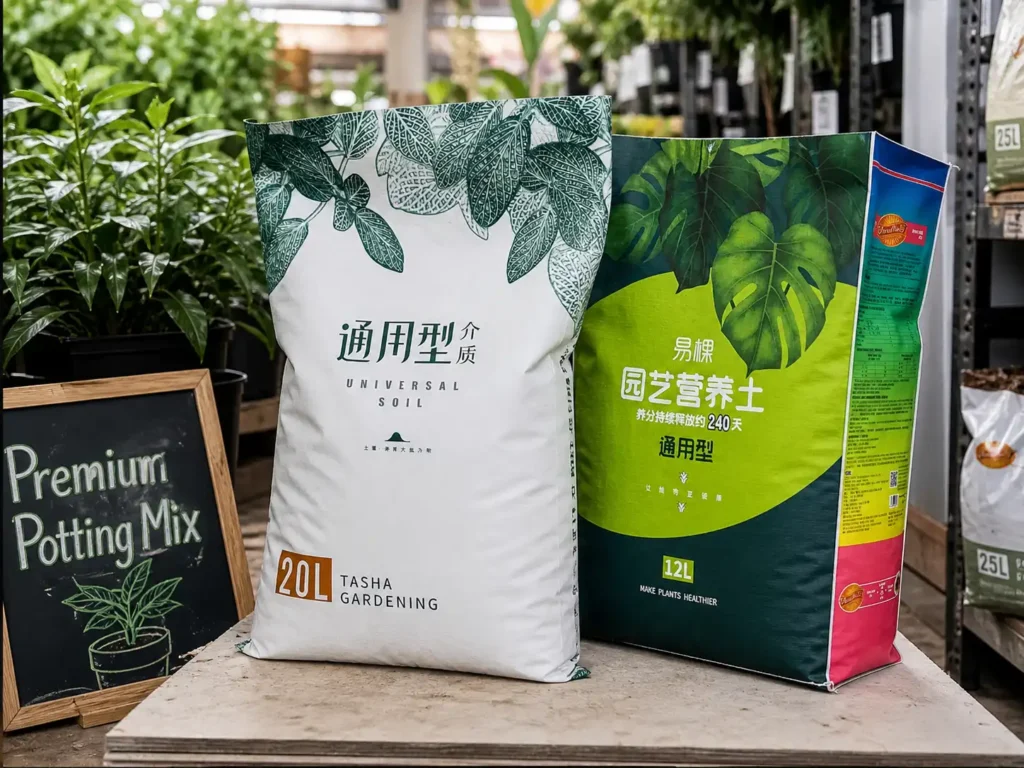
pp woven bags with liner: Strong Outside, Protected Inside, Built for Reliable Industrial Packaging
Industrial packaging has to do much more than hold a product. It must move smoothly through the filling line, resist pulling and impact during handling, maintain a stable shape on the pallet, protect the packed material during storage, and arrive at the customer in the condition expected. For powders, granules, food ingredients, fertilizers, minerals, feed, polymer materials, and other dry products, one weak point in the package can become one expensive problem in the supply chain.
This is why VIDEPAK develops pp woven bags with liner as a complete packaging system rather than treating the bag, the PE liner, the closure, and the printing as separate items. The woven polypropylene outer shell carries mechanical loads and supports handling, while the internal PE liner creates an additional continuous film layer between the product and the woven fabric. The result is a practical combination: strength outside, protection inside; flexibility during filling, stability during transport. VIDEPAK states that its PP woven range is produced from virgin polypropylene and can be configured with lined, coated, laminated, gusseted, anti-slip, open-mouth, valve, and other constructions.
THE VIDEPAK PACKAGING IDEA: the outer woven shell carries the load; the PE liner helps protect the contents; the closure keeps the protection working; and the complete specification connects the bag with the filling line, warehouse, pallet, transport route, and customer.
What Are VIDEPAK pp woven bags with liner?
At their simplest, pp woven bags with liner combine two structures with two different jobs. The outer part is woven from polypropylene tapes. These tapes cross each other to form a flexible fabric that can provide the tensile strength, shape support, abrasion resistance, and handling performance required by many industrial packages. The inner part is a separate polyethylene film, normally based on LDPE or LLDPE according to the required flexibility, toughness, sealing behavior, and application. VIDEPAK describes lined woven bags as using a loose or fitted polyethylene inner layer to provide additional protection against moisture exposure, fine-particle leakage, contamination, and direct contact between the product and the woven shell.
The difference matters because woven fabric is strong precisely because it is woven. The crossing tapes distribute load efficiently, but a normal uncoated woven structure contains small spaces between the tapes. For large grains, pellets, or products that benefit from breathability, this may be perfectly acceptable. Fine powders, hygroscopic materials, salts, fertilizers, clean ingredients, and contamination-sensitive granules can require something more. That “something more” is often the PE liner.
One package, two complementary functions
Woven PP Outer Shell
Designed to provide mechanical support, bag shape, handling strength, abrasion resistance, and a practical base for coating, printing, lamination, gussets, anti-slip treatment, and different bottom structures.
PE liner
Designed to create a separate continuous inner layer that helps manage moisture exposure, product sifting, warehouse dust, contamination risk, and direct contact between the contents and woven fabric.
Complete Package
pp woven bags with liner bring the two functions together, allowing the outer construction and the PE liner to be adjusted independently but engineered to work as one packaging system.
This division of work is one of the main reasons pp woven bags with liner are so adaptable. The outer woven bag can be designed around load, filling method, pallet behavior, graphics, and transport. The PE liner can be designed around the product itself. A fine mineral powder may place more emphasis on sifting control. Fertilizer may place more emphasis on humidity. A clean polymer resin may place more emphasis on contamination control. Food ingredients may require careful consideration of material selection and the rules that apply in the destination market. The architecture is similar, but the specification is different.
That distinction is important when selecting a manufacturer. A professional manufacturer should not simply offer a standard bag and ask the buyer to accept it. The better approach is to begin with the product, the filler, the required pack weight, the transport route, the climate, and the customer’s protection target. Only then should the manufacturer decide how the woven fabric, PE liner, mouth, bottom, seam, venting, and surface should be combined.
The same principle applies when choosing a global Supplier. A useful Supplier is not only a source of empty sacks. It is a packaging partner capable of converting operating conditions into a repeatable specification. What is the material? How does it flow? How much air enters during filling? How long will it remain in storage? Will the pallet face humidity, vibration, container transport, or temporary outdoor staging? Good questions create good specifications. Good specifications create consistent bags.
Simple rule: choose an unlined woven bag when the woven structure already gives the product the protection it needs. Choose pp woven bags with liner when the product needs woven strength outside and an independent PE liner inside. The goal is not the most material. The goal is the right material in the right place.
Why the PE liner Changes the Performance of pp woven bags with liner
The PE liner may look like the simpler half of the package, but its role is critical. It changes an open woven structure into a two-layer system in which the contents are surrounded by a more continuous inner surface. That difference can help reduce the movement of fine particles through the weave, limit direct exposure to outside dust, and improve protection from environmental moisture when the film gauge, seals, mouth construction, and handling conditions are properly selected. VIDEPAK cautions that a liner should not be treated as a magic layer that makes every package automatically waterproof or airtight; final performance also depends on film thickness, formulation, sealing, perforations, closure, handling damage, and storage conditions.
This is an important point for buyers comparing quotations from a manufacturer or Supplier. A thicker PE liner does not automatically mean a better bag. Thickness adds film, but film alone cannot repair an unsuitable closure. Film alone cannot correct badly positioned vents. Film alone cannot protect itself from poor insertion or sharp handling points. More is not always better; better is better. In professional pp woven bags with liner, liner gauge, liner size, sealing behavior, liner position, venting, and outer fabric are considered together.
Choosing the right liner rather than simply choosing a thick liner
VIDEPAK technical information identifies LDPE and LLDPE as common choices for woven-bag liners and gives approximately 40–80 microns as a useful starting range for many lined applications, while heavier or otherwise application-specific films can be selected when greater puncture, sealing, or moisture performance is needed. The company also makes clear that these figures are starting points rather than universal limits.
A loose PE liner can be practical for straightforward open-mouth applications because it offers a simple separation between liner and shell. A fitted or selectively secured PE liner can provide greater control over position where liner movement must be reduced. Neither option is automatically superior. A competent manufacturer selects the arrangement according to the filling operation and the packed material rather than according to a single catalog preference. VIDEPAK identifies loose and fitted polyethylene inner barriers as available approaches within its lined woven-bag system.
Air management deserves the same attention. Powders often carry air into the package as they are filled. Seal a bag too tightly without a planned air-release path and the package can inflate, slow the line, or form a soft pallet. Add uncontrolled holes and the PE liner may no longer provide the containment expected. This creates a classic packaging balance: strength without barrier can expose the product; barrier without air release can disturb filling; air release without control can allow dust. Good pp woven bags with liner balance all three.
For the buyer, this is where the technical value of a strong Supplier becomes visible. The Supplier should ask about particle size, bulk density, powder behavior, filling speed, bagging equipment, closure method, and acceptable dust level. Then the Supplier can recommend liner fit, film gauge, venting, opening, and dimensions as one package. A catalog gives choices. Engineering connects the choices.
Buyer warning: “moisture resistant,” “waterproof,” and “airtight” should not be treated as interchangeable words. In pp woven bags with liner, actual protection depends on the complete construction: PE liner film, gauge, seals, stitching, mouth, vents, puncture condition, and storage environment. A professional manufacturer should define performance through the agreed specification, not through one adjective.
VIDEPAK Specifications and Customization for pp woven bags with liner
Industrial buyers rarely purchase a bag by material name alone. They purchase dimensions, filling weight, fabric weight, liner gauge, printing, opening style, bottom style, pallet behavior, and repeatability. VIDEPAK’s published PP woven product range provides a useful starting framework: approximately 80–150 GSM fabric weight, customizable sizes with examples ranging from about 40 × 60 cm to 120 × 180 cm, and common packing capacities from approximately 5 kg to 50 kg. The final dimensions and structure must still be matched to product density, required filling weight, and operating conditions.
VIDEPAK’s wider PP woven portfolio also includes flat and M-type gusseted constructions, block-bottom formats, transparent-window options, anti-slip treatments, several stitching methods, and different outer finishes. Its published opening choices include sewn open mouth, valve, pinch-bottom open mouth, pasted open mouth, self-opening sacks, gusseted open-mouth arrangements, and drawstring structures. Its bottom choices include folded sewn seams, block-bottom structures, sealed pinch constructions, and hemmed seams reinforced with tape.
For pp woven bags with liner, these are not decorative extras. Every option changes package behavior. Gussets can increase usable volume and help create a more regular filled shape. A block bottom can improve standing geometry for suitable applications. An anti-slip surface can help improve pallet behavior. Coating or lamination can reduce the openness of the woven surface while also providing a different base for graphics. The PE liner then adds the internal barrier required by the packed material.
Printing also deserves attention because industrial packaging is both a protective system and a communication system. Product name, handling information, batch identification, safety instructions, barcodes, logos, and sales graphics must remain clear enough to perform their job after filling and transport. A good manufacturer therefore looks at printing together with fabric, lamination, bag dimensions, and conversion tolerances. A reliable Supplier should control not only how the bag looks when empty but how the finished package presents after it is filled, stacked, stretched, rubbed, and moved.
Customization should therefore follow a clear order: product first, process second, protection third, appearance fourth. Starting with artwork and then trying to force the package around it reverses the logic. Starting with the cheapest PE liner and hoping it will fit every application reverses the logic as well. In professionally specified pp woven bags with liner, function creates the specification; the specification creates the bag.
Better purchasing question: instead of asking a manufacturer, “Can you make a 70-micron PE liner?” ask, “What liner construction should protect this product through our filling process, storage period, transport route, and pallet system?” That question gives the Supplier enough information to solve the real problem.
How a Professional manufacturer Builds and Controls pp woven bags with liner
A finished bag is the last link in a long manufacturing chain. Quality begins well before cutting and sewing. Polypropylene resin has to become stable tapes. Tapes have to become consistent woven fabric. The fabric must move through any required coating, lamination, printing, or surface treatment. Separately, polyethylene must be formed into the required PE liner. Only then can the liner and woven body be converted into the finished package. VIDEPAK describes extrusion, drawing, weaving, coating or printing where required, film production, liner insertion, cutting, conversion, inspection, and packing as the main logic behind the product.
From resin to finished package
VIDEPAK production logic for pp woven bags with liner
The first responsibility of the manufacturer is material control. VIDEPAK says it uses virgin material for its PP woven bags and conducts sampling inspection of incoming raw materials before production. The company also states that its PP woven products are produced and tested under its quality-control system using applicable ISO, ASTM, EN, and JIS requirements, with testing that can include tensile, impact, UV-weathering, and other performance checks according to specification.
The second responsibility of the manufacturer is process consistency. The tape must be stable. The weave must be uniform. Dimensions must remain within agreed tolerances. Printing must remain positioned. The PE liner must be cut and inserted correctly. Seams must capture the required material. When pp woven bags with liner are produced in large quantities, a small variation repeated thousands of times is no longer small. Consistency is therefore not a marketing word; it is a purchasing requirement.
The third responsibility is application control. A sample can look excellent on a desk and still behave poorly on the buyer’s filling line. The manufacturer should therefore consider how the bag opens, how the PE liner opens with it, whether the liner moves during filling, whether air can escape at the required rate, whether the mouth closes cleanly, and whether the filled package forms the expected pallet shape. VIDEPAK emphasizes the value of line trials, particularly for powders where entrained air can strongly affect bag behavior.
The fourth responsibility is verification. Inspection should not stop at color and dimensions. For pp woven bags with liner, important questions include whether the liner is positioned correctly, whether film seals are continuous, whether seams are properly formed, whether the package tolerates realistic handling, whether printing remains readable, and whether the bag functions on the customer’s equipment. VIDEPAK describes quality control through material inspection and finished-product testing, while its published sample system includes both reference samples and specification-based mock-up samples before mass production.
This is also where the distinction between an ordinary seller and an experienced Supplier becomes important. An ordinary seller may confirm width, length, and price. A technically useful Supplier confirms the relationship among width, length, gusset, fill volume, liner gauge, mouth, seam, vent, pallet, and testing. One sells a piece. The other manages a system.
Quality principle: a strong outer bag cannot rescue a damaged PE liner; a thick PE liner cannot rescue a weak closure; a perfect closure cannot rescue the wrong dimensions. In pp woven bags with liner, quality is not one excellent component. Quality is every component working together.
Why Choose VIDEPAK as Your manufacturer and Global Supplier?
For international buyers, selecting pp woven bags with liner is only half of the purchasing decision. The other half is selecting the manufacturer and Supplier capable of repeating the approved construction across commercial production. A packaging specification creates value only when the manufacturer can reproduce it order after order and the Supplier can support the buyer as specifications, artwork, forecasts, filling conditions, and markets evolve.
VIDEPAK states that it was founded in 2008, has more than 500 employees, and exports industrial packaging to more than 70 countries. Its current website describes a PP woven-bag production capacity of approximately 300 million pieces and a portfolio covering PP woven bags, lined woven structures, valve bags, laminated constructions, polyethylene packaging, paper sacks, and bulk packaging.
Scale is useful, but scale alone is not the reason to choose a manufacturer. What matters is what scale makes possible: stable process control, organized sampling, repeatable conversion, coordinated purchasing, production planning, quality records, and the ability to support larger programs. For an international Supplier, the same logic applies. The buyer does not only need enough bags this month. The buyer needs the specification to remain understandable next month, next season, and when another facility begins using the same packaging.
Material Control
VIDEPAK states that its PP woven range uses virgin polypropylene and that incoming raw materials are sampled before production.
Flexible Engineering
Fabric weight, dimensions, PE liner, opening, bottom, gusset, surface, printing, coating, and anti-slip options can be combined around the application.
Production Scale
VIDEPAK publishes approximately 300 million pieces of production capacity for its PP woven-bag operation.
Sample Validation
Reference samples and specification-based custom mock-ups can be used to evaluate material, dimensions, printing, and construction before commercial production.
VIDEPAK’s published commercial information lists a standard minimum order quantity of 10,000 pieces per specification for its PP woven bags. It also states that standard bulk-order lead time is generally around 15–25 business days depending on order quantity and requirements, while specification-based mock-up samples are generally planned around ten business days before express transit. These figures should be treated as VIDEPAK’s published general guidance and reconfirmed for the actual project.
For buyers working across agriculture, chemicals, minerals, construction materials, food ingredients, animal feed, polymer granules, and other dry-bulk markets, this combination of customization and manufacturing depth is especially relevant. The same manufacturer may need to develop one PE liner construction for moisture-sensitive fertilizer and another for clean resin granules; one opening for manual filling and another for a valve system; one exterior for straightforward industrial handling and another for stronger retail branding. VIDEPAK identifies fertilizers, chemicals, food-related materials, feed, powders, construction products, polymers, and other dry industrial applications among the areas where lined woven structures can be configured.
Applications involving food or regulated chemicals require an additional layer of care. The suitability of pp woven bags with liner cannot be established from the words “PP” or “PE” alone. Material grades, additives, printing systems, manufacturing conditions, migration requirements, product compatibility, destination-market rules, and actual contact conditions may all matter. Similarly, a normal PE liner should not be assumed suitable for every chemical or hazardous material. The actual product and transport requirements must be reviewed before a specification is approved. VIDEPAK’s own technical guidance makes the same distinction between general woven packaging and application-specific qualification.
Purchasing sequence: Product → Filling Method → Protection Target → Fabric Strength → PE liner → Air Release → Closure → Printing → Pallet → Testing → Production. When a manufacturer and Supplier work through the project in this order, pp woven bags with liner become easier to specify, easier to test, and easier to repeat.
The strongest reason to choose VIDEPAK as a manufacturer and Supplier is therefore not one number, one fabric weight, or one liner thickness. It is the ability to treat pp woven bags with liner as a connected packaging system. The woven fabric supports the load. The PE liner protects the product environment. The mouth connects the bag to filling. The seam closes the package. The surface supports handling and branding. The pallet carries the result into the supply chain.
That system can be simple when the application is simple and more protective when the application demands more. It can use a straightforward open-mouth woven structure with a loose PE liner, or a more carefully fitted and closed structure for demanding powders. It can remain flat for basic industrial packing or use gussets and other conversion options for controlled shape. It can emphasize economical handling, stronger graphics, moisture management, dust control, pallet stability, or a balance of all of them. VIDEPAK’s published PP woven portfolio is structured around this type of customization.
For purchasing teams, that creates a clearer way to evaluate a Supplier. Do not ask only whether the Supplier can make pp woven bags with liner. Ask whether the Supplier understands why your product needs a PE liner. Ask how the manufacturer will control liner gauge, fabric weight, dimensions, opening, bottom, seam, printing, and inspection. Ask how the manufacturer will translate the approved sample into mass production. Ask how the Supplier will preserve that specification when the next order arrives.
Because reliable packaging is rarely dramatic. The best pp woven bags with liner should simply do their work: open correctly, fill smoothly, release air as intended, close securely, stack predictably, travel reliably, protect the material, and arrive ready for the next stage. When the outer woven shell and the inner PE liner work together so naturally that nobody needs to think about the bag, the packaging system is doing exactly what it should.
VIDEPAK pp woven bags with liner: strong where the supply chain needs strength, protective where the product needs protection, customizable where the filling process needs flexibility, and repeatable where international purchasing needs confidence. As an experienced manufacturer and global Supplier, VIDEPAK builds the woven shell, the PE liner, and the finished specification around one practical objective: helping the customer’s product move safely and efficiently from filling line to final destination.
- pp woven bags with liner: Strong Outside, Protected Inside, Built for Reliable Industrial Packaging
- What Are VIDEPAK pp woven bags with liner?
- Why the PE liner Changes the Performance of pp woven bags with liner
- VIDEPAK Specifications and Customization for pp woven bags with liner
- How a Professional manufacturer Builds and Controls pp woven bags with liner
- Why Choose VIDEPAK as Your manufacturer and Global Supplier?
- Executive Lens: Why PP Woven Bags with Liner Matter Now
- 1. The Problem Behind the Problem: Why the Liner Inside PP Woven Bags with Liner Is Decisive
- 2. Architectures Inside PP Woven Bags with Liner: PE Film vs. Foil Laminate
- 3. Risk Thinking: When PP Woven Bags with Liner Are Not Optional
- 4. The Measurement Mindset: Showing the Work Behind PP Woven Bags with Liner
- 5. System Engineering Inside PP Woven Bags with Liner: From Resin Choice to Seal Jaw Texture
- 6. Regulatory Confidence: How PP Woven Bags with Liner Travel the World Without Paper Cuts
- References
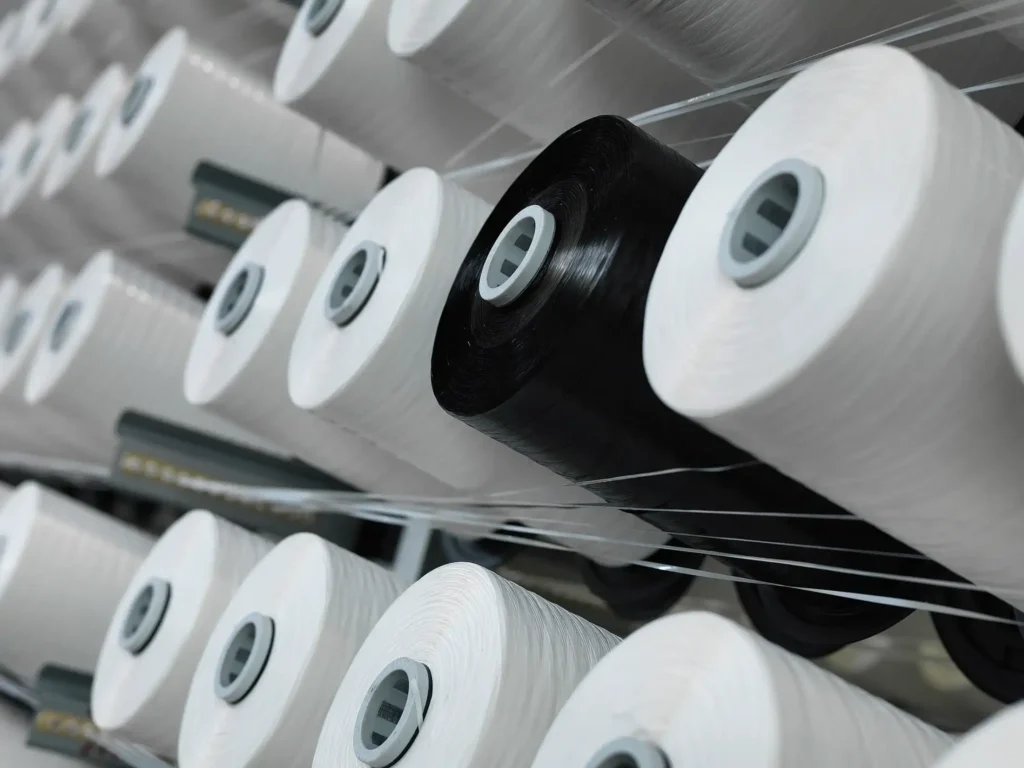
Executive Lens: Why PP Woven Bags with Liner Matter Now
Supply chains have become hotter, longer, and less predictable. A sack that behaves well in a temperate warehouse may fail on a tarmac under tropical sun. Moisture spikes; oxygen sneaks in; aromas bleed out; light catalyzes reactions. The mechanical skeleton of a woven polypropylene shell is rarely the limiting factor. The barrier is. That is precisely where PP Woven Bags with Liner change the odds. By pairing a structural outer shell with a continuous inner skin—polyethylene film or aluminum‑foil laminate—you decouple strength from protection, logistics from chemistry, handling from hygiene. Strength carries the load; the liner carries the risk.
Laminated PP Woven Bags
High-quality laminated PP woven bags with liner for moisture-proof and durable industrial packaging.
Check More →Polypropylene Woven Bags China
Premium PP woven bags with liner, manufactured for reliable bulk packaging and long-term use.
Check More →PP Woven Fabric Bags Analysis
Detailed analysis of liner-equipped PP woven bags for performance and packaging applications.
Check More →Heavy-Duty Woven Bags Guide
Complete guide to heavy-duty PP woven bags with liner for strong, safe, and professional packaging.
Check More →Is this a minor tweak? Not at all. Consider the chain of consequences: shelf‑life stabilizes, dust emissions plunge, product claims survive audits, and global standards line up on the same page. What looks like “a bag with a liner” is in practice a compact system of barrier science, sealing practice, regulatory documentation, and process control. When we call them PP Woven Bags with Liner, we are naming a category that unites these elements into a single, verifiable promise.
1. The Problem Behind the Problem: Why the Liner Inside PP Woven Bags with Liner Is Decisive
1.1 Breathability vs. Barrier: The Product’s Hidden Trade‑off
Woven polypropylene breathes; films do not. The interstitial pathways that discharge air during fast filling also serve as micro‑highways for water vapor and oxygen. Stitching, for all its rugged charm, adds additional leak paths. You can close the mouth; diffusion still works invisibly. In PP Woven Bags with Liner, a continuous film draws a molecular line in the sand. One side is climate; the other is your product.
Ask a simple question: if moisture ingress is predictable and slow, can we design around it? Indeed we can—by specifying film thickness, polymer type, and seal geometry so that the total permeation over the intended dwell time stays below the product’s tolerance. That is the logic of PP Woven Bags with Liner: engineering the rate of trouble to be lower than the rate of use.
1.2 What Fails When Barrier Fails (and Why It Matters)
It starts with caking for hygroscopic powders. Then flow stops. Then blending is compromised, measurement scatters widen, potency targets slip, complaints accumulate. For oxygen‑sensitive goods, peroxide values rise, aroma notes flatten, colors drift. Light does its own damage: photolysis, off‑hues, rancidity. PP Woven Bags with Liner address all of these failure modes by relocating the critical pathway from a porous weave to a sealed film throat.
1.3 Three Paths, One Decision
There are three practical containment options for powders and granulates:
- Woven shell only—fast, cheap, breathable, risky.
- PP Woven Bags with Liner using PE film—moisture managed, dust contained, oxygen reduced somewhat, seals heat‑weldable.
- PP Woven Bags with Liner using foil laminate—oxygen, moisture, and light pushed near the instrument floor, with spouts or valves sealed hermetically.
Short route? Stable climate? Perhaps option 1 can survive. Hot, humid lanes? Moisture‑loving solids? Choose option 2. Aroma‑critical or oxygen‑fragile goods? Option 3 pays for itself.
2. Architectures Inside PP Woven Bags with Liner: PE Film vs. Foil Laminate
2.1 Polyethylene Liners: The Workhorse Inside PP Woven Bags with Liner
The PE path is about robustness. Monolayer LDPE or LLDPE (C4/C6/C8) in 50–150 µm gauges balances barrier and bagging speed. It resists flex pinholing, accepts broad seal windows, and remains forgiving on fast‑cycle lines. In PP Woven Bags with Liner built on PE, the key variables are film thickness, comonomer selection, and slip/antiblock tuning.
Data that matters: at 38 °C/90% RH, a ~25 µm LDPE film typically exhibits 16–23 g/m²·day WVTR under modulated‑IR methods. Doubling thickness roughly halves WVTR for homogeneous films. Oxygen barrier is modest relative to foil but sufficient for many non‑oxidative products—especially with headspace management.
Case in point: a nutraceutical blend shipped across a monsoon corridor saw repetitive caking. Switching to PP Woven Bags with Liner using 80 µm LLDPE, plus a sealed throat and desiccant, dropped returns to near zero. The woven shell still took the drops; the liner absorbed the climate.
Comparative snapshot: versus paper multiwall with a liner, PP Woven Bags with Liner using PE deliver better tear resistance at the same mass, superior scuff strength under rough handling, and faster drying after rain events. Paper still prints beautifully; the woven + film approach wins when dust control and wet‑handling resilience are decisive.
2.2 Foil Laminates: The Specialist Inside PP Woven Bags with Liner
Foil increases seriousness. PET/Al/PE laminates—think PET12 / Al6–9 µm / PE70–100 µm—shut down oxygen and water vapor and render the interior light‑safe. The result? Oxidation slows to a crawl; aroma scalping stops; photodegradation retreats.
Numbers give confidence. Under common laboratory conditions, foil laminates report ≤ 0.5 cc/m²·day OTR at 23 °C/0% RH and ≤ 0.5 g/m²·day WVTR in standard tests. Metallized PET (VMPET) is useful, but under repeated flex and humidity cycling it yields earlier than true foil. PP Woven Bags with Liner using foil thus suit flavors, vitamins, enzyme blends, and metal powders where oxygen and light cannot be mere suggestions.
Seal practice becomes decisive. Smooth jaws, adequate dwell, controlled pressure, and verified seal widths prevent wrinkle‑induced stress risers. Where routes are harsh—rail hubs, ocean containers, unpaved transfers—adding a second polymer layer (PET/Al/PE/PE) improves flex crack resistance. The woven outer shell, remember, still carries the loads; the foil liner preserves the chemistry.
3. Risk Thinking: When PP Woven Bags with Liner Are Not Optional
3.1 Material Categories and Triggers
Hygroscopic solids (urea, ammonium nitrate blends, powdered minerals) breathe in moisture; caking is inevitable without barrier. PP Woven Bags with Liner using PE cut WVTR to manageable levels; a small desiccant buffer manages transient spikes. Oxygen/light‑sensitive goods (flavors, vitamins, colorants) need foil; it is that simple. Aroma‑critical palatants and coffee‑adjacent materials need foil to hold the top notes in and warehouse odors out. Ultra‑clean or low‑dust operations—pharma excipients, biotech nutrients, pigments—benefit from the dust‑tight inner surface and sealed valves of PP Woven Bags with Liner.
3.2 Route and Climate as Design Inputs
Consider three lanes: a winter continental route; a temperate coastal hop; a six‑week tropical ocean leg. The first may survive unlined. The second prefers PE liners. The third? Without PP Woven Bags with Liner—ideally foil—quality drifts become near‑certain. If your forecast includes long dwell above 25 °C and 70% RH, ask not whether to line; ask how to line.
3.3 Operational Realities
Automated hooding? Liners with anti‑slip additives avoid telescoping. Valve filling with entrained air? Micro‑perfs above the seal zone speed densification when barrier is non‑critical, while spout filling and “seal after settle” protect barrier when it is critical. In every case, PP Woven Bags with Liner give you options, not obstacles.
4. The Measurement Mindset: Showing the Work Behind PP Woven Bags with Liner
4.1 What Gets Measured Gets Managed
Water vapor transmission is not trivia; it is destiny. Oxygen ingress is not folklore; it is kinetics. The methods that govern these numbers—modulated‑IR for WVTR, coulometric for OTR—anchor the claims behind PP Woven Bags with Liner. Listing the method, condition, and unit on the Certificate of Analysis is not stock bureaucracy—it is how customers in different regions compare apples to apples.
4.2 Conditions Create Meaning
WVTR at 38 °C/90% RH is not the same as WVTR at 23 °C/50% RH. OTR at dry conditions is different from OTR at 50% RH. High barrier films often sit near instrument floors; you need adequate dwell times, stable sensors, proper conditioning. In PP Woven Bags with Liner, we make the condition explicit so the decision is confident.
4.3 Dual‑Path Confirmation When the Numbers Are Tiny
When claims approach 0.5 cc/m²·day OTR or 0.5 g/m²·day WVTR, cross‑checking with alternative sensor principles or independent labs is prudent. It is not pedantry; it is prudence. PP Woven Bags with Liner benefit from this rigor because the price of a false positive is a failed shelf‑life and the price of a false negative is needless cost.
5. System Engineering Inside PP Woven Bags with Liner: From Resin Choice to Seal Jaw Texture
5.1 Film Extrusion Controls
Melt flow rate (MFR) defines the window for bubble stability and sealing response; density signals comonomer content; thickness control (and Cp/Cpk) ties directly to barrier and mechanical consistency. For PP Woven Bags with Liner built with PE, slip and antiblock must fit the filler’s line—too much slip and stacking slides; too little and bag separation slows.
5.2 Lamination Controls for Foil Liners
Adhesive coat weights are verified and cure is checked by solvent residual tests. Foil pinholes are scanned by lightbox or camera; acceptance limits follow risk. Jaw texture and seal bar flatness are validated so that wrinkles at the throat do not become pinholes after transport. In rugged routes, a secondary PE layer and a thicker PET (e.g., 23 µm) add flex endurance. All of this is not decoration; it is the hidden machinery behind the promise of PP Woven Bags with Liner.
5.3 Sealing Science
Seal strength is qualified, not guessed. We define the width, the temperature band, the dwell, the pressure. We check peel modes and channels. We leak‑test when hermeticity is claimed. In PP Woven Bags with Liner, this is the gate between “lab number” and “field reality.”
6. Regulatory Confidence: How PP Woven Bags with Liner Travel the World Without Paper Cuts
6.1 The Quality Spine
A documented quality system orchestrates design, supplier control, in‑process inspection, nonconformance handling, corrective action, and continuous improvement. That is not ceremony; it is how PP Woven Bags with Liner keep their properties in spec from lot to lot, lane to lane. We think in process maps and control plans so the bag on Friday looks like the bag on Monday.
6.2 Food Contact, Chemicals, and Hygiene
For food applications, total migration and specific migration limits are set and tested; for chemical safety, substances of very high concern are screened across the supply chain; for hygiene, production is audited for pest control, taint avoidance, and housekeeping. Why mention any of this in a product narrative about PP Woven Bags with Liner? Because real shipments cross borders and face audits, and because documentation closes deals as surely as drop tests.
6.3 Market Pragmatism
Different regions care about different needles on the gauge. Some call out specific CFR sections; others demand migration tests; still others want proof of SVHC discipline. PP Woven Bags with Liner knit these threads into a single, shareable packet so procurement can sign and quality can sleep.
References
- ISO 9001:2015 — Quality management systems — Requirements.
- ASTM F1249‑20 — Standard Test Method for Water Vapor Transmission Rate Using a Modulated Infrared Sensor.
- ISO 15106 series — Plastics — Film and sheeting — Determination of water vapour transmission rate.
- ASTM D3985‑17 — Standard Test Method for Oxygen Gas Transmission Rate Through Plastic Film and Sheeting Using a Coulometric Sensor.
- ISO 15105‑2 — Plastics — Film and sheeting — Determination of gas‑transmission rate — Equal‑pressure method.
- ASTM F88/F88M‑23 — Standard Test Method for Seal Strength of Flexible Barrier Materials.
- ASTM D3078 — Standard Test Method for Determination of Leaks in Flexible Packaging by Bubble Emission.
- ASTM D1709 — Standard Test Method for Impact Resistance of Plastic Film by the Free‑Falling Dart Method.
- ASTM D882 — Standard Test Method for Tensile Properties of Thin Plastic Sheeting.
- EN 15593:2008 — Packaging — Hygiene management in the production of packaging for foodstuffs.
- EU Regulation No. 10/2011 in conjunction with Regulation (EC) No. 1935/2004 — Plastics materials and articles intended to come into contact with food.
- REACH Regulation (EC) No. 1907/2006 — Registration, Evaluation, Authorisation and Restriction of Chemicals — Substances of Very High Concern guidance for articles.
- EN ISO 21898:2024 — Packaging — Flexible intermediate bulk containers (FIBCs) for non‑dangerous goods.
- IEC 61340‑4‑4 — Standard on electrostatics — Test methods for specific applications — Electrical resistance of FIBC.
- Intertek, SGS, Eurofins, TÜV — Representative third‑party laboratory practices for migration, WVTR/OTR, and seal integrity testing (project‑specific reports as commissioned).