
- What are Printed BOPP Woven Bags and why do they outperform plain woven sacks?
- What names appear in RFQs and purchase orders for this format?
- What features make Printed BOPP Woven Bags distinct?
- What is the production process from artwork to finished bag?
- Where do Printed BOPP Woven Bags add the most value?
- Standards, test methods, and claims you can audit
- Specification tables for rapid scoping
- Decision logic: from hazard to specification
- Why color capability is not vanity but value
- How reverse printing on BOPP changes durability—and why it matters on woven shells
- Which press family suits Printed BOPP Woven Bags—and how to decide without bias
- The lamination architecture behind the print: thicknesses, bonds, and curl control
- Liner decisions inside Printed BOPP Woven Bags—and the logic for each path
- Closure types—and why the mouth is a control surface, not a finishing touch
- Pressroom details that separate art from artifact
- Choosing a packaging scheme by decision tree—not by habit
- Sustainability and compliance without slogans
- Troubleshooting pattern library—because the same gremlins recur
- Tables that compress ambiguity into action
- Extended case studies that turn theory into throughput
- Horizontal and vertical thinking: borrowing discipline, stacking control
- Frequently asked questions for engineering and procurement
- Internal link to configuration catalog
- How Do Printed BOPP Woven Bags Deliver a Long Service Life?
- Why Is A Dedicated Print & Lamination Technician Worth It For Printed BOPP Woven Bags Production?
- How Do I Figure Out Which Film, Fabric, and Liner Specs Fit My Printed BOPP Woven Bags Project?
- What Makes A Packaging Line Using Printed BOPP Woven Bags Trip Up, And How Do We Prevent It?
- How Critical Are Surface Energy And Tie‑Layer Chemistry In Printed BOPP Woven Bags?
- Should Each SKU Of Printed BOPP Woven Bags Use Its Own Cylinder/Plate Library?
- How Can Brand Owners Extend Shelf Life With Printed BOPP Woven Bags Without Overbuilding?
- Understanding The Production Stack For Printed BOPP Woven Bags
- Advantages Of Printed BOPP Woven Bags For Fertilizers, Rice, Pet Food, Seeds, and Pigments
- Applications Of Printed BOPP Woven Bags Across Markets
- Exploring Different Grades And Builds Of Printed BOPP Woven Bags
- Benefits Of Registered Matte/Gloss Finishing In Printed BOPP Woven Bags
- Evaluation Of Suppliers For Quality And Turnaround In Printed BOPP Woven Bags
- Selecting “Replacement Parts” In The Spec—What Truly Matters For Printed BOPP Woven Bags
- Preventing Downtime With Timely Upgrades To Printed BOPP Woven Bags Tooling And SOPs
- Internal Link For Comparative Configurations
- References
What are Printed BOPP Woven Bags and why do they outperform plain woven sacks?
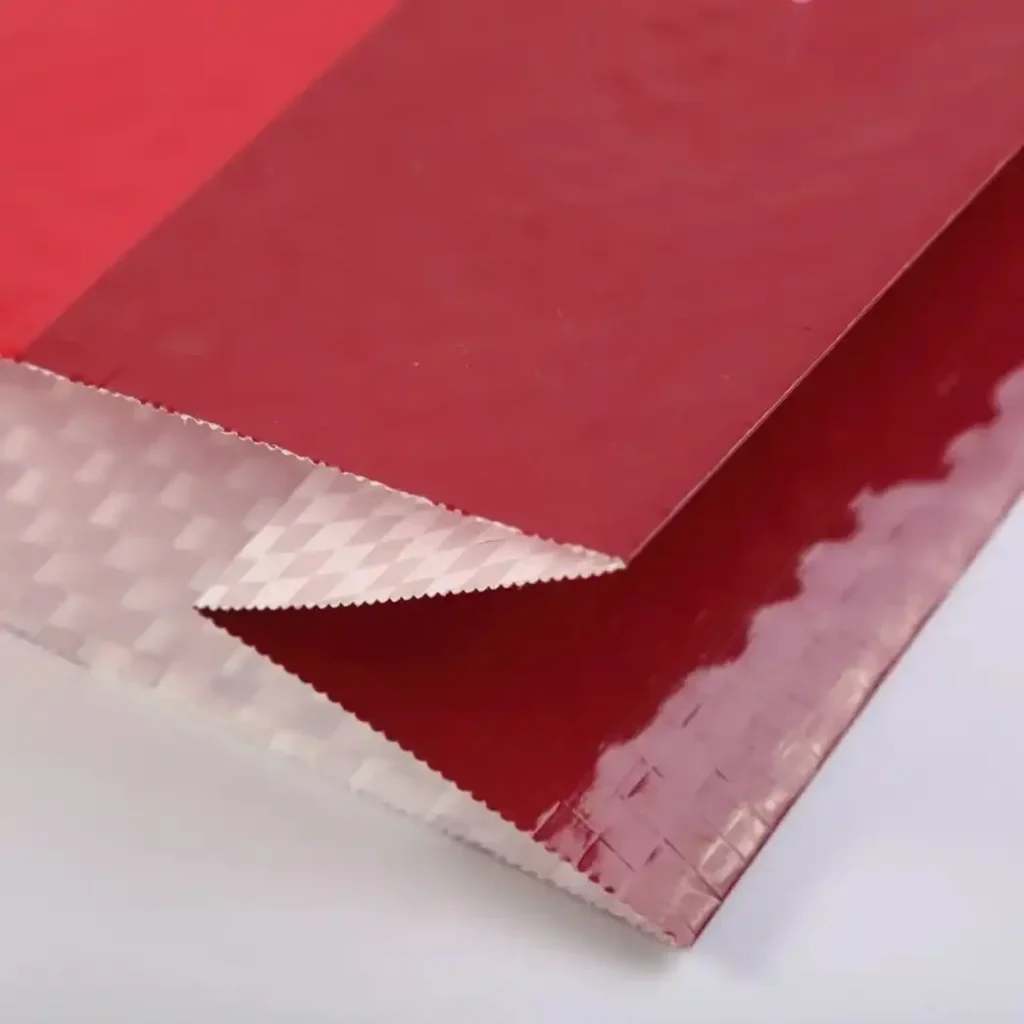
Printed BOPP Woven Bags combine a reverse‑printed biaxially oriented polypropylene film with a strong polypropylene woven fabric, joined by an extrusion‑laminated tie layer. The result is a mono‑material polyolefin structure that pairs high‑fidelity graphics with rugged mechanical performance. The film carries the image; the fabric carries the loads. One protects the brand; the other protects the product. And because the artwork is printed on the underside of the BOPP and then trapped under the laminate, the image sits behind a hard, cleanable surface that resists scuffing during transport, stacking, or pallet movement.
Why does this matter? Because packaging is a system. Moisture, oxygen, light, and dust pressure a product in different ways along a route. A stitched mouth may be fast, but it behaves like a small vent; a heat‑sealed mouth converts barrier potential into barrier reality. A coated woven sack may carry text, but it cannot carry photography; a laminated film makes room for tone, gradient, and microtext. When a supply chain moves through hot, humid lanes or shelf‑competitive categories, this system behavior becomes the difference between predictable shelf life and expensive variability.
If you want a single reference point for deeper exploration, see our configuration catalog for Printed BOPP Woven Bags. The link anchors the options discussed below—color stations, lamination stack, liner choices, closure types—so you can map them to your product’s hazard profile.
What names appear in RFQs and purchase orders for this format?
- BOPP laminated PP woven sacks
- Reverse‑printed BOPP on woven polypropylene bags
- Extrusion‑laminated BOPP//PP retail bags
- Photo‑grade woven poly sacks
- Laminated woven packaging with film face
- Export‑grade printed woven bags
These terms all describe the same architecture: reverse art on BOPP, an extrusion tie, and a woven base. The differences in phrasing reflect region, sector, and audit vocabulary.
What features make Printed BOPP Woven Bags distinct?
Artwork is printed on the underside of BOPP and locked under the laminate. The result is rub resistance that outlasts surface‑printed coatings in pallet‑to‑pallet contact.
Modern rotogravure or CI‑flexo presses support 8–10 colors in a pass, with additional decks reserved for registered matte, tactile varnish, or anti‑slip stripes.
The film face wipes clean, resists shelf scuff, and supports gloss‑matte play for premium cues without sacrificing barcode or QR readability.
Combine with polyethylene liners for moisture control, or PET/Al/PE liners for oxygen and light sensitivity; finish with a heat‑sealed mouth where hermetic intent exists.
BOPP film and PP fabric live in the same polyolefin family, easing labeling and sorting in regions where mechanical recycling streams are developing.
All key claims can be tied to test methods: ISO 12647 for print characterization, ASTM F1249/D3985 for barrier, ASTM F88/D3078 for seals and leaks.
What is the production process from artwork to finished bag?
The workflow is linear on paper yet highly iterative in practice: color management translates brand intent into printable separations; press settings translate ink into consistent tone; lamination translates layers into a single sheet; conversion translates sheets into sacks that load, stack, and open without surprises. Below is the practical sequence we run and document.
- Artwork and color separation. ICC‑managed separations aligned with ISO 12647‑6 (flexo) or ISO 12647‑4 (gravure). Spot libraries are standardized, and drawdowns verify solid ink density and overprint traps before press.
- Plate or cylinder preparation. Gravure cylinders use 120–200 lpi with cell volume tuned to BOPP wetting; CI‑flexo plates use HD dots and anilox selections around 400–800 lpi (2.0–4.0 cm³/m² BCM) to control highlights and avoid mottling.
- Substrate preparation. BOPP is corona‑treated to ≥ 38–42 dyn/cm (ASTM D2578). Dyne levels and lot IDs are logged to prevent lamination under‑wetting due to energy decay.
- Reverse printing. Register is held within ±0.15–0.25 mm across 800–1350 mm web widths. Drying profiles target residuals below lab reporting limits before lamination (ISO 16000‑9 screening or equivalent SOP).
- Extrusion lamination. A PP/PE tie layer of ~15–25 µm bonds film to fabric. Peel strength targets ≥ 2.5–4.0 N/15 mm (ASTM D903). COF is tuned to 0.3–0.5 (ASTM D1894) depending on pallet method.
- Slitting and conditioning. Slit tolerance is ±0.5 mm; reels are conditioned to stabilize curl prior to conversion.
- Conversion and closure. Tubing, gusseting, and bottom styles are formed; a heat‑sealed mouth is used when barrier continuity matters, validated by ASTM F88 for peel and ASTM D3078 for gross‑leak screening.
Where do Printed BOPP Woven Bags add the most value?
Photo‑grade imagery, crisp nutrition panels, and wipe‑clean surfaces stay legible through repeated handling. Lamination reduces shelf scuff compared to surface‑printed coatings.
Combine with polyethylene liners and a fused mouth to turn moisture ingress into a predictable, thickness‑driven curve rather than a weather‑driven gamble.
Registered matte/gloss finishes elevate shelf appeal while foil liners and sealed mouths guard against aroma loss and odor pickup in mixed warehouses.
Light‑blocking laminates and hermetic closures protect germination potential and color integrity across long, sun‑exposed routes.
Low‑dust fused mouths, clean inner surfaces, and anti‑static options support audited hygiene programs without slowing decant.
Standards, test methods, and claims you can audit
Claims gain power when they come with methods and conditions. The following anchors allow cross‑lab verification and smoother global audits.
- Print characterization: ISO 12647‑4 (gravure), ISO 12647‑6 (flexo)
- Surface energy (pre‑print): ASTM D2578 dyne test, ≥ 38–42 dyn/cm
- Lamination bond: ASTM D903 peel, typical target ≥ 2.5–4.0 N/15 mm
- Coefficient of friction (outer): ASTM D1894, tuned to 0.3–0.5
- Barrier: ASTM F1249 (WVTR at 38 °C/90% RH), ASTM D3985 (OTR at 23 °C/0% RH)
- Seal strength and leaks: ASTM F88/F88M, ASTM D3078 bubble emission
- Hygiene in production: EN 15593:2008
- Food‑contact documentation (when relevant): EU 10/2011 with Reg. (EC) 1935/2004; US 21 CFR 177.1520 and 178.2010
Specification tables for rapid scoping
Decision logic: from hazard to specification
Start by naming the dominant hazard. Quantify it. Translate into a target: WVTR at 38 °C/90% RH; OTR at 23 °C/0% RH; outer COF for pallet stability; peel bands for handling. Then map the structure: lamination for graphics and cleanability; PE liner for moisture; PET/Al/PE liner for oxygen/light; heat‑sealed mouth for hermetic intent. Finally, validate with pilots and lock a control plan (ISO 2859‑1 sampling; method‑and‑condition on every CoA). That loop—hazard → number → build → test → control—turns a printed bag into a reproducible asset.
Why color capability is not vanity but value
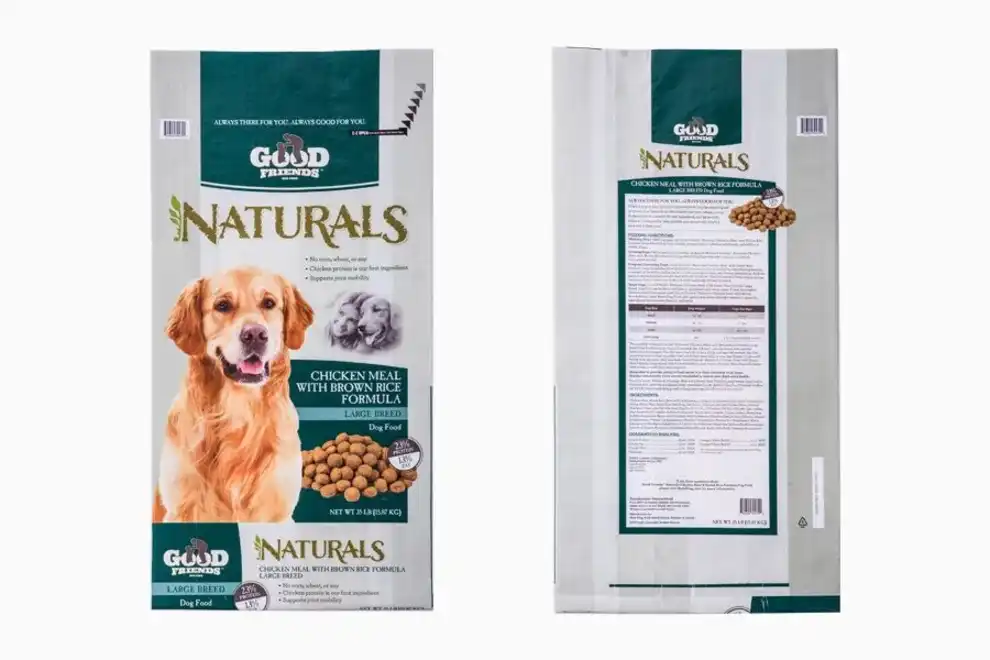
Color is not decoration; color is information. Shelf contrast, legibility at a glance, regulatory icons that must be read in low light—these are business outcomes, not graphic indulgences. On modern presses, Printed BOPP Woven Bags can run eight, nine, even ten inks in a single pass, and—when the job warrants—reserve extra stations for registered matte, anti‑slip stripes, tactile varnish, or cold‑foil accents. More decks do not merely add chroma; they separate functions. One station for a dense white base that lifts imagery from the weave. One for a key brand spot blue that must never wander. One for a scuff‑hiding matte over large color fields. One for an anti‑slip strip that reduces telescoping. When color is treated as architecture rather than paint, Printed BOPP Woven Bags stop being a surface and start becoming a system.
Printed BOPP Woven Bags
High-quality color-printed BOPP woven bags with professional printing technology and vibrant design.
Check More →BOPP Bags With Custom Printing
Custom color and pattern printing solutions for BOPP woven bags to match brand strategy.
Check More →Laminated BOPP Woven Bags
Premium laminated BOPP bags supporting high-definition color printing for brand packaging.
Check More →BOPP PP Woven Bags Solutions
Integrated packaging solutions including printed color design and branding for BOPP woven bags.
Check More →Data reinforcement. Ten‑color rotogravure platforms routinely hold line screens of 120–200 lpi with laser‑engraved cylinders, producing smooth gradients without banding; central‑impression flexographic units, paired with 400–800 lpi anilox rolls (2.0–4.0 cm³/m² BCM), deliver photographic halftones on oriented polypropylene with highlight control. Across these ranges, brand tolerances of ∆E*ab ≤ 3 under ISO 12647 viewing conditions are not aspirational; they are achievable and auditable.
Case analysis. A regional seed portfolio moved from six to nine colors to unlock registered matte zones over broad solids and a metallic highlight on a seal of quality. The added stations raised contrast without forcing overprints that had been unstable on humid days. Microtext at 7–8 pt stayed crisp, and field complaints about hard‑to‑read batch codes dropped after the team introduced a dedicated, high‑contrast spot for data panels.
Comparative study. “Five versus nine” is not a moral argument; it is a risk argument. Below six, composite overprints carry too much of the hue burden and magnify tiny registration drift; at eight to ten, the palette is decoupled from functions. Above ten, returns diminish unless the extras serve a purpose (registered varnish, barrier lacquer, anti‑slip). The point is not maximalism, but modularity.
How reverse printing on BOPP changes durability—and why it matters on woven shells
When a package will ride forklifts, scrape pallets, and rub against other sacks, the ink layer must be somewhere that friction cannot reach. Reverse printing places the artwork on the underside of the BOPP; extrusion lamination then traps the image between film and tie layer. Result: graphics live behind glass, not on sandpaper. The woven substrate still provides tear and creep performance; the BOPP/ink/laminate stack provides gloss/matte control, cleanability, and rub resistance.
Method in practice.
- Artwork conversion under ISO 12647 (‑4 for gravure, ‑6 for flexo) to align tone value increase and aim solids; spot libraries locked to a press‑characterized deck.
- Cylinder or plate making with screen rulings that avoid moiré against weave frequency; cell volume (gravure) or anilox BCM (flexo) tuned to BOPP wetting behavior.
- BOPP corona treatment to ≥ 38–42 dyn/cm per ASTM D2578; dyne data logged lot‑wise.
- Ink selection for oriented polyolefins: polyurethane or nitrocellulose systems balanced for rapid solvent release; toluene‑free sets for plants under stricter VOC governance.
- Reverse print with register control ±0.15–0.25 mm across 800–1350 mm web widths.
- Extrusion lamination with a PP/PE tie layer around 15–25 µm; peel targets ≥ 2.5–4.0 N/15 mm (ASTM D903) to survive vibration and gusseting.
- Slitting at ±0.5 mm; conditioning to stabilize curl before conversion.
- Conversion to tubes, gussets, bottoms; mouth finish (heat‑seal where barrier must be real; stitch where speed and cost rule).
Data reinforcement. Reverse‑printed Printed BOPP Woven Bags outperform surface‑printed analogs on rub tests (TAPPI T830 style or ASTM F2497 frameworks). Because inks are buried, the familiar pallet‑rub whitening of solids is markedly reduced. Residual solvent before lamination is run below lab reporting limits to avoid lam bond under‑cure (ISO 16000‑9 screening or equivalent SOPs).
Contrast with surface print. Surface inks can look glossier on day one but scuff visibly by day ten. Reverse print looks nearly as glossy on day one and almost as glossy on day ninety. The difference shows up not on a lightbox, but on a pallet jack.
Which press family suits Printed BOPP Woven Bags—and how to decide without bias
Two families dominate and both are right—depending on your constraints.
Rotogravure brings extraordinary repeatability on long runs, with cylinders that hold tone shape for months. Dense solids look like lacquer; vignettes melt into zero without sandy grain. Speeds of 250–450 m/min are common, and once the cylinder library is built, every reprint is déjà vu.
CI‑Flexographic systems trade cylinder steel for photopolymer plates and agile changeovers. For SKU‑rich portfolios, flexo is often the pragmatic answer: makereadies fall, waste drops, and per‑SKÚ economics improve, even if peak solid density is fractionally lower than gravure at equal conditions.
Case analysis. A pet‑food exporter with 12 SKUs across three plants transitioned hero SKUs to gravure and kept secondary flavors on CI‑flexo. By matching the method to the job, they cut makeready by 35–40% while still achieving ∆E within ±3 on all variants. A fertilizer giant, conversely, stayed with gravure: two SKUs dominated volume, and solid‑ink density paid farther down the curve than flexo’s agility would have.
Rhetorical test. Is your constraint changeover, or is your constraint solids? If the answer is changeover, flexo carries the day. If the answer is solids, gravure holds the crown. If the answer is “both,” your portfolio probably wants both.
The lamination architecture behind the print: thicknesses, bonds, and curl control
A pristine print is only as strong as the lamination that protects it and the bond that holds it to the weave. In Printed BOPP Woven Bags, extrusion lamination is the dominant pathway: a polyolefin melt ties film to fabric while keeping the structure mono‑material from a recycling standpoint.
Core numbers. BOPP thickness of 20–25 µm is a practical sweet spot for graphics and stiffness; tie layer of 15–25 µm provides bond without over‑stiffening; lamination peel ≥ 2.5–4.0 N/15 mm per ASTM D903 survives valley‑to‑peak folding at gussets; outer COF tuned to 0.3–0.5 (ASTM D1894) stabilizes pallets without choking automatic lines.
Mechanisms that matter.
- Curl. Differential shrink or moisture pickup can curl webs post‑lam. Control web temperature profiles; precondition reels; watch dyne decay; document unwind direction so fabric memory doesn’t fight slit behavior.
- Tunneling. When trapped solvent outgasses or surface energy decays, micro‑channels appear between film and fabric. Fix with on‑press corona, stricter FIFO for film, or revisited drying curves.
- Bond haze. Milky lamination zones typically indicate under‑wetting or contaminated tie. Audit melt temperature and chill roll pressure; trace resin lots.
Case analysis. A regional rice brand suffered lamination tunnels on humid days. Root cause: aged film with dyne slippage. Countermeasure: inline corona enhanced wetting; FIFO eliminated long‑aged lots; lamination bond stabilized above 3.0 N/15 mm.
Liner decisions inside Printed BOPP Woven Bags—and the logic for each path
Printing may sell; lining saves. Whether to add a liner, and which liner to add, depends on the chemistry of your fill and the severity of your route.
No liner works for pellets and non‑hygroscopic granules where dust and moisture are not revenue risks.
PE monolayer liners (60–120 µm) are the default for hygroscopic powders and salts. Why? Robust flex life, forgiving seals, reasonable cost, and compatibility with polyolefin recycling streams. At 25 µm, LDPE shows WVTR around 16–23 g/m²·day at 38 °C/90% RH; increasing thickness halves ingress roughly with each doubling for homogeneous films.
Foil laminates (PET/Al/PE) are for oxygen/light‑sensitive goods. Typical OTR ≤ 0.5 cc/m²·day at 23 °C/0% RH and WVTR ≤ 0.5 g/m²·day push degradation kinetics to a crawl, especially when paired with nitrogen headspace. The caution: flex‑induced pinholes on rough rides—mitigated with smooth jaws, widened seals, and supportive polymer layers.
Why PE first? Because most routes are moisture‑driven before they are oxygen‑driven; because most budgets prefer a thick, tough film to a thin, brittle metal layer; because dust control is often the audit that fails first. Printed BOPP Woven Bags with a PE liner and a heat‑sealed mouth turn chaos into calculation for a surprising fraction of profiles.
Case analysis. A hygroscopic mineral blend repeatedly caked in the tropics. With an 80 µm PE liner and a fused mouth, caking claims fell below 0.5%; gravimetric dust capture at decant dropped by more than half. The print did not change. The liner and closure did.
Closure types—and why the mouth is a control surface, not a finishing touch
A woven sack can close three ways: sewn, heat‑sealed, or pinch‑bottom hot‑melt. All “close” a bag; only one turns barrier potential into barrier reality.
- Heat‑sealed is the default where hermetic intent exists. Seal strength is validated by peel testing (ASTM F88/F88M), leak risk is screened by bubble emission under vacuum (ASTM D3078), and the jaw geometry is specified so channels do not imprint. For foil liners, smooth jaws reduce stress risers.
- Sewn is fast and cheap, acceptable where exposure risk is low. Add EZ‑open if customer convenience matters. Expect more dust and more convective ingress.
- Pinch‑bottom creates a premium silhouette and excellent stack geometry. Use where line equipment supports it and where the closure contributes to shelf presence.
Rhetorical contrast. A stitched mouth invites the room into the bag; a sealed mouth invites the bag to be a container. Which invitation serves you on a 40‑day tropical lane?
Pressroom details that separate art from artifact
Every plant has tales of perfect proofs that became messy reels. The cure is measurement.
- Registration & tension. Keep register at ±0.15–0.25 mm even near top speed; poor tension control cascades into lamination curl and gusset misregistration.
- Drying & solvent retention. Run interdeck temperatures and exhaust rates to push residuals below reporting limits before lamination. Solvent left in inks today becomes a blister tomorrow.
- Surface energy. Log corona levels; dyne decay is real, especially with time and humidity. Re‑treat on‑press if lag exceeds the validated window.
- COF & pallet safety. Outer COF in the 0.3–0.5 band balances slip and grip. Anti‑slip stripes are not cosmetic—they are insurance against telescoping.
Case analysis. A flavor line saw occasional offsetting inside reels. Post‑mortem revealed a minor regression in drying curves after a maintenance change. Restoring prescribed exhaust flow and adding in‑line solvent sensors eliminated the issue and cut waste 2% month‑over‑month.
Choosing a packaging scheme by decision tree—not by habit
Step 1 — Name the dominant hazard. Moisture, oxygen, light, odor, dust. Rank not by intuition but by cost of failure.
Step 2 — Quantify it. Acceptable moisture gain in 60–90 days, maximum oxygen load before potency drifts, light exposure thresholds for color or bioactivity. Translate those into WVTR/OTR targets and headspace spec.
Step 3 — Map to a structure.
- Moisture dominated → BOPP lamination + PE liner (70–100 µm) + heat‑sealed mouth.
- Oxygen/light dominated → BOPP lamination + PET/Al/PE liner + heat‑sealed mouth + N₂/CO₂ headspace.
- Dust/hygiene dominated → any liner + heat‑sealed mouth + smooth fused cut.
- None dominated → coated woven + sewn mouth for economy.
Step 4 — Validate. Pilot on the harshest lane. Run ASTM F1249 (WVTR) and D3985 (OTR) at the stated conditions; F88 for peel; D3078 for leaks; D1894 for COF.
Step 5 — Lock the control plan. Sampling by ISO 2859‑1/ANSI ASQ Z1.4 with switching rules; state method numbers and conditions on every CoA so data travel.
Case analysis. A spice carrier failed aroma retention in a mixed‑odor DC. The decision tree pointed to foil + heat‑seal. After the change, GC‑MS headspace drift stayed below sensory thresholds, and the “warehouse smell” vanished from complaint logs.
Sustainability and compliance without slogans
“Mono‑material” is a useful direction, not a magic amulet. Printed BOPP Woven Bags built via extrusion‑laminating BOPP to PP fabric remain in the polyolefin family; that helps in many mechanical recycling streams. Where systems are immature, prevent product waste first—because wasted product often owns the larger footprint.
Compliance anchors.
- REACH (EC No 1907/2006): SVHC below 0.1% w/w at article level; supplier declarations on inks, resins, and additives.
- EU 10/2011 + Reg. (EC) 1935/2004: migration testing (OML ≤ 10 mg/dm²; SML as listed) with accredited lab reports (SGS, Intertek, Eurofins, TÜV) where food contact is relevant.
- 21 CFR 177.1520 and 178.2010: U.S. food‑contact frameworks for polyolefins and stabilizers.
- EN 15593: hygiene management in the production of packaging for foodstuffs.
Pragmatic note. Publish method and condition with every claim: “WVTR 38 °C/90% RH per F1249,” “OTR 23 °C/0% RH per D3985,” “COF per D1894.” Numbers without context are folk tales; numbers with context are passports.
Troubleshooting pattern library—because the same gremlins recur
- Mottling in large solids. Check anilox/ink pairing; verify solvent balance; raise sleeve pressure cautiously to avoid crushing dots.
- Ghosting on halftones. Look for bounce; tweak plate durometer; consider gear‑side dwell adjustments.
- Banding near edges. Audit web tension and deck alignment; inspect cylinder/plate roundness.
- Tunneling post‑lam. Re‑treat film; lengthen drying; raise tie temperature or nip.
- Seal channeling. Examine jaw texture; widen seal; level jaws; switch to smooth faces for foil.
Rhetorical reminder. If the symptom repeats across SKUs, the cause is in the pressroom. If it repeats across plants, the cause is in the standards.
Tables that compress ambiguity into action
Table 1. Print capability snapshot (illustrative ranges)
| Feature | Typical VidePak range | Verification / standard | Why it matters |
|---|---|---|---|
| Color stations (gravure/CI‑flexo) | 8–10 (up to 12 with specials) | ISO 12647 target curves; press spec | Separate brand spots from functional coats |
| Registration tolerance | ±0.15–0.25 mm across web | Press register logs | Microtext and barcode fidelity |
| Line screen (image) | 120–200 lpi | Prepress proof vs. drawdown | Smooth gradients on BOPP |
| Corona level (pre‑print) | ≥ 38–42 dyn/cm | ASTM D2578 | Ink anchorage, lam bond |
| Lamination bond | ≥ 2.5–4.0 N/15 mm | ASTM D903 | Survives folding and vibration |
| COF (outer) | 0.3–0.5 | ASTM D1894 | Pallet stability vs. line flow |
Table 2. Barrier & mechanics (method‑based, typical)
| Property | Typical value & condition | Method | Implication |
|---|---|---|---|
| WVTR, BOPP 20–25 µm | 3.9–6.2 g/m²·day @ 38 °C/90% RH | ASTM F1249 | Baseline moisture shield |
| OTR, BOPP 20–25 µm | 1200–2000 cc/m²·day @ 23 °C/0% RH | ASTM D3985 | Oxygen barrier modest—choose foil if critical |
| WVTR, PET/Al/PE | ≤ 0.5 g/m²·day | ASTM F1249 | High‑barrier liner for humid lanes |
| OTR, PET/Al/PE | ≤ 0.5 cc/m²·day @ 23 °C/0% RH | ASTM D3985 | For oxidation/light‑sensitive fills |
| Seal strength (bands) | Application‑specific | ASTM F88/F88M | Stops channel leaks |
| Dart impact (film) | Grade‑dependent | ASTM D1709 | Handling robustness |
Table 3. Scheme selection—hazard → structure → closure
| Hazard focus | Recommended structure | Closure | Add‑ons |
|---|---|---|---|
| Moisture‑dominant (salts, starches) | BOPP lamination + PE liner (70–100 µm) | Heat‑sealed | Desiccants; rain hoods |
| Oxygen/light‑sensitive (vitamins, seeds) | BOPP lamination + PET/Al/PE liner | Heat‑sealed | N₂/CO₂ headspace |
| Aroma‑critical (palatants, spices) | BOPP lamination + foil liner | Heat‑sealed | Odor‑free pallet covers |
| Dust/hygiene (pigments, biotech nutrients) | BOPP lamination + any liner | Heat‑sealed | Antistatic additives; spout fill |
| Commodity pellets/granules | Coated woven fabric | Sewn | EZ‑open string |
Extended case studies that turn theory into throughput
Retail rice on monsoon lanes. Before: coated woven, stitched, four‑color surface print; shelf scuff and humidity hits led to returns. After: reverse‑printed BOPP (eight colors), extrusion lamination, PE liner, heat‑sealed mouth. Outcome: claims fell by >70%; planogram presence improved; DC cleaning time dropped because smooth skins shed less dust.
Pet‑food flavor suite (12 SKUs across climates). Before: gravure only, stitched closures, mixed cylinder conditions. After: CI‑flexo for secondary SKUs, gravure for heroes; reverse print with registered matte/gloss; heat‑seal + N₂ flush for premium lines. Outcome: ∆E within ±3; aroma profiles stable at 12‑week checks; makeready cost fell ~35%.
Vitamin premix exporter. Before: PE liner + stitches; oxidation drift at 90 days. After: PET/Al/PE + heat‑seal + documented seal window. Outcome: label claim held at checkpoints; complaints near zero.
Pigment manufacturer under hygiene audit. Before: coated woven, stitched; airborne particulate triggered CAPA. After: BOPP lamination + PE liner + fused mouth + calibrated spout. Outcome: >60% decant dust reduction; audit findings closed.
Horizontal and vertical thinking: borrowing discipline, stacking control
Horizontal thinking borrows from adjacent validated worlds: controlled‑atmosphere packaging for headspace design, beverage closures for seal‑window mapping, cleanroom housekeeping for dust pathways, standardized print curves for tone control. Vertical thinking stacks controls from molecular to operational: ink/film interaction → lamination bond → closure geometry → pallet friction → warehouse climate. Each layer introduces variance; each countermeasure removes it. Printed BOPP Woven Bags excel when each layer does its job and all jobs are documented.
Frequently asked questions for engineering and procurement
Do we always need lamination? No. When graphics are simple and lanes are gentle, coated woven with a sewn mouth can be the right economic choice. If shelf presence, wipe‑clean surfaces, or humidity defense matter, lamination pays back quickly.
How many colors do we really need? Enough to isolate brand‑critical spots from utility coats. For most brands, eight to ten decks are the sweet spot: image, two or three spots, white base, and headroom for registered matte or anti‑slip.
Will lamination complicate recycling? Extrusion‑laminated BOPP//PP woven structures remain polyolefin‑centric. Mark resin codes clearly and favor mono‑material ties.
What about line speed? Reverse print + lamination + heat‑seal often improve throughput because dust falls and product settles more predictably, reducing rework.
How do we spec for global audits? Put the method beside every number: “WVTR 38 °C/90% RH per ASTM F1249,” “OTR 23 °C/0% RH per ASTM D3985,” “Seal strength per F88,” “COF per D1894,” “Migration per EU 10/2011.” Accredited labs can mirror the regimen.
Internal link to configuration catalog
For option‑by‑option comparisons—liners, closures, finishes—explore laminated Printed BOPP Woven Bags for export‑grade retail and map the hazard profile of your product to a structure that will survive the route.
How Do Printed BOPP Woven Bags Deliver a Long Service Life?
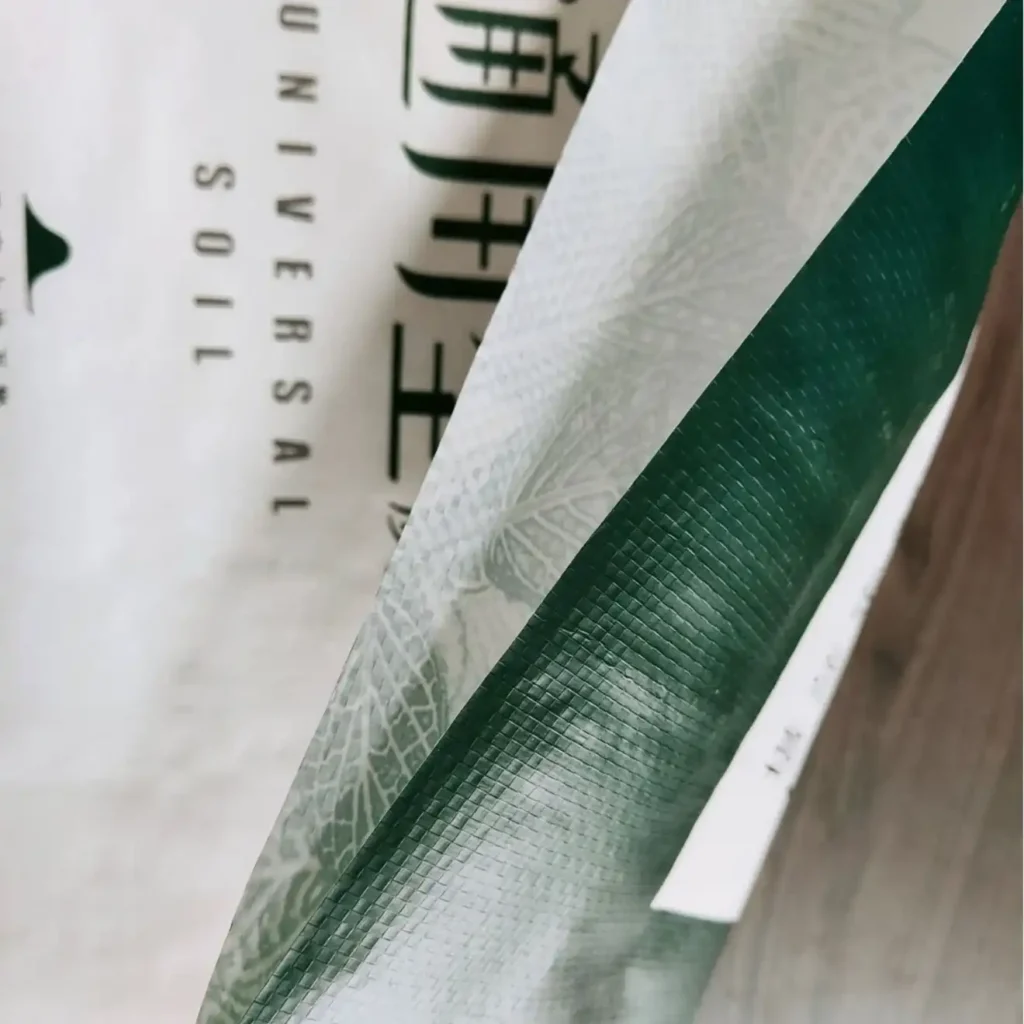
A sensible starting question is longevity: not of the bag as a physical object, but of the product protected inside it. Printed BOPP Woven Bags are engineered to survive warehousing, transport, and retail while keeping graphics intact and contents stable. Background: a laminated BOPP film carries the image in reverse print, a polyolefin tie layer bonds that film to the woven polypropylene fabric, and an optional inner liner—often PE or PET/Al/PE—manages diffusion of moisture and oxygen.
Method: treat longevity as a four‑variable system—mechanics, barrier, closure, and environment. Mechanics deals with tape denier, pick density, and fabric strength. Barrier comes from the film and any liner (WVTR/OTR targets). Closure is either stitched, pinch‑bottom, or heat‑sealed. Environment is the route: temperature, humidity, dwell time.
Results: when the route spends weeks above 70% RH, heat‑sealed mouths and PE liners drastically reduce moisture ingress; when oxidation drives degradation (vitamins, spice volatiles, seeds), PET/Al/PE liners paired with heat seals hold OTR near instrument floor. Discussion: longevity is less about overbuilding fabric and more about removing convective pathways at the mouth and sizing barrier to climate. In short, Printed BOPP Woven Bags live long not by being heavy, but by being sealed, matched, and measured.
Why Is A Dedicated Print & Lamination Technician Worth It For Printed BOPP Woven Bags Production?
Background: reverse printing on BOPP and extrusion lamination turn a sequence of variables—inks, anilox/cylinder, web tension, corona treatment, melt temperature—into a single sheet. Small drifts cause visible artifacts (mottle, banding) or invisible failures (weak laminations, residual solvents).
Method: put a trained technician on press who owns register, tone curves, corona levels (≥ 38–42 dyn/cm), and drying profiles. Give that person authority to stop the line to protect peel strength (≥ 2.5–4.0 N/15 mm, ASTM D903) and keep residuals below lab reporting limits before lamination.
Results: brands that staff this role report lower ∆E drift (≤ ±3 under ISO 12647 targets) and fewer post‑lam tunneling events because dyne decay is caught early. Discussions with converters show makeready waste drops and reprint parity improves across sites.
Discussion: an extra headcount looks like cost until you count the scrap avoided, the claims prevented, and the uniformity won. For Printed BOPP Woven Bags, a “live” process owner is a profit lever disguised as quality culture.
How Do I Figure Out Which Film, Fabric, and Liner Specs Fit My Printed BOPP Woven Bags Project?
Background: every SKU carries a hazard profile—moisture, oxygen, light, odor, dust. The fabric provides drop and creep performance; the film and liner govern diffusion; the mouth governs convection; the print governs shelf appeal.
Method: build a decision tree. Step 1: rank hazards by business impact. Step 2: translate hazards into numbers—WVTR at 38 °C/90% RH; OTR at 23 °C/0% RH; outer COF 0.3–0.5 (ASTM D1894) for pallet safety. Step 3: map numbers to a structure—BOPP lamination for graphics; PE liners at 70–100 µm for moisture; PET/Al/PE liners for oxygen/light; heat‑sealed mouths when hermetic intent exists; sewn mouths when it does not. Step 4: pilot on the harshest route and lock a control plan (ISO 2859‑1 sampling; method‑and‑condition on every CoA).
Results: the “right spec” emerges from a bounded search rather than trial‑and‑error. Moisture‑dominant salts land on PE liners; aroma‑critical pet food chooses foil liners plus heat‑sealed mouths; pellets with low hazard stay on coated woven with stitched closures.
Discussion: good specification is not guesswork but translation. Printed BOPP Woven Bags function best when risks become measurable targets and targets map to standard parts.
What Makes A Packaging Line Using Printed BOPP Woven Bags Trip Up, And How Do We Prevent It?
Background: recurring faults have patterns—lamination tunnels on humid days, registration drift at speed, seal channels when jaws aren’t flat, carton dust from rough outer skins, or COF too low/high for pallet stability.
Method: adopt a fault tree. For tunnels, check dyne decay and residual solvent; add on‑press corona and restore drying curves. For registration, audit tension loops and deck alignment; keep ±0.15–0.25 mm with system feedback. For seals, measure jaw planarity and widen seal width; validate with ASTM F88/F88M and bubble‑test gross leaks via ASTM D3078. For COF, tune outer layer to 0.3–0.5 and add anti‑slip stripes where telescoping risk is high.
Results: same‑day countermeasures eliminate repeat defects; process drift becomes visible on charts, not on pallets.
Discussion: prevention is cheaper than rework. Converters that document these guardrails see steadier yields, faster approvals, and fewer firefights once Printed BOPP Woven Bags hit distribution.
How Critical Are Surface Energy And Tie‑Layer Chemistry In Printed BOPP Woven Bags?
Background: inks must wet the BOPP enough to anchor during reverse print; molten tie must wet film and fabric enough to bond during lamination. If either interaction fails, delamination or ink pick‑off appears.
Method: monitor BOPP at ≥ 38–42 dyn/cm (ASTM D2578) before print; re‑treat on‑press when reels age. Validate lamination peel ≥ 2.5–4.0 N/15 mm (ASTM D903) with chill‑roll pressure and melt temperature logged. Control solvents and drying to keep residuals below reporting limits—solvent trapped today becomes a bubble tomorrow.
Results: higher first‑pass yields and fewer “mystery” tunnels; barcode and microtext durability improve because ink is truly buried under the film.
Discussion: surface energy is the quiet hero of Printed BOPP Woven Bags: invisible on the shelf, decisive in the field.
Should Each SKU Of Printed BOPP Woven Bags Use Its Own Cylinder/Plate Library?
Background: using “close enough” cylinders against different artworks saves money—until it does not. Slightly wrong cell volume or anilox selection shifts tone value increase, risking brand colors and fine type.
Method: maintain a disciplined library per SKU family. Gravure cylinders engraved at 120–200 lpi with correct cell geometry; CI‑flexo plates paired to dedicated anilox ranges (e.g., 400–800 lpi, 2.0–4.0 cm³/m² BCM). Lock ICC profiles and tone curves under ISO 12647 and publish ∆E tolerances (≤ ±3) in RFQs.
Results: consistent repeats, lower approval friction, and simplified multi‑plant parity.
Discussion: a robust library is a capital expense that pays out in fewer disputes and faster cycle time. The more visual your category, the more valuable this discipline becomes for Printed BOPP Woven Bags.
How Can Brand Owners Extend Shelf Life With Printed BOPP Woven Bags Without Overbuilding?
Background: adding grams per square meter to fabric feels safe but rarely addresses chemistry—moisture, oxygen, and light.
Method: keep fabric where drop/creep requires it and invest in barrier continuity. Choose PE liners for moisture‑dominant risks and PET/Al/PE for oxygen/light; switch to heat‑sealed mouths for hermetic intent; consider headspace gases (N₂/CO₂) for highly sensitive fills. Model ingress using surface area and standard method data (ASTM F1249 for WVTR, ASTM D3985 for OTR) at declared conditions.
Results: fewer caking and oxidation complaints, more predictable potency retention, smoother audits.
Discussion: shelf life is won at the mouth and in the liner, not just in the weave. Printed BOPP Woven Bags respond best when design dollars chase the dominant hazard.
Understanding The Production Stack For Printed BOPP Woven Bags
Background: production is a chain—weakness in one link shows up later, often far from the cause.
Method: document each link. (1) Artwork & separation under ISO 12647. (2) Cylinder/plate prep with screen rulings that avoid moiré against the fabric weave. (3) BOPP pre‑treatment to target dyne; record lot IDs. (4) Reverse print with register control and drying verification. (5) Extrusion lamination with PP/PE tie; validate peel and COF. (6) Slit and condition to stabilize curl. (7) Convert with tube formation, gusseting, bottom construction, and mouth finish tailored to the hazard profile. (8) Pack and ship with pallet protocols that maintain COF and prevent scuffing.
Results: the “same” bag from week one and week ten remains the same in the field because parameters and proofs are the same in the plant.
Discussion: consistency is not a promise; it is a trail of recorded settings that let Printed BOPP Woven Bags repeat on demand.
Advantages Of Printed BOPP Woven Bags For Fertilizers, Rice, Pet Food, Seeds, and Pigments
Background: categories vary in what hurts them. Fertilizers cake with moisture; rice scuffs and must look clean; pet food scalps aroma and picks up odors; seeds lose germination to oxygen and light; pigments shed dust.
Method: map each category to a structure. Fertilizers: PE liner (70–100 µm) plus heat‑sealed mouth. Rice: reverse print (8–10 colors), extrusion lamination, sewn or heat‑sealed depending on climate. Pet food: foil liners + heat‑seal + registered matte/gloss for premium cues. Seeds: light‑blocking films + foil liners + heat‑seal + UV‑stabilized fabrics. Pigments: antistatic PE liners + fused mouths + spout filling.
Results: fewer rejects, cleaner pallets, truer shelf presentation, and better compliance.
Discussion: the “advantages” come from matching features to failure modes, not from generic claims. That is the practical power of Printed BOPP Woven Bags.
Applications Of Printed BOPP Woven Bags Across Markets
Background: the same platform supports commodity and premium segments.
Method: segment by function: display‑critical retail (grains, pet food), performance‑critical industrial (salts, fertilizers), audit‑critical specialty (biotech nutrients, pigments). For each, specify graphics (color stations, finishes), barrier (liner type and thickness), and closure (sewn or heat‑sealed). Build optional layers: anti‑slip stripes, tactile varnish, microtext.
Results: a single converter can serve diverse SKUs by swapping liners, closures, and finishes while keeping the base fabric and lamination line constant.
Discussion: platform thinking turns Printed BOPP Woven Bags into a configurable system rather than a bespoke art project each time.
Exploring Different Grades And Builds Of Printed BOPP Woven Bags
Background: “grade” is a combination of fabric strength, film gauge, tie‑layer thickness, liner choice, and finish.
Method: define families. Grade A: BOPP 20–25 µm; fabric optimized for 25–50 kg; sewn mouth; no liner. Grade B: same film; PE liner 70–100 µm; heat‑sealed mouth; anti‑slip stripes. Grade C: PET/Al/PE liner; heat‑sealed; headspace gas; registered matte/gloss; microtext. Grade D: antistatic options; fused mouth; spout for dust‑control decant.
Results: buyers can select by outcome (barrier, look, handling) instead of getting lost in part numbers.
Discussion: clear grades reduce RFQ ambiguity and speed approvals when specifying Printed BOPP Woven Bags.
Benefits Of Registered Matte/Gloss Finishing In Printed BOPP Woven Bags
Background: large matte fields hide scuff but can mute imagery; full gloss pops imagery but reveals every rub.
Method: register matte over broad solids and keep gloss on imagery, logos, and key panels. Keep varnish laydown controlled so COF stays in band. Validate barcode contrast and microtext after varnish—don’t assume.
Results: higher perceived quality, fewer shelf‑return complaints, and consistent scan rates.
Discussion: finishing is not decoration—it is risk management in plain sight for Printed BOPP Woven Bags.
Evaluation Of Suppliers For Quality And Turnaround In Printed BOPP Woven Bags
Background: lead time and uniformity trump theoretical press limits.
Method: evaluate suppliers on process capability (Cp/Cpk for gauge and register), standards literacy (ISO 12647, ASTM F1249/D3985, ASTM D903, ASTM D1894, ASTM F88/D3078, EN 15593), and documentation rigor (method‑and‑condition on every CoA). Ask for multi‑plant color parity evidence and a cylinder/plate library policy.
Results: fewer surprises, faster reruns, and brand integrity across regions.
Discussion: quality is what repeats under pressure. Choose partners that measure what matters for Printed BOPP Woven Bags.
Selecting “Replacement Parts” In The Spec—What Truly Matters For Printed BOPP Woven Bags
Background: some changes seem minor—anilox swap, tie‑layer resin substitute, different corona treater—but ripple effects are large.
Method: when substituting, re‑qualify the seal window, lamination peel, and COF; re‑confirm dyne and tone curves; rerun barrier tests if liner or tie chemistry changes. Document deltas and lock change control.
Results: controlled transitions without field failures.
Discussion: specs are systems. Treat every component as a dependency chain in Printed BOPP Woven Bags.
Preventing Downtime With Timely Upgrades To Printed BOPP Woven Bags Tooling And SOPs
Background: aging cylinders, tired plates, and drifted SOPs create recurring defects.
Method: set replacement intervals based on defect onset, not calendar alone; use predictive maintenance on register and tension systems; recalibrate corona and drying after any service; update SOPs after each CAPA.
Results: fewer stops, cleaner starts, and steadier yields.
Discussion: upgrades and SOP hygiene are part of the product—because the product is the process in Printed BOPP Woven Bags.
Internal Link For Comparative Configurations
For a side‑by‑side view of finishes, liner choices, and closure types, explore our catalog of BOPP‑laminated woven sacks and map your hazard profile to an optimal build. The link anchors the options discussed here and lets teams translate theory into a spec they can buy.
References
- ISO 12647‑4 (gravure) and ISO 12647‑6 (flexo) print characterization frameworks
- ASTM D2578 (dyne test for surface energy) and guidance on 38–42 dyn/cm targets before print
- ASTM D903 (peel strength) and typical lamination bond bands ≥ 2.5–4.0 N/15 mm for woven laminates
- ASTM F1249 (WVTR at 38 °C/90% RH) and ASTM D3985 (OTR at 23 °C/0% RH) for barrier benchmarking
- ASTM D1894 (coefficient of friction) with practical pallet‑safety bands 0.3–0.5 for outer films
- ASTM F88/F88M (seal strength) and ASTM D3078 (bubble emission) for closure validation
- EN 15593:2008 (hygiene management in packaging production) as an audit anchor
- EU 10/2011 and Regulation (EC) 1935/2004 (plastics in contact with food), plus US 21 CFR 177.1520 and 21 CFR 178.2010 for food‑contact builds
- SGS, Intertek, Eurofins, and TÜV laboratory protocols for migration, barrier, and mechanical tests in flexible packaging contexts