UN Dangerous Goods Regulations and 5M2 Packaging Certification
Understanding the Regulatory Framework: The transportation of dangerous goods is strictly governed by international regulations to prevent accidents at sea, on roads, and in the air. The United Nations, through its Recommendations on the Transport of Dangerous Goods (often called the UN Orange Book), provides a model framework for classifying hazardous materials and specifying how they must be packaged. For maritime shipments, these recommendations are implemented via the International Maritime Dangerous Goods (IMDG) Code, which is adopted under the SOLAS convention for safety of life at sea. In essence, any company shipping hazardous substances by ocean freight must use packaging that meets UN-specified standards for performance. This is known as UN certified packaging or “UN performance-oriented packaging,” and it involves rigorous design and testing to ensure that even if the package is dropped, compressed, or exposed to moisture and temperature changes, it will reliably contain its dangerous contents. Each approved design is assigned a unique code and must carry the UN mark–a stamped code on the packaging that indicates the type of container, materials, performance rating, and the certification details.
What “UN 5M2” Means?
In the UN packaging code system, the code 5M2 refers to a specific type of certified bag. The first character “5” designates a bag or sack. The letter “M” indicates the material – in this case, paper (specifically a multi-wall paper construction). The final digit “2” signifies an important feature of the design – for 5M2, it denotes a multi-wall paper bag that is water-resistant. In practical terms, a 5M2 bag is a heavy-duty multi-ply paper sack engineered to resist water ingress (often via a water-repellent outer layer or an integrated moisture barrier) and to pass stringent tests for carrying hazardous solids. Such bags are tested and certified to ensure they can safely handle certain classes of dangerous goods. For example, chemicals like some fertilizers, pigments, or powdered additives might be classified as dangerous goods; if a manufacturer wants to ship these in paper sacks, those sacks need to have a UN certification such as 5M2.
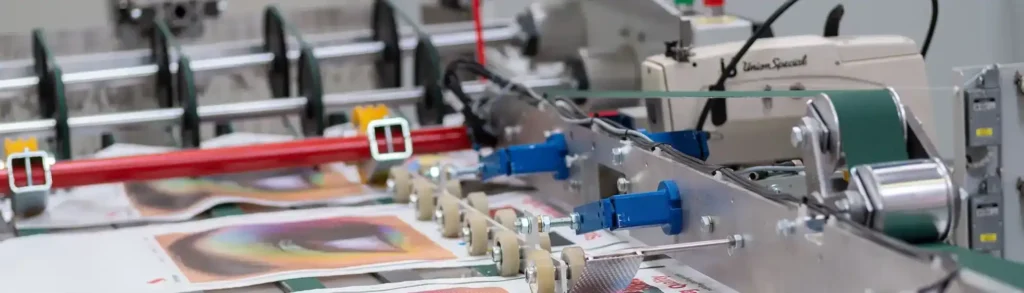
Multiwall Paper Valve Bags Manufacturing
Professional production process for high-strength multiwall paper bags meeting UN packaging standards.
Check More →Laminated Kraft Paper Sacks
Reinforced laminated kraft paper sacks with stable structure for UN-certified hazardous material packaging.
Check More →Multiwall Paper Bags Manufacturer
Certified manufacturer of UN 5m2 compliant pasted open mouth multiwall paper packaging bags.
Check More →Pinch Bottom Open Mouth Paper Bags
Heavy-duty PBOM paper bags with reinforced bottom, matching UN 5m2 safety and strength standards.
Check More →
Supplemental Technical and Commercial Copy for Pasted Open Mouth Paper Bags
Pasted Open Mouth Paper Bags are best presented as engineered paper sacks, not simple commodity packaging. The buying case is clear: a wide mouth for efficient filling, a pasted bottom for stable pallet geometry, a printable outer sheet for branding and mandatory markings, and a structure that can be tuned from breathable bulk packing to moisture-managed transport. In trade-association guidance, open-mouth paper sacks are used across food, agriculture, building materials, and industrial products, while manufacturer pages emphasize pallet stability, hygienic closure, and customization of the paper stack and barrier package.
This supplement adds what a technical buyer normally wants after the headline article ends: a sharper product profile, a practical specification matrix, clearer compliance logic, better application matching, and cleaner purchasing guidance. The contrast matters. A bag may look ordinary and still be highly engineered; it may look robust and still be the wrong choice for a regulated solid. Not all paper sacks are equal, and not every heavy-duty paper sack is a UN-certified bag.
Why Pasted Open Mouth Paper Bags Earns Shortlists
The material logic behind Pasted Open Mouth Paper Bags
kraft paper remains the structural heart of the format because it combines strength, pliability, and proven converting behavior. PSSMA defines sack kraft paper as paper produced from a sulphate process, typically brown unless bleached, with long fibers that support tensile and tear performance; the same guidance notes common shipping-sack basis weights in the multiwall market and explains why natural kraft keeps an advantage in strength. VidePak’s broader sack pages add the commercial context, placing paper sacks from light industrial fills up to heavy-duty ranges and offering brown, white, multiwall, coated, and liner-supported versions.
In commercial terms, the bag is a system, not a shell. The open mouth simplifies gravity, auger, or spout filling; the pasted bottom creates a blocky, warehouse-friendly profile; and the closure can be sewn, pinch-sealed, taped, or combined with an inner liner. Breathability accelerates filling, yet barrier layers protect shelf life. Parallel goals, opposite mechanics. That is why specifiers should not ask only for “paper bag.” They should ask for the right paper stack, the right barrier position, and the right closure method for the real product behavior. You do not force the product into the bag; you fit the bag to the product.
Controlled porosity and optional micro-perforations help vent displaced air in powder filling.
Sewing, pinch closure, tape, or liner sealing can be matched to the fill line.
Paper is a strong print surface, and open-mouth bags are promoted for stable palletisation.
Specification of Pasted Open Mouth Paper Bags
The matrix below is deliberately practical. It compares common buying variants rather than pretending a single construction fits every use-case. Industry and manufacturer sources show multiwall paper bags in roughly two to five plies, with typical paper grammage around 70–100 g/m² per ply, optional liners around 20–40 μm, and dimensions that can span from compact low-kilogram packs to large industrial sacks. VidePak’s own product pages indicate common custom-commercial terms around a 10,000-piece MOQ and standard bulk lead times of roughly 15–25 business days.
Note: the values above are representative and customizable. They should be treated as quoting guidance, not as a substitute for a signed datasheet or approved test report.
High printability, flexible closure formats, and strong pallet behaviour make the format commercially versatile.
Standard paper structures are not long-term outdoor packs, and higher barriers can reduce breathability or complicate end-of-life handling.
UN 5M2 Compliance and Qualification Logic
For dangerous-goods transport, the code itself carries meaning. In the paper-bag rules, “5” indicates a bag, “M” indicates multi-wall paper, and “2” indicates water-resistant construction. Official UN guidance and U.S. hazardous-material rules align on the core definition. For paper bags, the regulations require suitable kraft paper or equivalent paper with at least three plies, and seams and closures must be sift-proof. That is the baseline from which 5M2 bags are built.
The water-resistance logic is precise. A three-ply design must use a water-resistant outermost ply. A design of four plies or more must use either a water-resistant ply in one of the two outermost plies or a suitable barrier between those two outermost plies. If the lading reacts with moisture, or if it is packed damp, a waterproof ply or barrier must also sit next to the substance, and seams and closures must be waterproof. Maximum net mass is 50 kg. These are engineering requirements, but they are also purchasing checkpoints.
Qualification is design-specific. U.S. hazardous-material rules require drop testing for bag designs, set drop heights by packing group, exclude bags from the stacking test requirement applied to other non-bulk packaging types, and still require non-bulk packages to withstand vibration. Marking must follow the prescribed sequence with the UN symbol, packaging code, performance letter, marked mass, “S” for solids, year, country, and manufacturer identification. Test reports must be prepared and retained. A compliant lot is therefore not only manufactured; it is documented.
Certification path for UN 5M2
UN 5M2 Certification Path for a Multiwall Water-Resistant Paper Bag
Design Brief
Define product class, packing group, and target gross mass.
Structure Selection
Choose ply count, water-resistant ply or barrier, and closure.
Prototype Stage
Produce pilot bags and verify dimensions.
Qualification Testing
Conduct required drop testing and verify marking data.
Approval Release
Issue design qualification report.
Production Control
Maintain traceable production tolerances.
Applications and Selection Guidance
The most persuasive application story is a balanced one. Pasted Open Mouth Paper Bags work especially well for dry construction blends, mineral powders, specialty additives, feed materials, selected food ingredients, and pet-care powders. Trade-association and manufacturer sources repeatedly place open-mouth paper sacks in building materials, food, agriculture, and industrial/heavy-duty channels. The reason is not romance; it is fit. The format fills well, stacks well, and communicates “paper” without surrendering technical control over plies, liners, or closure options.
Best where breathable multiwall paper supports powder filling and square pallet loads.
Best where clean handling, white or brown print surfaces, and orderly shelf or warehouse presentation matter.
Best only when the approved UN-certified bag structure and marking align with the classified substance.
Recommended applications
Recommended applications include dry mortar and filler systems, mineral additives, feed or food ingredients that value hygienic handling, pet-care powders, and selected dry specialty chemicals. The common thread is simple yet important: these are products that benefit from a paper exterior, disciplined pallet shape, and tailored closure logic. The antithesis is just as useful as the recommendation: if your real problem is long-term open-yard exposure or fully hermetic protection, specify a stronger barrier structure or another packaging family instead of overpromising what plain paper can do.
Buying Guidance and Operational Care
PSSMA’s ordering guide is still one of the best discipline checks for buyers: specify fill weight, bag style, full size format, construction from inside ply to outside ply, any perforations, seam requirements, print colors, pallet details, shipping mode, hazard labels, and whether UN requirements apply. For new products, add density or specific gravity so the bag can be sized to the filled profile rather than to a theoretical flat-sheet cube. This is where good RFQs save weeks. Short now, shorter later.
Commercial expectations should also be realistic. VidePak’s current product pages cite a typical MOQ of 10,000 pieces per specification, mock-up lead time around 10 business days, and standard bulk lead times generally in the 15–25 business-day range. Custom liners, specialty barriers, and regulated dangerous-goods reviews can extend the schedule. Procurement teams that align artwork, closure choice, pallet format, and compliance documents at the quotation stage usually move faster and buy better.
Handling and storage tips
- Store filled sacks in cool, well-ventilated rooms; PSSMA identifies about 70°F and 50–60% relative humidity as ideal storage conditions.
- Keep filled sacks on dry floors and use wooden platforms or moisture barriers where dampness might occur.
- Interlock stacks, keep pallet edges flush, and avoid excessive overhang.
- For outdoor exposure, specify moisture-resistant or purposely waterproof constructions; never place filled sacks directly on the ground.
- Empty sacks perform best when paper moisture sits around 5–8%; brittle sacks can be reconditioned in a humidified room before filling.
Compliance checklist for a water-resistant multiwall paper bag
- Confirm the classified substance, packing group, and transport mode before specifying 5M2 bags.
- Verify the ply count and the location of the water-resistant ply or barrier within the approved design.
- Require waterproof inner-side protection where the lading reacts with moisture or is packed damp.
- Check the full printed mark: UN symbol, code, performance letter, mass, “S,” year, country, and manufacturer identifier.
- Request the current design qualification report and production-control evidence.
That is the strongest supplemental message for this article and for the sales page that surrounds it: Pasted Open Mouth Paper Bags win when specification is precise. The right kraft paper grade, the right liner placement, the right closure, the right pallet footprint, the right traceability. We shape the bag around the product, and then the product moves better because the bag was shaped correctly. Not louder claims, but better fit. Not more complexity, but better control.