
Polypropylene (PP) woven bags have long been the workhorse of bulk packaging, valued for their strength, light weight, and cost-effectiveness. In recent years, however, BOPP woven bags – polypropylene woven bags laminated with Biaxially Oriented Polypropylene (BOPP) film – have emerged as a premium solution that marries durability with high-impact graphics. These laminated bags offer the robust performance of woven PP fabric combined with the print quality and protective benefits of a BOPP film layer. As global logistics grow harsher, consumer branding expectations rise, and sustainability targets tighten, BOPP laminated woven bags are increasingly seen as the format that can meet all these demands. This white paper presents a comprehensive technical comparison between standard PP woven bags and BOPP laminated woven bags. We examine the construction and materials of each, detail the production processes, and highlight performance advantages and market relevance.
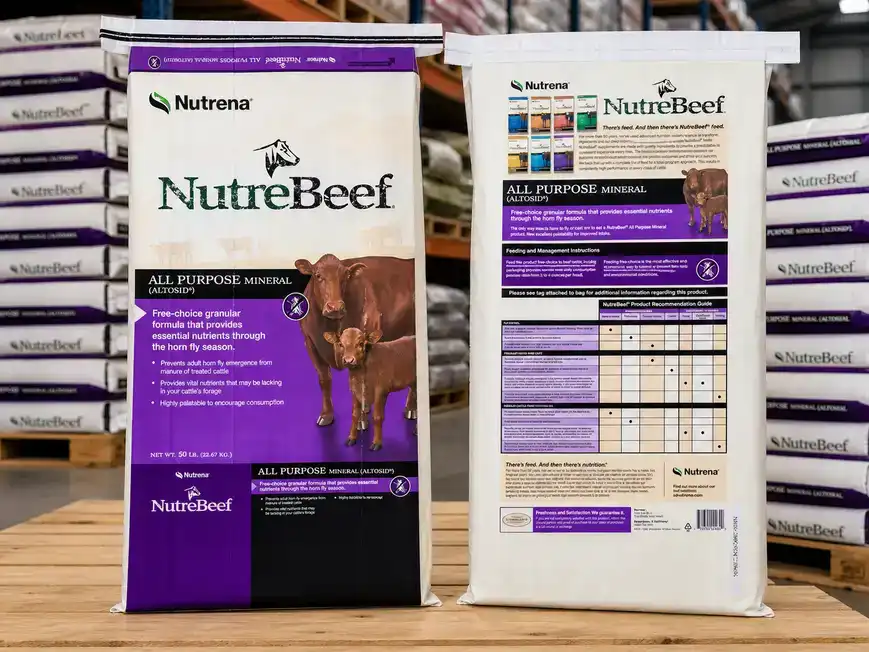
Supplemental Technical Copy for BOPP Woven Bags and PP Woven Bags
When buyers compare BOPP Woven Bags with PP Woven Bags, they are not simply comparing two sack styles; they are choosing between two packaging strategies. One prioritizes economy, breathability, and straightforward industrial utility. The other adds a smoother printable surface, stronger moisture control, better shelf impact, and stronger visual durability through BOPP film and engineered lamination. Both formats rely on woven Polypropylene for load-bearing strength, but the added composite layers in BOPP Woven Bags change how the package performs in filling, transport, storage, and retail display.
This section expands the original article with practical specification guidance: structure, manufacturing flow, single- and double-sided lamination, solventless and solvent-based bonding choices, coatings, closures, liners, typical size ranges, performance metrics, industry fit, recyclability, and quality-control checkpoints. The key commercial truth is simple: a woven bag should not only carry product; it should protect the product, support the line, reinforce the brand, and still make sense after use. Not packaging that merely looks good, but packaging that works well because it is specified well.
Structure Difference Between BOPP Woven Bags and PP Woven Bags
PP Woven Bags begin with stretched Polypropylene tapes that are extruded, drawn, and woven into a strong fabric. That fabric is the structural backbone: it carries tensile load, resists tearing, supports seam strength, and keeps package weight low relative to payload. In their simplest form, these bags remain breathable and cost-efficient, which is why they are widely used for grains, sugar, flour, feed, fertilizer, salt, cement, and other bulk goods. Their trade-off is equally clear: the open woven texture can allow moisture ingress and powder sifting unless the bag is coated or fitted with an inner liner.
BOPP Woven Bags use that same woven base, then add a BOPP film face and a bonding layer created through controlled lamination. In technical terms, the woven scrim supplies the strength while the film supplies print quality, gloss or matte appearance, better dirt resistance, stronger moisture performance, and better graphic protection because reverse printing places ink beneath the film rather than on top of it. The result is not merely a prettier bag; it is a multi-layer composite that can combine load strength, cleaner handling, retail-grade graphics, and better barrier behavior in one format. In short: plain woven sacks are fabric-first; BOPP Woven Bags are performance composites.
Commercial specifications reflect that design logic. Typical woven-fabric programs often sit around 80–120 gsm for lighter 5–25 kg uses and around 100–160 gsm for 20–50 kg programs, with denier commonly ranging from roughly 400 to 1200 depending on duty level. On the film side, woven-sack converters commonly work with BOPP layers in the high-teens to roughly mid-20 micron range for mainstream premium bags, while coating or tie layers are engineered only as thick as needed to secure adhesion, close pores, and avoid curl, haze, or delamination. Strong packaging is not created by adding material blindly; it is created by balancing base fabric, film, bond, and closure intelligently.
Manufacturing Flow and Lamination Choices
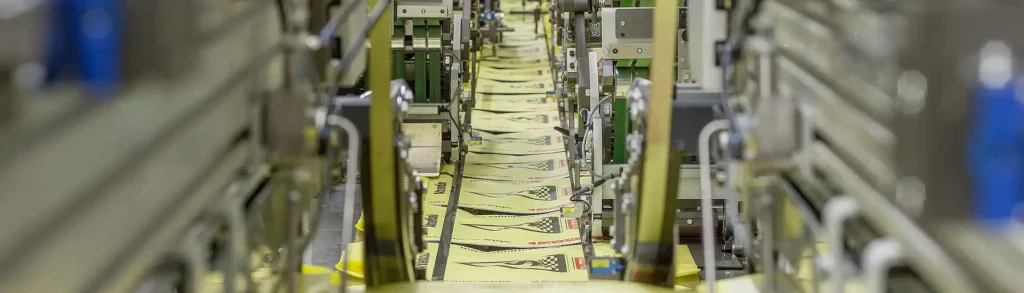
The manufacturing route begins with resin selection and tape extrusion, then proceeds through tape drawing, weaving, film preparation, printing, lamination, conversion, and inspection. In many reverse-print systems, the BOPP film is printed before it is bonded to the woven fabric, so the final graphics are protected under the film. That process is why well-made BOPP Woven Bags keep their branding sharp under abrasion, vibration, and handling, while standard surface-printed PP Woven Bags are more likely to scuff or fade with time.
Converters can tune lamination in several directions. Single-sided lamination is commonly chosen when the priority is a strong printable exterior and improved moisture resistance. Double-sided lamination can be specified when dust control, surface smoothness, or barrier performance on both sides matters more. Modern flexible-packaging portfolios also include solventless, solvent-based, UV, water-based, and film adhesive systems. Solventless systems are especially attractive because they eliminate solvent drying, support high-speed operation, use low coating weights, and can reduce energy use and emissions; that said, converters still evaluate solvent-based systems where structure difficulty, optics, or process preference call for them.
Coatings and finishes add another layer of control. Heat-seal, cold-seal, barrier, primer, functional, and overprint-varnish coatings all exist in modern converting portfolios. In practical woven-bag programs, overprint varnishes protect graphics, anti-slip finishes improve pallet stability, and barrier coatings can help retain freshness or reduce moisture transmission. Recyclability guidance increasingly emphasizes that inks, lacquers, adhesives, and added features should be chosen with the final recycling stream in mind; the thinner the unnecessary extras, the stronger the circularity story.
Side-by-Side Comparison
The real commercial divide is not “basic versus advanced” in the abstract. It is functional contrast. PP Woven Bags remain the smart choice when breathability, low unit cost, and basic transport protection are enough. BOPP Woven Bags become the stronger choice when the bag must work harder: resist moisture better, print better, stack better, look better, and still survive heavy handling. One saves cost at the unit level; the other often saves risk across the route.
The comparison above synthesizes the supplied article with commercial TDS ranges and converting options published by woven-bag manufacturers and film suppliers.
when the product is moisture-sensitive, retail-visible, grease-prone, export-bound, or palletized in tall stacks. They are especially compelling when artwork must stay sharp, when anti-skid handling matters, or when the bag itself is part of the selling story.
when the route is industrial, the graphics are simple, the product benefits from airflow, or a liner already solves the barrier problem. They remain one of the most cost-effective formats for heavy bulk transport.
Specifications, Finishing, and Recommended Uses
Typical commercial ranges should be treated as design windows, not rigid universal rules. Widths commonly run from roughly 215–620 mm in one supplier’s BOPP TDS to about 300–800 mm in another premium laminated range, while lengths often extend from around 420 mm to above 1100 mm. Fabric weight can span from roughly 50 gsm in lighter-duty woven sacks to around 200 gsm in heavier constructions. Common capacities include 5 kg, 10 kg, 25 kg, and 50 kg programs, with liners commonly specified in the 20–100 micron class for hygiene or moisture management.
Standard woven format
PP Woven Bags with 50–120 gsm fabric, simple flexo printing, and optional coating are ideal for grain, sugar, feed, cement, and other high-volume commodity uses where function outweighs visual theatre.
Premium composite format
BOPP Woven Bags typically combine 55–120 gsm woven fabric with about 18–25 micron BOPP film, 10-color gravure printing, and gloss or matte anti-skid finishes for rice, pet food, fertilizer, seeds, and retail-facing dry goods.
Moisture-managed export format
For powders, chemicals, and long humid routes, specify coated or laminated woven sacks with inner liner, tight seams, and valve or heat-seal closure. This build prioritizes barrier discipline over minimum cost.
Retail recloseable format
For pet food, garden products, and smaller food packs, converters can add zipper, easy-tear opening, handle support, micro-perforation, or clear windows so the package becomes easier to open, reseal, and trust.
Finishing options now span gusseted or pillow shapes, heat-cut, cold-cut, zigzag-cut mouths, valve constructions, PE or HDPE liners, anti-slip treatment, matte strips, handles, and zipper-style recloseability in suitable retail programs. The best specification is the one that matches how the product is filled, how it is stored, and how it is opened. The graphics should serve the bag, and the bag should serve the goods.
As for performance metrics, buyers typically assess gsm, denier, strip tensile or tear resistance, adhesion or peel after lamination, moisture performance, drop resistance, and seam burst or seam integrity. The original article cites robust woven structures around ≥70 N/50 mm tear strength and notes common 5:1 safety factors for heavy-duty sacks; elsewhere on the same source site, fertilizer-grade QC examples include seam-burst protocols above 500 kPa, showing how buyers often translate “strength” into measurable acceptance criteria.
Selection, Sustainability, and Quality Control
The cleanest selection method is to start with the product’s enemies. If the enemy is moisture, odors, grease, UV, abrasion, or weak shelf presence, BOPP Woven Bags usually justify their higher price. If the enemy is only logistics cost, and the product tolerates airflow and simple graphics, PP Woven Bags are frequently the smarter buy. Shelf life pushes the decision toward film-faced structures. Branding pushes it further. Tight budgets pull it back. This is where contrast matters: choose the lower-cost bag when packaging is only a container; choose the higher-performing bag when packaging is also protection, communication, and insurance.
Pros and cons should be viewed as trade-offs, not slogans. BOPP Woven Bags offer better printability, cleaner surfaces, stronger moisture resistance, and more premium appearance, but they cost more and demand tighter converting control. PP Woven Bags offer lower price, proven tensile efficiency, and optional breathability, but they typically deliver simpler visuals and weaker barrier performance unless coatings or liners are added. In many real programs, the decision is not whether to use one or the other forever; it is whether the bag should optimize unit price, total delivered quality, or both.
Environmental performance depends heavily on structure discipline. CEFLEX guidance favors mono-material polyolefin packaging where possible because it is easier to recycle and can produce better-quality recyclate. The same guidance also warns that adhesives, coatings, inks, lacquers, and added features affect recyclability and should be specified carefully, with closures such as zippers or valves ideally made from the same material family as the primary pack. Siegwerk likewise notes that printing chemistry matters: recycling-compatible ink systems can improve recyclability of PP-based flexible structures. In other words, recyclability is not just about Polypropylene; it is about everything added to it.
Quality control should mirror the risks. That means incoming resin checks for consistency; tape-width and denier control in extrusion; gsm and weave-density checks in weaving; peel strength, flatness, and curl control in lamination; print registration and rub resistance in graphics; seam, valve, and cut accuracy in conversion; then filled-bag drop, tensile, sift, burst, and moisture checks before release. Barcode readability, traceability coding, and anti-skid performance should be verified when the route or retail environment demands them. Good woven packaging is rarely failed by one dramatic defect; more often, it is failed by small uncontrolled variables that accumulate. Better specs prevent that accumulation before it begins.
In the end, the best specification is the one that fits the product, the process, the route, the brand, and the recycling pathway at the same time. That is why the strongest purchasing decisions in this category are neither purely marketing-led nor purely engineering-led. They are both. And that, finally, is the quiet advantage of getting woven packaging right.
Woven Fabric PP Bags Features
Core performance features of standard polypropylene woven bags for basic industrial packaging.
Check More →BOPP Bags With Custom Printing
High-definition printed BOPP woven bags with glossy surface and premium display effect.
Check More →BOPP PP Woven Bags Solutions
Complete customized packaging solutions combining BOPP film and PP woven base materials.
Check More →Localizing BOPP Woven Bags
Production and application localization for high-quality BOPP laminated woven bags.
Check More →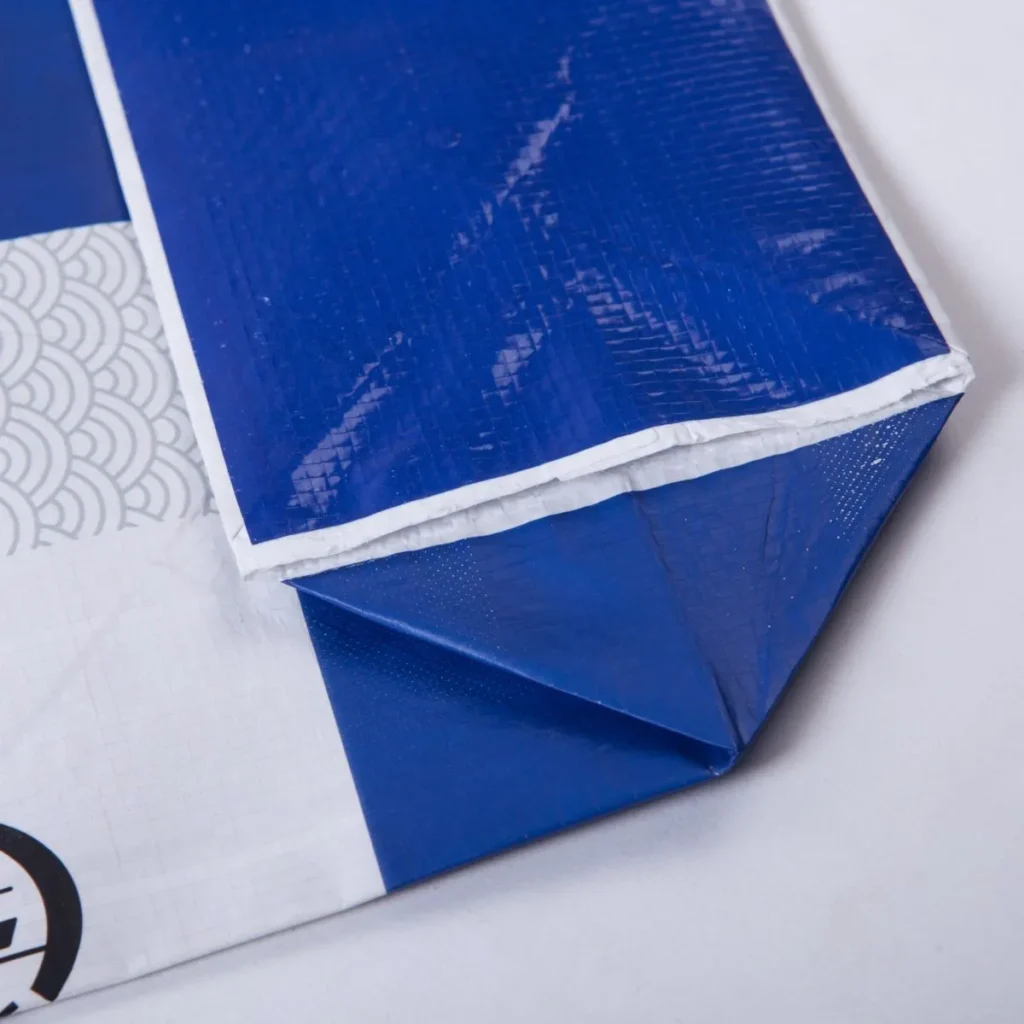
- Supplemental Technical Copy for BOPP Woven Bags and PP Woven Bags
- Structure Difference Between BOPP Woven Bags and PP Woven Bags
- Manufacturing Flow and Lamination Choices
- Side-by-Side Comparison
- Specifications, Finishing, and Recommended Uses
- Selection, Sustainability, and Quality Control
- Comparison Table: BOPP Laminated Woven Bags vs. Standard PP Woven Bags
- Market Relevance and Applications
- Conclusion
Comparison Table: BOPP Laminated Woven Bags vs. Standard PP Woven Bags
To clearly illustrate the differences between BOPP woven bags and traditional PP woven bags, the following table compares them across key dimensions:
(Sources: VidePak technical specifications and industry data)
As seen above, BOPP laminated bags excel in areas of printability, barrier performance, and versatility, making them the go-to choice when packaging is expected to do more than just hold product. Standard PP woven bags remain a staple for cost-sensitive and heavy-duty needs, but they often require trade-offs or additional measures (like adding liners or tolerating simpler presentation). Many companies find that upgrading to BOPP bags pays off through better marketability and reduced spoilage or spillage – the total cost of ownership can be lower even if unit prices are higher. On the other hand, for purely industrial uses where graphics don’t matter and products aren’t moisture-sensitive (say, construction sand or certain animal feed), a basic PP sack may suffice. Ultimately, the choice depends on the product requirements and marketing objectives: BOPP bags for performance + branding, vs. PP woven bags for economy + basic function.
Market Relevance and Applications
Polypropylene woven bags in general occupy a huge segment of the global packaging market, valued at roughly USD 6–7 billion in 2025 and projected to grow steadily as demand for bulk packaging rises. Within this market, BOPP laminated woven bags are one of the fastest-growing categories, as industries seek packaging that not only transports goods safely but also aligns with modern marketing and sustainability trends. Manufacturers worldwide are investing in advanced weaving, coating, and printing technologies – precisely to enable products like BOPP bags that offer enhanced moisture resistance and branding opportunities. The drive for recyclable packaging and reduction of product waste also bolsters BOPP bag adoption, since these bags hit key goals: they are durable, reusable, and easily recyclable, all of which appeal to companies aiming to improve their environmental footprint.
In terms of applications, BOPP woven bags have made especially strong inroads in the following sectors:
- Agriculture and Animal Feed: Producers of rice, beans, grains, and animal feeds increasingly use BOPP bags to differentiate their brands. For example, premium rice exporters use BOPP sacks with photographic images and even transparent windows to showcase quality. Animal feed and pet food companies appreciate the toughness (resisting punctures from pellets or kibbles) and the moisture barrier that keeps feed fresh and mold-free. The vivid printing helps their product stand out in farm co-ops or pet stores. Traditional jute or paper sacks have largely been supplanted by woven PP, and now BOPP laminate is the next step up for value-added products in this space.
- Fertilizers and Chemicals: Fertilizer, pesticides, and other agricultural chemicals are commonly packaged in BOPP laminated bags to withstand outdoor storage and long shipping times. The UV protection and water resistance are crucial for these products, which might cake or lose efficacy if moisture penetrates. BOPP bags also contain any strong odors (like certain fertilizers) and prevent fertilizer dust from leaking out. Branding is important too – manufacturers print usage instructions, compliance icons, and marketing info on the bags in high resolution. Compared to the old multi-wall paper bags (which can fail if wet or not handled gently), laminated woven bags drastically cut down product loss and returns. Many fertilizer companies have reported improved satisfaction and fewer complaints after switching to BOPP woven sacks, since the bags hold up better through the supply chain.
- Building Materials (Cement, Minerals): For products like cement, grout, sand, or mineral ores, packaging needs to survive rough handling and possibly exposure to the elements. While plain PP bags are already widely used for cement, BOPP variants are gaining popularity, especially for bagged products that are sold in retail (e.g. high-end cement or specialty minerals) where a clean, strong bag reflects quality. The pinch-bottom BOPP bags, for instance, provide a leakproof, easily palletized option for cement that reduces dust and is easier to stack than traditional sewn sacks. Similarly, charcoal or wood pellets often use BOPP laminated bags so they can be stored outdoors and have an attractive look for retail stacks. The block-bottom style (a box-like, flat bottom) made with woven PP and BOPP is especially in demand here because it gives a very brick-shaped, self-standing bag ideal for stacking and display, combined with film lamination for moisture protection. VidePak’s own product lines of block-bottom BOPP bags target these use cases as sustainable replacements for paper sacks.
- Food Ingredients & Consumer Goods: Flour, sugar, starches, and other food ingredients are increasingly packed in laminated woven bags because of hygiene and durability benefits. The bags can be made food-grade (compliant with FDA and EU food contact standards) and prevent contamination. For example, large 25 kg bags of flour or milk powder can use a BOPP bag with an inner PE liner – offering a double barrier – making them far more robust than paper bags that were traditionally used. Also, in wholesale and retail channels, having a well-printed bag with product information and branding is a plus. We also see BOPP bags in consumer goods like pet litter, garden soil, or pool salt – products where the packaging might sit outside in a store or backyard, so it must endure weather and rough handling. These are all areas where market relevance of BOPP bags is growing, often displacing less durable packaging.
- E-commerce and Retail Bulk Packaging: With the expansion of e-commerce, sometimes bulk products are shipped directly to consumers or small businesses. BOPP woven bags, being tough yet presentable, are suitable for this trend. For instance, a customer ordering 20 kg of specialty coffee or 15 kg of artisanal pet food expects the package to arrive intact and looking professional – a printed BOPP bag can fulfill that role, whereas a plain bag might require an additional outer carton or overpack for branding. Thus, these bags play into the broader trend of “transit packaging doubling as display packaging.” They ensure the product’s integrity through the delivery journey and still look good upon arrival.
Conclusion
BOPP laminated woven bags represent a pinnacle in bulk packaging, achieving a harmony between rugged performance and high-end presentation. Through a careful construction of woven polypropylene strength layered with BOPP film graphics, these bags solve many of the challenges in transporting and marketing bulk goods. They offer the tensile durability to protect heavy shipments across continents, the barrier properties to shield sensitive contents from moisture and contamination, and the print quality to effectively communicate brand and product information in any market. In the comparison of BOPP vs. standard PP woven bags, it’s clear that while both share a strong PP backbone, the BOPP variant elevates the humble woven sack into a sophisticated packaging format aligned with modern needs – from strict safety and quality standards to marketing differentiation and sustainability goals.
In conclusion, BOPP woven bags vs. PP woven bags is not just a comparison of two products, but a reflection of evolving priorities in the packaging world. Companies are increasingly choosing the enhanced capabilities of BOPP laminated bags to future-proof their packaging – and with partners like VidePak, they gain a collaborator capable of executing those needs to the highest standard. The result is packaging that not only contains and protects, but also communicates and elevates. That is the promise of BOPP woven bags, and VidePak has the expertise and capacity to fulfill it, batch after batch, year after year.