Multiwall Kraft Paper Sacks vs. Kraft Paper Laminated PP Bags: A VIDEPAK Product Analysis
Industrial packaging often presents a choice that looks simple from the outside but is highly technical underneath: should a dry product be packed in a multi-ply kraft Paper Bags, or in a kraft Paper laminated Woven bags? Both solutions can look natural, print clearly, run on modern filling systems, and carry heavy powders or granules. Yet they do not create performance in the same way. One builds strength by combining several plies of sack kraft Paper; the other builds strength around a woven PP fabric core and uses kraft Paper as a functional outer face. This difference affects durability, moisture response, filling, pallet stability, and total delivered cost. Industry terminology also separates sacks material, mouth style, and bottom style, which is essential because the same basic geometry can be engineered in different material families.
Core buying insight: the decision is not “natural versus synthetic” and not “traditional versus modern.” It is a system decision. Product flow, particle size, moisture sensitivity, drop risk, pallet height, warehouse climate, filling equipment, print goals, and local recovery options must be reviewed together. A qualified Multiwall paper sacks manufacturer and a qualified Kraft Paper Laminated PP Bags manufacturer should therefore discuss the packed product and supply chain before discussing only ply count or bag price.
The Product Decision at a Glance
Multiwall kraft Paper sacks are flexible industrial containers made from two or more plies of kraft Paper, sometimes with an added barrier ply, coating, or loose inner liner. Their structure can be tuned for strength, stiffness, air release, printability, and sift control. Kraft Paper laminated PP bags are composite sacks in which a printable kraft Paper layer is bonded to woven PP fabric through an extrusion coating or adhesive tie layer; optional film or liner components can add moisture protection or sealing performance. In practical terms, multiwall sacks distribute stress through several fiber layers, while laminated PP bags rely on oriented plastic tapes woven into a load-bearing grid.
Neither family is automatically superior. A low-density ingredient moving through a clean domestic chain may gain little from a heavy pp woven reinforcement. A dense mineral crossing humid ports may expose the limits of an all-fiber structure. The right comparison is therefore not bag against bag in isolation, but package against journey: filler to pallet, pallet to container, container to warehouse, warehouse to user. A strong bag can be inefficient if it traps air; a breathable bag can be risky in rain; a low unit price can become a high system cost through loss, stoppage, or pallet failure.
Raw Materials and Layer Architecture
Multiwall Kraft Paper Sacks: Strength Built Ply by Ply
The basic raw material is sack kraft Paper, but that phrase covers several practical options. Brown kraft Paper gives a natural industrial appearance and often supports strong fiber performance. White kraft Paper creates a clean printing field for safety colors, product data, and retail-facing graphics. Extensible Paper is engineered to stretch more before failure, so it can absorb drop energy rather than tearing at the first shock. PE-coated kraft Paper adds a thin moisture-resistant surface and can support grease control, heat activation, or improved sealing in selected structures. These options may be combined across plies: the outside can focus on print and rub resistance, the middle on energy absorption, and the inside on product compatibility, porosity, or barrier performance. High-performance extensible grades can also allow fewer plies in some applications, provided testing confirms the required safety margin.
A typical multiwall design uses two to four kraft Paper plies, though specialized structures may use more. Individual plies often sit within broad commercial grammage ranges, but grammage alone is not a guarantee of strength. Tensile energy absorption, stretch, tear resistance, porosity, moisture content, ply orientation, adhesive pattern, and finished bag geometry all matter. Industry guidance links stretch and tensile strength through TEA because together they indicate how well sack Paper absorbs energy during drops. This is why an experienced Multiwall paper sacks manufacturer should not simply add another ply whenever performance is questioned. More material can add stiffness and cost, yet the better answer may be a stronger extensible grade, a tighter bottom, a better adhesive pattern, or a revised air-release plan.
Outer Ply
Brand graphics, legal text, scuff control, friction, and visual identity.
Middle Ply
Mechanical reinforcement, shock sharing, and dimensional body.
Inner Ply
Product contact, controlled porosity, sift resistance, or support for a liner.
Optional Barrier
PE coating, free film, or fitted liner selected around humidity and shelf-life needs.
Kraft Paper Laminated PP Bags: Strength Built Around a Woven Core
Kraft Paper laminated PP bags start with the same kraft Paper choices—white kraft Paper, brown kraft Paper, extensible Paper, and PE-coated kraft Paper—but add a second material family: polypropylene. PP resin is melted, formed into film, slit into tapes, stretched to orient the polymer, and woven into fabric. The woven fabric becomes the mechanical spine. It carries load through interlaced warp and weft tapes, resists tear growth, and helps the bag survive abrasion, grabbing, dragging, and repeated impacts. The kraft Paper face then supplies stiffness, grip, a familiar natural look, and a direct printing surface. The two are joined with a controlled extrusion coat or adhesive layer, which must bond strongly enough to resist peel while remaining flexible at folds.
Typical project windows may place the kraft Paper face around 70–120 g/m², the woven PP substrate around 65–120 g/m², and the lamination coat around 18–30 g/m², but these are starting ranges, not universal specifications. Mesh density, tape denier, fabric weight, lamination weight, corona treatment, Paper moisture, and web tension interact. A tighter weave can improve surface support and sift resistance but may affect flexibility and air release. A heavier coating can improve barrier and bonding but may stiffen folds or slow de-aeration. A higher kraft Paper grammage can improve print smoothness and rub resistance but may add cost without raising the woven core’s tensile capacity. A capable Kraft Paper Laminated PP Bags manufacturer therefore balances the stack as one composite rather than treating the components as independent shopping items.
| Layer Question | Multiwall Kraft Paper Sack | Kraft Paper Laminated PP Bag |
|---|---|---|
| What carries the load? | The combined fiber plies and their bonded geometry | The woven PP fabric, supported by the laminated face and closures |
| What creates the print surface? | The outer kraft Paper ply | The outer kraft Paper laminate |
| How is barrier added? | Coated ply, film ply, or separate inner liner | Lamination coat, coated Paper, optional inner coating, or liner |
| Main design risk | Humidity weakening, tear propagation, corner leakage, or excess air retention | Poor laminate bond, fold cracking, seam leakage, trapped air, or exposed-edge wicking |
Production Process and Shared Bag Formats
The production routes separate at the beginning. For multiwall kraft Paper sacks, rolls of selected plies are unwound together on a tuber. The machine aligns the webs, applies longitudinal and cross adhesives where required, forms a flat or gusseted tube over a former, introduces perforation or venting features, and cuts the tube to length. A bottom then open, folds, pastes, caps, or forms the required end. Printing may take place before tubing or as part of an integrated converting sequence. Industry descriptions identify tubing and bottoming as the central stages, while dust-control guidance emphasizes glue placement, corner sealing, valve construction, and air management as critical details.
For kraft Paper laminated PP bags, production begins farther upstream. PP resin is extruded into a film, slit into tapes, stretched, heat-set, and woven. The fabric is surface-treated when needed, laminated to the selected kraft Paper, printed, cured, cut, gusseted, and converted into the specified mouth and bottom. Valve sleeves, easy-open features, liners, anti-slip treatments, micro-perforations, and sealing layers may be added according to the filling system. This route has more interfaces—resin to tape, tape to fabric, fabric to laminate, laminate to bag—so control of tension, registration, bond strength, and dimensional accuracy is especially important. More steps do not automatically mean a better bag. They mean more design freedom, and more variables that must be controlled.
Manufacturing Flow: Two Routes, One Finished-Pack Goal
The route changes; the goal does not: stable filling, secure containment, clean pallets, clear graphics, and repeatable performance.
The most important similarity is often missed: material family does not dictate bag geometry. Both multiwall kraft Paper sacks and kraft Paper laminated PP bags can be designed with the same broad open and bottom structures. The three key formats are Pinch Bottom Open Mouth, Block Bottom Open Mouth, and Block Bottom Pasted Valve. The engineering details differ because fiber plies are pasted while woven composites may need specially designed fold, coating, adhesive, heat, or sleeve systems, but the customer-facing functions can be aligned. This allows buyers to compare material platforms without automatically changing the filling concept. VIDEPAK’s product range describes open-top, block-bottom, and valve designs across kraft Paper and laminated woven families.
| Shared Format | How It Works | Best Operational Fit | Key Specification Focus |
|---|---|---|---|
| Pinch Bottom Open Mouth | One end is factory closed; the opposite stepped or prepared mouth stays open for filling and is then folded and sealed. | Products needing a clean, flat, sift-resistant closure and strong front-panel presentation. | Seal activation, mouth preparation, product contamination at the seal, fold memory, and easy-open behavior. |
| Block Bottom Open Mouth | A factory-formed square base supports standing and filling; the top remains fully open and is closed after filling. | Free-flowing products, semi-automatic or automatic open-mouth lines, and packs that need upright shelf or pallet behavior. | Bottom dimensions, top closure method, gusset control, bag opening reliability, and filled-bag squareness. |
| Block Bottom Pasted Valve | Both ends are factory formed; product enters through a valve sleeve that closes by product pressure or an added sealing step. | Fine powders, high-speed spout filling, dust control, tight pallet cubes, and consistent automation. | Valve-to-spout fit, de-aeration, sleeve sealing, corner tightness, glue pattern, and powder fineness. |
Pinch Bottom Open Mouth is the presentation-led open-mouth solution. It can create a flat, neat top without sewing holes, but it demands a controlled sealing window and a clean mouth area. Block Bottom Open Mouth is the flexible workhorse: easy product access, strong standing ability, and compatibility with several post-fill closures. Block Bottom Pasted Valve is the automation-led solution, especially for powders that need rapid filling and a compact rectangular pack. Industry guidance identifies pasted valve sacks as particularly suitable for cement and similar building materials, and notes that bottom construction, valve design, porosity, and glue placement are central to dust control.
Performance, Applications, and Specification Logic
Strength is the first contrast, but it should be read correctly. Multiwall kraft Paper sacks can achieve strong drop performance because several plies share impact and extensible grades absorb energy before rupture. They also provide useful stiffness, which helps filled bags form orderly pallet faces. Kraft Paper laminated PP bags usually provide a wider safety margin against tensile failure, tear growth, puncture, and abrasion because the woven tapes continue carrying load even when the outer kraft Paper is scuffed. This advantage is most valuable in long export routes, repeated manual handling, rough truck loading, sharp-edged granules, or warehouses where bags may be dragged. It is less valuable when logistics are gentle and controlled.
Moisture creates the second major contrast. Kraft Paper fibers respond to humidity and direct water, so an unprotected multiwall sack can soften or lose strength in wet conditions. Coated plies, film barriers, and inner liners can greatly improve protection, but seams, corners, perforations, and valve areas still need attention. PP itself is hydrophobic, so the woven core of a laminated PP bag does not absorb water in the way fiber does. However, “contains PP” does not mean “fully waterproof.” The outer kraft Paper can still wick at exposed edges; needle holes can leak; a poorly sealed valve can sift; and excessive micro-perforation can reduce barrier performance. Barrier is a whole-bag property, not a material slogan.
Air release creates the third contrast. Dry powders often enter a bag with a large volume of conveying air. If that air cannot escape, the bag balloons, filling slows, weight control suffers, and fresh pallets remain unstable. Sack kraft Paper can be selected for controlled porosity, and valve sacks can combine porous plies with designed de-aeration paths. Laminated woven structures need more deliberate venting because the laminate closes the fabric openings; micro-perforation, valve-sleeve design, side vents, or selective uncoated zones may be required. The right solution is a balance: enough air escape for speed, enough closure for product retention. Industry guidance gives porosity and TEA explicit roles in cement-sack performance, reinforcing that breathability and strength must be designed together.
Specification rule: never ask only, “How many plies?” or “What is the GSM?” Ask what the filled bag must survive, how quickly air must leave, what closure equipment is installed, how long the pallet will be stacked, and which climate it will face. Performance is designed from the outside in and verified from the inside out.
For food ingredients such as flour, starch, sugar, baking mixes, and selected feed products, multiwall kraft Paper sacks remain attractive when the route is dry, print presentation matters, and controlled breathing supports filling or product condition. A liner or coated inner ply can be added when hygiene, grease, or moisture demands rise. Kraft Paper laminated PP bags become attractive when the same products face export humidity, rough handling, heavy fill weights, or high damage costs. Product-contact compliance must be confirmed for the actual kraft Paper, PP resin, inks, adhesives, coatings, and liners used; a generic material name is not a compliance certificate.
For cement, dry mortar, gypsum, mineral powders, pigments, and chemical powders, Block Bottom Pasted Valve is often the central format because it supports fast spout filling, controlled dust, and compact pallet geometry. Multiwall kraft Paper versions perform well where porous high-strength plies, tight corners, and correct valve construction are matched to the packer. Kraft Paper laminated PP versions add strong resistance to puncture and wet handling, but they must be engineered to release filling air without creating sift paths. For fertilizers, salts, resins, seeds, grains, and abrasive granules, the woven reinforcement is especially useful when pallets travel through ports or open-sided storage, while an all-Paper solution can remain efficient for protected regional distribution.
Print and brand behavior are closer than many buyers expect. Both families can present a white or brown kraft Paper face with flexographic graphics, barcodes, handling symbols, multilingual text, and safety information. The all-Paper sack often feels more uniformly stiff and natural. The laminated PP bag combines that same visual language with a tougher hidden structure. Graphic success depends on surface smoothness, Paper sizing, ink system, drying, color control, rub resistance, and print-to-cut registration. A bright design on a weak bag is a promise that fails in transit; a strong bag with unclear information is a product that fails at the shelf. Function and communication must travel together.
| Product / Supply-Chain Condition | Preferred Starting Platform | Why | Verify Before Approval |
|---|---|---|---|
| Dry powder, controlled warehouse, high-speed valve filler | Multiwall kraft Paper, usually Block Bottom Pasted Valve | Porosity, stiffness, printability, efficient pallet shape | TEA, Gurley porosity, drop test, valve fit, sift test |
| Dense or abrasive product, rough handling, long export route | Kraft Paper laminated PP | Woven reinforcement limits tear growth and improves handling durability | Fabric tensile, seam strength, laminate peel, drop and abrasion tests |
| Retail-facing feed, seed, ingredient, or specialty product | Either platform; often Pinch Bottom Open Mouth or Block Bottom Open Mouth | Clean panels, broad graphics, controlled top closure | Print rub, seal quality, easy opening, filled appearance, pallet friction |
| Humidity-sensitive powder or granule | Composite or barrier-enhanced multiwall design | Moisture protection must be matched to shelf-life and route | Whole-bag moisture test, seam and valve leakage, edge wicking, storage trial |
Environmental analysis also needs a full-system view. A clean multiwall sack made mainly from kraft Paper may fit established fiber-recovery systems more easily than a bonded Paper-plastic composite, especially when no inseparable barrier is present. A kraft Paper laminated PP bag uses mixed materials, so recovery depends on collection, separation technology, contamination, and local market demand. Yet durability can reduce product loss, and lower damage can carry a large environmental benefit because the packed product often has a much greater footprint than the empty bag. The responsible claim is not that one platform is always greener. It is that material use, product protection, transport efficiency, and realistic end-of-life routes must be assessed together.
Why VIDEPAK Is Positioned to Engineer Both Platforms
A buyer comparing these categories should not be forced into a material choice by a supplier’s limited equipment. VIDEPAK’s value is the ability to evaluate both platforms around the same commercial target: protect the product, run the customer’s line, stabilize the pallet, communicate the brand, and control total cost. As a Multiwall paper sacks manufacturer, VIDEPAK can tune white or brown kraft Paper, extensible Paper, PE-coated kraft Paper, ply count, porosity, liner options, valve systems, and pasted or open-mouth geometry. As a Kraft Paper Laminated PP Bags manufacturer, VIDEPAK can tune resin, tape, weave, fabric weight, lamination, Paper face, venting, liner, valve, and closure design. The product families compete in some applications and complement each other in others.
The technical conversation should begin with a packaging brief. It should state product name and composition, bulk density, particle size, moisture sensitivity, temperature at filling, target net weight, filler type, spout or mouth dimensions, required bags per minute, de-aeration needs, top and bottom style, pallet pattern, stack height, transport mode, climate exposure, storage time, print colors, food-contact or chemical requirements, and opening method at the customer site. From that brief, VIDEPAK can recommend a structure and prepare samples for line trials. A Multiwall paper sacks manufacturer proves value through ply engineering and converting discipline; a Kraft Paper Laminated PP Bags manufacturer proves value through composite control and woven-fabric consistency. In both cases, proof must come from the filled bag.
VIDEPAK Validation Sequence
Define the product → select the material platform → design the layer stack → select Pinch Bottom Open Mouth, Block Bottom Open Mouth, or Block Bottom Pasted Valve → match venting and closure to the filler → print and convert pilot samples → run filled-bag trials → review drops, leakage, stacking, moisture exposure, opening, and graphics → freeze the approved specification → monitor every production lot against that specification.
Quality control should combine material tests and use tests. For multiwall kraft Paper sacks, relevant controls include grammage, moisture, tensile properties, TEA, tear, porosity, adhesive coverage, valve dimensions, bottom alignment, print registration, and filled-bag drop performance. For kraft Paper laminated PP bags, controls add tape and fabric tensile, mesh consistency, fabric weight, lamination bond, coating uniformity, seam or seal strength, dimensional stability, and abrasion behavior. For both, visual inspection alone is insufficient. A beautiful empty sack may fail when filled; a strong lab strip may fail at a corner; a tight bag may slow the packer because it cannot release air. The bag is a system, and the test plan must be a system too.
The final choice can be stated simply. Choose multiwall kraft Paper sacks when controlled breathability, rigid pallet shape, a fiber-led structure, and efficient high-speed powder filling are the leading needs. Choose kraft Paper laminated PP bags when tear resistance, puncture resistance, humid-route security, and rough-handling durability carry more weight. Choose Pinch Bottom Open Mouth when a clean sealed top and strong presentation matter. Choose Block Bottom Open Mouth when open filling and upright geometry must work together. Choose Block Bottom Pasted Valve when speed, dust control, and compact pallet form are decisive. Then test the choice on the actual line, with the actual product, under the actual route.
VIDEPAK brings both material technologies into one engineering conversation. That is the practical advantage: the right bag for the product, machine, and journey.
- Multiwall Kraft Paper Sacks vs. Kraft Paper Laminated PP Bags: A VIDEPAK Product Analysis
Multiwall Kraft Paper Sack Construction
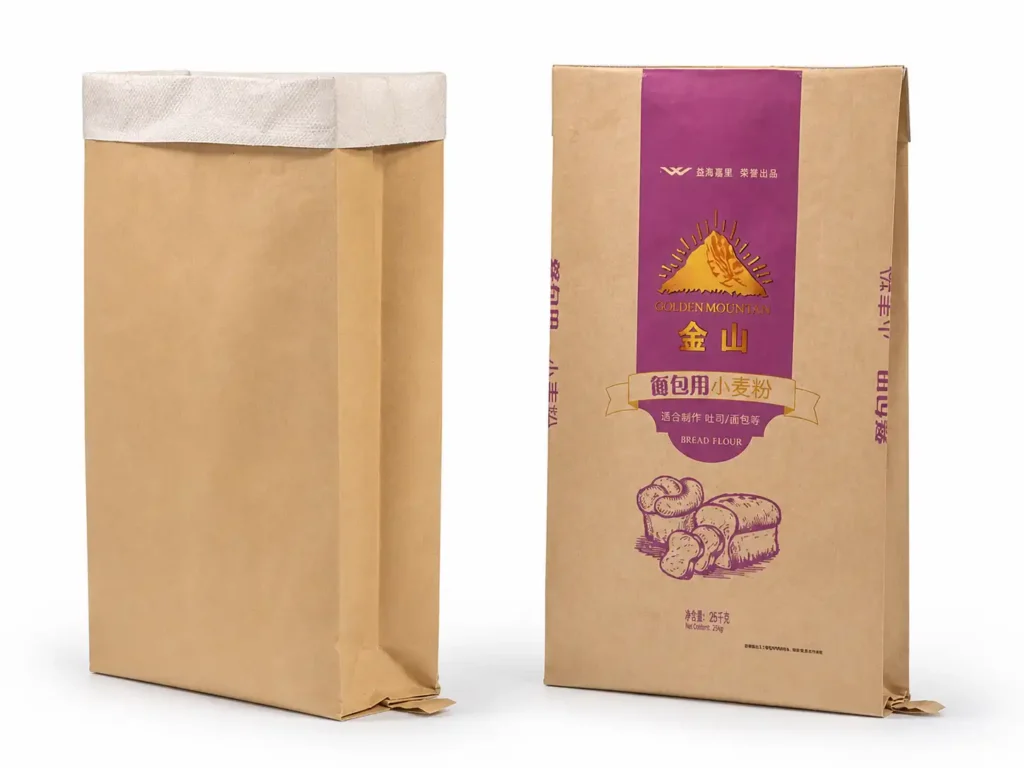
Multiwall kraft paper sacks (also known as multi-ply paper sacks) are built by layering several sheets of paper to create a single, sturdy bag. The word “multiwall” literally means multiple walls of paper. Key structural features include:
Kraft Paper Woven Bags Producer
Professional manufacturer of kraft paper woven bags and laminated PP composite packaging solutions.
Check More →Multiwall Paper Valve Bags Manufacturing
Complete production process for multiwall kraft paper sacks used in industrial bulk packaging.
Check More →Laminated Kraft Paper Sacks
High-strength laminated kraft paper sacks with PP composite lamination for durable packaging.
Check More →Multiwall Paper Bags Manufacturer
Specialized manufacturer of multiwall kraft paper sacks and paper-laminated PP woven bags.
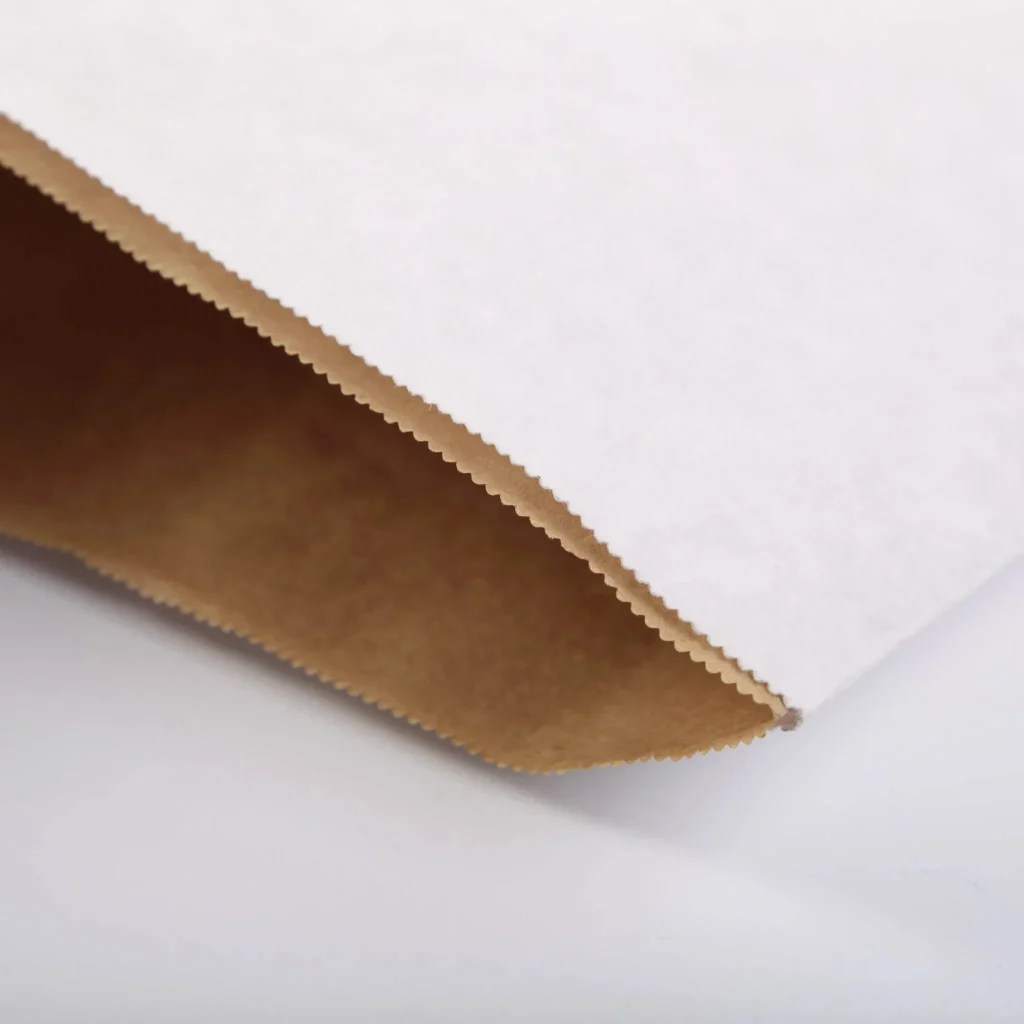
Check More →- Multiple Paper Layers: Typically made from two to four plies of high-strength kraft paper, each layer adds strength and puncture resistance. These layers are usually bonded together with glue across the bag’s surface. By using several thinner sheets rather than one thick sheet, the bag gains durability while remaining flexible. For example, a common design might use a 3-ply structure: an outer layer for print and weather resistance, a middle layer for strength, and an inner layer for additional reinforcement or smoothness. Each ply of kraft paper (often 70–100 gsm in weight) contributes to the overall tensile strength.
- Optional Inner Liner: Depending on the application, a plastic liner or coating can be integrated into a multiwall sack. Some multiwall sacks include a thin polyethylene (PE) film on the innermost side or a loose poly liner bag inserted inside. This liner provides a moisture barrier for products like cement, chemicals or food ingredients that absolutely must stay dry. When included, the liner is usually heat-sealed or glued to the paper at a few key points to keep it in place. However, many multiwall sacks used for dry products (like flour or sugar) omit the liner to keep the packaging fully paper-based and breathable.
- Closure Formats (Open Mouth or Valve): Multiwall paper bags can be produced in different formats. Open-top sacks (often called sewn open-mouth, or SOM, bags) are left open on one end for filling, then closed by stitching or adhesive after filling. Valve sacks, on the other hand, are a special design where the bag is pre-closed on both ends with only a small opening (valve) in one corner for filling. The valve allows quick filling using specialized equipment and then self-seals or can be folded shut. Multiwall paper valve bags are famously used for products like cement and flour – they facilitate fast, dust-free filling on high-speed lines. VidePak produces both styles: for example, we offer pasted valve paper sacks for cement, and open-mouth sacks for things like animal feed or chemicals, depending on customer needs.
- Paper Quality and Orientation: The kraft paper itself is usually unbleached (brown) or bleached (white) virgin kraft pulp known for its long fibers and toughness. Each layer’s grain direction might be alternated for better tear resistance. The outer layer is often the highest quality paper for good printing and scuff resistance, while inner layers can be slightly lighter or include recycled content if appropriate. The outer surface may also be treated to be water-repellent (with a sizing agent) or slip-resistant if needed.
- Glued or Stitched Bottoms: In multiwall sacks, bottoms can be pasted (glued) or stitched. Pasted block bottoms are common for valve sacks – the bottom and top are folded and glued into a brick-like square shape, giving a flat base that stands well and stacks efficiently. For open-mouth bags, the bottom is often factory-stitched or pasted, and the top is stitched closed after filling. VidePak’s multiwall sack lines (using Windmöller & Hölscher (W&H) equipment from Germany) can produce both block-bottom bags for optimal stackability and pinch-bottom or sewn sacks for traditional uses. We even offer innovations like paper tape-reinforced stitching for a more eco-friendly closure (using paper tape over the stitches instead of plastic tape).
In short, a multiwall kraft paper sack builds strength through layers of paper. It’s a monolithic paper structure, sometimes enhanced with a bit of plastic internally, but fundamentally it relies on the natural strength of kraft paper arranged in multiple plies.
Kraft Paper Laminated PP Bag Construction
Kraft paper laminated polypropylene bags (often called “paper-poly” bags) take a different approach: they are a hybrid construction, combining a woven plastic fabric with an outer paper layer. Essentially, these bags marry the strength of plastic with the printability and feel of paper. Key structural features of this composite design include:
- Woven PP Core: The backbone of a kraft laminated PP bag is a woven polypropylene fabric. Polypropylene strips (called tapes) are extruded from PP resin, stretched for strength, and woven into a fabric much like weaving textile threads. This woven PP fabric is what gives the bag its exceptional tensile strength and tear resistance. It looks like a mesh or weave of plastic threads if viewed closely. Typically, the weave is tight (for example, 10×10 or 12×12 tapes per square inch) to provide a solid structural net. This woven layer can bear heavy loads and resists punctures far beyond what paper alone can handle. It’s the same material base used in standard woven PP sacks (like those white grain or rice bags common worldwide).
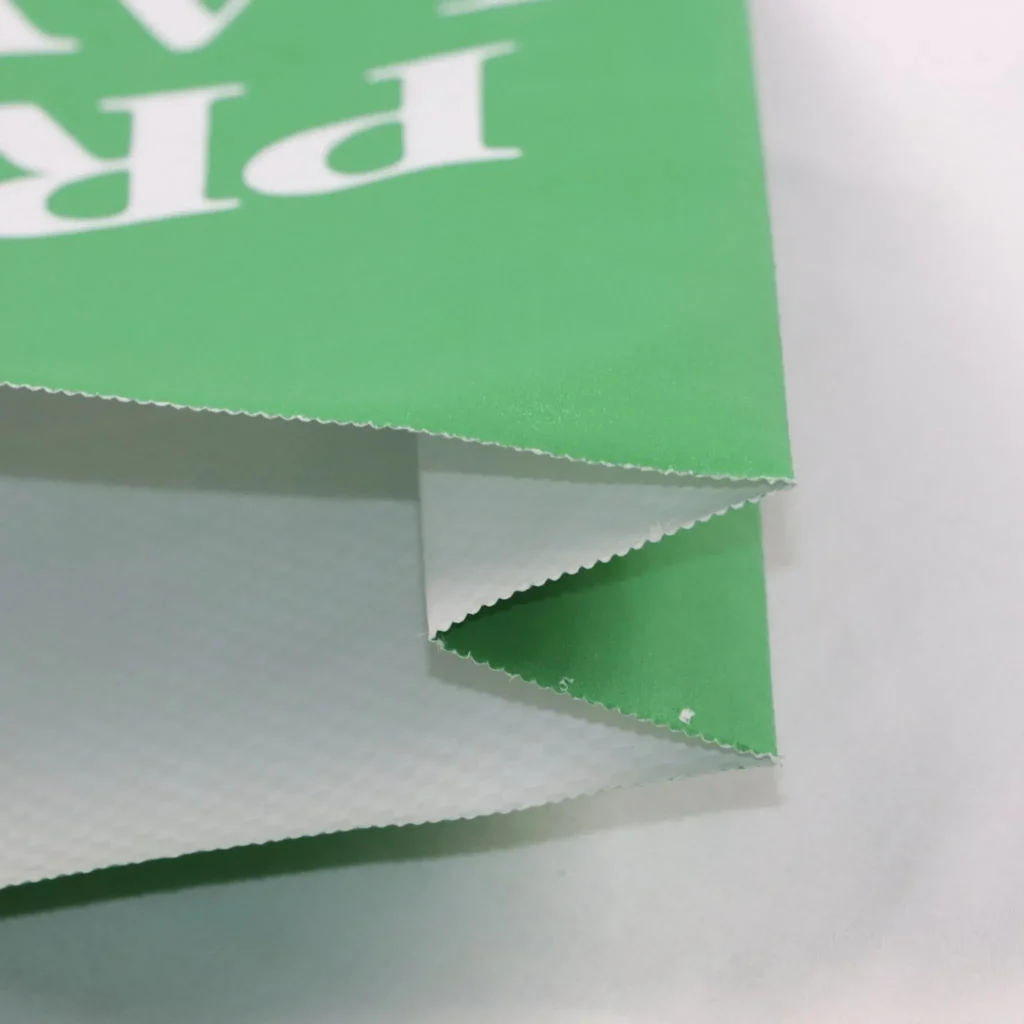
- Paper Outer Layer (Lamination): The woven PP core is laminated with a layer of kraft paper on one side (usually the outside of the bag). Lamination is achieved by bonding the paper to the plastic fabric using a thin layer of molten polymer. In manufacturing, this is often done by extrusion coating: a thin film of polyethylene (PE) or polypropylene is extruded and acts like a glue between the kraft paper and the PP weave. Once cooled and pressed, the result is a single composite material: paper on the outside, plastic woven on the inside. The kraft paper used for lamination is often in the range of 60–80 gsm – sturdy enough to add some stiffness and take print well, but not too thick as to make the bag unwieldy. The paper can be brown or white, depending on printing needs and aesthetic. After lamination, the paper and fabric move as one unit, so converting (cutting, folding) can be done similarly to other sack materials.
- Hybrid Wall Structure: Effectively, a kraft laminated PP bag can be thought of as a two-layer structure (not counting the bonding resin): one layer of paper, one of woven PP. In some designs there may also be a very thin internal coating on the inner surface of the woven PP to improve moisture barrier or to make the inside smoother (important for certain products so they flow out easily). But generally, the structure isn’t “multiwall” in the traditional sense – it’s a single-wall composite. However, because the inner layer is woven plastic, it behaves differently than a simple single-layer paper bag; it’s far stronger and less prone to tearing.
- Bag Conversion (Cutting & Sewing): Once you have the laminated roll (paper+PP fabric), the bag is formed similarly to other woven sacks. Usually, these bags are made as open-mouth sacks: the laminated material is cut to size, a tube is formed (with the paper side out), and then one end is folded and stitched shut. The stitching often goes through the laminated material; a strip of protective fabric or paper may be applied over the stitches for reinforcement. The top is left open for filling and will be sewn or otherwise sealed after filling. It’s also possible to create block-bottom paper-poly bags – newer machinery (including some Starlinger lines) can fold and glue the bottoms of woven bags to make a square-end sack much like a paper valve bag. In such cases, even valve openings can be added, giving a valve sack made of woven PP/paper composite. This is a more advanced configuration used for things like cement in some markets, where the bag has the brick shape of a paper cement bag but is actually a laminated woven sack. VidePak’s equipment includes Starlinger conversion lines which can produce these modern block-bottom PP bags with paper lamination, providing options for clients who need valve filling or self-standing sacks.
- Reinforcements and Features: Paper-laminated PP bags can also incorporate additional features. For example, micro-perforations can be added through the paper and fabric if the product inside needs to “breathe” (to let air escape during filling, which is common for fine powders). Handles can be die-cut into the paper and fabric for smaller consumer-oriented sacks. The lamination process itself seals the outer surface, but if needed, an inner PE liner can still be inserted for extreme moisture-sensitive products (though often not necessary as the woven fabric plus lamination already provide substantial water resistance). The outer paper gives a somewhat rigid structure, so these bags hold their shape well when filled, similar to paper sacks, which aids stacking stability.
In summary, a kraft paper laminated PP bag is built by fusing paper onto a plastic skeleton. It’s a composite wall – paper for printability and surface, polypropylene fabric for the muscle. This design results in a bag that looks and feels like a paper sack at first touch but has hidden reserves of strength and weather resistance courtesy of its PP core.