VIDEPAK Multiwall Kraft Paper Bags: A Practical Product Guide
Industrial packaging has one clear job: protect product value from the filling line to the final point of use. Yet the best bag does more. It fills cleanly, closes with confidence, carries clear information, builds a stable pallet, and supports a professional brand image. VIDEPAK designs Multiwall Kraft Paper Bags around this complete journey rather than around one isolated feature.
The product family includes Open Mouth, Pasted Valve and Pasted Valve, Pinch bottom, Block Bottom, and satchel bottom options. These names are closely related, but they do not describe the same thing. Open Mouth and valve describe how the bag is filled. Pinch bottom, Block Bottom, and satchel bottom describe how an end is formed and how the filled package behaves. The right design comes from matching both dimensions: filling entry and end geometry.
The VIDEPAK selection principle: start with the packed product, then check the filling machine, then define the closure, barrier, dimensions, printing, and pallet plan. A bag should follow the process. The process should not be forced to follow the bag.
The Engineering Logic Behind Multiwall Kraft Paper Bags
Strength Is Built Ply by Ply
Multiwall Kraft Paper Bags are made from two or more functional paper plies, normally using strong sack kraft grades. One ply may provide print quality and scuff resistance. Another may carry tensile load. Another may help control air release. An inner ply, coating, or film may add resistance to moisture, grease, odor, or product migration. The bag therefore works as a system: paper for strength, geometry for shape, adhesive for continuity, and an optional barrier for protection. Common VIDEPAK project ranges include two to five paper plies, individual paper weights often around 70–90 gsm for many industrial builds, and heavier or different grades when load, drop risk, or barrier needs increase. Representative capacities include 10, 20, 25, 40, and 50 kg, while final construction depends on product density and line conditions.
Kraft paper also supports fast filling because it can allow controlled air movement through the sack wall. This matters when fine powder enters quickly and carries air with it. If air cannot leave, the bag may swell, filling may slow, and the pallet may become soft or uneven. If air leaves too freely through poorly designed perforations, dust control and bag strength may suffer. The answer is balance, not maximum venting: suitable paper porosity, purposeful vent paths, correct valve or mouth geometry, and a liner design that matches the shelf-life target. Industry guidance links high-porosity sack paper with faster filling and highlights the importance of tight sealing and controlled valve design for cleaner packing.
One Family, Several Operating Personalities
Open Mouth
A full-width top opening supports visible, flexible filling and several post-fill closure methods.
Pasted Valve / Pasted Valve
A corner sleeve connects with a spout packer for rapid filling and compact line flow.
Pinch bottom
A folded and adhesive-sealed end creates a neat profile and strong sift control.
Block Bottom / satchel bottom
A squared base improves standing, shape control, pallet order, and shelf presentation.
The design categories can be combined. A bag may be an Open Mouth bag with a Pinch bottom. It may be an Open Mouth bag with a Block Bottom. A valve sack may also form a square Block Bottom profile when filled. This is why a useful product discussion must go beyond a single label. VIDEPAK evaluates the complete package: entry, body, bottom, top, barrier, graphics, and handling. Different choreography, same goal. Different geometry, same duty.
Flexible Filling with Open Mouth Designs
How the Open Mouth Format Works
An Open Mouth bag is supplied with one factory-closed end and one full-width opening for filling. Product enters from above through a hopper, gravity spout, auger system, or other open-top bagging equipment. After the target weight is reached, the customer closes the mouth by sewing, adhesive, heat activation, tape, or a combined method chosen for the product and line. The concept is simple, but that simplicity is powerful. Operators can see the entry area. Equipment can access the full bag width. Product families with different particle sizes can often use the same general filling logic.
VIDEPAK recommends Open Mouth formats when the filling plant values versatility, direct top access, and control over the final closure. Typical candidates include flour, sugar, animal feed, pet food ingredients, seeds, pellets, granules, chemicals, minerals, and dry blends. A clean free-flowing granule may need only a straightforward body and sewn top. A fine food powder may need a sift-resistant fold, a barrier layer, and a more controlled sealing step. The entry is the same; the engineering around it is not.
Sewn, Pasted, and Heat-Closed Choices
A sewn Open Mouth bag offers a familiar and adaptable closure. It is well suited to plants that already use sewing heads and need quick format change. Crepe paper tape can cover the stitch line to improve appearance and help manage sifting. A pasted Open Mouth design uses a factory-pasted bottom and keeps the upper mouth available for customer filling and closure. A heat-closed design can use pre-applied adhesive or a sealable inner layer to create a flatter, cleaner top after filling. Each choice changes line equipment, closure speed, leak resistance, opening behavior, and visual finish.
Choose Open Mouth when flexibility leads: broad top access, multiple closure choices, easy product observation, and compatibility with manual, semi-automatic, or automatic filling. Choose the exact closure only after testing the powder, granule, pellet, or blend.
Where Open Mouth Creates Commercial Value
The operational value is not limited to filling. A wide opening can simplify cleaning between product runs. A controlled top closure can support tamper evidence, easy opening, or a cleaner printed panel. A carefully sized gusset can help the bag expand without excessive bulging. A suitable outer kraft grade can carry product instructions, hazard information, traceability codes, and high-contrast branding. In other words, Open Mouth is not a basic option; it is a flexible platform.
VIDEPAK can tune the platform by changing ply count, paper grade, bag width, length, gusset, bottom depth, liner type, adhesive pattern, surface treatment, and printing. For a typical 25 kg project, a starting dimensional window may be approximately 480–540 mm in width, 90–120 mm in gusset, and 720–900 mm in length, but bulk density and pallet footprint must decide the final dimensions. A dense mineral and a light feed ingredient cannot share dimensions simply because both weigh 25 kg. Weight is only one number. Volume writes the shape.
High-Speed Packing with Pasted Valve and Pasted Valve Bags
A Bag That Becomes Part of the Filling Machine
A Pasted Valve bag, more commonly described in technical specifications as a Pasted Valve bag, is closed at both ends except for a short valve sleeve placed in a top corner. The packer spout enters this sleeve and sends dry, flowable material into the bag. As the bag reaches weight and leaves the spout, internal product pressure and friction help flatten or close the sleeve. Optional sleeve designs can add a tuck-in feature, a paper or film insert, heat sealing, or ultrasonic sealing when the product or cleanliness target requires more than a basic self-closing valve.
The central advantage of Pasted Valve is speed with order. The bag arrives largely closed. Filling happens through a defined entry. No full-width mouth must travel to a separate sewing station. The filled sack develops a compact shape, and a well-designed Block Bottom valve form creates straight pallet edges. Fast in, clean off, square on the pallet: three actions, one coordinated design.
Air Release, Dust Control, and Valve Selection
Fine powders carry air during filling. In a Pasted Valve system, that air must leave quickly enough to protect cycle time but carefully enough to control dust. VIDEPAK can approach this through porous kraft paper, selective micro-perforation, under-valve venting, stepped plies, or engineered gaps between functional layers. When a closed film liner is needed for shelf life, air management becomes more important because the film itself blocks venting. The best design may use a breathable paper path plus a controlled de-aeration channel, rather than simply adding more holes. Industry guidance for valve sacks connects clean performance with paper porosity, well-matched valve geometry, and deliberate sealing behavior; recent controlled testing also confirms that high-porosity paper sacks can support efficient filling with lower dust emissions in cement applications.
Valve construction should also follow product behavior. A free-flowing mineral may work with a standard paper sleeve. A very fine powder may benefit from a longer sleeve, a tighter fold, or an added seal. A moisture-sensitive blend may require a polyethylene barrier and a sealable valve extension. An abrasive product may demand stronger inner plies and careful spout contact design. The valve is small, but its influence is large. It controls the interface between bag and machine, between speed and dust, between closure and leakage.
Best-Fit Applications for Pasted Valve
Pasted Valve bags are especially effective for dry, flowable powders and granules handled on valve packers. Common application groups include cement, dry mortar, gypsum, plaster, tile adhesive, mineral powders, chemical powders, starches, flour, additives, and selected feed or food ingredients where the line and hygiene design are suitable. Valve sacks are widely associated with high-speed filling, rapid de-aeration, fewer separate closing actions, and efficient pallet formation.
Bottom Geometry: Pinch bottom, Block Bottom, and satchel bottom
Pinch bottom: A Flat Seal with Strong Control
A Pinch bottom construction uses stepped paper ends that are folded, brought together, and sealed with adhesive. In a pinch-bottom-open-mouth configuration, the lower end is factory sealed while the upper end remains open for filling. After filling, the upper stepped flap is folded and sealed, often by activating pre-applied hot-melt adhesive. The result is a flat, neat end with strong sift resistance and a polished profile. Industry descriptions identify pinch-bottom sacks as flat or gusseted open-mouth sacks that can provide very high leak protection for sensitive chemicals and food products.
VIDEPAK recommends Pinch bottom when closure quality, clean presentation, and barrier continuity are major priorities. The design is useful for fine powders, food ingredients, pet food, specialty chemicals, and products that should not leak through a stitch line. It also creates broad printable faces because there is no raised sewn seam across the main panel. The package can look refined while carrying complex protection.
Good Pinch bottom performance depends on accurate end stepping, correct adhesive placement, suitable heat and pressure, and enough dwell time for the bond to set. Product contamination in the seal area must be controlled. Bag length must leave room for the fold after filling. A liner must either join the closure correctly or remain positioned so it does not wrinkle into the bond. These details are not decoration. They are the closure.
Block Bottom: Geometry That Improves the Pallet
A Block Bottom is formed by folding and pasting the bag end into a square or rectangular base. When filled, the bag develops a box-like footprint instead of a soft pillow shape. This helps the sack stand more readily during filling, creates flatter layers on the pallet, reduces empty spaces between bags, and supports a clean warehouse appearance. Block Bottom can be used with valve or Open Mouth formats, so it should be understood as a structural platform rather than a single filling style.
The logistics benefit can be substantial. Stable geometry can improve pallet consistency, reduce leaning loads, and present straighter printed panels. For dense powders, the squared shape helps distribute volume. For consumer-facing bulk products, it helps the package stand and communicate. For automated lines, predictable bag dimensions help grippers, guides, flatteners, and palletizers repeat the same movement. Square is not merely visual. Square is operational.
satchel bottom: A Self-Supporting Base for Easy Handling
A satchel bottom is a square-ended base, often discussed together with self-opening satchel or block-style constructions. It opens into a stable platform and can stand with less external support than a flat tube. In an Open Mouth version, this standing ability can simplify bag placement and top filling. In a hybrid pinch-and-satchel design, the square base supports pallet stability while the upper mouth receives a secure pinch seal. Industry product descriptions note that this combination can handle and palletize better than a standard flat pinch-bottom sack because the base controls the footprint.
VIDEPAK positions satchel bottom for buyers who need easy opening, upright filling, neat shelf or warehouse presentation, and efficient stacking. It is useful for powders, granules, pellets, garden products, food ingredients, and specialty dry goods where a full top opening is valuable but a soft, unstable base is not. The satchel bottom answers a practical question: how can an open-top sack behave more like a box without losing the material efficiency of a bag?
A Practical Specification Framework for VIDEPAK Projects
Typical Parameters and Custom Options
No responsible manufacturer should select Multiwall Kraft Paper Bags from weight alone. The correct specification starts with bulk density, particle size, flow rate, abrasiveness, moisture sensitivity, fat or oil content, shelf-life target, transport climate, drop risk, and filling equipment. VIDEPAK then converts those facts into a controlled construction. The table below gives realistic project starting points, not fixed limits. Final values should be confirmed through samples and filling trials.
The parameter bands reflect common VIDEPAK product guidance for multiwall paper sacks, including two-to-five-ply constructions, representative 10–50 kg capacities, optional 20–40 μm PE liners, 25 kg dimensional starting points, and printing up to eight colors. They are a basis for discussion, not a substitute for application testing.
From Product Data to Bag Design
Density, flow, particle size, moisture, oil, dust, and shelf life
↓
Open Mouth for broad top access or Pasted Valve for spout packing
↓
Pinch bottom, Block Bottom, or satchel bottom
↓
Paper plies, liner, coating, venting, adhesive, and closure
↓
Print proof, dimensional check, filling trial, seal review, drop test, and pallet trial
Barrier Design Without Losing Line Performance
Barrier selection is a trade-off. More protection may reduce air release. More venting may reduce moisture resistance. A thicker structure may improve toughness but slow folding or add cost. VIDEPAK therefore treats the liner as one element of the total package. An inserted PE liner can create a separate internal barrier and may be sealed independently. A film placed between paper plies can improve moisture control while leaving paper in contact with the product or outside surface. A coated inner ply can reduce loose-film movement. Grease-resistant paper can help with fatty ingredients. The correct answer is not “add plastic.” The correct answer is “add only the function the product needs.”
For Pasted Valve, the barrier must work with the sleeve and the de-aeration route. For Open Mouth, the liner must remain stable during top filling and close correctly after dosing. For Pinch bottom, film placement must not weaken the adhesive fold. For Block Bottom and satchel bottom, the barrier must follow complex folds without bunching or creating hard corners. Protection and process must move together.
Printing That Works in the Warehouse and in the Market
The outer ply of Multiwall Kraft Paper Bags is also a communication surface. VIDEPAK can develop layouts for white or natural kraft, use multiple colors, and reserve clear zones for barcodes, batch codes, handling marks, product instructions, and legal text. A strong design uses contrast and hierarchy. Brand first. Product second. Instructions clear. Safety visible. It should look good at one meter and remain readable at arm’s length. VIDEPAK product guidance lists printing of up to eight colors for suitable multiwall constructions.
Print quality is only useful when the pallet still works. Excessively smooth coatings can reduce friction between layers. Heavy ink coverage may affect drying or scuff behavior. Critical codes should avoid folds, valve areas, and closure zones. On Block Bottom and satchel bottom bags, artwork should respect the panels that become visible after the base opens. On Pinch bottom bags, the fold line can become part of the visual structure. Packaging is media, but it is media under load.
Choosing the Right VIDEPAK Bag for Real Operating Conditions
A Clear Selection Matrix
Questions That Lead to a Better Specification
Before approving Multiwall Kraft Paper Bags, buyers should define the product’s bulk density, target weight, temperature at filling, dust level, flow behavior, expected shelf life, moisture risk, filling speed, closure equipment, pallet size, stacking height, transport route, and end-user opening method. Samples should be filled with the real product, not only with a substitute. A bag can pass a desk review and still fail at the spout. It can survive the filler and still lean on the pallet. It can stack well and still frustrate the user. Validation must follow the whole journey.
VIDEPAK’s role is to turn these operating facts into a repeatable bag specification. For one customer, that may mean a breathable Pasted Valve bag with a square Block Bottom for a dusty mineral. For another, it may mean an Open Mouth bag with a Pinch bottom, a controlled barrier, and a heat-activated top for a sensitive ingredient. For another, it may mean an upright satchel bottom format with strong graphics for a retail-facing dry product. There is no universal winner. There is a best fit.
VIDEPAK value in one line: the right paper, the right opening, the right bottom, the right barrier, and the right print—combined into one bag that runs well before it looks good, and looks good because it runs well.
Built for the Line, the Pallet, and the Brand
Multiwall Kraft Paper Bags remain valuable because they solve several needs at once. They use layered paper strength. They can breathe during rapid filling. They can accept liners for demanding products. They provide broad surfaces for clear printing. Above all, they can be shaped to the process. Open Mouth brings access and flexibility. Pasted Valve brings speed and compact workflow. Pinch bottom brings a clean, controlled seal. Block Bottom brings square stacking. satchel bottom brings standing ability.
That is the VIDEPAK product promise: not one bag for every product, but one disciplined design process for every bag. Fast where speed matters. Tight where protection matters. Square where logistics matter. Clear where the brand matters. From powder to pellet, from filler to pallet, from warehouse to customer, VIDEPAK Multiwall Kraft Paper Bags are engineered to carry more than weight. They carry process reliability, product confidence, and brand value.
Multiwall kraft paper bags are heavy-duty, multi-ply containers designed for demanding industrial and consumer packaging. Built from several layers of robust kraft paper (often 2–5 plies) bonded together, these bags combine the strength of paper with versatile sealing options. They can handle coarse grains, powders or chemicals with ease, yet present a clean, printable surface for branding. The “multiwall” structure absorbs impacts and resists tearing, making these bags ideal for high-speed filling lines and long-haul freight. In short, a multiwall paper bag stands up like a box but folds flat for storage – the best of both worlds.
Multiwall bags come in various styles, each defined by its bottom and top construction. Below we introduce the main types: open-top (open-mouth) bags, pinch-bottom open-mouth (PBOM) bags, block-bottom open-mouth (BBOM) bags, gusseted open-mouth (self-opening satchel) bags, sewn open-mouth (SOM) bags, pasted valve (PV) bags, and satchel-bottom open-mouth (Webb pinch) bags. We explain what each style is, how it is built, and what makes it different or advantageous.
- VIDEPAK Multiwall Kraft Paper Bags: A Practical Product Guide
- The Engineering Logic Behind Multiwall Kraft Paper Bags
- Flexible Filling with Open Mouth Designs
- High-Speed Packing with Pasted Valve and Pasted Valve Bags
- Bottom Geometry: Pinch bottom, Block Bottom, and satchel bottom
- A Practical Specification Framework for VIDEPAK Projects
- Choosing the Right VIDEPAK Bag for Real Operating Conditions
- Open-Top Multiwall Paper Bags
- Pinch Bottom Open Mouth (PBOM) Multiwall Paper Bags
- Block Bottom Open Mouth (BBOM) Multiwall Paper Bags
Open-Top Multiwall Paper Bags
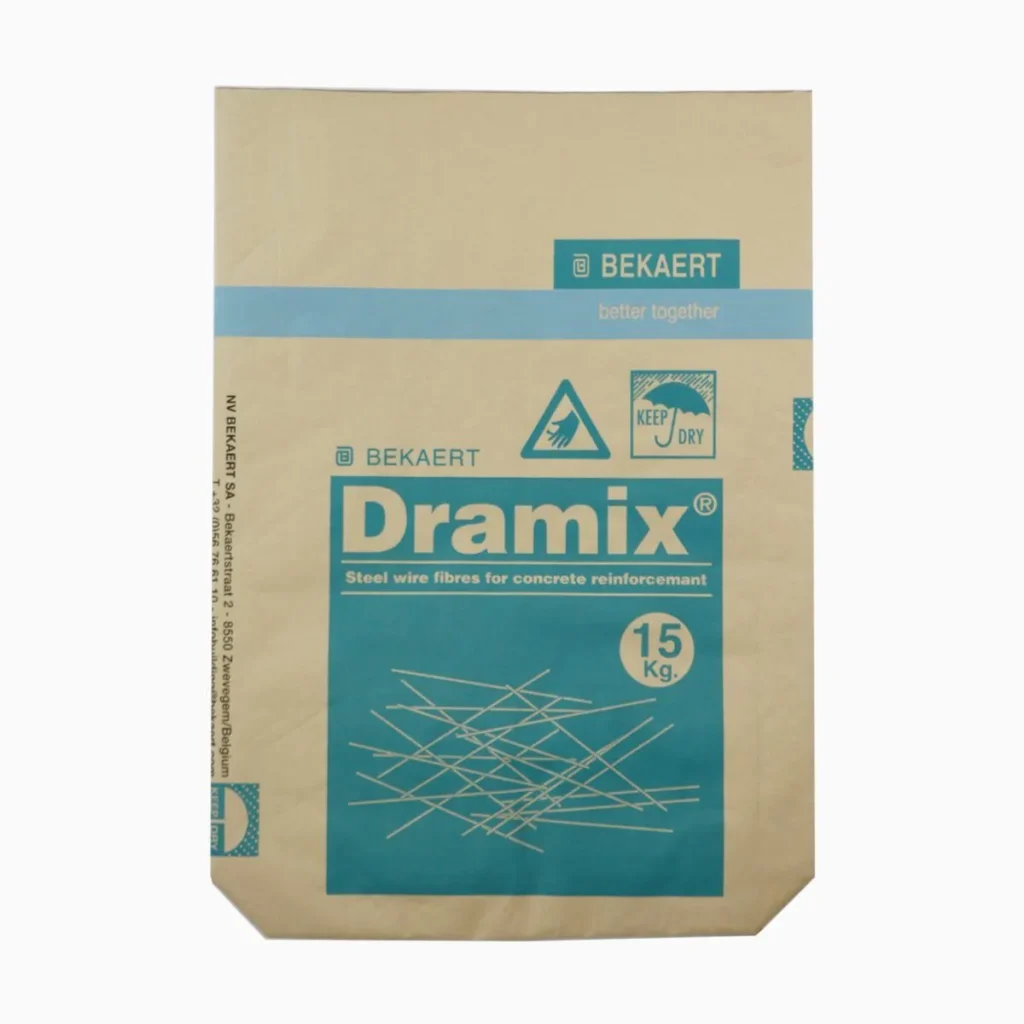
Open-top (or open-mouth) multiwall paper bags are bags that have a sealed bottom and an open top for filling. They are the simplest form of multiwall sack: the bag is typically formed from a paper tube with one end factory-sealed (often by gluing or folding), while the other end is left open. This open top allows product to be poured or blown in from above. After filling, the open end is closed by the customer using a sewing machine, a heat sealer, or adhesive tape.
Because their bottoms are fully pasted or folded at the factory, open-top bags sit flat on a surface without support. They may be made with flat sides or with side gussets, and in smaller sizes they are often “self-opening” (pre-creased so that they pop into shape when slid onto a hopper). Open-top bags offer economical packaging: with no fill spout or valve built in, they cost less and can be custom-sized for many applications. They excel in applications where speed is moderate and the product is not extremely moisture-sensitive – for example, pet foods, feed, seed, or retail-size flour bags. Their main structural feature is that one end is fully closed (block or folded), while the other end remains open until after filling. Because closure is done manually or by a sewing head, they require more labor than valve or heat-sealed bags, but they are rugged and flexible.
- Structure: Factory-sealed bottom (flat or pinched); top end cut flush.
- Closure: Hand sewing, sewing tape, or heat seal after filling.
- Features: Basic “bag pipe” format; accommodates flat tube or side-gusseted bodies; sturdy support when filled.
- Uses: Animal feeds, grains, horticulture products, cement mixes in retail bags, and other bulk goods where a simple sewn closure is acceptable.
Multiwall Paper Valve Bags Manufacturing
Complete manufacturing process for multiwall kraft paper bags with professional bottom and top processing.
Check More →Multiwall Paper Bags Structure Guide
Professional analysis of multiwall kraft paper bags including bottom, top and overall structural design.
Check More →Multi-Ply Kraft Paper Bags
Detailed introduction to multi-ply kraft paper bags with standardized bottom and top closure systems.
Check More →Pasted Open Mouth Paper Bags
Industrial applications of multiwall kraft paper bags with optimized bottom and top packaging structures.
Check More →
Pinch Bottom Open Mouth (PBOM) Multiwall Paper Bags
Pinch-bottom open-mouth (PBOM) bags are industrial multiwall bags engineered for fast filling and dust-tight closure. In a PBOM bag, the bottom is formed by two triangular “pinch” folds which are fully glued together at the factory, creating a flat, square base. The top of the bag is left open, with a pre-applied hot-melt adhesive or heat-seal tape on the inner top flap. During filling, product is poured in from above; then a pinch sealer (often hot-air or ultrasonic) folds the top ends of the bag and activates the adhesive to weld the flaps shut.
Key characteristics: A PBOM bag stands up on its glued bottom like a block, but its sides slightly taper at the very bottom due to the pinch. Its sealed top closure is virtually airtight and creates a “sift-proof” barrier against dust. This makes PBOM bags ideal for powders and fine materials – flour, cement, sugar, chemicals – that must not leak or spoil. The pinch seal process is rapid, supporting high-speed lines. PBOM bags typically use 3–5 plies of strong unbleached or bleached kraft paper (70–100 g/m² each), laminated with water-based adhesives. Optional inner linings (PE film, EVOH, etc.) or coatings can add moisture or oxygen barrier if needed.
Advantages:
– Leak-proof sealing: The factory-pasted bottom plus the heat-activated pinch top make PBOMs highly dust-tight.
– High fill rates: Wide open top and flat base mean machines can fill and seal thousands of bags per hour.
– Pallet stability: The square bottom and well-creased sides yield flat-faced pallet stacks.
– Versatile: Can carry everything from fine chemicals to food ingredients, with printing and liners.
Despite the complexity of their seal, PBOM bags are easy to operate. After filling, a single fold and a quick heat-seal cycle closes each bag. Compared to sewn bags, PBOMs provide much stronger containment (no needle holes) and better moisture resistance (adhesive forms a near-hermetic seal). Their only drawback is the need for pinch-seal equipment on the filling line, but for many producers this tradeoff is worthwhile.
- Structure: Fully pasted pinch-fold bottom (square when filled); open top with pre-coated adhesive tape.
- Closure: Hot-air or ultrasonic pinch sealer on the top flaps after filling.
- Features: Hermetic seal, tear-resistant multiwall construction, optional liners (PE, foil), printed facings.
- Uses: High-speed filling of cement, flour, chemicals, dry ingredients, pet food, pharmaceuticals, and any dusty or moisture-sensitive bulk powder.
Block Bottom Open Mouth (BBOM) Multiwall Paper Bags
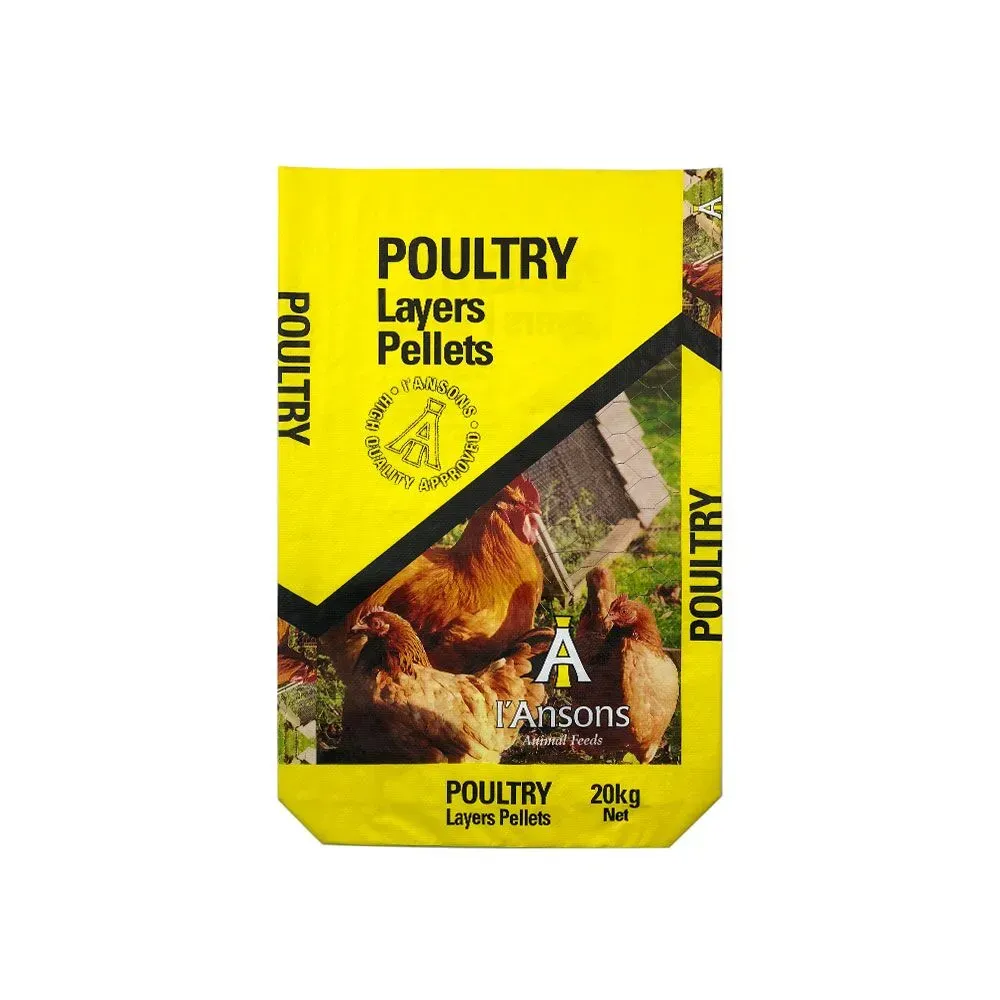
Block-bottom open-mouth (BBOM) bags are multiwall bags with a flat, square base (block bottom) that is fully pasted by the manufacturer. The sides of a BBOM bag are straight (parallel), giving it a rectangular cross-section. The top is open for filling, and after filling the open end is closed manually (by sewing) or by heat seal. In other words, BBOM is simply an open-mouth bag whose bottom layers have been glued all together in a block to form a rigid base.
This block-bottom design provides excellent load-bearing strength. When filled, a BBOM bag can stand unsupported, making it convenient for storage and display. The straight sides (often with optional side gussets) give maximum internal volume with minimal awkward taper. These bags commonly have 2–4 plies of kraft paper in the base (sometimes more for heavier weights), and can be made with barrier layers just like other multiwall styles. Because the bottom is solid, BBOM bags can handle heavy granular loads (pet food, pellets) and withstand stacking pressure.
Differences from PBOM: Unlike PBOM bags, which have pinch-folded corners at the bottom, BBOM bottoms are a simple glued block. BBOM sides are fully vertical, whereas PBOM sides pinch in at the very bottom. On the top end, BBOM bags do not come with adhesive already applied – they usually require sewing or manual heat-sealing to close. Therefore, BBOM bags are slightly simpler to produce but require extra closure steps. They may not be quite as airtight as PBOM unless a liner or heat sealing machine is used.
- Structure: Fully glued square bottom (block); optional side gussets for extra volume.
- Closure: Thread-sewn, heat-sealed or taped shut by the user after filling.
- Features: Excellent stacking strength; rigid, self-supporting base; vertical sides maximize capacity; moisture barrier options available.
- Uses: Dense bulk goods like feed, seeds, specialty grains, fertilizer, and retail products (flour, sugar) where sturdy standing bags are needed but ultra-tight top seal is not essential.