
What Are Custom Woven Bags: Precision Engineering with Starlinger Technology for Unmatched Quality and Efficiency?
In fast‑moving supply chains, packaging is asked to do the impossible: be light yet strong, protective yet beautiful, cost‑aware yet premium. Custom Woven Bags: Precision Engineering with Starlinger Technology for Unmatched Quality and Efficiency meet that brief by uniting a high‑strength woven polypropylene (PP) substrate with finishes, barriers, and closures tailored to each SKU, filling line, and route‑to‑market. In practice, the format appears under familiar aliases—PP woven sacks, poly woven bags, BOPP‑laminated woven bags, block‑bottom valve woven bags—but the governing idea is constant: design by requirement, build by tolerance, validate by data. Powered by Starlinger converting platforms, VidePak controls tape drawing, weaving, lamination, and sack conversion to keep dimensions true, seams consistent, and print registration razor‑clean.
From a materials angle, oriented PP tapes interlace into a fabric that offers an exceptional strength‑to‑weight ratio, high puncture resistance, and low creep under compression. Add a BOPP or co‑extruded PE laminate when you need scuff‑resistant graphics and moisture control; specify PE liners for aroma retention or powder containment. Every parameter—mesh, GSM, denier, seam geometry, open‑mouth vs. valve, tubular vs. back‑seam—is tuned to flow properties and line speeds so that Custom Woven Bags: Precision Engineering with Starlinger Technology for Unmatched Quality and Efficiency perform as modeled, not merely as imagined.
Horizontally, this solution sits where materials science meets print engineering meets logistics physics: polymer orientation and fatigue life, dot gain and ink anchorage, pallet compression and friction. Vertically, it cascades through the value stream: resin → tape → fabric → surface → print → conversion → QA → pallet. Each decision anticipates the next. For further context on the fabric platform, compare: Custom Woven Bags: Precision Engineering with Starlinger Technology for Unmatched Quality and Efficiency. For art‑rich surfaces that still run hard, see: Custom Woven Bags: Precision Engineering with Starlinger Technology for Unmatched Quality and Efficiency.
Features of Custom Woven Bags: Precision Engineering with Starlinger Technology for Unmatched Quality and Efficiency
Strength with margin; stability with grace. The woven PP skeleton disperses impact from rebar tips, fertilizer granules, or resin pellets, while the panel geometry—especially in block‑bottom builds—stays square under compression. Pallet overhang reduces; stacks behave; safety improves.
Brand‑ready surfaces that sell without shouting. Choose BOPP lamination for photo‑grade visuals protected beneath a film, or a PP coating for dust control with a natural aesthetic. Flexographic/rotogravure up to 8–10 colors keeps logos sharp, micro‑text legible, and bar/QR codes scannable across front, back, and gusset panels.
PP Woven Fabric Bags Analysis
Precision-engineered woven bags produced with Starlinger technology for superior quality and efficiency.
Check More →PP Woven Bags Manufacturer
Custom woven bags featuring advanced Starlinger manufacturing for consistent, high-performance results.
Check More →Breathable PP Woven Bags Supplier
Custom-designed breathable woven bags using precision Starlinger engineering and production systems.
Check More →Heavy-Duty Woven Bags Guide
High-strength custom woven bags built with Starlinger technology for industrial-grade durability.
Check More →Moisture and powder under management. Optional PE liners (20–80 μm) and tight PP coatings curb humidity ingress and powder sifting. Where fast filling traps air, tuned micro‑perforation near the shoulder maintains rate, prevents ballooning, and stabilizes net weights.
Ergonomics and hygiene by design. Valve sleeves couple to horizontal spouts for low‑dust dosing; easy‑open features reduce end‑user frustration; anti‑slip textures raise the coefficient of friction for safer tall stacks; UV‑stabilized substrates endure outdoor staging.
Precision from Starlinger. Starlinger lines are celebrated for consistent tape denier, uniform picks, and exacting fold/valve geometry. That precision shrinks batch variance and unlocks higher OEE: faster changeovers, fewer stoppages, cleaner audit trails.
Read the features horizontally and you’ll notice disciplines in dialogue—polymer physics talking to prepress, human factors to warehouse safety. Read them vertically and cause‑and‑effect emerges—mesh count influences print clarity; lamination affects rub resistance; venting design governs fill‑weight scatter. That is how Custom Woven Bags: Precision Engineering with Starlinger Technology for Unmatched Quality and Efficiency translate design intent into operational reality.
Production Process of Custom Woven Bags: Precision Engineering with Starlinger Technology for Unmatched Quality and Efficiency
Tape extrusion & orientation. Starting with 100% virgin PP, film is extruded, slit into tapes, and drawn to align molecular chains. Denier and draw ratios are set against target seam‑pull and drop‑test thresholds for 5–50 kg classes. Stable tapes weave into stable fabrics—quality begins at the hopper.
Weaving at scale. Tapes interlace on VidePak’s >100 circular looms (tubular) or on flat looms (back‑seamed). Mesh windows like 8×8 to 14×14 and fabric weights of 60–120 gsm balance puncture resistance, drape, and print fidelity. More picks sharpen icons and small text; fewer lower mass and cost.
Surface engineering. Depending on SKU, fabrics receive PP coating for sifting control or BOPP/co‑ex film lamination for durable graphics and barrier. Corona treatment tunes surface energy to lock ink; controlled COF targets stretch‑wrap stability and pallet safety.
Printing & registration. Flexo/gravure presses—often 8–10 colors—apply branding, bilingual instructions, regulatory legends, and traceability. Starlinger web handling and tension control guard registration across long runs, including full‑panel art and gusset spines.
Conversion & closures. Formats include open‑mouth (heat‑cut or hemmed), block‑bottom open‑mouth (BBOM), and valve (corner/top). Micro‑perforation matrices are added where de‑aeration is critical to line speed and weight accuracy. Optional PE liners are inserted free, spot‑tacked, or mouth‑stitched to prevent liner crawl.
Quality assurance. Routine checks cover fabric GSM and mesh uniformity, seam pull strength, drop tests (0.8–1.2 m typical), print rub/adhesion, lamination peel (when applicable), and dimensional audits for pallet fit and stretch‑wrap efficiency. Data is not décor; it is continuity of performance.
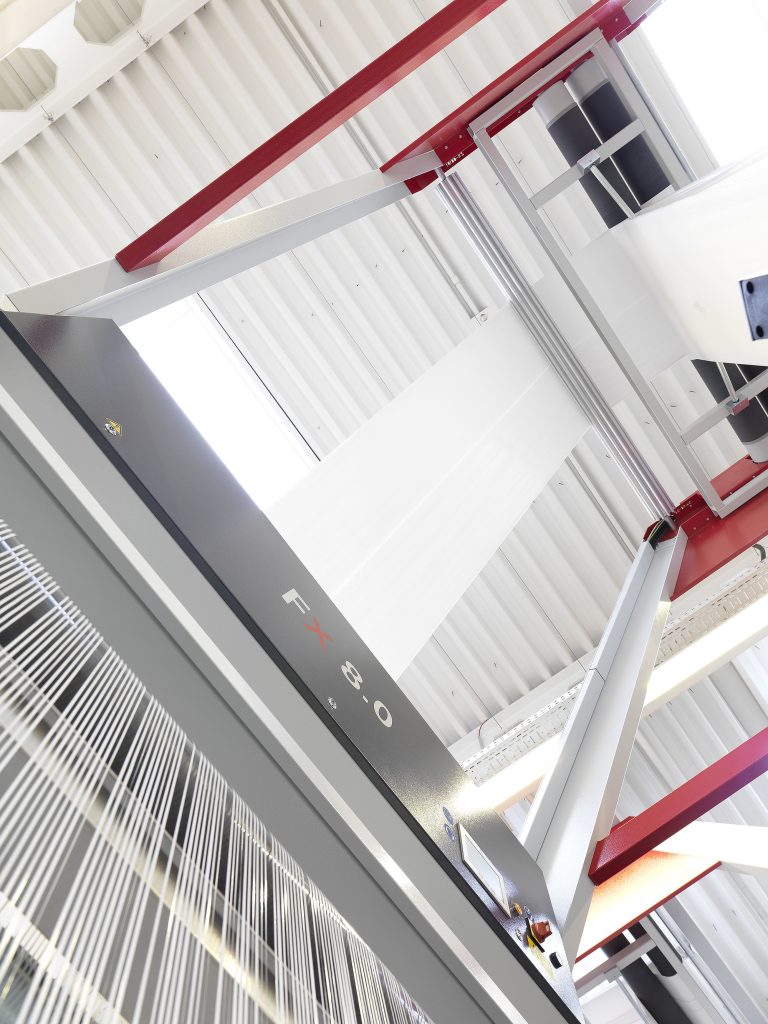
VidePak’s process capability is anchored by Starlinger and W&H (Windmöller & Hölscher) equipment, supported by 16 extrusion lines and 30+ lamination/printing machines. A core team with 30+ years in woven packaging converts SPC charts into predictable output at industrial scale.
Applications of Custom Woven Bags: Precision Engineering with Starlinger Technology for Unmatched Quality and Efficiency
Construction powders & dry mixes. Cement, mortar, gypsum, and tile adhesive demand puncture‑tough shells, clean valve filling, and square pallets that ride safely from plant to site.
Fertilizers & agriculture. Urea, NPK blends, seeds, and soil amendments benefit from humidity management, dust control, and UV‑stable exteriors fit for depot conditions across seasons.
Chemicals & resins. Masterbatch, polymer resins, mineral fillers require abrasion‑resistant faces and clear hazard labeling—delivered by BOPP surfaces and high‑contrast print.
Grains, food & pet nutrition. Rice, pulses, protein concentrates, and kibble rely on aroma containment, tidy closures, and retail‑ready panels; matte/gloss cues signal tiered SKUs for quick recognition.
Across these categories, Custom Woven Bags: Precision Engineering with Starlinger Technology for Unmatched Quality and Efficiency convert the same hardware into different wins: faster lines for operations, cleaner zones for EHS, better presence for sales, stronger pallets for logistics.
Technical Specifications — Custom Woven Bags (Typical Ranges)
| Item | Typical Options / Range | Notes |
|---|---|---|
| Product | Custom Woven Bags (PP woven) | Configured to product & filling line |
| Outer Material | 100% virgin PP woven fabric | Optional UV stabilization |
| Fabric Mesh / Denier | 8×8–14×14; 700D–1500D | Chosen for load & print detail |
| Fabric Basis Weight (GSM) | 60–120 gsm | Typical for 5–50 kg formats |
| Finishes | PP coated or BOPP laminated | Matte/gloss; scuff‑resistant graphics |
| Printing | Flexo/Gravure up to 8–10 colors | Bar/QR codes; full panels incl. gussets |
| Structure Options | Tubular/back‑seam; block‑bottom, valve or open‑mouth | Dense palletization & clean filling |
| Top/Bottom | Heat‑cut or hemmed; pasted/stitched bottom | Easy‑open tape optional |
| Inner Liner (Optional) | PE 20–80 μm | Moisture/aroma control |
| Common Sizes | 40×60, 45×75, 50×80 cm (custom) | Width ≥30 cm typical |
| Typical Fill Weights | 5–50 kg classes (e.g., 20/25/50 kg) | Validate via seam/drop tests |
Values reflect widely used, verifiable configurations across Made‑in‑China/Alibaba listings and peer plants for PP woven packaging.
Why VidePak for Custom Woven Bags: Precision Engineering with Starlinger Technology for Unmatched Quality and Efficiency
Experience & Scale. Since 2008, VidePak has specialized in woven and composite packaging. We operate with 568 employees, guided by a core team with 30+ years of field experience—from resin selection and tape orientation to lamination windows and print QC.
Equipment Edge. Starlinger and W&H lines secure repeatability in extrusion, weaving, lamination, printing, and converting, so what you approve at artwork and FAT is what you receive at SAT and beyond.
Capacity & Coverage. >100 circular looms, 16 extrusion lines, 30+ lamination/printing machines enable seasonal peaks and multi‑SKU campaigns. Our solutions ship to the USA, Europe, Brazil & South America, Southeast Asia, Japan, Korea, Central Asia, MENA, East & South Africa.
Material Integrity & Compliance. 100% new raw materials, food‑grade pathways, RoHS/REACH‑aligned inputs, and engineered pallet patterns convert specifications into safe, repeatable deliveries.
Tell us your product, packer model, and route‑to‑market—VidePak will engineer Custom Woven Bags: Precision Engineering with Starlinger Technology for Unmatched Quality and Efficiency that protect, perform, and persuade.
- What Are Custom Woven Bags: Precision Engineering with Starlinger Technology for Unmatched Quality and Efficiency?
- Features of Custom Woven Bags: Precision Engineering with Starlinger Technology for Unmatched Quality and Efficiency
- Production Process of Custom Woven Bags: Precision Engineering with Starlinger Technology for Unmatched Quality and Efficiency
- Applications of Custom Woven Bags: Precision Engineering with Starlinger Technology for Unmatched Quality and Efficiency
- Technical Specifications — Custom Woven Bags (Typical Ranges)
- Why VidePak for Custom Woven Bags: Precision Engineering with Starlinger Technology for Unmatched Quality and Efficiency
- 1. Comprehensive Product Specifications
- 2. Anti-Static Technology: Ensuring Safety in Sensitive Applications
- 3. Load-Bearing Capabilities
- 4. Starlinger Technology: A Benchmark for Excellence
- 5. Tailored Designs for Warehouse Efficiency
- 6. Versatility Across Industries
- FAQs
- 7. Industry Trends and Future Directions
- Conclusion
Custom woven bags manufactured using Starlinger technology are engineered for exceptional durability, versatility, and high-end customization, making them indispensable for industries ranging from agriculture to construction. Their ability to meet diverse operational requirements while delivering superior quality sets them apart in the competitive packaging market.
1. Comprehensive Product Specifications
Thickness, Weight, and Size Ranges
The precision engineering of custom woven bags allows for a wide range of specifications to suit various applications. Starlinger technology ensures accuracy in these parameters:
| Parameter | Range | Application Highlights |
|---|---|---|
| Thickness | 60–200 microns | Thin bags for light-duty goods, thick bags for heavy-duty materials. |
| Weight | 50–200 GSM | Lightweight options for cost-efficiency; heavy-duty for robust packaging. |
| Sizes | 20 cm × 30 cm to 100 cm × 200 cm | Small bags for retail, large bags for industrial needs. |
With precise control over these specifications, woven bags are adaptable to both niche and large-scale requirements.
2. Anti-Static Technology: Ensuring Safety in Sensitive Applications
Anti-static woven bags are essential for handling volatile or flammable materials. Here’s how they work:
- Electrostatic Discharge (ESD) Prevention
Conductive threads woven into the fabric dissipate static electricity, mitigating risks of sparks or explosions. - Advanced Coatings
Anti-static coatings applied to the surface enhance safety by reducing resistivity, especially during transportation or storage. - Compliance with Safety Standards
Many anti-static woven bags meet international standards such as ISO 61340-4-4, ensuring reliability in hazardous environments.
Example:
In the chemical industry, anti-static woven bags are used to safely transport powders and granules, preventing accidents caused by static build-up.
3. Load-Bearing Capabilities
Woven bags produced with Starlinger technology are designed to handle a broad spectrum of weights, ensuring structural integrity across various applications:
| Load Range | Recommended Use Cases |
|---|---|
| 5–25 kg | Packaging of rice, flour, and animal feed. |
| 25–50 kg | Transportation of fertilizers, grains, and industrial powders. |
| 50–1000 kg (FIBC) | Bulk materials like construction aggregates and chemicals. |
Rigorous quality testing, including drop tests and tensile strength evaluations, guarantees the bags perform reliably under maximum load conditions.
4. Starlinger Technology: A Benchmark for Excellence
Starlinger machinery sets the gold standard for woven bag manufacturing by incorporating advanced automation and precision. Key features include:
High-Speed Weaving
- Produces consistent fabric with exceptional tensile strength.
- Reduces manufacturing errors, ensuring uniformity.
Efficient Coating and Lamination
- Multi-layer laminations enhance durability and waterproofing.
- Supports branding with high-definition printing capabilities.
Customizable Features
- Enables integration of labels, handles, and liners for added functionality.
- Produces eco-friendly options with recyclable materials.
Statistical Insight:
Manufacturing with Starlinger technology can improve production efficiency by up to 40%, translating to lower costs and faster turnaround times.
5. Tailored Designs for Warehouse Efficiency
Color Coding and Labeling
- Customizable labels and color strips (blue, green, red) simplify inventory management by categorizing contents at a glance.
- Example: Blue-striped bags for grains, red-striped bags for chemicals.
Storage-Optimized Designs
- Stackable bags with anti-slip finishes improve space utilization in warehouses.
- Ventilated options maintain product freshness, especially for agricultural goods.
Convenience Features
- Handles and resealable tops enhance user experience during handling and transport.
- Inner liners ensure moisture protection for delicate products.
6. Versatility Across Industries
Agriculture
Custom woven bags are widely used for packaging grains, seeds, and fertilizers:
- Moisture-Resistant Liners prevent spoilage during long-term storage.
- High-Load Capacity accommodates bulk handling needs.
Construction
- Anti-static and reinforced woven bags handle heavy-duty applications like cement and sand.
- Waterproof laminations keep materials dry, even in outdoor conditions.
Retail
High-resolution printing on woven bags elevates brand visibility for retail packaging:
- Eye-Catching Designs attract consumers on store shelves.
- Eco-Friendly Materials cater to the growing demand for sustainable packaging.
FAQs
Q: What weight ranges can custom woven bags support?
A: Standard woven bags can handle up to 50 kg, while bulk FIBC bags can support up to 1000 kg.
Q: How do anti-static woven bags enhance safety?
A: They dissipate static electricity through conductive threads and coatings, ensuring safety in environments prone to static build-up.
Q: Can woven bags be customized for branding?
A: Yes, they support high-resolution printing and labeling, offering significant branding opportunities.
Q: What makes Starlinger technology stand out?
A: Its precision, automation, and ability to produce eco-friendly and high-performance bags make it a market leader.
7. Industry Trends and Future Directions
Sustainability
The industry is shifting toward sustainable practices, with recyclable materials and biodegradable options becoming standard. Starlinger machinery is designed to process eco-friendly polymers, aligning with global green initiatives.
Smart Packaging
- RFID-enabled woven bags improve inventory tracking.
- QR codes printed on bags allow consumers to access product information and recycling guidelines.
Enhanced Safety Standards
- Integration of advanced anti-static and flame-retardant materials ensures compliance with evolving safety regulations.
Conclusion
Custom woven bags crafted with Starlinger technology combine precision, durability, and versatility, making them indispensable for modern packaging needs. Whether it’s the ability to handle heavy loads, integrate anti-static features, or showcase vibrant branding, these bags set a high standard in the industry. Businesses looking for cutting-edge solutions can explore options like anti-static woven bags and leverage Starlinger’s advanced machinery for superior packaging outcomes.