
What is Open Top PP Woven Bags?
Open Top PP Woven Bags are polypropylene sacks built from oriented PP tapes woven into a high‑tenacity fabric and finished with an unsealed mouth for rapid loading and flexible closure. In different territories they are also known as open‑mouth PP woven sacks, open‑top woven polypropylene bags, or sewn open‑mouth PP bags. Whatever the label on your purchase order, the function is the same: give crews a rugged, lightweight, fold‑flat container that opens wide, fills fast, and closes in the way your workflow demands—cinch, stitch, cord, or cuff. In waste management and recycling—where seconds matter, spills cost, and labels must instruct at a glance—Open Top PP Woven Bags deliver the practical triad: quick fills, clean closures, and stacks that travel safely from route truck to MRF.
Technically speaking, Open Top PP Woven Bags sit at the crossroads of polymer orientation (which sets tape modulus and creep resistance), textile mechanics (mesh density, tear path suppression, puncture behavior), and conversion engineering (hem geometry, stitch architecture, anti‑slip finishing). Compare them sideways with neighboring formats and the niche becomes clear. Paper sacks tell a “natural” story but fatigue in damp transfer stations. Mono‑film PE liners seal perfectly yet scuff easily and stretch on tall pallets. Rigid bins are durable but expensive to ship and store, especially when empty. Open Top PP Woven Bags reconcile those trade‑offs—woven spine for abuse resistance, flexible closures for many collection styles, compact storage for low return freight, and printable faces for color‑coded streams. For specifiers mapping the PP‑woven family, see how Open Top PP Woven Bags relate to standard woven constructions used in other industrial flows.
A vertical view traces cause to effect. Start at resin: melt flow influences drawability. Move to tape drawing: draw ratio aligns chains and lifts specific strength. Enter weaving: mesh regularity governs tear propagation and layflat stability. Shift to finishing: coat weights moderate humidity and tune coefficient of friction (COF). Finish at conversion: fold geometry and stitch density determine dust leakage and mouth re‑openability. Alter a dial upstream and you will hear its echo downstream—in seam behavior, pallet lean, barcode readability. That is why professionals treat Open Top PP Woven Bags not as generic sacks but as engineered systems with load paths, seal paths, and information paths designed to work together.
What is the features of Open Top PP Woven Bags?
The best feature is the one that stops a failure. Read each attribute of Open Top PP Woven Bags as a countermeasure—to bag rupture, pallet slide, mis‑sorted material, or contaminated loads.
A woven backbone that absorbs abuse. PP tapes (typically 700D–1000D) are interlaced to meshes such as 7×7–14×14 and converted into fabrics in the 60–120 g/m² class. The orthogonal network spreads stress through warp and weft so a tear that tries to run meets resistance at every crossing. Angular shards from glass cullet or tile, sharp PET flake, or twisted metal offcuts encounter a fabric that refuses to yield easily.
PP Woven Bags Manufacturer
Professional manufacturer of open-top PP woven bags for waste management and recycling solutions.
Check More →Breathable PP Woven Bags
Durable open-top breathable bags ideal for waste collection, recycling, and environmental applications.
Check More →Woven Fabric PP Bags Features
Key features of open-top PP woven bags supporting efficient waste management and recycling operations.
Check More →PE Open Mouth Bags
Versatile open-top packaging bags compatible with waste handling and recycling management systems.
Check More →Open‑mouth convenience with closure choice. The mouth is delivered unsealed for speed. Crews can load manually, via chutes, or under hopper feeds, then finish the top with single‑ or double‑fold hems stitched by chain or lock stitches, slide a draw‑tape through a channel for a quick cinch, or simply lock off with cords/cable ties. Hem profiles and stitch densities are tuned to the dust profile of your stream so you can reopen for inspection without turning the bay into a snow globe.
Surfaces that suit the elements. Uncoated fabric breathes—useful for damp green waste or off‑gassing fractions. PE/PP extrusion coats (≈ 18–30 g/m²) add dust control and humidity moderation for paper/fiber or plastic scrap. Anti‑slip emboss or spray targets a stacking COF ≈ 0.5–0.7, the zone where pallets stand tall without over‑wrapping and forklifts feel composed.
Safety and identification baked into the print. High‑linecount CI flexo yields crisp pictograms, high‑contrast stream colors, and scannable barcodes/QR for route tracking. UV‑stabilized packages (typ. 200–400 h) help prints stay legible and fabrics stay strong during yard staging.
Accessory‑friendly by design. Loose or tubular PE liners (15–40 µm) can be added for wet or odorous fractions; micro‑perforation patterns vent entrained air during fast loading; gussets expand volume efficiency; block‑bottom options let bags stand in totes or racks for hands‑free filling. For waste flows that double as brand touchpoints (events, campuses), laminated faces can be specified to elevate graphics while preserving the woven spine beneath.
Put these together and the system reads like a compact manifesto: a tough core to take the hit, a top that adapts to your rhythm, a face that instructs, and a base that keeps stacks square. Fewer rips, fewer spills, fewer mis‑routes.
What is the production process of Open Top PP Woven Bags?
Production is choreography; missed steps become field complaints. The build pathway for Open Top PP Woven Bags links upstream controls to downstream stability.
1) PP tape extrusion & drawing. Virgin PP is extruded to a thin film, slit into narrow tapes, and hot‑drawn to align polymer chains. Draw ratio sets tensile strength and elongation; die gap, quench rate, and anneal temperature stabilize tape width and crystallinity. Uniform modulus across kilometers of tape is the foundation for uniform fabrics.
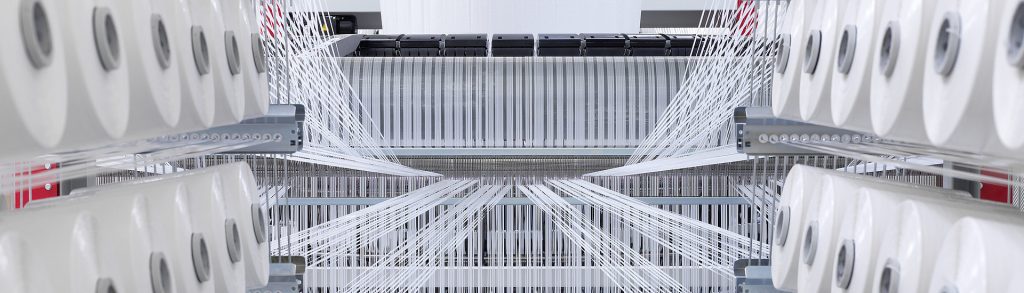
2) Weaving on circular looms. More than 100 circular looms interlace warp and weft to the target mesh (e.g., 7×7–14×14). Balanced tension reduces skew and produces flatter webs—crucial for accurate cutting, consistent hems, and clean print registration later.
3) Optional coating/lamination. A PE/PP melt curtain (≈ 18–30 g/m²) can be extruded onto the fabric for dust control and humidity moderation. Where premium abrasion resistance or retail‑grade branding is desired, a thin outer film (matte or gloss) may be laminated without sacrificing the woven core’s mechanical backbone.
4) Printing. Corona‑treated surfaces accept high‑linecount CI flexo. ΔE color tracking keeps stream colors faithful; registration control protects barcode readability and microtext warnings; overprint varnishes or matte spots can add tactile cues for sorting teams.
5) Conversion. Fabric is cut to length, gussets formed, bottoms sewn to spec (or kept flat), and the open top hemmed with your closure of choice—draw‑tape channels, reinforced mouth tapes, or EZ‑open tear strings. Needle selection, stitch density, and fold geometry tune seam efficiency and fines containment.
6) Quality assurance. Routine checks verify fabric tensile/tear, seam strength, COF, dimensional tolerances, print quality, and filled‑bag drop performance. For outdoor storage or depot staging, UV stability packages are validated. The line’s golden rule applies: repeatability beats record numbers when you’re shipping pallets, not prototypes.
VidePak executes this flow on industry‑top platforms from W&H (Germany) and Starlinger (Austria), backed by 16 extrusion lines, 100+ circular looms, and 30+ lamination/printing machines. Documented process windows keep adhesion, registration, and stitch integrity inside tight bands so each lot of Open Top PP Woven Bags behaves like the last—predictably.
What is the application of Open Top PP Woven Bags?
The open‑mouth format is the workhorse for collection, sorting, and transfer. If it moves from curb to MRF, from line to baler, or from demo site to roll‑off, Open Top PP Woven Bags have likely touched it.
Municipal recycling & MRFs. Color‑coded Open Top PP Woven Bags capture PET/HDPE bottles, mixed paper, OCC cuttings, aluminum, and steel cans. Anti‑slip faces stabilize stacked gaylords; printed QR supports route and contamination tracking.
Construction & demolition (C&D). Rubble, tile shards, metal offcuts, insulation scraps—puncture‑tolerant fabrics and reinforced hems survive rough edges and clamp‑truck handling. Gusseted bodies maximize cube utilization in roll‑off containers.
Industrial by‑products. Resin regrind, textile offcuts, foam trim, glass cullet—coated interiors reduce dusting while draw‑tape closures prevent spillage between process steps. On‑line color coding reduces mix‑ups between reclaim streams.
Agricultural & landscaping. Green waste, bark, seed, and irrigation hose offcuts—breathable builds reduce odor build‑up; UV packages stand up to sun‑yard staging; printed icons guide seasonal crews with minimal training.
Event & facility housekeeping. High‑visibility prints and bilingual warnings support safe staff use at stadiums, campuses, and transit hubs; optional liners manage wet fractions. For bulky fractions beyond sack scale, teams often pair Open Top PP Woven Bags with FIBC solutions on the same route.
Across lanes—from the US and Europe to Brazil & South America, Southeast Asia, Japan, Korea, Central Asia, the MENA region, East & South Africa—climate and handling vary, but the levers stay familiar: mesh for tear paths, coating for humidity, UV for sunlight, COF for stacking. Tune them to your route and Open Top PP Woven Bags will reward you with quieter warehouses and cleaner audits.
Typical Parameters for Open Top PP Woven Bags
The ranges below reflect widely available, real‑world specifications. VidePak also supports application‑specific customization.
| Parameter | Typical Range / Option | Notes (for Open Top PP Woven Bags) |
|---|---|---|
| Fabric mesh | 7×7 – 14×14 | Balance of strength and print‑base smoothness |
| Fabric weight (GSM) | 60 – 120 g/m² | Selected by fill weight & drop targets |
| Tape denier | 700D – 1000D | Correlates with tensile & puncture resistance |
| Bag width (body) | 350 – 650 mm | Wider bodies for bulky recyclables |
| Bag length | 500 – 1,100 mm | Tuned to bulk density & handling method |
| Mouth finish | Hemmed; draw‑tape; raw edge + cable tie | Choose reopenability vs. dust control |
| Bottom style | Sewn flat; block‑bottom | Standing fill vs. conveyor handling |
| Finish | Uncoated / Extrusion‑coated (18–30 g/m²) | Breathability vs. dust & moisture moderation |
| Printing | Flexo up to 6 colors | Pictograms, stream colors, barcodes |
| COF (stacking) | ≈ 0.5 – 0.7 | Anti‑slip emboss/spray to target value |
| UV stability | 200 – 400 hours (typical) | Outdoor staging profile dependent |
| Liner options | Loose/tubular PE 15–40 µm | Wet fractions, odor, fine particulates |
| Load capacity | 10 – 50 kg | Depends on GSM, seams, safety factor |
Why VidePak
Founded in 2008, VidePak’s core team brings 30+ years of woven‑packaging expertise and a workforce of 568 employees. We manufacture Open Top PP Woven Bags alongside BOPP woven bags, valve bags, and kraft‑paper woven bags using 100% new raw materials to stabilize mechanical properties and color outcomes. Our production platform—W&H and Starlinger equipment—spans 16 extrusion lines, 100+ circular looms, and 30+ lamination/printing machines, enabling tight control of adhesion windows, registration, and seam integrity at scale. With annual sales around USD 80 million and deliveries across the US, Europe, Brazil & South America, Southeast Asia, Japan, Korea, Central Asia, the MENA region, East & South Africa, we convert specifications into dependable pallets.
Looking to simplify sortation, standardize color‑coded streams, or improve pallet stability? Share your current dimensions, fill weights, and handling conditions—we’ll engineer Open Top PP Woven Bags to match or outperform your reference pack, and we’ll supply the data to prove it.
- What is Open Top PP Woven Bags?
- What is the features of Open Top PP Woven Bags?
- What is the production process of Open Top PP Woven Bags?
- What is the application of Open Top PP Woven Bags?
- Typical Parameters for Open Top PP Woven Bags
- Why VidePak
- Understanding the Versatility of Open Top PP Woven Bags
- Analyzing Product Parameters for Optimal Performance
- How Open Top PP Woven Bags Enhance Recycling Operations
- Industry Trends Driving the Demand for Open Top PP Woven Bags
- FAQs: Choosing the Right Open Top PP Woven Bag
- Competitive Edge: Open Top PP Woven Bags vs. Alternatives
- Related Resources
- Conclusion
- Typical Parameters for Open Top PP Woven Bags
Open Top PP Woven Bags stand out as a critical tool in waste management and recycling due to their superior durability, versatility, and eco-friendliness. These bags are highly customizable, capable of handling diverse materials, and designed to meet the specific requirements of modern industries. Their inclusion of advanced anti-static properties, significant load-bearing capacity, and optimized dimensions ensures maximum efficiency in waste handling and recycling operations.
Understanding the Versatility of Open Top PP Woven Bags
Open top PP woven bags are a cornerstone in industries ranging from agriculture to construction. Designed for efficient handling of bulky or fine-grain materials, these bags provide exceptional strength and reusability while remaining lightweight and cost-effective.
Key Features:
- Durability: High tensile strength and resistance to wear and tear.
- Customizable Design: Adaptable dimensions, thickness, and weight capacity to suit various needs.
- Sustainability: Recyclable materials, contributing to environmental goals.
These features position open top PP woven bags as a go-to solution for industries prioritizing both functionality and sustainability.
Analyzing Product Parameters for Optimal Performance
1. Product Dimensions and Material Specifications
Open top PP woven bags are designed to meet diverse requirements across industries. Below is a detailed table of typical specifications:
| Parameter | Range | Applications |
|---|---|---|
| Thickness (GSM) | 50 GSM to 200 GSM | Fine powders, heavy construction debris |
| Weight per Bag | 0.5 kg to 5 kg | Lightweight compost to industrial waste |
| Dimensions | 40 x 60 cm to 120 x 150 cm | Small-scale packaging to bulk handling |
- Thickness: Heavier applications like construction debris require higher GSM for enhanced durability.
- Weight Capacity: Tailored for materials ranging from agricultural products (10–25 kg) to industrial bulk (up to 100 kg).
- Size Adaptability: Options for compact storage or bulk transportation ensure efficient use of space and resources.
2. Advanced Anti-Static Properties
Static electricity poses a significant challenge when handling materials such as fine powders, chemicals, or plastic particles. Anti-static woven bags mitigate these risks through innovative material technologies.
- Mechanism: These bags integrate conductive fibers or anti-static coatings, allowing static charges to dissipate effectively.
- Compliance: Certified to meet safety standards like ISO 61340, ensuring safe handling of hazardous or flammable materials.
- Use Case Example: A chemical manufacturing plant uses anti-static bags to prevent ignition risks when storing ammonium nitrate.
This functionality is critical in recycling facilities where static-sensitive materials are frequently processed.
3. Load-Bearing Capabilities
PP woven bags excel in weight-bearing capacity, making them indispensable for industries requiring reliable bulk handling. Here’s how their weight range matches various applications:
| Load Capacity | Ideal Applications |
|---|---|
| Up to 25 kg | Compost, plastic granules, small recyclables. |
| 25–50 kg | Agricultural produce, fine-grain powders. |
| Above 50 kg | Construction debris, scrap metal, industrial waste. |
These capacities are achieved through advanced stitching techniques, such as double-folded edges and reinforced seams, ensuring structural integrity even under extreme loads.
How Open Top PP Woven Bags Enhance Recycling Operations
1. Eco-Friendly Materials
Open top PP woven bags are made from fully recyclable polypropylene, offering a sustainable solution for industries striving to reduce their carbon footprint. Recycling these bags helps minimize landfill waste while promoting circular economy practices.
2. Anti-Static Features for Recycling Safety
Static electricity can disrupt sorting processes or create hazards in waste management facilities. Anti-static coatings ensure safe handling of sensitive materials, streamlining operations and reducing downtime.
3. Enhanced Efficiency Through Customization
Industries can specify bag dimensions, thickness, and even branding, enabling seamless integration into their logistics and operational workflows. UV-resistant coatings ensure that printed instructions or logos remain intact even under prolonged outdoor exposure.
Industry Trends Driving the Demand for Open Top PP Woven Bags
The rising emphasis on sustainability and operational efficiency has accelerated the adoption of open top PP woven bags. Innovations include:
- Biodegradable Coatings: New developments in biodegradable PP films enhance environmental compatibility.
- Heavy-Duty Applications: Advanced reinforced fabrics expand their use in sectors like mining and construction.
- Automated Handling: Compatibility with modern material handling equipment increases efficiency in large-scale operations.
FAQs: Choosing the Right Open Top PP Woven Bag
Q1: How do I select the appropriate bag thickness?
Consider the material’s weight and type. Heavy loads, such as construction waste, require a minimum thickness of 120 GSM.
Q2: Can anti-static bags be used for all materials?
Yes, anti-static properties are ideal for static-sensitive materials like powders and chemicals.
Q3: Are these bags suitable for outdoor storage?
Absolutely. UV-stabilized coatings and water-resistant properties make them perfect for outdoor environments.
Q4: What weight limits do these bags support?
Standard designs support up to 100 kg, with options for reinforced variants for heavier loads.
Q5: How do I ensure safe handling during transportation?
Opt for bags with double-stitched seams and anti-slip coatings to prevent accidents.
Competitive Edge: Open Top PP Woven Bags vs. Alternatives
| Feature | Open Top PP Woven Bags | Plastic or Paper Bags |
|---|---|---|
| Durability | High tear and wear resistance. | Prone to tearing and punctures. |
| Recyclability | Fully recyclable. | Limited or no recycling options. |
| Load-Bearing | Supports up to 100 kg. | Suitable only for lightweight materials. |
| Customization | Highly customizable. | Limited options. |
Related Resources
For further information on waste management solutions, explore:
- Moisture-Proof Woven Bags: Essential Solutions for Waste Management and Compliance with Regulations
- The Versatility of FIBC Bags in Waste Management and Recycling Applications
Conclusion
Open top PP woven bags are an indispensable asset for waste management and recycling industries. Their ability to handle diverse materials, combined with anti-static properties and robust load capacities, ensures unmatched efficiency and safety. By adopting these bags, industries can achieve both operational excellence and environmental sustainability, setting a benchmark in modern waste management practices.