
What Are Waterproof Woven Bags?
Waterproof Woven Bags—also called water‑resistant PP woven sacks, laminated woven polypropylene bags, or weatherproof woven packaging—are polypropylene (PP) woven sacks engineered with barrier layers and sealed closures to block rain, splashes, and ambient moisture while preserving the mechanical grit of woven fabrics. In essence, Waterproof Woven Bags marry two worlds that rarely dance well together: the rugged spine of oriented PP tapes (drawn for strength, woven for dimensional stability) and the sleek shield of films and coatings that repel water and protect printing. The outcome? Packs that travel like industrial gear yet present like retail displays.
From a technical vantage, Waterproof Woven Bags sit at the crossroads of polymer science (chain orientation, seal‑initiation temperature, melt flow), textile mechanics (mesh density, denier, creep under compression), and conversion precision (seam architecture, valve geometry, anti‑slip finishing). Compare horizontally across neighboring formats and relationships crystallize: multi‑wall paper wears a warm aesthetic but wicks moisture in coastal depots; mono‑film PE FFS tubes seal beautifully but can stretch on tall stacks; rigid bins scoff at rain yet punish freight budgets and warehouse space. Vertically, follow cause to effect: resin grade → drawability; drawability → tape modulus; modulus + tape width → fabric GSM/mesh; fabric + seam plan → drop performance and stack creep; coating/lamination/liner set → moisture ingress and label durability. In short, Waterproof Woven Bags are not a single part but a calibrated system—each dial upstream echoes downstream as fewer caked corners, cleaner conveyors, tidier aisles.
To help specifiers place them in the portfolio, it’s useful to benchmark Waterproof Woven Bags alongside their laminate‑forward siblings—see Waterproof Woven Bags where the BOPP face elevates print while the woven core carries the load.
What Are the Features of Waterproof Woven Bags?
A feature only matters if it blocks a real failure mode. Dock rain. Forklift spray. Marine fog. Tropical humidity. Label scuff during cross‑dock. Waterproof Woven Bags counter these hazards with a toolkit designed to be tuned rather than guessed.
Barrier built on strength. A PE/PP extrusion coat (≈ 18–30 g/m²) lowers liquid water permeability and offers a smooth, ink‑friendly face. For premium optics and abrasion resistance, reverse‑printed BOPP (18–25 µm) or kraft lamination can be bonded to the textile. Under the skin, the woven core—tapes typically 700D–1000D, meshes 8×8–14×14—creates orthogonal load paths that resist tear run‑on and puncture from angular granules. Strength without bulk; protection without bloat.
Leak‑tight seams and closures. Pinch‑top heat‑seal designs create stitch‑free hermeticity that laughs at drizzle; sift‑proof sewn seams pair chain/lock stitches with filler cords that plug needle channels; ultrasonic assists can seal valve sleeves when speed, dust control, and weather protection must coexist. Mouth geometry, adhesive basis weight, and stitch density are chosen like gears in a gearbox—matched to granule size, target line rate, and allowable dust.
Anti‑slip handling for tall stacks. Pallet stability is not vanity; it’s seam insurance. Anti‑slip emboss or spray targets a COF ≈ 0.5–0.7, so columns stand straighter with less wrap, less lean, less side load on closures. Gussets and block‑bottom forms square the cube, improving shelf‑standing behavior and truck fill.
Print that endures the route. On coated fabric, high‑linecount CI flexo (up to 6 colors) holds microtext and barcodes; under BOPP, gravure yields photo‑grade branding with inks safely trapped behind film. Registration control keeps the small details crisp; ΔE monitoring keeps brand colors consistent week after week, lot after lot.
Options for hygiene, UV, and liners. Where food programs apply, low‑odor inks and compliant chemistries protect organoleptics. UV‑stabilized packages (typ. 200–400 h) preserve tensile metrics and color in sun‑lit yards. Loose or tubular PE liners (20–40 µm) isolate hygroscopic powders such as salt, sugar, or selected fertilizers without sacrificing the durability of the outer textile.
The promise condenses into three imperatives—keep water out, keep pallets square, keep graphics clear—achieved by material science, not wishful thinking.
What Is the Production Process of Waterproof Woven Bags?
Turning a moisture‑resistant drawing into predictable pallets is choreography: miss a step, and the warehouse hears it. Waterproof Woven Bags are built through a sequence where upstream choices reveal themselves later as seam integrity, stack stability, and clean aisles.
1) PP tape extrusion & drawing
Virgin PP is extruded into a thin film, slit into narrow tapes, then hot‑drawn to align polymer chains. Draw ratio sets tensile strength and elongation; quench and anneal fix crystallinity and width. Additive packages—anti‑fibrillation agents, UV stabilizers—are metered so yarns resist “hairiness” (which can wick droplets) and photo‑degradation during outdoor staging.
2) Weaving on circular/flat looms
On more than 100 circular looms, warp and weft tapes interlace to target meshes (e.g., 8×8–14×14). Tension balance matters: too loose and the fabric skews; too tight and it distorts coating flow. The output must lay flat for even coating and clean registration where graphics demand.
3) Coating & lamination
A PE/PP melt curtain (≈ 18–30 g/m²) is extruded onto the fabric to reduce permeability and provide a smooth base for print. Where premium graphics or extra abrasion resistance are required, reverse‑printed BOPP (18–25 µm) or kraft is laminated under controlled adhesion windows—too cool starves bonds; too hot relaxes fabric or mutes film gloss. Peel strength tells the truth.
4) Printing
Corona‑treated surfaces accept CI flexo or gravure. Registration marks guide conversion; color is measured to ΔE targets so nutrition panels, hazard pictograms, and data‑matrix codes remain legible after bag forming and line handling.
5) Conversion & closures
Fabric is cut to length, gussets formed, and bottoms built (flat, block‑bottom, or valve). Closures are selected to the duty: sift‑proof sewn for versatile lines, pinch‑top heat‑seal for stitch‑less hermeticity, valve sleeves (with ultrasonic assist if needed) for high‑speed gravity/air/impeller packers. Anti‑slip emboss and EZ‑open features can be integrated without disturbing seam geometry.
6) QA & verification
Routine checks confirm fabric tensile/tear, seam/peel strength, COF, dimensional tolerances, lamination integrity, and filled‑bag drop/stack performance. Where weatherproofing is critical, spray‑and‑drip exposure cycles and line‑side “wet‑dock” simulations validate closure integrity under real handling. Stability in these metrics turns a drawing into a dependable supply program.
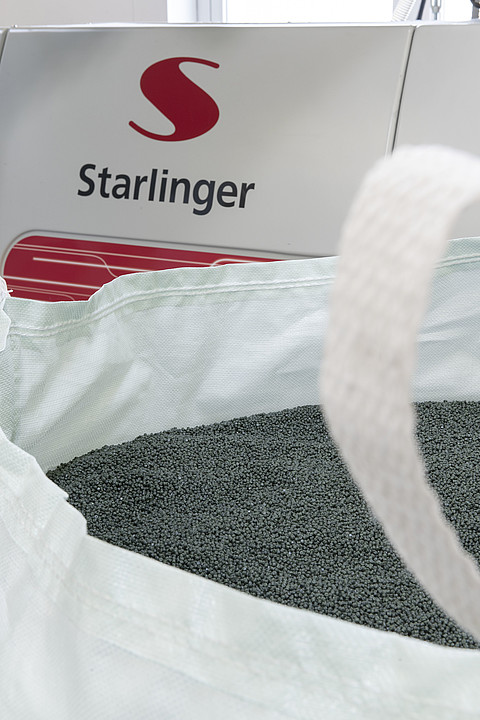
VidePak executes this sequence on top‑tier equipment—W&H (Germany) for printing/conversion, Starlinger (Austria) for tape and looms—anchored by 16 extrusion lines, 100+ circular looms, and 30+ lamination/printing machines. Process windows are documented and held so adhesion, registration, and seam performance sit inside measured bands, lot after lot.
What Are the Applications of Waterproof Woven Bags?
Because Waterproof Woven Bags combine woven strength with moisture protection, they serve wherever weather, wash‑downs, or damp storage threaten product integrity. One label, many lanes; one platform, many programs.
Fertilizers & agro‑inputs
Urea, NPK blends, MAP/DAP, SOP/MOP: coatings and liners slow humidity ingress; anti‑slip faces keep stacks square in open depots; optional UV packages guard outdoor staging. Moisture management is not a line item—it’s the difference between free‑flowing granules and a forklift‑proof brick.
Construction materials
Cement, mortar, gypsum, sand: valve architectures support high‑speed impeller packers, while laminate faces resist scuff and shrug off short showers between silo and site. Block‑bottom bodies sit square in stores; controlled COF reduces leaning in hot warehouses.
Food staples & ingredients
Rice, flour, sugar, starches: stitch‑less pinch‑top builds reduce contamination risk; compliant inks and low‑odor systems support food programs; where hot fills need to cool, micro‑perfs can be engineered without inviting water in. Hygiene and handling are not opposites; they are co‑requirements.
Salts, minerals & chemicals
Salt, calcium carbonate, titanium dioxide: laminated faces curb abrasion; liners reduce caking; closures stay leak‑tight in damp coastal climates. Barcodes and hazard panels remain readable after the voyage, not just before it.
Municipal & industrial logistics
Recycling streams, resin regrinds, charcoal and pellets: waterproof outer faces simplify housekeeping in rainy yards; color‑coded prints improve route clarity and inventory accuracy. When the yard is wet, a dry bag is a quiet warehouse.
With shipments across the US, Europe, Brazil & South America, Southeast Asia, Japan, Korea, Central Asia, the MENA region, East & South Africa, VidePak tunes the levers—mesh/GSM for tear paths, coating weight for humidity, UV package for sunlight, COF for stacking—so Waterproof Woven Bags match your climate, route, and handling realities.
Typical Parameters for Waterproof Woven Bags
Ranges below reflect widely available, real‑world specifications; VidePak supports application‑specific customization.
| Parameter | Typical Range / Option | Notes (for Waterproof Woven Bags) |
|---|---|---|
| Fabric mesh | 8×8 – 14×14 | Strength/print‑base balance |
| Fabric weight (GSM) | 60 – 120 g/m² (sacks) | Selected by fill weight & drop targets |
| Tape denier | 700D – 1000D | Correlates with tensile & puncture resistance |
| Extrusion coat | 18 – 30 g/m² (PE/PP) | Lowers water permeability; anchors ink |
| Lamination film | BOPP 18 – 25 µm or kraft composite | Photo‑quality face; scuff resistance |
| Mouth/closure | Pinch‑top / Sift‑proof sewn / Valve | Choose hermeticity vs. speed/dust control |
| Liner options | PE 20 – 40 µm (loose/tubular) | Extra moisture barrier for hygroscopic contents |
| COF (stacking) | ≈ 0.5 – 0.7 | Anti‑slip emboss/spray to target window |
| UV stability | 200 – 400 h | Package tuned to outdoor exposure |
| Printing | Flexo up to 6 colors; Gravure 8–10 with BOPP | Registration‑controlled branding |
| Load capacity | 10 – 50 kg | Depends on GSM, seams, & safety factor |
Why VidePak
Founded in 2008, VidePak’s core team brings 30+ years of woven‑packaging expertise and a workforce of 568. We produce Waterproof Woven Bags alongside BOPP woven, valve, and kraft‑paper composite ranges using 100% new raw materials to stabilize mechanical properties and color outcomes. Our platform—W&H printers/converters and Starlinger tape & loom lines—spans 16 extrusion lines, 100+ circular looms, and 30+ lamination/printing machines. Capacity matters; control matters more. That’s why adhesion, registration, stitch integrity, and COF targets sit inside documented windows—measured, repeatable, reliable.
Annual sales around USD 80 million reflect partnerships built not on slogans but on pallets that behave: fewer rejects, squarer stacks, clearer labels. Ready to validate a weather‑resistant spec? Share dimensions, fill weights, line speeds, climate profile, and storage conditions—we’ll engineer Waterproof Woven Bags to match or outperform your reference pack and provide the data to prove it.
- What Are Waterproof Woven Bags?
- What Are the Features of Waterproof Woven Bags?
- What Is the Production Process of Waterproof Woven Bags?
- What Are the Applications of Waterproof Woven Bags?
- Typical Parameters for Waterproof Woven Bags
- Why VidePak
Waterproof woven bags are setting a new standard in packaging, offering unparalleled customization options for diverse industries while integrating future-ready technologies like RFID and QR code tracking to enhance traceability and sustainability. From material innovation to smart packaging solutions, these bags are designed to meet evolving global demands efficiently.
The Importance of Customization in Waterproof Woven Bags
Customizing waterproof woven bags ensures their versatility and applicability across various industries. Let’s delve into the key aspects of customization that make these bags indispensable:
1. Material Selection and Durability
- Polypropylene (PP): Lightweight yet robust, PP offers superior strength and durability for long-term use.
- PE Laminations: Enhance waterproof properties, making them suitable for protecting sensitive materials like fertilizers and grains.
- Biodegradable Materials: Cater to environmentally conscious consumers, aligning with sustainability initiatives.
The use of advanced materials ensures that these bags can withstand diverse environmental conditions, from heavy rains to prolonged exposure to sunlight.
2. Structural Versatility
- Customizable Thickness: From 100 GSM for lightweight storage to 250 GSM for heavy-duty applications.
- Tailored Dimensions: Accommodates varied storage capacities, ranging from 10 kg to 50 kg.
- Handles and Reinforced Seams: Make handling and transportation easier and more secure.
| Customization Feature | Application Benefit |
|---|---|
| Material Options | Enhanced durability and waterproofing |
| Thickness Variations | Lightweight to heavy-duty uses |
| Shape and Size | Tailored for industry-specific needs |
Advanced Features: Smart Packaging for Future Applications
The integration of smart packaging technology in waterproof woven bags is reshaping the industry:
1. QR Code Tracking
- Enables real-time traceability by linking the bag to an online database.
- Provides instant access to critical product information, including origin, batch details, and certifications.
2. RFID Tags
- Automates inventory management, reducing human error and improving supply chain efficiency.
- Enhances logistics by tracking bag movements in real time.
Example in Action:
A grain distributor implemented QR codes on waterproof woven bags, reducing counterfeit risks and improving customer trust. Inventory accuracy increased by 25% through RFID integration.
Applications Across Key Industries
1. Agriculture
Waterproof woven bags protect grains, seeds, and fertilizers from moisture and contamination. Inner linings and UV-resistant coatings ensure extended shelf life.
2. Food Industry
Food-grade certifications and lamination make these bags suitable for products like sugar, spices, and flour. Custom printing helps meet branding and regulatory requirements.
3. Construction Materials
Reinforced designs are ideal for cement, sand, and other materials that require durability and resistance to tearing.
Key Customization Parameters for Waterproof Woven Bags
| Parameter | Specification | Purpose |
|---|---|---|
| Thickness | 100 GSM to 250 GSM | Matches product weight and durability |
| Laminations | PE or PP | Ensures waterproofing |
| Bag Capacity | 10 kg to 50 kg | Fits diverse storage requirements |
| Printing Options | Up to 8 colors | Supports branding and compliance |
| Smart Features | QR codes, RFID tags | Enables traceability and logistics |
These parameters ensure that the bags meet specific industry needs while maintaining quality and cost efficiency.
Addressing Common Concerns: FAQs
Q1: Are waterproof woven bags environmentally friendly?
Yes, with biodegradable and recyclable material options, these bags align with sustainable practices.
Q2: Can these bags handle heavy loads?
Reinforced seams and high-GSM materials support loads up to 50 kg, ensuring durability.
Q3: What customization options are available for branding?
Printing in up to 8 colors is available, allowing for high-resolution logos, product details, and regulatory labels.
Q4: How do smart packaging features work?
RFID tags and QR codes enable real-time tracking and provide access to product data, enhancing supply chain efficiency.
Q5: Are these bags compliant with food safety regulations?
Yes, they are available with food-grade certifications and custom laminations to ensure hygiene.
Trends Driving the Future of Waterproof Woven Bags
1. Sustainability Initiatives
- The demand for eco-friendly packaging is driving innovation in biodegradable materials and recyclable designs.
2. Smart Packaging Adoption
- Technologies like RFID and QR codes are expected to become industry standards, particularly in agriculture and food sectors.
3. Enhanced Functionality
- Integration with automated filling and sealing systems ensures compatibility with modern industrial processes.
Case Study:
A multinational agricultural company using RFID-enabled waterproof woven bags reported a 30% increase in supply chain efficiency and a significant reduction in operational errors.
- Learn more: Moisture-Proof Woven Bags for Waste Management
Conclusion
Customizing waterproof woven bags is not just about meeting immediate needs but also about preparing for the future. By incorporating advanced features like smart packaging and leveraging high-quality materials, manufacturers can cater to diverse market demands while adhering to sustainability goals. This approach ensures these bags remain relevant and indispensable in various industries.
- Explore further: The Future of BOPP Woven Bags: Sustainability and Customization