
What Are Woven Bags with PE Liner? (Also Called PE‑Lined PP Woven Sacks)
Woven Bags with PE Liner are composite sacks that combine a load‑bearing polypropylene (PP) woven outer with an internal polyethylene (PE) liner to deliver strength, moisture defense, and clean handling in a single package. In the market they are also known as PP woven sacks with PE liner, PE‑lined woven bags, liner‑in‑bag woven sacks, or composite PP/PE woven bags. The woven shell supplies tensile and tear performance for heavy fills common in the building‑materials trade; the PE liner protects hygroscopic powders from humidity ingress and keeps fines from escaping during filling, transport, and storage.
What Are the Features of Woven Bags with PE Liner?
A reliable construction sack must contain, protect, and communicate. Woven Bags with PE Liner do all three. The woven PP fabric resists abrasion and puncture when bags meet clamp trucks, conveyors, and pallets. The PE liner lowers water‑vapor transmission and adds a smooth interior that reduces dusting and product hang‑up. Panel‑wise friction can be tuned—lower on the machine‑facing side for smooth travel through the former, higher on the pallet face for stable stacks—so lines run fast and unit loads ride securely. When branding or hazard information must survive long routes and wet yards, the outer can be coated or laminated (e.g., BOPP) so full‑surface graphics remain crisp and scuff‑resistant while barcodes scan cleanly. The end result is a bag that is light but tough, breathable enough to fill efficiently yet sealed enough to keep material in spec.
What Is the Production Process of Woven Bags with PE Liner?
From pellet to pallet, performance is engineered rather than improvised. Virgin PP is extruded, slit, and oriented into flat tapes; these tapes are woven on circular or flat looms (typical meshes 10×10 to 14×14) to form a stable fabric. Depending on the duty, the fabric may receive a PP/PE coating or a reverse‑printed BOPP laminate to deliver moisture beading and high‑fidelity graphics. In parallel, PE liners—commonly blown‑film tubes or side‑sealed bags in the 30–80 μm range—are sized to fit and either inserted loose, hem‑tacked, or fully stitched into the mouth. Conversion follows: cutting, gusseting, and bottom forming (double‑stitched open‑mouth or block‑bottom valve for dust‑controlled, high‑speed filling). Friction is governed by lacquers or emboss; vents or pin‑holes are tuned to allow air egress without escorting fines. Quality checks close the loop: COF by panel (ASTM D1894), tensile/elongation (ASTM D882), tear (ASTM D1922), dart impact (ASTM D1709), rub (ASTM D5264), and, where barrier is critical, WVTR checks (ASTM F1249). Traceability links resin, film, fabric, and print lots to each finished bundle.
What Is the Application of Woven Bags with PE Liner?
Built for the building‑materials industry, Woven Bags with PE Liner excel with cement and dry mortar, gypsum/plaster, lime and fly ash, tile adhesive and grout, silica sand and aggregates, industrial fillers (calcium carbonate, talc, silica), and chemical admixtures. The liner keeps powders free‑flowing through rainy seasons; the woven exterior protects corners from clamp‑truck bruising; laminated faces preserve safety pictograms and mixing ratios at retail. On valve formats, bags couple with horizontal spouts for fast, dust‑controlled filling and square stacks; open‑mouth with liner‑tack serves manual dosing or slower lines. Whether the route is a short, dry hop or a long, humid export lane, the composite design helps cargo arrive clean, legible, and on‑spec.
PE Open Mouth Bags
Durable PE-lined woven bags designed for reliable building materials packaging and storage.
Check More →Heavy-Duty Woven Bags Guide
Industrial-grade woven bags with PE liners ideal for heavy building materials transportation.
Check More →Heat-Sealed PP Woven Bags
Leakproof PE-lined woven bags with secure sealing for construction material applications.
Check More →Woven Fabric PP Bags Features
Key features of PE-lined woven bags delivering strength and protection for building materials.
Check More →Product Parameters for Woven Bags with PE Liner (Typical, Real‑World Ranges)
| Parameter | Typical Range / Spec | Notes |
|---|---|---|
| Product | Woven Bags with PE Liner | PP woven outer + internal PE liner |
| Fabric mesh | 10×10 to 14×14 | Higher pick density improves seam capture & print flatness |
| Woven fabric mass (GSM) | ~70–120 g/m² | Tuned to duty (cement vs. sand vs. admixtures) |
| PE liner thickness | ~30–80 μm | Blown‑film tube or side‑sealed liner; sized to bag cavity |
| Coating/lamination | 15–30 g/m² PP/PE coat or 12–25 μm BOPP | For moisture beading and rub‑resistant graphics |
| Common 25–50 kg size | W 48–55 cm × L 75–95 cm | Block‑bottom valve or sewn open‑mouth |
| COF targets (panel‑wise) | Machine face ~0.25–0.35; Pallet face ~0.45–0.60 | Glide on line, grip on pallet |
| UV stabilization | 200–1000 h xenon‑arc equivalence | Outdoor yard and retail staging |
| Print colors | Up to 8–10 | HD flexo or gravure; barcode quiet zones maintained |
All windows reflect widely published construction‑duty specs; final values depend on product density, humidity, route, and line speed.
Why VidePak for Woven Bags with PE Liner
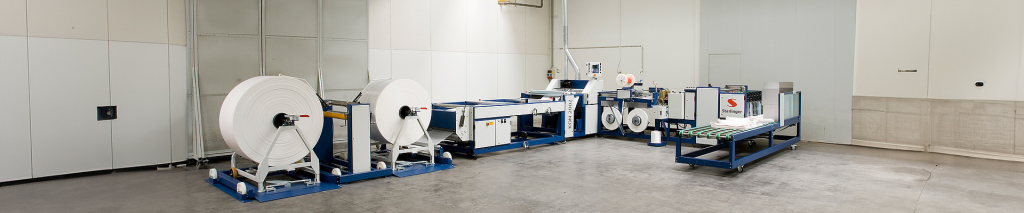
Founded in 2008, VidePak’s core team brings 30+ years of experience and a workforce of 568. Our portfolio spans BOPP‑laminated woven bags, valve bags, and kraft‑paper woven bags, with shipments to the United States, Europe, Brazil, South America, Southeast Asia, Japan, Korea, Central Asia, the MENA region, East Africa, and South Africa. To lock in quality and process stability, we run top‑tier equipment from W&H (Germany) and Starlinger (Austria)—more than 100 circular looms, 16 extrusion lines, and 30+ lamination/printing machines. We specify 100% virgin raw materials, support custom sizes and multi‑color printing, and scale confidently—annual sales of approximately USD 80 million.
Our technical governance is as important as our capacity. We set COF windows by panel, define seam‑pull targets, qualify drop/rub on worst‑case solids, and maintain change‑control on inks, adhesives, and films. The outcome is simple to experience and hard to counterfeit: Woven Bags with PE Liner that track straight on the former, stack square on the pallet, and arrive clean at the destination—season after season, site after site.
- What Are Woven Bags with PE Liner? (Also Called PE‑Lined PP Woven Sacks)
- What Are the Features of Woven Bags with PE Liner?
- What Is the Production Process of Woven Bags with PE Liner?
- What Is the Application of Woven Bags with PE Liner?
- Product Parameters for Woven Bags with PE Liner (Typical, Real‑World Ranges)
- Why VidePak for Woven Bags with PE Liner
Woven bags with PE liners are the ultimate choice for the building materials industry, offering unmatched moisture resistance, durability, and cost efficiency while meeting strict safety and operational standards. Whether handling cement, sand, gravel, or powdered chemicals, these bags provide the versatility and performance necessary for efficient storage and transportation in demanding environments.
Key Advantages of Woven Bags with PE Liners
1. Superior Moisture Resistance
PE liners act as a barrier against moisture, keeping materials like cement dry and preventing clumping or degradation. This feature is particularly valuable for outdoor storage or transportation in humid conditions.
2. Exceptional Durability
The woven polypropylene structure provides high tensile strength, allowing these bags to endure rough handling during transit. The addition of PE liners further reinforces their durability, ensuring minimal risk of tearing or leakage.
3. Customizable Options
Woven bags with PE liners can be tailored to meet specific requirements, including size, thickness, printing, and anti-static coatings. These customizations enhance their functionality and align them with unique industry needs.
4. Cost-Effective
Compared to alternative packaging solutions, these bags offer a cost-efficient option without compromising on quality or performance. Their reusability and recyclability also add economic and environmental value.
Exploring Product Parameters
Woven bags with PE liners are available in a range of specifications to cater to diverse applications in the building materials sector.
| Parameter | Specification Range | Application Examples |
|---|---|---|
| Thickness | 60–120 microns | High-thickness liners for moisture barriers. |
| Weight | 50–150 g/m² | Lightweight bags for ease of handling. |
| Size | Customizable: 20×30 cm to 100×120 cm | Adaptable for small and large loads. |
| Load Capacity | Up to 50 kg | Suitable for heavy materials like cement. |
| Liner Variants | Single/double-layer PE liners | Enhanced dust and moisture resistance. |
| Printing Options | Up to 8 colors | Branding and clear product labeling. |
Anti-Static Properties: Safety Redefined
Static electricity can be hazardous when handling materials that produce fine dust, such as cement or chemical powders. Anti-static woven bags mitigate these risks by integrating advanced technologies.
How Anti-Static Woven Bags Work
- Conductive Materials Conductive threads woven into the fabric create pathways for electrostatic discharge, preventing static buildup.
- Surface Treatments Anti-static coatings lower the bag’s surface resistivity, ensuring safe static dissipation during handling.
- Compliance with Standards These bags are tested against international standards, such as IEC 61340, ensuring suitability for static-sensitive environments.
Case Study
A leading construction company reduced workplace incidents related to static discharges by 40% after adopting anti-static woven bags for cement storage. This shift also resulted in smoother operational workflows.
Load-Bearing Capacity for Building Materials
The load-bearing capacity of woven bags with PE liners depends on the material and construction quality. Below are some typical ranges:
| Material Type | Weight Range | Bag Size | Load Capacity |
|---|---|---|---|
| Cement | 25–50 kg | 50×80 cm | Up to 50 kg |
| Sand and Gravel | 20–30 kg | 60×90 cm | Up to 30 kg |
| Powdered Chemicals | 10–25 kg | 40×60 cm | Up to 25 kg |
For example, a bag with a 100 g/m² woven fabric and a 90-micron PE liner can handle up to 50 kg of cement with ease, ensuring reliable performance.
Sustainability and Industry Trends
1. Eco-Friendly Materials
Many manufacturers now incorporate recycled polypropylene (PP) and polyethylene (PE) into bag production. This shift not only reduces environmental impact but also meets growing regulatory demands for sustainable packaging.
2. Technological Advancements
Ultrasonic sealing and automation in bag production ensure higher consistency and better bonding between the woven fabric and PE liner, enhancing durability.
3. Enhanced Customization
Recent innovations include UV-resistant coatings for prolonged outdoor use and tamper-evident closures for added security during transportation.
Frequently Asked Questions (FAQs)
Q1: Are woven bags with PE liners suitable for outdoor storage?
Yes, they are designed to withstand harsh conditions, with PE liners providing moisture and UV protection.
Q2: Can these bags be used for fine powders?
Absolutely. The tightly sealed PE liner prevents leakage, making them ideal for materials like cement and chemicals.
Q3: How are anti-static properties tested?
Anti-static woven bags undergo surface resistivity tests to ensure compliance with international safety standards like IEC 61340.
Q4: Are these bags recyclable?
Yes, woven bags with PE liners are fully recyclable, aligning with sustainability goals.
Q5: Can they be printed with logos or labels?
Yes, multi-color printing options allow for detailed branding and product information.
Conclusion
Woven bags with PE liners are an indispensable solution for the building materials industry. Their versatility, durability, and moisture resistance ensure the safe and efficient handling of materials like cement, sand, and powdered chemicals. As the industry continues to prioritize sustainability and innovation, these bags stand out as a reliable and eco-conscious choice.
For further insights, explore Woven Bags with PE Liner and learn more about Moisture Proof Woven Bags.