
What Are Custom Printed Woven Bags?
Custom Printed Woven Bags are purpose‑built packaging sacks made from interlaced polypropylene (PP) tapes that have been extruded, drawn for tenacity, and woven into a stable fabric before receiving a print‑friendly surface. In trade conversations you may also hear Custom Printed Woven Bags called BOPP‑laminated woven bags, custom‑art poly woven sacks, or PP raffia bags with graphics—different names for one architecture that carries 5–50 kg loads while wearing a showroom smile. Mechanically, the woven PP backbone resists tear and puncture at low mass; commercially, the print surface carries brand assets, barcodes, and multilingual instructions that must survive conveyors, forklifts, and weather. For format variants that often underpin this category, see Custom Printed Woven Bags.
A brief reality check frames their value. Supply chains are noisy—humidity cakes powders, pallets slip, inks scuff, labels blur. Custom Printed Woven Bags answer with a balanced triad: structural strength from oriented tapes, moisture moderation from coatings or laminates, and billboard‑grade graphics protected under film where needed. One pack, three jobs—contain, communicate, comply.
What Are the Features of Custom Printed Woven Bags?
Brand power that endures. Reverse rotogravure or HD CI‑flexo—often up to 8–10 colors—produces photo‑clean images, crisp microtype, and disciplined color gradients. Because inks are trapped beneath film when BOPP is used, graphics resist rub, rain splash, and carton abrasion, so a bag leaving the filler looks much like the one arriving at retail.
Strength without ballast. Oriented PP tapes woven in meshes around 10×10 to 14×14 create a light yet rugged skeleton. This anisotropic fabric supplies high tensile and tear resistance while keeping resin grams low—why haul mass that doesn’t add protection?
Moisture management with options. A PP/PE coating improves water beading and print hold‑out; an internal liner can add hygiene; a BOPP laminate supplies a continuous, rub‑resistant face. The choice depends on product density, route climate, and shelf expectations. Hygroscopic goods—salt, rice blends, mineral powders—benefit directly from these barrier choices.
Friction tuned by panel. A lower coefficient of friction (COF) on the machine‑facing panel lets bags glide across formers; a higher COF on the pallet face stabilizes stacks during transport. Glide in the machine, grip in the truck—two panels, two functions, one smoother operation.
Formats that fit the line. Sewn open‑mouth (SOM) for manual or semi‑auto fills; block‑bottom valve (AD‑style) for clean, high‑BPM powder filling; or tubular rollstock for FFS automation. Tear tapes, die‑cut handles, and easy‑open notches improve end‑user experience without compromising strength.
Sustainability signals grounded in physics. Mono‑polyolefin builds (PP fabric + PP/PE coatings) align with PP‑dominant recycling streams where they exist. Lightweighting via precise GSM and pick density reduces resin use and freight emissions. Durability cuts rewrap waste; consistent COF limits load failures that end as trash.
Cross‑domain logic at work. Color science meets scanner physics (matte windows prevent glare); tribology meets palletization (COF tuning curbs slip); polymer orientation meets drop tests (tenacity up, failure down). Features do not live alone—they cooperate.
What Is the Production Process of Custom Printed Woven Bags?
Tape extrusion & orientation. Virgin PP is melted, cast as a sheet, slit into flat tapes, and drawn to align polymer chains. Draw ratios and anneal conditions set the tape’s tenacity and elongation—microstructure choices that echo later in seam performance.
Weaving. Circular or flat looms interlace warp and weft into cloth. Typical meshes—10×10, 12×12, 14×14—strike a balance: enough picks for seam bite and print flatness, not so many that mass creeps up. Loom tension and pick count are tuned to duty (rice ≠ mineral filler).
Surface preparation. Fabrics receive corona or primer to raise surface energy. This step keeps inks anchored and adhesives confident; skip it and you invite ink pick‑off or lamination blisters.
Printing. Artwork is laid down either directly (HD CI‑flexo) or in reverse on BOPP film (rotogravure). Reverse printing shelters inks behind film after lamination, delivering rub life that outlasts the trip. Governance matters: Pantone lists for spot colors, LAB targets for critical hues, and barcode quiet zones embedded in dielines.
Lamination / coating. Reverse‑printed BOPP (≈12–25 μm, matte, gloss, or registered matte/gloss) is laminated to the fabric using solventless PU adhesives or extrusion lamination. Alternatively, PP/PE coatings (≈15–30 g/m²) build a simpler, sealable print face. Choice depends on look, rub‑life goals, and recycling positioning.
Conversion. Cloth is cut, gusseted, tubed, and finished into SOM or block‑bottom valve formats. Options include micro‑/macro‑vents to purge air during fill, anti‑slip lacquers on the pallet face, and easy‑open features. For FFS lines, tubular rollstock is supplied with tight lay‑flat and splice discipline.
Quality governance. Typical checks: COF by panel (ASTM D1894), tensile/elongation (ASTM D882), tear (ASTM D1922), dart impact (ASTM D1709), print rub (ASTM D5264), laminate bond strength, and filled‑bag drop tests (ASTM D5276). Lot traceability ties resin, film, adhesive, ink, and fabric IDs to each shipment—audits turn from story to evidence.
Horizontal & vertical thinking baked in. Horizontally, color tolerances (ΔE*) connect to scannability; friction windows connect to line speed. Vertically, resin MFI influences drawability; drawability sets tenacity; tenacity dictates seam design; seam design governs drop survival; drop survival determines stack height.
What Is the Application of Custom Printed Woven Bags?
Staple foods & retail. Rice, flour, pulses, and sugar demand clarity and cleanliness. Custom Printed Woven Bags deliver shelf‑ready graphics and square stacks that keep aisles neat—no leaning towers, no smudged instructions.
Pet nutrition. Kibble and seed mixes punish weak packs. The woven skeleton resists puncture; reverse‑printed BOPP defends the brand image; easy‑open elements help consumers without compromising integrity.
Home & garden. Fertilizers, soil amendments, compost, and de‑icing salts invite moisture and abrasion. Custom Printed Woven Bags shrug off both while keeping hazard icons and use directions readable.
Building materials & minerals. Cement additives, dry mortar, gypsum, lime, silica sand—dusty, dense, and rough on packaging. Valve formats run fast and clean; stitched SOM serves sands and aggregates.
Export channels. Long ocean legs and tropical ports do no favors to ordinary sacks. Reverse‑printed laminates protect barcodes and small type; pallets arrive with codes that scan the first time.
A question worth asking: can one platform serve such variety? Yes—when specifications vary intelligently (mesh, GSM, laminate gauge, COF windows) while artwork, dielines, and label zones remain harmonized across SKUs.
Technical Parameters — Custom Printed Woven Bags (Typical, Real‑World Ranges)
| Parameter | Typical Range / Spec | Technical Note |
|---|---|---|
| Product | Custom Printed Woven Bags | PP woven sacks with custom artwork (5–50 kg) |
| Fabric mesh | 10×10 to 14×14 | Higher pick density → flatter face, stronger seams |
| Fabric mass (GSM) | ~60–120 g/m² | Tuned to duty: food vs. minerals vs. garden |
| Coating mass | ~15–30 g/m² (PP/PE) | Drives water beading & print hold‑out |
| BOPP film gauge | 12–25 μm (matte/gloss/registered) | Reverse‑printed, rub‑resistant full‑bleed graphics |
| Common sizes | 5–25 kg retail; 25–50 kg industrial | Width ~35–55 cm; length ~60–95 cm |
| COF targets (panel‑wise) | Machine face ~0.25–0.35; pallet face ~0.45–0.60 | Glide on line, grip on pallet |
| UV stabilization | 200–1000 h xenon‑arc equivalence | For outdoor staging and sun exposure |
| Print colors | Up to 8–10 | HD gravure or CI‑flexo; barcode quiet zones maintained |
These windows mirror widely listed specs on Made‑in‑China, Alibaba, and peer supplier datasheets. Numbers should be tuned to product density, route climate, and filler speed. No MOQ is stated by design.
Why VidePak for Custom Printed Woven Bags
Since 2008, VidePak has treated packaging like a governed system, not a commodity. Our core team carries 30+ years of field experience, and our staff of 568 supports customers across the United States, Europe, Brazil, South America, Southeast Asia, Japan, Korea, Central Asia, the MENA Region, East Africa, and South Africa. We specialize in Custom Printed Woven Bags, BOPP‑laminated woven sacks, valve formats, and kraft‑paper composites.
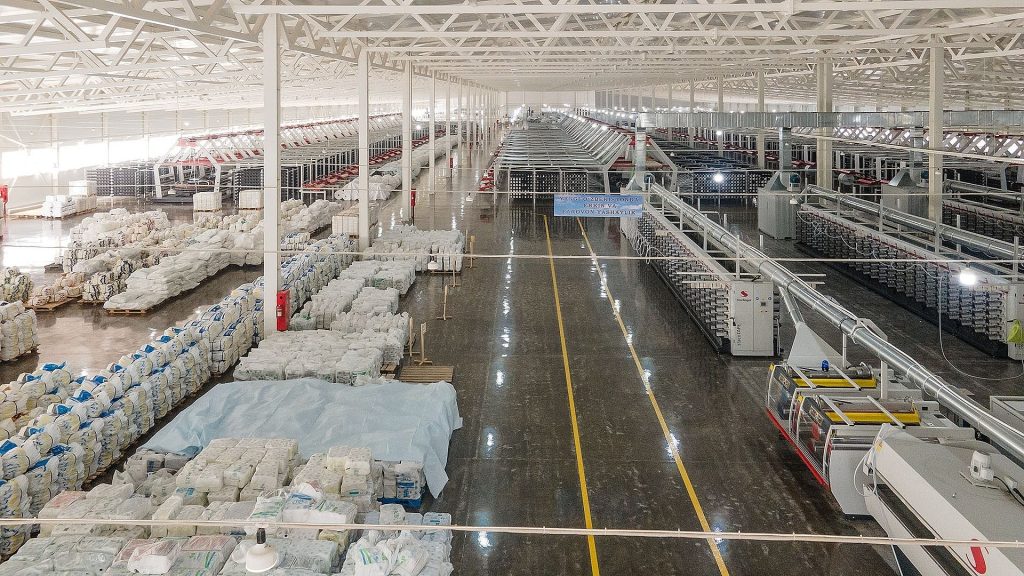
Equipment pedigree and scale. We run top‑tier assets from W&H (Germany) and Starlinger (Austria)—over 100 circular looms, 16 extrusion lines, and 30+ lamination/printing machines. That hardware, maintained with discipline, gives repeatable roll build, tight lay‑flat control, and steady COF from lot to lot.
Materials and customization. We use 100% virgin raw materials and support custom widths, gussets, finishes, and handle or tear‑open features. Color is governed by Pantone/RAL with LAB tolerances; registered matte/gloss textures and anti‑slip strategies are routine.
Quality governance you can audit. Each Custom Printed Woven Bags SKU ships with a one‑page spec: dimensions and tolerances; panel‑wise COF windows; seam‑pull and drop targets; laminate bond and print‑rub thresholds; WVTR where relevant. Change‑control on inks, adhesives, and coatings keeps approved performance truly approved.
Operational support. We help match bag COF to former materials, tune vent patterns for your powder’s air profile, and align roll lengths or bundle counts to your changeover cadence. Less guesswork, more throughput.
Proof, not promise. Cleaner fills and docks, faster BPM, squarer pallets, and labels that scan on the first pass—these are operational metrics, not slogans. With Custom Printed Woven Bags, VidePak’s job is to make your packaging a quiet advantage in a noisy supply chain.
- What Are Custom Printed Woven Bags?
- What Are the Features of Custom Printed Woven Bags?
- What Is the Production Process of Custom Printed Woven Bags?
- What Is the Application of Custom Printed Woven Bags?
- Technical Parameters — Custom Printed Woven Bags (Typical, Real‑World Ranges)
- Why VidePak for Custom Printed Woven Bags
The demand for custom printed woven bags has surged globally as businesses seek sustainable, functional, and visually appealing packaging solutions. These bags, known for their durability, versatility, and eco-friendly attributes, are used across multiple industries, including agriculture, retail, construction, and logistics. However, the global market for custom printed woven bags is diverse, with variations in demand, preferences, and regulations across regions. This article will explore how businesses can navigate these market demands and variations, providing guidance on product selection, customization, and emerging trends in woven bag packaging.
Understanding the Demand for Custom Printed Woven Bags
Custom printed woven bags serve as a powerful tool for branding and sustainability. The woven fabric, typically made of polypropylene (PP), provides excellent strength and resistance to tearing, making it ideal for a wide array of products, from bulk goods to consumer retail items. Global demand for these bags is influenced by several factors, including environmental concerns, regulatory requirements, and the growing need for branding in competitive markets.
| Region | Market Trends | Demand Factors | Challenges |
|---|---|---|---|
| North America | Preference for sustainable and high-quality packaging | Increasing environmental regulations, demand for brand visibility | Rising material costs, competition from alternatives like paper bags |
| Europe | Strong focus on eco-friendly solutions | Regulatory policies on recyclability and waste reduction | Balancing sustainability with cost-effectiveness |
| Asia-Pacific | High volume of manufacturing and agricultural products | Demand from agricultural industries, rising disposable income | Price sensitivity, varying standards across countries |
| Middle East | Focus on durability and cost-effectiveness | Need for durable packaging for heavy-duty items, waste management | Logistics challenges, cultural preferences for design |
| Africa | Growth in retail and agricultural sectors | Emerging market for branded, cost-effective packaging | Limited access to high-end printing technology |
Key Benefits of Custom Printed Woven Bags
Custom printed woven bags offer several advantages, which is why they are preferred over other packaging options in certain markets:
- Durability: Woven polypropylene (PP) offers superior strength, capable of carrying heavy loads without tearing, making it ideal for bulk products.
- Brand Visibility: High-quality printing allows for vivid, eye-catching designs, making woven bags an excellent choice for businesses looking to strengthen their branding.
- Sustainability: These bags are reusable and recyclable, appealing to businesses and consumers who prioritize eco-friendly solutions.
- Versatility: Custom woven bags can be tailored for different sizes, shapes, and functionalities, catering to a variety of industries such as agriculture, retail, and construction.
- Cost-Effectiveness: While the initial cost may be slightly higher than other packaging options, the long-term benefits, including durability and reusability, make woven bags a cost-efficient choice.
Factors Affecting Custom Printed Woven Bags Across Different Regions
The global demand for custom printed woven bags is not uniform. Various regions exhibit distinct preferences and challenges, influenced by their local industries, consumer behaviors, and regulatory environments. Let’s explore some of these regional variations in more detail.
North America
In North America, the emphasis on sustainability is driving the demand for custom printed woven bags. Consumers and businesses alike are becoming more environmentally conscious, leading to increased demand for recyclable and reusable packaging options. Moreover, companies in the retail and agricultural sectors are investing in custom printing to enhance their brand presence.
However, businesses must also navigate challenges such as rising material costs and stringent environmental regulations. Eco-friendly woven bags are becoming the norm, but achieving a balance between sustainability and affordability remains a concern. Eco-friendly woven bag trends are pivotal to success in this market.
Europe
Europe’s stringent waste reduction policies and focus on the circular economy are major drivers behind the demand for custom printed woven bags. Countries like Germany, France, and the UK have implemented recycling targets, pushing businesses to adopt packaging that is both functional and recyclable.
In this market, the customization options for woven bags are vast, as businesses seek to enhance their packaging aesthetics while complying with sustainability mandates. The trend toward BOPP laminated woven bags has grown, offering added protection for products and improving the shelf appeal. However, navigating the regulatory landscape and ensuring compliance with waste management laws can be challenging.
Asia-Pacific
The Asia-Pacific market is highly dynamic, with diverse needs and a growing interest in packaging solutions that are both durable and affordable. Countries like China, India, and Japan are major consumers of custom woven bags due to their large agricultural sectors, where these bags are used to pack grains, fertilizers, and other bulk goods.
One of the biggest challenges in this region is price sensitivity. While there is a significant demand for custom printed woven bags, cost remains a crucial factor for many businesses. Companies must find ways to provide high-quality products at competitive prices while also adapting to local market preferences and regulations.
Middle East and Africa
The Middle East and Africa are witnessing increasing demand for durable, cost-effective packaging solutions, particularly in industries such as construction and agriculture. In these regions, the emphasis is often on functionality and strength, with woven bags used for heavy-duty applications like sand, fertilizers, and building materials.
Customization in terms of design is also important, especially for businesses looking to enhance their branding. However, logistical issues and local consumer preferences can pose challenges when introducing new packaging technologies.
Emerging Trends in Custom Printed Woven Bags
To stay competitive in the global market, manufacturers must be aware of the latest trends that are shaping the demand for custom printed woven bags:
- Sustainability Focus: As businesses and consumers continue to prioritize environmental concerns, the demand for eco-friendly woven bags has increased. Brands are opting for recyclable materials, and innovation in manufacturing processes is pushing the envelope on sustainability.
- Technological Advancements: Advances in printing technology have made it easier to create intricate designs, vibrant colors, and high-quality prints on woven bags. This allows brands to stand out in crowded marketplaces.
- Customization and Branding: Custom woven bags are becoming an essential marketing tool, as companies seek unique ways to engage consumers and differentiate themselves from competitors. The ability to tailor packaging to specific consumer needs is a major advantage.
- Functionality: With a shift toward bulk packaging and logistical efficiency, many businesses are opting for woven bags with additional features, such as waterproofing, moisture resistance, and UV protection.
FAQs About Custom Printed Woven Bags
1. What are the most common uses for custom printed woven bags?
Custom printed woven bags are used in a wide variety of industries, including agriculture, retail, construction, and logistics. They are commonly used for packaging grains, chemicals, pet food, and construction materials.
2. What types of printing techniques are used for custom woven bags?
There are several printing methods used, including flexographic printing, screen printing, and digital printing. The choice of method depends on factors like design complexity, color requirements, and order volume.
3. How do I ensure my custom printed woven bags are eco-friendly?
To ensure your custom woven bags are eco-friendly, choose manufacturers that use recyclable materials, such as polypropylene, and offer solutions that comply with sustainability standards.
4. Can woven bags be used for food packaging?
Yes, woven bags can be used for food packaging, especially when they are laminated or treated with a food-safe coating to prevent contamination.
5. How can I customize my woven bags?
Customization options include adding logos, brand designs, and specific color schemes. You can also choose the size, material, and features of the bags based on your needs.
Custom printed woven bags are revolutionizing packaging solutions across the globe. With their adaptability, durability, and eco-friendly qualities, they meet a variety of market demands, from bulk packaging to sophisticated branding needs. By understanding regional differences, embracing emerging trends, and focusing on sustainability, businesses can position themselves for success in this growing market.
For more insights into how laminated woven bags and advanced manufacturing processes can enhance your business, check out this guide on laminated woven bags or explore the versatility of custom woven bags in global markets.