
What is PP Woven Bags? (Definition & Common Aliases)
When packaging must carry weight without carrying waste, communicate the brand without compromising strength, and run reliably on legacy or automated lines, PP Woven Bags deliver. Built from interlaced polypropylene tapes that form a textile‑like fabric and then finished with a tuned surface—extrusion‑coated PE, BOPP laminate, or kraft‑paper laminate—PP Woven Bags combine tensile strength, moisture control, and shelf‑ready graphics in a single, repeatable format. In industry catalogs you may also meet them as polypropylene woven sacks, WPP bags, BOPP‑laminated woven bags, or paper‑laminated woven sacks—different aliases orbiting the same core idea: tune the “skeleton” (fabric GSM, mesh, denier) and the “skin” (coating/laminate/print) so the container suits the product, the plant, and the pallet.
To think of PP Woven Bags as mere consumables is to miss the point. Horizontally, they borrow from textiles (denier, mesh, creep), flexible packaging (seal window, dyne, coefficient of friction), automation (web guiding, tension control), and logistics (cube efficiency, stack stability). Vertically, they climb a decision ladder—resin → tape → fabric → surface → print → conversion → QA. Skip a rung and consequences announce themselves as dust haze, leaning pallets, or unreadable barcodes; honor each rung and the line runs quiet. For formats and tolerances relevant to this family, see PP Woven Bags.
What are the Features of PP Woven Bags?
Strength at lean tare, geometry that stacks. Woven PP fabric delivers high tensile and tear resistance at low weight (typical ~60–120 g/m² for 5–50 kg lanes). Side gussets expand volume; pasted/block‑bottom options create brick‑like stacks that preserve pallet cube. Geometry isn’t décor—it’s stability.
Breathable PP Woven Bags
High-efficiency mesh-style breathable bags ideal for agricultural and industrial packaging needs.
Check More →Breathable PP Woven Bags Factory
Professional breathable mesh PP bags delivering superior ventilation for agricultural products.
Check More →HDPE Bags With Venting
Ventilated heavy-duty packaging designed for optimal breathability in agricultural and industrial use.
Check More →PP Woven Fabric Features
Key features of mesh PP woven bags offering enhanced efficiency for agricultural and industrial packaging.
Check More →Moisture and dust discipline by design. Extrusion‑coated PE layers (~20–40 μm) bridge inter‑tape pores and widen the heat‑seal window. For hygroscopic goods, optional inner liners and collar welds raise hermeticity. Where speed matters, micro‑perforation bands (20–60 holes/cm²) in a controlled top zone vent headspace air as the fill settles—air escapes, fines stay put.
Print faces that sell and scan. Corona‑treated surfaces (≥38 dynes) accept high‑definition flexo (6–8 colors) or rotogravure (8–9 colors). White/matte BOPP laminates (15–30 μm) lift color density and rub resistance; matte zones reduce scanner glare so GS1/QR codes keep their grade after long drayage. In short: artwork that persuades, barcodes that behave.
Handling stability—on the line and on the pallet. Inner COF around 0.18–0.30 feeds calmly across formers and seal jaws; outer COF around 0.35–0.55 grips pallets under straps. Paper‑laminated faces can further raise panel friction for tall stacks. The bag glides where it should and grips where it must.
Closure choice without compromise. Open‑mouth builds support wide heat‑seals on coated bodies, sewn‑taped tops on uncoated bodies, or adhesive/tape closures where equipment requires. Block‑bottom valve formats enable high‑speed filling with self‑closing mouths (heat‑seal, sonic‑seal, tuck‑in, or poly‑lock). Tear tapes and EZ‑open features improve user ergonomics while preserving the load path.
Sustainability pathways you can verify. Virgin contact layers support food‑adjacent SKUs; FSC® paper options are available for paper‑laminated builds; PCR content can be introduced in non‑food exteriors where performance allows. Water‑based inks and solventless laminations reduce VOCs, turning claims into auditable numbers.
Beyond features, PP Woven Bags serve as a practical intersection of physics, chemistry, and operations: strength through structure, cleanliness through sealing, clarity through print, and safety through friction control.
What is the Production Process of PP Woven Bags?
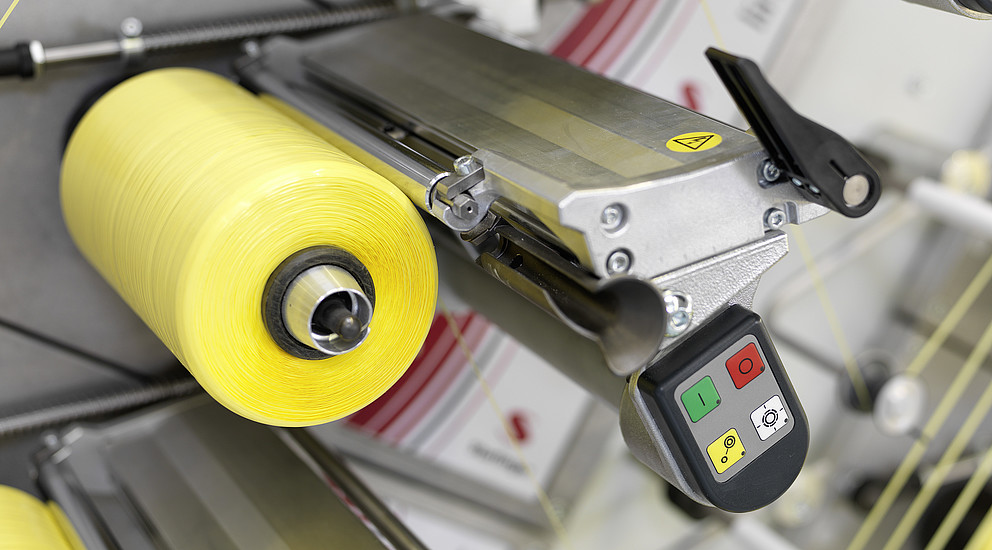
1) Tape extrusion & orientation — the skeleton. Virgin polypropylene is extruded into flat tapes and drawn to target denier (≈600–1,200 D). Draw ratio builds tensile strength and governs creep; online denier control narrows loom variability. Change the melt flow index and you change draw behavior; change draw and you alter denier stability; alter stability and you affect everything downstream.
2) Weaving — the fabric. Circular looms interlace tapes into meshes commonly 10×10 to 14×14. GSM is chosen to balance drop survival with fold behavior at the base and gussets. Planarity here drives everything later: coating flatness, print registration, valve fit, and block‑bottom forming accuracy.
3) Surface engineering — sealing and print readiness. A PE extrusion coat or PP/PE tie‑layer (~20–40 μm) bridges inter‑tape voids and creates a generous heat‑seal window. Where premium graphics are required, a BOPP laminate (15–30 μm) or a kraft‑paper laminate (60–120 g/m²) is bonded to the PP base. Corona treatment lifts dyne to ≥38, anchoring inks and overprint varnish.
4) Printing — carrying the message. Flexo and gravure deliver dense solids, fine micro‑type, and compliant barcodes. Rub‑ and UV‑resistant varnishes are validated with strap‑rub simulation and exposure checks so warnings, instructions, and QR codes survive the trip.
5) Conversion — shaping the bag. Cut to length; add gussets; form block‑bottoms by hot‑air welding or adhesive pasting; hem or heat‑seal tops; apply tear tapes; place micro‑perfs in a narrow band above the settled product level to vent headspace air without freeing fines. For valve sacks, valve patches are sized to the filler nozzle and dust profile.
6) QA & documentation — proving the promise. Thickness mapping across the web; tensile/tear on the woven base; seal/peel windows for impulse/constant/ultrasonic jaws; COF inner/outer; dart impact on formed samples; dyne retention; barcode grade after strap‑rub; visual AQL. Food‑adjacent builds ship with material declarations tailored to destination markets. Numbers travel with each lot so receiving can trust rather than test.
Horizontal thinking here borrows from textiles (denier arithmetic), films (seal windows, dyne), and print science (ink wet‑out, rub/UV). Vertical thinking traces cause and effect: change at one tier echoes down the ladder until pallets either stand square or need rescue.
What is the Application of PP Woven Bags?
Fertilizers & agro‑chemicals. Hygroscopic blends in humid lanes value heavier coats or liners and outer COF around 0.45–0.55 to curb pallet “skating.” Valve mouths and welded bases cut stitch‑line dusting, while top‑band micro‑vents maintain speed without haze.
Cement, dry mixes & minerals. Abrasive, dense powders push for higher GSM within range and robust bottoms (double‑fold sewn or pasted block‑bottom). Square stacks travel straighter; damage and claims drop.
Food ingredients (where compliant). Sugar, rice, flour, premixes—clean heat‑seals, scannable codes, and optional barrier liners for aroma and moisture control. Paper‑laminated faces deliver a natural shelf look while the woven skeleton carries the weight.
Animal feed & pet food. Shelf‑visible SKUs favor BOPP faces for photo‑grade graphics; welded or sewn‑taped bases reduce in‑store dusting. EZ‑open features aid consumers without weakening the load path.
Plastic resins & masterbatch. High bulk density demands stiffer bodies and antiskid exteriors; rub‑resistant ID panels keep product codes readable through long drayage.
Salts, charcoal & specialty chemicals. UV‑stabilized skins tolerate yard storage; tuned outer COF resists strap‑induced sliding; selective micro‑perfs preserve fill speed without creating a snow globe.
Across these lanes the refrain is familiar: cleaner fills, straighter pallets, fewer complaints—PP Woven Bags that act like parts of a well‑run line.
Why VidePak for PP Woven Bags?
Since 2008, VidePak has paired scale with process discipline to deliver export‑grade woven packaging. Our core team brings 30+ years of industry experience; today, 568 colleagues operate 100+ circular looms, 16 extrusion lines, and 30+ lamination/printing machines from top suppliers such as W&H (Germany) and Starlinger (Austria). We use virgin raw materials for contact layers, support multi‑color gravure and high‑definition flexo, and ship at scale to the USA, Europe, Brazil/South America, Southeast Asia, Japan, Korea, Central Asia, the MENA Region, East Africa, and South Africa. Annual sales near USD 80 million reflect not only capacity but also consistency—lots are traceable, repeatable, and on‑spec.
Engineering support comes standard: vent strategy selection, COF tuning for hot warehouses, barcode optimization for tough routes, and artwork guidance for scan‑friendly contrast. The goal is simple—PP Woven Bags that run quietly, scan cleanly, and look the way the brand promised.
Indicative Parameters — PP Woven Bags
The windows below reflect widely listed, export‑grade practice on Made‑in‑China/Alibaba‑class catalogs and peer manufacturers. Final set‑points depend on bulk density, fines %, climate, and handling severity. No MOQ is discussed here.
| Attribute | Typical Options / Ranges | Role in Performance | Notes |
|---|---|---|---|
| Product | PP Woven Bags | Woven PP sacks for 5–50 kg | Open‑mouth or block‑bottom valve variants |
| Fabric GSM | ~60–120 g/m² | Drop/tear vs. fold behavior | Heavier GSM for abrasive/mineral contents |
| Mesh (warp×weft) | 10×10 to 14×14 | Porosity; lamination/print flatness | Finer mesh → smoother print face |
| Tape Denier | 600–1,200 D | Tensile strength & creep resistance | Stable denier = stable weaving |
| PE Extrusion Coat | ~20–40 μm | Heat‑seal window; moisture discipline | Thicker for humid/coastal lanes |
| BOPP Laminate | 15–30 μm (clear/white/matte) | Print fidelity; rub resistance | Matte white improves barcode scans |
| Kraft Paper Laminate | 60–120 g/m² | Panel stiffness; stack friction | FSC® options on request |
| Valve/Top Style | Valve (heat/sonic/tuck‑in) or Open‑mouth heat‑seal/sewn‑tape | Fill speed; dust control | Match to filler nozzle geometry |
| Micro‑Perforation | 20–60 holes/cm² (top band) | Headspace air release | Keep above settled product level |
| COF (inner/outer) | 0.18–0.30 / 0.35–0.55 | Feeding vs. pallet grip | Antiskid textures optional |
| Printing | Flexo 6–8c; Gravure 8–9c | Brand impact; code legibility | Validate barcode grade after strap rub |
| UV Stabilization | 200–1,600 h | Outdoor storage resilience | Match to expected yard dwell time |
| Sizes | Layflat 300–600 mm; length by density | Pallet fit; cube efficiency | Gussets expand volume |
| QA Metrics | Seal/peel; tensile/tear; dart impact; dyne; COF; thickness SPC; barcode grade | Objective acceptance & repeatability | Material declarations for food‑adjacent builds |
Horizontal & Vertical Synthesis for PP Woven Bags
Horizontal thinking asks: what can we learn from neighboring domains? From pouches—seal‑window discipline and rub/UV testing; from corrugate—stacking math and the habit of counting claims per pallet; from labeling—quiet zones and contrast rules for scannability. Vertical thinking traces cause and effect: choose resin to draw stable tapes; weave for planarity and breathability; coat or laminate to hit sealing and print targets; convert to remove stitch leak points; and finally, QA what you promise. Treat PP Woven Bags as a system, and they repay you as a system: predictable on the line, tidy on the pallet, and persuasive at the shelf.
- What is PP Woven Bags? (Definition & Common Aliases)
- What are the Features of PP Woven Bags?
- What is the Production Process of PP Woven Bags?
- What is the Application of PP Woven Bags?
- Why VidePak for PP Woven Bags?
- Indicative Parameters — PP Woven Bags
- Horizontal & Vertical Synthesis for PP Woven Bags
In the world of industrial and agricultural packaging, efficiency and durability are key factors in choosing the right materials for the job. One packaging solution that has gained significant traction is mesh polypropylene (PP) bags. These bags are increasingly recognized for their superior performance in various industries, including agriculture, manufacturing, and logistics. In this blog post, we will explore why mesh PP bags are a game-changer in packaging, delving into their various advantages, the key product parameters, and addressing common FAQs from industry professionals.
What are Mesh PP Bags?
Mesh PP bags are woven bags made from polypropylene fibers that are crafted into a mesh design, providing superior breathability, strength, and flexibility. This design allows for effective air circulation while ensuring the bags maintain their structure, even when holding heavy materials. Due to these properties, mesh PP bags are commonly used for packaging products that require ventilation, such as agricultural produce, fertilizers, and industrial items.
These bags are made using the extrusion process, where PP fibers are woven into a mesh pattern. The resulting product is lightweight, durable, and often more cost-effective than traditional packaging alternatives like paper or plastic bags. With numerous customization options available, mesh PP bags can be tailored to fit specific requirements, such as size, strength, and design.
Key Advantages of Mesh PP Bags
1. Enhanced Durability and Strength
One of the biggest advantages of mesh PP bags is their durability. Polypropylene, the material used to make these bags, is known for its resistance to wear and tear. Mesh PP bags are built to withstand rough handling, making them ideal for transporting agricultural and industrial products that might be subject to rigorous conditions.
| Feature | Mesh PP Bags | Paper Bags | Plastic Bags |
|---|---|---|---|
| Durability | High | Moderate | Low |
| Tear Resistance | High | Low | Moderate |
| Load Capacity | High | Moderate | Low |
| Environmental Impact | Moderate | High | Low |
| Breathability | Excellent | Low | Moderate |
2. Breathability
Mesh PP bags allow for optimal ventilation, which is crucial for products like fresh produce, grains, and fertilizers that need air circulation during storage and transportation. The mesh structure helps to reduce moisture buildup and prevent the growth of mold or mildew. This makes them perfect for packaging agricultural items such as onions, potatoes, or even seed potatoes.
3. Cost-Effectiveness
Compared to other materials, mesh PP bags are an affordable packaging solution. Polypropylene is a cost-effective material, and the production process for mesh PP bags is relatively simple and quick, which leads to lower overall production costs. Additionally, their durability means fewer replacements, which adds to long-term cost savings.
4. Customization and Branding
Mesh PP bags can be easily customized in terms of size, color, and design. This is a significant advantage for businesses that wish to incorporate branding into their packaging. From the printing of logos to the selection of different colors for various product lines, mesh PP bags offer a versatile canvas for branding.
5. Sustainability
While not as sustainable as some other materials like paper, mesh PP bags are still a more eco-friendly option than traditional plastic bags. They are reusable and recyclable, reducing the environmental footprint. Many suppliers, like VidePak, emphasize sustainability by offering recyclable options and ensuring their production processes adhere to environmental standards. This is important for businesses looking to align with sustainability practices in packaging.
6. Weather Resistance
PP bags are resistant to water, which is an important feature in both agricultural and industrial packaging. Whether it’s rain or moisture from the environment, mesh PP bags can withstand such conditions without compromising the integrity of the contents inside. This makes them a practical choice for outdoor storage and transportation.
Applications in Agriculture and Industry
Mesh PP bags are used across various sectors, especially in agriculture and industrial packaging. Below are some common applications:
1. Agricultural Packaging
- Grains and Seeds: Mesh PP bags provide optimal air circulation for grains, reducing the chances of mold and preserving quality during transportation.
- Fresh Produce: Products like potatoes, onions, and garlic benefit from the breathability of mesh PP bags, allowing them to stay fresh longer.
- Fertilizers: Fertilizers often require storage in breathable conditions to prevent clumping. Mesh PP bags ensure they remain dry and functional.
2. Industrial Packaging
- Construction Materials: Whether it’s sand, gravel, or other construction materials, mesh PP bags provide the necessary strength and durability to hold heavy loads.
- Chemical Products: The flexibility and resistance of mesh PP bags make them suitable for packaging certain chemicals, fertilizers, and powders.
Product Parameters
For buyers looking to invest in mesh PP bags, understanding key product parameters is essential to ensure the bags meet their specific needs. Below is a breakdown of the key parameters to consider:
| Parameter | Description | Value Range |
|---|---|---|
| Material | Polypropylene (PP) | High-quality PP |
| Mesh Density | The size of the holes in the mesh | 2x2mm to 10x10mm |
| Load Capacity | The maximum weight the bag can carry | 25-50kg (depending on size) |
| Bag Size | The dimensions of the bag | Customizable |
| Printing | Custom printing options | Up to 6 colors |
| Lamination | Lamination for extra durability and protection | Optional |
| Recyclability | Ability to be reused or recycled | Yes |
| UV Resistance | Resistance to UV rays, extending longevity | Optional |
Frequently Asked Questions (FAQs)
1. What are the benefits of mesh PP bags compared to plastic bags?
Mesh PP bags are stronger and more durable than standard plastic bags. They offer better ventilation, which is particularly important for agricultural products that require air circulation. Additionally, mesh PP bags can handle heavier loads and are more resistant to wear and tear.
2. Can mesh PP bags be used for food packaging?
Yes, mesh PP bags can be used for packaging dry food products like grains, onions, and potatoes. However, they are not ideal for liquids or items that require complete moisture protection. For food-grade applications, ensure that the PP material used complies with safety standards.
3. How sustainable are mesh PP bags?
Mesh PP bags are recyclable, which makes them a more sustainable option than single-use plastic bags. While they may not be as environmentally friendly as paper bags, their reusability and durability contribute to reducing waste. Brands like VidePak have incorporated more eco-friendly production methods to enhance sustainability.
4. Can mesh PP bags be customized?
Absolutely! Mesh PP bags can be customized in terms of size, design, color, and even printing. This makes them a versatile packaging solution for both agricultural and industrial products. Custom branding can also be applied to increase visibility and market appeal.
5. What industries can benefit from mesh PP bags?
Mesh PP bags are widely used in agriculture, construction, logistics, and even in the packaging of industrial chemicals. Their versatility makes them a popular choice in several industries that require packaging that is durable, breathable, and cost-effective.
6. What are the differences between mesh PP bags and woven PP bags?
While both mesh PP bags and woven PP bags are made from polypropylene, the key difference lies in the structure. Mesh bags have a more open weave that allows for airflow, while woven PP bags are generally used for packaging that requires more protection and strength.
Conclusion
Mesh PP bags are revolutionizing agricultural and industrial packaging by offering a combination of durability, breathability, and cost-effectiveness. Whether you’re packaging grains, chemicals, or construction materials, these bags provide the strength and versatility needed to transport goods efficiently while minimizing environmental impact. With customizable features, mesh PP bags are an ideal solution for businesses looking to improve both their packaging process and their bottom line.
For businesses seeking to enhance the efficiency of their packaging processes, mesh PP bags represent a significant step forward. Learn more about mesh PP bags and their customizable solutions here and discover how they can help you optimize your packaging operations.
Let me know if you’d like more information on how mesh PP bags could be a solution for your specific industry or if you have further questions!