
What are FIBC Bags?
FIBC Bags—Flexible Intermediate Bulk Containers—are textile‑engineered, collapsible containers purpose‑built to move ton‑class quantities of animal‑feed materials with safety and precision. At their core, FIBC Bags are woven from oriented polypropylene (PP) tapes that translate molecular alignment into high tensile strength and tear resistance. In the feed value chain they carry pellets, mash, premixes, micronutrients, bran, oilseed meals, and mineral supplements. In different regions, FIBC Bags are also called bulk bags, big bags, jumbo bags, super sacks, or ton bags; the names shift, the function does not. They exist to lift more with less—more payload with less tare; more stability with less spillage; more hygiene with less downtime.
The backdrop is multi‑disciplinary. Feed packaging sits where polymer chemistry meets animal nutrition, where warehouse ergonomics meets transport economics. FIBC Bags must withstand fork tines and hoists, absorb the energy of drops, vent entrained air during filling, and protect moisture‑sensitive formulations during storage. They do all that while folding flat after discharge so reverse logistics become efficient instead of punitive. For a practical view of the format adopted across feed mills worldwide, see FIBC Bags. Horizontally, compare FIBC Bags with rigid IBCs or steel hoppers: the bag collapses, the bin does not; the bag scales in pennies of tare weight, the bin in kilograms of metal. Vertically, reason from polymer to pallet: isotactic PP crystallinity → drawn tape tenacity → fabric modulus → seam efficiency → stack stability. Each level constrains the next, so the final package inherits the strengths—and limits—of its smallest parts.
FIBC Bags also intersect with sustainability. PP fabrics, PP/PE coatings, and optional liners can be designed as mono‑material systems that simplify post‑industrial recycling streams where infrastructure exists. The rhetoric of circularity is popular; here, it is engineered—through material selection, controlled additives, and traceable batch records.
What are the features of FIBC Bags?
High load capacity with low tare. FIBC Bags routinely carry 500–2,000 kg Safe Working Load (SWL) while weighing only a few kilograms. That ratio is not decorative; it rewrites both ergonomics and freight cost. Operations lift a ton with fewer lifts, fewer pallets, fewer trips—while workers handle empty bags with minimal strain. In fatigue and drop scenarios common to feed mills, the woven architecture redistributes stress so local impacts don’t cascade into seam failure.
Type A B C D FIBC Jumbo Bags
Versatile FIBC bags designed for safe and efficient animal feed bulk packaging solutions.
Check More →FIBC Jumbo Bags Solutions
Professional FIBC packaging solutions optimized for animal feed storage and transportation.
Check More →Anti-Bulge FIBC Bags
High-capacity anti-bulge FIBC bags ideal for bulk animal feed packaging requirements.
Check More →Food Grade Anti-Static FIBC Bags
Safe food-grade FIBC bags suitable for hygienic animal feed bulk packaging.
Check More →Format diversity for different flow behaviors. Feed is not a single substance but a family of bulk solids with different angle of repose, particle size distributions, and cohesive energy. FIBC Bags answer with U‑panel, four‑panel, circular/tubular, and baffle (Q‑bag) bodies. Baffles create a quasi‑boxy silhouette that packs trucks tighter and resists bulging; tubular bodies remove side seams that can concentrate stress when filling dense, abrasive meals. The horizontal analogue in paper sacks is the choice between sewn‑open‑mouth and pasted‑valve: different formats to tame different flows.
Controlled filling and discharge. Tops and bottoms are not afterthoughts; they are flow‑control devices. FIBC Bags use spout tops for closed, clean filling on automated frames, duffle (skirt) tops for fast open fills, and conical tops for hard‑flowing materials. On discharge, spout bottoms with star/petal closures meter flow into mixers and hoppers; iris valves and rope ties prevent sudden slugs that unbalance batching. Ask a blender operator which matters more—nominal capacity or controllable flow—and the answer is predictable.
Hygiene and contamination control. For animal nutrition, the bag becomes part of the quality system. FIBC Bags can be specified with coated fabrics, LDPE/HDPE liners (often 60–120 μm), and sift‑proof seams so fines stay where they belong. Food‑contact production adds metal detection, vacuum cleaning, and documented handling SOPs; electrostatic Types B/C/D reduce ignition risk where dust clouds and equipment grounding interact.
Handling flexibility and identification. Four corner loops, cross‑corner loops, and stevedore straps each answer a different rigging scenario. Loop height is tuned for hook engagement without snagging; color coding, document pouches, and label windows make inventory visible from the aisle instead of the clipboard.
Outdoor resilience and stack stability. UV‑stabilized PP maintains strength during yard staging; anti‑slip coatings and baffle geometry keep stacks brick‑like on trailers and warehouse floors. Edge reinforcements address wear where bags rub against rails or frame members.
Horizontally, FIBC Bags line up against multi‑wall kraft paper and PE FFS films. Paper breathes naturally and prints warmly but can wick water; PE seals hermetically but may slide on pallets. FIBC Bags occupy a middle ground: better puncture/drop resilience than films at the same tare; better moisture resistance than uncoated paper when coatings/liners are chosen; far better cube utilization than rigid bins thanks to collapsibility.
What is the production process of FIBC Bags?
1) Tape extrusion and orientation. Polypropylene resin is melted, slit, drawn, and annealed into tapes. Draw ratios in the 5:1–7:1 neighborhood align chains so tenacity rises; annealing locks that orientation. Additive packages—HALS for UV, antistatic agents for dust environments—are dosed to meet service conditions. Vertically, the choice of draw ratio affects tape width; tape width affects weave density; weave density influences printability and dust retention. A decision at the extruder echoes in the warehouse.
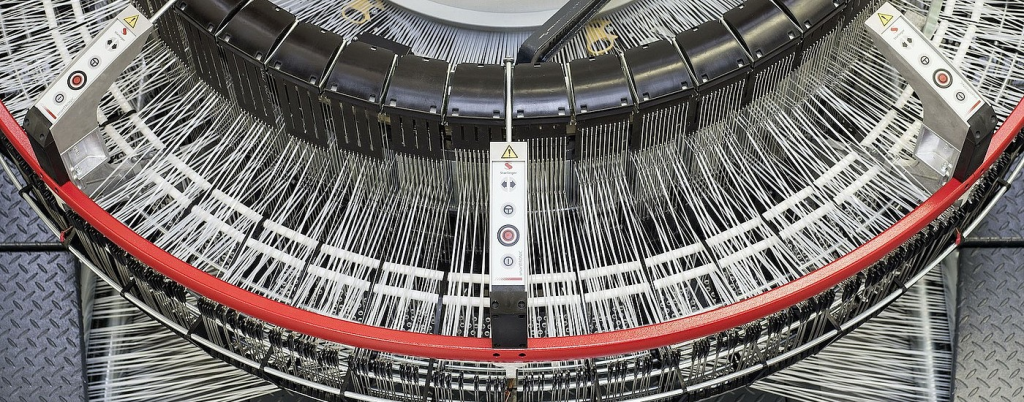
2) Fabric weaving. Tapes feed circular or flat looms to create fabrics typically 160–220 g/m², adjusted by application. For baffle bags, lightweight internal panels are cut with precise apertures that allow cross‑flow during filling without sacrificing the bag’s squareness. Loom tension, pick count, and tape modulus co‑determine how a bag behaves under corner‑lift versus side‑squeeze.
3) Surface engineering and liners. Coatings (PP/PE ≈20–30 g/m²) are applied where moisture barriers or dust control are vital. LDPE/HDPE liners—film‑blown, then gusseted or tubular—are inserted and tied off for hygroscopic or oil‑rich feeds. The horizontal parallel in bottle packaging would be choosing between monolayer PET and multilayer with barrier—same logic, different medium.
4) Cutting, printing, and assembly. Patterns are hot‑knife cut (sealing edges as they’re cut), printed via multi‑color flexography, and stitched using chain or lock seams with specified seam allowances to hit target seam efficiency. Lift loops of PP multifilament webbing are bartacked into load paths; base patches and wear strips reinforce high‑stress zones. The craftsmanship is quiet but consequential: a crooked stitch today is a ruptured seam tomorrow.
5) Finishing and QA. Filling and discharge spouts are sized (e.g., Ø 35–50 cm, 45–60 cm length) and fitted with closures. Bags undergo inspections per internal SOPs and, when required, test regimes aligned with ISO 21898 and IEC 61340 for electrostatic control. Top‑lift, cyclic loading, and drop tests are not ceremonial—they are the line between safe lifts and unsafe guesses.
6) Compliance and traceability. Batch codes, COA/COC, and material declarations support audits in the feed sector. For adjacent hazardous powders, UN performance certification is available in non‑feed contexts.
At VidePak, process stability is anchored by equipment from Germany’s W&H and Austria’s Starlinger. Capacity is real: 100+ circular looms, 16 extrusion lines, and 30+ lamination/printing machines. Founded in 2008, backed by a core team with 30+ years of woven‑packaging experience, VidePak tunes draw ratios, weave densities, loop geometries, and spout dimensions to the behavior of your actual product—not a generic spec sheet.
What is the application of FIBC Bags?
Animal feed and nutrition. FIBC Bags carry compound feed, pellets, mash, premixes, vitamins/minerals, bran, corn/maize, soybean meal, and DDGS. Baffles heighten truckload efficiency; liners preserve moisture‑sensitive mixes; antistatic builds mitigate ignition risk around grinders and pneumatic transfers. The vertical chain of benefit runs from filled bag geometry (squareness) to pallet pattern to trailer fill rate to delivered cost per ton.
Agriculture and ingredients. Seeds, grains, sugar, and salt move cleanly through controlled spouts. Uncoated fabrics allow gentle venting where a little breathability aids flow; coated fabrics with liners shield hygroscopic cargos during monsoon seasons or humid storage.
Chemicals and minerals (adjacent uses). Resins, masterbatch, calcium carbonate, barite, and bentonite exploit the same mechanics—ton‑class loads with safe handling and clean discharge—often specified as Type C/D for static control. The horizontal analogue here is clear: different powders, same physics.
In‑plant logistics. At filling, FIBC Bags reduce stoppages by pairing spout diameters with de‑dusting systems and bag vibrators. At discharge, iris valves and rope ties meter flow into mixers and dosing screws. Empty bags collapse to a fraction of their filled volume, slashing return freight and reclaiming floor space versus rigid IBCs or drums. Ask the warehouse supervisor what that means on a tight site—she’ll point to the cleared aisle.
Across geographies—United States, Europe, Brazil and South America, Southeast Asia, Japan, Korea, Central Asia, the MENA region, East Africa, and South Africa—VidePak adapts fabric specs, loop designs, and hygiene controls to local climates and codes. With 568 employees and annual sales near US$80 million, scheduling is responsive, yet output remains consistent.
Typical Parameters for FIBC Bags
The values below reflect widely used, real‑world ranges in the industrial bulk‑bag market. Select to match filler design, product rheology, safety regime, and logistics model.
| Parameter | Typical Options / Range |
|---|---|
| Product | FIBC Bags (bulk bags / big bags / jumbo bags) |
| Safe Working Load (SWL) | 500–2,000 kg |
| Safety Factor (SF) | 5:1 (single use), 6:1 (multi‑trip) |
| Body Styles | U‑panel, four‑panel, circular/tubular, baffle (Q‑bag) |
| Common 1‑ton Size | ~90 × 90 × 110 cm (customizable) |
| Fabric Weight | ~160–220 g/m² woven PP (application‑dependent) |
| Coating | PP/PE 20–30 g/m² (optional) |
| Liner Options | LDPE/HDPE 60–120 μm (gusseted or tubular) |
| Filling Options | Spout / duffle / conical top |
| Discharge Options | Spout bottom with star/petal closure, full‑open base |
| Lift Loops | 4 corner/cross‑corner, stevedore straps optional |
| Static Control | Type A/B/C/D (as application requires) |
| Printing | Flexographic, multi‑color, barcode/QR ready |
| Compliance | ISO 21898, IEC 61340 (as specified) |
| Extras | Sift‑proof seams, baffles, document pouch, label window |
Why VidePak for FIBC Bags
VidePak blends engineering depth, production scale, and global coverage into a dependable partnership for FIBC Bags. The company’s equipment roster—W&H and Starlinger—keeps gauge control, registration, and seam efficiency inside tight bands so performance is repeatable week after week. The materials policy is straightforward: virgin PP structural components by default, with controlled recycled content available for non‑food contexts where regulations allow. Customization is routine: multi‑color flexo artwork, gloss or matte surfaces, micro‑perforation patterns, liners matched to moisture profiles, valve and spout geometries tuned to your frames and powders.
For VidePak, a bag is not a commodity but a system: polymer → tape → fabric → seam → loop → pallet → truck. Change one variable and the system rebalances; ignore the dependencies and the system complains. That is why FIBC Bags specified and built by VidePak behave predictably in the real world—during a rainy yard staging, a noon loading rush, or a midnight batching cycle—when predictability is the difference between a good shift and a bad one.
- What are FIBC Bags?
- What are the features of FIBC Bags?
- What is the production process of FIBC Bags?
- What is the application of FIBC Bags?
- Typical Parameters for FIBC Bags
- Understanding FIBC Bags: What Are They?
- Key Features of FIBC Bags for Animal Feed Packaging
- Advantages of Using FIBC Bags for Animal Feed
- Industry Trends and Demand for FIBC Bags in Animal Feed Packaging
- Key Specifications for Animal Feed FIBC Bags
- FAQs about FIBC Bags for Animal Feed Packaging
- Conclusion
Animal feed packaging is an essential aspect of the agricultural industry. With the growing demand for sustainable and cost-effective solutions, Flexible Intermediate Bulk Containers (FIBC) bags have emerged as an ideal packaging choice for various types of animal feeds. This blog explores why FIBC bags are a perfect fit for packaging animal feed, discussing their features, benefits, and answering common questions regarding their use.
Understanding FIBC Bags: What Are They?
FIBC bags, also known as bulk bags, jumbo bags, or super sacks, are large, durable containers used to store and transport bulk materials. These bags are typically made from woven polypropylene (PP) fabric, which is strong, lightweight, and resistant to various environmental factors, including moisture and UV rays. FIBC bags are designed to handle large volumes, making them perfect for industries like agriculture, construction, chemicals, and more.
The versatility of FIBC bags makes them an excellent choice for packaging animal feed, which often requires secure, contamination-free, and easy-to-handle solutions. Animal feed manufacturers have realized that FIBC bags offer multiple advantages over traditional packaging methods such as paper sacks or plastic containers.
Key Features of FIBC Bags for Animal Feed Packaging
FIBC bags are designed with specific features that make them ideal for transporting and storing animal feed. Let’s take a closer look at these key characteristics:
| Feature | Benefit |
|---|---|
| Material | Woven polypropylene (PP) fabric offers strength, flexibility, and resistance to moisture and UV rays. |
| Size | Available in various sizes, typically ranging from 500kg to 2000kg capacity, making them suitable for different bulk feed quantities. |
| Shape and Design | Can be customized with options like baffle bags for stability and designs that minimize bulging. |
| Handles | Equipped with lifting loops or handles to make transportation easier. |
| Moisture Resistance | Impermeable to moisture, helping maintain the feed’s quality and prevent spoilage. |
| Customization | Available in different colors, printing, and branding options for better market visibility. |
These characteristics are just a few reasons why FIBC bags are increasingly used for animal feed packaging. They offer strength and reliability, reducing the risk of feed contamination and spoilage during transport.
Advantages of Using FIBC Bags for Animal Feed
FIBC bags offer a range of benefits that make them particularly suited for packaging animal feed. These advantages include:
1. Durability and Strength
FIBC bags are built to withstand the weight and bulk of animal feed. Their strong woven polypropylene construction ensures that the bags can carry substantial loads without tearing or breaking. This makes them ideal for packaging heavy bulk materials like animal feed, which may weigh several hundred kilograms per bag.
2. Protection from Contamination
Contamination is a significant concern when it comes to packaging food and feed products. FIBC bags are designed to be clean, airtight, and moisture-resistant, which reduces the risk of contamination during storage and transportation. This ensures that the feed remains safe and fresh, preserving its nutritional value.
3. Efficient and Cost-Effective
One of the biggest advantages of FIBC bags is their cost-effectiveness. FIBC bags are lightweight, easy to handle, and can be customized to suit specific storage and transportation needs. This reduces packaging costs and enhances logistics efficiency. The large capacity of FIBC bags also means fewer bags are needed for transportation, reducing the overall cost per unit.
4. Sustainability
With sustainability becoming increasingly important, FIBC bags offer a more eco-friendly solution compared to traditional packaging options. Made from recyclable polypropylene, FIBC bags can be reused, which reduces waste and lowers the carbon footprint associated with packaging. Moreover, many manufacturers now offer biodegradable FIBC bags, further enhancing their environmental benefits.
5. Ease of Handling and Storage
The design of FIBC bags, with their lifting loops and ability to be stacked, makes them easy to handle and store. These features reduce the need for additional handling equipment and help maximize storage space in warehouses and transportation vehicles.
Industry Trends and Demand for FIBC Bags in Animal Feed Packaging
The demand for FIBC bags in the animal feed packaging sector has been steadily growing due to several emerging industry trends:
- Sustainability Focus: With growing concern over plastic waste and the environmental impact of traditional packaging materials, the agricultural industry is moving towards more sustainable packaging options. FIBC bags, especially those made from recyclable and biodegradable materials, align with this shift.
- Increased Demand for Bulk Feed: As animal feed production increases to meet the needs of the growing livestock and poultry industries, the need for bulk packaging solutions has also surged. FIBC bags provide the ideal solution for bulk packaging due to their large capacity and efficient handling.
- Cost-Effectiveness: As competition intensifies in the agriculture sector, businesses are increasingly looking for ways to reduce operational costs. FIBC bags help reduce packaging and shipping costs, offering a competitive edge for animal feed manufacturers.
Key Specifications for Animal Feed FIBC Bags
When choosing FIBC bags for packaging animal feed, it’s essential to consider several factors related to the bag’s specifications. The most important parameters include:
| Parameter | Recommended Range/Value |
|---|---|
| Material | 100% woven polypropylene (PP) |
| Size/Capacity | 500kg to 2000kg |
| Design Type | Baffle or non-baffle bags (depending on load stability) |
| Top Closure | Open top, duffle top, or spout top (depending on use) |
| Bottom Closure | Flat bottom or discharge spout |
| UV Resistance | UV-treated fabric for exposure to sunlight |
| Coating/Finish | Coated or uncoated (depending on moisture protection needs) |
These specifications ensure that the FIBC bags meet the specific requirements of animal feed packaging, providing adequate protection and ease of handling throughout the supply chain.
FAQs about FIBC Bags for Animal Feed Packaging
1. What types of animal feed can FIBC bags be used for?
FIBC bags are suitable for a wide range of animal feeds, including grains, pellets, powders, and other bulk feed products. They provide excellent protection and ensure that the feed remains dry, fresh, and uncontaminated during storage and transportation.
2. Are FIBC bags customizable for animal feed packaging?
Yes, FIBC bags can be customized in various ways, including size, color, and printing. Custom branding and printing can also be added to FIBC bags, allowing feed manufacturers to create branded packaging that stands out in the market.
3. How do FIBC bags ensure the safety of the animal feed?
FIBC bags are designed with features like moisture resistance and airtight sealing to protect animal feed from contaminants such as water, dust, and pests. Additionally, the strong polypropylene material prevents the bags from tearing or breaking during transport, ensuring that the feed remains safe.
4. Are FIBC bags reusable and recyclable?
Yes, FIBC bags are reusable and recyclable, making them a more sustainable choice compared to single-use plastic bags or paper sacks. The polypropylene material is durable enough to withstand multiple uses, and at the end of their lifecycle, these bags can be recycled into new products.
5. How do FIBC bags compare to other packaging options for animal feed?
Compared to traditional packaging materials such as paper sacks or plastic containers, FIBC bags offer superior durability, cost-effectiveness, and ease of handling. They also provide better protection against environmental factors like moisture, which is particularly important for animal feed packaging.
Conclusion
FIBC bags are rapidly becoming the preferred solution for animal feed packaging due to their strength, efficiency, cost-effectiveness, and sustainability. As the demand for bulk packaging increases and sustainability becomes a key focus in the agricultural sector, FIBC bags offer an ideal packaging solution. Their customizable nature, durability, and ability to safeguard the quality of animal feed make them an essential part of the supply chain for animal feed manufacturers.
For more on the role of FIBC bags in modern packaging solutions, check out the full overview of FIBC bags and their benefits.
Additionally, for a deep dive into how innovations in packaging technology are shaping the future of the industry, explore Videpak’s advancements in FIBC bags.