
What are Poly‑BOPP Bags?
Poly‑BOPP Bags are polypropylene (PP) woven sacks laminated with a biaxially oriented polypropylene (BOPP) film. Think of them as a duet: the woven PP is the muscle that carries weight and resists abuse; the BOPP face is the eloquent voice that carries graphics, barcodes, and brand stories through the rough‑and‑tumble of distribution. In trade language they also appear as BOPP laminated woven sacks, BOPP laminated PP woven bags, poly woven BOPP bags, or simply BOPP bags. Names aside, the intent is constant—let a high‑tenacity fabric hold the product while a scuff‑resistant film protects and presents the message.
Why do Poly‑BOPP Bags matter now? Because packaging has a new mandate: lighter, tougher, better‑looking, and more circular where infrastructure permits. Woven PP contributes tensile strength and puncture resistance; BOPP contributes a print‑ready surface with gloss or matte aesthetics and low porosity. When specified as a PP‑dominant construction (PP fabric + BOPP + PP tie layers), post‑industrial and—in some regions—post‑consumer PP (#5) streams can accept it, creating a credible pathway beyond single use. This is not marketing poetry but engineering prose: polymer orientation → fabric modulus → lamination integrity → pallet behavior → shelf presence. For a concise overview of typical constructions, see Poly‑BOPP Bags.
Horizontally, compare Poly‑BOPP Bags to adjacent solutions. Multi‑wall kraft breathes well and prints warmly, yet it softens in humid yards; monolayer PE films seal hermetically and run fast on FFS lines, yet at equal tare they can suffer punctures and pallet slip. Poly‑BOPP Bags occupy a productive middle ground: woven backbone for strength, laminated skin for moisture moderation and durable graphics. Vertically, trace the cause‑and‑effect ladder from isotactic PP crystallinity to tape draw ratio, from tape draw ratio to fabric stiffness, from fabric stiffness to seam efficiency and drop performance. Small decisions at the micrometer scale ripple into real outcomes at the truck‑load scale.
What are the features of Poly‑BOPP Bags?
High strength‑to‑weight performance. Oriented PP tapes woven into fabric deliver a surprising load capacity at modest grammage. In the 5–50 kg segment common to staples, fertilizers, feeds, and minerals, Poly‑BOPP Bags maintain seam integrity through high‑speed filling, vibration settling, side‑grip forklift handling, and long‑haul distribution. Put simply: less tare, more staying power.
BOPP Woven Bags
Future-focused Poly BOPP bags leading sustainable packaging trends with eco-friendly design.
Check More →BOPP Laminated PP Woven Bags
Innovative laminated BOPP packaging aligned with future sustainable industry standards.
Check More →BOPP Laminated Bag Solutions
Custom sustainable packaging solutions for Poly BOPP bags adapting to future market trends.
Check More →Transparent Window BOPP Bags
Modern sustainable Poly BOPP woven bags with transparent design for next-generation packaging.
Check More →Moisture moderation with image durability. The BOPP laminate forms a low‑porosity shield that helps resist water ingress while guarding inks against scuff, rub, and fade. Where powders trap air during fast fills, patterned micro‑perforation lets air escape without ballooning or ink smearing—vent when you need to, seal when you must. The result is cleaner lines, cleaner pallets, cleaner warehouses.
Shelf‑ready graphics. Reverse rotogravure on BOPP supports continuous‑tone imagery, rich solids, crisp small type, and machine‑readable codes. Gloss finishes heighten saturation; matte finishes cut glare for regulatory panels. With spot‑matte on gloss—or the reverse—you can stage contrast that directs attention like a stage light in a dark theater.
Format flexibility. Open‑mouth, gusseted sacks support manual and semi‑automatic operations; block‑bottom (brick‑shape) variants create cuboid stacks that travel straight and store neatly. Feature menus include easy‑open tapes for controlled tear, anti‑skid textures to raise bag‑to‑bag friction, and transparent windows to showcase contents where permitted by regulation.
Yard resilience. UV‑stabilized tapes and films help fabrics retain tensile properties during outdoor staging. Hemmed tops, smooth edges, and optional edge reinforcements reduce snagging along rails and conveyors. It’s the quiet design work that prevents the noisy clean‑up.
Recyclability‑oriented design. A PP‑dominant stack simplifies sorting versus paper/PE or paper/PP composites. Does infrastructure vary by market? Certainly. Yet choosing one polymer family—fabric, tie layer, face film—gives the best odds of downstream compatibility when recovery streams are present.
Consider a lateral snapshot: paper breathes but wilts, films seal but slip; Poly‑BOPP Bags stand square, read clearly, and resist abuse. Consider a vertical snapshot: tape width sets weave density; weave density governs print lay‑down; print lay‑down influences converting speeds; converting speeds affect your OEE. The chain is continuous; the choices are connected.
What is the production process of Poly‑BOPP Bags?
1) PP tape extrusion & orientation. Virgin PP is melted, slit into tapes, and drawn to align polymer chains—often at 5:1–7:1 ratios—followed by annealing to lock in orientation. Additives (HALS UV stabilizers, slip/anti‑block agents) are dosed to match service conditions. The physics is elegant: stretch to strengthen, cool to set, anneal to keep.
2) Fabric weaving. Tapes feed circular or flat looms to achieve a target weave density, typically 10×10 to 14×14 threads per inch. Loom tension, pick count, and tape width co‑determine fabric modulus, tear path, and surface readiness for lamination and print. Anti‑skid textures can be woven or added later to improve pallet grip.
3) BOPP film preparation. BOPP is biaxially oriented in tenter or bubble processes to impart stiffness and dimensional stability. Corona treatment elevates surface energy for ink anchorage. Films are specified in gloss or matte with thickness tuned to barrier, optics, and handling.
4) High‑fidelity printing. Artwork is reverse‑printed on the BOPP via multi‑color rotogravure. Because the ink sits under the film after lamination, the graphic layer gains natural protection against rub and solvents. Fine codes remain scannable after conveyor rub tests that defeat lesser prints.
5) Extrusion lamination. A PP‑based tie layer bonds printed BOPP to the woven substrate. Caliper uniformity controls curl, feel, and bond strength. Where deaeration is required, micro‑perforations can be introduced pre‑lamination or post‑lamination to match filler behavior and dust‑control goals.
6) Converting. Laminated webs are cut, tubed, gusseted, and bottomed—stitched or heat‑sealed—into open‑mouth or block‑bottom formats. Features such as easy‑open bands, anti‑skid coatings, window panels, and tear notches are added here. Stitch type (chain vs. lock), seam allowance, and fold geometry are tuned to hit seam‑efficiency and drop‑test targets.
7) Quality assurance. Routine controls include seam efficiency, tensile/burst strength, drop behavior, ΔE color accuracy vs. proofs, ink adhesion, coefficient of friction (bag‑to‑bag and bag‑to‑metal), and UV retention. Process control is not a poster on the wall—it’s a loop: data from QA feeds back to extrusion, lamination, and converting to keep the process centered around specification.
At VidePak, this chain runs on equipment from Germany’s W&H and Austria’s Starlinger. Capacity is real: >100 circular looms, 16 extrusion lines, and >30 lamination/printing machines. Founded in 2008 and powered by a core team with 30+ years in woven packaging, VidePak tunes draw ratios, weave densities, laminate stacks, and micro‑perf maps to the behavior of your actual product, not a theoretical ideal.
What is the application of Poly‑BOPP Bags?
Staple foods & retail grains. Rice, pulses, sugar, and flour demand moisture moderation and legible, attractive panels. Poly‑BOPP Bags deliver billboard‑quality art that survives handling while transparent windows (where allowed) build consumer trust—what you see is what you buy. Barcodes stay crisp and scannable after long transit.
Fertilizers & soil amendments. Granular NPK, urea, and specialty blends have sharp edges and abrasive tendencies. The woven core resists puncture; the BOPP skin resists scuff. Pallets arrive square, graphics intact, complaints reduced.
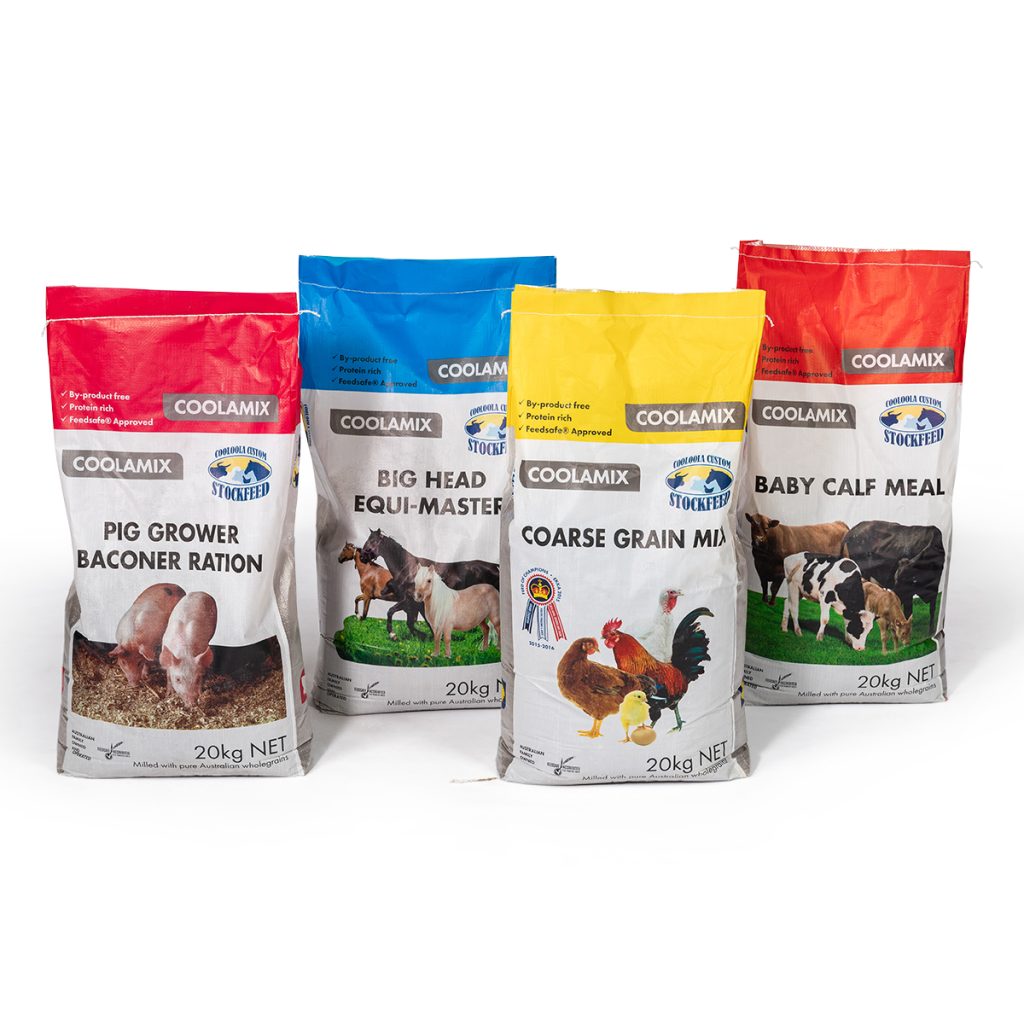
Animal feed & seeds. Pellets, mash, and premixes benefit from laminates that curb dusting and woven cores that accept high drop energy. Block‑bottom geometry forms brick‑like stacks for narrow aisles and stable trucking.
Building materials & minerals. Tile adhesive, grout, light aggregates, and calibrated sands require strong seams, clear safety panels, and—for fast lines—controlled deaeration. Micro‑perfs accomplish this without sacrificing print integrity.
Chemical & industrial goods. Where regulations, hazard pictograms, and traceability dominate, rotogravure on BOPP presents dense information cleanly and resists the conveyor rub that smears surface‑printed inks.
Across geographies—the United States, Europe, Brazil and South America, Southeast Asia, Japan, Korea, Central Asia, the MENA Region, East Africa, and South Africa—VidePak aligns fabric specs, laminate stacks, and artwork with local climate and codes. With 568 employees and annual sales near US$80 million, we pair enterprise scale with responsive schedules.
Typical Parameters for Poly‑BOPP Bags
The ranges below mirror widely used, real‑world specifications for BOPP‑laminated woven sacks. Select to match filler design, product rheology, climate, and logistics. Values are application‑dependent and customizable.
| Parameter | Typical Options / Range |
|---|---|
| Product | Poly‑BOPP Bags (open‑mouth / gusseted / block‑bottom) |
| Fabric (GSM) | ~70–110 g/m² woven PP (other ranges by application) |
| BOPP Film Thickness | 15–35 μm (gloss or matte; reverse‑printed) |
| Weave Density | 10×10 to 14×14 (warp×weft, threads/inch) |
| Bag Capacity | 5–50 kg common (rice/feed/fertilizer SKUs) |
| Common 50‑kg Size | ~50 × 80 cm (±1–2 cm by filler spec) |
| Micro‑Perforation | Patterned micro‑perfs for deaeration during filling |
| Printing | Rotogravure, multi‑color; barcode/QR capable |
| Coefficient of Friction | ≈0.30–0.60 (bag‑to‑bag with anti‑skid options) |
| Closures | Heat‑cut/hemmed top; single/double fold bottom; chain/lock stitching |
| UV Stabilization | Options up to ≈3000 h (storage profile dependent) |
Why VidePak for Poly‑BOPP Bags
- Engineering discipline. W&H and Starlinger assets keep lamination gauge, registration, and seam efficiency inside tight bands—so week‑to‑week runs look the same and perform the same.
- Materials & customization. We default to 100% virgin PP structural materials, support multi‑color printing, and tailor weave density, laminate caliper, micro‑perfs, anti‑skid textures, and window designs to your filler speed and product flow.
- Scale that flexes. With >100 circular looms, 16 extrusion lines, and >30 lamination/printing machines, we execute multi‑SKU rollouts without bottlenecks.
- Global support. From prepress to ship‑ready pallets, our teams cover the US, Europe, Brazil, South America, Southeast Asia, Japan, Korea, Central Asia, MENA, East & South Africa.
Work with VidePak to specify Poly‑BOPP Bags that carry your product securely, carry your brand vividly, and carry your sustainability goals forward—without carrying excess cost.
- What are Poly‑BOPP Bags?
- What are the features of Poly‑BOPP Bags?
- What is the production process of Poly‑BOPP Bags?
- What is the application of Poly‑BOPP Bags?
- Typical Parameters for Poly‑BOPP Bags
- Why VidePak for Poly‑BOPP Bags
Poly-BOPP (Biaxially Oriented Polypropylene) Bags are redefining sustainable packaging by offering a durable, eco-friendly, and highly customizable solution that meets the evolving needs of industries such as food, agriculture, and industrial goods. These bags combine advanced material technology, aesthetic versatility, and sustainability to support businesses aiming to align with global environmental goals while enhancing brand value.
What Are Poly-BOPP Bags?
Poly-BOPP bags are crafted using biaxially oriented polypropylene, a material celebrated for its exceptional clarity, strength, and moisture resistance. Their ability to withstand demanding conditions while providing an attractive finish makes them an ideal choice for diverse packaging needs.
Key Benefits of Poly-BOPP Bags
- Durability
- High tensile strength ensures these bags can carry heavy loads without tearing or losing integrity, making them suitable for industrial and commercial use.
- Customizable Aesthetics
- Multi-color, high-definition printing enhances branding opportunities, allowing companies to stand out in competitive markets.
- Moisture and Barrier Protection
- Poly-BOPP’s barrier properties protect contents from moisture, air, and contaminants, ideal for products requiring extended shelf life.
- Eco-Friendly Options
- Fully recyclable and available in biodegradable formats, these bags cater to increasing demand for sustainable solutions.
The Role of Poly-BOPP Bags in the Chinese Market
Regional Trends and Demands
China’s robust manufacturing and export landscape position it as a global leader in the adoption and innovation of Poly-BOPP bags. Key market trends include:
- Food Safety Regulations: Poly-BOPP bags are increasingly used in food packaging to meet stringent safety and hygiene standards.
- Agricultural Needs: The agricultural sector benefits from moisture-resistant bags for fertilizers and grains.
- Sustainability Push: Government policies encourage the adoption of recyclable materials, driving demand for eco-friendly packaging.
VidePak’s Competitive Edge
VidePak differentiates itself by prioritizing long-term brand development, exceptional quality standards, and customer trust. Unlike manufacturers focusing solely on cost, VidePak adopts a holistic approach, investing in innovation, material testing, and brand reputation to establish itself as a reliable global supplier.
Customization Options for Poly-BOPP Bags
| Feature | Options | Benefits |
|---|---|---|
| Printing | Flexographic, digital printing | Enables detailed, vibrant designs. |
| Lamination | Glossy, matte, metallized | Improves durability and visual appeal. |
| Inner Liners | PE, aluminum foil | Provides added protection for sensitive contents. |
| Closure Types | Heat-sealed, stitched | Ensures secure containment. |
| Capacity | 5-50 kg | Caters to a range of industrial and consumer needs. |
For a detailed look at customizable options, visit The Future of BOPP Woven Bags: Sustainability and Customization Leading the Way.
Emerging Trends in Poly-BOPP Bags
- Biodegradable Innovations
- Manufacturers are developing bio-based Poly-BOPP to enhance recyclability and reduce environmental impact.
- Smart Packaging Features
- QR codes and RFID tags integrated into bags offer supply chain transparency and enhance consumer engagement.
- Automation in Production
- Advanced machinery ensures consistency in quality and faster turnaround times, making mass production more efficient.
- Global Demand for Sustainability
- Consumers increasingly favor brands adopting sustainable practices, reinforcing the importance of eco-friendly packaging.
FAQs About Poly-BOPP Bags
Q1: What makes Poly-BOPP bags sustainable?
Poly-BOPP bags are fully recyclable, and biodegradable variants are available to reduce landfill waste and environmental impact.
Q2: What industries benefit most from these bags?
Industries such as food packaging, agriculture, construction, and pet care gain the most from Poly-BOPP bags due to their durability and moisture resistance.
Q3: How customizable are these bags?
Poly-BOPP bags can be tailored in terms of size, printing, lamination, and inner liners to suit specific business needs.
Q4: Why choose aluminum foil liners?
Aluminum foil liners provide excellent barrier protection against air, light, and moisture, ideal for products requiring high-quality preservation.
Q5: Are Poly-BOPP bags cost-effective?
Yes, they offer a balance of affordability, durability, and aesthetic appeal, ensuring value for businesses across sectors.
Learn more about the environmental benefits of recyclable bags by visiting Polypropylene Bags: A Versatile Packaging Solution with Customizable Aesthetic Options.
Implementing Poly-BOPP Bags: A Step-by-Step Guide
- Assess Product Needs
- Evaluate factors such as load capacity, moisture resistance, and branding requirements.
- Choose Customization Features
- Select lamination, printing, and liner materials tailored to your target market and product.
- Partner with a Trusted Supplier
- Collaborate with manufacturers like VidePak for consistent quality and timely delivery.
- Focus on Sustainability
- Opt for recyclable or biodegradable options to align with eco-conscious consumer preferences.
- Leverage Branding Opportunities
- Use high-definition printing to boost market visibility and reinforce your brand identity.
Conclusion
Poly-BOPP Bags are setting a new standard in the packaging industry by offering a perfect mix of durability, sustainability, and aesthetic versatility. As consumer demands and regulatory landscapes evolve, businesses must embrace these innovative solutions to remain competitive. VidePak’s commitment to quality, sustainability, and long-term brand development ensures that businesses not only meet their packaging needs but also strengthen their reputation in an increasingly eco-conscious market.