
What Are Woven Bags?
Woven Bags are engineered industrial packages made from interlaced polypropylene (PP) tapes that form a lightweight yet high‑tenacity fabric—part textile, part structural component. In different regions you’ll see the same concept described as PP woven bags, woven poly sacks, woven polypropylene bags, or woven packaging sacks. Different aliases, one mission: carry dry, flowable, or granular goods in the 5–50 kg class while enduring clamps, conveyors, forklifts, rain squalls, and rough yards. For buyers comparing substrates, Woven Bags sit between the print warmth of paper sacks and the seal simplicity of mono‑film PE—bridging aesthetic, mechanical, and barrier needs in a single platform.
Unlike plain film or paper, Woven Bags behave like engineered textiles. Warp and weft share load; oriented polymer chains resist propagation of tears; the surface can be tuned—left breathable for venting, coated for moisture control, or laminated for premium, scuff‑resistant graphics. Horizontally, they connect packaging science with logistics practice: resin → tape → fabric → pallet. Vertically, they map cause to effect: draw ratio determines denier; denier plus mesh density governs puncture resistance; coating weight influences WVTR and sealability; all of which roll up to fewer rewraps, truer stacks, and calmer audits. If paper is the storyteller and film is the seal specialist, Woven Bags are the steady foreman keeping the site on schedule.
To make this concrete—and clickable—see our product overview: Woven Bags.
What Are the Features of Woven Bags?
Strength without excess bulk. The biaxial lattice inside Woven Bags distributes stress across warp and weft, delivering high tensile and tear performance at moderate grammage. Corners behave better; seams last longer; pallets travel farther. Angular products—resins, pigments, mineral chips—bruise fewer panels because the fabric flexes to diffuse impact rather than surrendering at a single point.
Pasted Paper Valve Bags
Premium pasted valve bags engineered for safe, efficient packaging of chemical powders and industrial granular materials.
Check More →Paper Valve Woven Bags
Durable pasted valve woven bags with excellent sealing performance for chemical powder and industrial packaging needs.
Check More →PP Woven Valve Bags
Heavy-duty valve bags ideal for chemical powder packaging, featuring strong construction and reliable pasted valve design.
Check More →Pasted Valve Bag Applications
Versatile pasted valve bags widely used for chemical powder packaging, industrial materials, and bulk powder storage.
Check More →Moisture control as a menu, not a guess. Different corridors demand different defenses. Uncoated fabric breathes—useful for loads that off‑gas or carry residual moisture. An LDPE/PP coating (≈18–30 g/m², ~20–35 μm) lays down a continuous film skin that lowers water‑vapor transmission and enables heat‑sealed closures. When cargo is hygroscopic or shelf life is unforgiving, a PE inliner—clear for inspection or black for light/UV blocking—adds a second wall of protection. One layer slows vapor; the next layer stops it; the liner, if specified, makes complaints disappear.
Grip where it matters. Smooth films can skate on epoxy floors and steel forks; woven textures grip. Woven Bags raise pallet friction by design, and anti‑slip stripes or matte patches can further increase the coefficient of friction. Result: flatter stacks, fewer slide‑outs, quieter safety committees.
Graphics that survive the route. Surface flexo supports 1–6 colors for hazard icons, brand marks, and regulatory panels. For photo‑grade branding, reverse‑printed BOPP (15–25 μm, matte or pearlized) is laminated to create a rub‑resistant outer skin. A SKU should arrive exactly as it departed—legible, color‑true, and barcode‑ready.
Customization that respects process. Tube width, gusset depth, and cut length are selected to your forming shoulder and target stack height. Options include block‑bottom geometry for cubic pallets; easy‑open tapes for gloved operators; UV stabilization (200–300 h class) for sun‑exposed depots; anti‑sift seams for fine powders. In short, Woven Bags are tuned to corridor and climate, not just to SKU code.
Compliance‑ready by design. When required, polymer elements align with GB 4806.7 (food‑contact plastics), FDA 21 CFR 177.1520 (olefin polymers), and EU 10/2011. Print durability is verified to TAPPI T 830 / ASTM D5264; drop and compression to ASTM D5276 / D642; barrier claims to ASTM E96 / ISO 15106. Numbers replace narratives; audits move faster.
Systems thinking—horizontal and vertical. Horizontally, Woven Bags compare against paper (great print, limited wet strength) and mono‑film PE (great seals, limited clamp tolerance). Vertically, trace the chain: resin selection → tape draw → denier & crystallinity → fabric mesh & stiffness → seal window & seam design → pallet stability & claim rate. Each upstream choice echoes through downstream outcomes.
What Is the Production Process of Woven Bags?
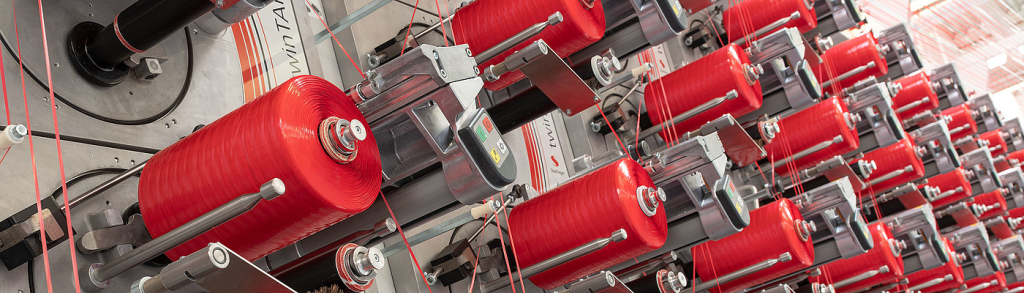
Extrusion & drawing—where strength is born. Virgin PP pellets are melted, extruded as a thin sheet, slit into tapes, and drawn to orient polymer chains. Draw ratio sets denier. Too little draw and the tape stretches, stress‑whitens, and tears; too much and it turns brittle. The correct window gives Woven Bags their signature blend of toughness and flexibility.
Weaving—turning tapes into fabric. Tapes interlace on circular looms. Picks per inch (mesh) and warp tension define openness (for breathability) versus smoothness (for print lay‑down). Typical meshes span 10×10 to 14×14 tapes/inch; tighter meshes contain fines and smooth the panel for small text, QR codes, and regulatory tables.
Surface engineering—coating, lamination, inlining. LDPE/PP coatings close inter‑yarn pores and create heat‑seal interfaces. BOPP laminations—matte for a premium subdued look, pearlized for bright opacity—enable photo‑grade reverse printing while protecting inks. PE inliners (40–80 μm) provide a second barrier; clear supports inspection, black blocks light and upgrades aesthetics. Corona treatment keeps surface energy inside a friendly dyne window so inks, adhesives, and seal layers anchor reliably.
Printing & conversion—identity meets utility. Flexo applies handling icons and artwork; gravure on BOPP locks image quality under film. The web is gusseted, cut to length, and closed by sewing (for breathable constructions) or heat‑sealing (for coated/laminated builds). Block‑bottom options improve cube; easy‑open tapes reduce time‑to‑access; anti‑slip stripes get added where floors are slick.
Quality gates—turning claims into numbers. Inline gauges track tube width, gusset depth, and squareness. Off‑line labs run drop (ASTM D5276), compression (ASTM D642), rub (ASTM D5264 / TAPPI T 830), seam/burst, and—when barrier is part of the spec—WVTR (ASTM E96/ISO 15106) at stated T/RH. Each certificate ties back to the SKU so that traceability is not a promise but a printout.
Why process details matter. Small shifts upstream—draw ratio, die temperature, loom tension—broadcast downstream as fewer leakers, straighter stacks, and cleaner scans. The process is the product; Woven Bags merely tell the story.
What Is the Application of Woven Bags?
Construction minerals & dry‑mix mortar. High bulk density, abrasive edges, long transit legs. Woven Bags with higher GSM and tighter mesh resist scuffing and edge puncture while coated builds shrug off drizzle at the dock. Barcodes stay scannable; pallets stay square; site teams stay patient.
Fertilizers & agrochemicals (solids). Hygroscopic blends demand humidity discipline. Laminated or coated Woven Bags with optional black inliners reduce caking and nutrient breakdown. Vent strategy balances fast fill and flat panels; the payoff is safer stacks and tidier depots.
Resins, masterbatches & industrial additives. Pellets want dust‑tight seams; masterbatches may be light‑sensitive. Woven Bags pair robust seams with windowed or fully laminated faces for brand impact that survives conveyor rub and clamp cycles. A bag that sells at a glance and survives at a shove.
Food ingredients (dry) & feed. Where audits matter, materials map to food‑contact frameworks. Matte faces and anti‑slip stripes support high‑bay racking; high‑contrast lot codes and big barcodes reduce WMS picking errors. The supply chain reads faster because the panels read cleaner.
Retail hardware & landscaping goods. Fasteners, fittings, soils, mulches—visibility (via windows) meets rugged handling. Woven Bags carry the load, carry the message, and carry their weight in uptime.
Recycling & municipal programs. Tough for mixed streams, precise for segregated ones. Colored print bands, QR codes, and job IDs improve accountability across curb‑to‑MRF journeys, while UV‑stabilized builds endure outdoor staging.
VidePak Manufacturing Capability Snapshot
Founded in 2008, VidePak is built for scale and repeatability. Our leadership averages 30+ years in packaging engineering. Today, 568 employees operate top‑tier platforms from Germany’s W&H and Austria’s Starlinger: 100+ circular looms, 16 extrusion lines, and 30+ lamination/printing machines. We insist on virgin raw materials, support full customization with multi‑color printing, and deliver globally—the United States, Europe, Brazil, South America, Southeast Asia, Japan, Korea, Central Asia, the MENA Region, East Africa, and South Africa—with annual sales around USD 80M. The operational edge: surge capacity without spec drift, color that stays on‑target, and lead times that respect launch calendars.
Table — Representative Parameters for Woven Bags
| Parameter (for Woven Bags) | Typical Range / Option | Notes |
|---|---|---|
| Capacity | 5–50 kg | Match to bulk density & pallet plan |
| Fabric weight (GSM) | 55–120 g/m² | Higher GSM for abrasive minerals or clamp handling |
| Tape denier | 700D–1200D | Denser tapes raise puncture & seam strength |
| Weave density (mesh) | 10×10–14×14 tapes/inch | Tighter mesh contains fines & smooths print zones |
| Flat width (tube) | 320–650 mm | Sized to forming shoulder; custom widths available |
| Cut length | 500–1100 mm | Planned to stack height & compression targets |
| Coating (LDPE/PP) | ≈18–30 g/m² (20–35 μm) | Improves moisture resistance; enables heat‑seal |
| Lamination (BOPP) | 15–25 μm | Reverse‑printed, scuff‑resistant premium panels |
| Optional PE inliner | Clear/black, 40–80 μm | Second barrier; black adds light/UV blocking |
| Printing | 1–6 colors flexo; up to 8 with BOPP | Spectro‑controlled color; barcode/QR windows |
| UV stabilization (optional) | 200–300 h class | For sun‑exposed depots and outdoor staging |
| Verification (as specified) | ASTM E96, D642, D5276, D5264/TAPPI T 830 | WVTR, compression, drop, rub; bond‑peel for laminates |
Ranges reflect widely published windows on Made‑in‑China, Alibaba.com, and peer technical datasheets; final targets are verified by line trials and route testing.
Why Woven Bags from VidePak?
Because we design for process, not merely purchase orders. Woven Bags from VidePak are tuned to realities you actually face—monsoon humidity or desert sun, clamp trucks or hand stacking, retail‑grade gloss or depot‑grade grit. We work the loop: problem → parameter → proof. Caking on coastal routes? Increase coating weight and specify a black inliner. Pallet slides on epoxy floors? Add anti‑slip stripes and set a friction threshold. Mis‑picks at the warehouse? Expand the barcode window and enforce contrast ratios. When packaging behaves like a system, schedules hold, budgets breathe, and brands arrive as intended.
- What Are Woven Bags?
- What Are the Features of Woven Bags?
- What Is the Production Process of Woven Bags?
- What Is the Application of Woven Bags?
- VidePak Manufacturing Capability Snapshot
- Why Woven Bags from VidePak?
Woven bags have become an indispensable part of modern packaging, serving a wide range of industries from agriculture to construction, and even waste management. Among the most notable technological advancements in the field, it plays a pivotal role in shaping the future of woven bags, enhancing efficiency, sustainability, and innovation.
In this blog, we’ll explore the core aspects of woven bag technology, the benefits of adopting modern woven packaging solutions, and how these innovations are transforming industries globally.
1. Understanding Woven Bags
Woven bags, also known as polypropylene (PP) woven bags, are produced by weaving threads of polypropylene, a durable and flexible plastic material. These bags have a variety of uses, from packaging agricultural products to construction materials, chemicals, and even food products.
Woven bags are favored for their strength, versatility, and recyclability. They’re also cost-effective, making them ideal for a wide range of applications. Woven bag technology has undergone significant advancements in recent years, improving production efficiency, environmental sustainability, and customization options.
2. Product Specifications and Key Features
When selecting woven bags for industrial use, it’s essential to understand the key specifications. The right choice of bag can significantly affect packaging efficiency, product safety, and cost-effectiveness.
| Feature | Description |
|---|---|
| Material | High-quality polypropylene (PP) |
| Strength | High tensile strength and resistance to tearing |
| Customization | Available in various sizes, colors, and printing options |
| Laminated Options | BOPP laminated for additional strength and printability |
| Printing | Multi-color flexographic printing capabilities |
| Types | Valve bags, open mouth bags, FFS tubular bags, jumbo bags |
| Durability | UV resistant, weatherproof, and moisture-resistant |
| Recyclability | Fully recyclable, contributing to eco-friendly practices |
| Load Capacity | Up to several hundred kilograms, depending on size |
3. Key Benefits of Woven Bags
Woven bags are becoming increasingly popular due to the numerous advantages they offer over traditional packaging options such as paper or plastic. Below are some of the most notable benefits:
A. Durability
Woven bags are highly durable due to the robust polypropylene material used. These bags can withstand heavy loads and are resistant to punctures, tears, and abrasions, ensuring that packaged goods remain safe during transport and storage.
B. Cost-Effectiveness
The production process for woven bags is cost-efficient, making them an affordable solution for large-scale industrial packaging needs. Additionally, their recyclability helps reduce long-term environmental costs.
C. Environmental Sustainability
With increasing concerns about plastic waste, woven bags are emerging as a more sustainable option in packaging. Companies like VidePak have committed to enhancing their woven bag designs by incorporating recyclable materials and eco-friendly manufacturing practices.
For more on this, see the article on embracing sustainability with transparent woven bags.
D. Customization Options
Woven bags can be customized in various ways to suit different business needs. From the size and shape of the bag to custom prints and color schemes, woven bags can be adapted to meet the specific requirements of any business, offering excellent branding opportunities.
E. Lightweight Yet Strong
Despite being lightweight, woven bags are incredibly strong, making them ideal for carrying heavy loads. This combination of strength and lightness contributes to more efficient shipping and storage, reducing transportation costs.
4. Applications of Woven Bags in Different Industries
Woven bags have applications across various industries, ranging from packaging consumer goods to construction materials and agricultural products.
A. Agricultural Packaging
In agriculture, woven bags are widely used to package grains, seeds, fertilizers, and other agricultural products. Their strength and versatility make them ideal for handling and transporting heavy goods, while their breathable nature ensures that the contents remain safe and undamaged.
B. Construction and Industrial Packaging
Woven bags are used extensively in the construction industry for packaging materials such as sand, cement, and chemicals. Their moisture-resistant properties help protect sensitive products from weather conditions. For instance, the versatility and benefits of FIBC bulk bags are well-suited for this sector, offering easy handling of bulk materials.
C. Food Packaging
In food packaging, woven bags are increasingly used due to their ability to safely contain dry goods such as rice, flour, sugar, and pet food. Laminated woven bags, such as those made from BOPP (Biaxially Oriented Polypropylene), provide an additional layer of protection, preserving the freshness of the contents.
D. Waste Management
Woven bags have gained traction in the waste management industry, especially in areas requiring heavy-duty bags for storing and transporting waste. Their durability and moisture resistance ensure that waste remains secure during disposal or recycling processes.
E. Retail Packaging
Woven bags are also used for retail packaging, particularly for bulk items such as pet food, grains, and other consumables. Their strength ensures that the bags can hold large quantities of goods without breaking, while their customizable printing allows businesses to create attractive packaging designs.
5. Common FAQs About Woven Bags
Q1: What are the advantages of using woven bags over traditional plastic bags?
A: Woven bags are more durable, cost-effective, and eco-friendly compared to traditional plastic bags. Their strength allows them to carry heavier loads, while their recyclability helps businesses meet sustainability goals.
Q2: Can woven bags be customized?
A: Yes, woven bags can be customized in size, shape, color, and print design. This makes them ideal for businesses looking to create unique, branded packaging solutions.
Q3: Are woven bags suitable for food packaging?
A: Yes, woven bags, especially those laminated with BOPP film, are commonly used in food packaging. They provide protection from contaminants while allowing for high-quality prints that make the packaging attractive to consumers.
Q4: How do woven bags contribute to environmental sustainability?
A: Woven bags are recyclable and can be made from recycled polypropylene materials. Their long lifespan and recyclability contribute to reducing waste compared to single-use plastic bags, making them a more sustainable option.
Q5: What is the best type of woven bag for heavy-duty use?
A: FIBC (Flexible Intermediate Bulk Containers) bags are ideal for heavy-duty use. These bags are designed to handle bulk materials and can be used for a variety of industrial and agricultural applications.
6. Trends in Woven Bag Technology
As industries evolve and demand for more sustainable packaging grows, woven bags continue to see innovations in design and manufacturing. Some of the latest trends in woven bag technology include:
- Smart Packaging: Incorporating sensors into woven bags for real-time tracking of contents, improving supply chain visibility and reducing theft.
- Eco-friendly Materials: With growing concerns about the environmental impact of plastics, more companies are adopting biodegradable or recyclable materials in woven bags.
- Advanced Manufacturing: Automated weaving and printing technologies, such as Starlinger machines, are increasing production efficiency while ensuring consistent quality in woven bags.
7. Conclusion
Woven bags are an essential part of modern packaging, offering a combination of strength, versatility, and environmental sustainability. As industries continue to innovate and push the boundaries of packaging technology, woven bags will remain a reliable and cost-effective solution for packaging needs. By adopting the latest technologies and manufacturing practices, businesses can ensure that their packaging solutions meet both customer expectations and environmental standards.
For more insights into how woven bags are revolutionizing packaging solutions, check out these articles on the latest innovations in woven packaging solutions: