
What are Multi‑wall Woven Bags?
Multi‑wall Woven Bags are engineered industrial sacks that combine a structural polypropylene (PP) woven core with one or more functional facings—kraft paper plies for a natural look, polyethylene (PE) coatings for rugged sealing, or biaxially oriented polypropylene (BOPP) films for photo‑grade graphics. In everyday terms: the woven fabric carries the load, the outer walls carry the message, and the multi‑wall architecture carries risk off your balance sheet. Across markets, Multi‑wall Woven Bags also appear as multi‑wall laminated woven sacks, paper–poly composite woven bags, kraft‑laminated PP woven bags, or block‑bottom laminated woven bags. Many aliases, one aim—give grain, seed, feed, and fertilizers a durable, print‑ready, moisture‑managed home that stands square on a pallet and looks trustworthy on a shelf.
Why highlight Multi‑wall Woven Bags now? Because agricultural logistics have grown longer, hotter, and more complex. Crops spend weeks at sea, days on rails, hours on forklifts. A package must be more than a container—it must be a shield against moisture, a signpost for traceability, a system component that plays nicely with conveyors and palletizers. The woven PP core delivers tensile strength and puncture resistance; the outer walls tune barrier, printability, and handling. Strength with shelf appeal; hygiene with safety; sustainability‑oriented design with line efficiency—on the same pallet. For a quick category waypoint, explore Multi‑wall Woven Bags.
From a horizontal lens, compare Multi‑wall Woven Bags to sewn multi‑wall kraft (breathable, but needle‑perforated) and to heavy‑duty mono‑film (hermetic, but less puncture‑resistant at equal tare). From a vertical lens, trace the cause‑and‑effect ladder: polymer orientation → tape tenacity → fabric modulus → laminate bond → seam geometry → pallet stability → claims rate. A single micron added at the laminator can echo as fewer split corners in the warehouse—materials science turning into measurable logistics outcomes.
What are the features of Multi‑wall Woven Bags?
Strength‑to‑weight that stacks straight. Oriented PP tapes woven into fabric distribute stress the way a truss spreads load. Corners stay crisp through spout impacts, clamp handling, and belt transfers; stacks stay square in containers and silos. The result is more product per pallet, fewer “leaning tower” surprises at the receiver, and calmer QA dashboards.
Moisture moderation with a printable face. Lamination lowers porosity compared with plain paper and shields inks from scuffing. Choose BOPP when photo‑quality branding (gloss or low‑glare matte) moves the needle; choose PE extrusion coats for rugged, high‑line‑count flexo where industrial data density matters. For crops that need a pressure‑release valve—onions, potatoes—specify controlled micro‑perforation zones to vent fill‑air without turning the warehouse dusty.
Block‑bottom geometry for pallet stability. The self‑opening square base behaves like a brick: it stands upright during filling, loads trailers cleanly, and resists “stack creep” in warm, humid yards. Procurement sees better cube utilization; operations see faster truck turns; retail sees billboard‑flat panels.
Hygiene and safety built in. Cleaner seams mean fewer fines escaping, safer aisles, and happier audits. Document pouches, label windows, and color‑coded panels keep batch codes and certifications visible. Anti‑skid textures lift bag‑to‑bag COF so columns don’t skate on wraps and decks.
Weather‑ready by design. UV‑stabilized tapes and films help retain mechanical properties during field‑side staging. Hemmed tops and edge guards cut snag risk on hooks and rails. From sun‑baked depots to monsoon ports, Multi‑wall Woven Bags behave like professionals.
Recyclability‑oriented construction. Keeping the structure within polyolefin families (PP fabric + BOPP/PE + PP/PE tie layers) supports PP‑aligned recovery streams where they exist, while optional paper plies add the natural aesthetic some markets prefer. One package, multiple end‑of‑life pathways—selected to match local infrastructure rather than wishful thinking.
Lateral comparison in one line: paper sacks breathe but wilt in drizzle; monolayer films seal well but scuff and puncture under edge loads; Multi‑wall Woven Bags bridge those worlds—woven backbone, tuned barrier, credible shelf presence.
What is the production process of Multi‑wall Woven Bags?
1) PP tape extrusion & orientation. Virgin polypropylene is melted, slit, and drawn—typically 5:1–7:1—so polymer chains align. Annealing locks orientation for repeatable tenacity. Additives (HALS UV, slip/anti‑block) are dosed to the service climate. In short: stretch to strengthen, cool to set, anneal to keep.
2) Fabric weaving. Tapes run on circular or flat looms to a target weave density (often 10×10 to 14×14 threads/inch). Tension and pick count set fabric modulus and tear path; surface flatness influences lamination quality and print laydown. The textile engineer’s decisions become the converter’s process window.
3) Wall construction (lamination).
- Paper–poly build: outer natural/bleached kraft plies (e.g., 70–120 g/m² outer; 60–90 g/m² inner) are joined to the woven core via PP/PE tie layers (~15–30 μm) in extrusion lamination. The interface must be uniform; uneven caliper telegraphs later as curl or gusset cracking.
- Film‑poly build: BOPP 15–35 μm (reverse‑printed) or PE 20–35 μm extrusion coat is applied to the woven fabric. Films are corona‑treated to lift surface energy for ink anchorage; tie‑layer selection balances bond strength and flexibility.
4) Printing. Multi‑color flexographic printing delivers high‑contrast agri panels and traceability data; rotogravure on BOPP carries continuous‑tone brand imagery. Registration control is functional, not cosmetic—GS1 barcodes must scan; QR codes must land inside capture zones; hazard diamonds must align with multilingual copy.
5) Converting & forming. Laminated webs are cut, tubed with side gussets, and formed into block‑bottom valve or open‑mouth sacks; pinch‑top variants serve heat‑activated sealants. Bottoms are stitched or heat‑sealed per laminate stack. Practical add‑ons—easy‑open tapes, anti‑skid coatings, clear windows (where permitted), document holders—are integrated here.
6) Vent strategy & liners. Laser or pin micro‑perforation maps accelerate deaeration on fast fills and can be tuned for crop respiration. Optional liners (LDPE/HDPE 20–80 μm) add hygiene or moisture management for hygroscopic goods.
7) Quality assurance. Routine controls include seam efficiency, tensile/burst strength, color ΔE vs. proof, COF (ASTM D1894), UV retention, and drop performance (often 0.8–1.2 m with conditioned loads). Data loops upstream to keep extrusion, lamination, and converting centered; a tighter process means tighter pallets.
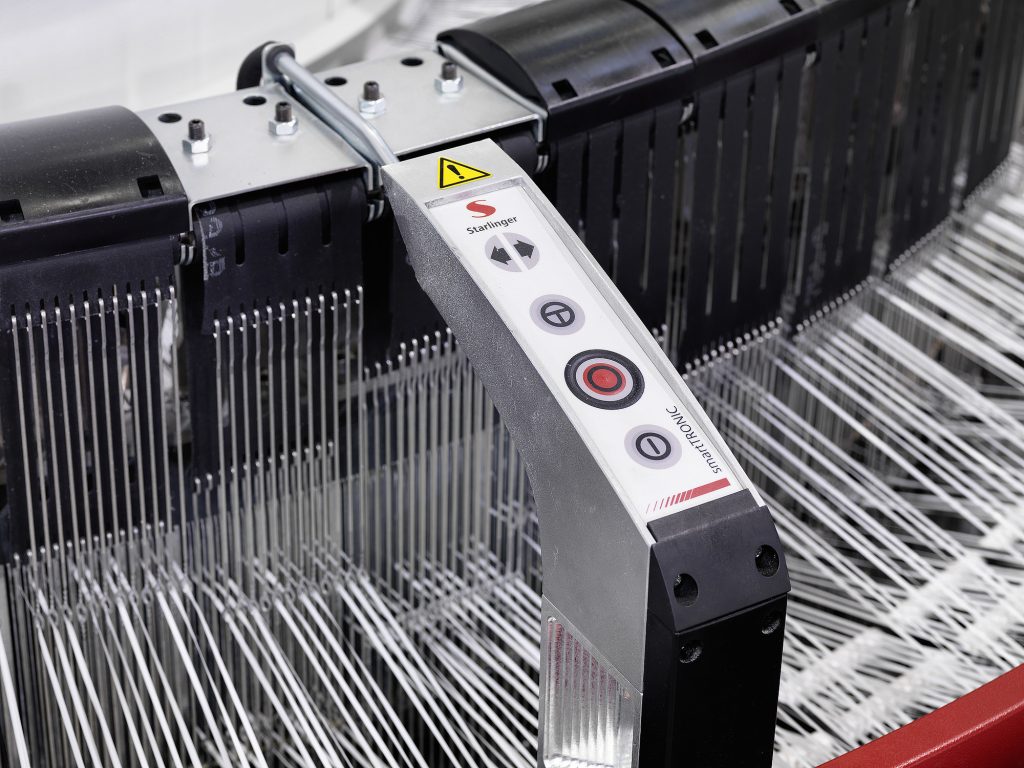
At VidePak, this chain runs on top‑tier assets from Germany’s W&H and Austria’s Starlinger. With >100 circular looms, 16 extrusion lines, and >30 lamination/printing machines, capacity scales while gauge control, registration, and seam tolerances remain consistent. Founded in 2008 and guided by a core team with 30+ years in woven packaging, we tune draw ratios, weave densities, laminate calipers, and vent maps to your crop and your line—not to a theoretical chart.
What is the application of Multi‑wall Woven Bags?
Staple grains & cereals. Rice, wheat, maize, and barley demand moisture moderation and stack integrity from mill to market. Multi‑wall Woven Bags keep graphics readable, seams closed, and pallets cube‑efficient—proof that logistics hygiene and shelf presence can coexist.
Seeds & specialty crops. High‑value seed requires puncture resistance and trustworthy traceability. Optional windows (where allowed) and high‑contrast print help growers verify contents without breaking a seal; robust seams protect germ rates from rough handling.
Animal feed & premixes. Pellets and micronutrient blends benefit from laminated faces that reduce dusting while keeping barcodes scan‑reliable through multiple transfers. Block‑bottom geometry builds square pallets that resist creep during long hauls.
Fertilizers & soil amendments. Hygroscopic NPK and urea need weather‑tolerant walls and disciplined pallets for container loading. Anti‑skid textures and UV‑stable tapes keep stacks neat in hot, humid ports; vent maps support fast fill without ballooning.
Produce supply (breathable variants). Onions and potatoes travel best in square‑standing packs with engineered vents—a sweet spot for Multi‑wall Woven Bags tuned for controlled respiration rather than uncontrolled leakage.
Across geographies—the United States, Europe, Brazil and South America, Southeast Asia, Japan, Korea, Central Asia, the MENA Region, East Africa, and South Africa—VidePak localizes fabric specs, laminate stacks, COF targets, and art to climate, code, and route risk. With 568 employees and annual sales near US$80 million, we combine enterprise scale with a responsive project cadence.
Typical Parameters for Multi‑wall Woven Bags
The ranges below mirror widely used, real‑world specifications for agricultural Multi‑wall Woven Bags. Select to match filler design, product rheology, climate, and logistics. Values are application‑dependent and customizable.
| Parameter | Typical Options / Range |
|---|---|
| Product | Multi‑wall Woven Bags (block‑bottom valve / open‑mouth / pinch‑top) |
| PP Woven Fabric (GSM) | ~70–110 g/m² (application‑dependent) |
| Weave Density | 10×10 to 14×14 (warp×weft, threads/inch) |
| Paper Plies (optional) | Outer 70–120 g/m²; inner 60–90 g/m² kraft |
| Film/Coating Options | BOPP 15–35 μm reverse‑printed; PE 20–35 μm extrusion coat |
| Micro‑Perforation | Zoned pin/laser patterns for deaeration or crop respiration |
| Bag Capacity | 5–50 kg common; 25–50 kg typical for grains/fertilizers |
| Common 50‑kg Size | ≈50 × 80 cm (±1–2 cm by filler spec) |
| Valve Opening (if valve) | ≈10–17 cm (matched to filler spout and aeration needs) |
| Coefficient of Friction (bag‑bag) | ≈0.35–0.55 with anti‑skid textures |
| UV Stabilization | Options up to ≈3,000 h (storage profile dependent) |
| Printing | Flexographic multi‑color; rotogravure on BOPP; barcode/QR capable |
| Liner Options | LDPE/HDPE 20–80 μm loose liners (as required) |
| Drop Test Reference | 0.8–1.2 m (load‑ and spec‑dependent), conditioned samples |
Why VidePak for Multi‑wall Woven Bags
- Engineering depth. We align draw ratios, weave density, laminate caliper, seam geometry, and vent maps with your crop’s flow behavior and your filling hardware—so seals hold, pallets square, and claims drop.
- Equipment pedigree. German W&H and Austrian Starlinger lines underpin repeatability in gauge control, color registration, and seam efficiency—run after run, market after market.
- Capacity that scales. >100 circular looms, 16 extrusion lines, >30 lamination/printing machines—built for multi‑SKU, multi‑market rollouts without bottlenecks.
- Materials & customization. 100% virgin raw materials by default; multi‑color printing; anti‑skid, easy‑open, windows, valves, and liners tailored to region and route.
Partner with VidePak to specify Multi‑wall Woven Bags that carry your harvest securely, carry your brand convincingly, and carry your sustainability goals forward—without carrying excess cost.
- What are Multi‑wall Woven Bags?
- What are the features of Multi‑wall Woven Bags?
- What is the production process of Multi‑wall Woven Bags?
- What is the application of Multi‑wall Woven Bags?
- Typical Parameters for Multi‑wall Woven Bags
- Why VidePak for Multi‑wall Woven Bags
- Introduction
- The Critical Role of Multi-wall Woven Bags in Agriculture
- Material Selection: Balancing Strength and Functionality
- Quality Control: Ensuring Consistency and Compliance
- Printing and Branding: Turning Bags into Billboards
- Logistics Advantages: From Warehouse to Retail
- Choosing the Right Parameters: A Buyer’s Guide
- FAQs
- Future Trends: Smart Packaging and Sustainability
- Conclusion
Main Answer: Multi-wall woven bags are the backbone of agricultural packaging in China, combining durability, customization, and cost-efficiency to protect goods like flour and rice while enhancing brand visibility and logistical efficiency.
Introduction
In China’s agricultural sector, where post-harvest losses cost $30 billion annually (FAO 2023), multi-wall woven bags have emerged as a game-changer. These bags—constructed from layered polypropylene (PP) fabrics—offer unmatched protection for bulk goods. This report unpacks their role in agricultural packaging, focusing on material innovation, quality control, and parameter optimization to meet industry-specific needs.
The Critical Role of Multi-wall Woven Bags in Agriculture
From rice to flour, multi-wall bags prevent spoilage, contamination, and spillage during storage and transport. Their multi-layer design (typically 2–4 walls) balances breathability and strength.
Example: COFCO Group, China’s largest grain trader, reduced rice spoilage by 18% after switching to 3-layer woven bags with UV-resistant coatings. Similarly, Wilmar International uses laminated multi-wall bags for edible oil powder, cutting leakage incidents by 90%.
Q: Why choose multi-wall over single-layer bags?
A: Multi-wall designs distribute stress evenly, withstand stacking pressures up to 8 meters high, and block moisture ingress—critical for hygroscopic products like flour.
Material Selection: Balancing Strength and Functionality
1. Fabric Composition
PP remains the gold standard due to its high tensile strength (≥35 N/cm²) and chemical resistance. Additives like calcium carbonate (20–30% filler) reduce costs without compromising durability.
Case Study: Yihai Kerry’s 90 g/m² PP bags with anti-static additives prevent dust explosions in flour mills, aligning with GB/T 8946-2022 safety standards.
2. Lamination and Liners
- BOPP Films: 20-micron BOPP lamination provides waterproofing (IP66 rating) for rice stored in humid climates.
- PE Liners: Food-grade polyethylene liners in 0.1–0.3 mm thicknesses block pests and odors in sugar packaging.
Quality Control: Ensuring Consistency and Compliance
China’s GB/T 8946 and ISO 21898:2020 standards mandate rigorous testing:
| Test | Standard | Acceptance Criteria |
|---|---|---|
| Tensile Strength | ASTM D5034 | ≥35 N/cm² (warp and weft) |
| Drop Test | ISTA 3A | No rupture after 1.2m drop |
| Moisture Barrier | GB/T 4857.9 | ≤5% weight gain after 24h |
Example: Shandong Luhe Packaging uses AI-powered inspection systems to detect weave defects at 200 bags/minute, achieving a 0.02% defect rate.
Printing and Branding: Turning Bags into Billboards
High-resolution flexographic printing (up to 8 colors) enables vibrant branding.
Example: Jinguan Rice boosted shelf visibility by 40% using metallic ink logos on BOPP-laminated bags. Sinograin incorporates QR codes for traceability, linking consumers to harvest data via WeChat.
Q: Does printing weaken the bags?
A: Modern solvent-free inks bond chemically with PP fibers, maintaining 95% of the fabric’s original strength (Packaging World).
Logistics Advantages: From Warehouse to Retail
- Stackability: Rectangular block-bottom bags (e.g., 50×80×20 cm) enable stable palletization, maximizing container space by 25%.
- Reusability: 85% of multi-wall bags survive 3+ transport cycles, per Logistics Management Institute.
Case Study: Bright Food Group cut logistics costs by 12% using standardized 25 kg bags that integrate with automated palletizers.
Choosing the Right Parameters: A Buyer’s Guide
| Parameter | Flour Packaging | Rice Packaging | Chemicals |
|---|---|---|---|
| Thickness | 0.18–0.22 mm | 0.15–0.20 mm | 0.25–0.30 mm |
| GSM | 90–100 g/m² | 80–90 g/m² | 100–120 g/m² |
| Lamination | BOPP 20μm | PE-coated | Aluminum foil composite |
| Inner Liner | None (breathable) | PE 0.2 mm | PP woven + PE 0.3 mm |
Example: For rice exports to Southeast Asia, Wuchan Zhongda selects 85 g/m² bags with 0.15 mm PE liners—preventing mold in 85% RH environments while keeping costs under $0.35/bag.
FAQs
- How to prevent insect infestation in grain bags?
Use insect-repellent PP resins (e.g., permethrin-infused) approved by GB 2763-2021 Food Safety Standards. - Are multi-wall bags recyclable?
Yes—mono-material PP bags achieve 98% recyclability, while laminated versions require separation (see recyclable woven bags). - What size suits 50 kg rice?
A 60×100 cm bag with reinforced gussets optimally distributes weight.
Future Trends: Smart Packaging and Sustainability
- Edible Coatings: Zhejiang Mingfeng trials chitosan-based coatings that repel pests and biodegrade in 6 months.
- Blockchain Integration: RFID tags in custom-printed woven bags enable real-time tracking from silo to supermarket.
Conclusion
Multi-wall woven bags are more than containers—they’re strategic assets in China’s agricultural value chain. By optimizing materials, embracing smart tech, and adhering to strict quality protocols, manufacturers can deliver solutions that protect products, please consumers, and propel brands.
External Links:
- Discover how multiwall laminated woven bags enhance safety here.
- Learn about food-grade woven bags market strategies here.
Data sourced from industry reports, regulatory standards, and manufacturer case studies to ensure technical accuracy.