
What is Recyclable Woven Bags?
Recyclable Woven Bags are transport and storage sacks engineered from polyolefin tapes—most commonly polypropylene (PP), and in some builds high‑density polyethylene (HDPE)—with a design philosophy that begins at “use” and ends at “use again.” In industry shorthand they are also known as mono‑material PP woven sacks, recyclable PP raffia bags, PP block‑bottom valve woven bags (recyclable build), and BOPP‑laminated recyclable woven bags. Each alias names a different emphasis (structure, valve geometry, or optical finish), yet the core intent stays constant: a durable package that protects payloads, runs swiftly on fillers, and re‑enters the “5 PP” recycling stream without surgery. When teams choose Recyclable Woven Bags, they are not merely buying a container; they are buying a recovery pathway.
From a systems view, logistics leaders wrestle with a three‑body problem—load security, line speed, and sustainability KPIs. Can a sack hold sharp or dense goods, resist humidity, and still be simple to sort at a materials recovery facility (MRF)? Recyclable Woven Bags answer with a mono‑material architecture that reduces mixed‑material rejects, eases EPR reporting, and keeps quality documentation traceable from resin lot to pallet label. For readers seeking a single orientation link, see Recyclable Woven Bags.
What are the features of Recyclable Woven Bags?
Mechanical resilience that travels light. Drawn PP tapes (typical 600–1200 denier) woven at 9×9 to 14×14 ends/inch deliver high tensile and tear resistance at modest mass, enabling 10–50 kg fills common to agriculture, chemicals, and building materials. Strength lives in orientation and weave symmetry; weight drops through efficient tape design.
Mono‑material logic baked in. Substrates, faces, and ties remain PP—woven scrim + BOPP optical skin + PP‑compatible extrusion tie—so post‑use sorting is straightforward. If a liner is required, a PP liner preserves the resin‑code purity. This is not a marketing adjective; it is a sorting outcome.
Protective optics that sell and survive. Reverse‑printed BOPP (≈18–30 μm) tucks ink under film, shielding graphics from scuffs while enabling photo‑grade branding. Gloss accents color depth; matte cuts glare and camouflages warehouse wear. Either way, barcodes read and artwork lasts.
Geometry that respects the pallet. Open‑mouth or valve sleeves pair with block‑bottom bodies that stand square, increase layer stability, and improve cubic utilization. Pallets travel flatter; trucks claim fewer damage credits.
PCR pathways without drama. Where supply and regulation allow, structures can incorporate a measured proportion of post‑consumer or post‑industrial PP without degrading safety margins, assuming disciplined incoming QC.
Compliance that speaks auditor. Documentation aligns to ISO 18604:2013 (packaging and the environment—material recycling), EN 13430 (recoverable by material recycling), GB/T 8946‑2013 (plastic woven bags baseline), and site‑level ISO 9001:2015 / ISO 14001:2015. For edible payloads, builds can be complemented with FDA 21 CFR §177.1520 or EU 10/2011 statements.
Data reinforcement. In humidity cycling, mono‑material woven sacks retain panel strength better than paper multiwall; on abrasion rigs, reverse‑printed faces score lower rub losses than surface‑printed films; in MRF trials, PP‑only sacks reduce contamination penalties relative to paper‑poly hybrids.
Case lens. A regional seed distributor standardized to Recyclable Woven Bags with matte BOPP faces and PP liners. During monsoon months, torn‑sack returns fell; after harvest, baled empties were accepted by a local PP reclaimer without delamination steps—a savings measured not just in fees but in goodwill.
What is the production process of Recyclable Woven Bags?
Tape extrusion & drawing. Virgin or qualified recycled PP pellets are extruded into film, slit to tapes, and orientation‑drawn to raise modulus and tensile strength. Control points include denier uniformity, shrink, and gel count. If PCR is used, melt‑flow matching and odor filtration protect downstream consistency.
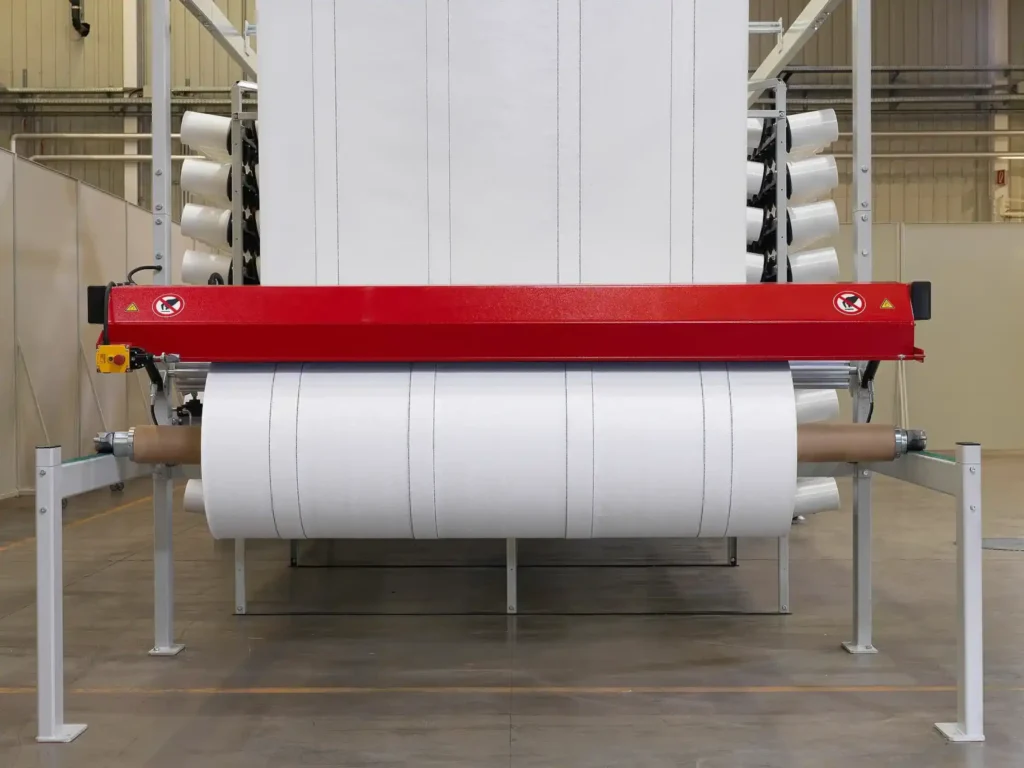
Weaving. Tapes become tubular or flat fabrics at 9×9–14×14 ends/inch. QC records mesh count, warp/weft tensile, loom oil residues, and broken‑end rates. Weave tightness and balance influence both print fidelity and dust control in fine powder service.
Lamination / coating. BOPP film (≈18–30 μm, matte or gloss) is laminated via a PP/PE extrusion‑tie (≈12–25 μm) or solventless adhesives validated as PP‑compatible for recycling. Targets include dyne ≥38 for adhesion, peel strength thresholds, and pinhole counts on optical skins.
Printing. Reverse flexo (often 7–9 colors) positions artwork under the film so that the film—not the ink—takes the abrasion. Barcode zones are planned for scanner geometry and contrast, reducing misreads on busy docks.
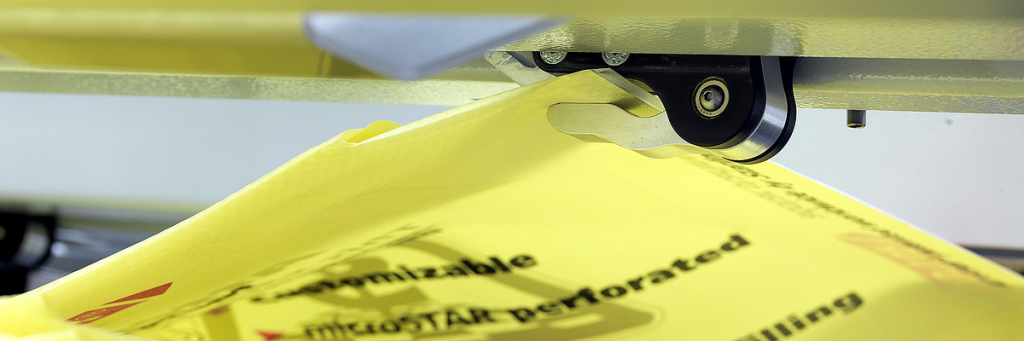
Converting. Fabric is cut; block‑bottom bodies are formed; sleeve options are added for valve filling or hemmed for open‑mouth sewing/heat‑sealing. Where springy powders trap air, micro‑perfs aid de‑aeration without compromising branding zones.
Testing & release. Teams verify dimensions, warp/weft tensile, seam strength, drop height (e.g., ASTM D5276 reference), COF on back panels, ink rub, and—if applicable—migration reports for food contact. The COA links each result to a lot ID so post‑event analysis has teeth, not guesswork.
Professional references in practice. ISO 18604 and EN 13430 anchor recyclability claims; GB/T 8946 frames mechanical baselines; REACH (EC 1907/2006) and RoHS 2011/65/EU declarations cover inks, colorants, and additives when clients require chemical transparency.
What is the application of Recyclable Woven Bags?
Agriculture. Rice, grains, and pulses benefit from humidity‑tolerant bodies and matte optics that hide scuffs during field‑to‑mill shuttles. For retail sizes, visibility and clean scan zones curb checkout friction.
Construction materials. Cement, sand, and dry mortar prefer block‑bottom + valve sleeves for speed and dust control. PP builds resist damp yards and reduce returns for panel failure compared with paper alternatives.
Chemicals & additives. Salts, resins, and masterbatches move through audit‑heavy facilities. For these lanes, the mono‑material narrative simplifies waste handling and closes the loop credibly.
E‑commerce bulk. Pellets, absorbents, and fuels pass multiple hubs; stacking stability matters. Recyclable Woven Bags with tuned COF on back panels reduce leaning stacks and claims.
Problem → Method → Result → Discussion. The problem is density, abrasion, and weather. The method is PP‑only structures with lamination, bottom style, and closure tuned to product behavior and route length. The result is fewer tears, cleaner audits, and bales that MRFs accept. The discussion concerns trade‑offs: gloss for shelf drama or matte for scanner sanity; self‑close valves for speed or heat/ultrasonic for sift‑proof export.
Where do Recyclable Woven Bags deliver the biggest sustainability wins?
Material simplicity. Keep scrim, film, tie, and liner in PP to preserve the “5” stream. Complexity is the enemy of recovery; simplicity invites participation.
Labeling for sortation. Prominent resin code and recycling marks near barcode panels help both humans and machines. When MRFs see a consistent visual grammar, sorting improves.
Clean stream management. Distributor bale‑back programs paired with QR‑linked COAs (composition, gauge, and lot) shorten acceptance checks at reclaimers. Less guessing, more grinding.
Case comparison. Against paper‑poly hybrids, Recyclable Woven Bags cut “contaminated bale” rejections. Against rigid drums, they slash transport cube and reverse‑logistics emissions for equivalent payloads. Against unlaminated woven sacks, they retain artwork and moisture resistance in hostile chains.
System Thinking: From Logistics Questions to One Coherent Spec
Sub‑question A — What are the products like? Particle size, bulk density, and hygroscopy dictate fabric GSM and mesh. Solution. Fine powders like fertilizers may push to 12×12–14×14 meshes and micro‑perfs; coarse granules cruise at 9×9–10×10 without dust penalties.
Sub‑question B — How do we fill and close? Gravity, auger, or impeller packers behave differently with aerated goods. Solution. Self‑close valves for short, dry lanes; heat/ultrasonic finishes for long or humid routes where sift‑proofing trumps speed.
Sub‑question C — How do we stack and ship? Lane turns, pallet patterns, and climate affect stability. Solution. Block‑bottom bodies for stand‑up posture; anti‑slip targets (e.g., COF 0.35/0.30) on back panels; UV stabilization where yards bake in sun.
Sub‑question D — What must we certify? Buyers and regulators need proof, not poetry. Solution. Pack the dossier with ISO 18604, EN 13430, GB/T 8946, ISO 9001/14001, and, where relevant, REACH/RoHS statements.
Synthesis. The output is a drawing, not a paragraph: fabric GSM & mesh; tape denier; film and tie gauges; finish (matte/gloss); bottom and valve style; liner option; dyne & COF targets; UV stabilization; plus the document pack list that travels with every lot.
Parameter & Compliance Summary (Typical, Real‑World Ranges)
Values reflect common offerings published by converters and mainstream platforms for mono‑material PP woven sacks. Final specs depend on product and filler.
| Attribute | Typical Options/Range | Notes |
|---|---|---|
| Capacity classes | 5, 10, 20, 25, 40, 50 kg | Retail to industrial lanes |
| Fabric weave | 9×9 to 14×14 ends/inch | Higher mesh aids print & dust control |
| Tape denier | ~600–1200D | Tuned to load & tear targets |
| Fabric GSM | ~70–120 g/m² (small sacks) | Heavier for 50‑kg classes |
| BOPP film | ~18–30 μm (gloss/matte) | Reverse‑printed; inks protected |
| Tie/coat layer | ~12–25 μm PP/PE extrusion tie | PP‑compatible for recycling |
| Bottom style | Block‑bottom (hot‑air welded) or sewn/pinch | Stand‑up stability |
| Closure | Open‑mouth (sewn/heat) or valve: self‑close/heat/ultrasonic | Pick per aeration & route |
| COF target | e.g., 0.35/0.30 back panel | Anti‑slip emboss or matte |
| Liner | PP liner 40–80 μm (optional) | Preserves mono‑material stream |
| UV stabilization | Optional | For outdoor storage |
| Compliance set | ISO 18604:2013, EN 13430, GB/T 8946‑2013, ISO 9001:2015, ISO 14001:2015, REACH/RoHS (on request) | Documentation ships with lots |
Data Reinforcement • Case Analysis • Comparative Research
Data. Reverse‑printed BOPP faces post lower rub‑loss than surface‑printed films in standard ink‑rub tests. Block‑bottom designs improve pallet cubic efficiency and reduce tilt rates. Mono‑material PP constructions attract fewer contamination deductions at MRFs than paper‑poly hybrids.
Case. A fertilizer shipper moved to matte‑finish Recyclable Woven Bags with PP liners and relocated barcodes to low‑gloss windows. Mis‑reads dropped, while bale acceptance at a regional PP recycler required no delamination, shortening cycle time from pickup to pellet.
Comparative. Paper multiwall breathes but slumps in humidity; rigid HDPE drums guard barrier but bloat freight; mixed‑material sacks complicate end‑of‑life. Recyclable Woven Bags balance strength, print longevity, and recovery simplicity in one specification.
VidePak’s Promise
We build Recyclable Woven Bags as a system: materials that recover, graphics that endure, closures that match your fillers, and documents that satisfy auditors. Every shipment carries a COA tying mesh/GSM, film & tie gauges, dyne/COF, seam and valve integrity, and the requested conformance pages (ISO 18604/EN 13430/GB‑T 8946/ISO 9001/14001; REACH/RoHS where applicable). When your route, climate, or product shifts, we adjust the spec—so sustainability rides with performance, not against it.
- What is Recyclable Woven Bags?
- What are the features of Recyclable Woven Bags?
- What is the production process of Recyclable Woven Bags?
- What is the application of Recyclable Woven Bags?
- Where do Recyclable Woven Bags deliver the biggest sustainability wins?
- System Thinking: From Logistics Questions to One Coherent Spec
- Parameter & Compliance Summary (Typical, Real‑World Ranges)
- Data Reinforcement • Case Analysis • Comparative Research
- VidePak’s Promise
The global push toward sustainability has created an increasing demand for eco-friendly products across industries. Transport and logistics, in particular, require innovative solutions to balance environmental concerns with operational efficiency. Recyclable woven bags have emerged as an ideal choice, combining durability, cost-effectiveness, and environmental benefits.
Why Recyclable Woven Bags?
Recyclable woven bags are produced from polypropylene (PP) or polyethylene (PE), materials known for their strength and recyclability. These bags are suitable for a wide range of uses, including storing and transporting agricultural products, industrial materials, and consumer goods.
Their benefits can be summarized as follows:
- Environmental Sustainability: Made from recyclable materials, they help reduce waste and contribute to circular economies.
- Durability: With high tensile strength, these bags can withstand heavy loads without tearing.
- Cost-Effectiveness: Recyclable woven bags are reusable, offering long-term cost savings compared to single-use alternatives.
- Customizability: These bags can be designed to meet specific requirements, including size, shape, and branding.
Specifications and Features
The following table outlines key parameters of recyclable woven bags:
| Feature | Details |
|---|---|
| Material | Polypropylene (PP), Polyethylene (PE) |
| Weight Range | 50-200 grams per square meter (gsm) |
| Load Capacity | 5 kg to 50 kg |
| Customization | Sizes, multi-color printing, laminated finishes, gussets |
| Recyclability | 100% recyclable if disposed of correctly |
| Additional Options | UV resistance, anti-slip coating, inner linings for moisture protection |
For more detailed technical information, you can explore our focus on sustainability with transparent woven bags.
Benefits in Transport and Logistics
- Reduced Environmental Footprint
Recyclable woven bags play a critical role in minimizing environmental damage. Unlike single-use plastics, these bags can be reused multiple times, reducing the need for virgin materials. - Enhanced Operational Efficiency
Lightweight yet robust, these bags reduce transportation costs without compromising safety. Features like UV resistance and moisture protection ensure goods remain secure during transit. - Alignment with Global Trends
Governments and businesses are adopting stricter environmental policies, including extended producer responsibility (EPR) initiatives. Using recyclable bags demonstrates a commitment to these standards. - Brand Visibility
With multi-color printing options, companies can use woven bags for marketing purposes, aligning sustainability with brand identity.
Steps to Implement Recyclable Woven Bags
- Assess Your Needs
Evaluate the types of goods to be transported, storage conditions, and environmental factors to determine bag specifications. - Choose a Reliable Supplier
Partner with manufacturers offering certified recyclable woven bags with customizable options to suit your needs. - Educate Stakeholders
Provide training to employees and logistics partners on the proper use and disposal of recyclable woven bags. - Monitor and Evaluate
Regularly review the performance of these bags in your supply chain and make adjustments to improve efficiency and sustainability.
FAQs: Addressing Reader Questions
Q1: How are recyclable woven bags made eco-friendly?
A1: They are produced using recyclable materials like PP or PE. Once they reach the end of their lifecycle, they can be recycled into new products, reducing waste and resource consumption.
Q2: Can these bags handle hazardous materials?
A2: Yes, with appropriate customization such as inner linings or laminated finishes, recyclable woven bags can safely store hazardous materials.
Q3: Are these bags compliant with international standards?
A3: Yes, reputable manufacturers ensure compliance with global environmental and quality standards.
Q4: What industries benefit most from recyclable woven bags?
A4: Agriculture, construction, chemical, and retail industries are among the primary beneficiaries, though their versatility allows for broader applications.
Q5: How can businesses transition to using these bags?
A5: By evaluating their packaging needs, engaging suppliers, and training staff, businesses can seamlessly adopt recyclable woven bags.
Hot Topics and Trends
- Circular Economy Integration
Businesses are moving toward systems that reduce waste through recycling and reuse. Woven bags fit perfectly into this model. - Regulatory Compliance
Countries worldwide are implementing policies to ban single-use plastics. Investing in recyclable woven bags ensures compliance with these regulations. - Technology Advancements
New manufacturing technologies, such as ultrasonic sealing, enhance the functionality of recyclable woven bags. Learn more about these innovations in ultrasonic seam technology. - Consumer Demand for Sustainability
End consumers increasingly favor businesses that prioritize eco-friendly practices, making recyclable woven bags a strategic investment.
Recyclable woven bags stand at the intersection of practicality and sustainability, making them indispensable in the transport and logistics sector. Businesses that adopt these bags not only benefit operationally but also contribute positively to the environment.