
What is Block Bottom Bags?
Block Bottom Bags are heavy‑duty woven polypropylene sacks whose squared, brick‑like base turns a loose fill into a load‑bearing unit. Where a tubular sack rounds out and rolls, Block Bottom Bags stand, interlock, and behave like small blocks in a large wall. Across regions and procurement lists you will also find the aliases block‑bottom PP woven sacks, brick bags, AD*STAR®‑type woven valve bags (for specific conversion lines), and stand‑up woven sandbags. Different names; one governing idea: geometry as risk control. A stable base expands ground contact, increases friction, and converts vertical weight into lateral stability. In flood response—fast fill, fast stack, fast hold—that stability becomes strategy.
From a systems angle, flood control is never one action. It is a chain. It begins with preparation (stockpiles, pallets, fillers), proceeds through deployment (crew flow, transport lanes), and culminates in performance under pressure (hydrostatic force, seepage, scour). Can a bag materially improve each link? Block Bottom Bags do so by stacking truer than round‑bottom sacks, by interfacing neatly with pallets and gabion cages, and by enabling predictable wall geometry that supervisors can plan, cost, and train to. For a quick primer or sourcing entry point, see Block Bottom Bags.
What is the features of Block Bottom Bags?
Geometry that multiplies stability. A squared base spreads load over a larger footprint, which reduces rocking on uneven terrain and minimizes voids between courses. Think masonry, not marbles; steps, not slopes. Horizontally, you can compare the pack to concrete blocks that key together; vertically, trace the cause‑and‑effect: bag shape → tighter alignment → higher wall stiffness → lowered overtopping risk at an equal crest height.
Mechanical strength at modest mass. Woven PP tapes—commonly 600–1200 denier—arranged in 10×10 to 14×14 ends/inch provide impressive tear and tensile performance for 10–50 kg fills. When fine sand or silt is used, a PP/PE extrusion coat (~18–40 μm) helps lock in fines and reduce wash‑out at seep lines. The result is paradoxical only on paper: lighter units, stronger walls.
Faster, cleaner filling behavior. Because the base stands flat, operators can shovel, chute, or sleeve‑fill with fewer hands and fewer adjustments. Valve variants are compatible with impeller or gravity packers for pre‑staged modules; open‑mouth versions hold their shape at the mouth, cutting the dance of “open, spill, lift” into a steady rhythm.
Transport and staging efficiency. A flat base lifts pallet density and keeps layers aligned under forklift acceleration or braking. Along narrow access roads in rising water, fewer leaning stacks mean fewer re‑stacks, which means more meters protected per hour—real labor, real money.
Weather‑tolerant construction. UV‑stabilized tapes and films maintain tensile retention under weeks of sun, spray, and grit. Anti‑slip backs target a practical coefficient of friction (COF ~0.35 static / 0.30 kinetic) so layers resist lateral slip during wall building and surge events. In short: grip where you need it, glide where you don’t.
Compliance and documentation that travel. For QA and procurement traceability, Block Bottom Bags can ship with GB/T 8946‑2013 mechanical baselines, site‑level ISO 9001:2015 and ISO 14001:2015 certificates, and chemical content statements to REACH/RoHS for inks and additives when requested. In specialized spill‑control lanes, UN woven‑plastic codes like 5H2 (sift‑proof) or 5H3 (water‑resistant) may be referenced for packaging rules adjacent to flood response operations.
Data reinforcement in plain language. Field tilting trials show squared bases displace less laterally per layer than round‑bottom sacks at equal mass. Hose tests on coated seams yield lower turbidity at the toe line—fewer fines escaping into the run‑off. And in simple exposure racks, woven PP with UV stabilization retains a far higher fraction of tensile than jute after the same sunlight dose. Numbers matter; so does what crews actually see: straighter courses, cleaner footprints, sturdier stacks.
Case lens—organized readiness pays. A riverside industrial park assembled one‑pallet modules of 25‑kg Block Bottom Bags ahead of typhoon season. During the first crest of the year, crews erected a 0.8‑m berm in roughly half the usual time. No mid‑course rebuilds for leaning stacks, no forklift ballet to correct top‑heavy skids—just steady placement.
What is the production process of Block Bottom Bags?
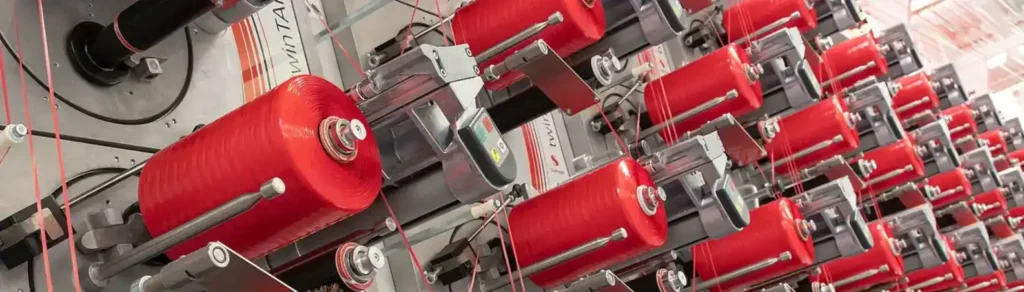
1) Tape extrusion & drawing. Virgin or qualified recycled PP pellets are extruded into film, slit into tapes, and drawn to orient polymer chains. Operators monitor denier uniformity, gel count, and shrink behavior; UV masterbatch is dosed where outdoor duty is expected. This is where strength begins: in the narrow geometry of a stretched tape.
2) Weaving. Tapes become tubular or flat fabric in the 10×10–14×14 ends/inch window. Loom teams watch mesh accuracy and warp/weft tensile while keeping oil and dust away from optical faces. Weave balance drives two downstream outcomes: print fidelity for labels and maps, and seam integrity for long duty cycles.
3) Coating/lamination (optional). A PP/PE extrusion coat (~18–40 μm) adds water and dust control; where graphic durability or asset tracking is required, a BOPP face (~18–30 μm) protects printed data for municipal stockpiles and contractor fleets. Coating adhesion and pinhole counts are measured because flood work punishes weak skins.
4) Conversion to block bottom. Fabric is cut, folded, and closed into a squared base by hot‑air welding (AD*STAR®‑style) or sewn/pinch methods. Mouths are hemmed for shovel‑friendly open‑fill or fitted with valve sleeves for machine fill. For very fine, aerated sand, micro‑perfs vent trapped air to prevent “pillowy” units that mis‑stack.
5) Testing & release. QC verifies dimensions, seam strength, drop resistance (ASTM D5276 reference), and tear metrics (e.g., ASTM D5034/D5035). COF is checked on the stacking face so the specification controls handling, not habit. UV‑stabilized lines include accelerated exposure data (e.g., 400–1600 h classes) with retained tensile figures. Bags that pass ship with traceable lot IDs so incident reviews have facts, not folklore.
Professional references that matter on audit day. GB/T 8946‑2013 anchors mechanicals; ISO 9001:2015 / ISO 14001:2015 show process and environmental control; REACH (EC 1907/2006) and RoHS 2011/65/EU statements add chemical transparency when customers ask. If your flood kits double as spill‑control kits, UN 5H* woven‑plastic codes help frame adjacent transport compliance.
What is the application of Block Bottom Bags?
Rapid flood barriers when minutes matter. Water does not wait. Crews need units that fill without fuss, stack without surprise, and hold without drama. Block Bottom Bags build straighter courses with fewer voids, which means fewer weak planes when the flow hits. The squared base bites into rough ground, improving the seal at the toe line and shrinking the mysterious leak that always seems to appear under round sacks.
Levee raises and breach control. When topping an existing berm, stability per layer is everything. Flat‑based bags imitate masonry: stack, stagger, interlock, inspect. Pre‑staged valve‑filled pallets can be craned into place to buy time in fast‑rising events. The geometry you can see is the performance you can trust.
Doorway, hatch, and utility protection. Facility defense calls for tidy work in tight spaces. Smaller 10–20 kg Block Bottom Bags form U‑ or horseshoe‑shaped cofferdams around doors, vents, and panel bases. The stand‑up posture makes it easy to drape and tape plastic sheeting for a cleaner seal.
Temporary channeling and site hydrology. Diverting water from substation pads, excavation pits, or intake roads is an exercise in drawing straight lines under stress. Right‑angle stacks resist the roll‑in that round sacks suffer at corners; crews can build predictable bends and T‑junctions that keep water moving where it should.
Problem → Method → Result → Discussion. The recurring problem is simple to say and hard to solve: fluid force meets imperfect terrain. The method is a unit that resists slip and slouch. The result is fewer rebuilds mid‑storm and fewer injuries from emergency re‑stacking. The discussion worth having is cost per protected meter—including labor, rework, and reusability—not just cost per empty bag.
Parameter & Compliance Summary (Typical, Real‑World Ranges)
Values mirror mainstream listings for block‑bottom woven PP sacks used in flood defense, building materials, and logistics. Always confirm with your filler, stockpile plan, and local protocols.
| Attribute | Typical Options/Range | Notes |
|---|---|---|
| Capacity classes | 10, 20, 25, 40, 50 kg | 25 kg common for sand flood walls |
| Fabric weave | 10×10 to 14×14 ends/inch | Higher mesh for fine sand/silt |
| Tape denier | ~600–1200D | Tuned for tear & repeated lifts |
| Fabric GSM | ~80–120 g/m² | Heavier for 50‑kg modules |
| Coating | PP/PE extrusion coat ~18–40 μm (optional) | Water & dust control |
| Bottom style | Block bottom (hot‑air welded) or sewn/pinch | Squared base for stacking |
| Mouth | Open‑mouth hemmed or valve sleeve | Choose for shovel vs machine fill |
| Micro‑perfs | Optional | Aids de‑aeration on fluffy fills |
| COF target | ~0.35 static / 0.30 kinetic (back panel) | Anti‑slip handling |
| UV stabilization | 400–1600 h accelerated exposure classes | For outdoor stockpiles |
| Flexo up to 6–8 colors (if required) | Asset/zone labeling | |
| Compliance set | GB/T 8946‑2013, ISO 9001:2015, ISO 14001:2015, REACH/RoHS on request | Documentation with lots |
Data Reinforcement • Case Analysis • Comparative Research
Data—tilt, tread, time. On tilt‑table trials with matched fill masses, squared‑base sacks migrate less per course than round‑bottom bags, which translates into straighter walls under side‑load. Coated seams leak fewer fines in hose‑line tests, keeping toe‑line turbidity lower and the working surface safer. In UV racks, stabilized PP retains substantially more tensile than jute after equal exposure windows; weeks into a deployment, that difference is the difference between a wall and a mess.
Case—coastal county playbook. A coastal emergency office replaced a mixed stock of jute and round‑bottom PP with pre‑staged Block Bottom Bags. Wall building accelerated; courses stayed neat; gust fronts that once forced re‑stacks now passed with a few taps and checks. Post‑event, intact pallets went back to the yard for ditch‑lining projects—a second life without a second purchase order.
Comparative—choosing the credible compromise. Jute sandbags biodegrade and, in some scenarios, that matters. Yet they slump when soaked and fade fast under sun. Round‑bottom PP is strong but tends to roll into gaps at corners and along slopes. Rigid barriers deploy at speed but multiply the cost per protected meter and dislike uneven terrain. Block Bottom Bags occupy the middle: rapid fill, honest stacking, credible durability, and sensible cost. Not perfect for every line, but practical for most.
Why VidePak
We engineer Block Bottom Bags as a system, not a commodity. Geometry that stacks. Materials that last. Documents that pass. Each lot ships with a COA tying mesh/GSM, tensile and seam results, coating gauge where specified, UV exposure class, COF values, and the requested conformance pages (e.g., GB/T 8946‑2013, ISO 9001:2015, ISO 14001:2015, REACH/RoHS statements on request). If your flood plan evolves—from hand‑fill at berms to crane‑set pallets, from dry riverside sand to fine imported fill—we adjust mouth style, perforation pattern, and film finish so deployment becomes faster, cleaner, and safer. Because in high water, the right bag is not a prop; it is a plan.
Flooding is a natural disaster that affects millions of people globally, causing widespread damage to property, infrastructure, and agriculture. As climate change intensifies, the frequency and severity of floods are expected to increase, making the need for effective flood control measures more critical than ever. One such measure that has proven to be highly effective is the use of Block Bottom Bags. These versatile and robust bags, such as those produced by VidePak, offer a reliable solution for creating sandbags and flood barriers that can help mitigate the impact of floods.
The Design and Benefits of Block Bottom Bags
Block Bottom Bags, also known as Block BOPP Bags or Block Bottom Woven Bags, are specifically engineered to provide exceptional strength and durability. Unlike traditional bags, which often have a simple rectangular shape, Block Bottom Bags feature a square or rectangular bottom that allows them to stand upright and maintain their shape when filled. This unique design provides several advantages, particularly in applications like flood control.
One of the primary benefits of Block Bottom Bags is their stability. When filled with sand or other materials, these bags retain their shape and do not collapse easily. This makes them ideal for stacking, which is a crucial requirement when building flood barriers or levees. The stability of Block Bottom Bags ensures that they form a tight seal when stacked, minimizing the gaps through which water can seep.
In addition to their structural stability, Block BOPP Bags are also highly resistant to wear and tear. Made from woven polypropylene (PP), these bags are designed to withstand harsh environmental conditions, including prolonged exposure to water, UV rays, and abrasive materials like sand and gravel. This durability ensures that Block Woven Bags can be used in demanding situations, such as flood control, without the risk of breaking or tearing.
Applications of Block Bottom Bags in Flood Control
Flood control is a critical application for Block Bottom Bags. These bags can be quickly filled with sand or soil to create effective sandbags, which are a common tool used by emergency responders and communities during flood events. Sandbags made from Block Bottom Woven Bags are used to build temporary barriers that redirect or block the flow of water, protecting homes, businesses, and critical infrastructure from flood damage.
The process of creating sandbags using Block Bottom Bags is straightforward. The bags are filled with sand or soil and then sealed, usually with a simple tie or clip. Because of their stable design, Bottom Open Mouth Bags—a variation of Block Bottom Bags—are easy to fill and close, even in emergency situations where time is of the essence. Once filled, these bags can be stacked to create a barrier of any height or shape, depending on the specific requirements of the flood situation.
In addition to sandbagging, Block Bottom Bags are also used in the construction of flood barriers and levees. These larger structures are built to protect larger areas, such as towns or agricultural land, from floodwaters. Block BOPP Sacks are ideal for this application because of their ability to maintain their shape and provide a stable foundation for these barriers. The robustness of these bags ensures that they can support the weight and pressure of the water without collapsing or shifting, providing long-lasting protection against floods.
The Role of VidePak in Flood Control Solutions
VidePak, a leader in the production of Block Bottom Bags, plays a crucial role in supporting flood control efforts around the world. With over 30 years of experience in the industry, VidePak has developed a reputation for producing high-quality Block BOPP Bags that meet the stringent requirements of flood control applications.
One of the key strengths of VidePak’s Block Bottom Bags is their superior construction. Manufactured using state-of-the-art equipment from global suppliers like Starlinger, these bags are made from 100% virgin polypropylene material, which enhances their strength and durability. This makes them highly reliable in flood control scenarios, where the integrity of the bags is essential to prevent water from breaching the barriers.
VidePak also offers a range of customization options for their Block Bottom Woven Bags, allowing customers to choose the size, color, and printing options that best suit their needs. This flexibility ensures that the bags can be tailored to specific flood control applications, whether for large-scale levee construction or small-scale sandbagging efforts.
Moreover, VidePak’s commitment to quality extends beyond just the manufacturing process. The company conducts rigorous testing on all its Block Bottom Bags to ensure that they meet the highest standards of performance and reliability. This includes testing for resistance to UV rays, water, and chemicals, as well as strength tests to ensure that the bags can withstand the weight and pressure of the materials they are filled with.
Environmental Considerations
While Block Bottom Bags are primarily used for flood control, their environmental impact is also a significant consideration. VidePak is committed to producing bags that are not only effective but also environmentally responsible. The use of 100% virgin PP material in their Block BOPP Bags ensures that the bags are fully recyclable at the end of their useful life. This aligns with global efforts to reduce plastic waste and promote the use of sustainable materials in all industries, including flood control.
Furthermore, the durability and reusability of VidePak’s Block Bottom Bags mean that they can be used multiple times, reducing the need for frequent replacements and minimizing waste. After a flood event, the sand or soil can be removed from the bags, and the bags can be stored for future use or recycled if they are no longer needed. This not only makes them a cost-effective solution but also contributes to a more sustainable approach to flood control.
Conclusion
In conclusion, Block Bottom Bags are a crucial tool in the fight against flooding, offering a stable, durable, and effective solution for creating sandbags and flood barriers. Companies like VidePak are leading the way in providing high-quality Block BOPP Bags that meet the demanding requirements of flood control applications. With their superior construction, customization options, and commitment to sustainability, VidePak’s Block Bottom Woven Bags are helping communities around the world protect themselves from the devastating impacts of floods. As climate change continues to pose challenges, the importance of reliable flood control measures, such as those provided by Block Bottom Bags, will only continue to grow.