
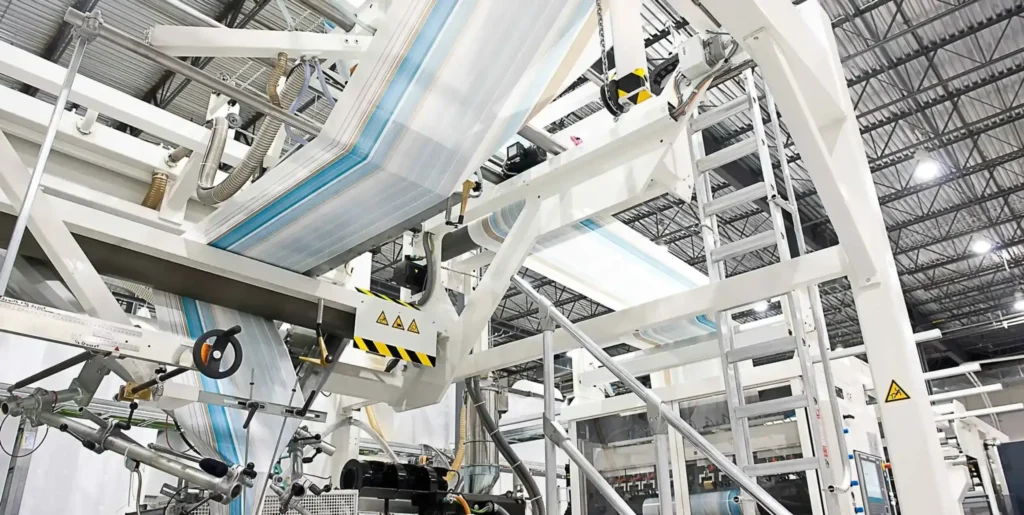
What is Transparent Woven Bags?
Transparent Woven Bags are industrial and retail sacks engineered on a woven polypropylene (PP) substrate that preserves visibility—either across the whole face or through a precisely registered clear window—so inspectors, line operators, and shoppers can confirm contents at a glance. In cross‑market parlance you will also meet clear PP woven sacks, transparent window woven bags, BOPP‑laminated transparent woven bags, and clear‑gusset woven bags. Different labels, one architectural idea: oriented PP tapes (resin code “5”) woven into a tough scrim, then dressed with optical films and closures to balance clarity, strength, shelf appeal, and end‑of‑life recovery. If you need a quick orientation or sourcing start, explore Transparent Woven Bags.
Problem → Method → Result → Discussion. Product teams face a recurring dilemma: how to show product quality without opening the bag; how to run fast on gravity/impeller/auger fillers without dust; how to stand square on pallets; how to re‑enter PP recycling streams credibly. The method is a mono‑material PP build, tuned optics, and a geometry that stacks like masonry. The result: quicker QA decisions, cleaner aisles, calmer audits. The discussion centers on finish (gloss pop vs matte poise), window placement/width, and valve style versus product aeration.
What is the features of Transparent Woven Bags?
Clarity that works, not just looks. The optics in Transparent Woven Bags are engineered, not accidental. Unpigmented high‑modulus PP tapes reduce base haze; high‑clarity BOPP film (≈18–30 μm) carries reverse‑printed graphics while keeping a window zone pristine; clear gussets add lateral visibility without surrendering billboard space. Why insist on visibility? Because seeing is decision‑making: receivers spot clumps or moisture halos; retail buyers judge grain length or pellet size; warehouse pickers double‑check SKUs visually before a scan.
Strength‑to‑weight that travels. Oriented tapes in the 600–1200 denier band woven at 10×10–14×14 ends/inch produce tensile/tear performance far beyond paper or mono‑PE formats at comparable mass. The practical effect is less creep on long routes, fewer split seams, and fewer leaning towers—especially when stacks sit through humid seasons.
Print that persuades, film that survives. Reverse‑printed BOPP traps ink beneath the wear layer, so conveyors scuff film—not graphics. Gloss amplifies color saturation; matte reduces glare, lifts barcode hit‑rate, and projects a premium finish. A registered window can be nested into the art so the eye lands on both the brand story and the real product. Is that just cosmetics? Hardly. Readability under rub and light glare protects safety icons, ingredients, and traceability codes.
Geometry that behaves like bricks. Block‑bottom bodies stand square and interlock; courses align; pallets cube better. Valve sleeves—self‑close, heat‑seal, ultrasonic, or tuck‑in—keep lines fast and dust contained. A cylinder rolls; a brick sits. Which one would you rather stack when a forklift turns sharply?
Mono‑material logic for recovery. Woven PP + BOPP + PP‑compatible tie layer keeps the structure inside resin code “5,” supporting recyclability statements that reference ISO 18604 and EN 13430. Optional PP liners (40–80 μm) preserve that mono‑material story for aroma/humidity control.
Risk controls built in. Anti‑slip emboss on the back panel targets COF ≈0.35 static / 0.30 kinetic for pallet discipline; UV‑stabilized tapes extend useful life in outdoor displays or yard storage; micro‑perfs vent air on fluffy fills to prevent pillowing.
Data reinforcement • Case • Comparison. Across converter listings you’ll consistently see mesh 10×10–14×14, BOPP 18–30 μm, tie 12–25 μm, and 7–9 color print systems. Rub testing favors reverse‑printed faces over surface‑printed films; tilt‑table checks show COF‑tuned backs reduce lateral slip in mixed stacks. A rice brand that moved from opaque sacks to Transparent Woven Bags with a 50‑mm window and matte film reported lower “wrong variety” returns and fewer pallet claims as block‑bottoms reduced lean. Versus paper multiwall (strength loss in humidity), mono‑PE film (scuffs and stretches), or rigid tubs (ships air), Transparent Woven Bags split the difference: clarity for trust, woven strength for logistics, credible PP‑stream recovery for ESG.
What is the production process of Transparent Woven Bags?
1) Tape extrusion & drawing. Virgin or qualified recycled PP pellets are extruded into a film, slit into tapes, and drawn for orientation. Quality gates: denier uniformity, gel count, shrink behavior; UV masterbatch is dosed when outdoor exposure is expected. Strength is earned here—later steps only protect or present it.
2) Weaving. Tapes are woven into tubular or flat fabric at 9×9–14×14 ends/inch. Balanced warp/weft tension maximizes seam efficiency and keeps print register tight. Loom‑oil hygiene protects adhesion in downstream lamination.
3) Optical engineering & lamination. A high‑clarity BOPP face (≈18–30 μm, gloss or matte) is laminated using a PP/PE extrusion tie (≈12–25 μm) or PP‑compatible solventless adhesive. Targets: dyne ≥38 dyn/cm for ink anchorage, peel strength within spec, pinhole minima, and controlled haze/clarity for windows. Where a transparent stripe or gusset is needed, the film, ink layout, and die paths are registered to millimeter repeatability.
4) Printing. Reverse flexographic or gravure systems (often 7–9 colors) lay artwork under film for rub‑fastness. Variable data—lot IDs, QR, recycling marks, GHS icons—sits on low‑glare zones to maximize scanner hit‑rate.
5) Conversion. Bodies are cut; bottoms formed by hot‑air welded block‑bottom or sewn/pinch methods; mouths hemmed (open) or fitted with valve sleeves (self‑close / heat‑seal / ultrasonic). Anti‑slip embossing tunes COF; micro‑perfs can be applied near the valve throat on aerated powders to bleed trapped air.
6) Testing & release. Dimensional checks; warp/weft tensile and seam metrics (e.g., ASTM D5034/D5035); drop performance (ASTM D5276 reference); COF (ASTM D1894 reference); ink rub; haze/clarity; and, where relevant, food‑contact migration (EU 10/2011 / FDA 21 CFR §177.1520). Certificates of Analysis map results to lot IDs; third‑party pages from SGS/Intertek/TÜV are added for tenders.
Vertical causality. Extrusion earns strength → weaving sets structure → lamination defines optical personality → printing delivers persuasion and traceability → conversion calibrates line speed and closure behavior → testing turns promises into proof. Break one link and the cost shows up elsewhere—in slower lines, in rewraps, in audit findings.
What is the application of Transparent Woven Bags?
Food & agriculture. Rice, grains, pulses, sugar, and seed reward visibility: windowed panels let buyers judge grain length or uniformity; matte faces reduce glare in bright aisles; optional PP liners (40–80 μm) protect aroma and moisture. The effect is simple: trust at the shelf, fewer returns later.
Pet care & animal nutrition. Kibble abrades and can oil‑stain. Reverse‑printed faces protect graphics; clear stripes display kibble size; valve sleeves keep dust inside on fast fills; block‑bottom geometry produces neat facings that resist slouch in warm stores.
Chemicals & minerals. Salts, resins, prills—dense, sometimes hygroscopic. Higher mesh fabrics and heat‑sealed or ultrasonic valves lift sift‑proofness; windows help QA verify pellet uniformity without opening the pack, reducing contamination risk.
Home & garden / DIY. Fertilizers, soil amendments, pellets need weather‑tolerant skins and honest stacks. UV‑stabilized films defend outdoor displays; anti‑slip backs keep weekend towers upright; windows build shopper confidence—what you see is what you take home.
Public works. Municipal stockrooms value rapid visual checks for absorbents or sand grades. Transparent Woven Bags shorten inspection cycles and reduce mis‑picks when labels are dusty or partially obscured.
Problem → Method → Result → Discussion. The problem is seeing quality while surviving logistics. The method is a PP woven core + high‑clarity BOPP skin + block‑bottom body + closure matched to the filler. The result is fewer rewraps, fewer wrong‑SKU picks, faster checks. The discussion touches window width vs panel stiffness, matte vs gloss for glare control, and self‑close vs heat‑seal based on aeration and voyage length.
What is the application of Transparent Woven Bags in Supply Chain, Compliance & ESG?
Regulatory dossiers (vertical). Food‑contact builds can carry FDA 21 CFR §177.1520 and EU 10/2011 migration pages with supplier letters of guarantee; hazardous‑substance transparency rides on REACH (EC 1907/2006) SVHC and RoHS 2011/65/EU statements for inks/additives; plastic identification and recyclability reference ISO 18604 / EN 13430 and domestic marks (e.g., GB/T 16288) printed legibly.
ESG execution (horizontal). Mono‑material PP simplifies PP‑stream bales; UV stability extends useful life; accurate COF reduces over‑wrap waste. When rPP is used (10–30%), chain‑of‑custody programs (e.g., ISCC PLUS) and recycled‑content validations (UL 2809 / SCS / RecyClass) convert claims into auditable proof.
Case sketch. A seed cooperative standardized 10–25 kg SKUs into Transparent Woven Bags with 25 μm matte BOPP, 50‑mm windows, and COF‑tuned backs. Barcode mis‑reads fell; distributors accepted bale‑back without delamination; QA time per pallet dropped because contents were visible even when labels were dusty.
Comparative view. Paper‑poly hybrids complicate MRF sorting; mono‑PE film scuffs and stretches; rigid pails inflate freight intensity. Transparent Woven Bags occupy the credible middle—readable, durable, recoverable.
Parameter & Compliance Summary (Typical, Real‑World Ranges)
Values reflect mainstream converter datasheets and platform listings; align final specs with your filler, route, and regulatory scope.
| Attribute | Typical Options/Range | Notes |
|---|---|---|
| Capacity classes | 2, 5, 10, 15, 20, 25, 50 kg | Retail to industrial SKUs |
| Fabric weave | 9×9 to 14×14 ends/inch | Higher mesh → finer print & dust control |
| Tape denier | ~600–1200D | Tuned to load & tear targets |
| Fabric GSM | ~70–120 g/m² (small sacks) | Heavier for 50‑kg classes |
| BOPP film | ~18–30 μm (gloss/matte, high‑clarity) | Reverse‑printed; window optional |
| Tie/coat layer | ~12–25 μm PP/PE extrusion tie | PP‑compatible for recycling |
| Window style | Full‑face; side‑gusset; vertical stripe | Registered to maintain clarity |
| Bottom style | Block‑bottom (hot‑air welded) or sewn/pinch | Stand‑up stability |
| Valve types | Self‑close / heat‑seal / ultrasonic / tuck‑in | Pick per aeration & route |
| Liner | PP liner 40–80 μm (optional) | Moisture/aroma control; mono‑material |
| COF target | ~0.35 static / 0.30 kinetic (back panel) | Anti‑slip pallet behavior |
| UV stabilization | 400–1600 h accelerated exposure classes | Outdoor storage/display |
| Compliance set | GB/T 8946‑2013; FDA 21 CFR §177.1520; EU 10/2011; ISO 18604:2013; EN 13430; ISO 9001:2015; ISO 14001:2015; REACH/RoHS | Documentation ships with lots |
Buying Template (Problem → Parameters → Proof)
State the problem. “We need 10–25 kg bags that show product quality, run on our auger/impeller filler, stack straight outdoors, and qualify for PP‑stream recycling.”
Translate to parameters. 12×12 mesh; 95 g/m² fabric; Transparent Woven Bags with 25 μm matte BOPP; window stripe 50 mm; anti‑slip back COF 0.35/0.30; block‑bottom; heat‑sealed valve; PP liner 60 μm; dyne ≥38; UV‑stabilized tapes; print 7 colors.
Specify proof. COA with ASTM D5034/D5035, D5276, D1894 results; haze/clarity measurements; migration pages (EU 10/2011 if food); REACH/RoHS statements; recyclability per ISO 18604 / EN 13430; QR‑linked traceability and lot photos of window registration.
Result to expect. Faster QA checks, cleaner aisles, calmer audits—and packaging that lets buyers see quality while logistics see stability.
In the packaging industry, Transparent Woven Bags have become an essential solution for businesses that require visibility, durability, and reliability in their packaging materials. These bags are widely used across various sectors, including agriculture, construction, and retail, due to their strength, versatility, and the ability to showcase the contents without compromising on protection. However, the excellence of these bags is rooted in the quality of the raw materials used, particularly polypropylene (PP) pellets. Ensuring the purity, melt index, and tensile strength of PP pellets is crucial for producing woven bags that meet the rigorous demands of these industries. VidePak, a leader among Woven Bag Manufacturers, exemplifies how stringent quality control in raw material selection underpins the production of superior PP Woven Bags.
The Role of Transparent Woven Bags in Modern Packaging
Transparent Woven Bags serve a unique purpose in the packaging world. Unlike traditional opaque woven bags, these bags allow for clear visibility of the product inside, which is particularly useful in sectors where product inspection and identification are critical. For example, in the agricultural industry, Transparent Woven sacks are often used for packaging grains, seeds, and other produce, allowing both sellers and buyers to easily assess the quality of the contents without opening the bag.
Moreover, the transparency of these bags does not compromise their strength. Made from woven polypropylene, these bags are incredibly durable, resistant to tears, and capable of withstanding the stresses of transportation and storage. The woven structure also provides breathability, which is essential for products that need to remain dry and fresh. This combination of visibility, durability, and breathability makes Transparent Woven Bags an indispensable packaging solution for many businesses.
The Importance of Quality in PP Pellets
The quality of PP Woven Bags is heavily dependent on the properties of the polypropylene pellets used in their production. PP pellets are the primary raw material from which the woven fabric is made, and their quality directly affects the strength, flexibility, and appearance of the final product. At VidePak, ensuring the highest quality of PP pellets is a top priority, as it lays the foundation for the entire manufacturing process.
- Purity of PP Pellets: The purity of polypropylene pellets is crucial for producing high-quality woven bags. Impurities in the pellets can lead to inconsistencies in the extrusion process, resulting in weak spots in the woven fabric. These weak spots can cause the bags to tear or fail under stress, which is unacceptable in demanding applications. VidePak sources its PP pellets from trusted suppliers who provide materials with minimal impurities, ensuring that the woven fabric produced is strong, uniform, and reliable.
- Melt Index: The melt index of PP pellets is another critical factor that influences the quality of Woven Bags. The melt index measures how easily the polymer flows during the extrusion process, which affects the thickness and consistency of the tapes that are woven into the fabric. A consistent melt index is essential for producing uniform tapes that contribute to the overall strength and appearance of the bags. VidePak rigorously tests the melt index of its PP pellets to ensure that they meet the required specifications, enabling the production of bags with consistent quality.
- Tensile Strength: Tensile strength is a measure of how much force a material can withstand before breaking. For Transparent Woven Bags, high tensile strength is essential to ensure that the bags can carry heavy loads without tearing. The tensile strength of the final woven fabric is directly related to the quality of the PP pellets used. VidePak conducts thorough testing of the tensile strength of its PP pellets before they are used in production. This ensures that the woven fabric produced is not only strong enough to handle demanding applications but also durable enough to withstand repeated use.
The Manufacturing Process: From PP Pellets to Transparent Woven Bags
Once the PP pellets have passed all quality checks, they are ready to be transformed into Transparent Woven Bags. The manufacturing process begins with the extrusion of the pellets into thin tapes, which are then woven into a strong, flexible fabric. This fabric forms the basis of the bags and must meet stringent quality standards to ensure the final product performs as expected.
At VidePak, the extrusion process is carefully controlled to ensure that the tapes produced are of consistent thickness and strength. The tapes are then woven into fabric using advanced machinery that maintains tight control over the weave pattern. This ensures that the fabric is not only strong but also uniform in appearance, which is particularly important for transparent bags where any inconsistencies would be immediately visible.
After the fabric is woven, it is laminated with a clear coating that provides additional protection and transparency. This lamination process is crucial for enhancing the durability of the bags and ensuring that they can withstand exposure to moisture, UV rays, and other environmental factors. The clear lamination also allows the contents of the bag to be easily seen, making Transparent Woven sacks an ideal choice for packaging products where visibility is key.
Finally, the laminated fabric is cut, sewn, and finished to create the final Transparent Woven Bags. VidePak offers a range of customization options, allowing customers to choose the size, shape, and design of the bags to meet their specific needs. This flexibility, combined with the high quality of the materials and manufacturing process, ensures that VidePak’s bags are not only functional but also visually appealing and reliable.
VidePak’s Commitment to Quality and Innovation
As one of the leading Woven Bag Manufacturers, VidePak is committed to producing high-quality PP Woven Bags that meet the evolving needs of its customers. This commitment is reflected in every aspect of the company’s operations, from the careful selection of raw materials to the advanced manufacturing processes used to produce the bags.
VidePak understands that quality begins with the raw materials, which is why the company places such a strong emphasis on the quality control of its PP pellets. By ensuring that these pellets meet the highest standards of purity, melt index, and tensile strength, VidePak is able to produce woven bags that are strong, durable, and reliable. This focus on quality is complemented by the company’s use of state-of-the-art machinery and techniques, which enable the production of bags that are not only functional but also aesthetically pleasing.
In addition to its commitment to quality, VidePak is also dedicated to innovation. The company continually invests in new technologies and processes to improve the performance and sustainability of its products. This includes exploring new materials, such as recycled polypropylene, and developing new manufacturing techniques that reduce waste and energy consumption.
VidePak’s transparent woven bags are a testament to the company’s commitment to quality and innovation. These bags offer a unique combination of visibility, strength, and durability, making them an ideal choice for a wide range of applications. Whether used for packaging agricultural products, construction materials, or retail goods, VidePak’s transparent woven bags provide a reliable and sustainable packaging solution that meets the highest standards of quality.
Conclusion
Transparent Woven Bags are a versatile and essential packaging solution that combines visibility with durability. The quality of these bags begins with the careful selection and testing of PP pellets, ensuring that they meet the stringent standards required for producing strong, reliable woven fabric. VidePak’s dedication to quality and innovation in the manufacturing of PP Woven Bags ensures that these products not only meet the functional needs of their users but also align with the highest standards of sustainability and performance. By choosing VidePak, businesses can be confident that they are investing in packaging solutions that are both effective and environmentally responsible, contributing to a more sustainable future for the industry.