
Sub‑title: A systems view of safety, performance, and brand impact that turns regulatory compliance into commercial advantage
What is Food Grade Woven Bags (also called PP/PE Food‑Contact Woven Sacks, Polypropylene Food‑Grade Woven Bags, BOPP‑Laminated Food Sacks, and Raffia Food Bags)?
Food Grade Woven Bags are engineered packaging sacks made from oriented polypropylene (PP) or PP‑dominant blends. Tapes are drawn, woven into a fabric, then converted—via cutting, printing, surface finishing, and closure—into open‑mouth or valve formats suitable for direct or indirect food contact. Across markets they answer to multiple aliases: PP/PE food‑contact woven sacks, polypropylene food‑grade woven bags, BOPP‑laminated food sacks, and raffia food bags. Different names, same promise: protect edible goods, run clean on filling lines, and present a brand without compromising safety. That is why we repeat Food Grade Woven Bags—the phrase is not mere taxonomy; it encodes a philosophy of build and proof.
To orient new stakeholders, many specifications begin from the PP‑woven family and add food‑contact layers later. One representative starting point is Food Grade Woven Bags, where laminated structures illustrate how print quality, scuff resistance, and moisture control coexist on a single substrate.
Background & field knowledge. Food packaging is a junction of polymer science, hygiene engineering, printing technology, and logistics. Teams must harmonize drop resistance and pallet creep; moisture and odor control; line speed and dusting; migration compliance (EU 10/2011; FDA 21 CFR 177.1520; GB 4806 family); graphic integrity and shelf rub. Within this landscape, Food Grade Woven Bags occupy a distinctive niche—lighter than paper at comparable wet strength, more shape‑stable than monolayer PE film at similar tare, and display‑ready once laminated.
Horizontal & vertical thinking. Horizontally, place Food Grade Woven Bags alongside paper PBOM sacks and co‑extruded PE film bags, then borrow strengths: paper’s brick‑like squareness and premium print; film’s hermetic sealing and clean closure; woven PP’s truss‑like tear resistance per gram. Vertically, trace cause and effect from resin purity → tape draw ratio → mesh density → surface system → seam geometry → QA protocol → route hazards (humidity, vibration, UV). The pattern that emerges is not rhetoric—it is mechanics, measurable and repeatable.
- Data reinforcement. Supplier/test‑lab envelopes for 10–50 kg dry edibles commonly list fabric ~60–100 g/m² (GSM), meshes ~8×8 to 12×12, tape denier ~500D–1000D; coatings ~15–30 g/m² or BOPP laminations ~10–35 g/m²; print up to ~6–7 colors via flexo or gravure.
- Case analysis. A jasmine‑rice brand cut base fabric from 92 to 82 g/m² yet preserved pallet stability by upgrading from single‑fold/single‑stitch to double‑fold/double‑stitch bottoms and adding a 20 g/m² matte BOPP. Seam‑split complaints dropped, while shelf readability rose.
- Comparative study. Against paper, Food Grade Woven Bags retain puncture and wet strength through humid legs; against monolayer PE film, they resist long‑term creep under stack, enabling taller pallets at similar tare when ventilation and stacking geometry are controlled.
What is the features of Food Grade Woven Bags?
1) Food safety by design—not by afterthought
Food Grade Woven Bags are built around materials and chemistries intended for food contact. Virgin PP minimizes extractables; inks, primers, and laminating adhesives are selected against overall and specific migration limits. Hygiene controls (HACCP, pre‑op sanitation, allergen management) are engineered into conversion, not stapled on later. Safety is designed in, documented, and then audited.
- Data reinforcement. Regulatory anchors include EU 10/2011 (overall migration 10 mg/dm² with substance‑specific SMLs), U.S. FDA 21 CFR 177.1520 for olefin polymers, and China’s GB 4806.7‑2023 (plastics) with GB 4806.1‑2016 (general) and GB 4806.14‑2023 (inks). Plants that formalize these frameworks show lower variance in migration and odor tests across lots.
- Case analysis. For milk‑powder export, a converter validated overall migration below limits after 10 days at 40°C in food simulants, recorded odor/taste neutrality via sensory panels, and added metal detection at pack‑out. The following quarter, taint complaints fell to zero.
- Comparative study. Paper PBOM excels in mono‑material recovery streams; Food Grade Woven Bags excel where humidity or condensation cannot be controlled, offering moisture robustness and puncture resistance without sacrificing graphics.
2) Strength‑to‑weight efficiency that protects without over‑packing
The woven lattice behaves like a lightweight truss. Oriented tapes carry load along warp and weft; engineered seams route forces away from cut edges; coatings or laminations stabilize the surface. The outcome: less tare, more safety—if the architecture is disciplined.
- Data reinforcement. For 25 kg rice or sugar, fabrics in the 70–90 g/m² band with meshes ~9×9–11×11 and tape denier ~700D–900D commonly pass ISO 7965 drop orientations when paired with double‑fold/double‑stitch bottoms.
- Case analysis. A flour producer trimmed tare by ~12% by moving from 95 g/m² uncoated fabric to 85 g/m² + 18 g/m² coating. Sifting losses fell; pallet lean improved as seam rigidity increased; logistics cost per ton shipped declined.
- Comparative study. Versus monolayer film sacks at equal mass, Food Grade Woven Bags retain pallet geometry longer (lower creep). Versus paper, edge‑tear and puncture resistance remain higher at comparable tare in humid distribution phases.
3) Surface systems that block, brand, and behave on the line
A bag’s skin both protects and persuades. Coatings of PP/PE seal weave pinholes and improve moisture resistance; BOPP laminations unlock photo‑grade print, rub resistance, and controlled scuff. Slip/anti‑block and matte/gloss variants tune machinability and shelf feel, so the same sack can be rugged in a warehouse and refined in a supermarket aisle.
- Data reinforcement. Coatings ~15–25 g/m²; BOPP ~15–30 g/m² (matte/gloss); corona treatment elevates surface energy for ink anchorage; flexo/gravure routinely handles 6–7 colors on retail flour, rice, or pet‑food SKUs.
- Case analysis. Pet‑food packs showing “whitening” replaced coated fabric with matte‑BOPP laminated Food Grade Woven Bags. Graphics held up after transport rub tests; drop performance remained constant because the structural lattice and seam design were unchanged.
- Comparative study. Paper offers premium print textures and crisp bricks; laminated woven systems bring water resistance and durability; monolayer films deliver the cleanest heat seals but may creep under tall stacks.
4) Traceability, coding, and auditability
Food markets demand proof. Food Grade Woven Bags programs integrate lot coding, GS1/QR barcoding, supplier certificates, and third‑party lab reports (SGS/TÜV/Intertek) so disputes are resolved with data rather than debate.
- Data reinforcement. Plants operating under ISO 9001 and ISO 22000 or FSSC 22000 keep HACCP plans, pre‑op sanitation records, retained‑sample libraries, and label control logs aligned to shelf life. These artifacts shorten investigations and protect brands.
- Case analysis. A seed exporter serialized QR codes on Food Grade Woven Bags and traced a pallet complaint to a specific lamination batch. Corrective action focused on the adhesive lot, not the entire week’s production, preserving service levels.
- Comparative study. Film and paper programs also track lots; woven PP’s longer service window and reusability make accurate coding essential to prevent back‑flow and gray‑market leakage.
What is the production process of Food Grade Woven Bags?
System step‑down. Production is a chain of coupled levers where upstream choices echo downstream results.
- Resin & compounding. Virgin PP (optionally PE blend/liner) is selected for migration performance. Additives—UV masterbatch, slip/anti‑block, pigments—are screened for food‑contact suitability and lot‑tracked for recall discipline.
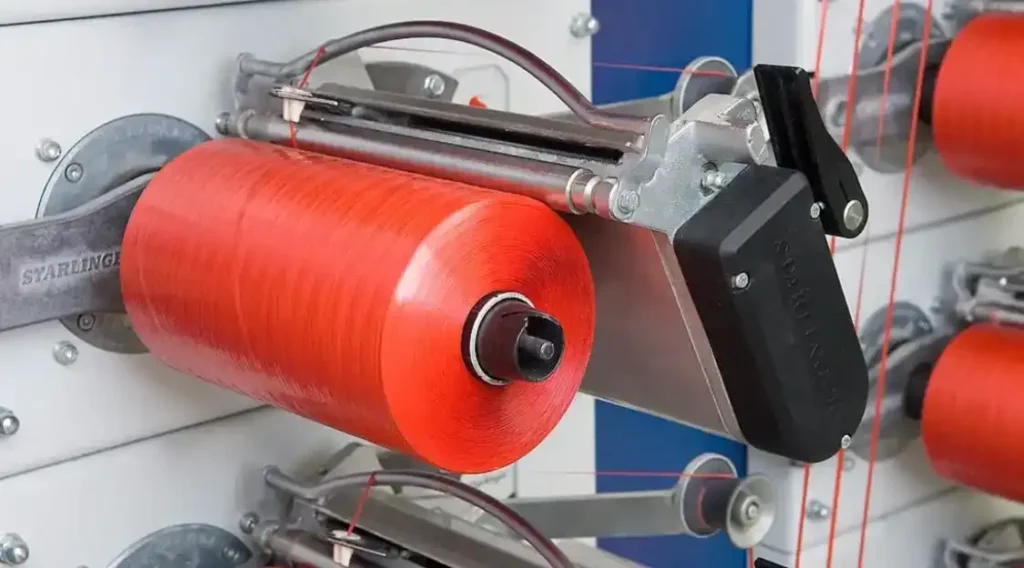
- Tape extrusion & orientation. Film extrusion → slitting → stretch orientation. Draw ratio sets tensile modulus and elongation; denier choices (e.g., ~600–900D for staples; higher for abrasive contents) trade stiffness against flexibility and fold memory.
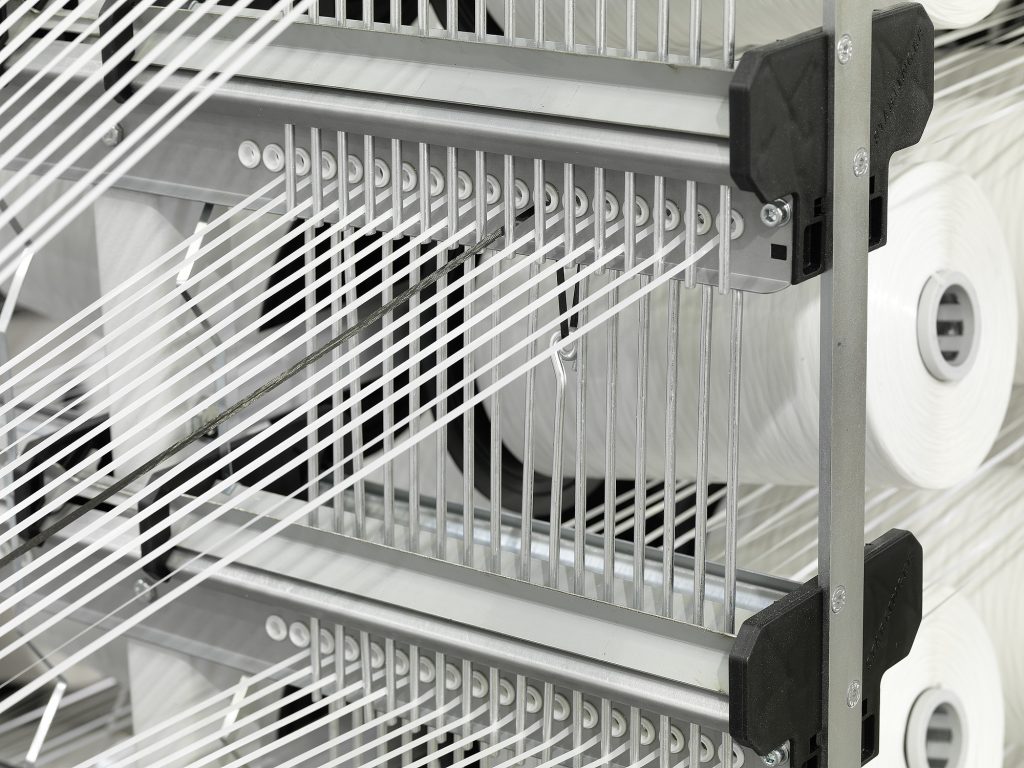
- Weaving. Circular or flat looms interlace tapes to target mesh (≈8×8–12×12). Loom tension and pick uniformity are monitored; broken‑pick detection with in‑line vision reduces defect escapes and underwrites safe lightweighting.
- Surface engineering. Apply PP/PE coating (~15–25 g/m²) to seal the weave or laminate BOPP (~15–30 g/m²) for print/scuff control. Surface energy is tuned via corona/flame to ensure ink adhesion and low rub‑off.
- Printing & converting. Flexo/gravure printing up to ~6–7 colors; tubes cut to length; bottoms formed (single vs double fold; single vs double stitch); tops prepared for open‑mouth or valve; optional easy‑open threads for consumer packs and QA sampling.
- QA & release. Routine warp/weft tensile, seam strength, sifting checks, and ISO 7965 drop tests at specified fills (often 25–50 kg). Food‑contact SKUs undergo overall/specific migration, odor/taste, and on‑line hygiene verifications; UV‑aging applies where sun exposure is expected.
- Data reinforcement. Plants holding fabric within ±3 g/m² and lamination within ±2 g/m² report steadier drop‑pass rates and fewer pallet‑lean events; variance control is not a cost—it is insurance.
- Case analysis. Adding metal detection/X‑ray at pack‑out for retail rice in laminated Food Grade Woven Bags eliminated foreign‑object complaints without slowing cycle time.
- Comparative study. Coated woven lines offer cost‑efficient moisture control; laminated lines deliver barrier plus branding in one composite; film‑only lines maximize heat‑seal speed but may need secondary cartons for tall stacks.
What is the application of Food Grade Woven Bags?
Domain map. Food Grade Woven Bags “live” where dry edibles meet rough handling and humidity swings: rice and grains, pulses and beans, flour and semolina, sugar and salt, starches and seasonings, pet‑food kibbles and treats. They are also common for seed and feed in mixed food/feed facilities where hygiene rules resemble food protocols.
- Data reinforcement. Working envelopes in supplier listings: payloads 5–50 kg; fabric ~60–100 g/m²; coatings 15–25 g/m² or BOPP 15–30 g/m²; widths ~300–700 mm; lengths ~450–1,200 mm; printing up to 6–7 colors—dimensions aligned to standard spouts and pallet footprints.
- Case analysis. A sugar mill reduced sifting and housekeeping by switching from uncoated to ~20 g/m² coated Food Grade Woven Bags at the same base GSM; the labor payback arrived within the season, and QA rejects declined.
- Comparative study. In humid export chains, woven/laminated programs show fewer pallet collapses than paper at equal payload; in climate‑controlled premium retail, PBOM paper may still win for shelf “brick” appeal.
What is the application of Food Grade Woven Bags? (extended scenarios)
Line & route scenarios.
- Manual/semi‑auto filling: Sewn open‑mouth Food Grade Woven Bags—forgiving of dust, easy to close, simple to re‑open for QA pulls. Who said rugged cannot be practical?
- Powder fillers needing cleanliness: Laminated Food Grade Woven Bags with tighter mesh and anti‑dust turn‑ups—cleaner spouts, steadier net weights, calmer operators.
- Premium retail storytelling: BOPP‑laminated Food Grade Woven Bags—billboard graphics, rub resistance, and matte options that mute glare under store LEDs without dulling color.
- Long routes / humidity swings: Coated or laminated Food Grade Woven Bags—moisture defense with better stack geometry than monolayer films at comparable tare.
- Data reinforcement. Seal/hemming windows are matched to inner‑layer melt‑flow index; mouth tolerances drive spout fit and cycle time; registration control keeps branding on spec and off the rework pallet.
- Case analysis. A beans exporter tightened mouth tolerances and tube squareness, cutting fill time by ~10–12% while reducing reject rework. The fix was geometric, the impact operational.
- Comparative study. If payloads regularly exceed 50 kg, escalate to FIBCs; within 5–50 kg, Food Grade Woven Bags remain the operational sweet spot for dry edibles.
Certification, Standards & Compliance (spec numbers buyers ask for)
Food Grade Woven Bags convert regulatory language into purchase‑order clauses and plant tests:
- Food‑contact plastics: EU 10/2011 (overall migration 10 mg/dm²; SMLs per substance); U.S. FDA 21 CFR 177.1520 (olefin polymers); GB 4806.7‑2023 (plastics), GB 4806.14‑2023 (printing inks), GB 4806.1‑2016 (general).
- Sack mechanics & testing: GB/T 8946‑2013 (plastic woven sacks requirements); ISO 7965 series (drop testing of filled sacks).
- Quality systems: ISO 9001 for process control; ISO 22000 or FSSC 22000 for food‑safety management; documented HACCP plans and retained‑sample programs.
Third‑party laboratories (SGS, TÜV, Intertek) routinely issue migration, tensile, seam, drop, odor/taste, and UV‑aging reports, aligning factory QA with independent verification so procurement and QA speak the same language.
Quick Spec Table — Food Grade Woven Bags
| Parameter | Typical Options / Range | Notes |
|---|---|---|
| Base fabric (GSM) | ~60–100 g/m² | Select by payload and drop spec (e.g., 25–50 kg) |
| Mesh | ~8×8 to 12×12 | Tighter meshes reduce sifting and improve ink laydown |
| Denier (tapes) | ~500D–1000D | Higher denier raises tensile at a given mesh |
| Surface | PP/PE coating 15–25 g/m²; BOPP 15–30 g/m² (matte/gloss) | Coating for moisture/sifting; BOPP for graphics & scuff |
| Liner options | PE liner ~20–60 µm (where needed) | For powders sensitive to moisture/odor |
| Width × Length | ~300–700 mm × 450–1,200 mm | Match spout & pallet pattern |
| Printing | Flexo/gravure up to ~6–7 colors | Food‑grade inks; corona‑treated surfaces |
| Closures | Sewn single/double fold; easy‑open thread | Edge strength depends on fold depth & stitch pitch |
| Payload class | 5–50 kg | Verify with ISO 7965 drop orientations |
| Food‑contact | EU 10/2011; FDA 21 CFR 177.1520; GB 4806 family | Use virgin PP and compliant inks/adhesives |
| QA cadence | Tensile, seam, drop, migration, odor/taste, UV‑aging | Third‑party verification available |
How to integrate the subsystems into one solution (systems synthesis)
Start with the payload & route: mass, particle size, hygroscopicity, humidity swings, pallet geometry, expected drop orientations. Choose the fabric architecture: GSM/mesh/denier aligned to load paths—not habit. Tune the surface for function and feel: ~20 g/m² PP/PE coating where sift control and splash resistance lead; ~20–30 g/m² BOPP where abrasion resistance and photo‑grade graphics carry the day. Engineer the seam & mouth: double‑fold/double‑stitch for edge strength; valve vs open‑mouth by filler type; mouth tolerances that match spout hardware. Lock compliance early—EU/FDA/GB declarations, documented ink/adhesive specs, ISO 7965 drop plans—and schedule third‑party verification. Validate against reality: tensile, seam, drop, migration, odor/taste, and UV‑aging tied to acceptance limits.
When specified this way, the outcome looks deceptively simple: Food Grade Woven Bags that are lighter yet safer, cleaner yet faster, vivid on shelf yet disciplined in the lab. Simplicity at the dock door is earned complexity in design and testing—that visible simplicity is the competitive advantage.
- What is Food Grade Woven Bags (also called PP/PE Food‑Contact Woven Sacks, Polypropylene Food‑Grade Woven Bags, BOPP‑Laminated Food Sacks, and Raffia Food Bags)?
- What is the features of Food Grade Woven Bags?
- What is the production process of Food Grade Woven Bags?
- What is the application of Food Grade Woven Bags?
- What is the application of Food Grade Woven Bags? (extended scenarios)
- Certification, Standards & Compliance (spec numbers buyers ask for)
- Quick Spec Table — Food Grade Woven Bags
- How to integrate the subsystems into one solution (systems synthesis)
Food-grade woven bags have gained significant attention in the packaging industry due to their sustainability, versatility, and capacity to meet increasingly stringent food safety standards. These bags are crucial in packaging a wide variety of food products, from grains to snacks, ensuring they remain safe and secure throughout the supply chain. This article explores the dynamics of the food-grade woven bag market, shedding light on the competitive advantages they provide and how businesses can leverage them to stay ahead in a rapidly evolving industry.
The Growing Demand for Food Grade Woven Bags
In recent years, the global market for food-grade woven bags has witnessed substantial growth. This can be attributed to several factors, including an increase in food safety awareness, a demand for sustainable packaging, and the shifting preference of manufacturers toward more eco-friendly solutions. The food industry, in particular, is focusing on packaging solutions that not only preserve product quality but also contribute to minimizing environmental impacts.
As per market reports, the food packaging industry is expected to grow at a compound annual growth rate (CAGR) of around 4.5% over the next few years. This growth is driven by the expansion of the global food trade and the increasing demand for processed and packaged foods. Woven polypropylene (PP) bags, particularly those used for food packaging, are benefiting from this trend due to their durability, cost-effectiveness, and ability to meet regulatory requirements.
Key Features and Benefits of Food Grade Woven Bags
Food-grade woven bags offer a wide range of benefits that make them an attractive option for food manufacturers and distributors. Here are some of the key features:
- Durability and Strength: Food-grade woven bags are made from high-quality polypropylene, ensuring they are strong enough to handle bulk products like rice, flour, or pet food without compromising the safety of the contents.
- Food Safety Compliance: These bags are designed to meet strict food safety regulations and certifications, such as the FDA (Food and Drug Administration) standards for food-grade materials, ensuring that they do not contaminate the packaged product.
- Cost-Effectiveness: Compared to alternatives like paper bags or plastic containers, woven bags are a more affordable option for both small and large-scale packaging operations.
- Eco-Friendliness: With increasing awareness about sustainability, woven bags are often reusable and recyclable. Manufacturers can opt for laminated or biodegradable versions to align with eco-conscious goals.
- Customizability: Food-grade woven bags can be customized in terms of size, strength, and print designs, providing businesses with a versatile solution that meets branding and logistical needs.
Here is a table summarizing the primary benefits of food-grade woven bags:
| Feature | Description | Advantages |
|---|---|---|
| Durability | Made from high-quality polypropylene | Handles heavy loads, ideal for bulk products |
| Compliance | Meets food safety regulations like FDA standards | Ensures products are safe and meet legal standards |
| Cost-Effectiveness | Affordable compared to alternatives like plastic or paper bags | Reduces packaging costs, especially in bulk packaging |
| Eco-Friendliness | Reusable, recyclable, and biodegradable options available | Supports sustainability goals, reduces environmental impact |
| Customizability | Available in various sizes, strengths, and print designs | Flexible to meet specific business and branding needs |
Market Trends in Food Grade Woven Bags
1. Sustainability Initiatives
The growing global focus on sustainability has led to an increasing preference for eco-friendly packaging options. Food manufacturers are increasingly choosing woven polypropylene bags because they are recyclable and reusable. Moreover, manufacturers are opting for biodegradable laminates, which further enhance the environmental benefits of these bags.
2. Automation and Technology Advancements
With advancements in technology, the production of woven bags has become more automated, increasing production efficiency and reducing costs. The use of state-of-the-art equipment, such as circular looms and extrusion lines, ensures that the bags are of high quality, have better load-bearing capacity, and are more customizable.
3. Customization and Branding
Customization is a key trend in the food-grade woven bag market. Companies are seeking bags that not only meet safety and durability standards but also reflect their brand identity. From custom prints to specific sizes and features like tamper-evident seals, businesses are focusing on ways to use packaging to enhance their brand’s image while maintaining functional integrity.
4. Focus on Food Safety
As food safety regulations become stricter globally, food-grade woven bags are continuously being tested and improved to comply with these standards. Companies like VidePak are at the forefront of ensuring that their bags meet global food safety guidelines, providing peace of mind to their customers and helping avoid contamination risks.
5. Adoption of Smart Packaging
Smart packaging technologies, such as QR codes or RFID tags integrated into food-grade woven bags, are gaining traction. These features allow consumers to trace the product’s journey from farm to table, improving transparency and food safety.
Competitive Advantages of Food Grade Woven Bags
Companies that manufacture or use food-grade woven bags enjoy several competitive advantages in the marketplace. These advantages can significantly influence business outcomes, especially in highly competitive and regulated industries like food manufacturing.
1. High Efficiency and Reduced Costs
Woven bags are not only durable but also lightweight, reducing shipping costs for bulk products. Their ability to handle large volumes of goods with minimal material wastage makes them a highly cost-effective packaging solution.
2. Enhanced Product Protection
Food-grade woven bags offer enhanced protection from contaminants like moisture, dust, and UV rays, ensuring that products stay fresh for longer periods. Laminated woven bags provide an extra layer of protection, making them suitable for packaging perishable items.
3. Branding Opportunities
The customizability of woven bags opens the door for food brands to differentiate themselves in a crowded market. Customized packaging, whether through vibrant prints or added features like windows for product visibility, can enhance brand recognition and attract customers.
4. Adaptability to Various Food Products
These bags are versatile enough to be used for a wide range of food products, from grains to snacks, pet food, and more. Their flexibility in size and design makes them suitable for packaging everything from bulk food items to specialty products.
5. Regulatory Compliance
Food-grade woven bags meet regulatory standards for food safety. Manufacturers using these bags can confidently comply with national and international regulations, ensuring their products remain safe for consumption.
Here’s a comparison table showing the competitive advantages:
| Advantage | Description | Impact on Business |
|---|---|---|
| Efficiency & Cost Reduction | Lightweight and durable, reducing shipping and storage costs | Lowers overall packaging costs, improves profit margins |
| Product Protection | Provides moisture, dust, and UV protection | Enhances product shelf life and ensures product quality |
| Branding Opportunities | Customizable with logos, designs, and sizes | Differentiates products, attracts customers |
| Versatility | Suitable for various food products, including grains and snacks | Expands market reach, fits various product needs |
| Regulatory Compliance | Meets stringent food safety standards | Ensures safety and builds customer trust |
FAQs
Q1: Are food-grade woven bags recyclable? Yes, food-grade woven bags are made from polypropylene, a material that is highly recyclable. Some manufacturers also offer biodegradable or compostable options to further reduce environmental impact.
Q2: How do I know if a woven bag is food-grade? Food-grade woven bags comply with international safety standards, such as FDA or EU regulations. Ensure that the manufacturer provides the necessary certifications to confirm that their bags meet food safety requirements.
Q3: Can woven bags be used for packaging frozen foods? Yes, woven bags can be used for frozen foods as long as they are laminated with an appropriate material to protect against moisture and temperature changes. Proper sealing also ensures that the bags remain intact during freezing and thawing processes.
Q4: Are custom-printed woven bags more expensive? Custom-printed bags may have a slightly higher initial cost due to the printing process, but they offer significant benefits in branding and marketing. Additionally, bulk purchasing can help reduce per-bag costs.
Conclusion
The rise of food-grade woven bags reflects the growing demand for packaging solutions that balance sustainability, safety, and efficiency. As the food packaging industry continues to evolve, these bags offer several competitive advantages, such as cost-effectiveness, product protection, and branding opportunities. By adopting woven bags, food manufacturers can ensure they meet food safety standards while also aligning with sustainability goals and gaining a competitive edge in the marketplace.
For more information on the advantages of woven bags and their various applications, explore this article on the versatility of open-top PP woven bags, and learn more about sustainability and transparent woven bags.