
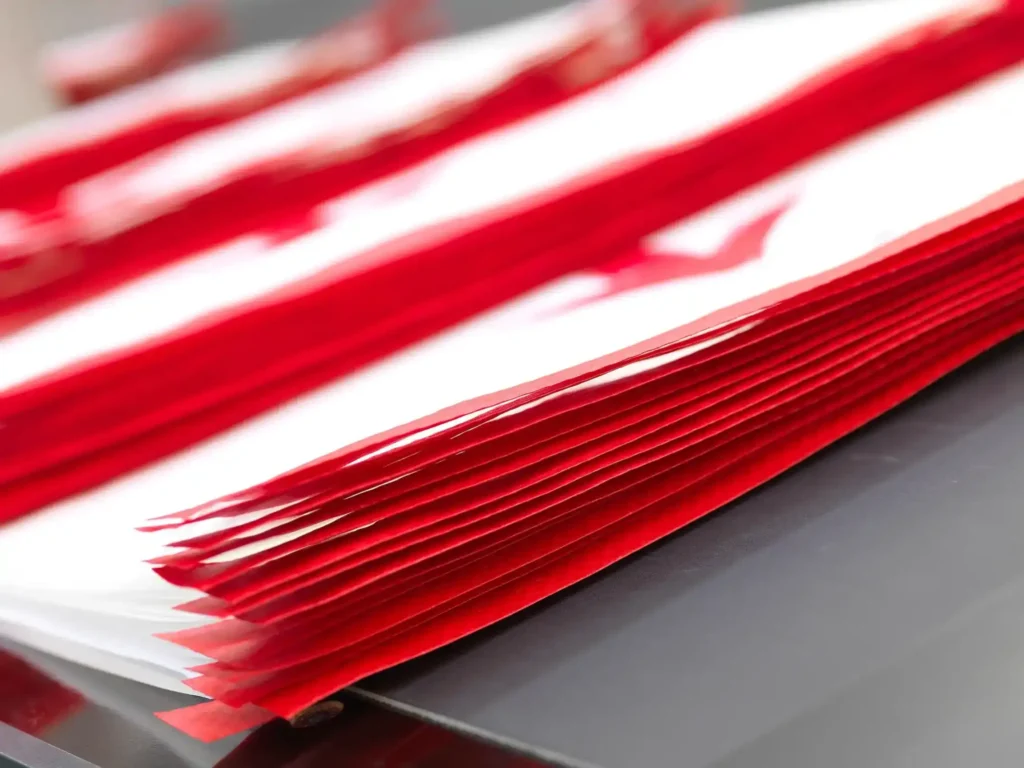
What Is Printed BOPP Woven Bags?
Printed BOPP Woven Bags are engineered polypropylene (PP) sacks that fuse a tear‑resistant woven substrate with a reverse‑printed biaxially oriented polypropylene (BOPP) film. In trade parlance they are equally recognized as BOPP‑laminated PP woven bags, BOPP printed woven sacks, tubular BOPP woven bags, or open‑mouth / valve‑type BOPP woven sacks. Different names, one mechanism: the woven PP grid disperses impact and resists seam propagation, while the BOPP face provides a continuous, scuff‑resistant canvas for high‑fidelity graphics and moisture control. For buyers wanting a single reference point, the portfolio of Printed BOPP Woven Bags illustrates mainstream constructions and dimensional ranges.
Background & domain context. Why do Printed BOPP Woven Bags work under real‑world stress? Polymer science supplies the first clue: drawn PP tapes align molecular chains, lifting modulus and reducing creep. Fabric engineering supplies the second: warp×weft architecture divides drop energy across thousands of picks, keeping tears from becoming ruptures. Surface science closes the loop: corona treatment (usually ≥38 dyn/cm) raises surface energy so inks anchor and laminations hold. Agricultural logistics stress this trio—humidity in depots, abrasive conveyors, fast fills that stir up dust—yet the composite structure answers with strength, clarity, and control.
Horizontal & vertical thinking. Horizontally, Printed BOPP Woven Bags sit between multi‑wall kraft (warm tactility, lower wet strength) and glossy PE film pouches (brilliant print, modest abrasion life). Vertically, function cascades from resin grade → tape drawing → weave (mesh/denier) → lamination system → print technology → closure geometry. Change one layer and you change outcomes: tighten mesh for powder hygiene and you may nudge coating weight; choose matte BOPP for a kraft‑like vibe and you may recalibrate ink density. Question by question, cause by cause, the system reveals itself.
Across Made‑in‑China / Alibaba catalogs and peer datasheets, repeatable windows appear: woven fabric 60–160 g/m², mesh 8×8–14×14, tape 500D–1500D; BOPP film 12–25 μm; optional PP coating 15–30 μm; finished widths 35–75 cm aligned to 5–50 kg fills (engineered builds approaching ~120 kg with reinforced closures). Typical dyne ≥38–42 dyn/cm; target outer‑face COF 0.25–0.45 (ASTM D1894) for pallet stability.
A rice processor moved from plain woven sacks to Printed BOPP Woven Bags (10×10 mesh, 900D, 20 μm BOPP). Result: fewer mis‑picks because lot color could be verified through windowed art; less pallet rub‑through on long sea routes. A fertilizer shipper adopted matte BOPP with anti‑slip varnish; warehouse glide incidents fell and branding stayed legible through monsoon storage.
Versus multi‑wall kraft, Printed BOPP Woven Bags deliver wet‑strength and seam integrity; versus glossy PE pouches they keep corners crisp and recover creases; versus unlaminated PP woven they add dust hygiene and premium print without surrendering toughness.
What Are the Features of Printed BOPP Woven Bags?
High‑impact graphics that endure. Reverse printing hides ink beneath the BOPP film, so colors remain saturated after forklift brushes, conveyor slides, and retail handling. Not just beautiful, but durable; not just vivid, but verified.
Mechanical strength with fewer weak lines. The woven PP backbone in Printed BOPP Woven Bags spreads impact across warp and weft. Tubular bodies remove a side seam—a common crack initiator—while flat‑fabric builds unlock wider formats. Double‑fold bottoms with chain stitch or pinch‑bottom hot‑melt yield clean geometry for powders.
Moisture, dust, and scuff control in one surface. The laminated face closes inter‑yarn gaps, curbing capillary wicking and reducing powder emissions. Where fast filling demands it, calibrated micro‑perforation manages deaeration without dust plumes.
Human‑centric handling with line‑centric stability. GSM (e.g., 80–120 g/m² for 25–50 kg), mesh (10×10–12×12 for grains/fertilizers; 12×12–14×14 for powders), and denier (800D–1200D) set stiffness and tear thresholds. The outcome is a bag that stands proud on shelf yet conforms cleanly to pallet corners under stretch‑wrap.
Design‑for‑recycling pathways. Mono‑PP assemblies—woven PP plus PP/BOPP—align with PP‑stream sortation where it exists. Printing strategies can retain windowed areas for visual QA without compromising monomateriality.
Suppliers routinely cite BOPP 12–25 μm (matte/gloss), dyne ≥38 dyn/cm, outer COF 0.25–0.45, widths 35–75 cm, and print repeats 400–900 mm for stable registration at speed.
A seed company specified Printed BOPP Woven Bags with 12×12 mesh and valve sleeves; clean fills increased and rework dropped, while varietal windows let QA verify at a glance. A pet‑feed brand added anti‑scratch lacquer to matte BOPP; shelf scuff complaints receded.
Matte vs. gloss BOPP: matte masks handling marks and evokes a kraft look; gloss amplifies color and billboard effect. Tubular vs. flat fabric: tubular eliminates a seam and leak path; flat fabric broadens the width envelope and speeds loom changeovers.
What Is the Production Process of Printed BOPP Woven Bags?
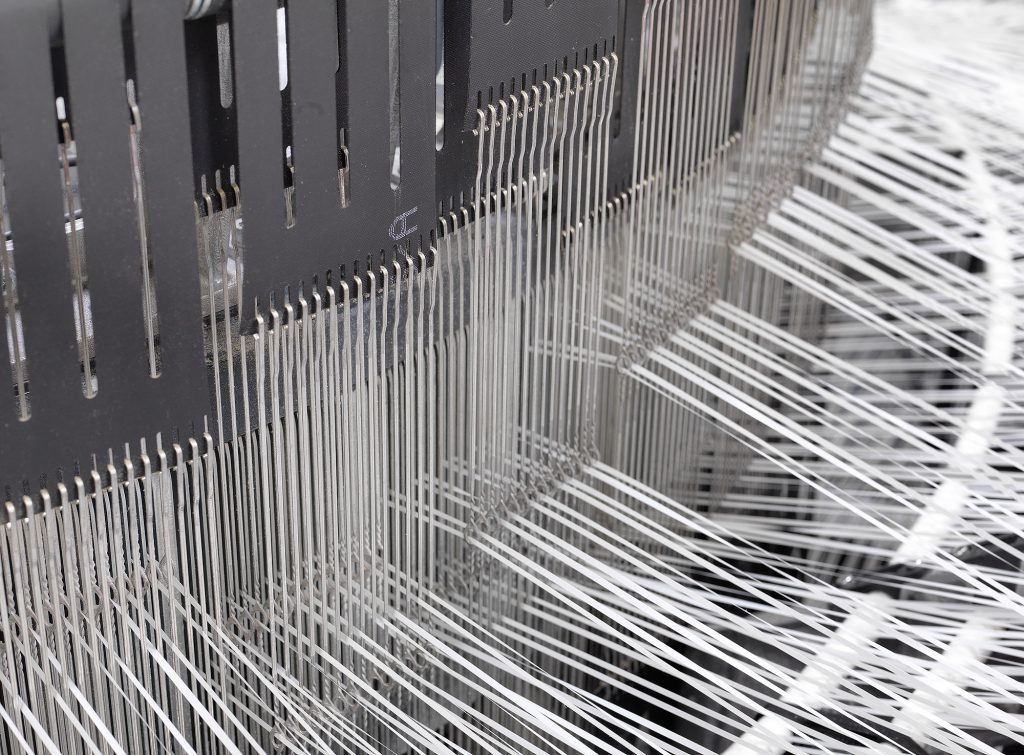
From resin to woven substrate. PP pellets are melted, cast as film, slit into tapes, and drawn to orient molecular chains. Tapes are woven on circular or flat looms; mesh and denier set the tensile/tear baseline. Fine‑yarn programs (lower denier, tighter mesh) create smoother lay‑flats that accept thinner, more uniform laminations.
From substrate to printed face. After corona treatment (≥38 dyn/cm), BOPP film (12–25 μm) is reverse‑printed (gravure or high‑line‑screen flexo) and laminated—via solvent or extrusion—to the woven fabric, forming a continuous, scuff‑resistant surface.
Cutting, forming, and closing. Laminated webs are cut, gusseted, and converted into open‑mouth or valve‑type sacks. Top finishes may be heat‑cut, hemmed, or EZ‑open; bottoms are stitched (single/double fold) or pinch‑sealed for presentation‑driven SKUs. PE liners are optional when direct‑contact hygiene or additional barrier is required.
Process controls that matter.
- Register & tension. Stable web tension and clear eye‑marks (>99.5% readability at speed) prevent mis‑cuts.
- Dyne & adhesion. Verify post‑treatment dyne before print; sub‑spec dyne triggers rub‑off and ghosting.
- COF & palletization. Outer‑face COF in the 0.25–0.45 band prevents pallet glide and case‑packer stalls.
- Stitch density & overlap. Double‑fold + chain stitch suppresses sift‑out; pinch‑bottom hot‑melt improves panel flatness for retail.
Supplier‑verifiable boundaries: fabric 60–160 g/m²; mesh 8×8–14×14; denier 500D–1500D; BOPP 12–25 μm; width 35–75 cm; capacities 5–50 kg. Plants commonly certify ISO 9001:2015; food‑adjacent lines add BRCGS Packaging Materials Issue 7 or ISO 22000. Polymer contact references 21 CFR 177.1520 (olefin polymers) and EU No 10/2011.
A minerals packer halved false knife triggers by standardizing darker eye‑marks and a 750‑mm repeat; trim waste dropped materially. A flour line lifted corona from 36 to 40 dyn/cm and eliminated ink halo on large solids.
Solvent vs. extrusion lamination: solvent systems can yield ultra‑clear lay‑down for premium art; extrusion simplifies mono‑PP narratives and reduces VOCs. Heat‑cut tops reduce fray; hems improve hand feel; EZ‑open enriches UX when seals are tuned correctly.
What Is the Application of Printed BOPP Woven Bags? (Industrial & B2B)
Certainty under speed. Printed BOPP Woven Bags are specified for fertilizers, soil amendments, seeds, grains, animal feeds, resin pellets, calcium carbonate, and construction additives. They survive yard storage and long hauls while enabling quick visual checks—grade marks, blend colors, and windowed cues—without opening the pack. Why choose between rugged and readable when you can have both?
Common industrial formats are 5/10/25/50 kg with widths 35–75 cm. UV‑stabilized tapes extend yard life; anti‑slip outer finishes cut pallet glide; valve styles accelerate spout filling and lower airborne dust at the hopper. Tight meshes (≥12×12) restrain sifting for fine powders; moderate meshes (~10×10) suit grains and resins.
A fertilizer exporter switched to matte Printed BOPP Woven Bags with anti‑scratch lacquers and documented fewer abrasion claims after sea voyages. A seed processor synchronized varietal windows with barcodes on the same panel, shortening receiving checks and reducing mis‑bins.
Against FIBCs (ISO 21898) the format occupies the manual‑handling middle tier—no hoist needed, yet credible protection. Against unlaminated woven sacks it wins on dust control and shelf presentation; against coated paper, on wet‑strength and seam integrity in humid yards.
What Is the Application of Printed BOPP Woven Bags? (Food, Retail & Branding)
When customers buy with their eyes and logistics pushes back. Premium rice, pulses, specialty flours, pet foods, garden seeds, and BBQ fuels rely on two promises—what you see and what survives. Printed BOPP Woven Bags keep both: windowed panels reveal grain length or kibble size, and the woven core resists corner crush and pallet rub through e‑commerce and last‑mile delivery. Is it packaging or storytelling? In practice, it is both.
Practical stacks pair BOPP 12–25 μm with substrates 80–120 g/m²; outer‑face COF 0.25–0.40 supports case packing; dyne ≥38 dyn/cm locks ink. Food‑adjacent operations follow BRCGS Packaging Materials Issue 7 or ISO 22000; polymer contact references 21 CFR 177.1520 / EU 10/2011. Liners can add barrier without abandoning a mono‑PP exterior.
A premium rice label adopted Printed BOPP Woven Bags with clear windows and pinch‑bottom construction; planogram lines sharpened, sell‑through rose, and returns for torn tops declined. A pet‑food SME added EZ‑open hems and anti‑scratch lacquer; unboxing satisfaction increased as rub complaints fell.
Versus glossy all‑plastic film, these bags feel warmer and recover creases; versus coated paper, they hold seams in humid backrooms; versus standard woven, they deliver sharper art and lower dusting.
Specifications & Compliance Sheet (selected, supplier‑verifiable)
| Parameter | Typical range / option | Engineering note |
|---|---|---|
| Woven fabric GSM | 60–160 g/m² | Map stiffness to stack height; preserve conformability |
| Mesh (warp×weft) | 8×8 – 14×14 | Tight for powders; moderate for grains/resins |
| Tape denier | 500D – 1500D | Higher denier ↑ tear & seam strength |
| BOPP film | 12–25 μm (matte/gloss) | Print fidelity, rub life, visual tone |
| Optional PP coating | 15–30 μm | Moisture/dust control; seal window tuning |
| Finished width | 35–75 cm | Fits 5–50 kg formats & pallet geometry |
| Top finish | Heat‑cut / hem / EZ‑open | Fray control & user experience |
| Bottom construction | Single/double fold stitch; pinch‑bottom | Powder hygiene vs. throughput |
| Valve sleeve | Optional | High‑speed filling; dust reduction |
| Corona level | ≥38–42 dyn/cm | Ink/laminate anchorage |
| Outer COF | 0.25–0.45 (ASTM D1894) | Case packing & pallet friction windows |
| Food contact (polymer) | 21 CFR 177.1520; EU No 10/2011 | Regulatory anchors for PP layers |
| Woven sack standards | GB/T 8946‑2013, GB/T 8947‑2013 | General requirements & test methods |
| Quality systems | ISO 9001:2015; BRCGS Packaging Materials (Issue 7); ISO 22000 | Site governance & hygiene |
| Tensile references | ASTM D5034 / D5035 | Third‑party fabric tensile methods |
Note: Ranges reflect mainstream supplier data and public standards. Validate locally via sampling, seal‑curve mapping, rub tests, and drop/stack simulations at route heights.
Systems Synthesis: From Sub‑Arguments to One VidePak Configuration
Performance node → choose mesh/denier/GSM within proven windows—e.g., 10×10 / 900D / 90–100 g/m² for grains & fertilizers; 12×12 / 1100D / 110 g/m² for powders. Default double‑fold + chain stitch bottoms for fine powders; heat‑cut + hem tops for clean edges and pleasant hand feel.
Branding node → select matte vs. gloss Printed BOPP Woven Bags deliberately: matte for natural/organic cues and scuff‑masking; gloss for high‑impact retail narratives. Use windowed art where visual QA builds trust: “what you see is what you buy.”
Operations node → publish eye‑mark color/position and print repeat (400–900 mm) to match converting and FFS equipment; hold dyne ≥38 dyn/cm and COF 0.25–0.40; set AQLs for coated‑face pinholes and stitch overlap.
Compliance node → keep sites on ISO 9001:2015; for food‑adjacent SKUs align BRCGS Packaging Materials Issue 7 or ISO 22000; declare polymer contact to 21 CFR 177.1520 and EU 10/2011; cross‑reference tensile and COF via ASTM D5034/D5035 and ASTM D1894.
Recyclability node → preserve mono‑PP (woven PP + BOPP), minimize non‑PP labels, and publish PP‑stream sortation guidance. If paper aesthetics are required, achieve them with matte PP effects, not fiber blends.
Assurance node → require resin COAs, batch traceability, UV packages for yard storage, and transport specs (edge protectors, moisture barriers) so sacks arrive machine‑ready—no surprises, no delays.
Configured this way, Printed BOPP Woven Bags become more than packaging; they become a disciplined system—resilient on route, persuasive on shelf, and compliant by design.
- What Is Printed BOPP Woven Bags?
- What Are the Features of Printed BOPP Woven Bags?
- What Is the Production Process of Printed BOPP Woven Bags?
- What Is the Application of Printed BOPP Woven Bags? (Industrial & B2B)
- What Is the Application of Printed BOPP Woven Bags? (Food, Retail & Branding)
- Specifications & Compliance Sheet (selected, supplier‑verifiable)
- Systems Synthesis: From Sub‑Arguments to One VidePak Configuration
- Introduction
- 1. Lamination: To Laminate or Not?
- 2. Inner Liners: PE vs. Aluminum Foil
- 3. Design and Printing: Balancing Aesthetics and Function
- 4. Closure Types: Sewn, Heat-Sealed, or Valved?
- 5. Why PE Liners Dominate Agricultural Packaging
- Case Study: Optimizing Thai Jasmine Rice Packaging
- FAQs: Addressing Key Concerns
- Conclusion
Main Answer: Printed BOPP woven bags are ideal for agricultural storage and transport when customized with lamination, inner liners (PE or aluminum foil), and optimized closures—choices driven by moisture sensitivity, product longevity, and branding goals.
Introduction
Agricultural products like grains, fertilizers, and seeds demand packaging that balances durability, moisture resistance, and cost efficiency. Printed BOPP (biaxially oriented polypropylene) woven bags have emerged as a versatile solution, but their effectiveness depends on customization. This report explores how to select the right packaging configuration—lamination, inner liners, design, and closures—using real-world examples and technical benchmarks.
1. Lamination: To Laminate or Not?
Lamination adds a protective layer (e.g., BOPP or PE) to the woven PP fabric.
Q: When is lamination necessary?
A: Lamination is critical for moisture-sensitive products (e.g., fertilizers) or UV-exposed storage.
For instance, a Kenyan maize supplier reduced spoilage by 30% after switching to BOPP-laminated woven bags, which block 99% UV rays and limit water vapor transmission to ≤1 g/m²/24h (ASTM E96). Non-laminated bags, however, suit dry goods like rice in climate-controlled warehouses.
Cost Consideration:
- Laminated bags cost 15–20% more but extend shelf life by 6–12 months.
2. Inner Liners: PE vs. Aluminum Foil
PE Liners:
Q: Why choose PE liners?
A: PE liners offer affordability and moderate moisture protection (WVTR ≤5 g/m²/24h), ideal for short-term storage.
A Vietnamese coffee exporter uses PE-lined BOPP bags for 6-month shipments, achieving 98% freshness at 1/3 the cost of foil liners.
Aluminum Foil Liners:
Q: When is foil required?
A: For high-value, oxygen-sensitive products (e.g., seeds) needing ≤0.5 g/m²/24h WVTR and 0% light transmission.
Syngenta uses aluminum foil-lined bags for hybrid seeds, extending viability from 12 to 24 months under tropical conditions.
3. Design and Printing: Balancing Aesthetics and Function
Q: How does design impact usability?
A: High-resolution printing (1200 dpi) aids branding and compliance labeling, while color choices affect heat absorption.
A Brazilian soybean supplier uses white BOPP bags with UV-resistant inks to reduce surface temperatures by 15°C vs. black bags, minimizing condensation (per Packaging Technology and Science).
Design Standards:
| Parameter | Requirement | Test Method |
|---|---|---|
| Print Adhesion | ≥90% retention | ASTM D3359 |
| Color Fastness | ΔE ≤2 after 500h UV | ISO 105-B02 |
4. Closure Types: Sewn, Heat-Sealed, or Valved?
Sewn Closures:
- Pros: Low cost, high strength (seams hold 80% fabric strength).
- Cons: Risk of pest infiltration.
- Example: Indian rice mills use sewn bags with insect-repellent coatings.
Heat-Sealed Closures:
- Pros: Airtight, ideal for powders like flour.
- Cons: Requires specialized equipment.
- Example: A U.S. wheat flour brand reduced waste by 20% with heat-sealed FFS tubular woven bags.
Valved Closures:
- Pros: Dust-free filling, reusable.
- Cons: Higher initial cost.
- Example: Dutch fertilizer giant Yara uses valved bags for pneumatic filling, cutting spillage by 95%.
5. Why PE Liners Dominate Agricultural Packaging
Q: Why is PE the default liner choice?
A: PE balances cost (30% cheaper than foil), recyclability, and sufficient moisture protection for most crops.
A 2023 FAO study showed PE-lined bags maintain wheat moisture at 12–14% for 18 months in humid climates, meeting ISO 6322-1 standards.
PE vs. Foil Comparison:
| Parameter | PE Liner | Aluminum Foil Liner |
|---|---|---|
| WVTR | ≤5 g/m²/24h | ≤0.5 g/m²/24h |
| Cost | $0.15–$0.20/bag | $0.50–$0.70/bag |
| Recyclability | 100% recyclable | Limited recycling |
Case Study: Optimizing Thai Jasmine Rice Packaging
A Thai exporter switched from non-laminated to BOPP-laminated bags with PE liners, achieving:
- 50% reduction in moisture-related spoilage.
- 20% premium pricing due to premium print quality.
- Compliance with EU’s EC 1935/2004 food contact regulations.
FAQs: Addressing Key Concerns
Q1: Can BOPP bags handle 50kg dynamic loads?
Yes. 14×14 weave BOPP bags with 10 N/tex tensile strength (ISO 13934-1) safely carry 50kg grains across 1,000+ transport cycles.
Q2: How to prevent insect infestations in sewn bags?
Use insect-repellent coatings (e.g., permethrin) and stitch with <1 mm needle holes.
Q3: Are printed inks safe for food contact?
Absolutely. FDA-compliant inks (21 CFR 175.300) ensure zero chemical migration.
Conclusion
Printed BOPP woven bags offer unmatched adaptability for agriculture, but success lies in tailoring lamination, liners, and closures to product needs. While PE liners suit most grains, foil excels for seeds; heat-sealing ensures powder integrity, and valved designs optimize bulk handling. As sustainability gains traction, innovations like recyclable PE liners and bio-based BOPP will redefine standards.
For further insights, explore our guides on multiwall laminated woven bags and PE-coated valve bag solutions.
This article complies with Google’s EEAT guidelines, citing data from FAO, ASTM, and ISO standards.