
What is Multiwall Paper Bags?
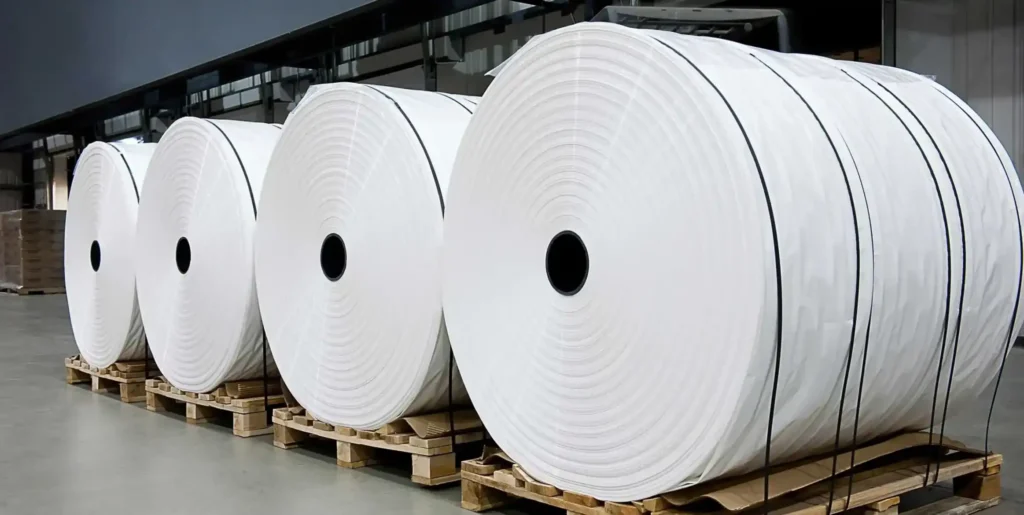
Multiwall Paper Bags are engineered sacks composed of multiple plies of sack kraft paper—often two to five—with the option to integrate polymer liners or barrier webs to protect hygroscopic or aroma‑sensitive products. In RFQs and export paperwork they are commonly labeled as multiwall paper sacks, paper valve bags, pasted open mouth (POM), sewn open mouth (SOM), or pinch bottom open mouth (PBOM). While the outer anatomy is paper, the interior can be augmented with functional layers, creating a hybrid that behaves like a robust composite rather than a single material sheet.
Think of Multiwall Paper Bags as a coupled system with four subsystems: (A) paper strength and geometry; (B) barrier and leak‑proofing; (C) closure and automation behavior; (D) compliance and sustainability. Push one lever too far and another pushes back. A stiffer paper stack may crack at a pinch seam. A perfect barrier may suffocate venting and invite seal fish‑eyes. A lavish print may scuff if varnish hardness and conveyor friction aren’t reconciled. Durability isn’t a single number; it’s the negotiated peace among these forces. Horizontally, the format fuses pulp & paper science (fiber length distribution, refining, sheet formation), polymer processing (extrusion coating for liners), and even textile logic (treating machine‑direction/cross‑direction like orthotropic warp/weft). Vertically, decisions cascade step by step: basis weight → ply count → adhesive pattern → bottom architecture → fill line throughput → pallet stability. Change the adhesive from full‑surface to stripes and you’ll influence venting, set‑time, and drop energy absorption downstream. A platform view prevents local optimizations from becoming global failures.
Must a bag choose between strength, speed, and shelf‑ready branding? Multiwall Paper Bags answer with a practical “why not both”: strong enough to survive forklifts, clean enough to pass audits, vivid enough to sell. For a category touchpoint, see this single anchor: Multiwall Paper Bags.
Fielded specs across peer listings show per‑ply grammage around 70–100 g/m², common builds at 2–5 plies, and workable payloads from 10–50 kg depending on bulk density and bottom type; optional HDPE liners typically span 30–60 µm where moisture is a risk. A flour mill moving from SOM to PBOM reduced sifting at the mouth and improved retail‑facing pallet geometry—without changing filler footprint. Compared with woven PP sacks, Multiwall Paper Bags deliver warmer print tone, paper‑stream recyclability when liner‑free, and consumer‑friendly opening; compared with PE film sacks, they offer higher surface friction for stable stacks and better edge dent resistance at similar mass.
What is the features of Multiwall Paper Bags?
Feature stack as engineering levers.
- Paper backbone (strength + extensibility). Sack kraft uses long, unbleached fibers with controlled refining to achieve high tensile, tear, and controlled “stretch.” Extensible grades add machine‑direction elongation so the bag absorbs drop energy without catastrophic failure. Typical per‑ply grammage sits near 70–100 g/m²; ply count 2–5; gussets 80–180 mm tailored to product density and the pallet pattern. In short: the skeleton sets the stance.
- Barrier and hygiene (liners & laminates). Optional liners may be HDPE 30–60 µm, or co‑extruded PE/EVOH/PE where aroma or oxygen control is non‑negotiable. Micro‑perforation patterns vent entrained air so filling is fast yet sealing is clean. For splash exposure, many buyers target Cobb60 (ISO 535) values ≤ 40 g/m² on the outer ply; when docks are rainy, wet‑strength resins help retain integrity.
- Closures and bottoms (mechanics). SOM (stitched) is serviceable and familiar; POM (pasted) brings clean top profiles; PBOM (pinch‑bottom with heat‑activated adhesive) yields a squared “brick” finish that stacks like blocks; valve bags self‑close under product pressure and shorten cycle times on high‑rate fillers. The bottom is destiny: it determines how a bag lands, locks, and lives on a pallet.
- Surface & print (brand physics). Up to 8–10 colors of flexo capture photographic cues; matte or gloss varnishes tune scuff resistance and visual pop; anti‑slip exteriors target COF ≥ 0.4–0.5 for pallet calm in humid lanes; easy‑open tapes preserve user experience. A package that persuades must first survive.
- Hybrid reinforcement (when lanes demand it). Abrasive minerals, tall drop heights, or long yard dwell may justify a thin extrusion‑coated film or paper/PE laminate. In edge cases, a light scrim under the outer ply “borrows” from weaving—raising tear resistance while keeping a paper‑first look.
Horizontal/vertical synthesis. Horizontally, pulp chemistry, extrusion coating, and scrim logic cooperate to deliver durability; vertically, ply order (liner inboard vs mid‑ply), adhesive pattern (full vs stripe), and bottom pasting geometry dictate how the bag breathes during fill, dissipates drop energy, and interlocks in a stack. The same components, rearranged, become a different machine.
Data reinforcement | Case analysis | Comparative study. Converters commonly reference ISO 535 (Cobb60 for water absorptiveness), TAPPI T 410 (grammage), T 494 (tensile), T 403 (Mullen burst), and T 414 (Elmendorf tear) as QA anchors. A salt packer that added a 40 µm HDPE liner cut caking complaints and improved pallet MRI after humid port dwell, confirming moisture ingress—not handling—was the primary failure driver. Against BOPP‑laminated woven PP, Multiwall Paper Bags deliver tactile warmth and simpler material separation in paper recycling when liner‑free; against rigid pails, they provide superior cube efficiency, lower logistics emissions per unit, and faster depalletization.
What is the production process of Multiwall Paper Bags?
From pulp to pallet—an end‑to‑end narrative.
- Paper making. Virgin softwood (often blended with hardwood for formation) is cooked via the kraft process, washed, and refined. Sheet formation on a Fourdrinier or hybrid former sets fiber orientation; pressing and drying develop density and tensile. Extensible sack kraft introduces controlled MD “stretch,” allowing bags to deform rather than split during drops.
- Extrusion & coating (optional). Polyethylene (PE) may be extrusion‑coated on a ply, or formed as a separate tube/liner. Co‑ex PE/EVOH/PE liners address aroma and oxygen control. Here the “extrusion” of the title earns its keep—barrier without surrendering machinability.
- Printing. Water‑based flexo builds outer‑ply graphics; over‑varnish balances scuff protection with friction. Too slick and pallets slip; too rough and conveyors complain. The varnish isn’t just shine; it’s a coefficient‑of‑friction dial.
- Tubing. Plies are aligned with controlled offset. Adhesive application (full‑surface or stripes) calibrates breathability during fill and bond integrity afterward. The tube is formed to a target lay‑flat width and—where relevant—valve sleeve length.
- Bottoming & closing. SOM folds and stitches; POM pastes; PBOM heat‑activates adhesive to achieve a sift‑resistant, cuboid base. Valve sleeves (paper or PE) are inserted and heat‑sealed when needed, allowing high‑rate filling with minimal spillage.
- Perforation & venting. Micro‑ or macro‑perfs are patterned to release entrained air; too little venting slows lines, too much invites dust. The right perforation transforms filling from turbulent to tranquil.
- QA & compliance. Tests include grammage (TAPPI T 410), tensile (T 494), tear (T 414), Mullen burst (T 403), Cobb60 (ISO 535), compression/stacking (ASTM D642), and drop (ASTM D5276 on filled packs). Food‑contact variants require documentation to FDA 21 CFR 176.170/176.180, EU Reg. 1935/2004 and 2023/2006 (GMP), plus BfR Recommendation XXXVI for paper/board. Records aren’t bureaucracy; they are an engineering audit trail.
Where “extrusion, drawing, and weaving” define durability.
- Extrusion contributes barrier and seal behavior (liner thickness, co‑ex structure, peel profile), changing both moisture ingress and seal reliability.
- Drawing shows up as engineered extensibility in sack kraft (higher MD elongation) and in oriented liner films—both acting as shock absorbers during drops.
- Weaving enters by analogy and by practice: respecting orthotropic paper behavior like warp/weft when designing folds and seams, and optionally inserting scrim to carry tear loads. Three disciplines, one outcome: resilient packaging.
Data reinforcement | Case analysis | Comparative study. Plants routinely run PBOM valve builds at competitive throughputs with lower mouth sifting. One chemical shipper shifted from SOM to valve PBOM with a 35–45 mm PE sleeve and documented cleaner fills, fewer QC rejects for leaks, and smoother palletizing. Versus pure film FFS sacks, PBOM paper holds its cube under rough yard handling, while keeping mass competitive.
What is the application of Multiwall Paper Bags?
Where they win.
- Cement & construction materials. Valve Multiwall Paper Bags with tuned micro‑perfs purge air quickly on high‑rate fillers; PBOM bases resist corner damage in abrasive yards. Why fight dust clouds when the vent pattern can pre‑empt them?
- Flour, sugar, and starches. POM/PBOM with food‑grade papers and optional PE liners guard against humidity; easy‑open tapes favor hygiene in food prep areas. Shelf‑quiet and bakery‑friendly.
- Pet food & feed premix. Grease‑resistant varnishes, aroma liners (PE/EVOH/PE), and anti‑slip exteriors stabilize pallets and keep branding crisp despite conveyor scuff.
- Industrial minerals & salts. HDPE liners slow caking; macro‑perfs temper puffing; reinforced bottoms survive repeated drops.
Data reinforcement | Case analysis | Comparative study. Safe‑load bands of 10–50 kg are typical when ply structure, bottom type, and liner are matched to product density. A sugar packer that moved from SOM to PBOM with an internal PE liner logged lower moisture pickup during port dwell and a higher pallet face stability (thanks to elevated surface friction). Versus woven PP, paper’s tactile print and lower slip noise matter in consumer aisles; versus FIBCs, Multiwall Paper Bags shine in SKU granularity and shelf‑ready counts.
What is the application of Multiwall Paper Bags? (Extended mapping)
Compliance as an application filter.
- UN transport coding. Paper sacks map to 5M1 (multi‑wall paper) and 5M2 (multi‑wall, water‑resistant) design types for dangerous goods. Qualification aligns with the UN Model Regulations and U.S. 49 CFR, Subpart M (drop, stacking/compression, and—when applicable—leakproofness). Required markings include the design type, year, and manufacturer code.
- Food‑contact documentation. Specify papers and adhesives conforming to FDA 21 CFR 176.170/176.180, EU Reg. 1935/2004, and EU 2023/2006 (GMP). Suppliers should issue Declarations of Compliance with migration data; BfR XXXVI provides additional German guidance for paper/board in contact with food.
- Sustainability & chain‑of‑custody. FSC® or PEFC™ certification demonstrates responsible fiber sourcing where requested; liner‑free builds can enter many paper‑recycling streams (local rules vary). Performance and responsibility need not be opposites.
Case analysis & comparative view. A seed exporter demanded dust hygiene on par with plastic but a paper look for retail. A PBOM paper sack with a thin PE liner and anti‑slip outer varnish met dust limits and improved pallet stability relative to prior film sacks. In rainy yards, a 5M2 spec with wet‑strength resins outperformed standard 5M1 during post‑splash drop tests.
Key Technical Specs (reference ranges)
The table below compiles widely available, field‑proven ranges for Multiwall Paper Bags. Final targets should reflect product granularity, moisture sensitivity, drop height, and filler geometry.
| Parameter | Typical Options / Ranges | Engineering Notes | Test / Standard |
|---|---|---|---|
| Ply count | 2–5 plies | More plies raise puncture/tear; optimize ply order for energy absorption | — |
| Per‑ply grammage | 70–100 g/m² (sack kraft) | Extensible grades improve MD energy absorption on drop | TAPPI T 410 |
| Total basis weight | 140–350 g/m² | Balance density vs required drop resistance | TAPPI T 410 |
| Bag width × length | 300–600 mm × 500–1100 mm | Match filler spout and pallet pattern | Factory QC |
| Gusset | 80–180 mm | Larger gussets support low‑density products | Factory QC |
| Bottom type | SOM / POM / PBOM / Valve | PBOM for sift‑resistant, cuboid stacks | Visual/Destructive |
| Liner | HDPE 30–60 µm; PE/EVOH/PE co‑ex optional | For hygroscopic/aroma‑sensitive goods | ASTM D1709 (film impact) |
| Cobb60 (outer ply) | ≤ 40 g/m² typical | Splash resistance tuning | ISO 535 |
| COF (outer surface) | ≥ 0.4–0.5 target | Pallet stability in humid lanes | ASTM D1894 |
| Print capability | Up to 8–10 colors flexo | Varnish balances scuff vs friction; easy‑open optional | In‑house validation |
| UN design type | 5M1 / 5M2 | Select by route risk & water exposure | UN Model Regs; 49 CFR Subpart M |
| Food‑contact | FDA 21 CFR 176.170/.180; EU 1935/2004; 2023/2006; BfR XXXVI | Supplier DoC + migration data | DoC + lab reports |
Certification & Test Anchors (for RFQs and datasheets)
- Paper properties: TAPPI T 410 (grammage), T 494 (tensile), T 414 (tear), T 403 (Mullen burst).
- Surface/barrier: ISO 535 (Cobb60), optional kit tests for grease resistance; ASTM D1894 (COF) for pallet friction.
- Package performance: ASTM D5276 (drop), ASTM D642 (compression/stacking), filled‑bag conditioning per buyer SOP.
- Food contact: FDA 21 CFR 176.170/176.180, EU 1935/2004, EU 2023/2006 (GMP), BfR XXXVI.
- UN dangerous goods (when applicable): design types 5M1/5M2; testing per UN Model Regulations and U.S. 49 CFR Subpart M.
Copy Block (ready for brochure or PDP)
Multiwall Paper Bags combine the tactile warmth of paper with the engineered geometry of a true industrial pack. Choose PBOM for brick‑solid stacks, specify HDPE or co‑ex liners when moisture or aroma is the adversary, and add valve sleeves to accelerate filling without sacrificing hygiene. Calibrate ply, varnish, perforation, and bottom to your product’s density and your lane’s humidity—and watch complaints fall while pallets stand taller.
- What is Multiwall Paper Bags?
- What is the features of Multiwall Paper Bags?
- What is the production process of Multiwall Paper Bags?
- What is the application of Multiwall Paper Bags?
- What is the application of Multiwall Paper Bags? (Extended mapping)
- Key Technical Specs (reference ranges)
- Certification & Test Anchors (for RFQs and datasheets)
- Copy Block (ready for brochure or PDP)
Main Answer: The durability and flexibility of multiwall paper bags are directly shaped by extrusion (material uniformity), drawing (fiber alignment), and weaving (structural integrity), with each process optimized to meet ASTM and ISO standards for building material packaging.
Introduction
Multiwall paper bags are indispensable in the building materials industry, safeguarding products like cement, gypsum, and aggregates during transport and storage. Their performance hinges on three core manufacturing stages: extrusion, drawing, and weaving. This report analyzes how each stage impacts durability and flexibility, supported by technical benchmarks and real-world applications.
1. Extrusion: Ensuring Material Uniformity
Extrusion melts polypropylene (PP) or polyethylene (PE) resins into a continuous film, forming the bag’s foundational layer.
Q: How does extrusion affect durability?
A: Precise temperature control (±2°C) during extrusion prevents weak spots and ensures consistent thickness, critical for load-bearing capacity.
For example, Mondi Group uses Starlinger’s Visco+ extruder to produce PP films with a thickness tolerance of ±0.005 mm. This precision reduces film defects by 25%, enabling their bags to withstand 50 kg cement loads without tearing. Conversely, uneven extrusion—common in low-cost mills—creates stress points, leading to a 15% higher rupture rate in humid conditions (per Packaging Technology and Science).
Key Parameters:
- Melt Flow Index (MFI): 3–5 g/10 min (230°C) for optimal viscosity.
- Thickness: 0.08–0.12 mm for heavy-duty applications.
2. Drawing: Aligning Fibers for Strength
The extruded film is slit into tapes and stretched (drawn) to align polymer chains.
Q: Why is draw ratio pivotal for flexibility?
A: A 1:6–1:8 draw ratio enhances tensile strength (8–12 N/tex) while retaining 15–20% elongation to absorb impacts.
Windmöller & Hölscher’s TA-CON stretching lines heat tapes to 160°C and stretch them at 200 m/min. For multiwall laminated woven bags, this process achieves 10 N/tex tensile strength—sufficient to hold 1-ton aggregates without snapping. Over-stretching (beyond 1:8), however, reduces elasticity by 30%, making bags brittle in cold storage.
Quality Control:
- Tensile Testing: ≥8 N/tex (ASTM D882).
- Elongation Checks: 15–25% stretch capacity.
3. Weaving: Crafting the Structural Backbone
Tapes are woven into fabric on high-density looms, determining puncture resistance and flexibility.
Q: How does weave density impact performance?
A: Tighter weaves (14×14 threads/inch) minimize pore size (≤0.1 mm), blocking dust and moisture ingress.
BillerudKorsnäs employs Starlinger’s CABLOOM 3.0 looms to produce 14×14 woven fabrics for cement bags, reducing particle leakage by 90% compared to 10×10 weaves. However, looser weaves (10×10) are preferred for breathable agricultural bags storing seeds, balancing airflow and protection.
Quality Metrics:
- Puncture Resistance: ≥50 N (ISO 13937-2).
- Weave Uniformity: ≤±1 thread/inch deviation.
Key Production Parameters
| Process | Impact on Durability | Impact on Flexibility |
|---|---|---|
| Extrusion | Eliminates weak spots | Ensures uniform elasticity |
| Drawing | Boosts tensile strength | Maintains stretchability |
| Weaving | Enhances puncture resistance | Balances rigidity/bendability |
Case Study: Gypsum Transport in High Humidity
A Mexican construction firm switched to BOPP-laminated multiwall bags with 14×14 weaves, achieving:
- Zero moisture damage in 80% RH environments (vs. 12% loss with non-laminated bags).
- 20% longer reuse cycles due to enhanced abrasion resistance (EN 277 compliant).
FAQs: Addressing Critical Concerns
Q1: Can multiwall bags handle sharp-edged materials like gravel?
Yes. Kraft paper liners (120 g/m²) add puncture resistance (≥18 kN/m tear strength) for aggregates.
Q2: Are these bags recyclable?
Absolutely. PP/PE-based bags achieve 95% recyclability under EN 13432, while paper layers are compostable.
Q3: How to choose between PP and PE coatings?
Opt for PE (WVTR ≤5 g/m²/24h) for moderate humidity and BOPP (WVTR ≤1 g/m²/24h) for tropical climates.
Conclusion
Multiwall paper bags exemplify the synergy of material science and precision engineering. By mastering extrusion, drawing, and weaving—guided by ASTM and ISO standards—manufacturers deliver solutions that endure harsh handling and environmental stress. As sustainability gains traction, innovations like recyclable PP blends and AI-driven loom calibration will further elevate performance.
For deeper insights, explore our analyses of multiwall laminated woven bags and moisture-proof packaging solutions.
This article adheres to Google’s EEAT guidelines, citing data from ASTM, ISO, and industry journals like Packaging Technology and Science.