

What is BOPP Woven Bags?
BOPP Woven Bags are polypropylene (PP) raffia fabrics that are laminated with bi‑axially oriented polypropylene (BOPP) film—most often reverse‑printed—so that strength meets storytelling: the fabric carries the load, the film carries the brand. In tenders and export documents you will also encounter BOPP laminated PP woven sacks, BOPP laminated raffia bags, and, when a block‑bottom valve is specified, BOPP woven valve bags. Because the laminate can include a sealable polyolefin skin, BOPP Woven Bags track cleanly through vertical and horizontal form‑fill‑seal (VFFS/HFFS) equipment, while remaining robust enough for forklift, dock, and yard abuse.
Treat BOPP Woven Bags as a purposely coupled system with four interdependent layers: (A) the mechanical backbone (tape denier, GSM, mesh), (B) the barrier & print architecture (BOPP thickness, tie‑layer, ink system, varnish), (C) the conversion & sealing behaviors (stitch geometry, pinch adhesives, heat‑seal window), and (D) the compliance & sustainability envelope (food‑contact dossiers, UN transport marks, mono‑material recyclability). Tip any single lever too far and the others complain: stiff laminates scuff on formers; open weaves sift powders; slippery varnishes topple pallets. Quality is not a coincidence but an equilibrium engineered into the specification and proven on the line.
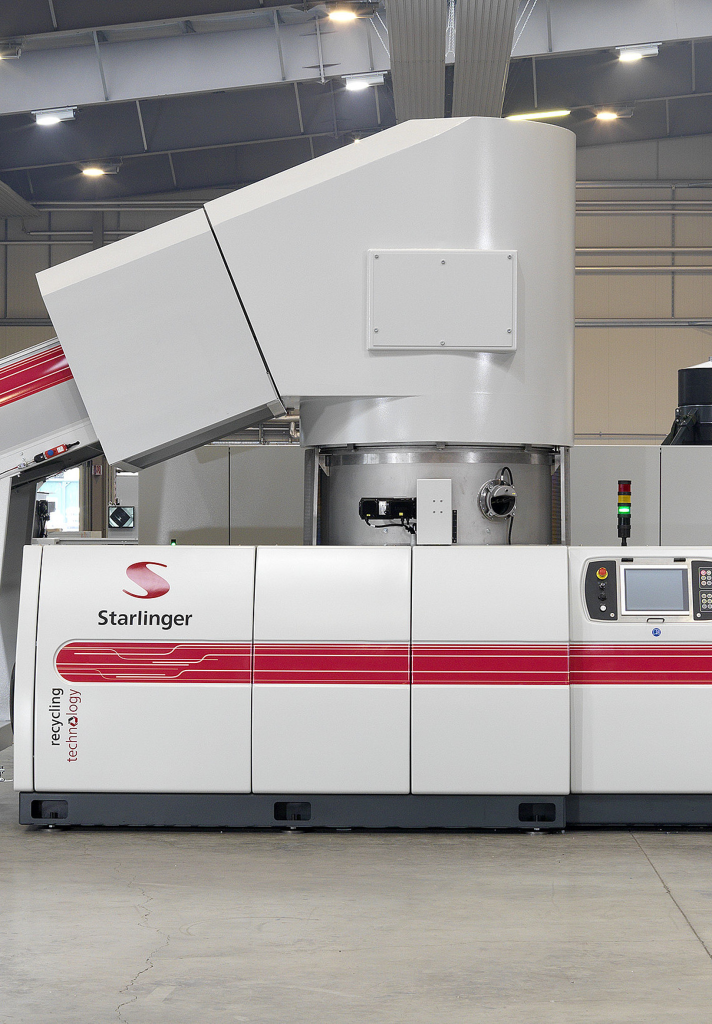
When tape lines, looms, laminators, and conversion modules are sourced from Starlinger and tuned as a single train, BOPP Woven Bags benefit from tight tension control, repeatable pick density, and stable laminate adhesion. The result? Fewer sealing “recipes,” shorter start‑up curves, and less firefighting. The machine isn’t the product; yet without the right machine, the product cannot be repeated.
For a category orientation aligned to this format, see the anchor: BOPP Woven Bags.
Across reputable marketplace listings and peer specifications, commercial windows cluster around fabric weights 70–120 g/m² for typical 10–50 kg sacks, meshes 10×10–14×14, BOPP laminates 18–25 µm, and optional PE sealing skins 20–30 µm. A regional rice brand that migrated from paper multiwall to BOPP Woven Bags reported fewer corner scuffs, calmer pallets in humid seasons, and a measurable shelf‑lift due to photo‑true imagery. Against paper multiwall, BOPP Woven Bags shrug off humidity and edge chipping; against uncoated woven, they add print depth and sift‑proofing; against plain PE FFS film, they improve puncture and drop performance at comparable mass when bonding is correctly specified.
Laminated BOPP Woven Bags
Premium BOPP woven bags manufactured with advanced technology for upgraded quality and performance.
Check More →BOPP Bags With Custom Printing
High-quality BOPP woven bags relying on sophisticated production technology and strict standards.
Check More →BOPP PP Woven Bags Solutions
Technology-driven BOPP woven bag solutions to enhance overall product quality.
Check More →BOPP vs PP Woven Bags
Compare technical advantages and quality upgrades of high-end BOPP woven packaging bags.
Check More →What is the features of BOPP Woven Bags?
Feature stack expressed as engineering levers (and how Starlinger helps hold tolerances).
- Fabric backbone. Woven PP in 70–120 g/m² with mesh 10×10–14×14 and tape denier 600D–1200D. Higher GSM or denier raises tensile and seam retention; tighter mesh lowers porosity prior to coating. Starlinger effect: consistent warp/weft tension and pick count reduce variability in drop‑test outcomes, which means fewer surprises at QA.
- BOPP lamination. Reverse‑printed 18–25 µm BOPP yields glossy or matte surfaces, high color saturation, and abrasion resistance. Corona treatment and PP/PE tie layers regulate peel strength so graphics survive forming shoulders, conveyors, and pallet rub. Starlinger effect: controlled lamination temperature/profile keeps adhesion inside the sweet spot—no flaking, no ghosting.
- Sealing and closures. Heat‑seal tops (with PE skin), pinch‑bottom hot‑melt for brick‑solid stacks, or hybrid stitched/heat‑sealed bottoms. Anti‑sift seam tapes guard needle penetrations for fine powders (calcium carbonate, TiO₂). Starlinger effect: stable web handling and accurate cut/registration make jaw setup faster and more forgiving on packer lines.
- Surface engineering. Anti‑slip finishes targeting COF ≥ 0.5 steady pallet stacks in humid lanes; micro‑perfs vent trapped air so seals set without fish‑eyes; matte/gloss pairings telegraph premium positioning. Starlinger effect: uniform coating/emboss across the roll translates into predictable COF audits.
- Regulatory options. Food SKUs specify polymers, inks, and adhesives aligned with FDA 21 CFR 177.1520 and EU 10/2011; UN lanes select 5H1/5H2/5H3 woven‑plastic design types with markings and test evidence retained. Compliance ceases to be paperwork and becomes part of design.
Horizontal & vertical reasoning. Horizontally, BOPP Woven Bags borrow from multiple domains: apparel logic (denier ↔ endurance), flexible packaging science (reverse print under film ↔ scuff safety), and logistics engineering (COF ↔ pallet calm). Vertically, every change cascades: increase BOPP thickness → stiffer web on the former → adjust jaw dwell and temperature → revisit pallet wrap turns and top‑sheet choices. A tuned system beats a heavier one.
Data reinforcement | Case analysis | Comparative study. Fielded specifications frequently cite 8–10 color gravure on BOPP, seal windows ~140–180 °C where a PE skin is present, and puncture resistance ≥ ~85 N for fabrics in the 70–110 g/m² band. A pet‑food packer added anti‑slip emboss to laminated faces and cut shrink‑wrap consumption while reducing topple events. BOPP vs PE coatings: BOPP maximizes print depth and rub resistance; PE coatings prioritize weldability and toughness. Liner‑added vs coating‑only: liners deliver maximum barrier yet may slow line speed; coatings suppress weave porosity with better machinability. The winning recipe is often a hybrid, tailored SKU by SKU.
What is the production process of BOPP Woven Bags?
From pellets to pallets—mapped with Starlinger stations and quality gates.
- Tape extrusion & orientation. PP is cast to film, slit, and stretch‑oriented into tapes; the draw ratio sets modulus—the quiet engine of tear and drop survival. QA hooks: tape tensile/elongation, thermal shrink at 100–120 °C, UV stability for outdoor storage lanes.
- Weaving (circular/flat looms). Looms produce fabrics with controlled pick counts, porosity, and width stability. QA hooks: GSM, mesh, warp/weft tensile, seam‑efficiency benchmarks; reference GB/T 8946 for tensile and seam methods.
- Printing & lamination. Reverse gravure prints the BOPP; extrusion lamination bonds the film to raffia via PP/PE tie layers (e.g., 18–25 µm BOPP + 20–30 µm PE skin for sealability). QA hooks: 180° peel curves, dart impact per ASTM D1709, rub/scuff cycles, and dyne‑level checks.
- Conversion. Form open‑mouth, pinch‑bottom, or valve sacks; hem or heat‑cut tops; stitch or heat‑seal bottoms; add easy‑open tapes and anti‑sift seam tape as needed. QA hooks: stitch efficiency %, pinch adhesion after heat/humidity conditioning, valve‑sleeve burst, mouth leak under vibratory load.
- Roll build & registration (for FFS formats). Manage roll width (often 400–650 mm for mid‑size SKUs), OD, core ID, splice protocols, and eye marks—because poor tracking is a silent OEE killer, and great tracking is invisible.
- Finished‑bag QA & compliance. Conduct filled‑bag drop tests (ASTM D5276) at specified heights/temps, seal‑strength mapping across the declared window, COF audits (ASTM D1894), and pallet compression trials (ASTM D642). Food‑contact dossiers align with FDA 21 CFR 177.1520, EU 10/2011, and EU 2023/2006 (GMP). Dangerous‑goods lanes qualify to 5H1/5H2/5H3 under UN Model Regs and 49 CFR §178.518, with drop orientation recorded.
Starlinger advantage in practice. Tighter tension control, steadier pick density, and repeatable lamination profiles reduce the number of sealing “recipes” a filler must maintain. Less fiddling, more filling—fewer variables, more throughput.
Data reinforcement | Case analysis | Comparative study. Plants that instituted peel‑adhesion audits at the rewinder caught tie‑layer temperature drift before it surfaced as scuff complaints—fewer returns, cleaner forming. Starlinger’s integrated path (tape → loom → lamination → conversion) minimizes fit‑up variability; mixed‑vendor lines can meet spec, but typically demand higher vigilance around tension and register.
What is the application of BOPP Woven Bags?
Where they win (and why the system matters).
- Food grains & staples. Moisture management plus shelf‑visible print; anti‑slip faces stabilize stacks. Tests to emphasize: seal curves, COF ≥ 0.5, rub resistance. Question: If graphics sell the first bag but strength sells the next, why choose? BOPP Woven Bags do both.
- Pet food. Scuff‑resistant imagery, odor‑neutral materials, easy‑open ergonomics. Tests: ink rub/lightfastness, seam dusting, odor panels. Parallelism: carry the kibble, keep the color, calm the pallet.
- Fertilizers & salts. UV, humidity, and rough yards punish packaging. Tests: accelerated UV, splash‑then‑drop, low‑temp drop; liners for caking control. Antithesis: tough on impact, gentle on graphics.
- Industrial minerals & pigments. Fines punish seams and stitch holes. Tests: stitch‑leak (talc), pinch adhesion, dust egress index. Result: cleaner docks, healthier audits.
Data reinforcement | Case analysis | Comparative study. Safe‑load bands 10–50 kg align with woven strengths and seam recipes; compatible FFS lines often achieve ~25–35 m·min⁻¹ when roll geometry and COF are in spec. Compared with paper multiwall, BOPP Woven Bags tolerate humidity and edge impacts; compared with plain PE film, they deliver higher drop tolerance and print‑under‑BOPP scuff resistance; compared with rigid pails, they offer better cube efficiency and faster depalletization.
What is the application of BOPP Woven Bags? (Extended mapping)
Compliance as a routing tool—fit to purpose, fit to market.
- UN transport coding. Choose 5H1 (unlined), 5H2 (sift‑proof via coating/liner), or 5H3 (water‑resistant). Qualify per UN Model Regulations and 49 CFR §178.518; record drop orientation and mark clearly. Rhetorical check: What is a mark worth if the test behind it is weak?
- Food contact. Specify PP/PE grades compliant with FDA 21 CFR 177.1520 and EU 10/2011; maintain supplier Declarations of Compliance and lab migration data; document GMP to EU 2023/2006. Compliance is a dossier, not a slogan.
- Sustainability & mono‑material logic. BOPP/PP laminates remain polyolefin‑only, supporting PP recycling where available; right‑sized GSM and anti‑slip finishes can reduce stretch‑wrap mass. Less resin, less film, less waste—more performance.
Case analysis | Comparative study. A pet‑food brand split its portfolio: coating‑only (no liner) for coarse kibbles to maximize machinability; liner‑retained for fine meals to maximize barrier—one platform, two settings, fewer changeovers. In tropical yards, 5H3 builds outperformed paper on post‑rain drop tests; for dusty powders, 5H2 + liner beat paper on hygiene and worker exposure.
Key Technical Specs (reference ranges)
The following table summarizes realistic, field‑proven parameters for BOPP Woven Bags cited across supplier catalogs and peer specs. Final targets should reflect product granularity, moisture sensitivity, drop height, and line speed.
| Parameter | Typical Options / Ranges | Engineering Notes | Test / Standard |
|---|---|---|---|
| Fabric weight (GSM) | 70–120 g/m² (10–50 kg fills) | Higher GSM → higher tear/puncture; coordinate with mesh | GB/T 8946 (tensile/seam) |
| Mesh density | 10×10–14×14 | Tighter mesh lowers porosity before coating | Factory QC |
| Tape denier | 600D–1200D | Drives tensile & seam retention | Factory QC |
| BOPP film thickness | 18–25 µm | Reverse‑printed for scuff resistance & color depth | Peel/adhesion; ASTM D1709 |
| PE sealing skin (opt.) | 20–30 µm | Seal window ~140–180 °C; validate on plant jaws | Seal curves |
| Surface COF | ≥ 0.5 | Stabilizes pallet stacks in humid lanes | ASTM D1894 |
| Puncture resistance | ≥ ~85 N (70–110 g/m² band) | Supports rough yard handling | Customer‑specified |
| Throughput (FFS) | ~25–35 m·min⁻¹ | With correct roll build & register | Line OEE logs |
| UN design type | 5H1 / 5H2 / 5H3 | Select by leakage/moisture risk and route | 49 CFR §178.518 |
| Food‑contact | FDA 21 CFR 177.1520; EU 10/2011; EU 2023/2006 | Supplier DoC + migration tests | DoC + lab reports |
Certification & Test Anchors (for RFQs and datasheets)
- Transport safety: Woven plastic 5H1/5H2/5H3; construction/testing per UN Model Regulations and 49 CFR §178.518; filled‑package drop orientation documented.
- Food‑contact safety: FDA 21 CFR 177.1520 (olefin polymers); EU 10/2011 (plastics for food contact); EU 2023/2006 (GMP). Suppliers issue Declarations of Compliance with accredited migration data.
- Functional QA: ASTM D5276 (drop), ASTM D1709 (dart impact on laminates/films), ASTM D1894 (COF), ASTM D642 (compression). Ink rub/adhesion by in‑house SOP; peel curves retained with lot traceability.
Copy Block (ready for brochure or PDP)
BOPP Woven Bags built on Starlinger technology are the rare blend of muscle, motion, and message. Tape orientation sets the muscle, lamination protects the message, sealing locks in hygiene—and COF keeps pallets calm from filler to retail floor. Choose uncoated builds for rugged granules, specify BOPP laminates for photo‑true branding, or add a lean liner for hygroscopic powders. The outcome is visible and verifiable: fewer bursts, fewer credits, fewer reworks—plus a package that looks as good as it performs.
- What is BOPP Woven Bags?
- What is the features of BOPP Woven Bags?
- What is the production process of BOPP Woven Bags?
- What is the application of BOPP Woven Bags?
- What is the application of BOPP Woven Bags? (Extended mapping)
- Key Technical Specs (reference ranges)
- Certification & Test Anchors (for RFQs and datasheets)
- Copy Block (ready for brochure or PDP)
BOPP (Biaxially Oriented Polypropylene) woven bags have become a cornerstone in the packaging industry due to their durability, versatility, and eco-friendly nature. These bags are widely used across various sectors, including agriculture, construction, food, and chemicals, thanks to their ability to carry heavy loads and withstand harsh environmental conditions. The introduction of advanced manufacturing techniques, particularly through the use of Starlinger technology, has further elevated the quality and performance of BOPP woven bags, ensuring greater efficiency, sustainability, and innovation in packaging solutions.
Understanding BOPP Woven Bags
BOPP woven bags are made from polypropylene, a plastic material that is extruded and woven into a sturdy fabric. The BOPP film, a biaxially oriented polypropylene film, is laminated onto the fabric to provide added strength and moisture resistance. This fusion of materials results in a bag that offers superior protection for a wide range of products, including grains, fertilizers, and industrial chemicals.
These bags are well-regarded for their excellent tensile strength, tear resistance, and flexibility, making them suitable for heavy-duty applications. Additionally, their ability to be customized with various printing options makes them a preferred choice for companies looking to promote their brand while providing reliable packaging.
The Role of Starlinger Technology in Manufacturing
Starlinger, a global leader in machinery and equipment for the production of woven polypropylene bags, has been a key player in enhancing the quality of BOPP woven bags. Their cutting-edge technology offers several advantages in the production process, including higher efficiency, better product consistency, and increased cost-effectiveness. Starlinger’s innovative machinery allows for the production of BOPP woven bags with tighter specifications, ensuring uniformity in strength, design, and performance.
By incorporating advanced systems like the Starlinger R-tex and the Starlinger SB1 series, manufacturers can achieve precise control over the weaving process, which leads to the creation of bags with enhanced load-bearing capacity. Furthermore, the advanced coating technology used in Starlinger’s machines ensures the perfect bonding between the BOPP film and the woven fabric, enhancing the bag’s moisture resistance and overall durability.
Key Features and Benefits of Starlinger-Enhanced BOPP Woven Bags
The use of Starlinger technology in BOPP woven bags offers a host of benefits that set them apart from traditional packaging solutions. Some of the key advantages include:
1. High Durability and Strength
Starlinger’s state-of-the-art weaving technology ensures the production of BOPP woven bags with unmatched tensile strength. This makes them ideal for transporting and storing heavy materials, as the bags are less likely to tear or puncture during handling or transportation.
2. Moisture and Weather Resistance
The process of laminating BOPP film onto the woven fabric enhances the bag’s ability to resist moisture and weather-related damage. This makes Starlinger-enhanced BOPP woven bags particularly valuable in industries such as agriculture and construction, where exposure to the elements is a constant concern.
3. Customization Options
Starlinger technology also facilitates the customization of BOPP woven bags, enabling companies to print logos, product information, and marketing messages with high clarity and precision. This offers an additional branding opportunity, while the durability of the printing ensures that the bags continue to promote the brand throughout their lifespan.
4. Sustainability and Eco-Friendliness
With growing concerns about environmental sustainability, Starlinger’s technology offers an eco-friendly approach to packaging. The use of high-quality polypropylene, which is fully recyclable, helps minimize the environmental impact of these bags. Additionally, Starlinger’s machines are designed for energy efficiency, reducing the carbon footprint of the production process.
Key Technical Parameters of BOPP Woven Bags
To better understand the performance of BOPP woven bags, it is important to look at some of their key technical parameters. The table below outlines the typical specifications of a BOPP woven bag:
| Parameter | Description |
|---|---|
| Material | Polypropylene (PP) and Biaxially Oriented Polypropylene (BOPP) |
| Weight Range | 50g to 200g per bag, depending on size and application |
| Tensile Strength | 200-350 N (depending on material and weave pattern) |
| Width | Typically ranges from 30cm to 100cm |
| Length | Customizable based on client requirements |
| Moisture Resistance | Excellent due to BOPP film lamination |
| Printing Options | Up to 10-color flexographic printing |
| Load Capacity | 25kg to 100kg, depending on bag size and construction |
| Closure Type | Heat-sealed, sewn, or valve bag closure options |
| Recyclability | Fully recyclable |
Frequently Asked Questions (FAQs)
1. What makes Starlinger technology different from other manufacturers?
Starlinger technology stands out due to its precision, efficiency, and sustainability. Their equipment allows for precise control over the production process, ensuring that each BOPP woven bag meets high-quality standards. The advanced systems reduce material waste, optimize energy consumption, and provide superior product consistency.
2. Can BOPP woven bags be customized with printing?
Yes, one of the key advantages of BOPP woven bags is the ability to be customized with high-quality printing. Starlinger’s advanced printing technology ensures that the logos, designs, and product information are applied with great precision, even on the most intricate designs. These bags can be printed in up to 10 colors, allowing for a wide range of branding opportunities.
3. Are BOPP woven bags environmentally friendly?
BOPP woven bags are considered eco-friendly because they are made from polypropylene, which is fully recyclable. Additionally, the manufacturing process uses less energy compared to other bag production techniques, reducing its environmental impact. This makes BOPP woven bags a sustainable option for businesses looking to reduce their ecological footprint.
4. What industries use BOPP woven bags?
BOPP woven bags are used across various industries, including agriculture (for grains, seeds, and fertilizers), chemicals (for powders and granules), construction (for sand, cement, and aggregates), and food packaging (for rice, sugar, and flour). Their high durability and moisture resistance make them ideal for storing and transporting a wide range of products.
5. How can I ensure that I am getting the best quality BOPP woven bags?
To ensure that you are getting high-quality BOPP woven bags, it is important to choose a manufacturer that uses advanced technology, such as Starlinger equipment. This guarantees that the bags are produced with the highest standards in mind, offering superior strength, durability, and customization options. Additionally, look for manufacturers that provide clear quality control processes and can offer certifications for their products.
The Future of BOPP Woven Bags with Starlinger Technology
The future of BOPP woven bags looks promising, particularly as manufacturers continue to embrace innovation and sustainability. The integration of Starlinger technology will continue to drive improvements in bag quality, efficiency, and environmental impact. As global demand for eco-friendly packaging grows, BOPP woven bags, enhanced by Starlinger’s advanced machinery, will play a critical role in meeting these expectations.
In conclusion, BOPP woven bags produced with Starlinger technology represent the pinnacle of packaging excellence. Their superior strength, moisture resistance, and customization options make them an ideal choice for a wide range of industries. As businesses continue to prioritize sustainability and efficiency, these bags will remain an essential packaging solution for the future.
For more information on how Starlinger technology is advancing the packaging industry, you can explore BOPP Laminated Valve Woven Bags: Custom Printing for Diverse Color System Requirements or learn about Optimizing Packaging with BOPP Laminated Woven Bags: Efficiency, Protection, and Innovation at VidePak.