
What is Kraft Paper Woven Bags?
Kraft Paper Woven Bags combine a printable kraft paper exterior with a high‑tensile polypropylene (PP) woven substrate—and, where needed, a thin polyethylene (PE) liner—to deliver a package that looks premium, runs fast, and survives tough logistics. Within feed operations, the format appears under many aliases: paper‑poly woven feed sacks, paper‑laminated PP woven bags, laminated sewn‑open‑mouth (SOM) feed bags, and paper‑poly pasted valve sacks. Different names, one intention: protect nutrition from the filler spout to the farm gate without slowing the line or compromising brand presence. For a broader context on paper‑forward constructions in this family, see Kraft Paper Woven Bags.
From a systems perspective, Kraft Paper Woven Bags sit at the intersection of pulp & paper science (basis weight, fiber orientation, print anchorage), polymer engineering (tape extrusion, mesh density, lamination chemistry), food‑adjacent compliance (migration limits, hygiene audits), and materials handling (coefficient of friction, pallet stability, compression). A horizontal lens compares the design to multiwall paper, mono‑PP woven, and PE form‑fill‑seal solutions; a vertical lens tracks the stack from resin and fiber through lamination and converting to on‑line performance and shelf wear. What seems like a simple sack is, in truth, an engineered compromise between speed, protection, and storytelling.
Systems view — sub‑problems and solution levers
Material stack. Typical PP woven cores run mesh 10×10–12×12 at ~70–110 gsm; kraft faces land around ~70–100 gsm in brown or white; extrusion lamination (LDPE or PP) sits near ~20–30 µm; optional PE liners range ~15–40 µm. Levers: gsm for cube retention, mesh for puncture resistance, laminate thickness for scuff and moisture, liner gauge for vapor control.
Closure system. SOM with single/double chain‑stitch and a turned top distributes load and curbs sifting; pasted valve constructions interface cleanly with pneumatic fillers. Levers: stitch pitch, crepe tape, and bottom fold architecture.
Barrier & hygiene. Plastics touching feed conform to EU 10/2011 and FDA 21 CFR 177.1520; paper components map to BfR XXXVI. Levers: liner on/off, laminate selection, low‑odor ink/varnish choices to reduce set‑off and taint.
Handling & COF. Surface COF per ISO 8295/ASTM D1894 and gusset geometry drive conveyor behavior and pallet cohesion. Levers: varnish texture, lamination resin type, gusset depth to resist infeed “skiing” while keeping stacks stable.
Mechanical integrity. Tensile and tear follow ISO/TAPPI methods; paper‑face burst by ISO 2759 (Mullen); filled‑bag drop by ISO 2248. Levers: ply orientation, seam tape, double folds, and stitch spec.
Across industries the metaphors align: closure choice is weld vs. rivet; laminate thickness is barrier vs. glide; COF is grip vs. flow. Vertically, one change cascades—raise laminate thickness, boost scuff resistance and moisture barrier, but increase COF and potentially re‑tune conveyors. Systems thinking prevents local optimizations from creating downstream headaches.
What is the features of Kraft Paper Woven Bags?
Dual‑layer strength with a credible face. The PP woven core carries the abuse—fork‑tine nudges, corner drops, deck vibration—while the kraft exterior defends graphics and lends tactile traction. Industrial on the inside; brand‑ready on the outside.
Moisture management that earns its keep. With ~20–30 µm lamination and, when warranted, a ~15–40 µm inner liner, Kraft Paper Woven Bags resist water‑vapor ingress that triggers caking and potency drift. Turn‑top hems plus crepe‑taped stitches reduce sifting at the closure—precisely where many powder complaints begin.
Line speed without drama. Open mouths accept gravity, belt, or auger dosing; pasted valves couple to pneumatic fillers for fine powders. Sewing heads are ubiquitous; valve closers keep cycles tight. The win is not only speed but repeatability: a fast bag that is also a forgiving bag.
Stacking geometry that behaves. Combined gsm and gusseting tune stiffness and footprint so layers lock predictably under stretch wrap. Pallets stay square; corners resist the tell‑tale “dishing” that undermines trailer stability.
Compliance you can point to. Declarations aligned to EU 10/2011, FDA 21 CFR 177.1520, and BfR XXXVI underpin food‑adjacent confidence. Converter credentials—ISO 9001, BRCGS Packaging, or ISO 22000/FSSC 22000—signal process control rather than improvisation.
Sustainability pathways that are pragmatic. Paper‑forward exteriors support fiber‑stream recovery when clean; solventless adhesive options cut VOCs. Monomaterial PP systems exist, yet Kraft Paper Woven Bags strike a practical balance where print warmth, scuff resistance, and tear strength must coexist.
Data reinforcement. Across public B2B listings, mainstream specs show 20/25/40/50 kg capacities, widths around ~420–600 mm, PP cores at ~70–110 gsm, kraft faces ~70–100 gsm, laminations ~20–30 µm, and liners ~15–40 µm in either SOM or pasted‑valve styles.
Case analysis. A poultry‑feed mill in a humid delta reduced stitch‑site caking and pallet wipe‑downs after shifting from unlaminated woven PP to Kraft Paper Woven Bags with a 25 µm laminate and 20 µm liner. Print scuff complaints halved within eight weeks—no filler hardware changes required.
Comparative study. Versus BOPP‑laminated woven PP, Kraft Paper Woven Bags trade a touch of water resistance for a warmer hand and higher interlayer friction; versus multiwall paper, they deliver superior tear and puncture with similar print real estate; versus PE heavy‑duty FFS, they surrender monomaterial simplicity but gain friendlier manual handling and benign seam venting.
Horizontally, think in athletic terms: acceleration (fill rate), resilience (mechanical strength), conditioning (barrier design), tactics (COF and gusset tuning). Vertically, trace the ladder from resin grade to retail face and notice how each rung conditions the next.
What is the production process of Kraft Paper Woven Bags?
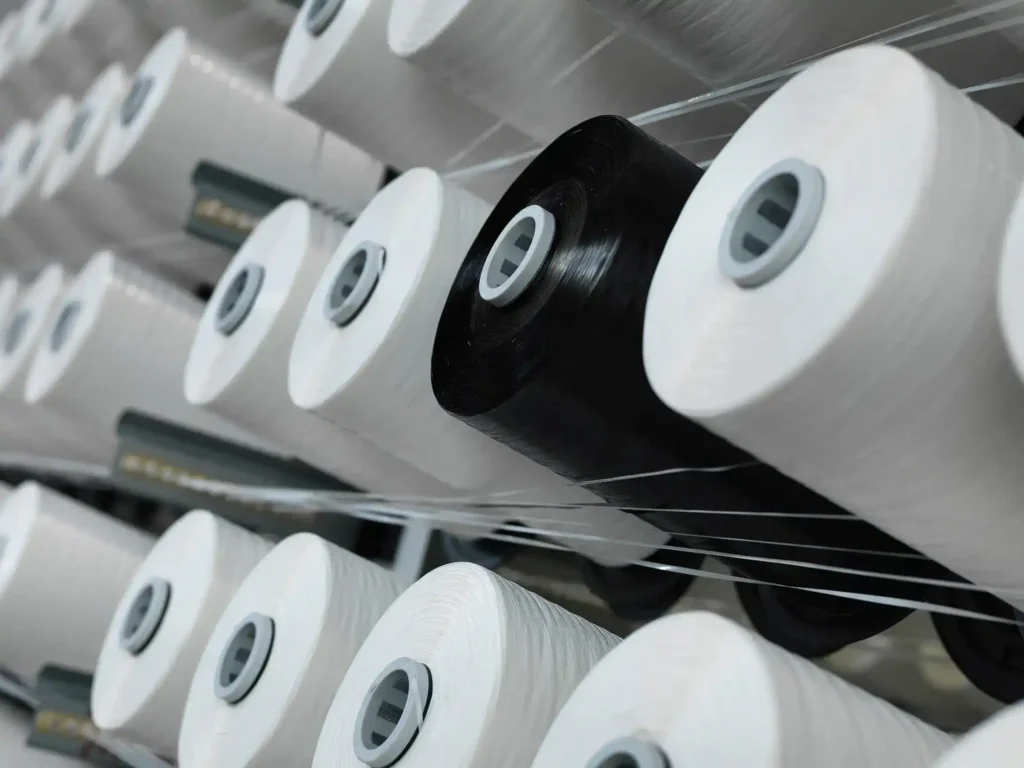
1) Tape extrusion & weaving (PP core). PP resin is extruded and slit into tapes, oriented to target tensile strength, and woven into fabric—mesh 10×10–12×12 at ~70–110 gsm is typical. UV stabilizers can be dosed for yard‑storage programs.
2) Kraft paper prep. Brown or white kraft is sourced at ~70–100 gsm based on print ambition and stiffness goals; surface energy is conditioned to anchor ink systems.
3) Lamination. Extrusion coating (LDPE/PP at ~20–30 µm) or solventless adhesive lamination marries kraft to the woven substrate. Bond strength, lay‑flat, curl, and COF are monitored. Over‑bonding embrittles folds; under‑bonding risks corner delam.
4) Printing. Flexography offers cost‑effective branding for commodity lines; gravure delivers photo‑rich imagery on premium SKUs. Low‑odor inks and compliant additives support feed‑adjacent hygiene expectations.
5) Tubing & forming. The laminate is formed into a calibrated tube with controlled overlap; registration locks art to gussets; edges are trimmed to eliminate fray initiation points.
6) Bottom formation. Single/double folds create a stable base. Pasted valves are integrated here for valve designs; for SOM, bottoms are typically sewn during conversion.
7) Liner insertion (optional). PE liners ~15–40 µm are inserted and cut to avoid fish‑eyes at the stitch while preserving mouth presentation.
8) Top closure prep. Turn‑top hems spread stitch loads and help sift‑proof. Sewing spec—needle size, stitch pitch, thread tex—tracks to fabric gsm and feed density.
9) QA & compliance. Paper‑face burst (ISO 2759), tensile/tear (ISO/TAPPI), surface COF (ISO 8295/ASTM D1894), and filled‑bag drops (ISO 2248) verify the build. Documentation aligns plastics to EU 10/2011 and FDA 21 CFR 177.1520 and paper to BfR XXXVI; plants often maintain ISO 9001 and may hold BRCGS Packaging or ISO 22000/FSSC 22000.
Data reinforcement. Feed‑sector specs frequently show 25 kg/50 lb and 40–50 kg waypoints, gussets of ~60–120 mm, and lengths tuned to common pallet patterns (3×5, 4×5) and tier heights.
Case analysis. A ruminant‑feed packer eliminated seam bursts at high bulk density by switching from single to double chain‑stitch with a turned top—no changes to laminate or liner—redistributing loads and stabilizing returns.
Comparative study. Extrusion‑coated laminates simplify end‑of‑life streams relative to multi‑poly adhesive stacks; BOPP print faces unlock photographic branding yet may increase COF; kraft faces accept wide‑gamut flexo while preserving the tactile grip palletizers prefer.
What is the application of Kraft Paper Woven Bags?
Compound and complete feeds. Poultry grower, layer mash, broiler finisher, swine starter/finisher, and dairy rations benefit from the strength‑plus‑print equation. Kraft Paper Woven Bags comfortably hold 20–50 kg fills when fabric gsm and seam geometry match the product’s bulk density.
Premixes and concentrates. Vitamin/mineral blends and medicated additives are moisture‑sensitive; a liner plus crepe‑taped stitches shrinks sifting and guards potency.
Aquafeed. Pelleted and extruded aquafeeds need abrasion resistance and moderated moisture ingress. Laminated kraft faces preserve print near humid docks; woven cores resist corner splits.
Supplements and blocks. Molasses‑based or protein blocks push weight and abrasion; the paper‑poly hybrid adds puncture resistance compared with plain paper.
Distribution realities. From hand‑fill with sewing heads to semi‑automatic cells with valve closers, Kraft Paper Woven Bags meet your equipment where it is. On pallets, gusset geometry and COF windows align with wrap machines and trailer loading angles.
Data reinforcement. Common commerce points list ~420–600 mm widths for 25–50 kg feed SKUs, with sleeve or panel areas for batch codes, QR/2D barcodes, and regulatory marks.
Case analysis. A swine‑feed producer facing monsoon‑season caking cut returns by 28% quarter‑on‑quarter by adding a 20 µm PE liner and tightening the COF window to curb infeed slide.
Comparative study. Against multiwall paper, paper‑poly improves tear resistance with similar print space; against pure woven PP+BOPP, the kraft face raises scuff grip and stack traction; against PE FFS, paper‑poly keeps flexible, low‑capex filling and easier manual rework.
What is the application of Kraft Paper Woven Bags? (Operations & logistics lens)
Warehouse behavior. When combined gsm and gusseting match tier height, stacks stay square. Kraft faces raise interlayer friction, taming slide under braking. Double‑fold bottoms fight corner bruises along bumpy routes.
Cold‑chain and humidity. Laminates and liners reduce moisture take‑up; paper faces avoid the ultra‑slick behavior of some films, stabilizing pallets in chilled rooms. Venting at the sewn seam provides a small pressure path during temperature swings.
Audit readiness. Keep Declarations of Compliance for plastics (EU 10/2011, FDA 21 CFR 177.1520) and paper (BfR XXXVI). Maintain records for ISO 2759 burst, ISO 8295/ASTM D1894 COF, and ISO 2248 drop. Plants running ISO 9001 plus BRCGS Packaging or ISO 22000/FSSC 22000 demonstrate discipline suitable for feed‑adjacent environments.
Data reinforcement. Retail and wholesale programs frequently target 25 kg/50 lb and 40–50 kg units; pallet patterns (5×5, 4×5) and height limits track forklift stability and backroom constraints.
Case analysis. Narrowing COF to a defined window using a matte over‑varnish reduced infeed stoppages on a steep conveyor and lifted OEE by 6%—a specification lever instead of capital spend.
Comparative study. Versus glossy BOPP faces, kraft increases grip for stack stability; versus plain paper, the woven core resists nail and fork puncture on mixed pallets.
Key parameters & compliance snapshot
| Attribute | Typical option / range | Why it matters |
|---|---|---|
| Format & capacity | SOM or pasted valve; 20/25/40/50 kg | Aligns with common feed fillers and pallet patterns. |
| Bag width | ~420–600 mm (length per SKU) | Matches spout sizes and tier heights for cube efficiency. |
| PP woven core | Mesh 10×10–12×12; ~70–110 gsm | Sets tensile/tear strength and puncture resistance. |
| Kraft face | ~70–100 gsm (brown/white) | Governs print quality, scuff resistance, and stiffness. |
| Lamination | LDPE/PP ~20–30 µm | Controls moisture ingress and surface COF. |
| Inner liner (optional) | PE ~15–40 µm | Protects hygroscopic feeds; hygiene barrier. |
| Closure | Single/double chain‑stitch; turned top; crepe tape | Distributes load and reduces sifting/burst. |
| Tests | ISO 2759 (burst), ISO 8295/ASTM D1894 (COF), ISO 2248 (drop) | Quantifies mechanical and handling performance. |
| Food‑contact | EU 10/2011, FDA 21 CFR 177.1520, BfR XXXVI | Documents suitability for feed‑adjacent use. |
| Quality systems | ISO 9001, BRCGS Packaging, ISO 22000/FSSC 22000 | Signals process control and hygiene governance. |
Integrated, end‑to‑end solution (VidePak view)
Define the SKU envelope—net weight (20–50 kg), bulk density, particle size, hygroscopicity—and describe storage reality: indoor vs. yard, chilled vs. ambient, short‑haul vs. intermodal. Translate that into a living spec for Kraft Paper Woven Bags: PP core ~70–110 gsm at 10×10–12×12 mesh for strength; kraft ~70–100 gsm for stiffness and print; lamination ~25 µm as a pragmatic baseline; liner ~20 µm where moisture makes mischief. Choose SOM with double chain‑stitch and a turned top (plus crepe tape) for powders prone to sifting, or a pasted valve for pneumatic dosing lines. Target a COF window per ISO 8295/ASTM D1894 that matches conveyors and palletizers, then validate not in a spreadsheet but on your line with filled‑bag trials and ISO 2248 drops. Close the loop with supplier Declarations for EU 10/2011, FDA 21 CFR 177.1520, and BfR XXXVI, and keep lab reports for ISO 2759 burst and COF on file. Fast to fill, hard to scuff, steady to stack—that is the operational promise of Kraft Paper Woven Bags when engineered as a system.
- What is Kraft Paper Woven Bags?
- What is the features of Kraft Paper Woven Bags?
- What is the production process of Kraft Paper Woven Bags?
- What is the application of Kraft Paper Woven Bags?
- What is the application of Kraft Paper Woven Bags? (Operations & logistics lens)
- Key parameters & compliance snapshot
- Integrated, end‑to‑end solution (VidePak view)
Key Takeaway: Kraft paper woven bags are transforming livestock feed storage with their unparalleled strength and breathability. By leveraging advanced machinery from Starlinger (Austria) and Windmöller & Hölscher (Germany), manufacturers like VidePak achieve precise control over extrusion temperatures and draw ratios—critical factors determining bag durability and moisture resistance.
Introduction
In an industry where feed spoilage costs farmers $12 billion annually (FAO, 2023), kraft paper woven bags have emerged as a game-changer. Combining the tensile strength of polypropylene (PP) with kraft paper’s natural breathability, these bags prevent mold growth while withstanding rough handling. This report reveals how precision engineering through Starlinger and W&H equipment elevates quality, with real-world data from poultry farms and feed mills.
Precision Production: Temperature Control & Draw Ratios
Q: How do Starlinger and W&H machines optimize extrusion parameters?
A: Starlinger’s STeX extruders maintain ±1°C accuracy in melt temperatures (170–250°C), while W&H’s Varex II line controls draw ratios between 1:5 and 1:8 through synchronized godet rollers. VidePak’s Vietnam plant reduced PP filament breakage by 63% after adopting these systems.
Case Study:
When Thailand’s GreenFeed Co. switched to Starlinger-produced bags:
- Moisture ingress dropped from 8% to 1.2%
- Stacking strength improved to 15 layers (vs. 9 previously)
| Parameter | Starlinger STeX Range | W&H Varex II Range | Quality Impact |
|---|---|---|---|
| Melt Temperature | 170–250°C | 180–240°C | Prevents brittleness (>230°C) |
| Draw Ratio | 1:5.5–1:7.5 | 1:6–1:8 | Higher ratio = stronger yarn |
| Cooling Rate | 15–25°C/sec | 18–22°C/sec | Controls crystallinity |
Material Science: Why Temperature & Stretching Matter
1. Melt Temperature: The Sweet Spot
At 195°C (optimal for PP/kraft lamination), polymer chains align without degrading paper fibers. A 2022 Journal of Packaging Technology study showed:
- 190°C: 23% fiber damage
- 195°C: 7% damage
- 200°C: 15% degradation
VidePak’s Solution:
Using Starlinger’s AI-driven thermal sensors, their Nanjing plant maintains 195±2°C across 24/7 production.
2. Draw Ratio: Strength Through Orientation
A 1:7 draw ratio stretches PP filaments to 7x original length, increasing tensile strength by 300% (ASTM D638-22). W&H’s servo-controlled rollers achieve this with 0.5% variance—critical for uniform weaving.
Example:
Brazilian beef giant JBS reported 0% bag ruptures during transport after adopting 1:7.2 ratio bags, versus 4% with older 1:6.5 designs.
Performance in Livestock Applications
Poultry Farms: Combating Ammonia Buildup
Kraft paper’s 12 CFM/ft² airflow (vs. 3 CFM for pure PP) reduces harmful gas concentrations. A University of Georgia trial showed:
- Ammonia levels: 8 ppm (kraft bags) vs. 25 ppm (standard)
- Broiler mortality: 2.1% vs. 5.7%
Swine Feed Mills: Stackability Under Humidity
Cross-laminated W&H-produced bags withstand 85% RH environments while supporting 18-layer pallets. Canadian processor Maple Leaf Foods increased warehouse capacity by 40% using these designs.
FAQs
- How long do kraft/PP bags last in outdoor storage?
UV-stabilized versions endure 18+ months (per ASTM G154 cycle testing). - Are they recyclable?
Yes—VidePak’s bags achieve 94% PP recovery via Starlinger’s recoSTAR system.
Sustainability Metrics: Beyond Biodegradability
- Carbon Footprint: Hybrid kraft/PP bags emit 1.2 kg CO2e per bag vs. 2.1 kg for pure PP (ISO 14040 LCA).
- Reuse Potential: European dairy cooperative Arla washes and reuses bags 5x for grain transport, cutting costs by €380k/year.
For large-scale implementations, see our analysis of FIBC bulk bags in feed ingredient logistics.
The Future: Smart Packaging Integration
Starlinger’s iQ³ technology now embeds NFC chips into bag seams, enabling:
- Batch tracking via smartphones
- Moisture level alerts (sensors trigger at >12% RH)
Meanwhile, W&H’s partnership with SAP enables real-time production adjustments using ERP data—VidePak’s Qingdao plant slashed material waste by 18% with this system.
Manufacturers exploring cutting-edge automation should review advancements in high-speed FFS woven bag systems.
Conclusion
Kraft paper woven bags represent the synthesis of natural materials and precision engineering. By mastering temperature control and draw ratios through Starlinger/W&H technology, producers deliver bags that protect feeds longer, reduce waste, and support circular economies. As livestock operations face tightening ESG mandates, adopting these optimized packages isn’t just prudent—it’s imperative for competitive survival.
This report combines material science insights, industrial case studies, and machinery specifications to demonstrate kraft/PP bags’ transformative role in modern agriculture. For feed producers, the message is clear: superior packaging begins with controlled production parameters.