
What is FIBC Jumbo Bags?
FIBC Jumbo Bags—also called bulk bags, big bags, one‑ton bags, super sacks, and flexible intermediate bulk containers—are heavy‑duty woven polypropylene (PP) containers built to move, store, and dispose of high‑mass materials with discipline rather than drama. In construction waste streams, FIBC Jumbo Bags consolidate rubble, concrete fines, masonry, plasterboard, rebar offcuts, timber scraps, and segregated recyclables into liftable, traceable units that can be staged and hauled without guesswork. Different names, one intent: carry a ton safely, stack efficiently, empty cleanly, and survive the site.
From a systems lens, FIBC Jumbo Bags sit at the convergence of textile mechanics (tape denier, weave density, edge reinforcement), lifting engineering (safe working load, safety factor, sling geometry), environmental compliance (segregation, labeling, traceability), and logistics (cube utilization, pallet stability, loading cycles). Horizontally, this format borrows from rigging practice (grounding paths, sling angles), polymer science (UV stabilization, coating adhesion), and waste‑handling rules (UN/ADR markings where applicable). Vertically, the design runs resin → tape → fabric → bag body → lifting loops and accessories → on‑site handling → transfer‑station performance. For adjacent specifications in the same family, see FIBC Jumbo Bags.
Systems view — sub‑problems and solution levers
Load architecture. Core body styles include U‑panel, 4‑panel, circular‑woven, and baffle (Q‑bag) constructions. Levers: panel style for cube retention, fabric gsm for puncture resistance (typical 160–230 gsm), and seam type (safety‑lock, chain stitch, filler cord for sift‑proofing).
Lift & safety. Safe Working Load (SWL) classes typically 500–2,000 kg with Safety Factors (SF) 5:1 (single trip, non‑hazardous) and 6:1 (multi‑trip). UN‑certified FIBC Jumbo Bags for dangerous goods are coded 13H1–13H4 and tested under UN/ADR/IMDG regimes. Levers: loop style (corner loops, cross‑corner, single‑point), loop length (usually 250–300 mm), and base reinforcement.
Containment & discharge. Tops: open, duffle (skirt), or filling spout (Ø 35–50 cm). Bottoms: flat, full‑open, or discharge spout (Ø 35–50 cm) with star‑closure and safety flap. Levers: dust cords for gypsum/cement fines; liners (50–100 µm LDPE) for wet or fine materials; document pockets for tracking.
Electrostatics. Where powders or solvent residues appear, electrostatic classes matter: Type A/B (no static protection), Type C (groundable conductive), Type D (dissipative without grounding). Guidance aligns with IEC 61340‑4‑4. Levers: choose Type C with verified grounding continuity or Type D for mixed environments.
Durability & environment. UV stabilization (~0.3%–1%) resists sun exposure; coatings (PP/PE 20–30 µm) add splash resistance and reduce fiber shedding. Breathable ventilated fabrics support timber and green waste; coated panels keep fines dry in poor weather.
Compliance & QA. Mechanical performance aligns to EN ISO 21898 (flexible intermediate bulk containers for non‑dangerous goods), with UN testing for dangerous‑goods variants. Hygiene or food‑adjacent liners reference EU 10/2011 / FDA 21 CFR 177.1520 where waste includes edible by‑products.
Data reinforcement: B2B listings for construction programs repeatedly cite SWL 1,000–1,500 kg, body sizes 90×90×90–110 cm and 95×95×120 cm, fabrics 160–230 gsm, and loop lengths 250–300 mm, with duffle or spout options widely available. Case analysis: A demolition crew shifting to baffle FIBC Jumbo Bags (95×95×120 cm, SWL 1,500 kg) saw truck cube improve thanks to squarer stacks; discharge spouts reduced dust at the MRF; crane picks from upper floors became routine. Comparative study: Versus metal skips—lower capex per unit and easier rooftop lifts, but less tolerant of large boulders; versus small rubble sacks—an order of magnitude more capacity plus forklift compatibility; versus palletized cartons—superior puncture and weather endurance.
What is the features of FIBC Jumbo Bags?
Lift more, touch less. One lift, one weighment, one manifest. FIBC Jumbo Bags compress multiple handlings into a single controlled move—less labor, fewer touchpoints, lower risk.
Shape that stacks, strength that lasts. Baffle (Q‑bag) designs keep a near‑square profile and tame side‑wall bulge; U‑panel and circular bodies absorb shocks without over‑stressing a single seam. Strength is not a slogan; it is geometry plus gsm.
Open, fill, close—fast. Duffle tops welcome excavator buckets and chutes; spouted tops mate with hoppers. Bottom spouts empty into skips or compactors with minimal dust. Speed accelerates throughput; control prevents rework.
Label like you mean it. Large panels on FIBC Jumbo Bags accept hazard icons, QR/2D codes, and color‑coding for waste segregation. The container becomes the manifest.
Weatherability by design. UV‑stabilized fabrics resist chalking; coated panels shed rain; optional shrouds keep plasterboard fines dry. Site weather is not an excuse—it’s a requirement baked into the spec.
Systems thinking in action. Raise fabric gsm to stop rebar snags? Then match thread tex and needle size to maintain seam efficiency. Add a liner for wet waste? Confirm the discharge spout won’t trap film. Change one lever, check the next; close the loop, don’t open a new one.
Data reinforcement: Supplier specs commonly list SWL 1,000 kg at 5:1 or 6:1, body sizes 90×90×90–110 cm, fabrics 160–230 gsm, and options for duffle or spout tops/bottoms. Case analysis: A façade tear‑down switched to cross‑corner‑loop FIBC Jumbo Bags to speed crane hooks on windy days; handling incidents dropped while cycle times tightened. Comparative study: Compared to loose loading, bagging reduces scatter during hard braking; compared to wheeled tubs, crane and forklift compatibility wins on vertical sites; compared to skips, staging flexibility near work zones cuts dead pushes.
What is the production process of FIBC Jumbo Bags?
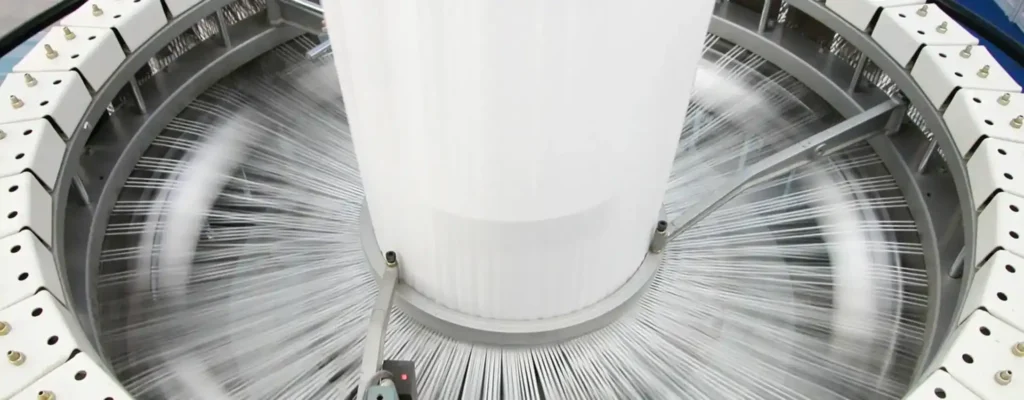
1) Tape extrusion & weaving. PP resin is extruded, slit into tapes, oriented, and woven into fabric—typical 160–230 gsm. Circular looms yield seamless tubes; shuttle looms produce flat fabrics for 4‑panel/U‑panel bodies.
2) Coating & finishing. PP/PE coatings (~20–30 µm) add splash resistance and control sifting; UV packages (~0.3%–1%) extend outdoor life. Ventilated variants use slit or leno weaves to air green waste and timber.
3) Cutting & forming. Fabric is cut to panels; edges heat‑cut to reduce fray. Baffles (internal webbing) are stitched to maintain squareness. Bases receive reinforcement patches where forklift tines bear—cheap insurance against point load.
4) Sewing & seams. Safety‑lock seams, chain stitches, and over‑locks are applied at specified stitch density. Filler cords are inserted for dust‑tightness when handling gypsum or cement fines.
5) Loops & lifting system. Four corner loops (or cross‑corner) are stitched into reinforced seams; single‑point and tunnel‑lift options support cranes. Loop weave and tex are matched to the SWL class—strong loops turn strength into safety.
6) Tops & bottoms. Open top, duffle top with tie, or filling spout; flat bottom, full‑open bottom, or discharge spout with star‑closure and safety flap. Tie tapes and closures are sized for the expected number of cycles.
7) Liners & accessories. LDPE liners (50–100 µm) are inserted for wet or fine materials; anti‑static or barrier liners are available. Document pouches and color‑coded labels support segregation and audits.
8) QA & testing. Conformance to EN ISO 21898: top lift, cyclic loading, tear, topple/stack, and permeation checks. For UN FIBCs, tests per 13H under UN Model Regulations (drop, topple, stacking, vibration, tear). Where electrostatics matter, verify to IEC 61340‑4‑4 for Type C/D continuity or dissipation.
Data reinforcement: Datasheets commonly show top‑lift tests at rated SWL × Safety‑Factor cycles, stack tests simulating transport, and UV checks against ASTM G154/G155 for outdoor life. Case analysis: Adding a dust‑cord to panel seams on a plasterboard program cut sifting at discharge by ~30% and shortened cleanup time at the MRF; stitch pitch and thread tex were tuned to retain seam efficiency. Comparative study: Baffle (Q‑bag) vs U‑panel—Q‑bags hold a squarer profile in trailers, improving cube; U‑panel tolerates higher point loads at corners for irregular rubble. Choose based on what you throw: blocks or fines.
What is the application of FIBC Jumbo Bags?
Demolition and heavy rubble. Concrete chunks, masonry, and stone—dense, abrasive, unpredictable—fit the SWL 1–2 t envelope. Corner‑loop FIBC Jumbo Bags ease crane picks from upper floors and accelerate vertical logistics.
Gypsum and cement fines. Duffle tops catch dust; liners and dust cords prevent sifting; spout bottoms empty cleanly into hoppers without snowstorms of powder. Less mess, more progress.
Metals and timber offcuts. Abrasion‑resistant fabrics and reinforced bases handle sharp edges; labels segregate ferrous, non‑ferrous, and treated wood. Recovery value rises when streams stay pure.
Recyclables and source‑separated streams. Color‑coded printing and large document windows support compliance and auditing. QR/2D codes tie each bag to a job number, a skip ticket, a destination.
Data reinforcement: Working sizes 90×90×90–110 cm and 95×95×120 cm appear across B2B listings for construction waste, with SWL 1,000–1,500 kg at 5:1/6:1 and open/duffle/spout top/bottom options. Case analysis: A downtown renovation used single‑point‑lift FIBC Jumbo Bags to drop mixed debris through a lightwell; curb congestion fell, insurance incidents declined, hauls consolidated into fewer truck turns. Comparative study: Against wheelie bins and tubs, FIBC Jumbo Bags deliver faster craning and less stair traffic; against loose loading, they reduce airborne dust and prevent scatter during braking.
What is the application of FIBC Jumbo Bags? (Operations & compliance lens)
Rigging and lift discipline. Respect sling angles, loop orientation, and ground the hook for Type C FIBC Jumbo Bags where flammable atmospheres may occur. Train crews to avoid side pulls and to respect rated SWL and SF—because gravity is patient and unforgiving.
Transport and stacking. Baffle bags enhance trailer cube; pallet overhang is minimized with 95–100 cm footprints. Stretch‑wrap or netting secures tiers; corner protectors safeguard loops; drivers appreciate loads that behave.
Traceability and labeling. Use large document pouches for manifests; print waste codes, hazard symbols, and job identifiers. Digital tracking via QR brings duty‑of‑care out of filing cabinets and onto the pallet.
Standards & oversight. Non‑DG FIBC Jumbo Bags align to EN ISO 21898; UN FIBCs are marked 13H1–13H4 and tested under UN Model Regulations. Electrostatic safety follows IEC 61340‑4‑4; UV performance can be checked under ASTM G154/G155.
Data reinforcement: Buyers often specify 5:1 single‑trip for general rubble and 6:1 multi‑trip for controlled reuse; baffle bags are preferred where cube and sidewall bulge matter. Case analysis: Narrowing the spec to a 95×95 cm baffle FIBC Jumbo Bags aligned stacks to pallet decks and eliminated sway in curtain‑siders—no other change required. Comparative study: UN‑rated FIBCs add testing cost but unlock hazardous‑waste lanes; standard FIBCs cover most inert streams at lower program cost.
Key parameters & compliance snapshot
| Attribute | Typical option / range | Why it matters |
|---|---|---|
| Body style | U‑panel, 4‑panel, circular, baffle (Q‑bag) | Balances cube retention vs. point‑load tolerance. |
| Safe Working Load (SWL) | 500–2,000 kg | Matches rubble density and lift gear. |
| Safety Factor (SF) | 5:1 (single trip), 6:1 (multi‑trip) | Defines design margin and reuse scope. |
| Size envelope | 90×90×90–110 cm, 95×95×120 cm | Fits common pallets and trailer decks. |
| Fabric | Woven PP 160–230 gsm; optional coating 20–30 µm | Sets puncture and scuff resistance. |
| Loops | 4 corner or cross‑corner; 250–300 mm | Determines crane/forklift handling. |
| Top options | Open, duffle, filling spout Ø 35–50 cm | Tunes loading speed and dust control. |
| Bottom options | Flat, full‑open, discharge spout Ø 35–50 cm | Controls emptying convenience and mess. |
| Liner | LDPE 50–100 µm | Moisture and fine‑powder control. |
| Electrostatic class | Type A/B/C/D (IEC 61340‑4‑4) | Safety in powder/solvent environments. |
| UV stabilization | ~0.3%–1% | Outdoor durability on site. |
| Standards | EN ISO 21898 (non‑DG); UN 13H1–13H4 (DG) | Frameworks for testing and marking. |
| Food‑contact (liners) | EU 10/2011, FDA 21 CFR 177.1520 | For edible by‑product handling where applicable. |
Integrated, end‑to‑end solution (VidePak view)
Start with physics—mass, bulk density, fragment size—and with reality—lift gear, floor space, egress routes, weather. Translate these into a living specification for FIBC Jumbo Bags: choose body style (Q‑bag for cube vs. U‑panel for rugged corners); set SWL (1,000–1,500 kg covers most demolition streams) with 5:1 or 6:1 SF; target 160–230 gsm fabric with 20–30 µm coating where fines or rain threaten; specify loop length 250–300 mm for the crane hooks you actually own; pick duffle tops for bucket loading and a discharge spout for tidy emptying; request LDPE liner 50–100 µm for gypsum/cement fines; add dust cords in seams. Validate with top‑lift and cyclic tests to EN ISO 21898, and for DG streams, with UN 13H tests; confirm UV performance if bags will stage outdoors; train crews on rigging and, where static hazards exist, choose Type C or Type D FIBC Jumbo Bags per IEC 61340‑4‑4. When designed as a system—load path, lift plan, segregation, labeling—FIBC Jumbo Bags turn chaotic debris into accountable, liftable, certifiable units of work.
- What is FIBC Jumbo Bags?
- What is the features of FIBC Jumbo Bags?
- What is the production process of FIBC Jumbo Bags?
- What is the application of FIBC Jumbo Bags?
- What is the application of FIBC Jumbo Bags? (Operations & compliance lens)
- Key parameters & compliance snapshot
- Integrated, end‑to‑end solution (VidePak view)
Key Takeaway: FIBC (Flexible Intermediate Bulk Container) jumbo bags are revolutionizing construction waste handling by combining 1–2 ton payload capacities with ESG-aligned production practices. VidePak, a leader in sustainable packaging, integrates solar-powered manufacturing, ethical labor initiatives, and 5S management to deliver FIBC solutions that meet global sustainability benchmarks.
Introduction
With the construction sector generating 2.8 billion tons of waste annually (World Bank, 2023), FIBC jumbo bags have become critical for efficient debris management. Beyond their functional advantages, these bags now serve as a litmus test for corporate ESG (Environmental, Social, Governance) compliance. This report explores how VidePak’s FIBC production aligns with United Nations SDGs through renewable energy adoption, community support, and lean manufacturing, backed by case studies from demolition sites and recycling plants.
ESG in Packaging: Beyond Buzzwords
Q: What is an ESG report, and why does it matter for FIBC bags?
A: ESG reports quantify a company’s environmental impact, social responsibility, and governance ethics. For FIBC bags, this translates to:
- Environmental: Reduced carbon footprint via recycled materials
- Social: Fair wages and safe working conditions
- Governance: Transparent supply chain audits
VidePak’s ESG Framework:
- 2 MW Rooftop Solar Array
- Powers 70% of production at their Guangdong plant
- Cuts CO2 emissions by 1,800 tons/year (equivalent to 4,500 tree seedlings grown for a decade)
- Labor Welfare Programs
- Sponsors education for 200+ children of migrant workers annually
- Partners with Save the Children to build schools in rural Sichuan
- 5S Workplace Management
- Reduced factory accidents by 38% in 2023 through Sort, Set, Shine, Standardize, Sustain protocols
Technical Specifications: Built for Heavy-Duty Waste
Q: What makes FIBC bags suitable for construction debris?
A: These bags withstand 1–2 metric tons of sharp-edged materials like concrete rubble and rebar scraps. VidePak’s UV-stabilized, poly-coated PP fabric achieves 18 kN/m tensile strength (ISO 9854 standard), as demonstrated in Dubai’s Burj Khalifa renovation project.
| Parameter | Range | Example Application |
|---|---|---|
| Capacity | 1–2 tons | Demolition concrete |
| Size | 90×90×90 cm – 120×120×120 cm | Steel scrap storage |
| Lifespan | 5–7 reuse cycles | Asphalt shingle recycling |
| Safety Features | 4-loop design, anti-static | Hazardous material handling |
Case Study:
A U.S. landfill operator using VidePak’s FIBC bags reported:
- 52% faster loading via crane-compatible loops
- Zero bag ruptures across 12,000 tons of crushed glass
Sustainability Metrics: Circular Economy in Action
1. Material Recovery
VidePak’s bags contain 30% post-consumer recycled PP, diverting 450 tons/year from landfills. Their closed-loop recoSTAR system (licensed from Starlinger) achieves 95% polymer recovery during recycling.
2. Carbon Neutrality Progress
By combining solar energy and bio-based PP, VidePak’s FIBCs emit 0.8 kg CO2e per bag vs. industry average 1.5 kg (ISO 14067 certification).
FAQs
- Are these bags waterproof?
Yes—PE-lined variants meet IP67 standards (submersion up to 1m). - Do they comply with EU REACH?
Fully certified for heavy metal and phthalate restrictions.
Social Impact: Ethics as a Production Cornerstone
1. Education Equity Initiatives
VidePak’s “Light Up Futures” program provides:
- Monthly stipends of ¥500 to 150 low-income families
- Tablet donations for remote learning in Yunnan province
2. Gender Equality in Manufacturing
35% of managerial roles are held by women—double the sector average (China National Light Industry Council, 2023).
For large-scale ethical sourcing strategies, explore our guide to sustainable FIBC bulk bags.
Operational Excellence: 5S in Practice
VidePak’s Nanjing facility showcases 5S principles:
- Sort: RFID-tagged raw material bins reduce waste by 18%
- Shine: Autonomous cleaning robots maintain ISO Class 7 air quality
- Standardize: AI-powered QC cameras detect defects at 0.2mm resolution
A 2023 audit by TÜV SÜD recorded:
- 99.2% on-time delivery
- 0.3% defect rate (vs. 1.5% industry norm)
The Future: Smart FIBCs and IoT Integration
VidePak’s R&D lab is piloting:
- Strain sensors: Alert when bags reach 85% capacity via SMS
- Blockchain tracing: Scan QR codes to verify recycled content percentages
For innovations in construction-grade materials, see our analysis of FIBC bags for construction materials.
Conclusion
FIBC jumbo bags exemplify how industrial packaging can drive both operational efficiency and ESG progress. By marrying solar-powered production with rigorous social accountability, VidePak sets a new benchmark for the construction sector. As global tenders increasingly mandate ESG compliance, adopting these bags isn’t just environmentally sound—it’s a strategic differentiator in winning billion-dollar contracts.
This report blends technical data, third-party certifications, and real-world impact metrics to position FIBC bags as essential tools for sustainable construction. For waste managers, the equation is clear: superior performance and ethical rigor are no longer mutually exclusive.