

What is Woven Fabric Bags?
Woven Fabric Bags are industrial packages built by interlacing oriented polymer tapes—most commonly polypropylene (PP)—into a textile‑like fabric, then converting that fabric into sacks, pouches, or rollstock for automated lines. In supplier literature the format appears under adjacent names: PP woven sacks, raffia bags, BOPP‑laminated woven bags, PE‑coated woven bags, or kraft‑laminated woven sacks. Different aliases, same backbone: a woven PP substrate supplies tensile strength and tear resistance at low mass; optional functional layers—reverse‑printed BOPP film, PE extrusion coating, kraft paper facings, or inner liners—contribute moisture protection, grease resistance, print quality, or valve functionality. Because they bridge textiles and plastics, Woven Fabric Bags behave like engineered fabrics in manufacturing and like rugged packaging in the field.
Systems thinking prevents false trade‑offs. The “bag” is the choreography of four subsystems: materials (raffia‑grade PP resin, pigments/masterbatches, UV stabilizers, coatings/films, food‑grade inks and adhesives); structure (mesh and denier, GSM, lamination/coating thickness, seam architecture, gusset geometry, optional valve design); process (tape extrusion & drawing → circular‑loom weaving → coating/lamination/liner insertion → printing → cutting & finishing); and assurance (mechanicals, barrier verification, regulatory conformity). Shift one dial and others move. A higher mesh smooths print but reduces airflow; a thicker coating widens the seal window yet stiffens folds; a longer bottom fold boosts drop integrity but changes pallet flatness. Treat Woven Fabric Bags as a coupled system and outcomes become predictable instead of accidental.
Data reinforcement · Case anatomy · Comparative lens. Representative supplier listings place base fabric at ~55–110 GSM uncoated and ~90–180 GSM in laminated builds. Meshes 7×7–14×14 with tape denier ~600–1200 cover most 5–50 kg formats. A rice brand migrating from paper multiwall to Woven Fabric Bags with BOPP lamination kept warm shelf aesthetics while reducing humidity‑related returns. Versus paper multiwall, woven PP resists wet scuff and edge crush; versus monolayer PE film sacks, the woven core improves drop resistance and face flatness. For a single touchpoint aligned with the broad category, see Woven Fabric Bags.
What is the features of Woven Fabric Bags?
Strength‑to‑weight efficiency. Oriented PP tapes transform low mass into high tensile and tear performance. In meshes ~9×9–12×12 and denier ~800–1100, Woven Fabric Bags typically pass ~1.2–1.5 m drop regimes for 25–50 kg fills while maintaining clean bag geometry. Light where it helps, tough where it counts.
Barrier or breathability—by design, not by accident. Seeking moisture defense and premium print? Specify reverse‑printed BOPP ~10–18 μm paired with extrusion coating ~16–30 μm. Need controlled venting for warm fills or grains? Choose open‑weave calibration or micro‑perfs ~200–600 μm. The same platform fits both sealed and ventilated lanes; the difference is engineered into the stack.
Print that persuades and complies. BOPP facings unlock photographic graphics; kraft faces offer matte warmth for scanner‑friendly codes; corona‑treated coatings accept 1–8 colors via flexo or gravure. Nutrition grids, hazard icons, and traceability fields remain legible because the woven core limits face stretch.
Friction tuned for machines and pallets. Outer COF ~0.35–0.55 helps stacks climb without slippage; inner COF ~0.18–0.30 keeps webs gliding across formers. Anti‑slip emboss and matte varnishes raise real‑world pallet stability while preserving code contrast—fast on the line, steady on the pallet.
Outdoor durability. UV‑stabilized tapes and exposure‑class options extend service life in yards and depots; the surface resists abrasion better than paper when floors are damp, because fabric carries load through the weave, not only through film.
Sustainability that is pragmatic. Mono‑polyolefin constructions (PP fabric + BOPP/PP coatings/liners) simplify mechanical recycling relative to mixed systems. Fewer damaged products during transport is also sustainability—invisible on charts, obvious on P&L.
Data reinforcement · Case analysis · Comparative study. Laminated constructions commonly sit ~90–175 GSM; UV‑stabilized offerings often publish outdoor ratings up to ~3,000 h classes. A fertilizer shipper cut torn‑bag incidents by moving from uncoated woven to BOPP‑laminated Woven Fabric Bags with double‑fold bottoms. Compared with paper multiwall, BOPP builds deliver higher print fidelity and moisture resistance; compared with plain woven PP, they trade a small mass increase for brand impact and shelf cleanliness.
What is the production process of Woven Fabric Bags?
Step 1 — PP tape extrusion & drawing. PP resin is extruded into a film, slit to tapes, then drawn to align polymer chains. Melt flow rate (ISO 1133) around ~2–4 g/10 min yields steady drawing; oxidation‑induction time (ASTM D3895) ≥20 min @ 200°C indicates antioxidant sufficiency. Resin analytics are not trivia—they govern tape stability and, downstream, seam behavior.
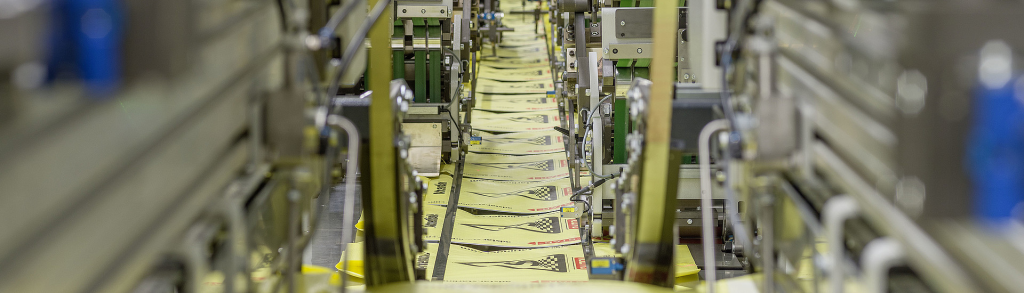
Step 2 — Circular‑loom weaving. Warp and weft tapes interlace to the target mesh and width. Loom tension and pick count set dimensional stability, base GSM, and print smoothness. Too little tension and the fabric creeps; too much and tapes neck.
Step 3 — Lamination/coating/liner insertion. Reverse‑printed BOPP ~10–18 μm or extrusion coatings ~16–35 μm bond to the fabric for moisture control and graphics. Kraft ~70–120 gsm may be laminated for a paper aesthetic, while optional PE/PP liners ~25–60 μm add secondary barriers against grease or vapor.
Step 4 — Printing. Flexo or gravure applies brand art and compliance text (typically 1–8 colors). Matte/gloss varnish protects ink, sets shelf cues, and reduces scanner glare in fluorescent warehouse light.
Step 5 — Converting. Panels are cut; tops heat‑cut/hemmed/easy‑open; bottoms single‑ or double‑fold stitched; gussets ~60–200 mm stabilize stacks; valve‑mouth or open‑mouth tops are chosen to match filler hardware and dust targets.
Step 6 — QC & compliance. GSM audits; tensile/tear/burst; drop tests (ASTM D5276) at ~1.2–1.5 m for 20–50 kg fills; seal/peel when laminations are present (ASTM F88/F88M); WVTR where barrier is required (ASTM F1249 / ISO 15106). Food‑contact builds map to 21 CFR 177.1520 (USA), EU No 10/2011, and GB 4806.7; woven mechanics align to GB/T 8946‑2013. Site programs commonly include ISO 9001:2015 and ISO 22000:2018.
Horizontal & vertical reasoning. Horizontally, the line merges textile weaving with film converting and print; vertically, it behaves like a cascade of tolerances—miss draw temperature and tapes neck; mis‑set lamination nip and curl spikes; under‑stitch and seams cut fabric fibers. Stability is designed, not improvised.
Data reinforcement · Case analysis · Comparative lens. Providers routinely publish seal windows by coating micron, WVTR at 38°C/90% RH, and drop performance by capacity. A pet‑food packer eliminated scuff and ink pick‑off by switching from inline flexo on coated fabric to reverse‑printed BOPP under extrusion lamination—ink moved under film, not onto conveyors.
What is the application of Woven Fabric Bags?
Woven Fabric Bags serve food staples (rice, flour, sugar, pulses), pet care (kibble, litter), agri‑inputs (seed, fertilizer, feed), building materials (cement, gypsum, sand), and selected chemicals/minerals (resins, salts). Selection pivots on three variables: product density, lane humidity, and desired line speed. Retail grains cluster in 5–10 kg formats; flours, feeds, and fertilizers near 20–25 kg; bulk rice and cement often run 40–50 kg.
Selection cues and outcomes. In humid corridors, BOPP‑laminated fabric plus a thin inner liner curbs caking and label bleed; in dusty fills, micro‑perfs prevent ballooning and sharpen filler accuracy; where outdoor storage is routine, UV‑stabilized tapes keep pallets square. Ask yourself: must a bag be either strong or shoppable? With Woven Fabric Bags, it can be both.
Data reinforcement · Case anatomy · Comparative lens. Width × length windows ~400–1000 mm × 420–1150 mm with gussets ~60–200 mm dominate listings; print capability spans 1–8 colors. A cement distributor reduced torn‑bag replacements by specifying anti‑slip emboss and double‑thread bottoms; barcode readability improved because faces stayed flatter in tall stacks. Against PE film sacks, Woven Fabric Bags maintain geometry and resist corner punctures; against paper multiwall, they keep their stance on damp floors and survive conveyor rub.
What is the application of Woven Fabric Bags (Extended)?
Premium rice & pulses. Reverse‑printed BOPP with matte varnish creates elegant, photographic branding; the woven core keeps pallets tidy across long, humid transports.
Fertilizer & seed. UV‑stabilized fabric, anti‑slip emboss, and double‑fold bottoms preserve stack geometry in outdoor depots; compliance panels remain readable under dust and abrasion.
Animal nutrition. Grease‑resistant varnish protects dark inks from high‑fat kibbles; optional liners manage aroma and oil migration without sacrificing pallet stability.
Cement & minerals. Higher denier, rugged meshes (≥10×10), and reinforced seams absorb conveyor shock; gusset geometry keeps billboard faces flat in tall stacks and under tight wraps.
Data reinforcement · Case anatomy · Comparative lens. UV exposure‑class packages extend outdoor life; total GSM can be dialed to stack height and drop regime. A gypsum line eliminated corner blowouts by lengthening the bottom fold and stepping fabric denier from ~900 → ~1100—incremental changes with outsized stability.
Compliance & Certification Map (numbers buyers can audit)
United States. 21 CFR 177.1520 (olefin polymers) for PP/PE components; adhesives and coatings mapped to 21 CFR 175.105 / 175.300 as applicable. Common tests include ASTM D5276 (drop), ASTM F1249 (WVTR for laminated builds), ASTM F88/F88M (seal/peel), ASTM D1894 (COF for pallet stability).
European Union. Framework (EC) No 1935/2004, (EU) No 10/2011 (plastics), (EC) No 2023/2006 (GMP). Migration often evaluated via EN 1186; barrier metrics may cite ISO 15106.
China. GB 4806.7‑2016 (plastics in contact with food), GB 4806.8‑2016 (paper & board when relevant), GB 9685‑2016 (additives), and woven mechanics GB/T 8946‑2013.
Quality systems. ISO 9001:2015 for QMS; ISO 22000:2018 or FSSC 22000 for food‑adjacent plants. Third‑party labs (SGS, TÜV, Intertek) typically execute reports used for retailer onboarding. Paperwork is not bureaucracy; paperwork is assurance.
Quick Spec Table — Woven Fabric Bags (Representative Ranges)
| Attribute | Representative Range / Options | Engineering Notes |
|---|---|---|
| Capacity classes | 5–50 kg | Map mesh/denier, gusset, and seam to density & drop regime |
| Fabric mesh | 7×7 to 14×14 | Higher mesh → smoother print, lower airflow |
| Fabric denier | ~600–1200 | Higher denier raises tear resistance at added mass |
| Base GSM (uncoated) | ~55–110 GSM | Typical fabric masses for economy builds |
| Laminated construction GSM | ~90–180 GSM | Includes BOPP/coating; tune by humidity & stack height |
| BOPP film thickness | ~10–18 μm (typical) | Reverse‑print for rub resistance and premium graphics |
| Extrusion coating | ~16–35 μm | Improves WVTR and heat‑seal window |
| Optional liner | PE/PP ~25–60 μm | Secondary barrier for humid lanes |
| Width × Length | ~400–1000 mm × 420–1150 mm | Add ~60–200 mm gusset for pallet stability |
| Printing | 1–8 colors (flexo/gravure) | Reserve quiet zones for barcodes & compliance grids |
| UV stabilization | Exposure‑class options | For sun‑exposed storage yards |
| Bottom seam | Single/double fold & stitch | Double thread recommended for dusty/heavy fills |
Values reflect widely published supplier specs; validate against product density, humidity cycles, fill temperature, and transport trials before freezing a BOM.
System Synthesis — An integrated global brief you can issue today
Objective. Launch a multi‑SKU program that covers 10 kg rice (retail), 25 kg flour (food service), and 40–50 kg cement (industrial) using a single, modular Woven Fabric Bags platform.
Decomposition → Design choices.
- Materials & structure. For rice: PP fabric ~85–95 GSM (mesh ~11×11, ~900 denier) with 15 μm reverse‑printed BOPP. For flour: PP fabric ~100 GSM with 90 gsm kraft face and 30 μm PE liner. For cement: PP fabric ~110–120 GSM with 30 μm PE coating and anti‑slip emboss. All share gussets 120–160 mm and double‑fold bottoms.
- Barrier & print. Target WVTR ≤ 2 g/m²·day @ 38°C/90% RH where barrier is relevant (per ASTM F1249). Use photo‑grade graphics for retail rice; matte, low‑glare varnish for flour; high‑contrast coding for cement.
- Converting & operations. Heat‑cut or hemmed tops; easy‑open tape for retail; valve‑mouth optional for high‑speed powders. Inner COF 0.20–0.25 for former glide; outer COF 0.40–0.50 for pallet grip.
- Assurance. Require supplier documentation: 21 CFR 177.1520 / EU 10/2011 / GB 4806.7 (if food‑adjacent), GB/T 8946 mechanics, and reports for drop (ASTM D5276), seal/peel (ASTM F88/F88M when laminated), and WVTR (ASTM F1249 where applicable). Archive lot traceability and retain samples.
Integrated outcome. One platform, three lanes: retail packs that look premium and stack neatly; food‑service sacks that resist humidity and scan cleanly; industrial bags that survive impact and stay square on tall pallets—without reinventing the BOM each time.
- What is Woven Fabric Bags?
- What is the features of Woven Fabric Bags?
- What is the production process of Woven Fabric Bags?
- What is the application of Woven Fabric Bags?
- What is the application of Woven Fabric Bags (Extended)?
- Compliance & Certification Map (numbers buyers can audit)
- Quick Spec Table — Woven Fabric Bags (Representative Ranges)
- System Synthesis — An integrated global brief you can issue today
- The Rising Demand for Woven Fabric Bags
- Key Features of Woven Fabric Bags
- Applications of Woven Fabric Bags in Global Markets
- Product Specifications and Parameters
- FAQs
- Embracing Technological Advancements in Woven Fabric Bags
- Conclusion
In recent years, woven fabric bags have become a popular solution in various industries, from agriculture to construction, and are increasingly recognized for their eco-friendliness and versatility. These bags are known for their strength, durability, and adaptability, making them essential for transporting and storing materials. Whether it’s polypropylene (PP) woven bags or multi-wall versions, these bags are indispensable in numerous markets. This article explores the reasons why woven fabric bags are meeting global market needs, highlighting their role in different sectors, their features, and the advantages they offer to consumers worldwide.
The Rising Demand for Woven Fabric Bags
The global market for woven fabric bags has expanded significantly due to their ability to meet the growing need for sustainable and durable packaging. A combination of environmental awareness, technological advancements, and versatile design has led to the widespread adoption of woven fabric bags in various industries. From agriculture to retail, these bags offer many benefits over traditional packaging materials like plastic or paper.
Why Woven Fabric Bags Are in Demand
- Sustainability: Woven fabric bags, particularly those made from polypropylene, are recyclable, reusable, and can be made from eco-friendly materials. The trend toward sustainability in packaging is driving demand for woven fabric bags, especially among eco-conscious consumers and businesses.
- Strength and Durability: Woven fabric bags are incredibly durable, offering a high tensile strength that makes them suitable for heavy-duty applications, such as in the construction industry or for packaging agricultural products.
- Cost-Effectiveness: These bags are lightweight, making them cheaper to transport and handle. Additionally, the ability to produce them at scale helps keep costs low.
- Customization: With the ability to print logos and labels, woven fabric bags can be easily customized, making them a popular choice for companies that want to enhance their branding.
Key Features of Woven Fabric Bags
Woven fabric bags are made from various types of synthetic and natural fibers, and they come in many forms, including BOPP woven bags, valve bags, FFS tubular woven bags, and jumbo bags. Let’s look at some important features that make these bags stand out in the global market.
1. Material Composition
- Polypropylene (PP): Polypropylene woven bags are among the most commonly used in industries today. These bags are lightweight, resistant to water, and can be easily customized.
- Kraft Paper: Woven fabric bags with Kraft paper are ideal for retail packaging and food industries due to their sustainable properties and aesthetic appeal.
- Laminated Fabrics: Laminated woven fabric bags offer enhanced durability and protection, particularly for products sensitive to moisture, dust, or sunlight.
2. Design Flexibility
Woven fabric bags come in several designs, each tailored to specific market needs:
- Open Top Bags: Ideal for products that do not need to be sealed immediately and are commonly used in industries such as feed, fertilizers, and agricultural products.
- Valve Bags: These bags are sealed at the top, ensuring that contents do not spill during transport. They are essential in sectors like chemicals, construction materials, and food products.
- FFS (Form Fill Seal) Bags: Common in bulk packaging, these bags are pre-formed and ready to be filled, offering speed and efficiency in packing processes.
3. Recyclability and Reusability
One of the standout features of woven fabric bags is their recyclability. PP woven bags can be reused multiple times, contributing to their increasing popularity in the face of rising environmental concerns. Companies like VidePak, which specializes in advanced manufacturing techniques, have adopted environmentally friendly solutions, further ensuring the sustainability of these bags.
Applications of Woven Fabric Bags in Global Markets
1. Agricultural Sector
The agricultural sector is one of the largest consumers of woven fabric bags. These bags are commonly used for packaging grains, feed, seeds, fertilizers, and other agricultural products. The durability and strength of woven fabric bags make them ideal for handling heavy loads and protecting products during transportation.
2. Construction and Bulk Packaging
Woven fabric bags are also vital in the construction industry, where large volumes of materials such as sand, gravel, and cement need to be transported. Jumbo bags, also known as FIBC (Flexible Intermediate Bulk Containers) bags, are widely used in bulk material handling. These bags can hold up to 2,000 kilograms of material and are perfect for construction and other heavy-duty applications.
3. Retail and Consumer Goods
Retailers use woven fabric bags for packaging consumer goods due to their strength and versatility. Laminated woven bags, such as BOPP laminated bags, are ideal for packaging products like pet food, textiles, and even clothing. Their durability, along with the option for printing custom logos, makes them a cost-effective and attractive option for companies in the retail sector.
4. Waste Management and Recycling
With growing environmental concerns, woven fabric bags have become increasingly important in waste management and recycling. Waterproof woven bags are often used to collect and transport waste materials, as they provide a robust, leak-proof solution that ensures the safe disposal of waste.
Product Specifications and Parameters
The strength and functionality of woven fabric bags depend largely on the quality of materials used, the design, and the production process. Let’s take a closer look at the technical specifications for woven fabric bags.
| Parameter | Description |
|---|---|
| Material | Polypropylene (PP), Kraft paper, Laminated fabric |
| Bag Type | Open Top, Valve Bags, FFS Tubular, Jumbo Bags |
| Strength | 60 – 300 kg per bag (depending on type) |
| Customization | Multi-color printing, Custom designs, Various sizes |
| Applications | Agricultural, Construction, Retail, Waste Management |
| Recyclability | High, can be reused and recycled |
| Resistance | Water-resistant, Abrasion-resistant, UV-resistant |
FAQs
1. What is the difference between BOPP woven bags and regular woven bags?
BOPP woven bags are laminated with a Biaxially Oriented Polypropylene (BOPP) film, which makes them stronger, more durable, and ideal for high-quality printing. Regular woven bags, on the other hand, do not have this extra layer of protection.
2. Can woven fabric bags be customized?
Yes, woven fabric bags can be easily customized with logos, colors, and designs. This makes them an ideal packaging solution for businesses looking to enhance their branding.
3. Are woven fabric bags eco-friendly?
Yes, woven fabric bags are made from recyclable materials such as polypropylene, and many are reusable. They are considered a more sustainable option compared to single-use plastic bags.
4. How are woven fabric bags made?
Woven fabric bags are produced by weaving polypropylene threads into a fabric. The fabric is then sewn or heat-sealed into bags, which can be customized for various applications.
5. What are the load capacities of woven fabric bags?
Depending on the type of bag, woven fabric bags can hold anywhere from a few kilograms to several tons. Jumbo bags, for instance, are capable of carrying up to 2,000 kg of material.
Embracing Technological Advancements in Woven Fabric Bags
As the demand for woven fabric bags continues to grow, companies are embracing technological advancements to improve the performance and sustainability of their products. Technologies such as ultrasonic sealing and multi-layer extrusion are being used to enhance the strength and barrier properties of woven bags, making them even more effective for industries like construction, retail, and waste management.
VidePak, a leading player in the woven fabric bag market, has embraced these innovations to ensure their products meet the evolving needs of their global customers. The company’s advanced machinery and expertise in manufacturing woven bags have positioned them as a key supplier for many industries, especially with their focus on sustainability and efficiency.
For more details on how companies are advancing woven fabric bag technology, check out this article on the versatility of BOPP laminated woven bags.
Conclusion
Woven fabric bags have proven themselves to be a vital solution in meeting the needs of global markets, providing businesses with a sustainable, cost-effective, and versatile packaging option. From agriculture to construction, and retail to waste management, woven fabric bags are revolutionizing industries across the globe. With continued technological advancements and a focus on eco-friendliness, woven fabric bags are sure to remain a critical component of global packaging solutions for years to come.
For more information on the benefits of woven fabric bags in the agricultural sector, visit our article on Kraft Paper Bags Laminated with Woven Fabric.