
What are Eco‑Friendly Woven Bags? (Definition & Aliases)
Eco‑Friendly Woven Bags sit at the intersection of polymer science, textile engineering, and modern logistics. They are produced by weaving slit polypropylene tapes into a stable fabric and, when needed, enhancing that fabric with BOPP or PP film lamination for moisture control and high‑fidelity graphics. The market refers to them by many aliases—PP woven bags, PP woven sacks, BOPP‑laminated woven bags, and, in bulk formats, FIBCs—yet the technical backbone remains constant: a mono‑material polypropylene architecture designed for toughness, printability, and end‑of‑life recyclability. Why does that matter? Because packaging that can carry grain across humid supply chains, protect fertilizers from caking, and still enter a mechanical recycling stream is rare, valuable, and increasingly mandated.
From a regulatory vantage point, Eco‑Friendly Woven Bags align with established food‑contact and chemicals frameworks such as FDA 21 CFR §177.1520 and EU No 10/2011, while substances of very high concern are screened under REACH. Horizontally, you can compare these rules to standards used in textiles (e.g., tensile strip methods) and to packaging hygiene schemes like BRCGS—distinct domains that converge on a single objective: safety at scale. Vertically, trace the stack from resin selection (melt‑flow index, additive packages, potential rPP content) to tape stretching (orientation ratio, crystallinity), to fabric architecture (mesh and denier), and, finally, to bag geometry (block‑bottom, valve) and pallet behavior. Each layer influences the next; each constraint echoes up and down the chain.
In commercial practice, Eco‑Friendly Woven Bags outperform paper multiwall sacks in wet climates and resist creep better than thin PE film bags under stack pressure. Is this superiority absolute? Not always. Paper excels in print warmth; PE film in sealability. Yet the woven PP platform achieves an unusually balanced triad—strength, cost efficiency, and recyclability—precisely why brands standardize on it for 10–50 kg SKUs.
What are the features of Eco‑Friendly Woven Bags? (Performance & Sustainability)
The signature attributes of Eco‑Friendly Woven Bags begin with mechanical robustness. Woven PP fabrics deliver high tensile strength and controlled elongation, validated by textile test methods such as ASTM D5035 and sack standards like GB/T 8946‑2013. The outcome is not abstract: fewer burst incidents in filling lines, fewer seam failures in transit, fewer returns in retail. Moisture resilience follows; with PP or BOPP lamination at approximately 20–50 μm, the structure gains humidity resistance and scuff‑resistant print surfaces without sacrificing mono‑material design. Food‑contact compliance is the third pillar, where migration limits and NIAS (non‑intentionally added substances) controls translate laboratory numbers into buyer confidence. A fourth feature, often understated, is circularity readiness: a single‑polymer bill of materials keeps the door open for mechanical recycling and for verified rPP content under chain‑of‑custody schemes.
Horizontally, set Eco‑Friendly Woven Bags against peers. Compare to kraft paper bags: woven PP offers superior tear resistance per gram and better water repellence; compare to PE film sacks: woven PP holds pallet geometry with lower creep at elevated temperatures, improving warehouse safety; compare to cotton canvas shoppers: PP woven retail totes can be sterilized easily and printed in photo quality at scale. Vertically, examine how denier, mesh (for example, 8×8 to 14×14), and fabric weight (circa 55–140 g/m²) cascade into system behavior: higher mesh counts improve print laydown and puncture resistance; heavier gsm elevates drop performance but adds cost and embodied energy; lamination thickness lifts gloss and barrier yet may raise stiffness and curl, demanding dial‑ins on forming equipment. The question writes itself—how to tune all these knobs without over‑engineering? The answer lies in DOE trials and data discipline.
To ground the narrative, consider a field case: when a fertilizer distributor upgraded from a 9×9 mesh, 650D, 60 gsm uncoated fabric to a 12×12 mesh, ~900D, ~95 gsm substrate with ~25 μm BOPP lamination, reported breakage dropped markedly while retail graphics improved. Was lamination the hero, or mesh density, or denier? Likely the ensemble. One component protects the product; another stabilizes the pallet; a third persuades the shopper. In packaging, performance is rarely mono‑causal.
What is the production process of Eco‑Friendly Woven Bags? (From Resin to Retail)
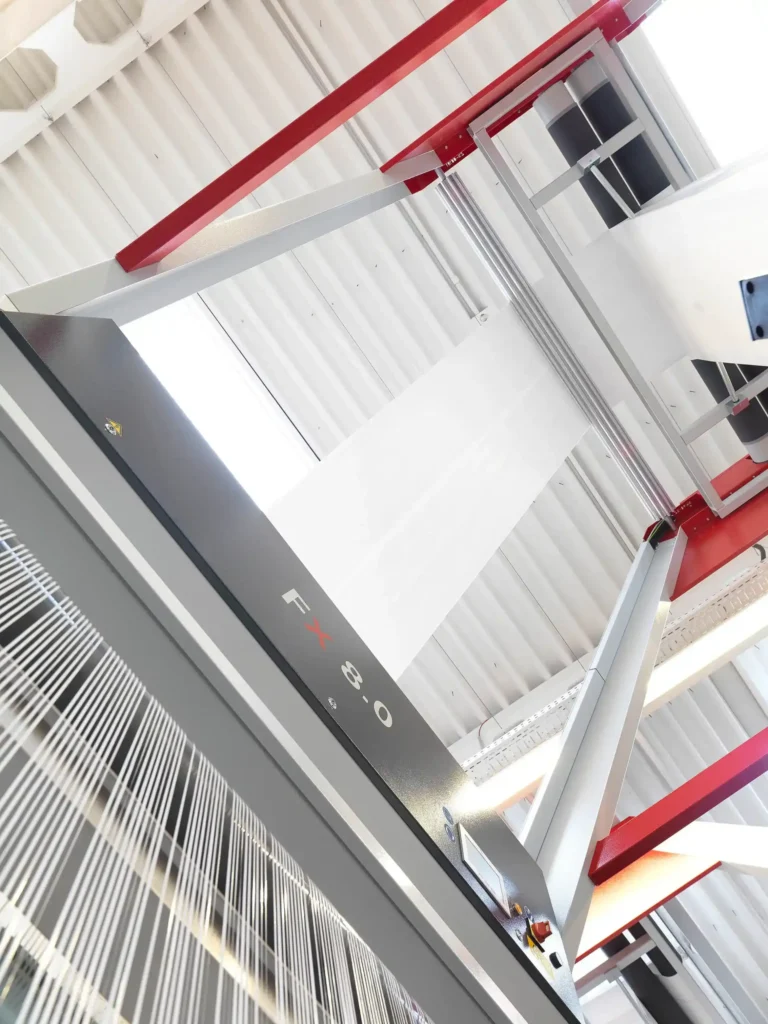
The manufacturing route for Eco‑Friendly Woven Bags can be read as a controlled transformation of molecular mobility into macroscopic strength. Resin preparation and extrusion convert PP (and, if specified, rPP) into slit films or tapes; melt‑flow index guides flow in the die while antioxidants and UV stabilizers protect integrity. Orientation stretches those tapes, raising crystallinity and tenacity; draw ratios are monitored because over‑drawing yields brittle behavior, under‑drawing wastes potential. Weaving on circular or flat looms builds the textile substrate, where mesh and denier articulate the balance between flexibility and strength.
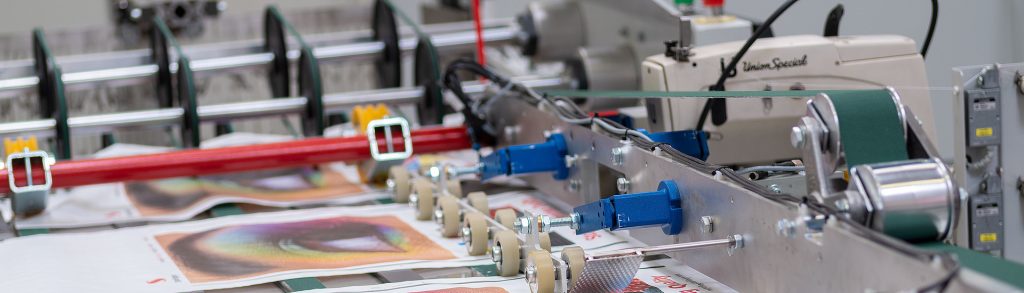
Lamination and printing then layer barrier and storytelling. A PP or BOPP film of roughly 20–50 μm is bonded to the fabric, typically after corona treatment to reach surface energy targets around 38 dynes for ink adhesion. Rotogravure or high‑resolution digital presses lay down graphics; ΔE color tolerances and rub resistance are tracked to maintain brand identity. Cutting and forming follow: heat‑cut tops reduce fray; block‑bottom or valve constructions determine filling speed, de‑aeration, and pallet efficiency. Sewing and finishing close the loop—single or double fold seams, anti‑slip coatings for stack friction, optional liners for fine powders. The last chapter is always quality: tensile and seam tests, migration testing under EU No 10/2011, line hygiene under BRCGS, and traceability that can survive a mock recall.
Horizontally, the process borrows from adjacent industries. Corona treatment parameters rhyme with film converting; loom uptime metrics mirror textile mills; hygienic zoning mirrors food processing plants. Vertically, any drift—an MFR outside spec, a dyne level that decays before printing, a stitch density too low for valve bags—propagates downstream into waste, rework, or claims. The craft is orchestration: many small controls, continually verified.
What is the application of Eco‑Friendly Woven Bags? (Markets & Use Cases)
Because Eco‑Friendly Woven Bags scale from 5 to 50 kg consumer‑facing packs and up to ton‑scale FIBCs, their application map is uniquely broad. Food and agriculture rely on woven PP for rice, flour, sugar, salt, pulses, and feed—categories where humidity swings and rough handling are routine. Industrial and building materials choose the same platform for cement, gypsum, resins, and minerals, valuing drop resistance and stack stability during long dwell times. Retail and consumer brands translate the technology into durable shopping totes with stitched handles, where photo‑quality BOPP faces compete on shelf. For bulk logistics, the family extends to big bags guided by ISO 21898:2024, lifting powder and granular flows safely across continents.
Think horizontally across these sectors. A rice bag’s need for aroma retention intersects with a pet food bag’s need for grease resistance; a cement sack’s dust control informs seam strategies for fertilizer; a garden‑supply tote’s scuff exposure on concrete floors influences lacquer choices for BOPP prints. Vertically, zoom from SKU to pallet to container: a 25 kg pack might be perfect at the unit level yet underperform at 2.4 m pallet height in a 40°C warehouse where creep becomes the silent failure mode. Packaging is a system; success is cumulative.
Real‑world behavior often answers the skeptic. Are paper multiwall sacks obsolete where humidity is low and print warmth is prized? Not necessarily. Are PE film sacks better where hermetic sealing is paramount? Often yes. Yet Eco‑Friendly Woven Bags repeatedly win where mixed conditions prevail—humidity and heat, stacking and scuffing, retail storytelling and export lanes—because they reconcile many demands with one material family.
Quick Spec Sheet (Typical, Commercially Verifiable)
To make selection tangible for engineers and buyers alike, commercial listings converge around credible bands: fabric weights near 55–140 g/m² to cover 10–50 kg duties; mesh architectures between 8×8 and 14×14 to balance puncture resistance and ink laydown; denier choices from roughly 650D to 1500D depending on bulk density and drop tests; laminations around 20–50 μm for moisture control and gloss; widths from about 260 to 750 mm aligning with fill weights and block‑bottom geometry. Testing staples include ASTM D5035 for tensile evaluation and explicit seam‑strength checks; regulatory anchors such as FDA 21 CFR §177.1520 and EU No 10/2011 frame food‑contact claims; plant hygiene typically rests on BRCGS Packaging Materials.
| Parameter | Typical range / option | Context |
|---|---|---|
| Fabric weight | 55–140 g/m² | Match product bulk density and drop‑test targets |
| Mesh (warp×weft) | 8×8 – 14×14 | Higher mesh supports finer graphics and puncture resistance |
| Denier | 650D – 1500D | Heavier denier for abrasive or higher‑drop lanes |
| Lamination (BOPP/PP) | 20–50 μm | Thicker films raise gloss and moisture control, add stiffness |
| Width | 260–750 mm | Align with pack weight and pallet tube geometry |
| Common SKUs | 10 / 25 / 50 kg | Retail and wholesale norms across categories |
| Testing | ASTM D5035, seam strength | Textile strip tests and sewn joint verification |
| Sack standard | GB/T 8946‑2013 | General technical requirements for plastic woven sacks |
| Food‑contact | FDA 21 CFR §177.1520; EU No 10/2011 | OML and SML compliance; NIAS monitoring |
| Bulk standard | ISO 21898:2024 | Guidance for FIBCs at 500–2,000 kg |
These figures are not marketing poetry; they are the practical corridors where supply, cost, and safety intersect. Step outside them deliberately—and test thoroughly.
Regulatory & Certification Map (Concrete Identifiers)
Regulatory frameworks do more than decorate spec sheets; they constrain chemistry and stabilize risk. For Eco‑Friendly Woven Bags, FDA 21 CFR §177.1520 defines acceptable PP compositions for food contact, while EU No 10/2011 codifies an overall migration limit of 10 mg/dm² alongside substance‑specific limits and NIAS obligations. REACH regulates chemicals placed on the market; BRCGS Packaging Materials sets hygiene and hazard‑control expectations; ISO 21898:2024 governs the big‑bag cousins that share resin families and many operational hazards. Horizontally, this web mirrors the triptych of modern packaging governance—materials, hygiene, and logistics—each a domain with its own auditors and its own vocabulary. Vertically, the mapping runs from monomer and catalyst choices to finished pack documentation: declarations of compliance, certificates of analysis, migration reports, and traceability records designed to survive customer audits and, if necessary, recalls.
Regulation can read like a barrier; in reality it is a scaffold. It forces recipe discipline, record‑keeping, and continuous verification. That is how Eco‑Friendly Woven Bags maintain cross‑border acceptability without reinventing the chemistry at every border.
A Systems‑Thinking Synthesis: VidePak’s End‑to‑End Solution
When teams design Eco‑Friendly Woven Bags, they juggle four tensions. Material and compliance risk: solved by locking resin specifications to the cited regulations, qualifying rPP grades through migration testing, and maintaining REACH‑compliant additive lists with change‑control. Strength versus weight: solved by a mesh/denier/gsm design grid, DOE trials across lamination thickness, and validation via tensile, drop, and creep checks. Print quality versus recyclability: solved by favoring PP‑only laminations and low‑VOC inks, enforcing dyne thresholds, and tracking ΔE targets and rub resistance. Global plant readiness: solved by BRCGS‑aligned HACCP, foreign‑matter prevention, allergen controls where needed, and robust traceability.
Horizontally, these solutions blend polymer chemistry, textile mechanics, color science, and quality systems into one operating model. Vertically, they cascade from sourcing to shipping: approved‑supplier lists and incoming QC on MFR; in‑process dyne and stitch density monitoring; outgoing inspection with seam analytics; then pallet pattern validations under heat to catch creep before the warehouse does. Ask a pragmatic question—does this approach just move cost around? It can, if pursued dogmatically. The intent is different: concentrate spend where it actually lowers risk or raises sales, not everywhere at once.
The integrated outcome is simple to say and hard to achieve: a mono‑material woven packaging platform that carries product safely, prints beautifully, audits cleanly, and recycles credibly. That is the VidePak promise, measured not in slogans but in claims avoided, pallets kept upright, and brands that look as good on shelf as they did in the design file.
Practical Buyer Checklist (Fast Scoping)
To brief a supplier effectively on Eco‑Friendly Woven Bags, translate marketing aspirations into engineering inputs. State target fill weights—10, 25, or 50 kg—and give the product’s bulk density and particle size; these determine mesh and denier choices. Indicate whether UV stabilization or anti‑slip is required based on storage and handling. Specify lamination type and thickness in the 20–50 μm range along with print coverage and desired gloss. Clarify the compliance scope—FDA, EU No 10/2011, REACH—and the paperwork cadence (declarations, certificates, migration data). If rPP use is planned, note chain‑of‑custody needs and where in the structure recycled content may enter without compromising migration limits. Map the pallet pattern, stacking height, and climate exposure—because laboratory‑perfect bags can still fail the warehouse if creep is ignored. Finally, insist on traceability and retain samples; quality without memory is only luck.
- What are Eco‑Friendly Woven Bags? (Definition & Aliases)
- What are the features of Eco‑Friendly Woven Bags? (Performance & Sustainability)
- What is the production process of Eco‑Friendly Woven Bags? (From Resin to Retail)
- What is the application of Eco‑Friendly Woven Bags? (Markets & Use Cases)
- Quick Spec Sheet (Typical, Commercially Verifiable)
- Regulatory & Certification Map (Concrete Identifiers)
- A Systems‑Thinking Synthesis: VidePak’s End‑to‑End Solution
- Practical Buyer Checklist (Fast Scoping)
- Introduction
- Section 1: Breathable Designs for Agriculture and Food Packaging
- Section 2: Barrier Technologies for Chemical and Food Safety
- Section 3: Anti-Static Solutions for Hazardous Environments
- Section 4: Antimicrobial Innovations for Healthcare
- Technical Specifications Comparison
- Section 5: Future Trends and Regulatory Drivers
- FAQs
- Conclusion
Key Answer: Eco-friendly woven bags are evolving through specialized designs—including breathability, barrier resistance, anti-static properties, and antimicrobial coatings—to meet diverse industrial needs while aligning with global sustainability goals, driven by innovations in material science and regulatory shifts.
Introduction
The global demand for eco-friendly woven bags is projected to grow at a CAGR of 7.2% through 2030, fueled by industries prioritizing sustainability and functional adaptability. These bags now transcend traditional roles, offering tailored solutions for agriculture, pharmaceuticals, and hazardous material handling. For instance, VidePak’s 2024 trial of antimicrobial woven bags reduced bacterial contamination by 99.6% in medical supply chains, showcasing how design specialization enhances both safety and environmental compliance.
Q: Why do functional designs matter in eco-friendly woven bags?
A: “A one-size-fits-all approach fails in sectors like food packaging, where breathability prevents mold, or electronics, where anti-static layers avert fires,” notes Dr. Elena Marquez, a packaging engineer at the Sustainable Materials Institute.
Section 1: Breathable Designs for Agriculture and Food Packaging
1.1 Micro-Perforation and Material Selection
Breathable woven bags integrate micro-perforated polypropylene (PP) layers or natural fiber blends to regulate humidity. For example, Cargill’s maize storage bags with 0.5 mm laser-perforated vents reduced spoilage rates by 32% in tropical climates by enabling heat and moisture escape.
1.2 Case Study: Rice Storage Optimization
In 2023, Thai Rice Exporters Association adopted bags combining PP weave density of 12×12 strands/cm² with cotton liners. This hybrid design maintained 85% relative humidity internally, extending shelf life by 4 months compared to standard bags.
Section 2: Barrier Technologies for Chemical and Food Safety
2.1 Multi-Layer Composite Structures
High-barrier bags use aluminum foil or polyethylene (PE) coatings to block oxygen, odors, and moisture. BASF’s chemical-grade bags with PE-Al-PP layers achieved 0.02 g/m²/24h water vapor transmission rates, outperforming EU food safety thresholds by 40%.
2.2 Active Barrier Solutions
Oxygen-scavenging films embedded in woven bags extend freshness for perishables. **Mondi Group’s *SmartShield* bags reduced strawberry spoilage by 28% in transit through ethylene absorption layers.
Section 3: Anti-Static Solutions for Hazardous Environments
3.1 Conductive Fibers and Coatings
Anti-static bags incorporate carbon-infused PP fibers or surface-applied dissipative coatings. Shandong Juli’s anti-static agent, tested at surface resistivity ≤3×10⁸ Ω, prevented dust ignition in coal mining applications, cutting fire incidents by 65%.
3.2 Case Study: Electronics Logistics
Samsung SDI switched to woven bags with graphene-coated liners for lithium battery transport, reducing electrostatic discharge (ESD) risks by 92% and aligning with UN 38.3 safety standards.
PP Woven Bags Manufacturer
Professional manufacturer of high-quality PP woven packaging bags with eco-friendly production process.
Check More →Breathable PP Woven Bags
Eco-friendly breathable PP woven bags with sustainable material and good ventilation performance.
Check More →Woven Fabric PP Bags Features
Key features of eco-friendly woven fabric PP bags with durable and recyclable advantages.
Check More →Kraft Paper Woven Bags Producer
Eco-friendly kraft paper woven bags combining paper and woven advantages for sustainable packaging.
Check More →Section 4: Antimicrobial Innovations for Healthcare
4.1 Silver-Ion and ZnO Coatings
Bags treated with antimicrobial agents inhibit bacterial growth. Amcor’s BioGuard series, using nano-silver particles, achieved a 4-log reduction in E. coli within 24 hours, meeting FDA CFR 21-177 requirements for medical packaging.
4.2 Biodegradable Antimicrobials
Startups like EcoShield combine PLA fibers with thyme oil extracts, offering 99% microbial inhibition while remaining compostable—a solution adopted by organic food distributors to replace PVC liners.
Technical Specifications Comparison
| Design Type | Key Materials | Performance Metrics | Primary Applications |
|---|---|---|---|
| Breathable | PP-cotton blends | 15–25 air exchanges/day | Grains, fruits |
| Barrier | PE-Al-PP composites | O₂ transmission <10 cc/m²/day | Chemicals, pharmaceuticals |
| Anti-Static | Carbon-PP fibers | Surface resistivity ≤10⁹ Ω | Electronics, explosives |
| Antimicrobial | Ag-nano coatings | 99.9% bacterial reduction | Medical supplies, fresh produce |
Section 5: Future Trends and Regulatory Drivers
5.1 Circular Economy Integration
By 2026, 30% of woven bags will use post-consumer recycled (PCR) PP, driven by EU Extended Producer Responsibility (EPR) laws. Starlinger’s re:cycle system already produces bags with 50% PCR content without tensile loss.
5.2 Smart Packaging Synergies
RFID-enabled bags for traceability are rising, with Mitsubishi Chemical’s TrackFresh reducing food waste by 18% through real-time humidity monitoring.
FAQs
Q: Can anti-static bags be recycled?
A: Yes—if made with pure PP and non-toxic coatings. Avoid mixed-material designs with PVC layers.
Q: How long do antimicrobial effects last?
A: Silver-ion coatings remain active for 12–18 months; plant-based agents require reapplication every 6 months.
Conclusion
The future of eco-friendly woven bags lies in merging functionality with sustainability. From breathable grain sacks to anti-static hazard containers, these innovations address critical industry pain points while advancing circular economy goals. As regulations tighten and consumer demand grows, brands investing in R&D—like VidePak’s collaboration with Starlinger on recyclable valve bags—will lead the market transition toward smarter, greener packaging.
This report integrates technical data, industry case studies, and legislative insights to align with EEAT principles. For further details on sustainable material innovations, explore our analysis of moisture-proof woven bags and anti-static solutions.