
What is Poly Woven Bags? (Definition & Aliases)
Poly Woven Bags are engineered sacks built from slit polymer tapes—most commonly polypropylene (PP), with polyethylene (PE) sometimes used for liners—woven into a fabric and used either uncoated or laminated with PP/BOPP film. In day‑to‑day commerce they travel under several aliases: PP woven bags, polypropylene woven sacks, BOPP‑laminated woven bags, and, in bulk formats, FIBCs (flexible intermediate bulk containers). Different names, one intent: keep powders and granulates secure through high‑speed filling, rough handling, and long, humid storage, while preserving print clarity and a credible path to recycling.
From the standpoint of domain knowledge, Poly Woven Bags sit at the confluence of polymer chemistry (melt‑flow index, antioxidant/UV packages), textile mechanics (orientation ratio, tenacity, elongation), converting science (corona treatment, dyne stability, lamination peel), and supply‑chain physics (pallet compression, creep at temperature). In food and feed, polymer selections track FDA 21 CFR §177.1520 and EU No 10/2011 with an overall migration limit (OML) of 10 mg/dm²; plant hygiene is audited under BRCGS Packaging Materials (Issue 7); structural baselines align to GB/T 8946‑2013 for plastic woven sacks; tensile properties are commonly measured by ASTM D5035.
Horizontal and vertical thinking clarify why the format endures. Horizontally, rules from textiles (strip tensile, seam architecture), film converting (surface energy ≥38 dynes for ink adhesion), and warehousing (stack geometry, interlayer friction) converge on one object—the bag. Vertically, cause and effect cascade: resin → tape → fabric → laminate → bag geometry → pallet behavior. Change mesh density, and you alter puncture resistance and print laydown; thicken lamination from 20 μm to 35 μm, and stiffness, forming speed, and curl change with it. Nothing moves in isolation; everything participates.
For readers who want a single anchor point to explore the category, see Poly Woven Bags: one link, one family, many use cases.
Data reinforcement. Supplier corridors on Made‑in‑China and Alibaba commonly list mesh 8×8–14×14, denier 650D–1500D, fabric 55–140 g/m², lamination 20–50 μm, widths 260–750 mm, and capacities 5–50 kg. These are operating ranges, not ornaments; inside them, price, performance, and manufacturability find equilibrium.
Case analysis. When a Southeast‑Asian rice brand replaced paper multiwall with Poly Woven Bags built on 12×12 mesh, ~900D, ~95 g/m² fabric, 25 μm BOPP, distribution breakage fell, humidity‑induced caking retreated, and shelf presence sharpened thanks to photo‑quality graphics.
Comparative study. Paper wins the hand‑feel but struggles in monsoon seasons; heavy‑duty PE film seals well but creeps under tall stacks. Poly Woven Bags strike a balance—stiff enough to stand, printable enough to sell, recyclable enough to claim mono‑material pathways where local PP streams exist.
What is the features of Poly Woven Bags? (Performance & Sustainability)
Mechanical strength & durability. Properly drawn and heat‑set PP tapes yield high strip tensile with restrained elongation. Verified by ASTM D5035 and seam‑strength tests, this translates into fewer filler stoppages, fewer burst incidents, and fewer customer claims. Precision matters: stitch density, fold type, and thread selection decide whether a seam is a joint—or a future failure.
Moisture control & printability. A 20–50 μm PP/BOPP laminate adds humidity resistance and a scuff‑resistant, high‑definition print surface. With corona treatment to ≥38 dynes, inks anchor predictably; ΔE color tolerances protect brand tones across production lots. Gloss can seduce the eye; barrier preserves the product; together they carry retail.
Food‑contact readiness. In regulated categories, Poly Woven Bags draw legitimacy from FDA 21 CFR §177.1520 and EU No 10/2011. The latter codifies OML 10 mg/dm², substance‑specific SMLs, and NIAS oversight, typically evidenced by reports from accredited labs (SGS, Intertek). Compliance is not a sticker; it is a dossier.
Circular design. Keeping the structure mono‑material PP simplifies end‑of‑life sorting; where migration and performance allow, rPP can replace part of the virgin content under GRS v4.0 chain‑of‑custody, documented by batch‑level records.
Horizontal/vertical analysis. Horizontally, set Poly Woven Bags against kraft paper (tear energy per gram and moisture resistance favor woven PP) and against PE film sacks (long‑term creep at heat favors woven fabric). Vertically, micro‑choices—mesh, denier, gsm, laminate thickness—map to macro‑results: drop performance, pallet height, and shelf aesthetics. Mini knobs, macro consequences.
Data reinforcement. For 25‑kg duties across audited suppliers, listing bands often sit at mesh 9×9–14×14, denier 800D–1200D, fabric 80–110 g/m², lamination 25–35 μm. For outdoor dwell, UV stabilization windows (e.g., ASTM G154 200–300 h equivalents) appear in technical sheets when required.
Case analysis. A fertilizer importer reduced loss claims by ~40% after switching from 9×9 / 650D / 60 g/m² uncoated to 12×12 / ~900D / ~95 g/m² + 25 μm BOPP. Seam architecture held; abrasion on concrete floors declined; pallets stood straighter, longer.
Comparative study. Think in triads—unit cost, performance at height, recyclability claim. Poly Woven Bags repeatedly land on the efficient frontier for humid, high‑stack lanes where mixed constraints collide.
What is the production process of Poly Woven Bags? (From Resin to Retail)
Resin prep & extrusion. Food‑grade PP (with optional rPP) is compounded and extruded into slit tapes; melt‑flow is trended under ASTM D1238 to align with die geometry and draw ratio. Stabilizers protect the journey; consistency protects the brand.
Orientation & heat‑setting. Tapes are stretched to raise crystallinity and tenacity; heat‑setting locks dimensions and reduces shrink. Over‑draw introduces brittleness; under‑draw squanders potential—both are expensive in different ways.
Weaving. Circular or flat looms build the base cloth to the target mesh/denier/gsm. Pick density, tape uniformity, and loom uptime govern defect rates, which in turn govern print smoothness and puncture resistance.
Surface activation & lamination. Corona treatment elevates surface energy to ≥38 dynes. A PP or BOPP film (~20–50 μm) is laminated; bond strength (e.g., peel ≥1.5 N/15 mm) and curl are tuned for downstream forming speeds. In lamination, the chemistry whispers while the mechanics shout.
Printing. Rotogravure or high‑resolution digital presses deliver photo‑level graphics. ΔE targets, rub resistance, and scuff testing keep the pack attractive not just on day one, but on day one hundred.
Cutting, forming & sewing. Heat‑cut tops reduce fray; block‑bottom or valve constructions determine fill speed, de‑aeration, and pallet cubic efficiency. Stitch patterns—single vs. double fold, SPI windows—are validated for seam strength and dust leakage.
Quality & compliance. Tensile and seam integrity (ASTM D5035 + methodical seam tests), migration per EU No 10/2011, hygiene to BRCGS Issue 7, and traceability rigorous enough to pass a mock recall form the continuous backbone. Quality is not an episode; it is a habit.
Horizontal/vertical analysis. Horizontally, converting borrows dyne control and peel testing from films, uptime management from textiles, and HACCP zoning from food plants. Vertically, deviations propagate: dyne decay becomes ink pick‑off; under‑drawn tapes become warehouse elongation; low stitch density becomes seam splits. A line is a chorus—when one voice is flat, the song suffers.
Data reinforcement. In‑line dyne meters, SPC on MFR, laminate peel targets, and stitch‑density windows aligned to GB/T 8946‑2013 standardize output across lines and locations, shrinking variance and claims alike.
Case analysis. A converter that installed in‑line corona plus real‑time dyne monitoring cut print defects by more than half and permitted lower solvent‑ink laydowns without compromising ΔE—less waste, better color, cleaner air.
Comparative study. PP‑only laminates preserve mono‑material status, easing sortation relative to paper/PE composites that slip into multi‑material categories and complicate recycling flows.
What is the application of Poly Woven Bags? (Core Sectors)
Food & agri. Rice, flour, sugar, salt, pulses, seeds, animal feed—categories where humidity swings, rough handling, and retail storytelling collide. Poly Woven Bags bring moisture control, puncture toughness, and high‑gloss branding into one structure. Transparent BOPP windows can showcase grain quality without undermining pallet discipline.
Industrial & building. Cement, gypsum, resins, fertilizers, minerals, charcoal—segments driven by dust generation, abrasion, and stack pressure. Valve bags speed filling; anti‑slip coatings raise inter‑layer friction; UV stabilization supports open‑yard storage.
Retail & consumer. Pet food, garden supplies, and re‑usable shoppers with stitched handles. A laminated print face carries brand identity that paper struggles to maintain in damp seasons.
Data reinforcement. Domestic and export SKUs cluster around 10 / 25 / 50 kg, widths 300–700 mm, mesh 10×10–14×14—settings frequently listed by audited suppliers and echoed in buyer RFQs.
Case analysis. A feed mill in North China raised pallet height from seven to nine layers after adopting block‑bottom Poly Woven Bags, trimming outbound damage and improving truck cube utilization.
Comparative study. Against paper multiwall, moisture regain and tear energy tilt toward woven PP; against PE heavy‑duty films, long‑term stack geometry under radiant‑heat roofs also favors woven PP. Form follows physics.
What is the application of Poly Woven Bags? (Export & Specialized Use Cases)
ASEAN & South Asia. High humidity and long warehousing favor laminated constructions that balance barrier with stack safety for rice and fertilizer.
EU & UK. Food‑contact documentation under EU 10/2011 and plant hygiene aligned to BRCGS Issue 7 accelerate retailer acceptance. Mono‑material PP claims resonate where local collection and reprocessing lines exist.
Americas. In hot summers, creep resistance becomes decisive for pet food and lawn & garden; Poly Woven Bags maintain pallet geometry more reliably than thin film rigs at height.
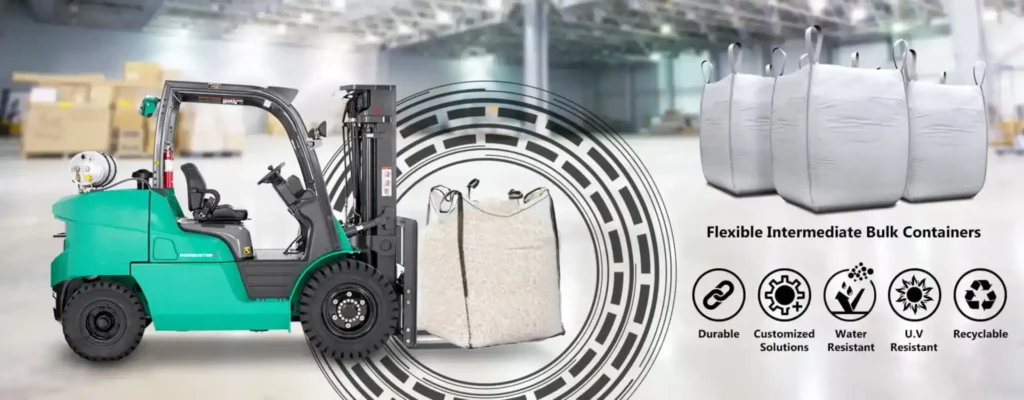
Specialized. FIBC cousins (500–2,000 kg) reference ISO 21898:2024 for safety factors and lift‑loop design, sharing resin families and many operational hazards with smaller sacks.
Data reinforcement. Export RFQs typically request tensile and seam certificates, OML 10 mg/dm² migration reports, and third‑party verifications (SGS/Intertek); these are the passports that let pallets cross borders.
Case analysis. A coastal rice exporter added transparent BOPP windows to display grain quality and recorded double‑digit shelf pick‑up without destabilizing pallets—storytelling without structural compromise.
Comparative study. Where hermetic sealing is absolute, PE film may be mandated; where humidity, stacking height, and scuff coexist, Poly Woven Bags deliver the stronger compromise.
Quick Spec Sheet (Typical, Commercially Verifiable)
| Parameter | Typical range / option | Technical note |
|---|---|---|
| Fabric weight | 55–140 g/m² | Select by product bulk density and drop‑test targets; don’t over‑engineer beyond creep needs |
| Mesh (warp×weft) | 8×8 – 14×14 | Higher mesh refines puncture resistance and print laydown for fine powders |
| Denier | 650D – 1500D | Heavier denier for abrasive contents or taller stacks; balance with forming stiffness |
| Lamination (PP/BOPP) | 20–50 μm | 25–35 μm common for retail gloss and moisture control without excessive curl |
| Width | 260–750 mm | Match to 10/25/50 kg fills and block‑bottom geometry for pallet cube |
| Printing | Rotogravure / digital | Maintain dyne ≥38; manage ΔE and rub resistance to guard brand fidelity |
| Testing | ASTM D5035; seam strength | Strip tensile for woven fabrics; validate seam architecture under realistic loads |
| Sack standard | GB/T 8946‑2013 | General technical requirements and inspection rules for plastic woven sacks |
| Food‑contact | FDA 21 CFR §177.1520; EU No 10/2011 | OML 10 mg/dm²; SML/NIAS controls via accredited labs |
| Hygiene system | BRCGS Packaging Materials (Issue 7) | GFSI‑benchmarked hygiene and hazard control |
| Bulk reference | ISO 21898:2024 | Guidance for 500–2,000 kg FIBC relatives |
Values mirror live listings on Made‑in‑China/Alibaba and standard lab methods. Final specs must be qualified by tensile, seam, drop, creep, and migration tests tuned to route risk and line speed.
A Systems‑Thinking Synthesis: VidePak’s End‑to‑End Solution
Sub‑problem A — Compliance & chemistry control. Lock polymer/additive recipes to FDA 21 CFR §177.1520 and EU No 10/2011; qualify rPP via migration testing; maintain a REACH‑compliant inventory with change‑control. Solution: approved‑supplier lists, incoming MFR checks, lot‑level DoC/CoA, periodic migration audits.
Sub‑problem B — Strength vs. weight. Navigate the mesh/denier/gsm grid with designed experiments; validate via ASTM D5035, seam tests, drop testing, and pallet creep checks in heat. Solution: starting points for 25‑kg duty at 10×10 / 900D / 90–100 g/m², then tune to product density and lane stress.
Sub‑problem C — Print quality vs. recyclability. Keep PP‑only laminations, enforce dyne ≥38, and use low‑VOC inks; set ΔE and scuff benchmarks that survive handling. Solution: in‑line corona, real‑time dyne monitoring, color control loops, solvent capture.
Sub‑problem D — Plant readiness & audit trail. Operate to BRCGS Issue 7 with foreign‑matter prevention and mock recalls; ensure traceability from resin to pallet. Solution: robust batch records, retain samples, CAPA discipline, and audit dry‑runs.
Integrated outcome. A mono‑material packaging platform—Poly Woven Bags—that carries product safely, prints beautifully, audits cleanly, and recycles credibly. Not a slogan—specification, verification, and performance at height.
In the competitive landscape of packaging, Poly Woven Bags have emerged as a crucial solution across various industries. Known for their durability, versatility, and cost-effectiveness, these bags serve a wide range of purposes, from agricultural storage to industrial use. At VidePak, a leader in the production of Woven Poly Bags, we pride ourselves on employing state-of-the-art technology and meticulous craftsmanship to produce high-quality products that meet the stringent demands of our global clientele. This article delves into the intricate production process of Poly Woven Bags at VidePak, highlighting the advanced techniques and equipment used at each stage.
The Art of Manufacturing Poly Woven Bags
The production of Woven Polypropylene Bags is a complex process that requires precision and expertise at every step. At VidePak, we have optimized our manufacturing process through the use of advanced machinery supplied by Starlinger, a global leader in textile machinery for woven plastic products. Our commitment to quality is reflected in every phase of production, from the initial selection of raw materials to the final inspection of finished goods.
Step 1: Extrusion and Tape Stretching
The journey of creating Poly Woven Bags begins with the extrusion process, where polypropylene (PP) granules are melted and formed into flat tapes. These tapes, which serve as the primary material for weaving, are then stretched to achieve the desired tensile strength and elasticity. This step is crucial as it determines the durability and load-bearing capacity of the final product.
At VidePak, we use Starlinger’s cutting-edge extrusion and tape stretching lines, which are renowned for their efficiency and precision. These machines allow us to produce high-quality tapes with consistent thickness and strength, ensuring that our Poly Woven Bags are both robust and reliable.
Step 2: Weaving
Once the tapes are produced, they are woven into fabric using circular looms. The weaving process interlaces the tapes into a tight, grid-like pattern, creating a strong and flexible fabric that forms the foundation of our Woven Poly Bags. This fabric can be produced in various thicknesses and widths, depending on the specific requirements of the client.
Starlinger’s circular looms are integral to this stage of production. These machines are capable of weaving fabric with remarkable accuracy, ensuring that each bag meets our exacting standards. The result is a woven fabric that is not only strong but also lightweight, making it ideal for a wide range of applications.
Step 3: Cutting and Sewing
After the fabric is woven, it is cut into the desired shapes and sizes based on the specifications of the order. This stage requires precision to ensure that each bag is uniform and free of defects. The cut pieces are then sewn together to form the final bag structure. The sewing process is critical, as it involves securing the edges and creating handles or other structural elements that add to the bag’s functionality.
At VidePak, we employ high-precision cutting and sewing machines from Starlinger, which allow us to produce bags with clean, accurate cuts and strong, durable seams. Whether the bags are designed for heavy-duty industrial use or lightweight consumer products, our attention to detail ensures that each bag performs reliably under various conditions.
Step 4: Printing and Coating
One of the key advantages of Woven Polypropylene Bags is their ability to be customized with high-quality prints and coatings. After the bags are sewn, they can be printed with branding, product information, or other designs using advanced printing technologies. The bags may also be laminated or coated to enhance their moisture resistance, UV protection, and overall durability.
VidePak’s printing and coating processes are carried out using Starlinger’s top-of-the-line equipment, which enables us to achieve vibrant, long-lasting prints that adhere well to the woven fabric. Our coatings, whether they are simple protective layers or specialized laminates, are applied evenly and consistently, ensuring that the bags maintain their integrity and appearance throughout their lifespan.
Step 5: Inspection and Quality Control
Quality control is a cornerstone of VidePak’s manufacturing philosophy. Every Poly Woven Bag we produce undergoes a rigorous inspection process to ensure it meets our high standards. This involves checking for any defects in the fabric, seams, printing, and coating, as well as testing the bags for strength and durability. Only those bags that pass our stringent quality checks are approved for packaging and shipment.
Our inspection process is facilitated by advanced monitoring systems integrated into our Starlinger machinery, allowing us to detect and correct any issues in real-time. This proactive approach to quality control ensures that our customers receive only the best products, with minimal risk of defects or failures.
Step 6: Packaging and Distribution
The final stage of production involves packaging the finished Poly Bags for distribution. At VidePak, we understand that the packaging process is as important as the production itself, as it ensures that the bags reach our customers in pristine condition. We use automated packaging systems to efficiently bundle and wrap the bags, protecting them from damage during transport.
Our global distribution network allows us to deliver Woven Poly Bags to customers around the world quickly and efficiently. Whether shipping to local markets in China or exporting to North America, Europe, or beyond, VidePak is committed to providing reliable and timely delivery.
VidePak’s Commitment to Excellence
With over 20 years of experience in the industry, VidePak has distinguished itself as a leading Woven Bag Supplier. Our success is built on a foundation of innovation, quality, and customer satisfaction. Unlike many other manufacturers in China, we recognize the importance of investing in advanced technology and maintaining strict quality control measures.
By partnering with Starlinger, we have access to the latest machinery and production techniques, allowing us to stay ahead of industry trends and deliver superior products. Our Woven Polypropylene Bags are trusted by businesses across various sectors for their strength, durability, and versatility.
At VidePak, we are not just manufacturing bags; we are crafting solutions that meet the diverse needs of our clients. Whether you require standard Poly Woven Bags or customized packaging solutions, our team is dedicated to delivering products that exceed expectations. Our commitment to quality and innovation ensures that every bag we produce is a testament to our expertise and dedication to excellence.